The story of the film
Lalish, Shekhan and Sinjar in northern Iraq, the Bekaa valley, Armenia, Georgia and Germany · 12th century–today
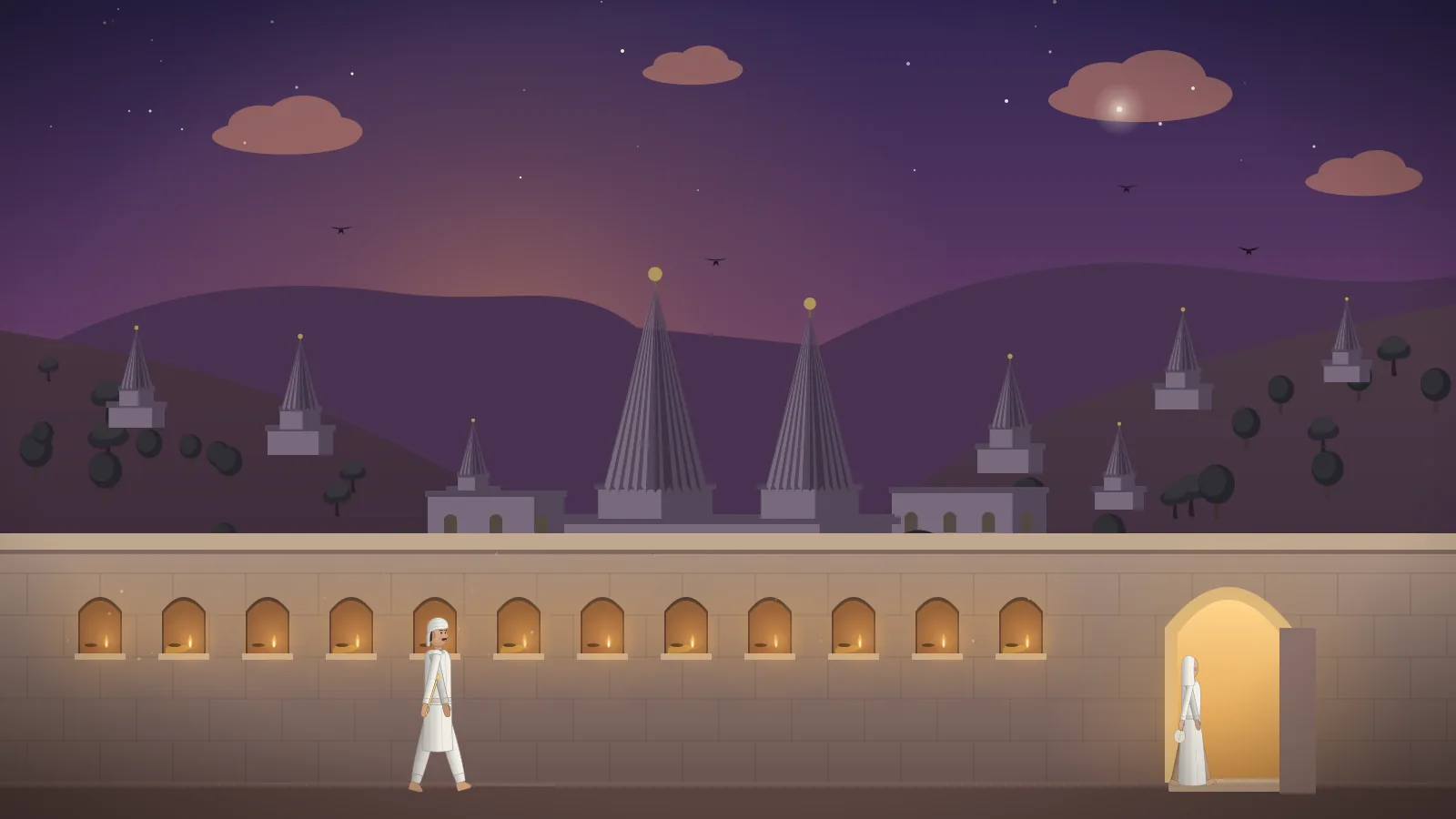
In a narrow valley in the mountains north of Mosul, in northern Iraq, the first sun touches white stone and tall fluted spires, shaped like cones, each topped with a small gilt ball. This is Lalish, the holiest place of the Yazidis. Every Yazidi hopes to come here. At its gate, pilgrims take off their shoes, because inside the valley everyone walks barefoot. No one steps on a threshold, because the doorways are holy, and so pilgrims step over them. In the shrine of Sheikh Adi, the tombs are draped in coloured silks, tied in many small knots. A pilgrim unties a knot left by someone else, and ties a new one, with a wish of her own. To understand what this valley means to those who come here, we have to begin with a name that was never theirs.
Chapter Iwatch from 0:45
A False Name
For centuries, outsiders gave the Yazidis a cruel name: devil worshippers. It was false. And it was used, again and again, to justify attacking them.
Scholars explain how it arose. In Yazidi stories, a great angel would not bow to Adam. Neighbours heard an echo of their own story of Satan, and drew the wrong conclusion.
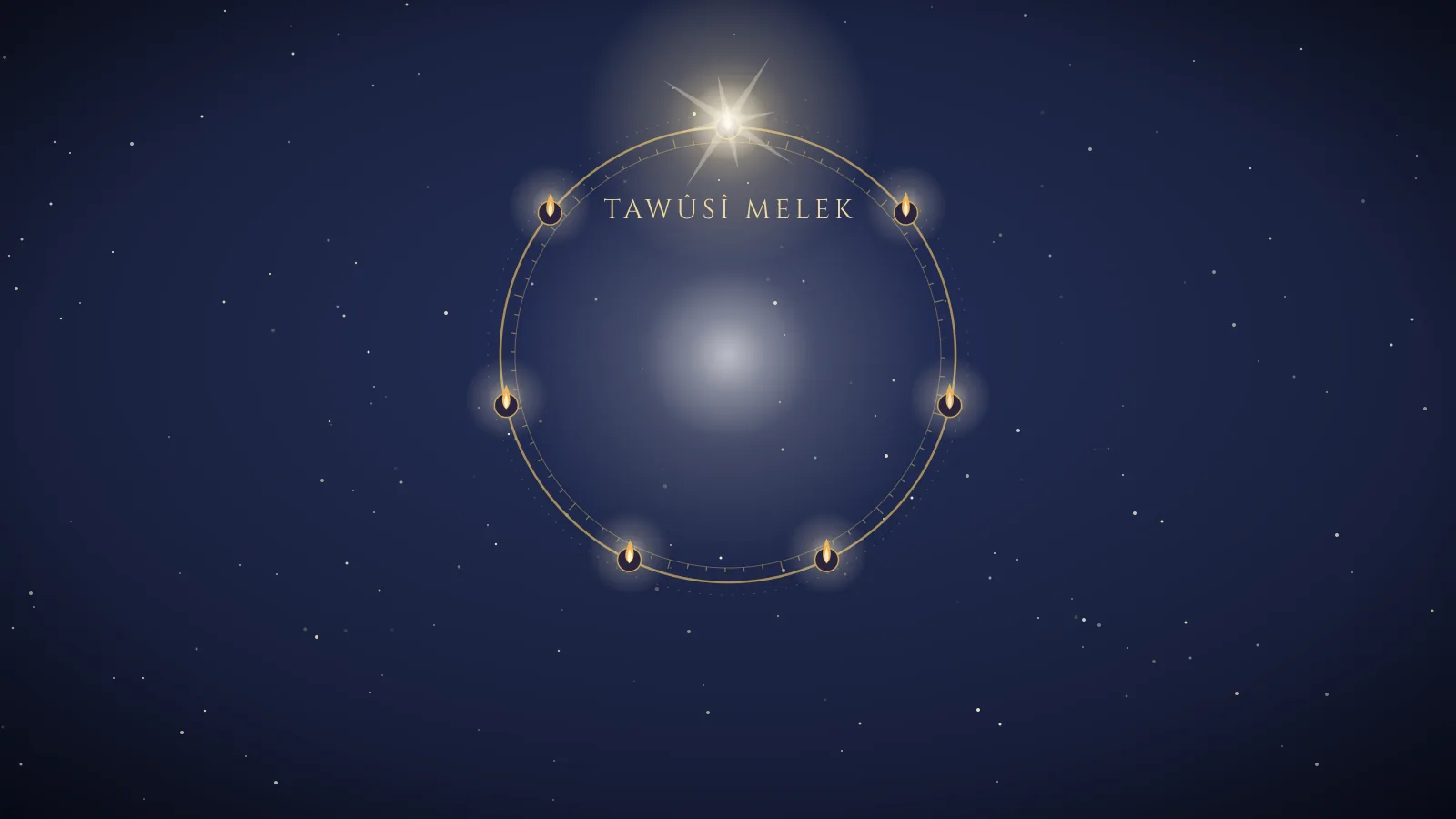
What Yazidis believe is something else. There is one God, good and all-powerful. He created the world, and entrusted it to seven holy beings. The chief of them is Tawûsî Melek, the Peacock Angel. Because God is good and all-powerful, there is no evil power that opposes him, Yazidis say. Good and evil both come from human choice.
There is no evil power that opposes him, Yazidis say.
As many Yazidis tell it, Tawûsî Melek would bow to no one but God himself, and God made him chief of the angels. Other tellings say he repented, and was forgiven. Either way, in Yazidi belief he is God’s chief angel, and the old accusation rests on a misreading of their faith.
Chapter IIwatch from 1:51
The Sheikh of Lalish
The story historians can trace begins more than nine hundred years ago, in the Bekaa valley, in what is now Lebanon. There a Sufi named Adi ibn Musafir grew up, and set out to study.
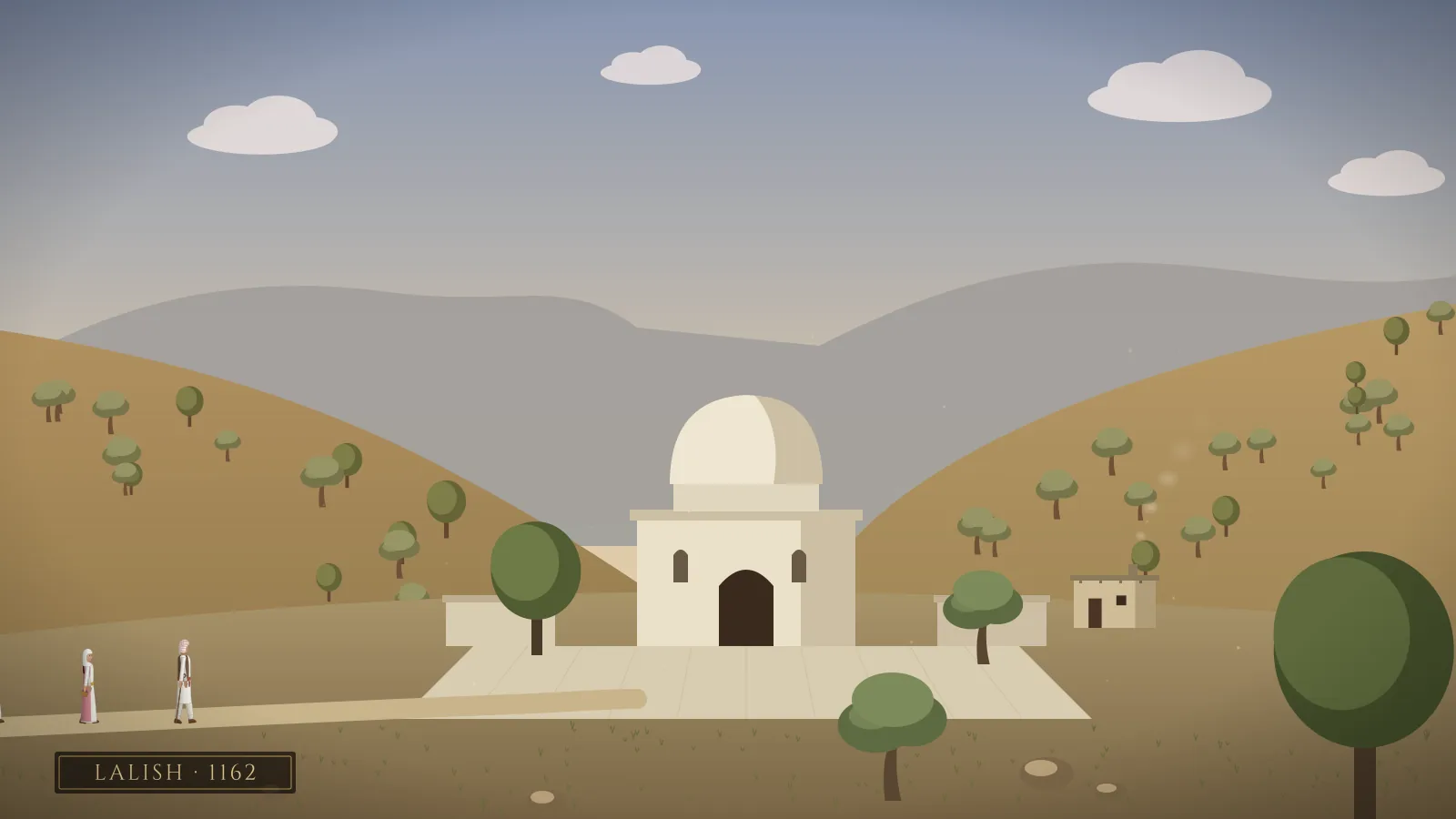
In the early twelfth century he settled in a quiet valley of the Kurdish mountains, at Lalish. He was known for his strict life and his learning, and he drew followers among the Kurdish tribes of the region.
When Sheikh Adi died, in 1162, he was buried at Lalish. His tomb became a place of pilgrimage, and his family led the order that gathered round it, the Adawiyya. The first tomb was modest: the tall fluted spires seen today came from later building. Yazidis revere Sheikh Adi as one of the holy beings who took human form.
Over the generations, the order grew apart from mainstream Islam. Leaders like Sheikh Hasan, in the thirteenth century, gave it a teaching of its own. He was later put to death by the ruler of Mosul. Older beliefs of the Kurdish mountains, about the sun, the holy beings and the cycle of the world, blended with the Sufi heritage.
Scholars such as Philip Kreyenbroek describe a distinct religion, with roots both in medieval Sufism and in ancient Iranian tradition. Yazidis themselves see their faith as very old, older than the religions around them.
Even their name is debated. Early followers of Sheikh Adi honoured the caliph Yazid, historians note, but Yazidis link their name to Ezid, a name of God.
Chapter IIIwatch from 3:29
Hymns, Castes and Birth
There is no single holy book. The faith lives in qewl, sacred hymns in Kurmanji Kurdish, sung by hereditary singers called qewwal, to the frame drum and the flute, and in stories told in families.
In the past, the qewwal travelled from village to village with the sanjaq, the sacred bronze peacock standards. They are the community’s holiest objects, and the film does not show them, not even covered.
Every Yazidi is born into one of three castes: sheikh, pir, or murid, the lay people. The sheikh and pir lineages hold the spiritual offices. Each lay family has a sheikh and a pir to guide it, a bond that also carries duties at birth, at marriage and at death. At a funeral, the hymns of the qewwal accompany the soul, and Yazidis believe that a soul may return in a new life.
The community has a prince, the Mir, and a spiritual head, the Baba Sheikh. Both offices are hereditary.
One is born a Yazidi, to two Yazidi parents. There is no way to convert in, and marrying outside the faith, or outside one’s caste, has traditionally meant leaving it. That strict boundary has protected the community through centuries of pressure, though it is increasingly debated in the diaspora.
Chapter IVwatch from 4:41
The Turning Year
Prayers are said at sunrise and at sunset, turning towards the sun. Wednesday is the holy day of the week.
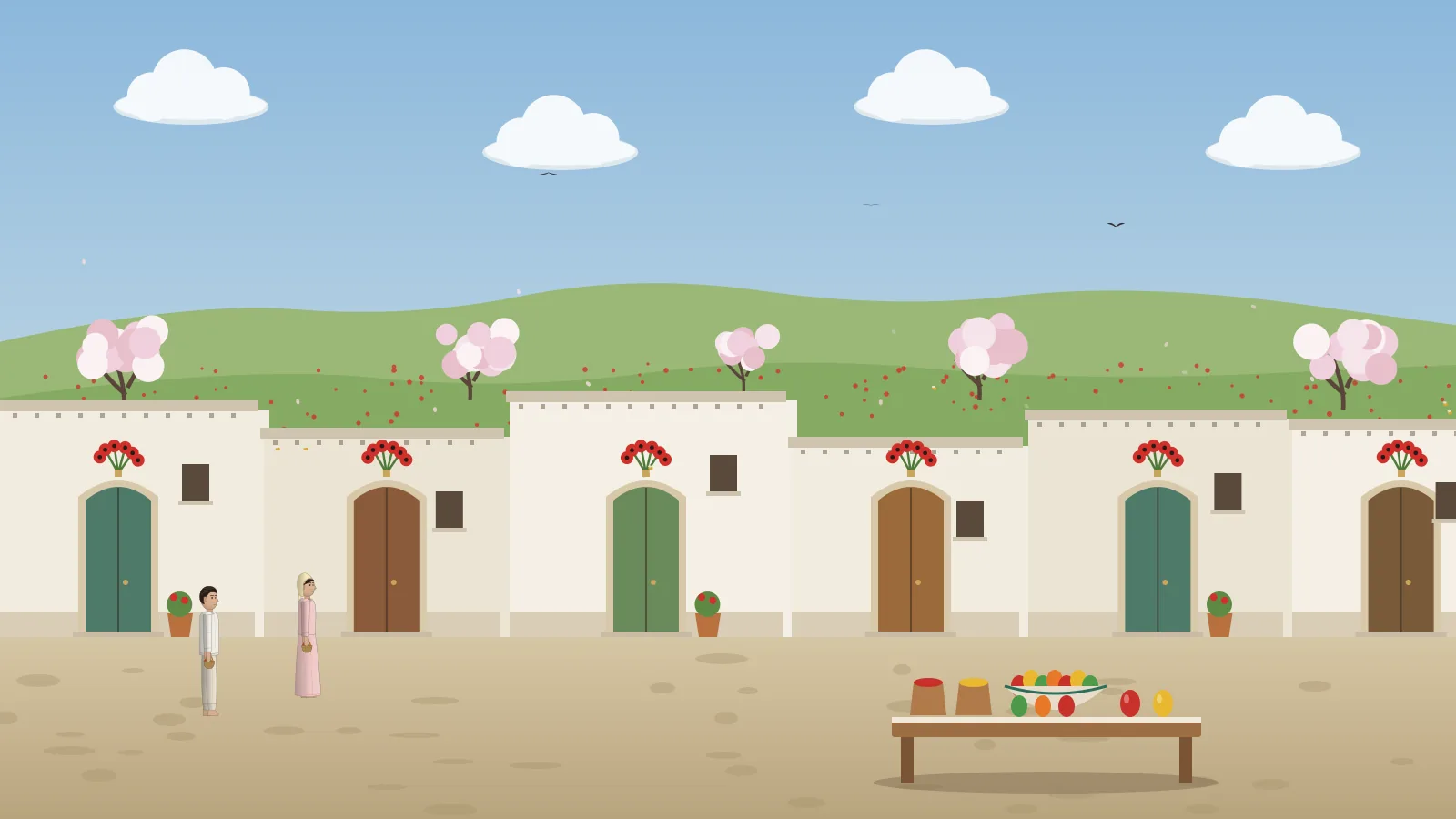
In April comes the new year, Red Wednesday, Çarşema Sor. It falls on the first Wednesday of April in the old Julian calendar, in mid-April today. Families colour eggs and fix red flowers to their doors, to mark the renewal of the world.
At Lalish, children may be blessed with water from the White Spring, and pilgrims take home small balls of the valley’s clay as a blessing. In December, many keep a three-day fast, which ends in the Feast of Ezid.
Each autumn, thousands gather at Lalish for the seven-day Feast of the Assembly. The shrines are visited, the hymns are sung, and pilgrims walk barefoot through the valley.
In the villages, families lived from farming and herding, and around Sinjar from tobacco, figs and olives. Hospitality, the honour of the family and loyalty to the community came first, and village elders settled their own disputes. Older customs, such as avoiding dark blue cloth or eating lettuce, are still remembered, though younger Yazidis keep them less strictly.
Chapter Vwatch from 5:42
A Chain of Ferman
Yazidis remember their history as a long chain of ferman, a word for a ruler’s decree. Many Yazidis count more than seventy of them.
Even Lalish was attacked more than once in the Middle Ages. Each time, the shrine of Sheikh Adi was rebuilt.
In the 1830s, the armies of Kurdish emirs devastated Yazidi villages in Shekhan and Sinjar. In 1892, an Ottoman campaign tried to force the Yazidis to convert. The shrine at Lalish was seized and held for some years, before the Yazidis won it back.
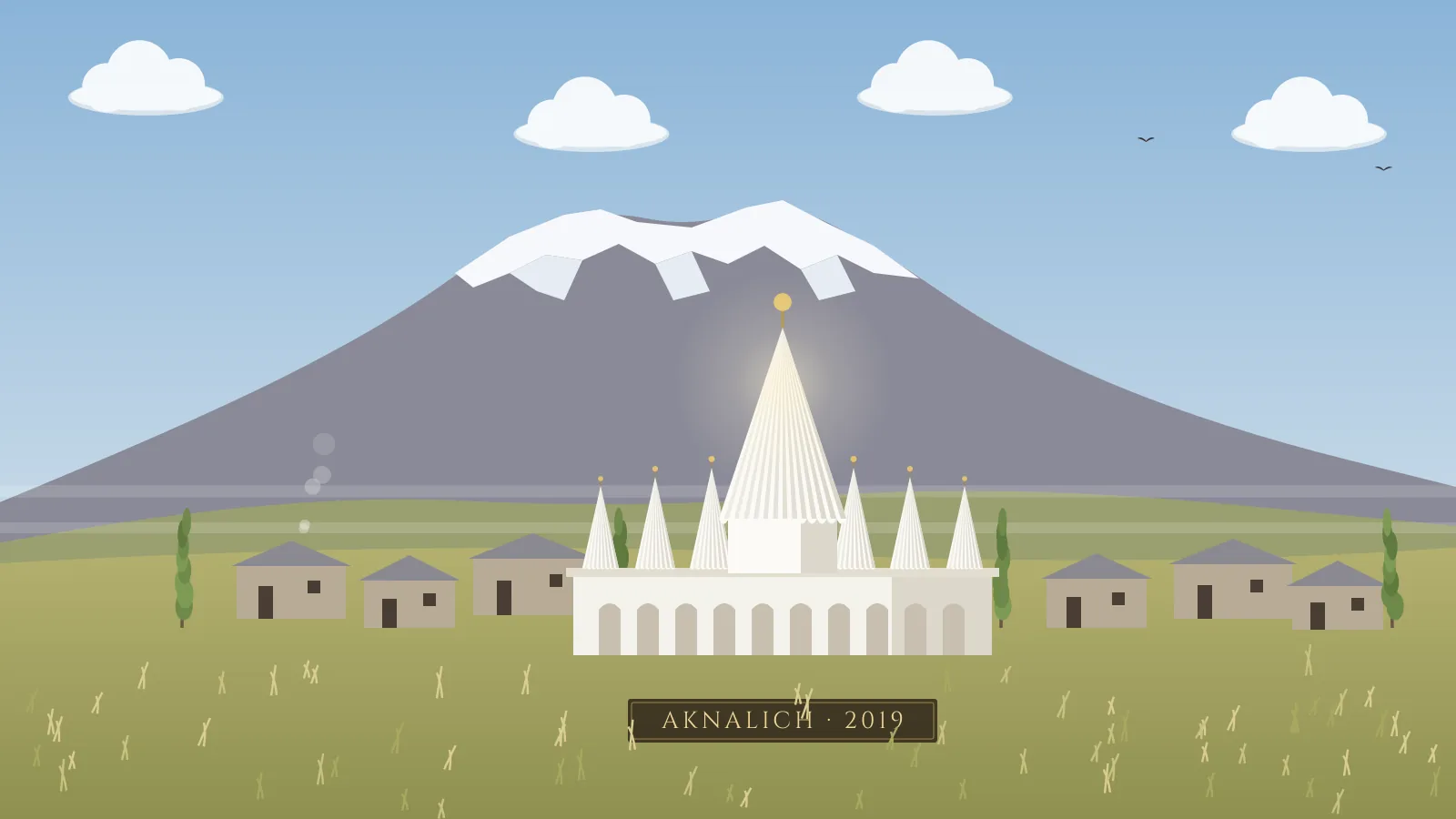
Many families fled north, to the Russian Caucasus. Their descendants still live in Armenia and Georgia. In 2019, a large new Yazidi temple opened in the Armenian village of Aknalich.
Chapter VIwatch from 6:41
Sinjar, 2014
Before 2014, about 550,000 Yazidis lived in Iraq, many of them around Mount Sinjar, a long ridge rising out of the plain near the Syrian border.
On 3 August 2014, the so-called Islamic State attacked the Sinjar region. Many Yazidis call it the 74th ferman.
Thousands of men and older women were killed, and thousands of women and children were taken captive. By 2021, the Kurdistan Region’s rescue office had recorded 6,417 Yazidis abducted.
Hundreds of thousands fled. Many were trapped for days on Mount Sinjar, in the August heat, with little food or water, until a way to safety was opened. Many reached the camps near Dohuk, long rows of white tents in the Kurdish north. Years later, many families were still living there.
In June 2016, a United Nations Commission of Inquiry, in a report called They Came to Destroy, concluded that the Islamic State had committed genocide against the Yazidis. Iraq passed a Yazidi Survivors Law in 2021, and in 2023 the German Bundestag recognised the genocide. Many people were still missing.
Chapter VIIwatch from 8:08
Welcomed Home
In the autumn of 2014, the Baba Sheikh and the religious leaders made a decision that changed the community. Those who returned from captivity were to be welcomed home. For a community with strict rules about marriage, it marked a change.
Those who returned from captivity were to be welcomed home.
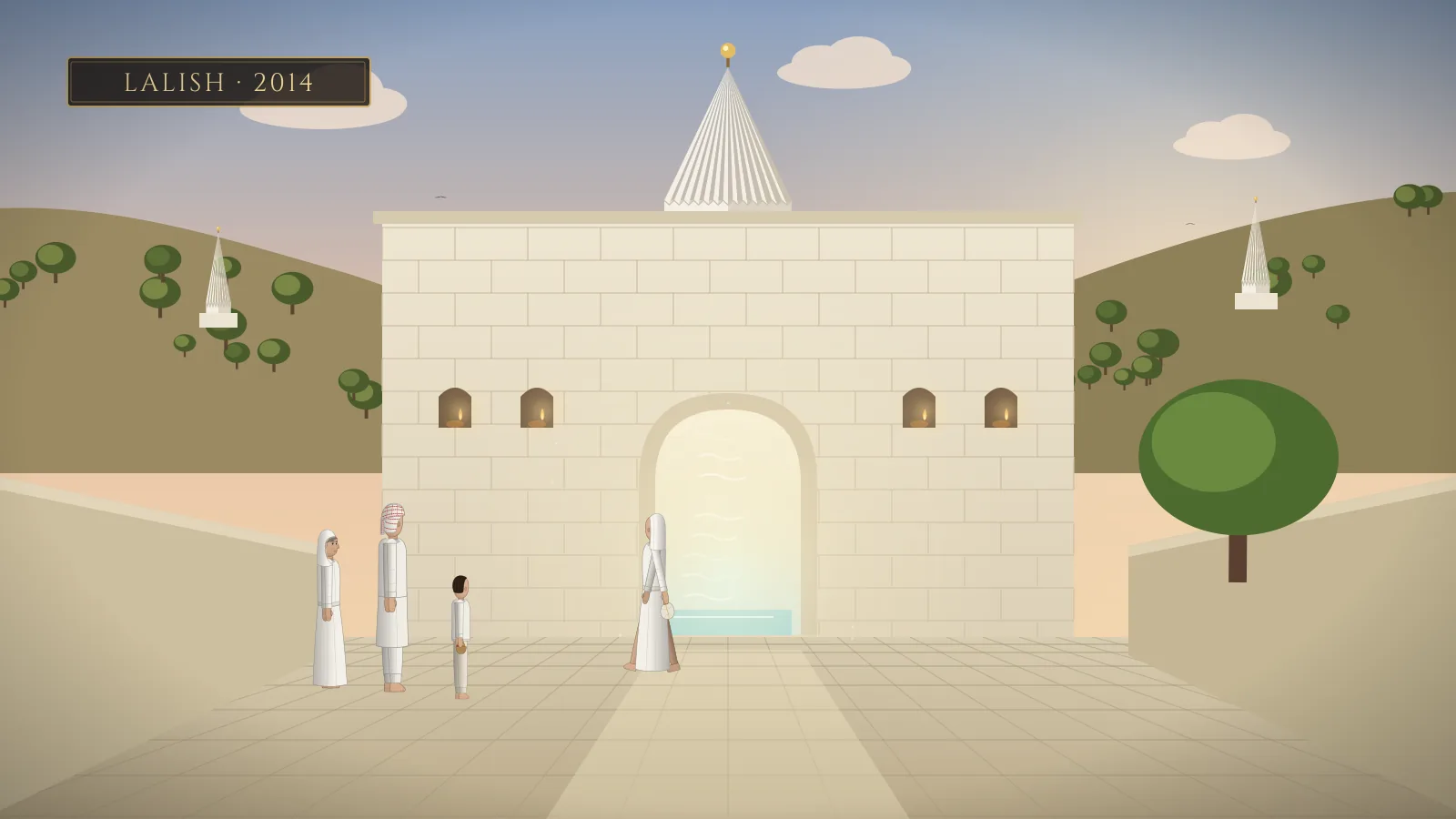
At Lalish, returning survivors were blessed in the water of the White Spring, and given back to their families.
One survivor, Nadia Murad, spoke out before the world. In 2018, she shared the Nobel Peace Prize for her campaign against sexual violence in war.
Chapter VIIIwatch from 8:43
Far from Lalish
Since the 1980s, and above all since 2014, many Yazidis have emigrated. About 150,000 now live in Germany, the largest community outside the Middle East. There, far from Lalish, the old hymns are recorded, taught and sung to a new generation.
In Sinjar, rebuilding has been slow. But some families have gone home, and fields on the mountain’s slopes are sown again.
Most Yazidis speak Kurmanji Kurdish, and many see themselves as Kurds of the original Kurdish faith. Others, especially since 2014, see the Yazidis as a separate people defined by their religion, and the question is debated within the community.
Legend says the Yazidis worship the devil, keep a secret black book, or are a lost branch of the Zoroastrians. The records show a faith in one God and his holy beings, carried in hymns rather than books, rooted in Sufism and in ancient Iranian tradition, and distinct from both. The “holy books” sometimes cited, the Black Book and the Book of Revelation, were published around 1900, and most scholars think they were written down or composed for Western readers.
Back at Lalish, the day is ending. In the courtyards of Sheikh Adi, the olive-oil lamps are lit, one wick at a time. Barefoot, dressed in white, the last pilgrims step over a holy threshold. After so many ferman, the valley is still full of hymns.