The story of the film
North India, Tibet, Bhutan, Mongolia and Central Asia · early 11th century to today
In the autumn of 1627, in a monastery in the hills of Bhutan, a Portuguese priest sat down to write a very long letter. His name was Estêvão Cacella, a Jesuit missionary. He and a younger companion, João Cabral, were the first Europeans known to have entered Bhutan. For nearly eight months they had been guests of the Shabdrung Ngawang Namgyel, and now Cacella was writing a report for his superior in Cochin, far away on the coast of India.
In that letter he passed on what he had been told. Far to the north, people said, lay a famous kingdom called Xembala. Perhaps, he wondered, it was Cathay, the China of old European maps.
Chapter Iwatch from 0:43
The Kingdom of the Wheel of Time
What Cacella had heard of was Shambhala, a kingdom described in one of the great teachings of Tibetan Buddhism: the Kalachakra, the Wheel of Time.
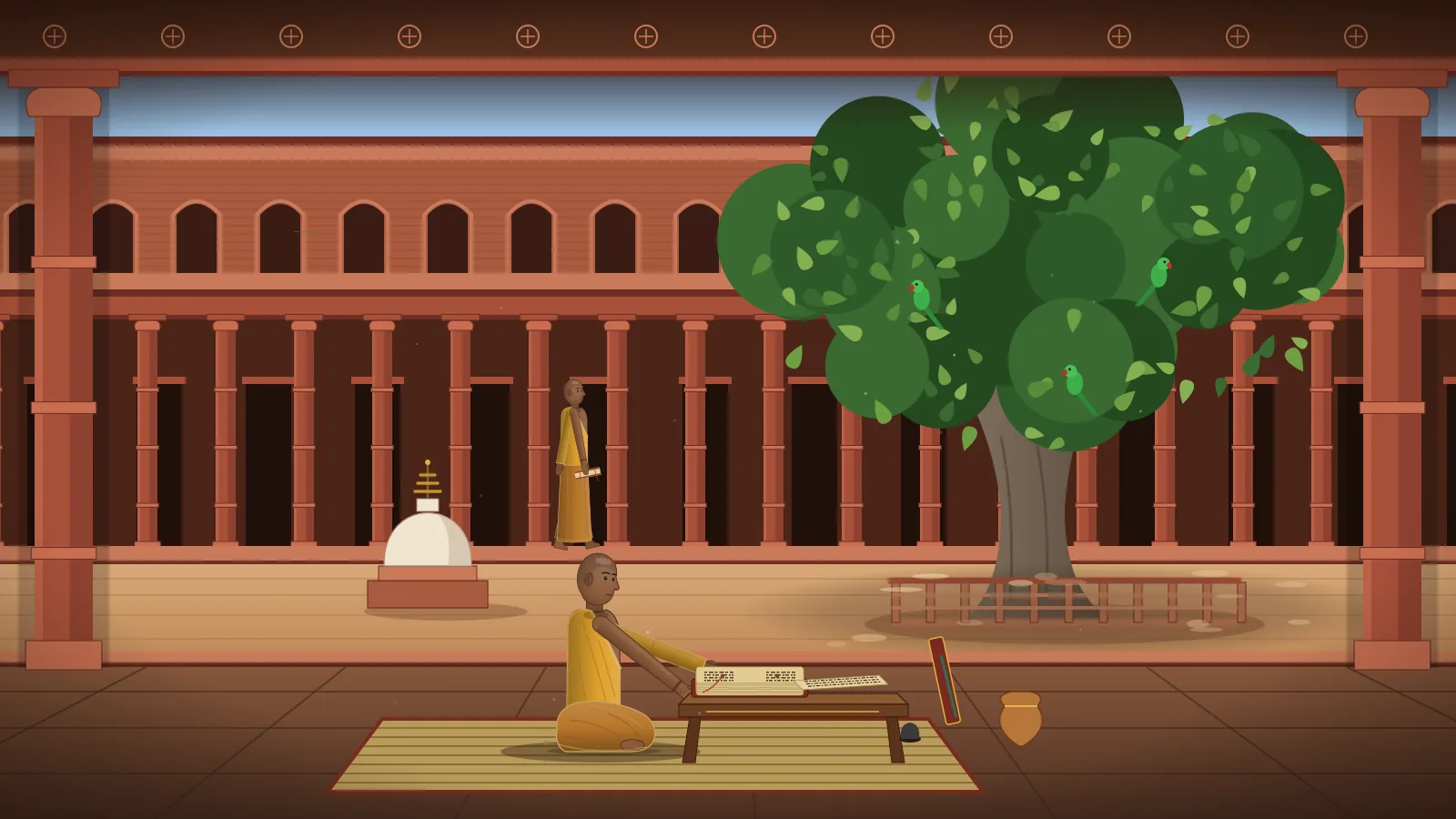
According to tradition, the Buddha taught the Kalachakra at the great stupa of Dhanyakataka, in southern India, at the request of a king from the north. His name was Suchandra, and he was king of Shambhala. Suchandra, the story goes, wrote the teaching down, carried it home, and built a great mandala, a palace of the Wheel of Time, in precious materials.
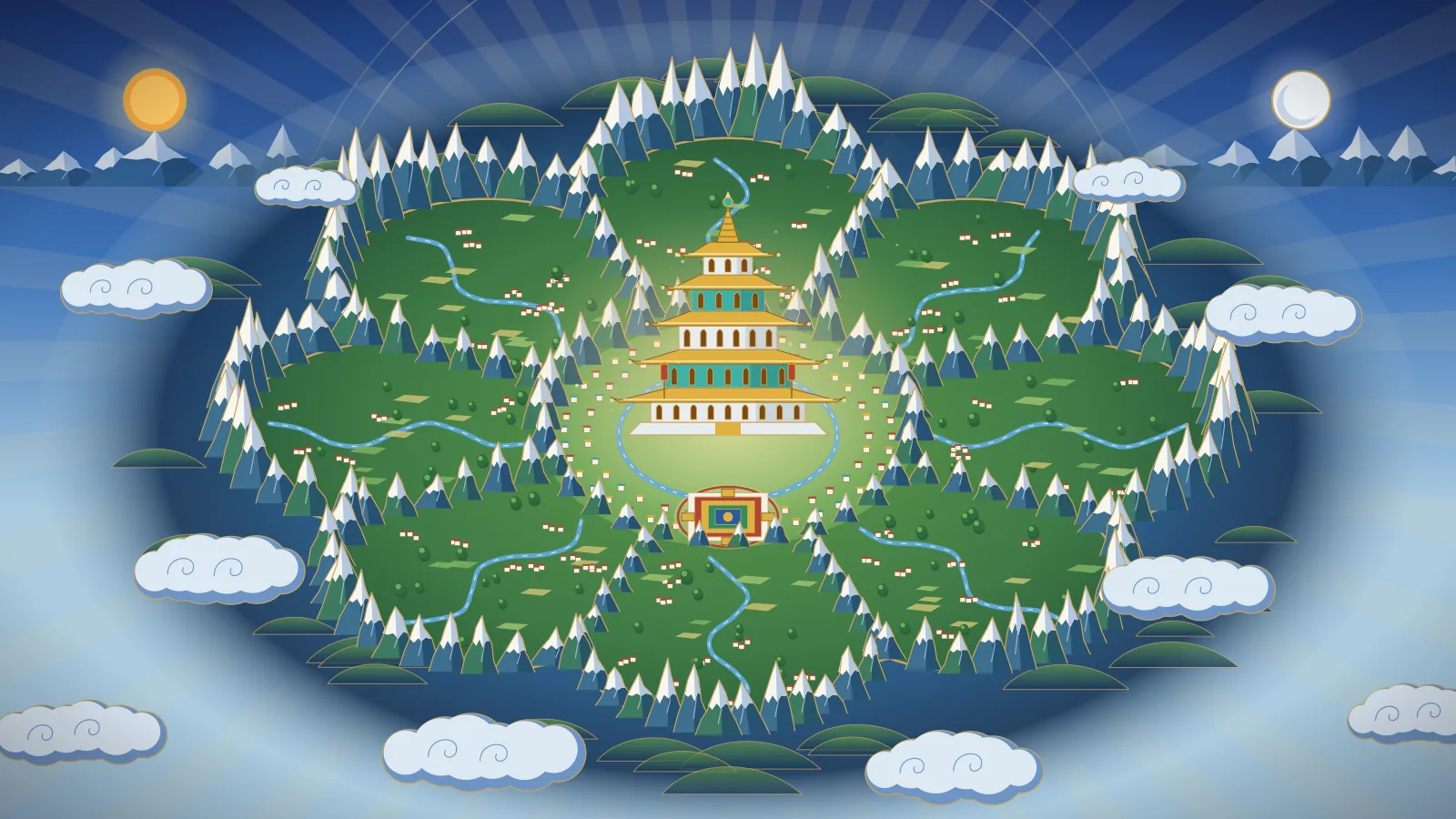
Tibetan accounts picture his kingdom as an eight-petalled lotus, ringed by snow mountains. At its centre stands the capital, Kalapa, with a palace so bright, the texts say, that it turns night into day.
Tibetan accounts picture his kingdom as an eight-petalled lotus, ringed by snow mountains.
After Suchandra came six more Dharma kings. Then, tradition says, King Manjushri Yashas united all the people of Shambhala into a single spiritual family. From then on its rulers were called kalki, holders of the lineage. There would be 25 of them, each, by tradition, reigning for about 100 years.
Chapter IIwatch from 2:04
A Text with a Date
The text that survives presents itself as a shorter version written by Manjushri Yashas. Its great commentary, the Stainless Light, is attributed to his son, Pundarika.
Historians see a text with a date. The Kalachakra appeared in north India in the early 11th century, in the world of the great Buddhist monasteries. The scholar John Newman found in these texts a year counted in the Islamic calendar, 403, which is about 1012 in ours.
Those were anxious years for Indian Buddhists. Armies from Ghazni, in today’s Afghanistan, were raiding north India, and the Kalachakra describes the newcomers’ faith in surprising detail.
And it contains a prophecy. In a dark future age, the 25th king, Raudra Chakrin, the Wrathful Wheel-Holder, will ride out of Shambhala with a great army and defeat the enemies of the Dharma. Then a new golden age will begin. The scholar Alexander Berzin dates that battle, from the texts, to 2424. Many teachers read it as an inner war, against ignorance.
Many teachers read it as an inner war, against ignorance.
The name itself was older. In the Hindu Puranas, Shambhala is the village where Kalki, the last avatar of Vishnu, will be born. Scholars think the Buddhist text reworked that image.
Chapter IIIwatch from 3:42
The Road to Shambhala
The Kalachakra crossed the Himalayas, and Tibetans took it to heart. Their 60-year calendar cycle still counts from 1027, the traditional date of its translation.
Tibetan writers began to describe the road to Shambhala. The earliest known guide dates from the 13th century. Another, by a Tibetan prince, dates from about 1557. The most famous was written in the 18th century by the Panchen Lama Lobsang Palden Yeshe, head of Tashilhunpo monastery, in Shigatse.
His guide leads the traveller north, through deserts, rivers and mountain passes, past places both real and imaginary, and it asks for long meditation and prayer along the way. In 1915 the German scholar Albert Grünwedel translated it into German as Der Weg nach Śambhala, The Road to Shambhala.
The journey was in the end an inner one.
Its author taught, according to later scholars, that the journey was in the end an inner one. Historians read such books as spiritual geography, not directions for travellers.
Chapter IVwatch from 4:40
The Seekers from the West
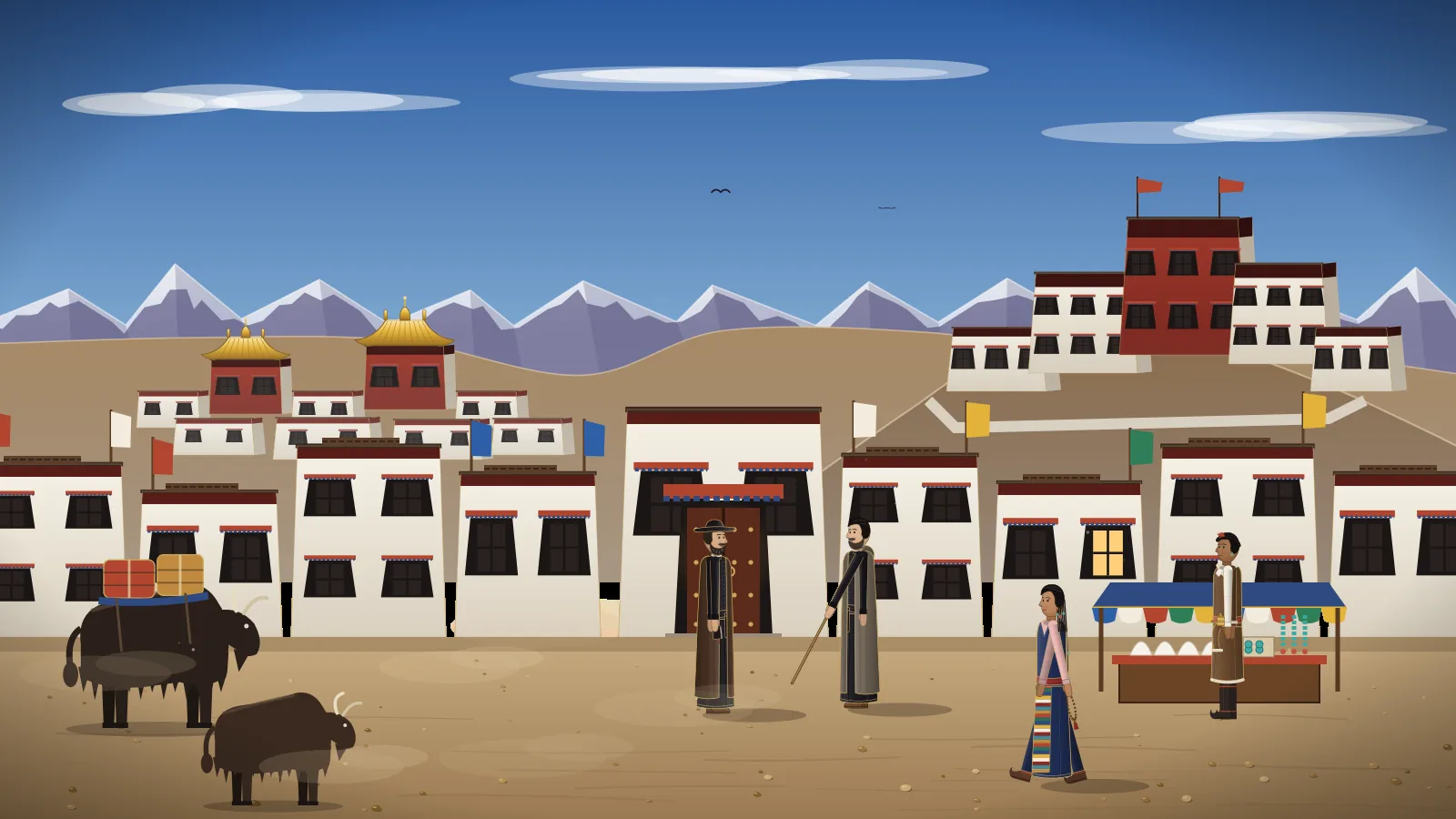
A century and a half earlier, Shigatse was where the two Jesuits had gone. Cacella arrived in late 1627, and Cabral early the next year.
In a letter of June 1628, Cabral wrote that Xembala was not Cathay at all. He placed it farther north, in the land that European maps called Great Tartary. Cacella travelled back to Bengal, then returned to Shigatse in poor health. He died there in March 1630, and never went farther north.
He died there in March 1630, and never went farther north.
Two centuries later, a Hungarian scholar came looking for something else: the ancient home of his own people. Alexander Csoma de Kőrös had left Transylvania in 1819, travelling largely on foot. In the Himalayas he learned Tibetan in remote monasteries, and wrote the first Tibetan-English dictionary, published in Calcutta in 1834. In 1833 he published a short note on the Kalachakra. Shambhala, he wrote, was “a fabulous country in the North”, beyond a river he identified with the Jaxartes, in Central Asia.
Helena Blavatsky, a founder of the Theosophical Society, mentioned Shambhala in The Secret Doctrine, in 1888. Later Theosophists made it the seat of hidden spiritual masters.
In Asia, meanwhile, the prophecy took on new life. In 1921, by later accounts, Mongolian commanders told their soldiers that if they fought for freedom, they would be reborn in the army of Shambhala.
Chapter Vwatch from 6:27
The Painter's Caravan
Then came the Russian painter Nicholas Roerich, with his wife Helena and their son George. Between 1925 and 1928, their expedition crossed Ladakh, Xinjiang, the Altai and Mongolia. Roerich gathered legends of Shambhala wherever he went. He believed its age was about to dawn.
In August 1927, in the region of the great lake Kokonor, Roerich wrote that his party saw “something big and shiny reflecting the sun, like a huge oval moving at great speed”. It was his own account, set down in his travel diary. Two days later, they consecrated a stupa that they dedicated to Shambhala.
In October, Tibetan officials stopped the caravan on the high Changtang plateau. For five months they waited in summer tents, in cold of around minus 40 degrees. Five men and about 90 animals died.
For five months they waited in summer tents, in cold of around minus 40 degrees.
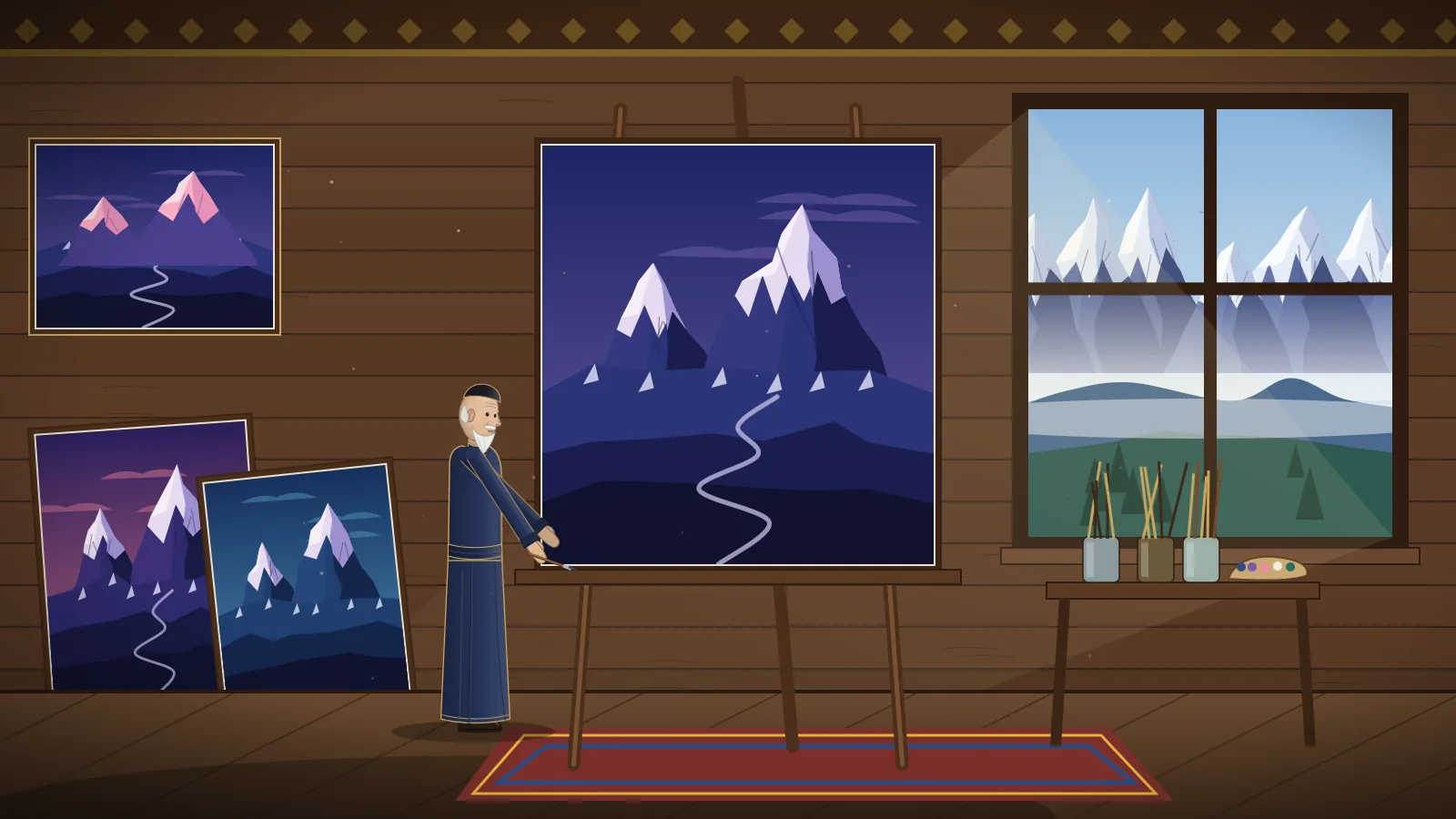
Roerich never found Shambhala. But he painted it again and again: blue mountains, glowing peaks, and paths that vanish into the snow.
Chapter VIwatch from 7:41
Shangri-La
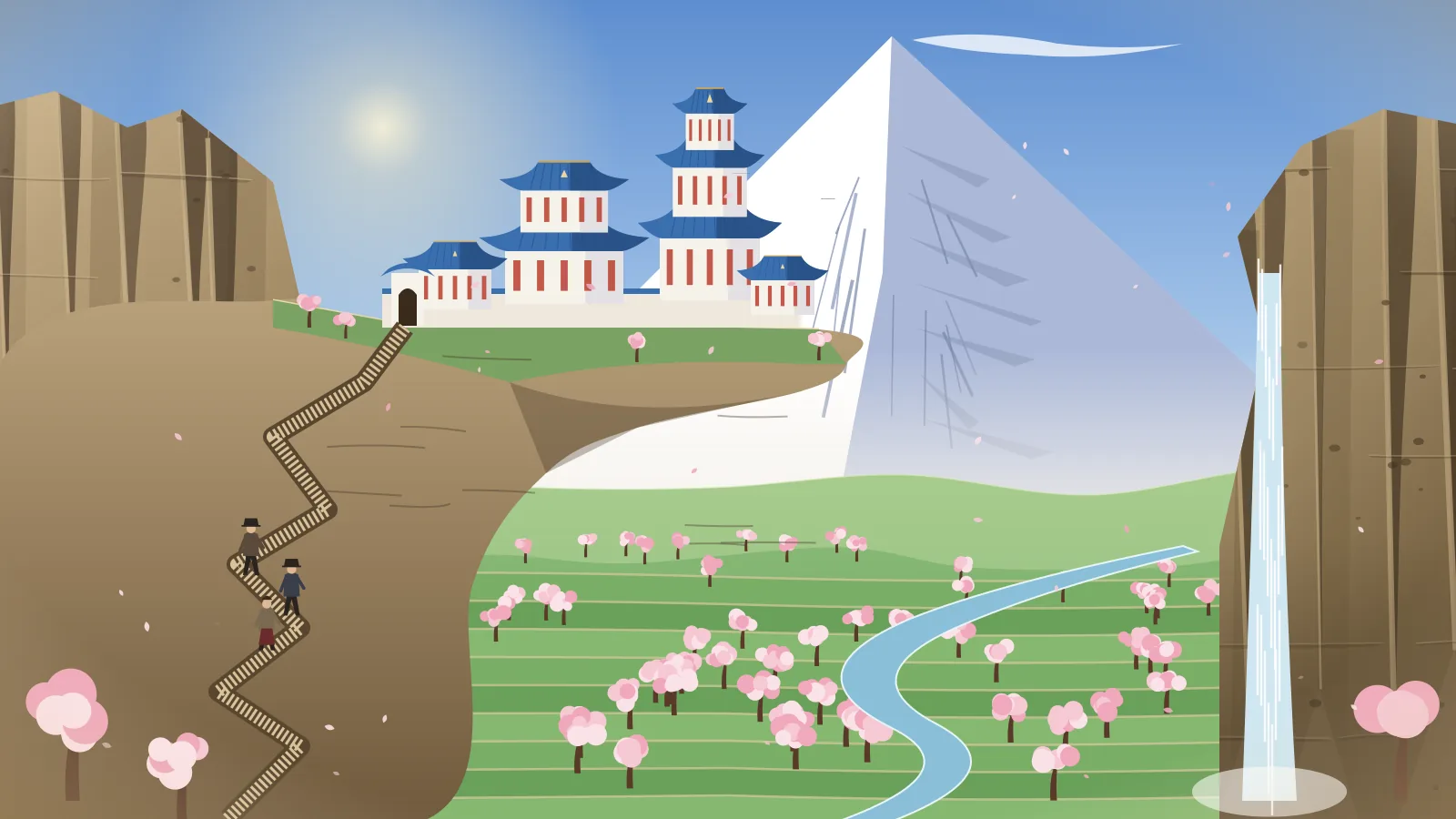
In 1933 the English novelist James Hilton published Lost Horizon. In it, a plane is hijacked and comes down in the mountains of Tibet. The survivors are led to a lamasery in a hidden valley, beneath a great white peak, where people age very slowly. Hilton called it Shangri-La.
In 1937 Frank Capra turned the novel into a Hollywood film. Two years later Lost Horizon became Pocket Book number one, the first of a cheap paperback line that changed American reading. President Franklin Roosevelt even named his mountain retreat in Maryland Shangri-La. Today it is called Camp David.
Shangri-La was fiction. Many readers linked it to Shambhala, but it was not the kingdom of the Kalachakra. And no evidence has ever been found that Shambhala existed as a physical kingdom.
Shangri-La was fiction.
Nor do the Kalachakra texts describe an underground world or a lost civilisation. Those ideas grew up much later, in the West.
Chapter VIIwatch from 8:57
The Palace of Sand
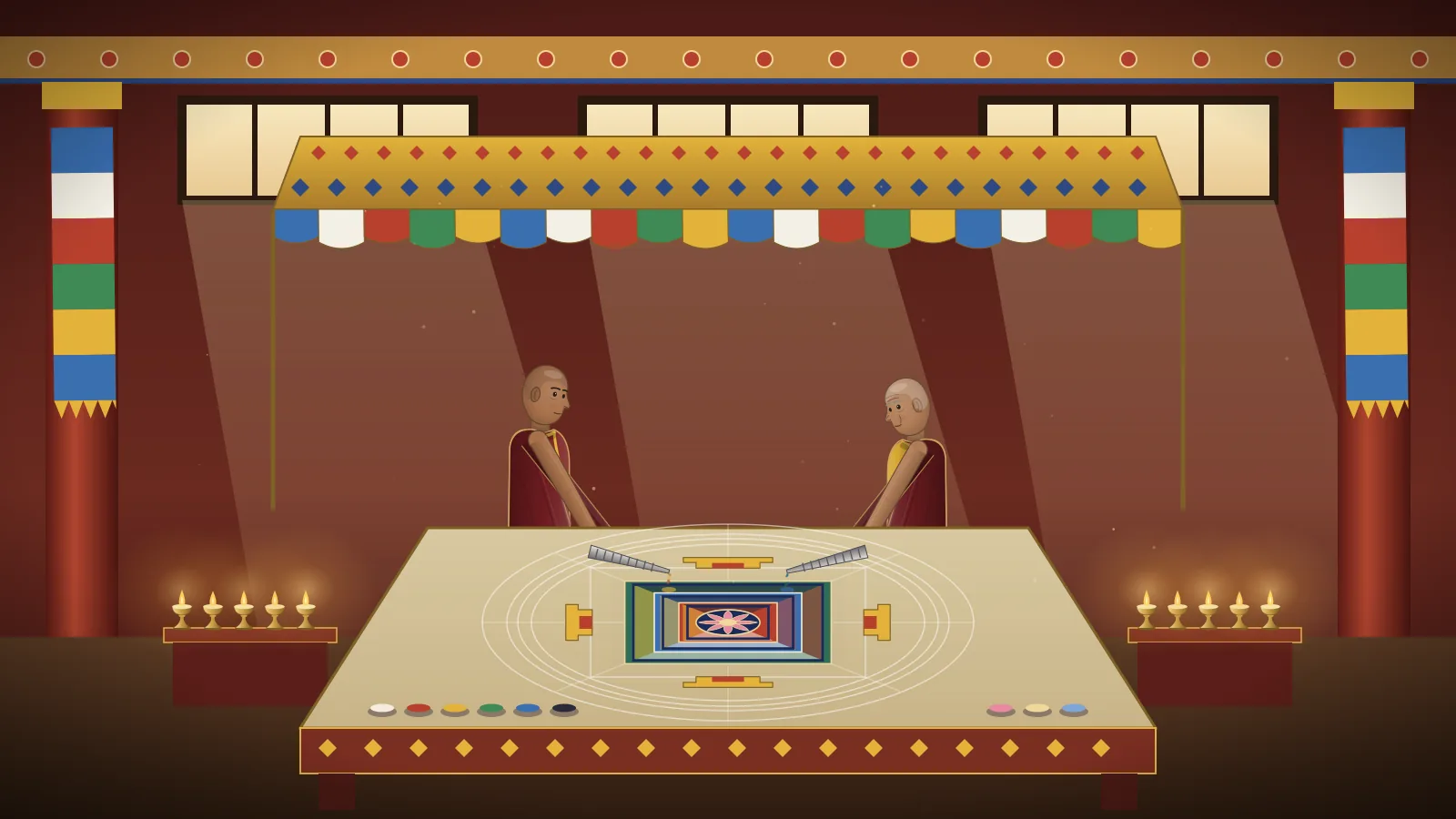
For Tibetan Buddhists, Shambhala lives on in practice. For the Kalachakra initiation, monks build the palace of the Wheel of Time in coloured sand, grain by grain, the same palace that Suchandra, the story goes, once raised in precious materials.
The Dalai Lama has given this initiation more than 30 times since 1954, sometimes to more than 100,000 people. In 1985 he called Shambhala “not a physical place that we can actually find”, but a pure land in the human realm, open to those with the right merit and connection.
In 1985 he called Shambhala “not a physical place that we can actually find”.
Some teachers speak of a hidden land, some of a pure land, others of a state of mind. Many Tibetans and Mongolians still recite prayers to be reborn there. In North America, the Tibetan teacher Chögyam Trungpa made Shambhala the name of a meditation path, and of his vision of an enlightened society. His book Shambhala: The Sacred Path of the Warrior appeared in 1984.
When the initiation is over, the mandala is swept away, and its sand is poured into flowing water.
Cacella went looking for Shambhala on the map, from a monastery in the hills of Bhutan. Many Tibetan teachers would say the road begins much closer, within the traveller. It remains a lotus of snow mountains that no explorer ever reached, and that many still hope to find.