The story of the film
Romanian villages, Habsburg Serbia, Transylvania and Whitby · Ovid's Rome to 2004
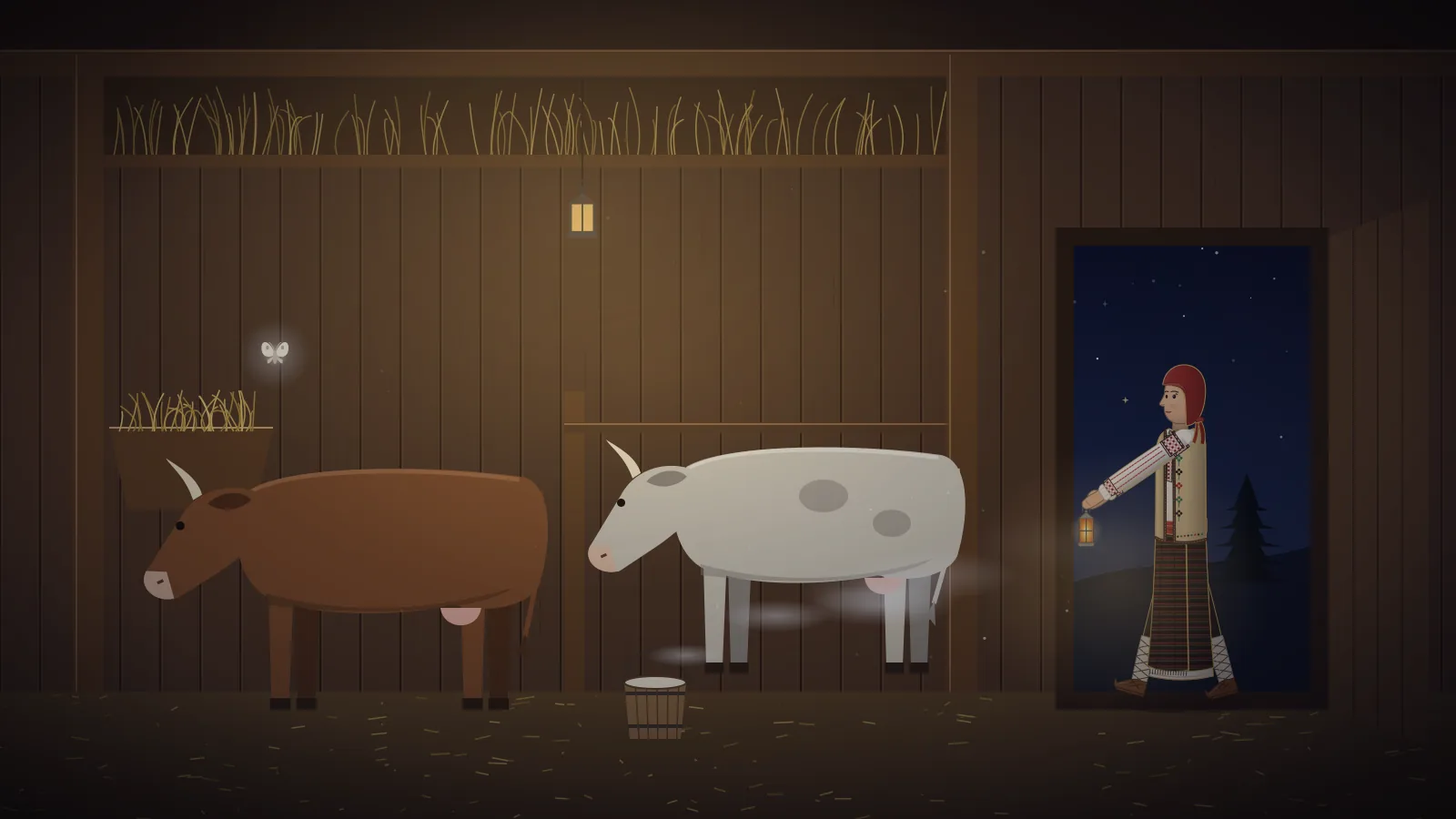
On a cold November evening, about a hundred years ago, in a village in the hills of Romania, the doors were shut early and the lamps were lit. In one house a woman broke open a head of garlic and rubbed it on the window frame in the shape of a cross. Then she did the same on the door, and on the horns of the cow.
It was the eve of Saint Andrew, the night of 29 November. That night, people said, the strigoi would walk.
Chapter Iwatch from 0:36
The Screeching Bird
The word is very old. The Romans spoke of the strix, a screeching bird of the night, believed to come to sleeping babies and attack them. Ovid himself was not sure whether such birds were born that way or were old women changed by spells.
In his poem the Fasti, Ovid told how these birds came to the cradle of a baby boy named Proca, only 5 days old. The nymph Cranaë kept them away. She set a branch of whitethorn at the small window of the room, and the birds stayed away.
In later Latin, a striga was a witch. In Romanian, with an ending that makes a word larger, it became strigoi.
Village life was rarely written down. Most of what we know comes from folklorists of the 19th and early 20th centuries, among them the priest Simion Florea Marian and, later, Agnes Murgoci, who sat with villagers and recorded what they heard. They found a belief that changed from valley to valley, in its names, its signs and its remedies. But it always had two sides.
But it always had two sides.
Chapter IIwatch from 1:28
The Living Strigoi
The first were the strigoi vii, the living strigoi. They were not creatures from far away, but ordinary men and women, often neighbours, thought to be marked from birth. A baby born with a caul, or with a small tail, or the seventh child of the same sex in one family, might grow up to be one.
At night, it was said, the living strigoi lay fast asleep, while the soul slipped out of the body, in the shape of a moth, a cat or a dog. In some accounts it left the house by the chimney.
What they stole was rarely blood. They took the milk of other people’s cows, the richness of their fields, the strength of their families. In a world that lived from its cattle and its harvest, few losses mattered more.
On certain nights they met at crossroads and fought one another, the stories said, with the wooden tools used to break hemp. Careful housewives hid theirs.
Careful housewives hid theirs.
Chapter IIIwatch from 2:16
Those Who Did Not Rest
The second were the strigoi morți, the dead strigoi: people who did not rest in the grave. A living strigoi became one after death. So might someone who died unbaptised, or under a curse, or a body over which a cat had jumped.
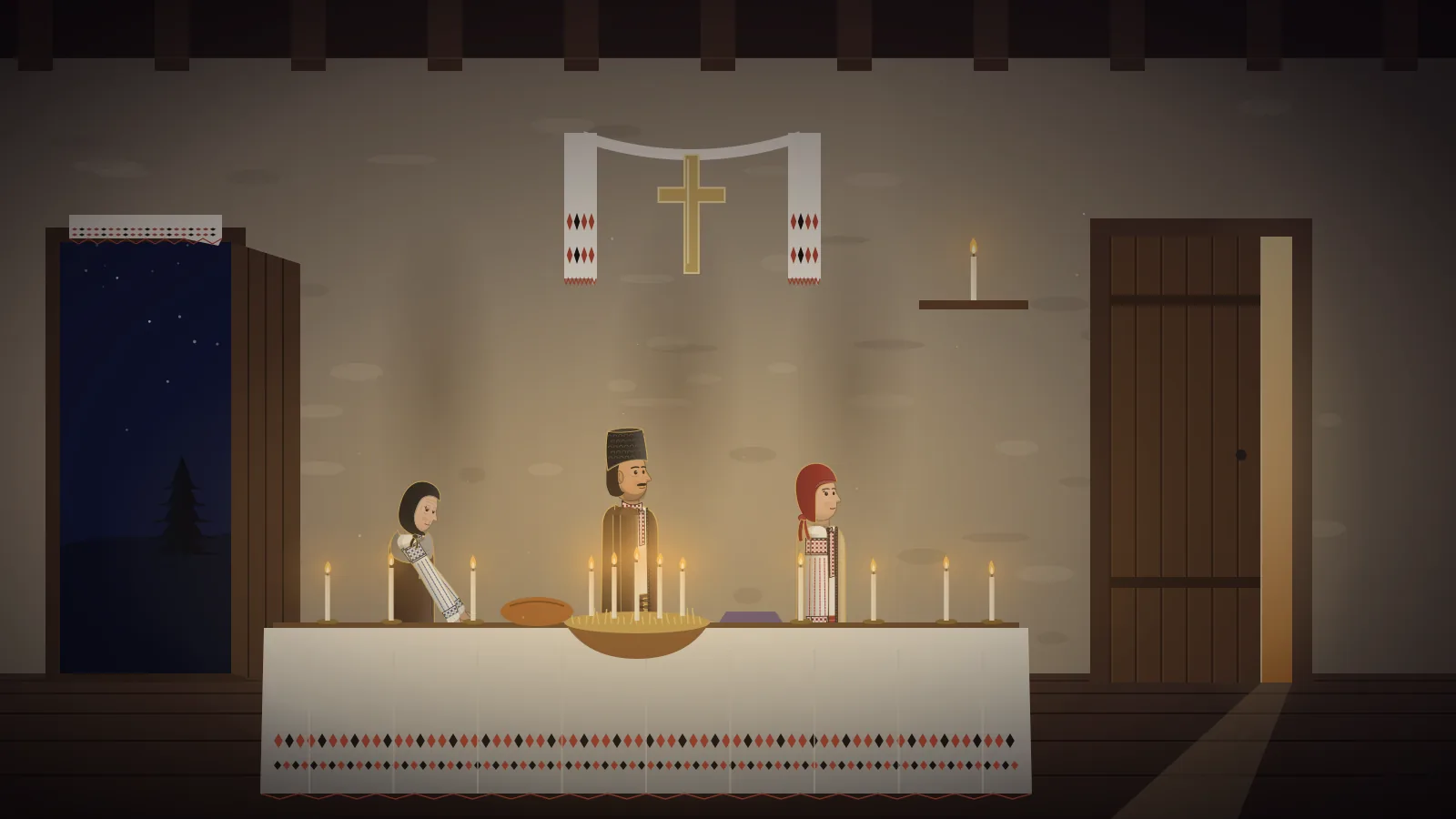
So the dead were never left alone before burial. Through the night, family and neighbours sat beside the body by candlelight, and kept the cats away.
So the dead were never left alone before burial.
A dead strigoi, people said, came back to its own house, and drained the life of its relatives first, then of their animals. When illness passed through a family, one death after another, neighbours began to wonder which of the recent dead had not stayed at rest.
There was also the moroi, and here too the valleys disagreed. In some regions it was the spirit of an unbaptised child; in others it was simply another name for the dead strigoi.
Chapter IVwatch from 3:20
The Guarding of the Garlic
Against all of them, the great protection was garlic. Strigoi, it was said, could not bear it. On Saint Andrew’s Eve, and again on Saint George’s Eve in April, families rubbed garlic on windows, doors and cattle. They shut the windows tight, and stopped up the chimney and the keyhole.
In some villages it was told that a voice might call at the window in the dark, asking whether the people inside had eaten garlic. Whoever answered would be struck dumb, so the wise kept silent.
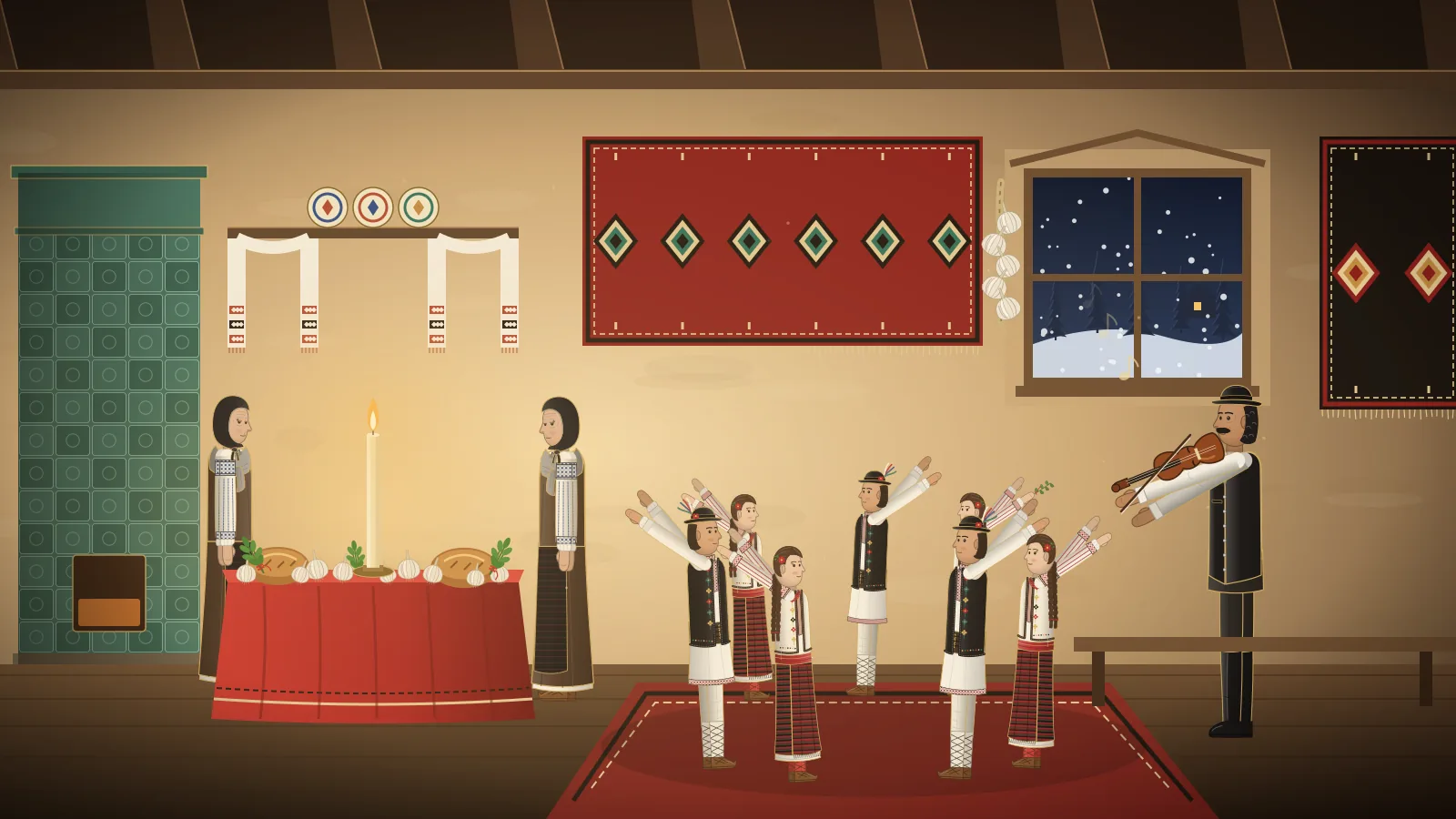
Yet Saint Andrew’s Eve was not only a night of fear. In some regions, young people gathered at a girl’s house for the guarding of the garlic. Each girl brought bread, 3 heads of garlic, and a sprig of basil tied with red thread. They lay together on a table under a red cloth, beside a candle that burned until morning.
Yet Saint Andrew’s Eve was not only a night of fear.
Two old women guarded the table all night, while young men arrived with musicians, and everyone danced. At dawn they danced a hora, the great round dance, out in the yard. The garlic was kept all year, as a remedy for people and for sick cattle.
Chapter Vwatch from 4:34
Reports from Serbia
Fears of the returning dead were shared across south-eastern Europe, under many names. In the 1720s, they reached the desks of officials in Vienna. In 1718, by the Treaty of Passarowitz, the Habsburg Empire had taken northern Serbia from the Ottomans.
In 1725, in a village called Kisolova, 9 people died within 8 days, each after an illness of a single day. The villagers blamed a man buried some weeks before, and opened his grave. An imperial official, Ernst Frombald, was there. The villagers, he wrote, were beside themselves with fear, and he asked not to be blamed for what they did. His report was printed in a Vienna newspaper, the Wienerisches Diarium, on 21 July 1725. Historians count it among the first appearances in print of the word vampire.
The villagers, he wrote, were beside themselves with fear.
Around 1726, at Medveđa, on the West Morava river, a former soldier named Arnold Paole fell from a hay wagon and broke his neck. In life he had often said that a vampire had troubled him near a place called Gossowa, perhaps in Kosovo, and that he had freed himself of it with earth from its grave. Within a month of his death, 4 people said he had come to them at night. All 4 died. About 40 days after the burial, the villagers opened his grave.
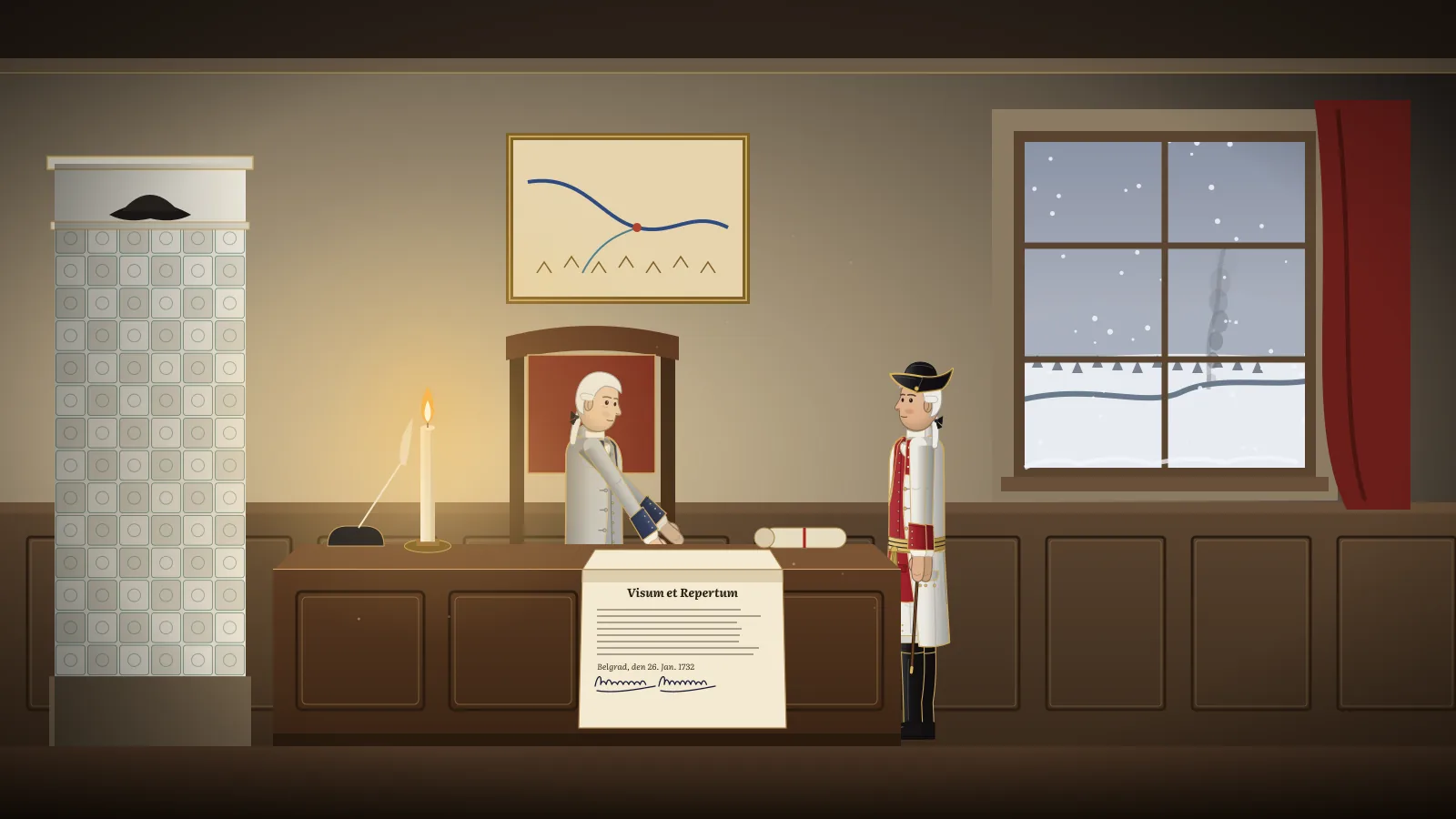
In the winter of 1731, people began to die in Medveđa again: 13 in 6 weeks. On 7 January 1732, an army surgeon, Johann Flückinger, had 17 graves opened. His report, dated 26 January and signed in Belgrade by 5 officers, described 12 of the bodies as undecayed. The remains were burned, and the ashes thrown into the river.
Printed and reprinted, the report caused a sensation. Soon vampires were argued over in newspapers, books and universities across Western Europe.
Much later, the American scholar Paul Barber argued that many signs villagers read in an opened grave were simply the natural changes that follow death. And when a disease struck a household, it could easily look like the work of the first to die.
Chapter VIwatch from 6:54
The Making of Dracula
In the 1880s, a Scottish writer, Emily Gerard, lived in Transylvania, where her husband, an officer in the Austro-Hungarian army, was stationed at Hermannstadt and Kronstadt, today Sibiu and Brașov. In 1885 she published an essay, Transylvanian Superstitions. Every Romanian peasant, she wrote, believed in the vampire, or nosferatu, as firmly as in heaven or hell. The word is not standard Romanian, and where it came from is still uncertain.
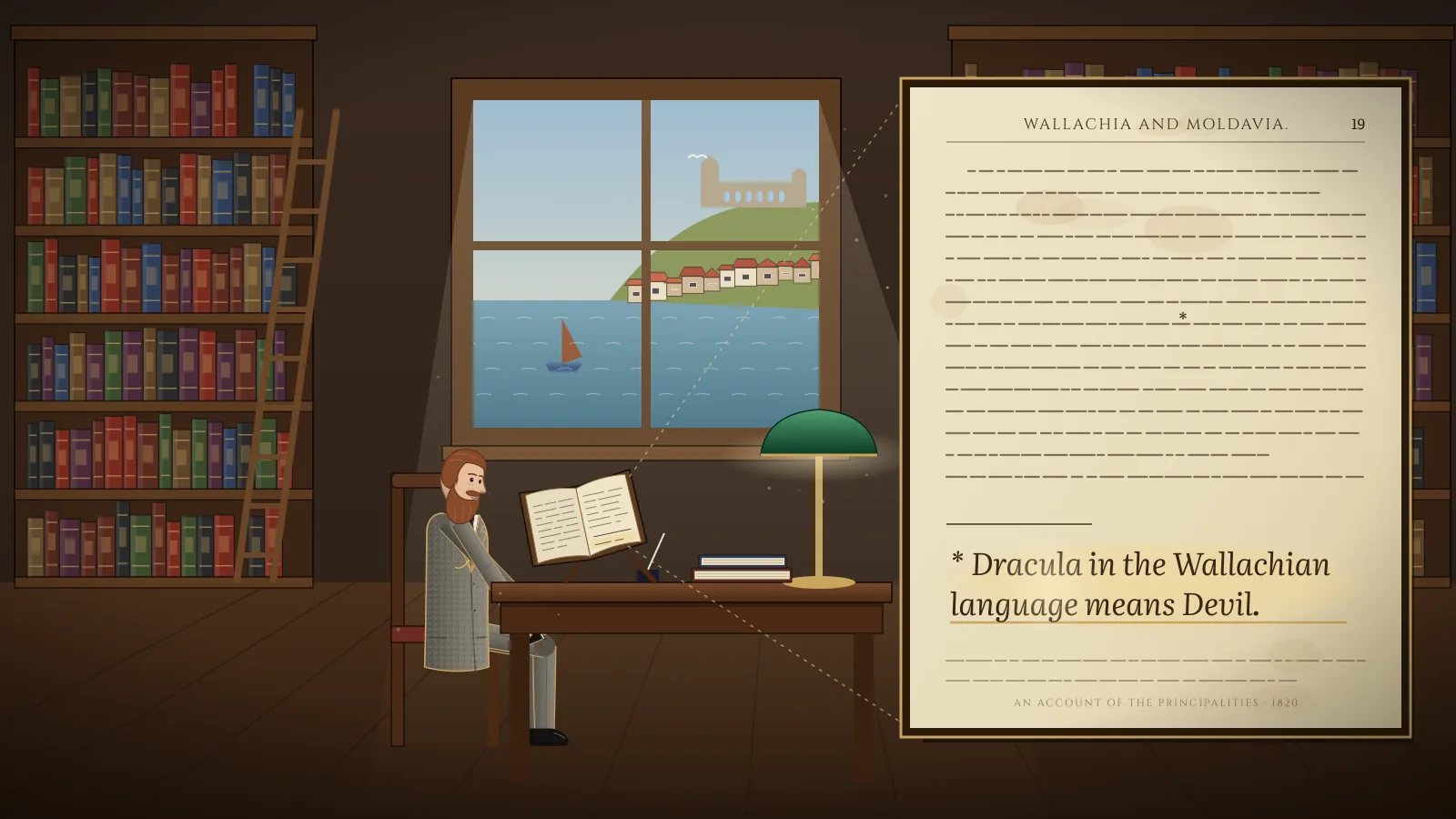
In the summer of 1890, an Irish theatre manager on holiday in Whitby, on the Yorkshire coast of England, asked the town’s subscription library for a rare book by William Wilkinson about Wallachia and Moldavia. His name was Bram Stoker. In a footnote he found a name, and copied it into his notes: Dracula, in the Wallachian language, means devil.
His early notes called the villain Count Wampyr, and set the story in Styria, in Austria. He read Gerard and other travel writers, and moved it to Transylvania. He never went there himself.
He never went there himself.
Dracula appeared in 1897: a nobleman in a castle who drank blood and cast no reflection. He was very different from the village strigoi, who were neighbours and kin.
In the novel, daylight weakens the Count, but does not destroy him. That idea came later, from the film Nosferatu, in 1922.
Chapter VIIwatch from 8:18
The Prince and the Golden Cup
The name had belonged to a real prince. Vlad III, born around 1431, ruled Wallachia 3 times: in 1448, from 1456 to 1462, and in 1476. His father was called Dracul, the dragon, after the Order of the Dragon to which he belonged, and Dracula meant the son of Dracul.
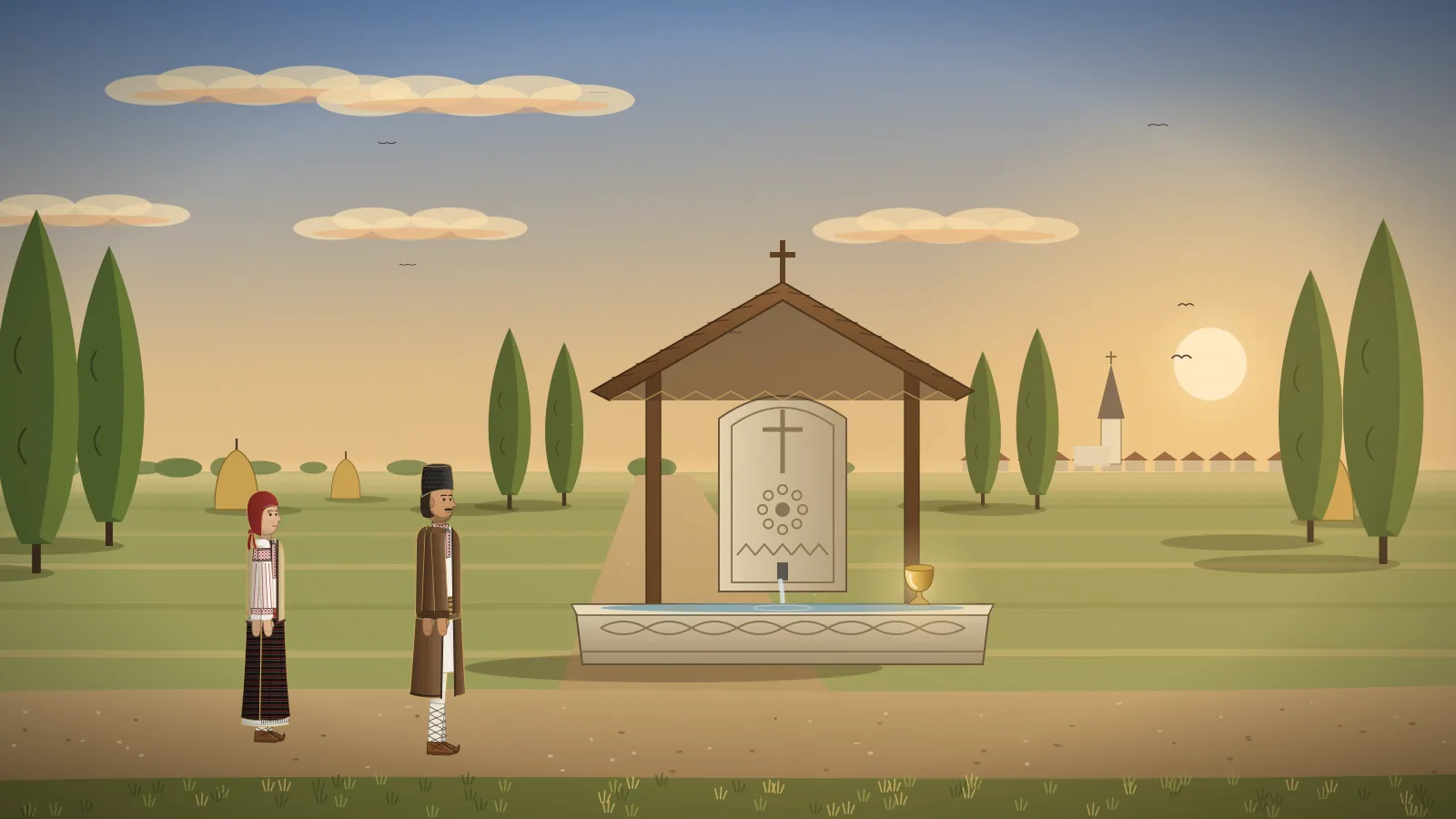
Vlad was feared for his cruel punishments, and remembered for his wars against the Ottomans. Romanian tradition says that in his day a golden cup could be left at a fountain, and no one dared to steal it. He was remembered as harsh, even just, but never as a strigoi.
He was remembered as harsh, even just, but never as a strigoi.
Today, crowds visit Bran Castle in Transylvania, sold as Dracula’s castle, though it has little real link to Vlad.
The old fear has not quite gone. In 2004, in a village in southern Romania, relatives opened a grave, fearing a dead man. Six of them were convicted. But in many villages, what lives on is gentler: garlic on the windows, young people singing late, a candle burning until dawn.
2,000 years ago, a branch of whitethorn kept the night birds from a baby’s window. On Saint Andrew’s Eve, in Romania, there is still garlic.