The story of the film
Roman Egypt, the Islamic world, Spain, Paris, Basel, Cambridge and CERN · c. 300 CE – 2025
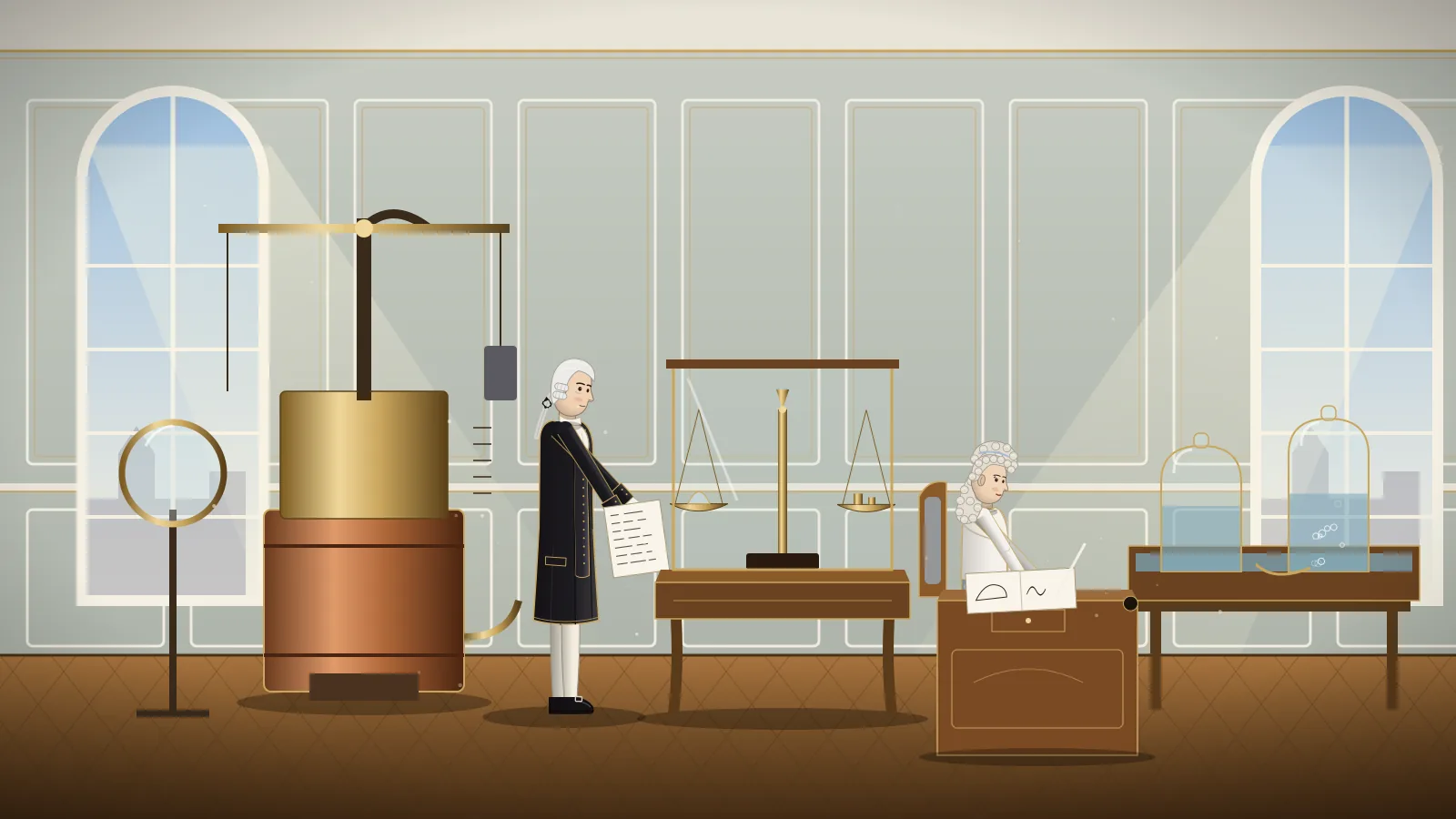
In July 1936, in an auction room at Sotheby’s in London, a mass of old papers went under the hammer. They were the private writings of Sir Isaac Newton, hundreds of lots in his own hand, and they were scattered among dozens of buyers. One of those buyers was the economist John Maynard Keynes.
When Keynes looked closely at what he had bought, he found page after page of recipes, strange symbols and secret names. The greatest scientist of his age, the man of gravity and the laws of motion, had also been an alchemist. To understand why, the story has to go back almost 1,700 years.
Chapter Iwatch from 0:39
The Workshops of the Nile
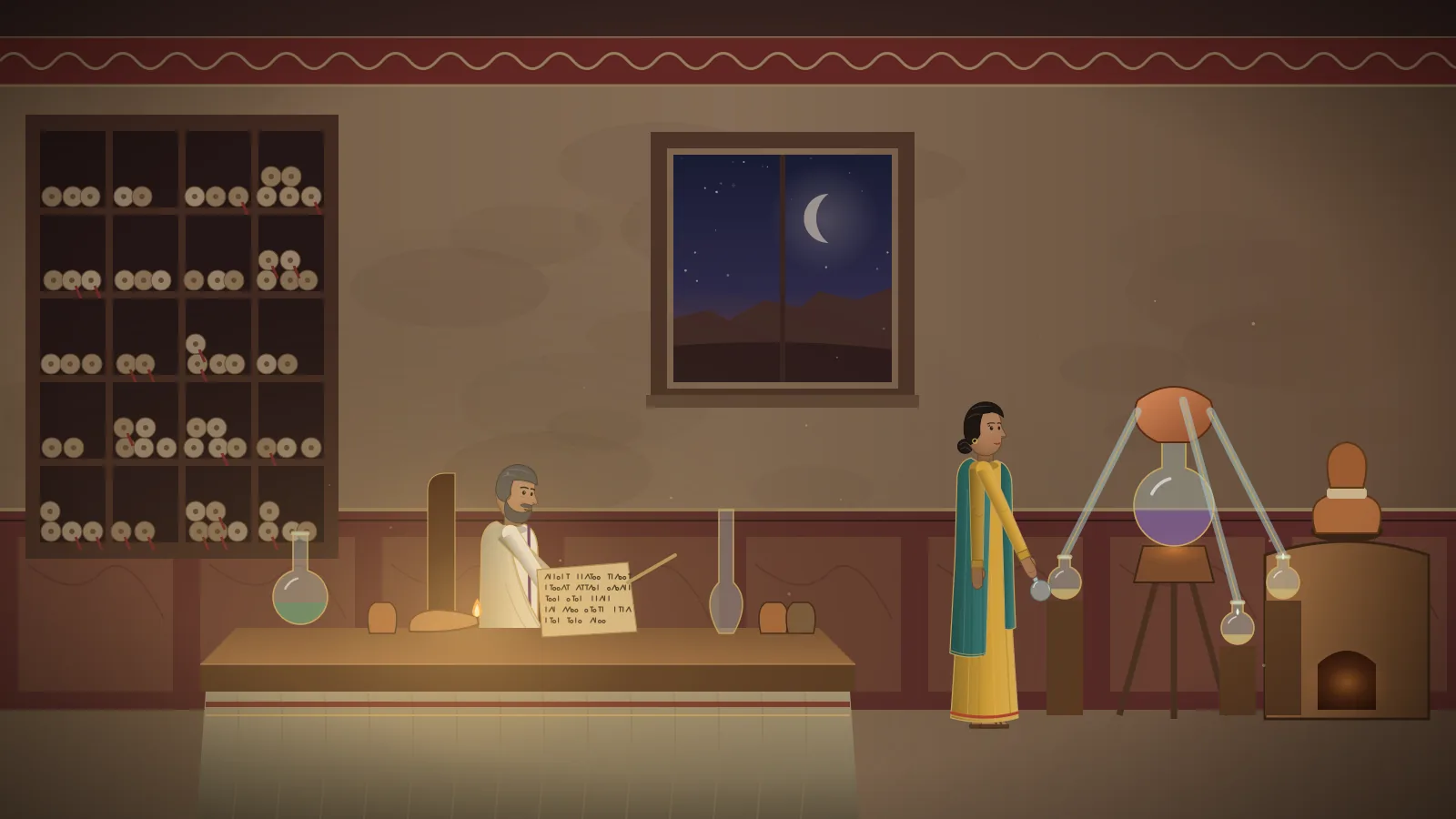
The story began in Roman Egypt, in workshops of metal, dye and fire. Craftsmen there knew how to colour cloth, how to tint metals and how to make cheap materials shine like precious ones. A papyrus book found at Thebes, written in Greek, holds more than 100 of their recipes: how to dye cloth purple, how to write in gold, and how to make metals that looked like silver and gold.
Around 300 CE, a man named Zosimos, from the town of Panopolis, wrote some of the oldest surviving books on alchemy. He addressed them to a woman named Theosebeia, and in them he described furnaces, glass vessels and stills. Some of these he credited to an earlier sage, Mary the Jewess. Her name lives on in the kitchen: a gentle water bath is still called a bain-marie, Mary’s bath, though the name came centuries later.
For Zosimos, the work was more than chemistry.
For Zosimos, the work was more than chemistry. He wrote of dreams and visions, and he saw the changing of metals as a purification of the spirit. The fire in the furnace and the change in the vessel were, for him, signs of something happening in the soul.
According to a Byzantine encyclopaedia written centuries later, the emperor Diocletian had Egypt’s books on making gold and silver burned, so that Egypt could not grow rich enough to rebel. No order of his on the matter survives, but the story shows how much power people believed those books held.
Chapter IIwatch from 1:58
The Arabic Name
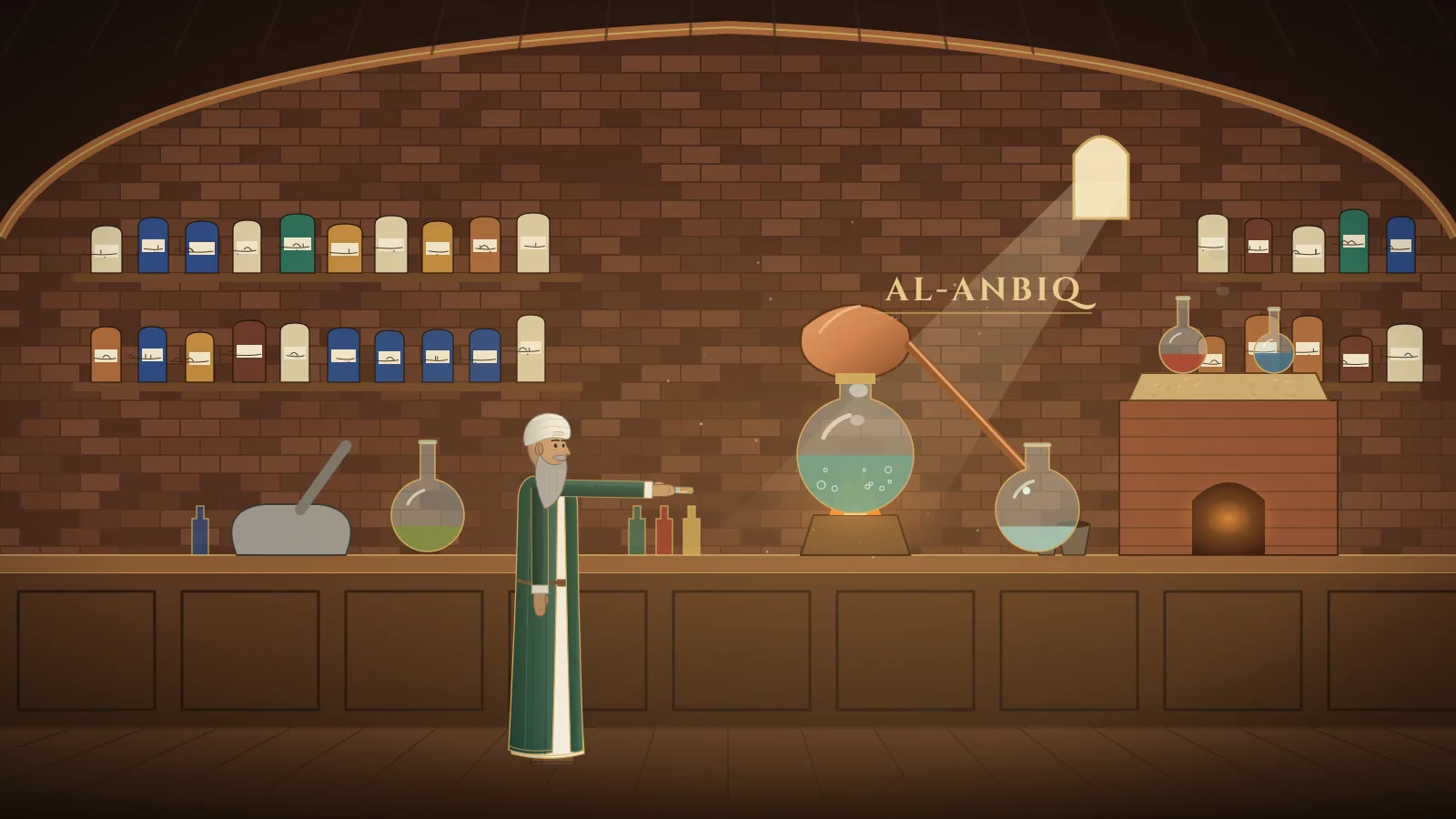
But the Greek books survived. From the 8th century onwards they were translated and studied in the Islamic world, and the art took an Arabic name: al-kimiya.
Hundreds of works bore the name of Jabir ibn Hayyan, who is said to have lived in Kufa in the 8th century. Many scholars think that several authors wrote them, over the next two centuries. These books taught that every metal is made of two principles, sulphur and mercury. In gold the two are perfectly balanced. A lesser metal, then, might be corrected, as a sick body is healed, by a medicine called al-iksir: the elixir.
Alchemy, elixir, alembic: all three words reached Europe through Arabic.
Around 900, the Persian physician Abu Bakr al-Razi described his substances and his tools with remarkable clarity: furnaces, crucibles, flasks, and a still called al-anbiq. In English it is still called an alembic. Alchemy, elixir, alembic: all three words reached Europe through Arabic.
Not everyone believed. The philosopher Ibn Sina, known in Europe as Avicenna, argued that alchemists could make metals look like gold, but could never truly change one into another. His argument would become the classic authority for every later attack on alchemy.
Far to the east, Chinese alchemists were seeking something else: elixirs of long life. One Daoist text warns of a mixture of saltpetre, sulphur and honey that burst into flames. It is an early record of gunpowder.
Chapter IIIwatch from 3:33
The Philosophers' Stone
In February 1144, an English scholar working in Spain, Robert of Chester, finished translating an Arabic book on alchemy into Latin. “Your Latin world,” says a preface that comes with it, “does not yet know what alchemy is.”
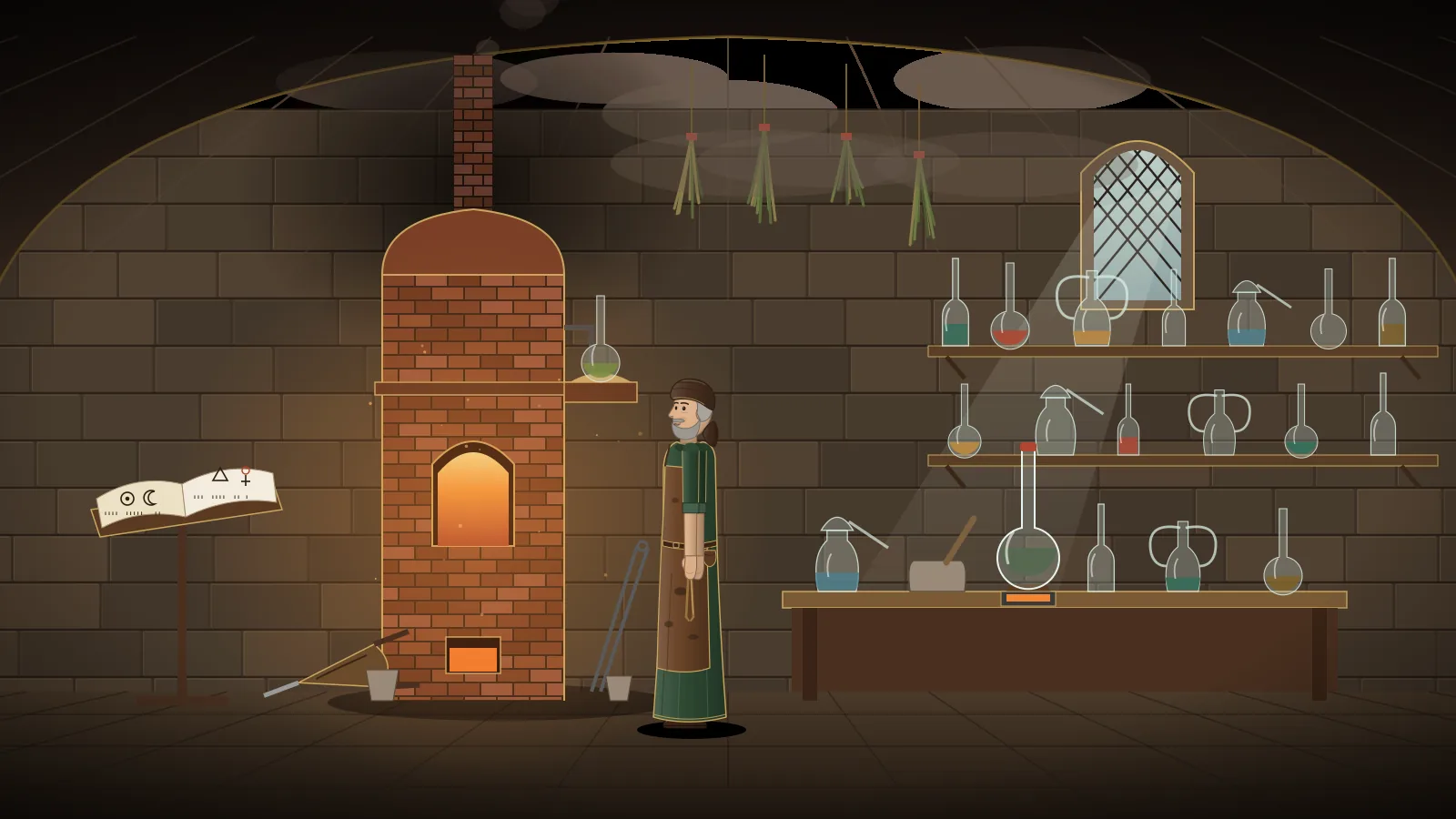
Soon it did. Alchemy spread across Europe, to monasteries, universities and princely courts, and its great goal had a name: the philosophers’ stone. It was often imagined as a heavy red powder. A tiny pinch, cast onto molten lead or mercury, would, it was said, turn it into gold. Some believed it could also heal the body and lengthen life.
The recipes were hidden in code.
The recipes were hidden in code. Writers painted kings and queens, green lions, dragons, and the wedding of the Sun and the Moon, each image standing for a stage of the work. Only those who held the key could read them.
But where there is gold, there is fraud. Swindlers sold false recipes and passed off brassy alloys as gold. In 1317 Pope John XXII condemned alchemists who made false gold and silver, and in 1404 England made the multiplying of gold and silver a felony.
Chapter IVwatch from 5:00
The Scribe of Paris
In Paris, in those years, lived the man whose name would become the most famous in alchemy: Nicolas Flamel.
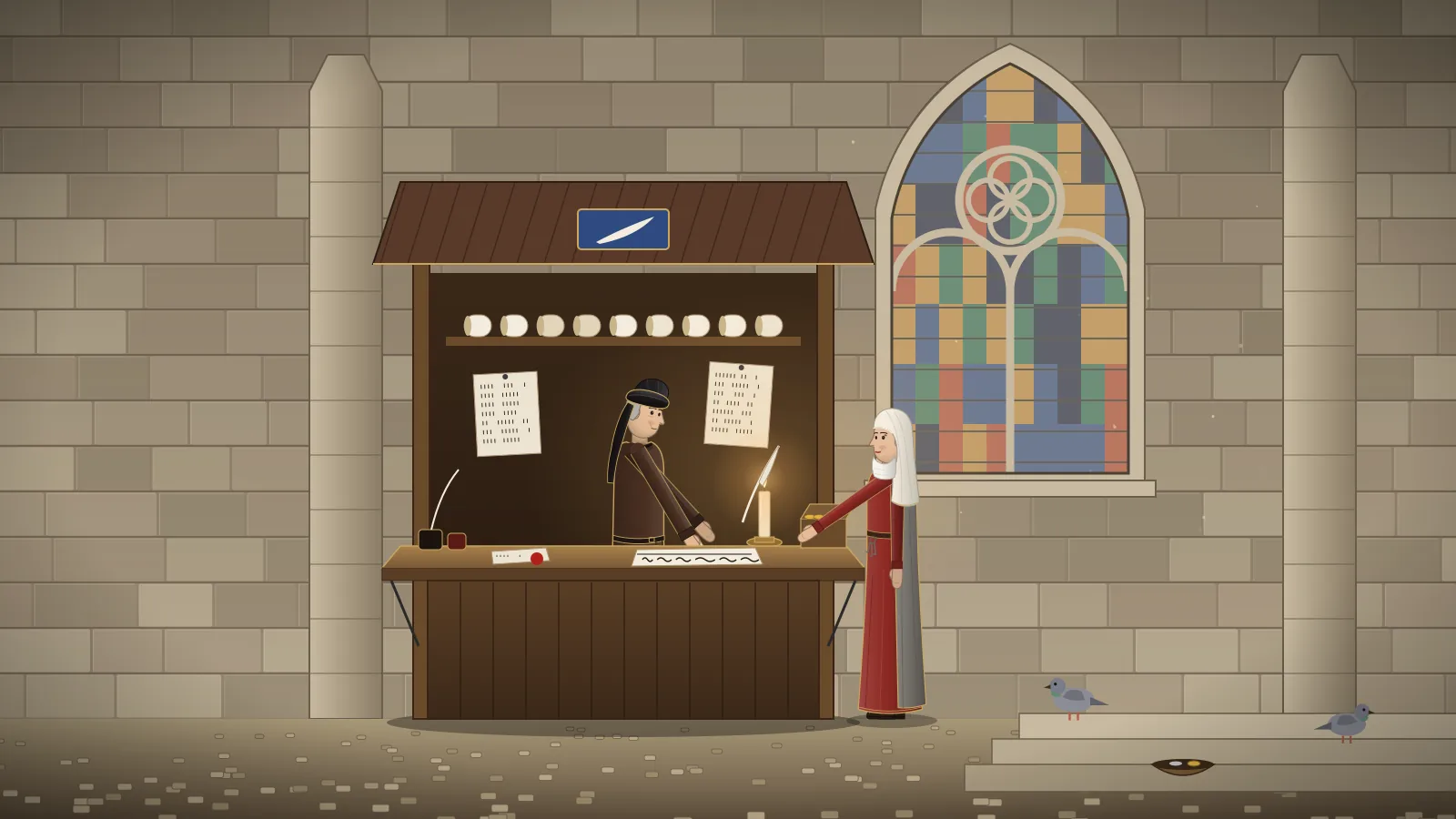
The real Flamel was a public scribe, who wrote out letters and contracts for those who needed them. He married a wealthy widow, Pernelle, bought houses, and gave to churches and the poor. He died in 1418. A house he built in 1407 still stands in the Rue de Montmorency, and his carved tombstone is kept in the Musée de Cluny.
Then, almost 200 years after his death, in 1612, a book appeared claiming to be his own account. In it, Flamel buys an ancient book of Abraham the Jew for 2 florins, travels to Spain to learn its meaning, and in 1382 turns mercury into silver, and then into gold.
His wealth came from property, not a stone.
Later stories said that the couple never died at all. Yet historians have found no evidence that the real Flamel practised alchemy. His wealth came from property, not a stone.
Chapter Vwatch from 6:12
Medicines and Measurements
In June 1527, in Basel, the usual account goes, the new city physician threw a book into the students’ Midsummer bonfire. It was Avicenna’s Canon of Medicine, the great medical textbook of the age. The physician called himself Paracelsus. He lectured in German instead of Latin, quarrelled with the faculty, and within a year had left Basel.
For Paracelsus, the purpose of alchemy was not gold. “For me such is not the aim,” he wrote, “but to consider only what virtue and power may lie in medicines.” He taught that all things are built from three principles, salt, sulphur and mercury, and his followers made new medicines from minerals.
For Paracelsus, the purpose of alchemy was not gold.
In the 1600s, alchemy and chemistry were still one field. Historians today give it the old spelling: chymistry. Robert Boyle measured, weighed and tested, and in 1661 his book The Sceptical Chymist attacked the old ideas of the elements.
Yet Boyle, often called a founder of modern chemistry, sought the philosophers’ stone all his life. According to Newton, Boyle even had England’s old law against making gold repealed.
Chapter VIwatch from 7:33
The Garden Laboratory
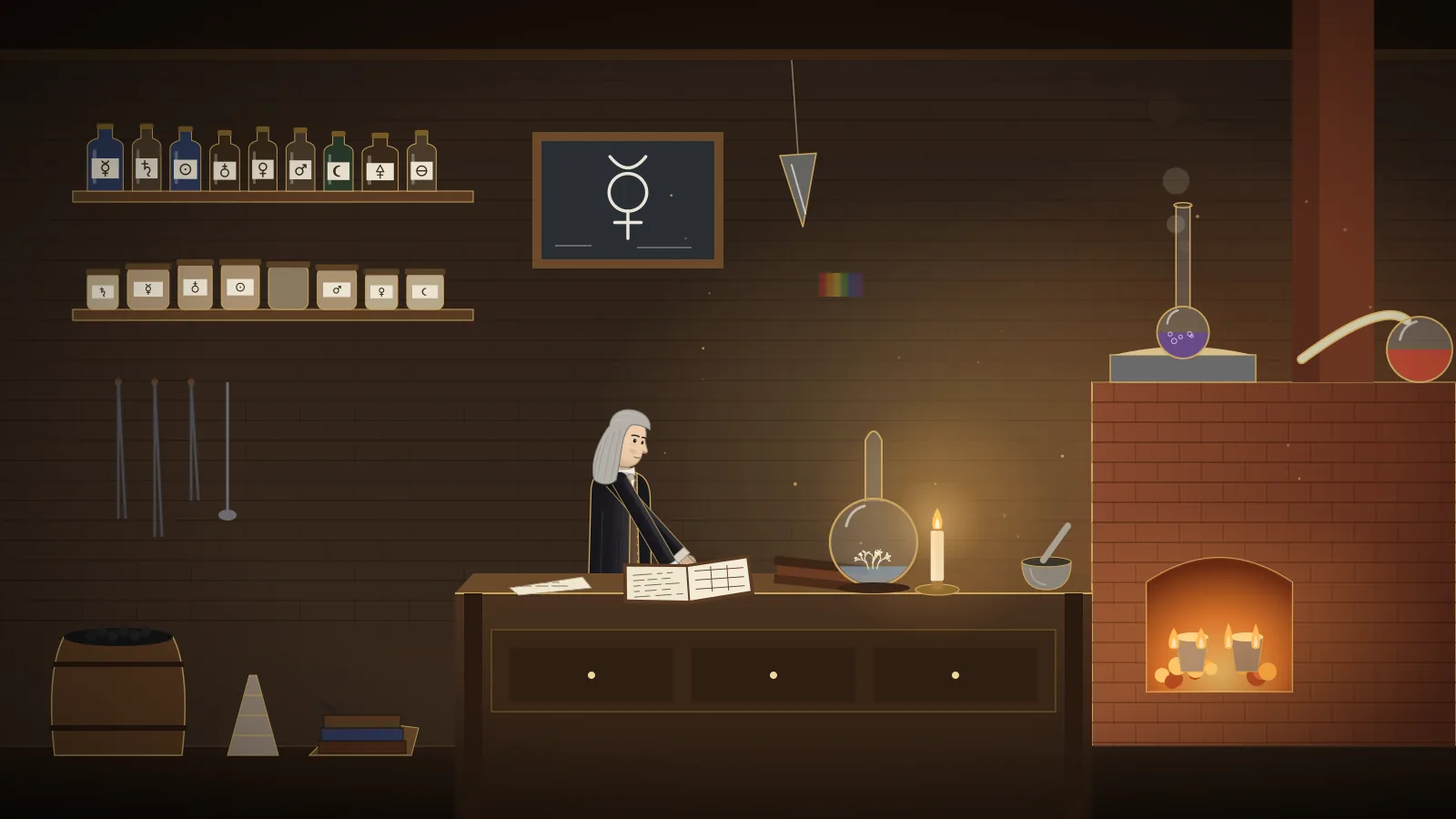
And Newton? At Trinity College, Cambridge, he kept a laboratory in the garden below his rooms. There, over some 30 years, he heated, distilled and recorded hundreds of experiments, in the same decades in which he worked out his laws of motion and gravity.
He wrote and copied about a million words on alchemy. He even had a secret name, Jeova sanctus unus, made from the letters of his own name in Latin. He published none of it. Alchemists guarded their secrets, and Newton guarded his closely.
He was the last of the magicians.
Keynes gathered many of the scattered papers and left them to Cambridge. In an essay read after his death, in 1946, he wrote: “Newton was not the first of the age of reason. He was the last of the magicians.”
Many historians now disagree. In laboratory and study alike, they argue, Newton was the same patient experimenter, asking the same question: how is matter made?
Chapter VIIwatch from 8:44
Elements and Atoms
The great change came in Paris. Antoine Lavoisier, working with his wife Marie-Anne, weighed substances before and after they changed, and showed that matter is neither created nor lost. In 1789 he listed 33 simple substances that no analysis had yet broken down. Gold was one. Lead was another.
If gold was an element, chemistry could not make it from anything else. The search for the stone passed out of science and into the world of spirit and symbol. Some later writers claimed that alchemy had always been purely spiritual. The laboratory notebooks say otherwise. And no one, by any chemical means, ever turned lead into gold.
Yet the dream came true, in a way no alchemist imagined.
Yet the dream came true, in a way no alchemist imagined. In 2025, physicists at CERN reported that some lead nuclei, racing past each other in the Large Hadron Collider, had lost 3 protons and become gold. Over several years they had made about 29 trillionths of a gram, and each atom lasted only a tiny fraction of a second.
Today anyone can read Newton’s alchemical papers online, page by page. The notebooks once sold off in a London auction room now belong to the history of science. Lead can become gold after all. It takes the heart of the atom, not a philosophers’ stone.