The story of the film
Nola, Naples and the Kingdom of Naples, then Piedmont, Milan, the Spielberg, Ravenna, Paris, Modena, Savona and Marseille · 1806–1861
On the night of 1 July 1820, in the little town of Nola, east of Naples, two young cavalry officers quietly roused their men. Their names were Michele Morelli and Giuseppe Silvati. Before dawn, with a troop of cavalry and a priest named Luigi Minichini, they rode out of the barracks and took the road into the hills, toward Avellino.
Many of them shared the same secret. They were sworn members of a society called the Carbonari, a name that means “charcoal burners”. Within a few days, this small ride would force a king to give his people a constitution.
Chapter Iwatch from 0:52
Napoleon’s Naples
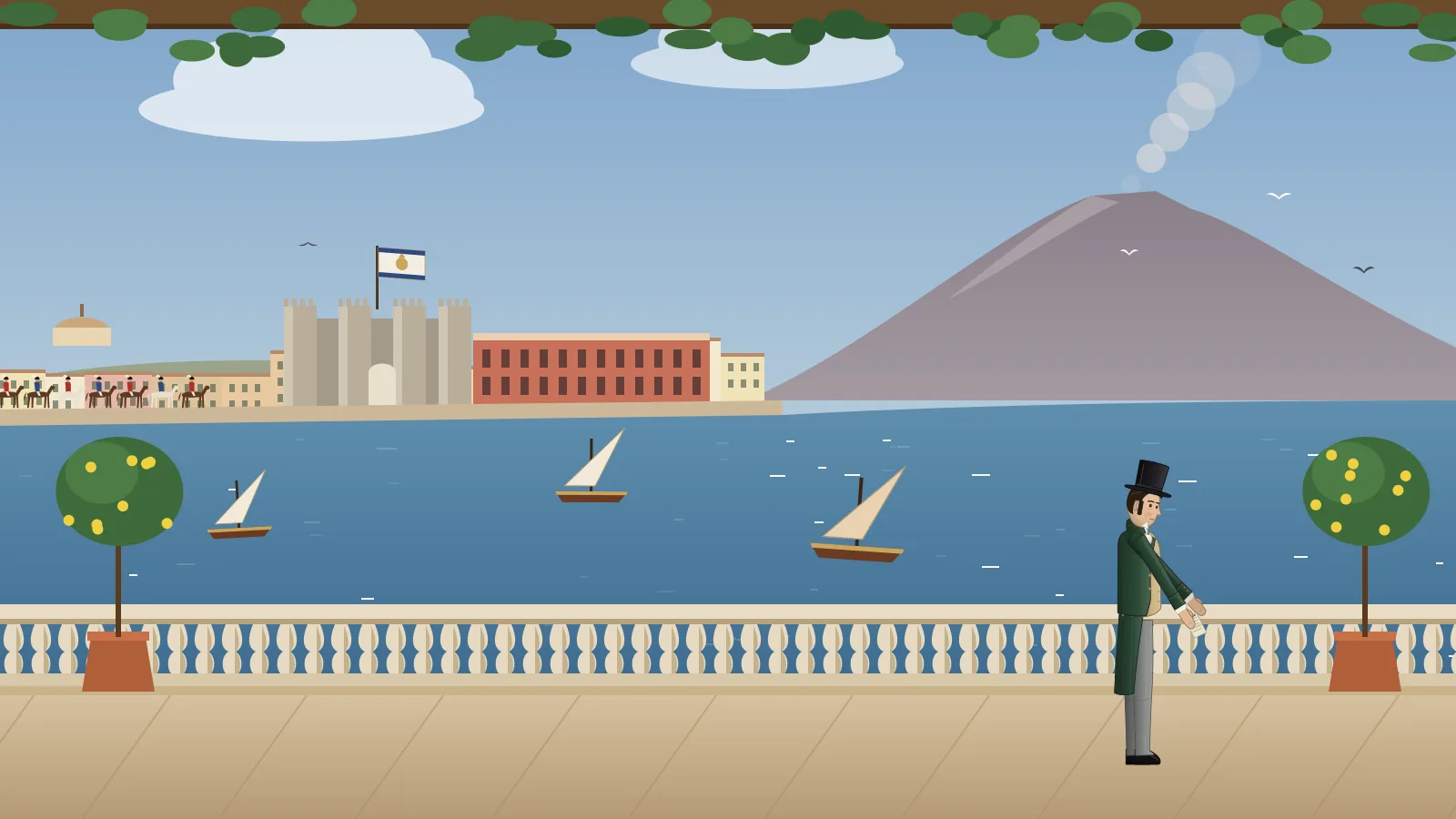
To understand that night, we must go back 14 years. In 1806 Napoleon’s armies took the Kingdom of Naples, the whole south of the Italian peninsula, and drove its Bourbon king to Sicily.
Napoleon made his brother Joseph king of Naples, and later his brother-in-law, the dashing cavalry general Joachim Murat. With them came French laws, French officials and French ideas.
In those years, the Carbonari appeared in the south. Most historians think the society grew out of Freemasonry, adapted to Italian life, and carried with it the liberal ideas of the French Revolution.
The Carbonari themselves told a grander story. Their documents claimed descent from the charcoal burners of medieval France, who worked in the forests under the protection of King Francis I. Historians regard this as legend.
Chapter IIwatch from 1:53
The Good Cousins
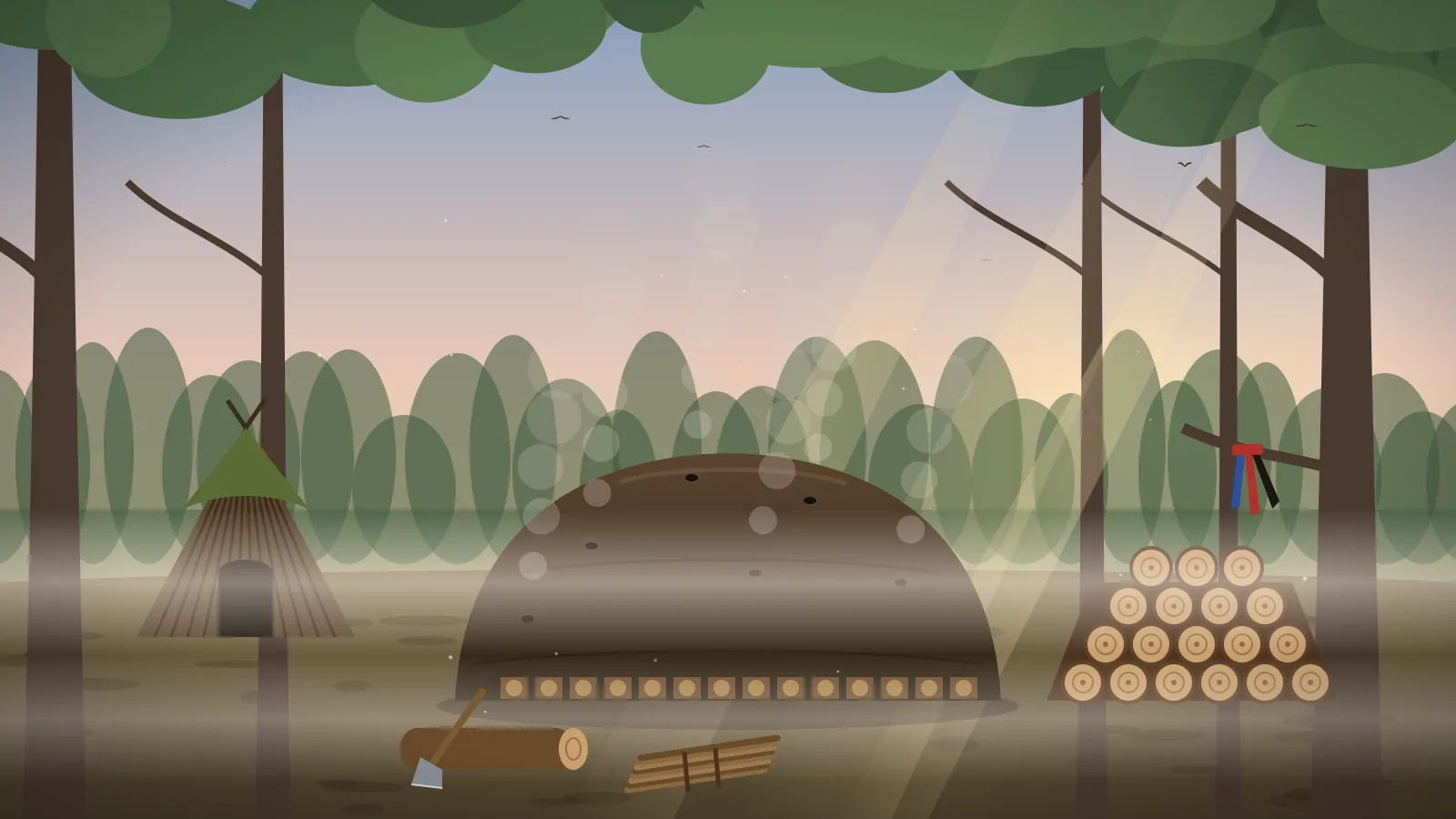
Their language, though, came from a real trade. In the mountain forests of the south, charcoal burners stacked wood into great mounds, covered them with earth, and let them smoulder slowly. For the society, the burning mound was a picture of the soul: wood purified by fire, as a man is cleansed of vice, and a people of tyranny.
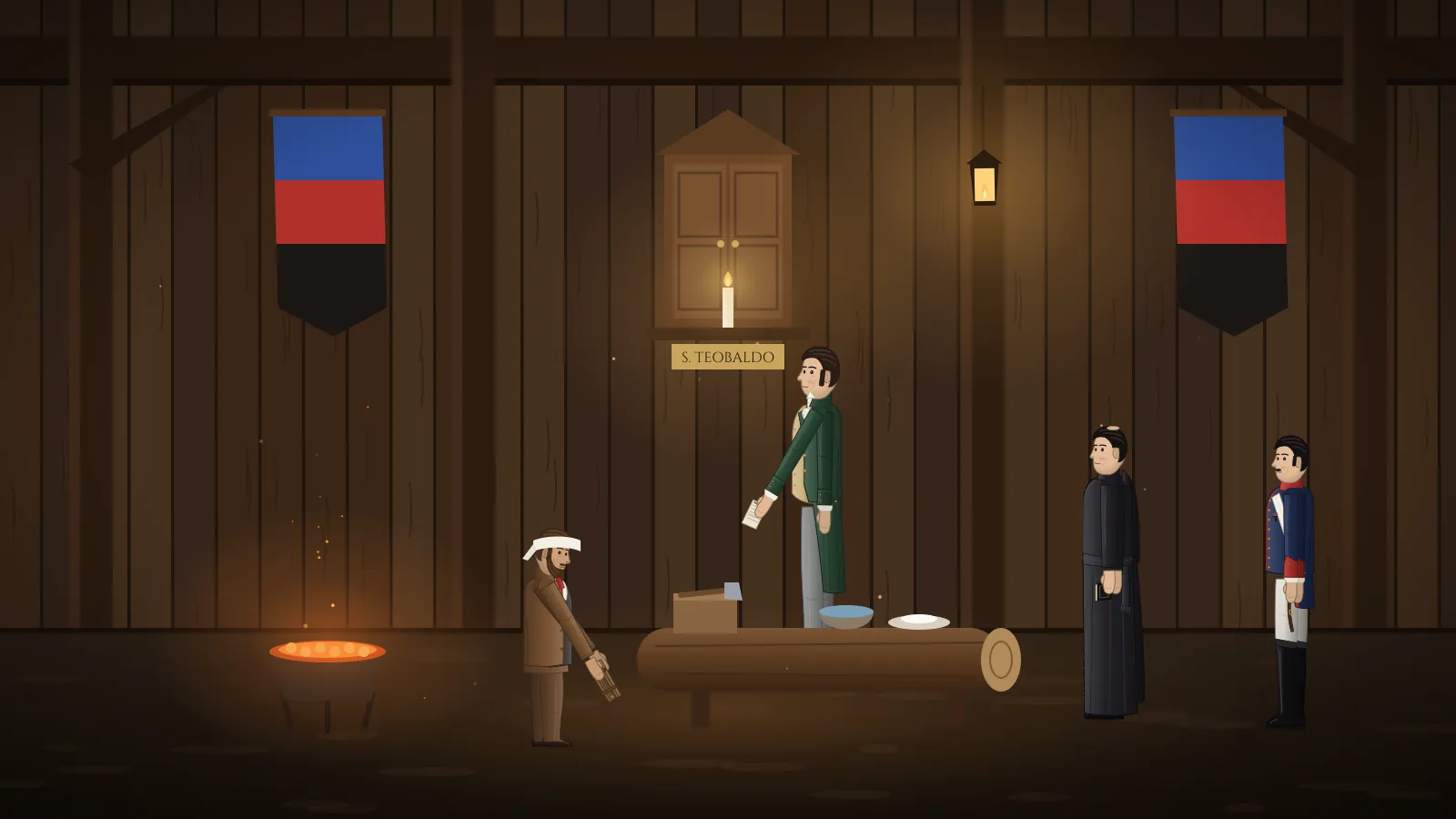
Each local cell was a vendita, a “sale”, and it met in a baracca, a hut. Members called one another buoni cugini, good cousins. Everyone outside the society was one of the pagani, the pagans.
A newcomer swore an oath of secrecy, on pain of severe penalties. He entered as an apprentice, and could become a master after at least six months. According to one account, apprentices wore a little bundle of sticks in the buttonhole, and masters a small hatchet. Each grade had its own secret signs of recognition. The rites used Christian symbols, and the cousins honoured Saint Theobald, a medieval hermit, as the patron of charcoal burners.
Very few members ever burned charcoal.
Very few members ever burned charcoal. They were army officers, lawyers, landowners, priests and craftsmen: men who wanted written laws, and limits on the power of kings. Murat tolerated the society at first, then turned against it and hunted its leaders. In 1814, in Rome, the government of the pope banned membership of secret societies, the Carbonari among them.
Then Napoleon fell. In 1815 the Bourbon king Ferdinand returned to Naples, and Austria became the real master of the Italian peninsula. The cousins now turned against the restored king. By 1820, contemporaries spoke of hundreds of thousands of members in the Kingdom of Naples. Historians think such figures were exaggerated, but the society was everywhere, even in the army.
Chapter IIIwatch from 4:01
God, the King, and the Constitution
In the spring of 1820, news came from Spain: rebel soldiers had forced their king to restore a liberal constitution. In Naples, the good cousins read the papers, and made their plans.
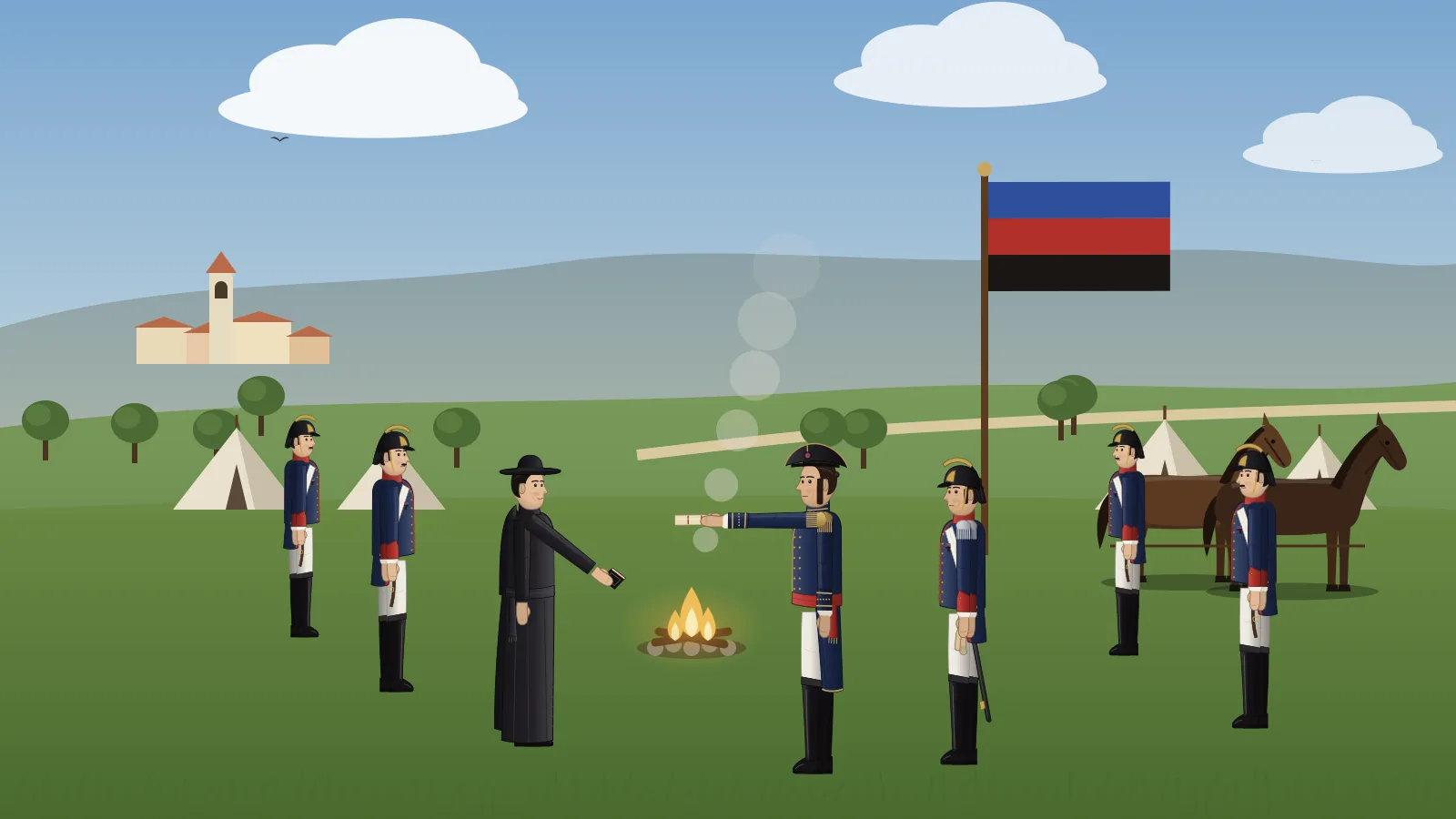
Then came the ride out of Nola. At Monteforte, on the road to Avellino, the rebels raised their flag, and their cry went up: “God, the King, and the Constitution.” Troops sent against them wavered, and many joined them.
General Guglielmo Pepe, a soldier close to the Carbonari, took command of the movement. Within days, King Ferdinand agreed to a constitution, modelled on the Spanish one of 1812. The troops marched into Naples through cheering crowds, wearing the society’s colours: blue, red and black.
On 13 July, in his royal chapel, the king laid his hand on the Gospels and swore to uphold the new constitution. That autumn an elected parliament met in Naples, and many of its deputies were Carbonari. For a few months, the good cousins had won.
Chapter IVwatch from 5:15
The King’s Secret
But the king had already written in secret to Austria. That winter he travelled to a congress of the great powers at Laibach, and there he asked them to restore his old authority.
An Austrian army marched south. On 7 March 1821, near Rieti, it routed Pepe’s poorly trained forces, and later that month Austrian troops entered Naples. The constitution was torn up, and the society was hunted. Morelli and Silvati, the two officers who had ridden out of Nola, were tried and hanged in 1822. Pepe escaped into a long exile.
In Piedmont, in March 1821, officers led by Santorre di Santarosa won a constitution of their own. It lasted only a few weeks. In April, Austrian troops crushed that rising too.
The Church turned against the cousins as well. On 13 September 1821 Pope Pius VII condemned the Carbonari in a bull, Ecclesiam a Jesu Christo, and excommunicated its members.
Chapter Vwatch from 6:19
Prisoners and a Poet
In Austrian Milan, on 13 October 1820, the young writer Silvio Pellico was arrested as a Carbonaro. He was sentenced to death, but the sentence was changed to 15 years of hard prison.
He served most of it in the Spielberg, a grim fortress on a hill above Brno, in Moravia. His friend and fellow prisoner Piero Maroncelli lost a leg there. Pellico was freed in 1830, after ten years. His quiet memoir, My Prisons, published in 1832, moved readers all over Europe.
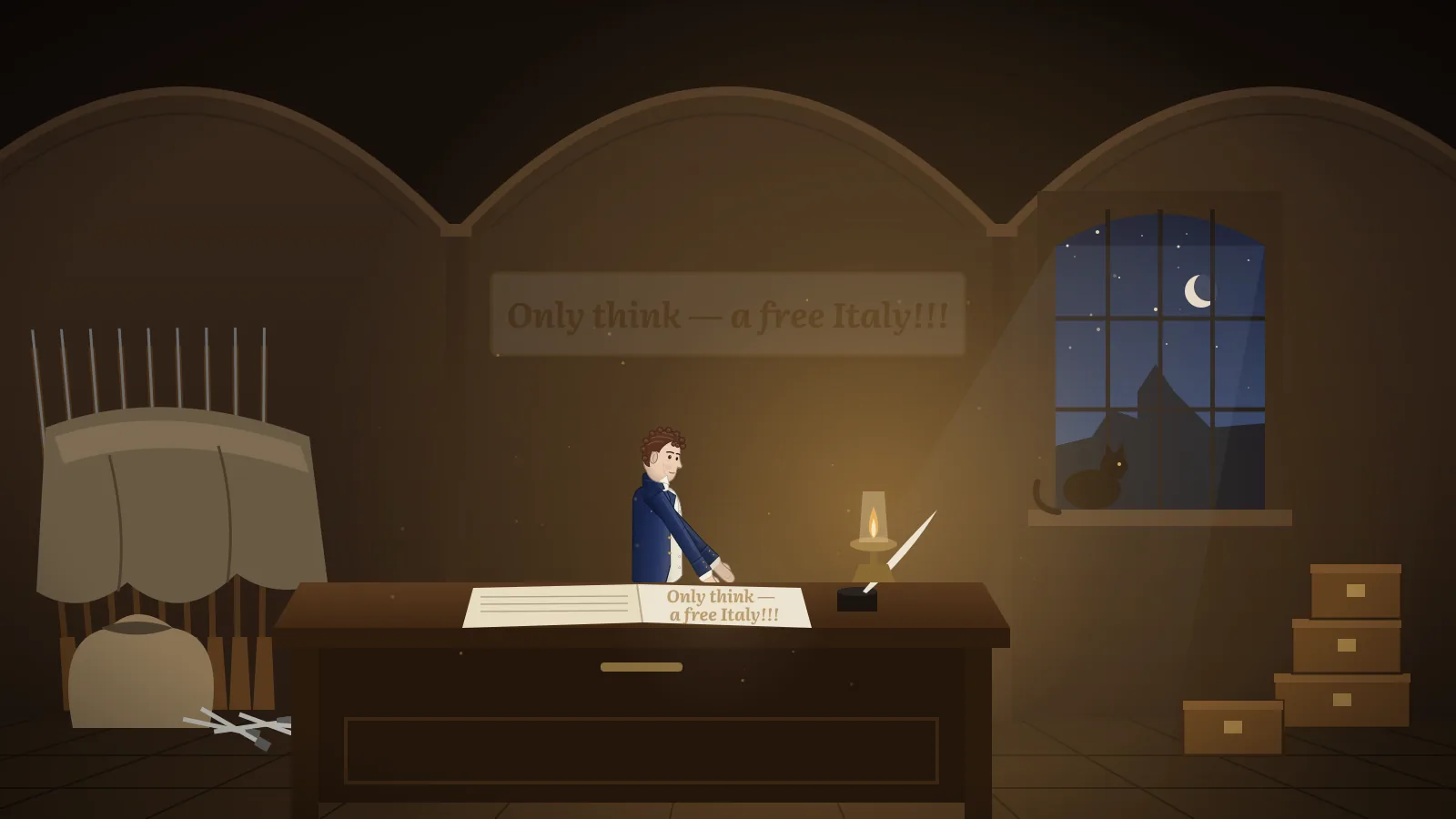
Meanwhile, in Ravenna, in the Papal States, lived a famous Englishman: the poet Lord Byron. Through the family of his companion, Teresa Guiccioli, he was drawn into the local Carbonari. In December 1820 the commander of the town’s troops was shot in the street, a short walk from Byron’s door. He was carried inside, and died in the poet’s house.
In February 1821 the cousins sent Byron a bag full of bayonets, some muskets, and hundreds of cartridges to hide. In his journal he wrote: “Only think, a free Italy!”
The Italians, Byron wrote, were always lost for lack of union among themselves.
Days later, the planned rising collapsed. The chiefs had been betrayed. The Italians, Byron wrote, were always lost for lack of union among themselves.
Chapter VIwatch from 7:53
Across the Alps
The idea crossed the Alps. In 1821 young men in Paris founded the French Charbonnerie, to plot against the Bourbon monarchy, and the aged Marquis de Lafayette lent it his support. Its members included officers, students and veterans of Napoleon’s armies.
Its plots failed one after another. Four young sergeants of the garrison at La Rochelle were arrested, and on 21 September 1822 they were executed in Paris. The Charbonnerie split and declined, though some of its members took part in the July Revolution of 1830.
Chapter VIIwatch from 8:24
The Last Wave
The last great wave came in 1831. In Modena, Ciro Menotti planned a rising, at first, it seems, with the encouragement of the duke himself, Francis IV. In early February the duke changed sides, and his troops surrounded Menotti’s house. Menotti was captured, and later executed. Risings in the Papal States were crushed with Austrian help.
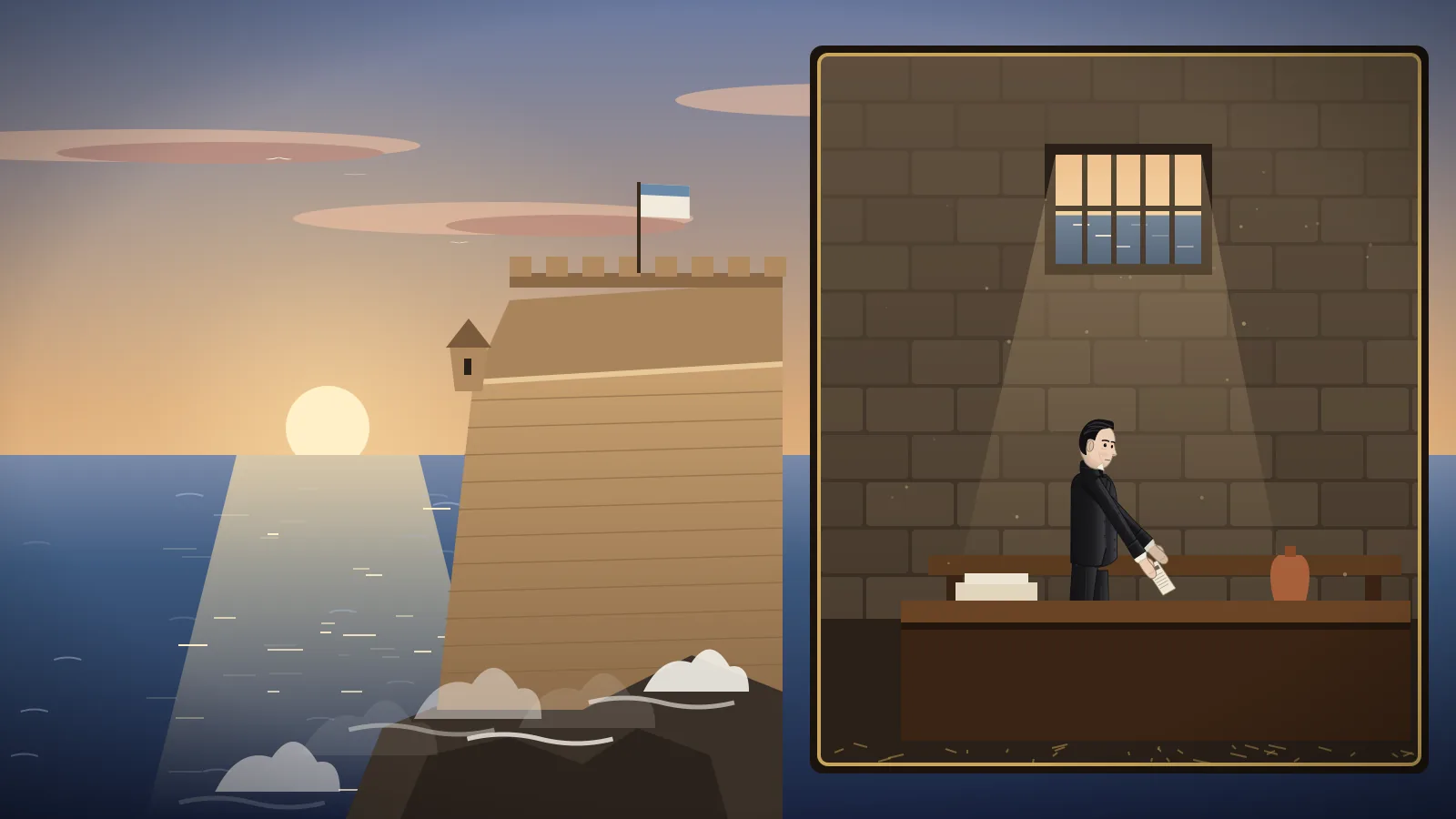
A young Genoese member, Giuseppe Mazzini, had been arrested in 1830 and held in the fortress of Savona, above the sea. There he thought hard about the failures. Small cells, secret oaths, divided aims, and plots the police always seemed to know about: this, he decided, could never free Italy.
In exile in Marseille, in 1831, he founded Young Italy, a movement that preached openly to the people. Many former Carbonari followed him.
Chapter VIIIwatch from 9:32
Fire Under the Earth
The old society faded. But its martyrs, its example and its dream of a constitution and a nation passed into the Risorgimento, the movement that founded the Kingdom of Italy in 1861.
Legends grew around the Carbonari. A document called the Alta Vendita, published in the nineteenth century, claimed to reveal their plan to take over the Catholic Church from within. Its authenticity is doubted, and historians do not accept it as evidence. The future emperor Napoleon III is often called a member. He did take part in the rising of 1831, but whether he ever formally joined is disputed.
Nor were the Carbonari one great hidden army. The records show a loose web of local cells with differing aims: some wanted a king bound by a constitution, others a republic. That is why their plots so often failed. Secrecy kept them alive, but it also kept them small, divided, and far from the people they hoped to free.
Picture again a charcoal mound in a mountain clearing at dawn: wood, earth, and a fire that burns slowly, out of sight. It was the image the good cousins chose for themselves. Their fire never became the blaze they hoped for. But its warmth reached the Italy that came after them.