The story of the film
Southern Iraq and Khuzestan in Iran, and new communities in Australia, Sweden and other countries · first centuries CE–today
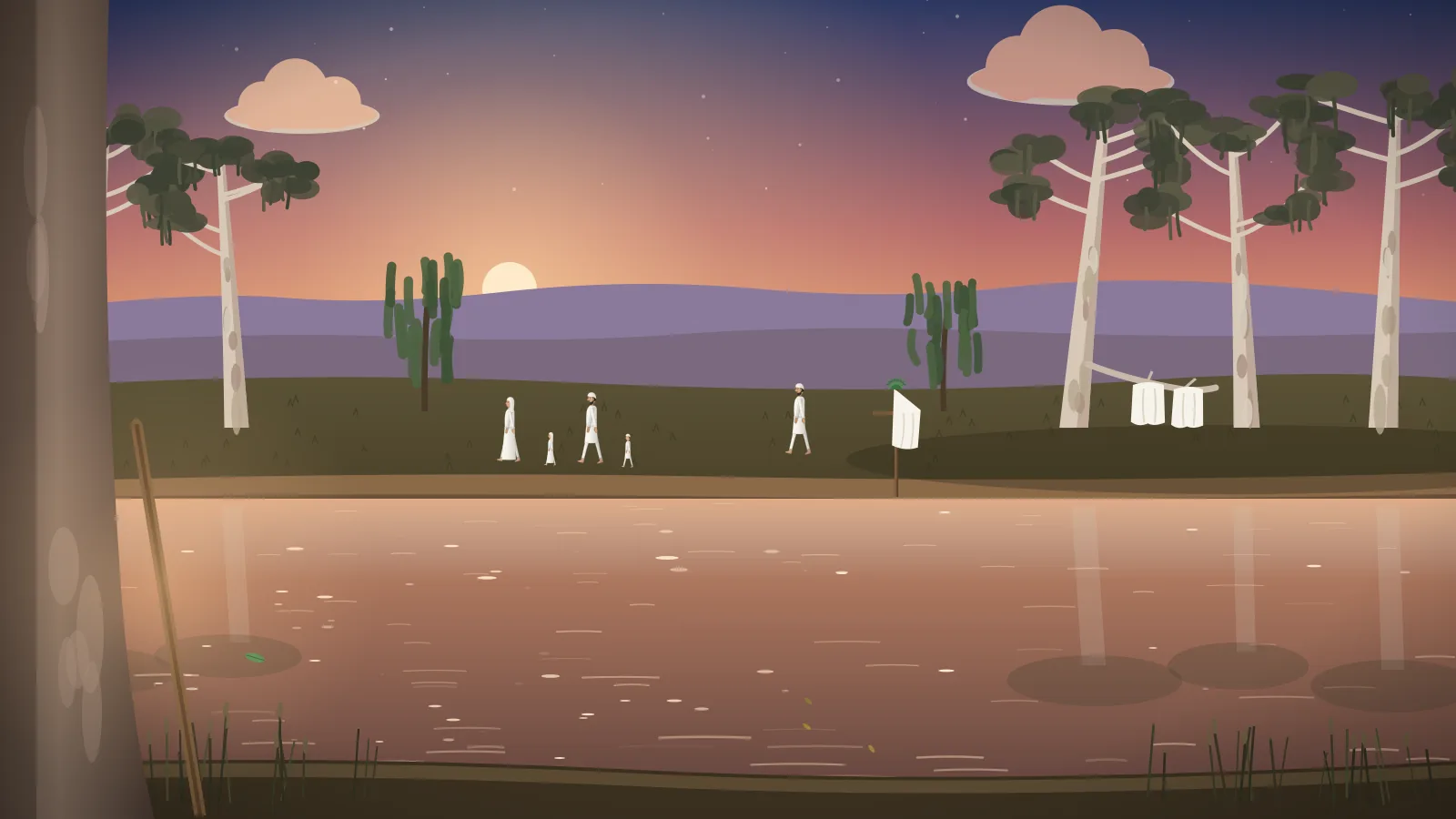
It is morning on the Nepean River, west of Sydney. Eucalyptus trees with pale, peeling trunks lean over the brown water, and on the grassy bank hundreds of people dressed all in white wait in the shade. It is Parwanaya, five days of baptism. In the current a priest in white stands waiting, his staff of olive wood upright beside him, and one by one the people step down the bank into the river. Three times each person is immersed. These are Mandaeans, and their ancestors prayed this way beside the Tigris and the Euphrates for well over a thousand years.
Chapter Iwatch from 0:42
Those Who Know
Their name comes from manda, the Mandaic word for “knowledge”. Mandaeans are those who know. In Arabic they are the Subba, the Sabians, and their priests and learned men are also called Nasoraeans.
They are neither Christians, nor Jews, nor Muslims. Theirs is one of the last living Gnostic religions, and the only one with an unbroken living community, with its own scriptures, its own priests and its own form of Aramaic, Mandaic.
Mandaeans see their faith as the oldest in the world. It was revealed, they believe, to the first man, Adam, and handed down through his descendants.
Historians ask a different question. Many think the community took shape in the first centuries of the Common Era, in or near the Jordan valley, among the baptising groups of that time, and then moved east. A Mandaean text, the Haran Gawaita, tells of such a journey to the “hills of the Medes”. Other scholars argue that the faith began in Mesopotamia itself. The question remains open.
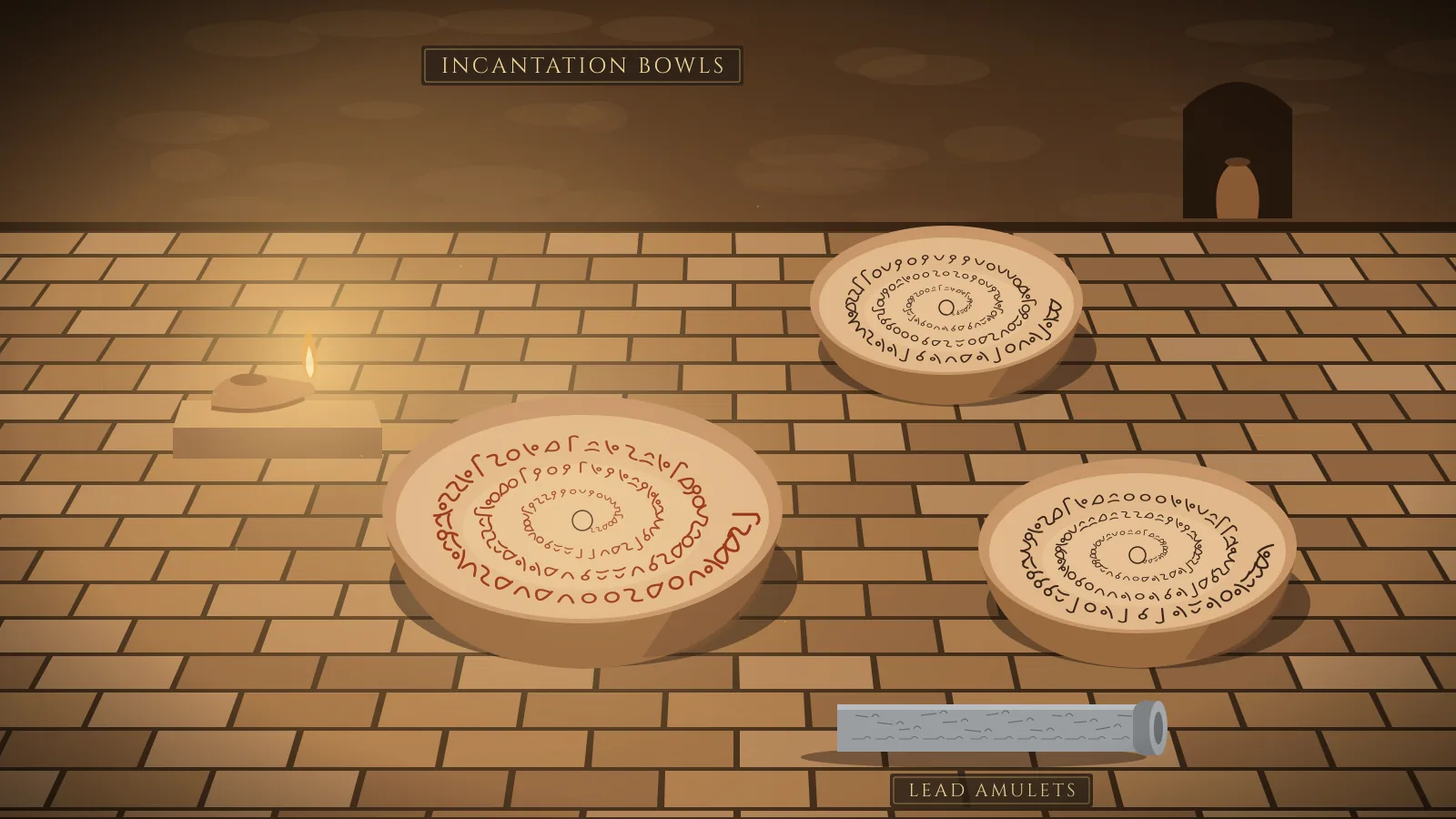
What is certain is that by late antiquity the Mandaeans lived in southern Mesopotamia. Clay bowls written in Mandaic to ward off harm survive from those centuries, together with thin lead amulets, rolled up and scratched with writing.
Their scribes signed their books with long chains of earlier copyists, set down in the colophons at the end of each manuscript. At the head of many stands Zazai d-Gawazta, whom the colophons place in the third century.
After the Arab conquests of the seventh century, Muslim rulers recognised the Mandaeans as Sabians, a people of scripture named in the Qur’an, though whether the Qur’an meant them is debated.
Chapter IIwatch from 2:26
Light and the Soul
Mandaean teaching tells of a World of Light, where the Great Life dwells among beings of light called uthras, and below it a World of Darkness. The film gives the World of Light no shape at all: it is only a soft, warm light.
Between the two lies our material world, formed by a lesser creator. Each human soul is a spark of light, held for a time inside the body. At death the soul rises through a series of watch-houses, where it is examined, until it reaches its home in the light. A ritual meal for the dead, the masiqta, helps it on its way. It is because of this picture of the world that scholars count the Mandaean faith among the Gnostic religions.
The greatest of their teachers is John the Baptist, whom they call Yahia Yuhana, a true priest who baptised in the Jordan. Mandaeans honour him deeply, but he is not their founder. Their faith, they say, was old long before him. The film never pictures him: he is there only as a river, a white robe on a low branch and a staff of olive wood.
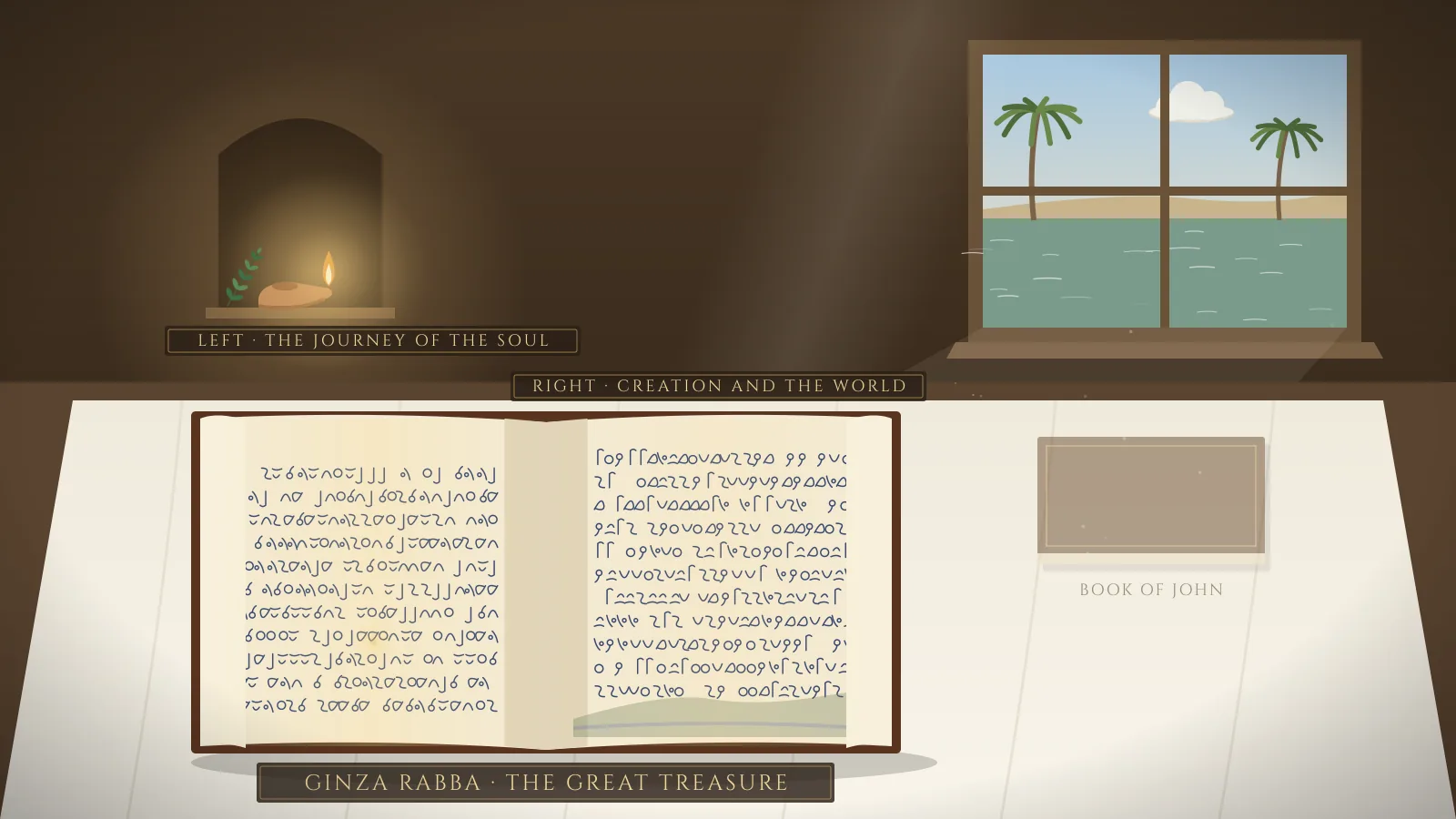
Their scriptures are written in Mandaic, in an alphabet of its own. The greatest is the Ginza Rabba, the “Great Treasure”. Its right half tells of creation and the world, its left half of the journey of the soul, and in the old books the two halves are bound back to back, the left one upside down. Beside it stand the Book of John and the Qolasta, a book of hymns and prayers.
Chapter IIIwatch from 3:44
Living Water
Every flowing river is a yardna, a Jordan. Its living water, Mandaeans believe, carries light from the world above. That is why Mandaeans settle beside rivers.
Still water is not a yardna.
In masbuta, the central rite, believers dressed in the white rasta step into the river beside a priest. They are immersed three times, signed with water on the forehead, given water to drink, and crowned with a wreath of myrtle. Unlike Christian baptism it is not done once. It is repeated on Sundays, at festivals, after a wedding or a birth, and whenever someone needs purification.
Before prayer, Mandaeans wash their faces, hands and feet in running water. They pray three times a day, at dawn, at noon and at sunset, facing north.
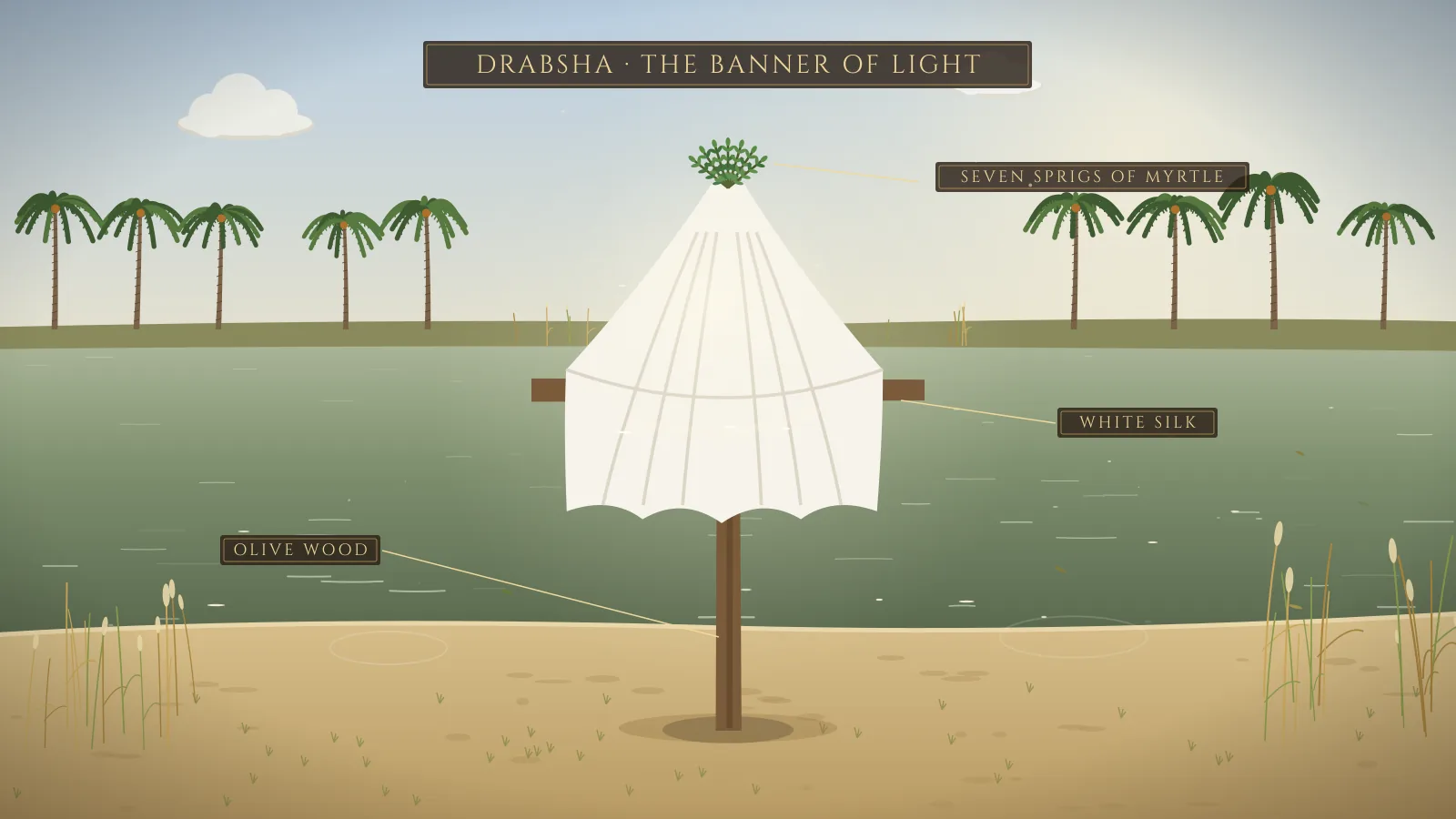
By the water stands the drabsha, the banner of light: two olive-wood branches bound crosswise, half covered with white silk, with seven sprigs of myrtle. It is not a Christian cross.
The priests, the tarmida and the senior ganzibra, usually come from priestly families and train for years. They serve at the mandi, a temple beside a pool of running water. In the marshes it was a small gabled house of reed and mud inside a low fence, with a channel bringing the river to its pool. For rituals men and women alike wear the rasta, white garments that recall the clothing of the beings of light.
Chapter IVwatch from 5:13
The Year of the Cholera
The priests had always been few. In 1831 cholera swept through the river towns of Iraq and Iran, Shushtar among them. Every serving priest died, and the ancient rites were in danger of ending.
A few young men from priestly families, led by Yahia Bihram and his cousin Ram Zihrun, initiated one another and rebuilt the priesthood.
Europeans had met the Mandaeans long before. Portuguese missionaries from the sixteenth century on called them “Christians of Saint John”. The name stuck, though it was a mistake.
Chapter Vwatch from 5:52
A Life by the River
The Mandaean year has twelve months of thirty days, and five extra days: Parwanaya, the great festival of baptism. At the New Year, Dehwa Rabba, families stay indoors for a day and a half.
Other rites mark the passages of life. A wedding lasts several days and includes the baptism of bride and groom. A newborn is baptised in its first weeks. The dead are dressed in the white rasta and buried quickly, and the family holds ritual meals for the soul in the days that follow.
Mandaeans marry only within the community, and there is no conversion into the faith. Traditionally, one who marries outside is considered to have left it.
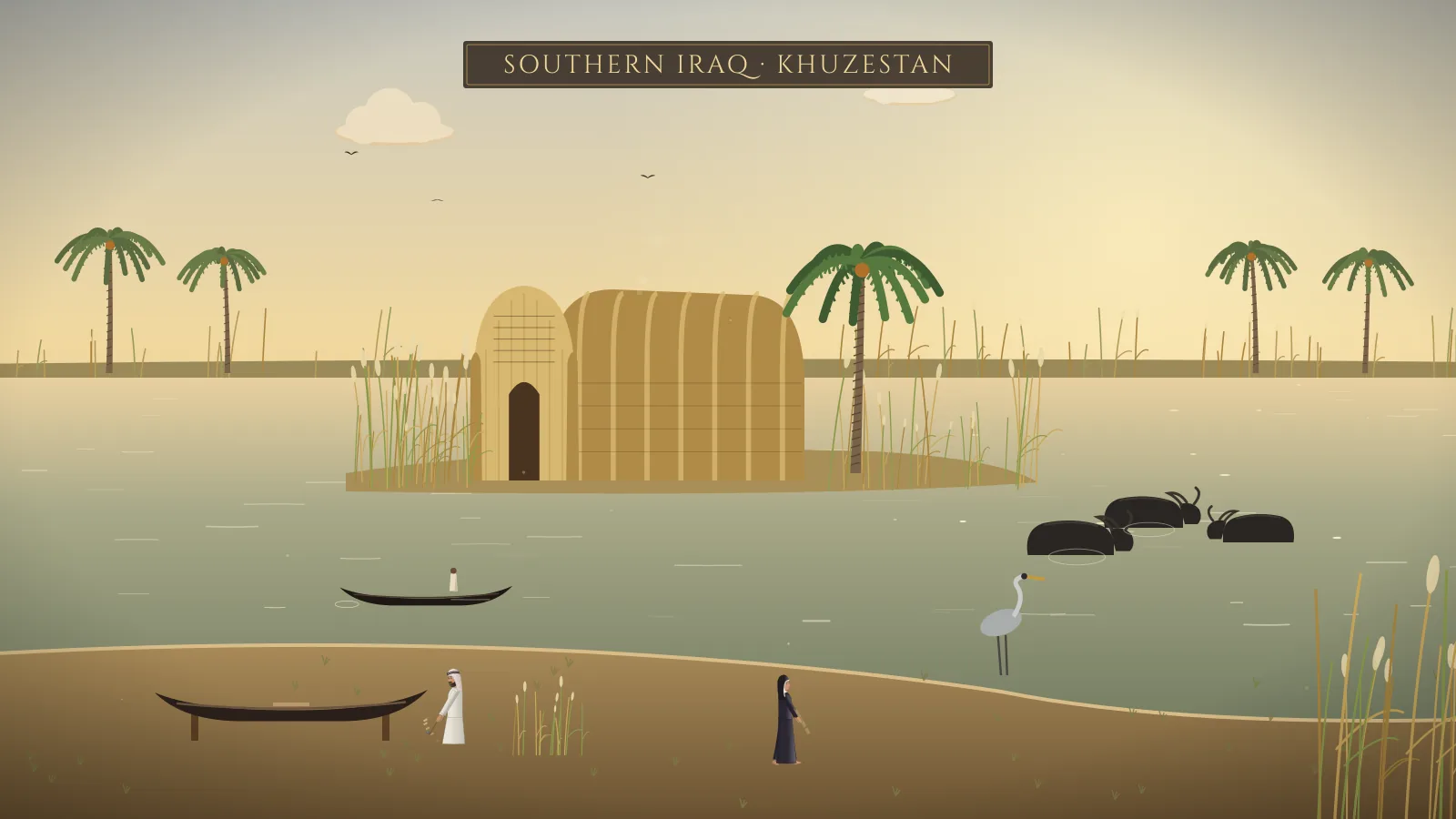
In the marshes of southern Iraq and along the rivers of Khuzestan in Iran, among reed beds, palms and water buffalo, Mandaeans were known as boat builders and, above all, as silversmiths. Their fine silver, inlaid in black with scenes of the marshes, reeds, canoes and reed houses, was known in Baghdad as the work of Amarah. In the twentieth century many moved from the villages to Baghdad, Basra and Ahvaz.
In the 1930s an English scholar, Ethel Stefana Drower, worked closely with them. She recorded their rituals and, in 1937, published The Mandaeans of Iraq and Iran, and she went on to publish many of their texts.
Chapter VIwatch from 7:07
Leaving the Rivers
Then came the wars. After the invasion of Iraq in 2003, Mandaeans, whose faith forbids them to carry weapons, were targeted in kidnappings, robberies and killings. Some were forced to convert.
Families locked their workshops and left. Most fled first to Syria and Jordan, then resettled far away. In Iraq a community of tens of thousands fell to a few thousand, and many riverbanks where Mandaeans had gathered for generations stood empty.
In Iran, Mandaeans still gather at dawn on the banks of the Karun at Ahvaz. But their faith is not among the minorities recognised in the constitution, which leaves them without the legal protections those minorities have.
Chapter VIIwatch from 7:55
New Rivers
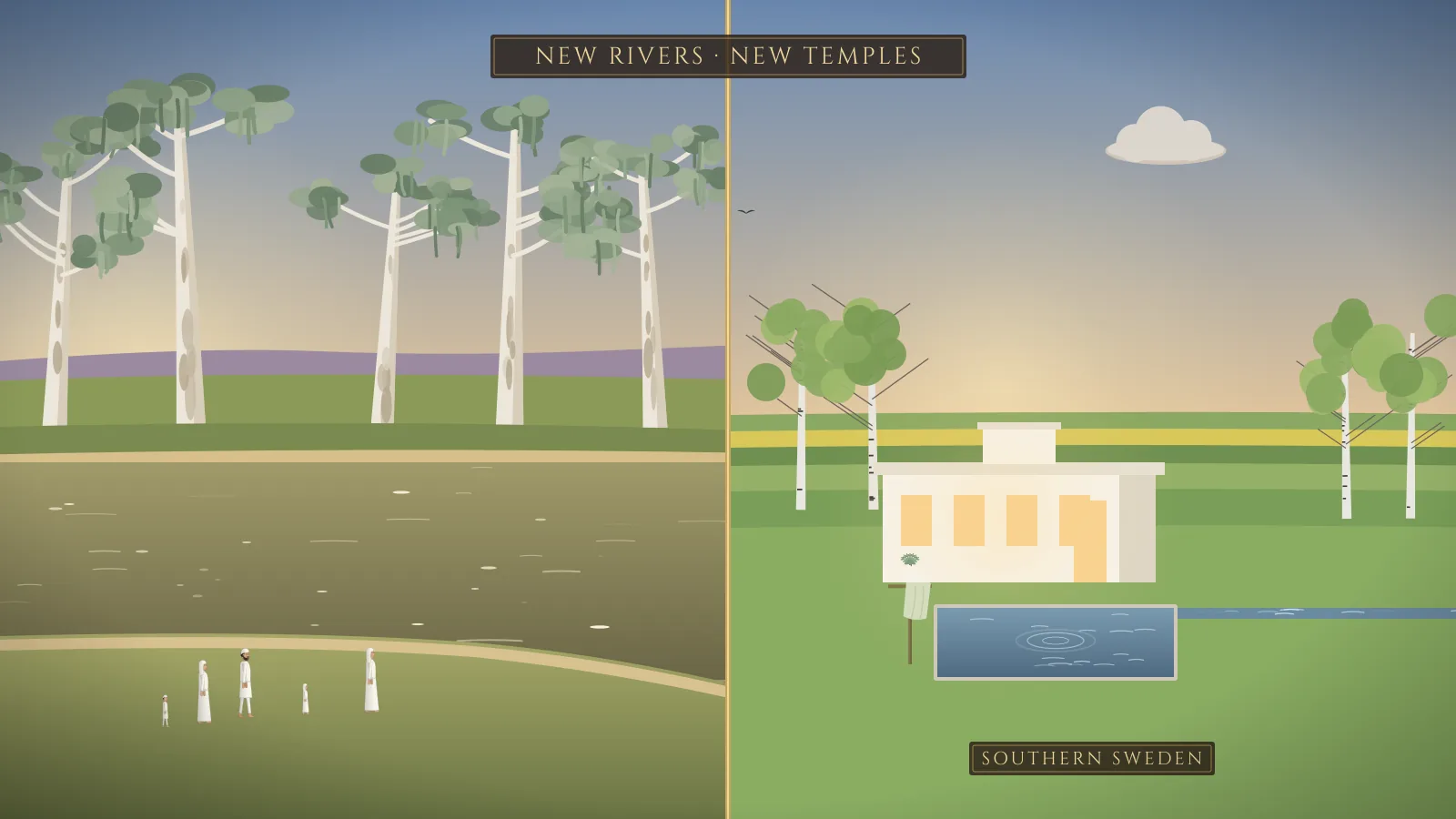
Today the largest communities live in and around Sydney, in Sweden, the Netherlands, Germany, the United Kingdom and the United States. Scholars commonly estimate sixty to a hundred thousand Mandaeans worldwide, but exact numbers are uncertain. Sweden is home to one of the largest communities in Europe.
Baptisms are now held in Australian and European rivers, like the Nepean, and new temples have been built, among them a mandi in the south of Sweden, with its own pool of running water.
In community schools, children learn the Mandaic letters. Classical Mandaic lives on in scripture and ritual, and a spoken form, Neo-Mandaic, is kept by a few families from Iran.
Yet by one recent count fewer than fifty priests serve the whole community, and the rule of marriage within the faith weighs heavily on young people abroad. Mandaeans see the rule as the way their faith has survived; others ask how an ancient river religion can endure far from the Tigris and the Euphrates.
Chapter VIIIwatch from 9:08
What Scholars Find
It is often said that the Mandaeans are Christians of Saint John, that John founded their religion, and that they worship water or the stars.
Scholars find otherwise. Mandaeans are not Christians: their scriptures do not accept Jesus as a prophet or as the Messiah. John is their greatest teacher, not their founder. They worship one supreme being of light, and honour flowing water because they believe it comes from the world of light. Their beliefs are Gnostic, though any link to the ancient Gnostic schools known from early Christian writers is still debated.
Evening comes to the Nepean. The river turns rose and gold, and the last people climb the bank, wring out their white robes and lay them on the branches to dry. An olive-wood staff leans against a tree. The river runs on, as the Tigris and the Karun run on, carrying, Mandaeans believe, a little of the light.