
The story of the film
Germany, Scotland, Spain, England and Massachusetts · c. 1450–1782
On a summer night in 1628, in the German city of Bamberg, a prisoner sat in a cell and wrote a letter to his daughter. His name was Johannes Junius. He was 55 years old, and he had served several times as one of the city’s mayors. The letter took him days to write, he said, because both his hands were lame.
“Innocent have I come into prison,” he wrote, “innocent have I been tortured, innocent must I die.” How a respected man came to write those words is the story of the great witch hunts, and it began long before him, in the villages of Europe.
Chapter Iwatch from 0:35
The Hammer of Witches
Fear of harmful magic was very old. In villages across Europe, people believed that some of their neighbours could curse a cow, a harvest or a child. For centuries, though, such cases were few.
Then, in the 15th century, a darker idea took shape. Some theologians and inquisitors began to say that witches were not simply spiteful neighbours. They were, these men claimed, a secret sect, sworn to the Devil, meeting at night to plot harm.
One man who spread this idea was a German Dominican friar, Heinrich Kramer. In 1484 a papal bull, Summis desiderantes affectibus, backed his work as an inquisitor in the German lands. But in 1485 his witch trial at Innsbruck, in the Alps, collapsed. The local bishop objected to his methods, and sent him away.
Kramer answered with a book.
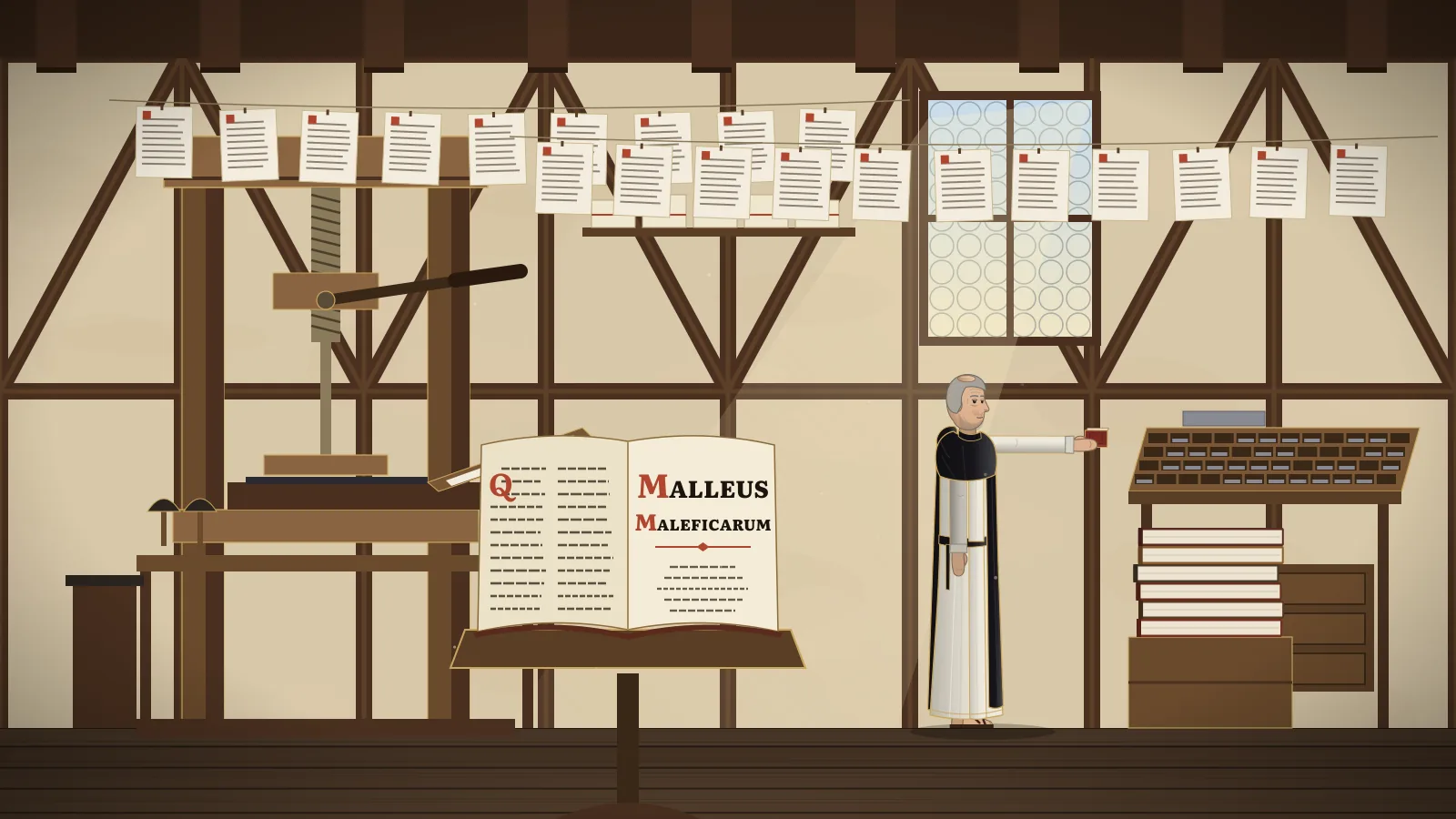
Kramer answered with a book. Printed at Speyer in 1486, it was called the Malleus Maleficarum: the Hammer of Witches. It told judges how to find, question and condemn witches. And it claimed that women were especially open to the Devil. It was never an official text of the Church, and some clergy criticised it. But it sold, edition after edition, and printers kept bringing it out again for more than a century.
Chapter IIwatch from 1:58
At a Neighbour's Door
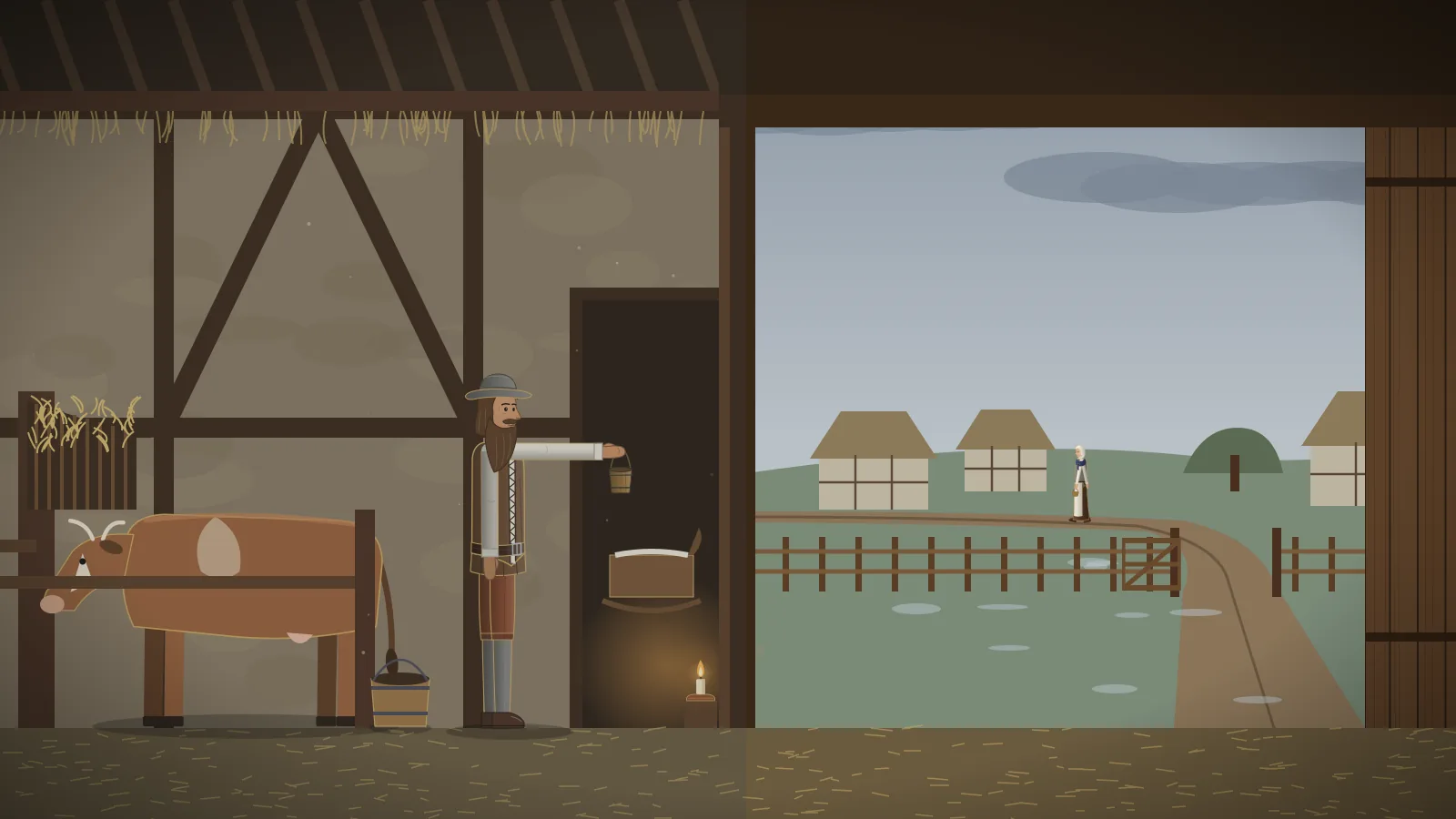
Yet most cases did not begin with books. They began at a neighbour’s door. A cow stopped giving milk. A child fell ill. Someone remembered a quarrel with an old, poor or sharp-tongued woman, who had been turned away when she came asking for help.
Once a case reached a court, procedure mattered. Most trials were held not by the Church but by ordinary secular courts. In much of continental Europe, judges were allowed to use torture. And the accused were asked one more question: who else had they seen at the Devil’s gathering?
Each name meant a new arrest.
Each name meant a new arrest, and each new prisoner was asked the same question. In this way, one accusation could become dozens, and a single case could grow into a whole chain of trials.
Chapter IIIwatch from 2:44
Storms over Trier and Scotland
The worst hunts came not in the Middle Ages, as many people imagine, but between about 1560 and 1650: the age of Shakespeare and Galileo.
In the lands of the Archbishop of Trier, in the 1580s and 1590s, hundreds were executed. According to one account, two villages were left with only one woman each. Not even the judges were safe. Dietrich Flade, a leading judge and official of the city who had himself condemned witches, was accused in turn, and executed in 1589.
Not even the judges were safe.
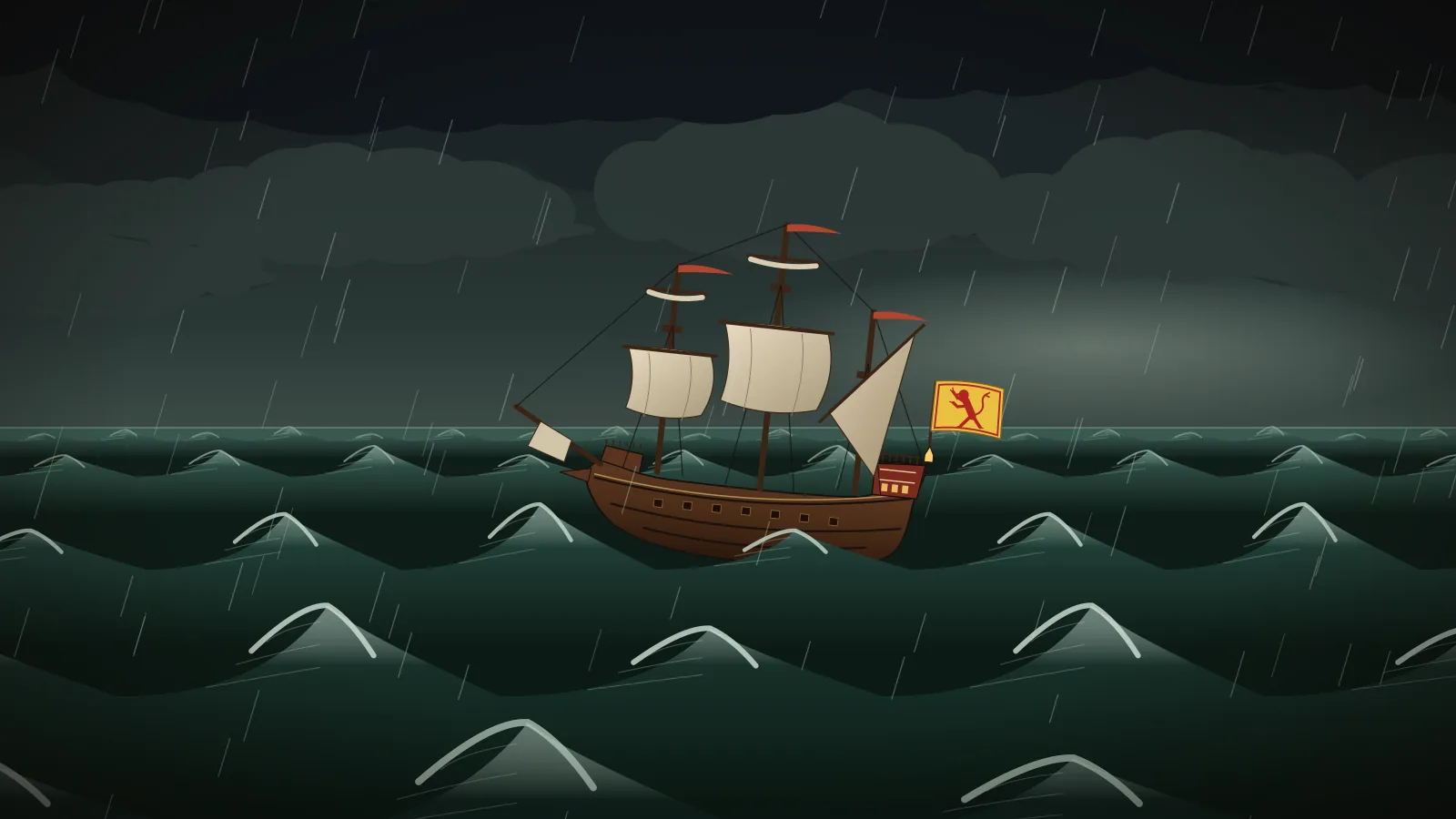
In 1590 the fear reached Scotland. King James VI had sailed home from Denmark with his young bride, Anne, through violent storms. Under questioning, people from East Lothian confessed that witches had met in the kirk at North Berwick, and plotted to sink the royal ship.
The king questioned some of the accused himself. According to a pamphlet printed the next year, Newes from Scotland, he called them extreme liars, until one of them, an elderly healer named Agnes Sampson, repeated to him the words he had said to his bride on their wedding night. The tale is known only from that pamphlet. But James was convinced. In 1597 he published his own book on witches: Daemonologie.
Chapter IVwatch from 4:06
The House of Witches
The deadliest panics broke out in the late 1620s, in the small Catholic prince-bishoprics of Germany, lands ruled by bishops who were also princes. In the spring of 1626 a late frost destroyed the vines and the grain around Bamberg and Würzburg. People looked for someone to blame.
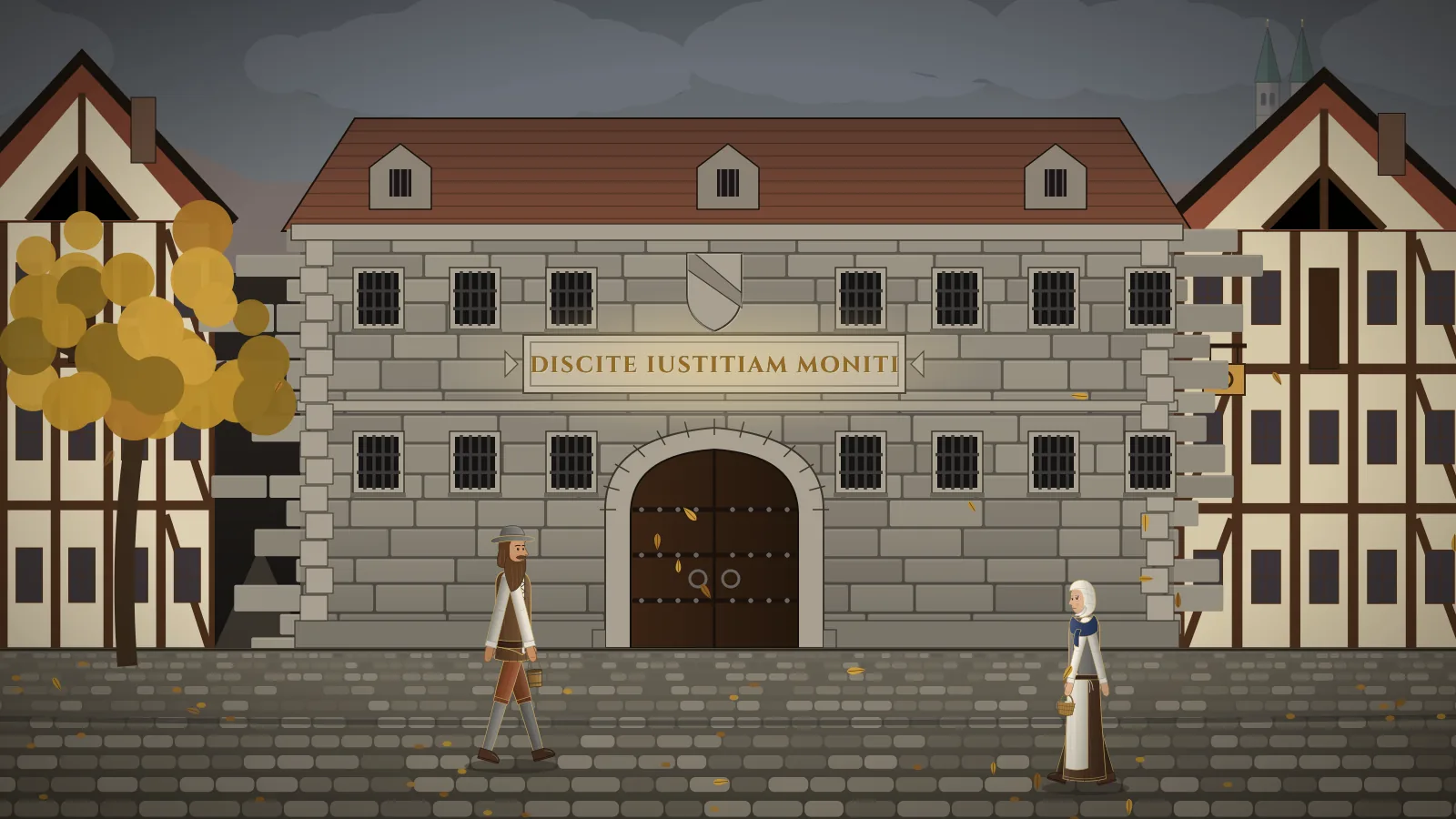
In 1627 Bamberg’s prince-bishop, Johann Georg Fuchs von Dornheim, had a special prison built for suspected witches, the Drudenhaus, with 26 single cells and 2 for groups. Over its door, a line from Virgil told passers-by to be warned and learn justice. Hundreds were accused. As the usual suspects ran out, the accusations climbed upward: to councillors, to merchants, and even to a serving mayor.
Johannes Junius was arrested in June 1628. Prisoners already condemned had named him; a note in the margin of his letter says that 6 had confessed against him under compulsion. Under torture, he confessed to meeting the Devil. To his daughter, Veronica, he wrote that it was all lies. Whoever came into that prison must become a witch, or be tortured until he invented something out of his head.
Whoever came into that prison must become a witch, or be tortured until he invented something out of his head.
The letter is dated 24 July 1628. A guard carried it out in secret. On 6 August 1628, Junius was executed. His wife had already died on the same charge.
In nearby Würzburg, under Prince-Bishop Philipp Adolf von Ehrenberg, some 900 people were executed or died in prison, by one estimate. Among them were dozens of children, many priests, and the bishop’s own nephew, Ernst. In both lands, the killing stopped only after protests reached the emperor, and Swedish armies came near.
Chapter Vwatch from 5:56
The Doubters
Even at the height of the hunts, some people said: this is wrong.
In 1563 the physician Johann Weyer argued that many so-called witches were sick or confused old women, who needed doctors, not judges. In Spain, around 1611, the inquisitor Alonso de Salazar Frías spent months investigating a panic in the Basque country. He found no proof that anyone was a witch. After new instructions from the Inquisition in 1614, executions for witchcraft in Spain became very rare.
He found no proof that anyone was a witch.
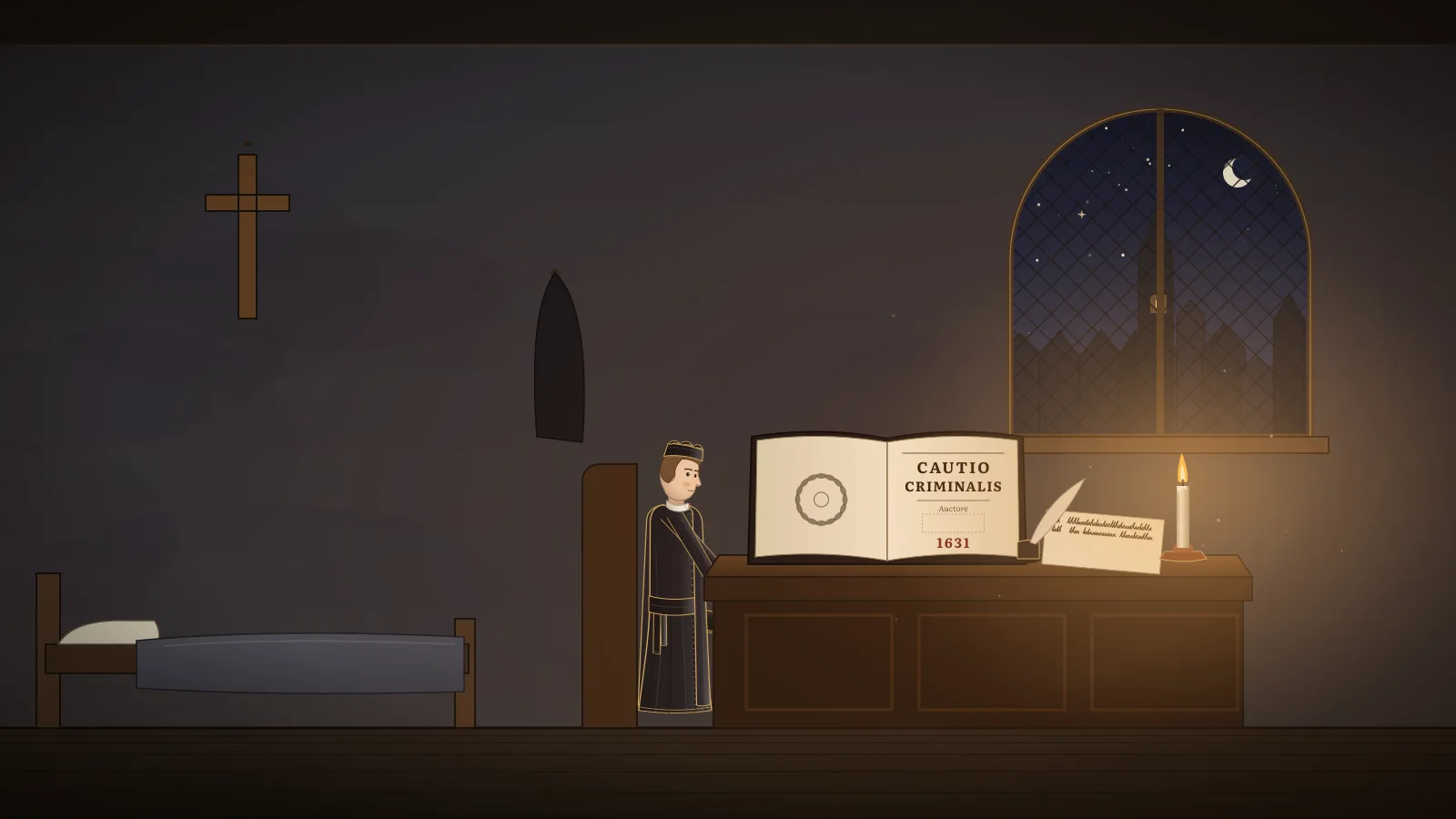
In 1631 a German Jesuit, Friedrich Spee, published a book without his name, the Cautio Criminalis. As a confessor, he had sat with condemned prisoners and gone with them to their deaths. Torture, he argued, would make anyone confess to anything. Sooner or later, he warned, even those who had demanded the trials would be accused: in an old translation of his words, “their turn, too, must inevitably come.”
Chapter VIwatch from 6:52
Witchfinders and Salem
In England, torture was not normally allowed. But in the chaos of the Civil War, a hunt broke out there too. In 1645 Matthew Hopkins of Essex began calling himself the Witchfinder General, and went from town to town in eastern England with his partner, John Stearne. Suspects were kept awake for nights, and searched for the Devil’s marks. That same year an Essex trial, the largest in English history, sent 19 people to their deaths. In about 2 years, at least 100 were hanged. Hopkins died in 1647, probably of tuberculosis; the story that he was himself tested as a witch and hanged is not true.
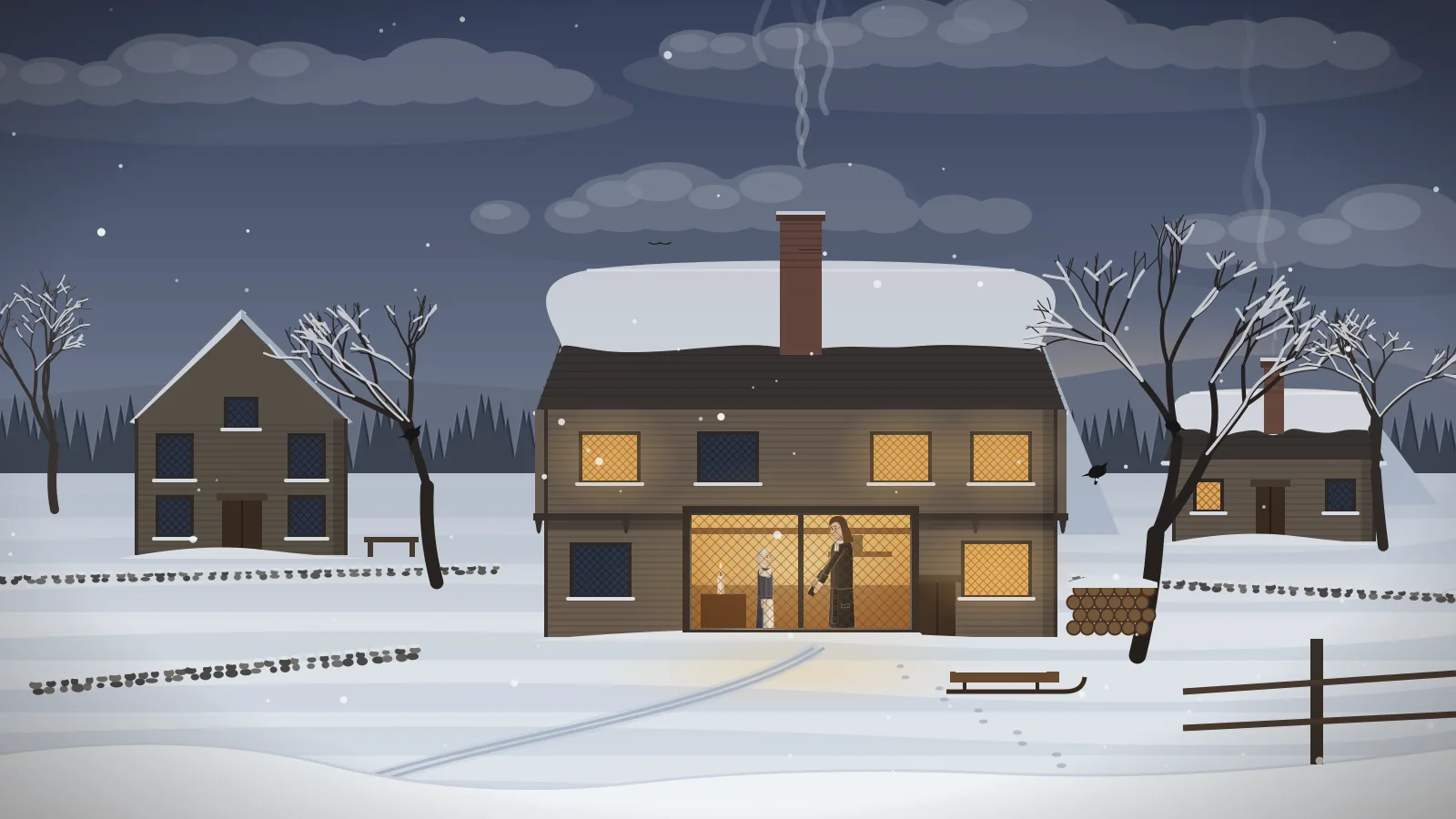
The best-known trials came late, and far away. In January 1692, in Salem Village, Massachusetts, two girls in the minister’s house, Betty Parris, aged 9, and Abigail Williams, aged 11, began to suffer strange fits. A local doctor said they were bewitched. Soon the girls, and others, were naming witches. More than 150 people were accused.
The court accepted spectral evidence: claims that the spirit of an accused person had appeared to the victims. Those who confessed were spared. Those who insisted on their innocence were condemned.
Those who insisted on their innocence were condemned.
In all, 20 people were executed. Of these, 19 were hanged, among them Rebecca Nurse, a respected elderly church member. Giles Corey died under heavy stones. In October the minister Increase Mather warned that spectral evidence was unsafe, and the governor closed the court. In January 1697, on a day of fasting, the judge Samuel Sewall stood in church while his apology was read aloud.
Chapter VIIwatch from 8:34
The End of the Trials
Across Europe, the trials ended in much the same way. Higher courts demanded real proof, and convictions fell away. In 1736 a new British law abolished the crime of witchcraft. Instead, pretending to use magic became an offence. One of the last legal executions in western Europe came in 1782, at Glarus in Switzerland: a servant, Anna Göldi. In 2008 the canton declared her innocent.
How many died? For a long time, popular books said 9 million. That figure came from an 18th-century writer, Gottfried Christian Voigt, who multiplied the records of one German town, Quedlinburg, across Europe and the centuries. Historians who have studied the court records, region by region, now estimate about 100,000 trials and 40,000 to 60,000 executions.
For a long time, popular books said 9 million.
About 3 in 4 of those executed were women, many of them old and poor. But in Iceland, most of the accused were men. And there is no evidence that midwives were singled out.
Today the victims are remembered. In 2022 Scotland’s First Minister, Nicola Sturgeon, formally apologised. That same year Massachusetts cleared the last convicted Salem witch, Elizabeth Johnson Jr, after a campaign by schoolchildren from North Andover. In Bamberg, a memorial sculpture called Brandmal stands behind the Geyerswörth town hall.
And in Bamberg, the letter of Johannes Junius still survives. It ends with a line written for one person: “Good night, for your father Johannes Junius will never see you more.” The hunts did not end by themselves. They ended because people inside those same societies, doctors, priests, judges and ministers, argued, case by case, that the system was wrong.




























































