The story of the film
Jabal al-Tarif near Nag Hammadi, Upper Egypt; Cairo; Zurich · 1945–1977
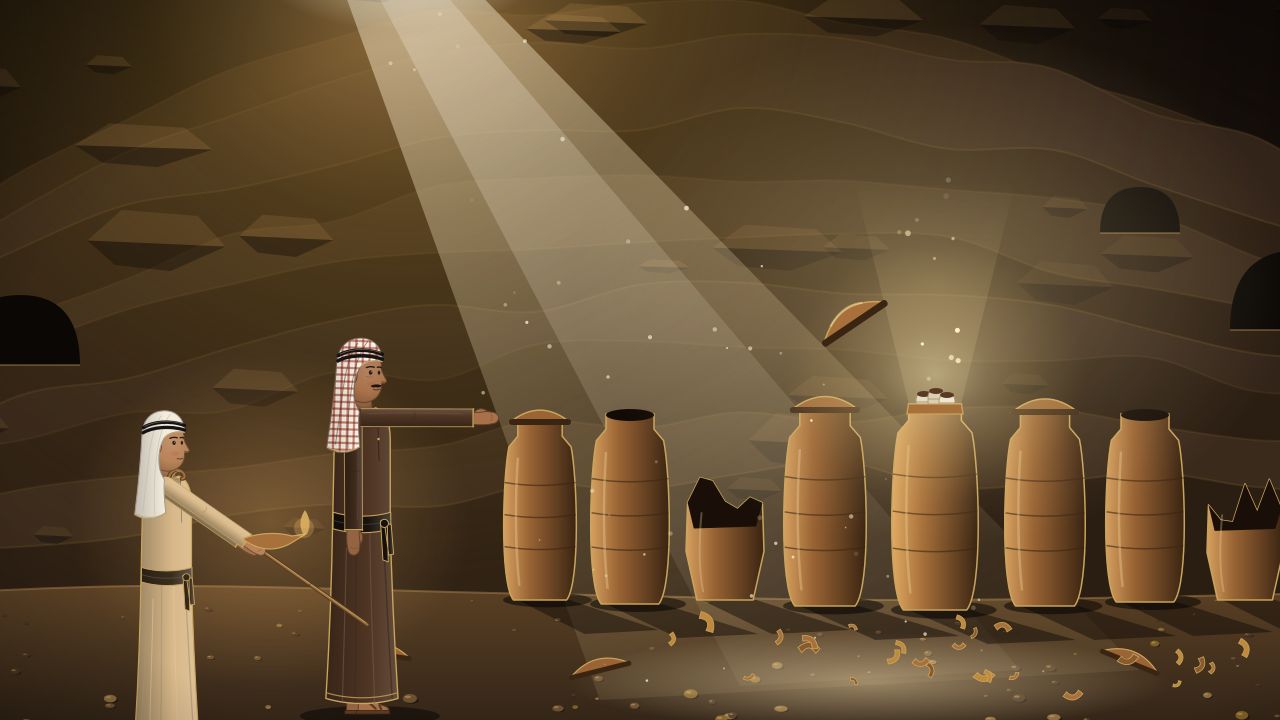
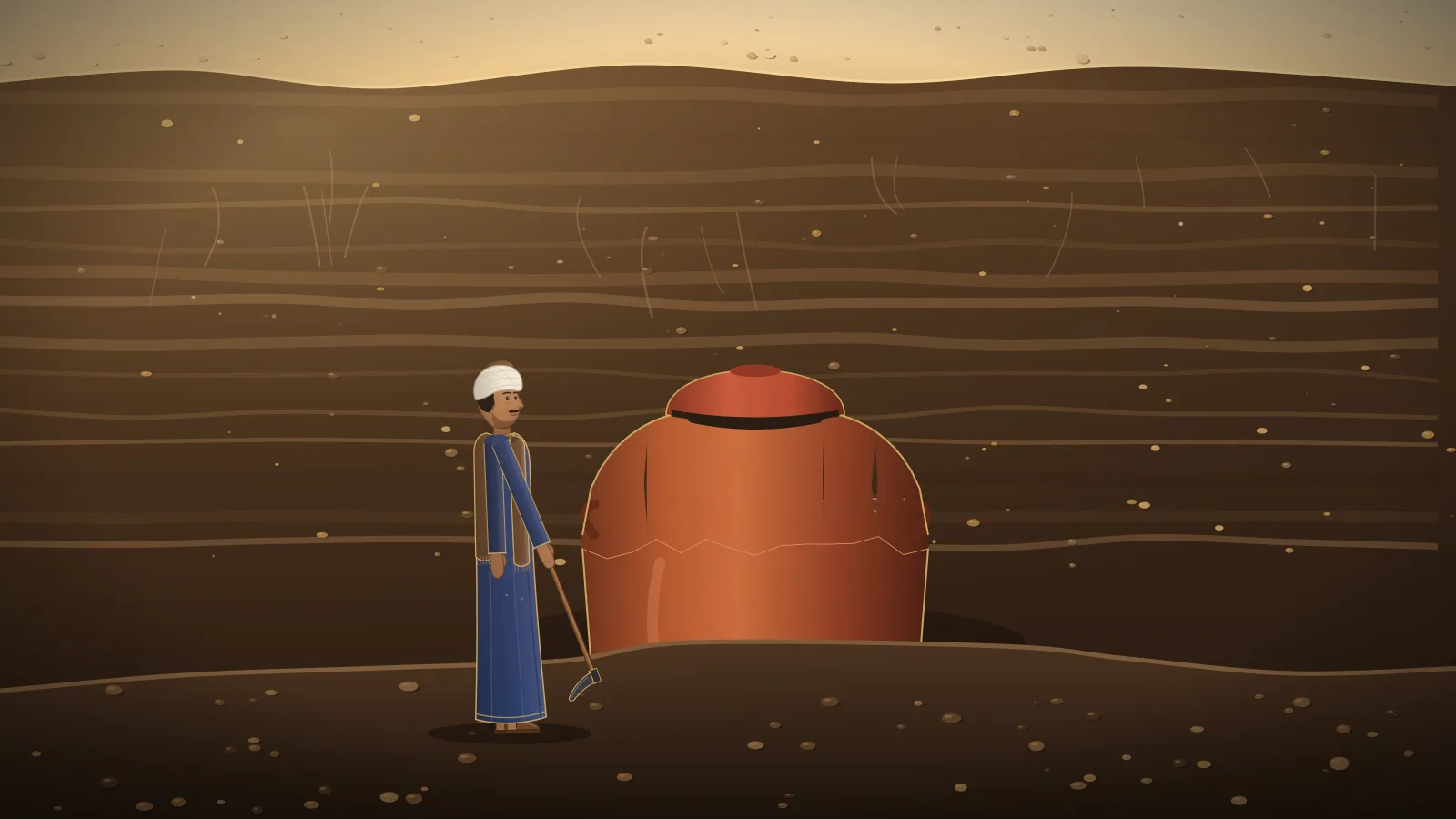
In December 1945, according to the usual account, a few farmers in Upper Egypt led their camels toward the cliffs at the edge of the Nile valley. At the foot of a cliff called Jabal al-Tarif, on the east bank of the river, they tethered the camels beside a boulder and began to dig.
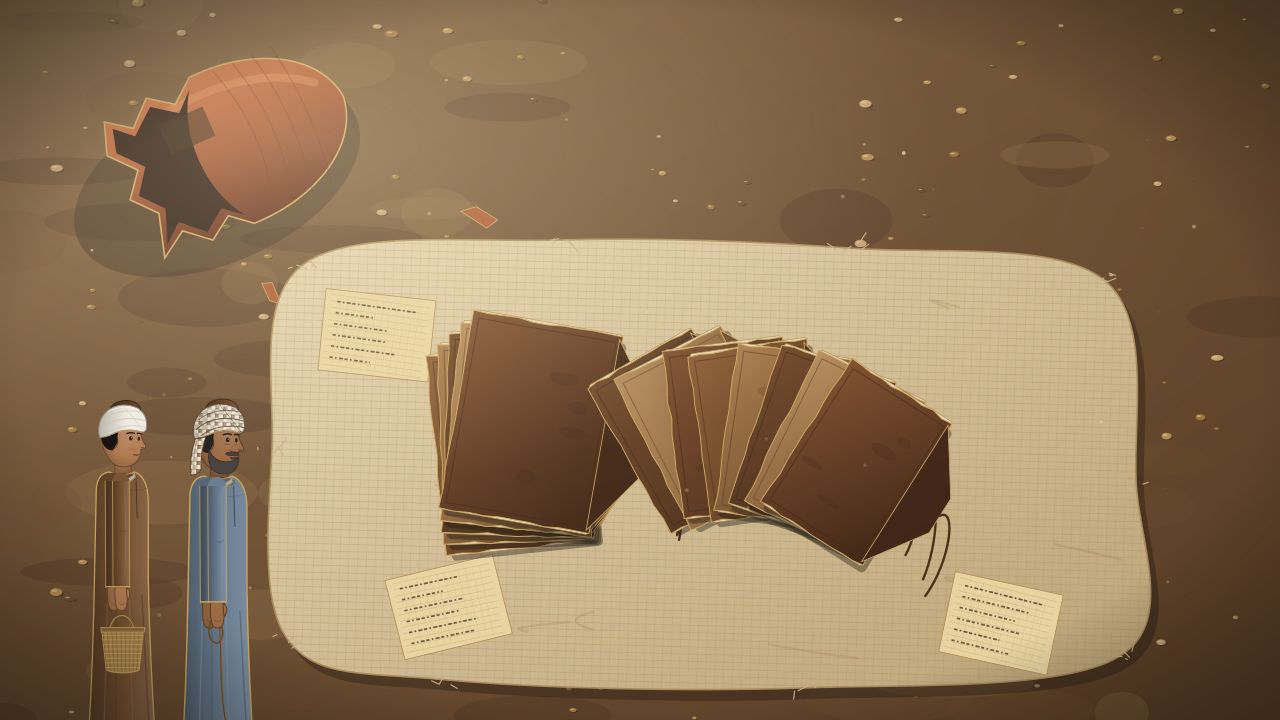
Under the soft earth, a mattock struck something hard. It was the rounded shoulder of a tall red clay jar, its mouth sealed with an upturned bowl.
Chapter Iwatch from 0:43
Jinn or gold
The farmers came from a village called al-Qasr. It lay near the town of Nag Hammadi, on the site of an ancient town called Chenoboskion. The man with the mattock was a farmer named Muhammad Ali al-Samman, and he had come with his brothers, among them Khalifah, for sabakh, a soft, rich earth that farmers spread on their fields as fertiliser.
Almost everything known about that day comes from Muhammad Ali himself. He told it some 30 years later to an American scholar, James M. Robinson, who began his inquiries in the mid-1970s. It is the account as he remembered it decades on, and some of its details have been doubted; even the date of December 1945 was worked out afterwards rather than written down at the time. But it has become famous.
Muhammad Ali hesitated over the jar. A sealed jar, he said later, might hold a jinn, a spirit better left alone. Then again, it might hold gold. He raised his mattock and broke the jar open.
There was no jinn, and there was no gold. Instead, tiny flakes of papyrus flew up and drifted away on the wind. Inside lay a stack of books, 13 by his count, each one bound in soft brown leather. They were not scrolls but codices, the ancestors of the modern book: sheets of papyrus stitched together inside a leather cover that tied shut with a thong. Their pages were filled with neat lines of Coptic, the last stage of the ancient Egyptian language, written in an alphabet borrowed mostly from Greek.
There was no jinn, and there was no gold.
None of the men could read them. The story goes that the others wanted no share, fearing bad luck. So Muhammad Ali gathered the books up in his tunic and carried them home.
Chapter IIwatch from 2:32
Straw by the oven
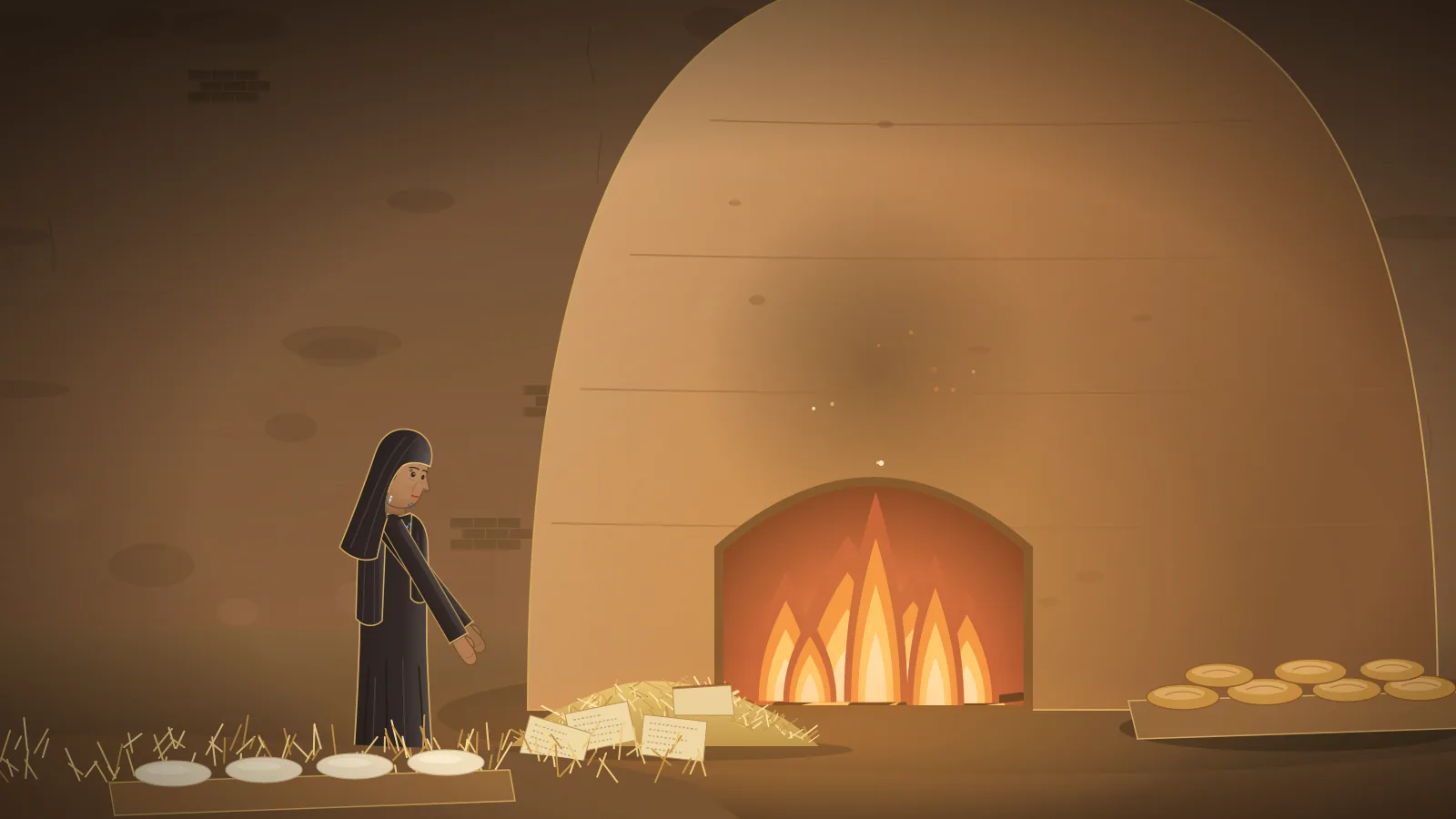
In the family house he dropped them in the straw beside the oven. What happened next is the most famous part of the story, and one of the most uncertain.
According to Robinson’s account, Muhammad Ali’s widowed mother, Umm Ahmad, burned some of the loose pages as kindling for the bread oven, and years later she is said to have admitted it. If so, most of one book, now called Codex XII, may have been lost this way. Some scholars suspect the tale grew in the retelling, and Jean Doresse, who looked into the find within a few years of it, treated the burning as rumour.
What happened next is the most famous part of the story, and one of the most uncertain.
In those same weeks the family was caught up in a blood feud, and the police came to the village again and again. Afraid that the books would be found in a search, Muhammad Ali left at least one of them for safekeeping with a local Coptic priest, Basiliyus Abd al-Masih. The priest’s brother-in-law, a history teacher named Raghib Andrawus, saw the book and guessed that it might be valuable.
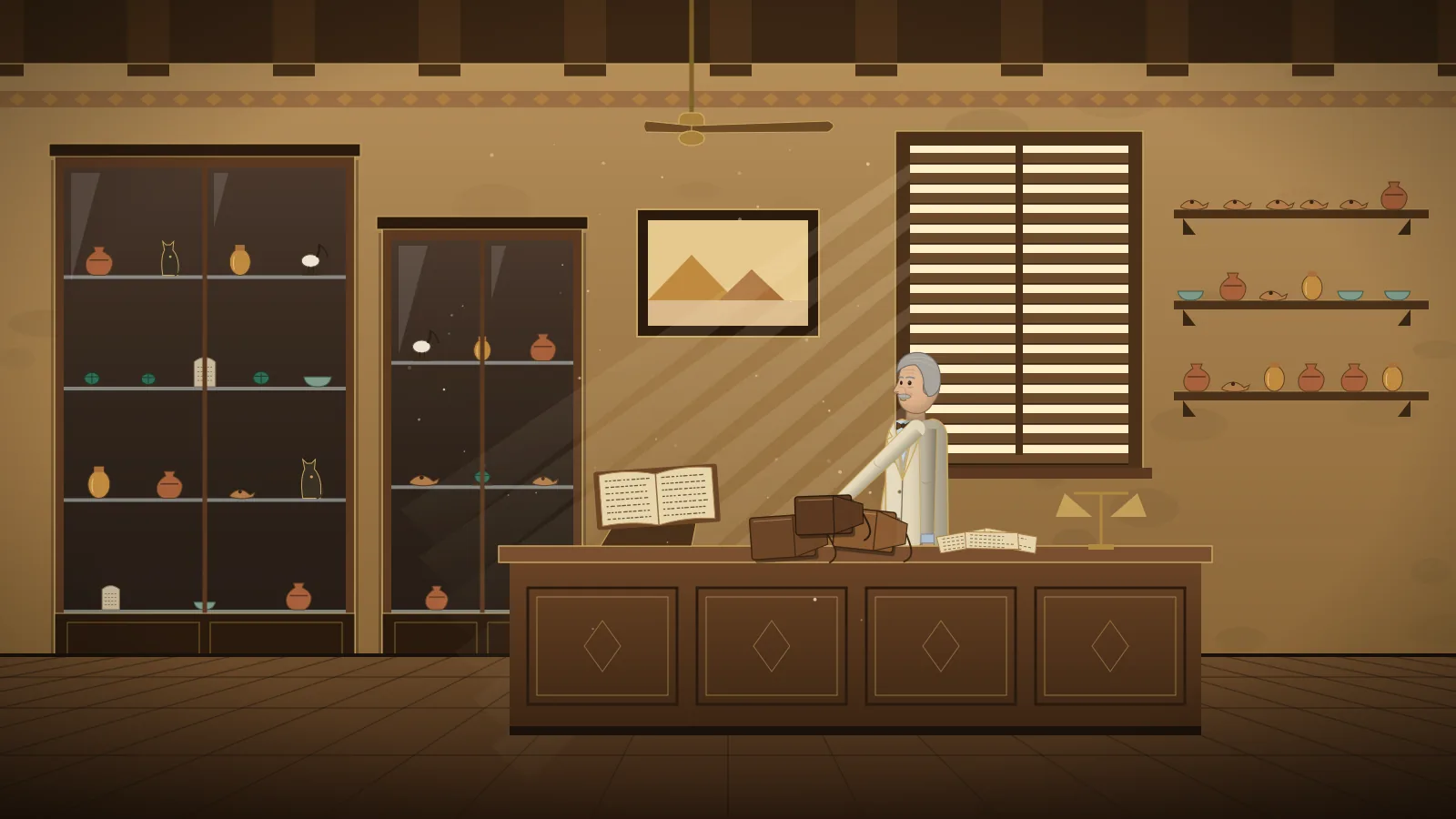
In 1946 Raghib carried it north to Cairo, more than 500 kilometres down the Nile. There it reached the Coptic Museum. After some haggling Raghib was paid 250 Egyptian pounds, and on 4 October 1946 the book was entered in the museum’s register.
Chapter IIIwatch from 3:59
Scattered
Meanwhile the other books were scattered. Some were bartered or sold in the village for very little. Others passed from hand to hand, travelling north toward the antiquities dealers of Cairo. Most of them ended up with Phokion Tano, a Cypriot dealer, who bought all he could find.
In 1947 a young French scholar, Jean Doresse, examined some of the books in Cairo. He realised that they were writings of early Christian groups that had been known until then mostly from their opponents’ attacks. For centuries, the teachers later called Gnostics had been described almost only by the church writers who set out to refute them. Now, it seemed, their own books had come to light.
The Egyptian authorities stepped in to stop the books leaving the country, and the Department of Antiquities took charge of Tano’s collection. After the revolution of 1952 the books were declared national property and placed in the Coptic Museum. But one book had already slipped away.
But one book had already slipped away.
Chapter IVwatch from 4:48
The codex in Zurich
A Belgian antiquities dealer, Albert Eid, had taken most of a single codex out of Egypt. In 1949 he offered it for sale in America, but no one bought it. After Eid died, his widow sold it in 1952, with the help of the Dutch scholar Gilles Quispel, to the C. G. Jung Institute in Zurich.
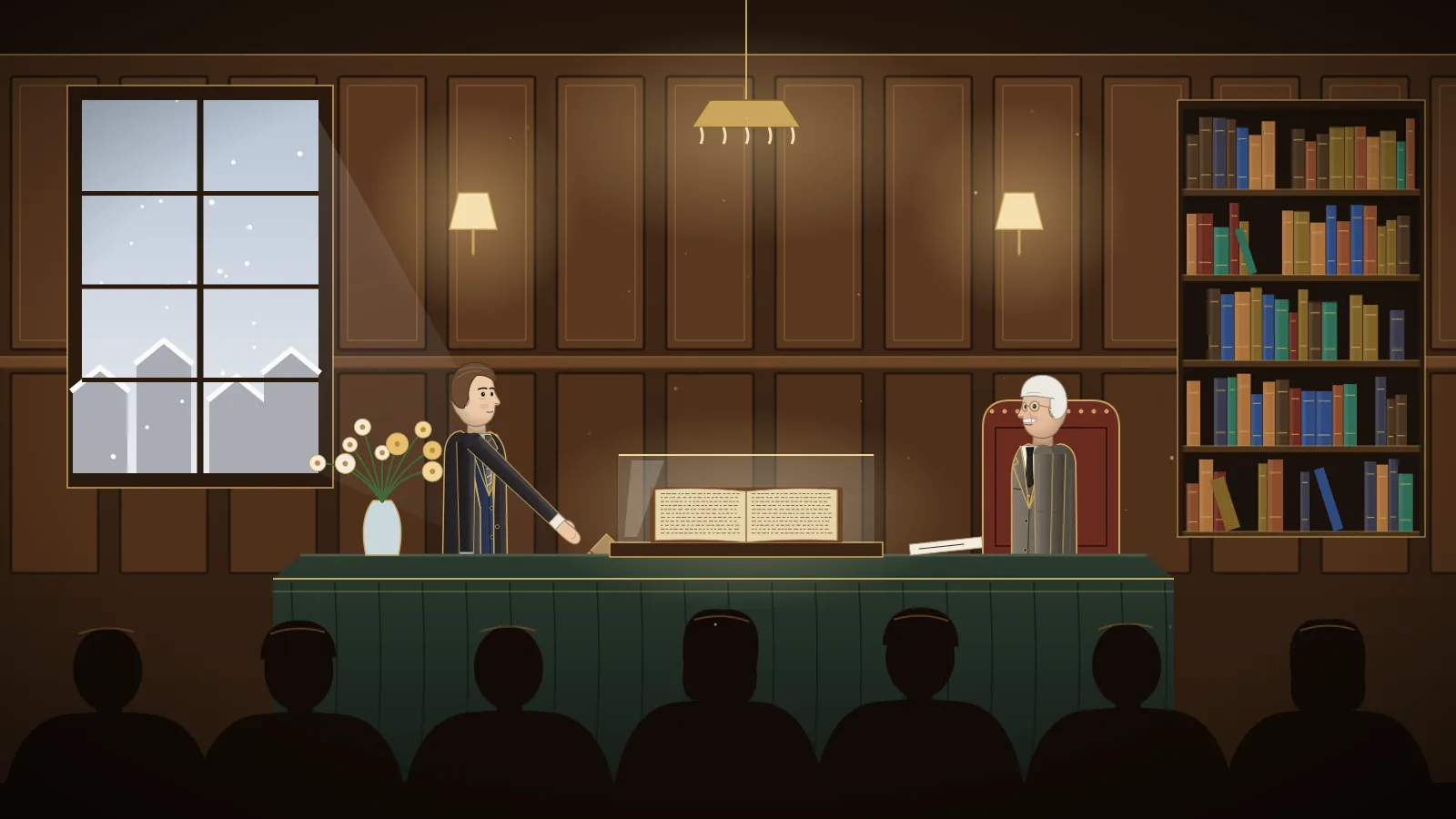
On 15 November 1953 the book was presented to the psychologist Carl Gustav Jung, who had long been fascinated by the Gnostics. From then on it was called the Jung Codex.
It spent years in a safe-deposit box at the Leu Bank in Zurich while scholars published its texts in instalments. Its leaves went back to Cairo in stages, and the last of them arrived in 1975, on 12 October, at the Coptic Museum. The book that had wandered furthest from the jar was home again.
Chapter Vwatch from 5:40
The long wait
In Cairo, the rest of the library waited. Only a few scholars could study it, and the work went slowly. There were rivalries between experts, and there were wars in the region. Even 20 years after the jar was broken, most of the texts were still unpublished.
Even 20 years after the jar was broken, most of the texts were still unpublished.
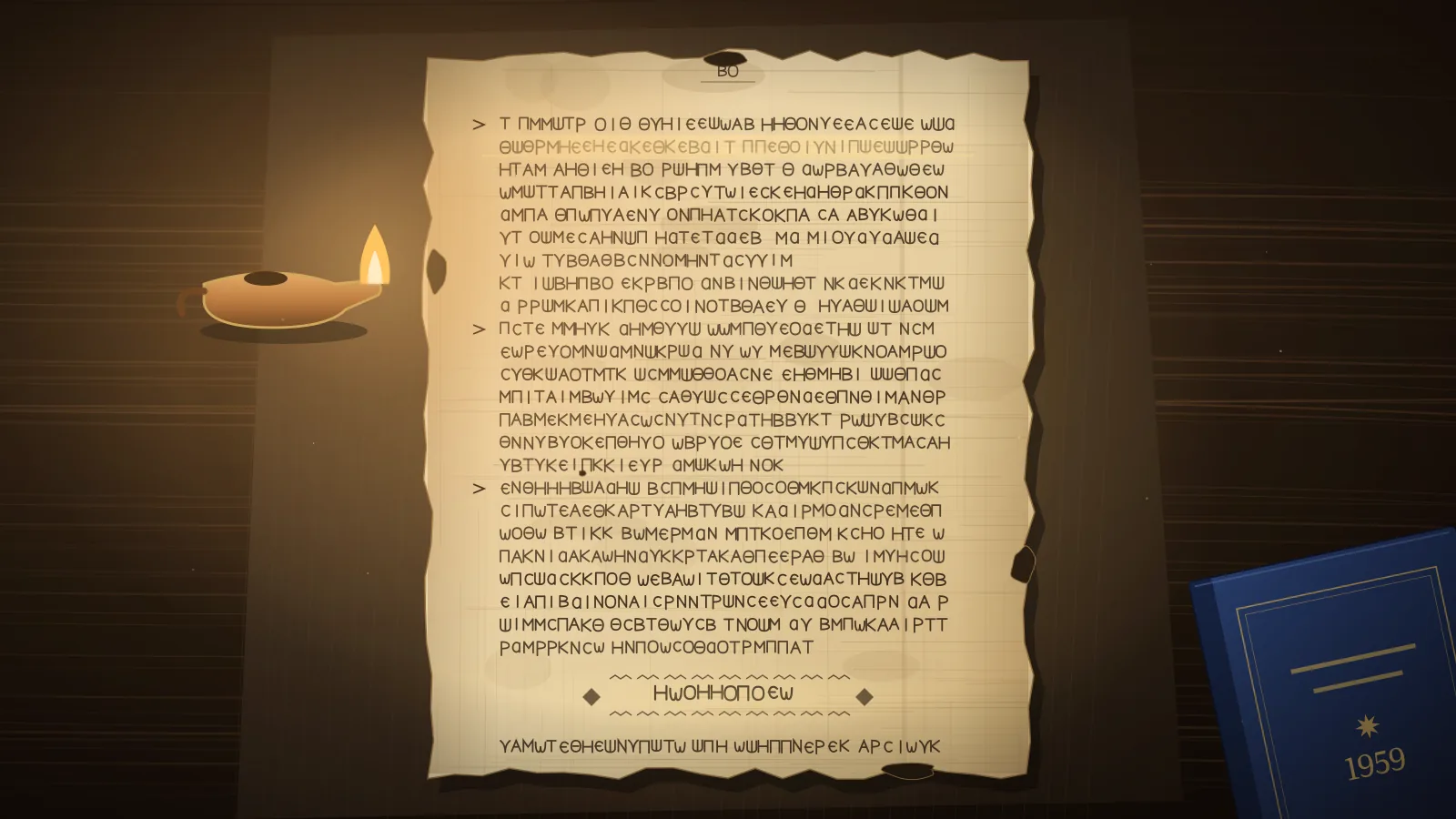
A few did appear. In 1959 the Gospel of Thomas was published, and it caused a stir around the world. In the 1960s James Robinson, a scholar from California, began pressing for the whole library to be opened to everyone.
In 1970 UNESCO and the Egyptian Ministry of Culture set up an international committee, with Robinson as its secretary. Its plan was simple to state and long to carry out: photograph every surviving page, and publish them all. Between 1972 and 1977 the main volumes of the facsimile edition appeared, and the last volume followed in 1984.
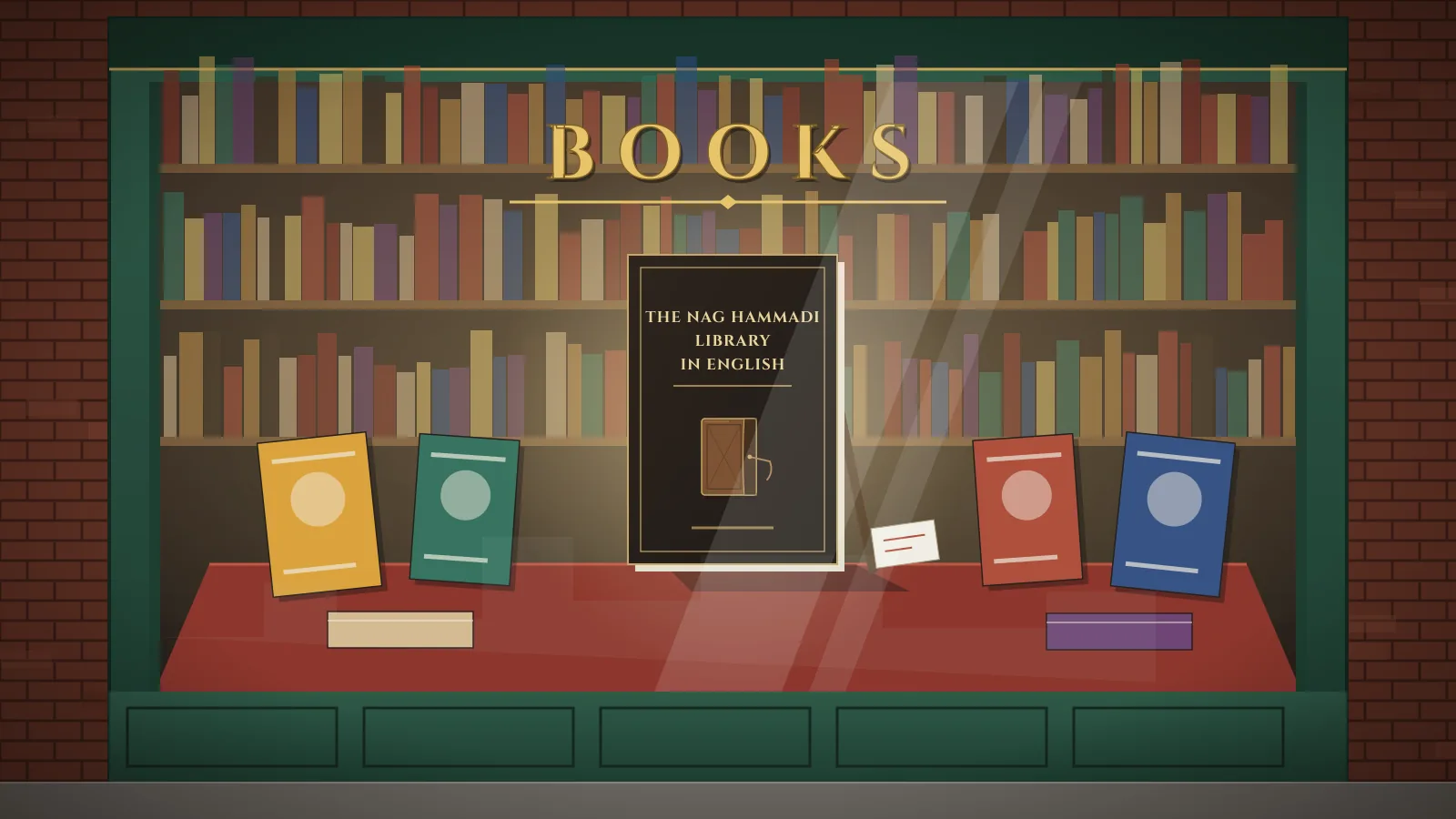
In 1977, too, a team led by Robinson published a single book, The Nag Hammadi Library in English. For the first time, anyone could read the books from the jar.
Chapter VIwatch from 6:53
What the books hold
What was in them? In all, 12 books survive, along with 8 leaves from a thirteenth, tucked long ago inside the cover of another. Together they hold more than 50 texts, most of them previously unknown.
Some are Christian writings that circulated outside the New Testament. Many reflect ideas that scholars call Gnostic, from the Greek word gnosis, which means knowledge. The label is a modern one, and some scholars find it misleading, for the texts speak in many different voices rather than as a single sect.
The most famous is the Gospel of Thomas, a collection of 114 sayings attributed to Jesus. It begins: “These are the secret sayings which the living Jesus spoke.” Many of its sayings echo the New Testament gospels, while others are found nowhere else.
Many of its sayings echo the New Testament gospels, while others are found nowhere else.
There is the Gospel of Philip, with its reflections on rituals and the soul, and the Apocryphon of John, a secret revelation about how the world began. There is the Gospel of Truth, a meditation on how ignorance is dispelled by knowledge. There is even a short passage from Plato’s Republic, in Coptic.
Nearly all of these works were first written in Greek, many probably in the second or third centuries, and later translated into Coptic for readers in Egypt. The books themselves were made in the 4th century. Their covers were stiffened with scraps of used papyrus, and one of those scraps is dated to the year 348.
Chapter VIIwatch from 8:11
Who sealed the jar
Not far from the cliff stood monasteries founded by Pachomius, a pioneer of monks living together in community; one of them, Pbow, lay close by. Many scholars think monks there may have read these books. One theory holds that they were hidden after 367, when Athanasius, the bishop of Alexandria, urged Christians to read only approved books.
Others think the books were buried with their owner, a custom known in Egypt at the time. No one knows for certain who sealed the jar, or why.
Someone put them away with care.
What is clear is that someone put them away with care, and that they lay in the dry ground for some 1,600 years. Today all the surviving codices, the Jung Codex among them, are kept in the Coptic Museum in Cairo. Some pages are lost forever. But more than 1,000 remain, a rare glimpse of the many ways early Christians understood their faith.
And it all began with a farmer at the foot of a cliff, a sealed jar, and a moment’s choice between fear of a jinn and hope of gold.