The story of the film
Jerusalem, Acre and Cyprus, then Paris and France · c. 1120–1314
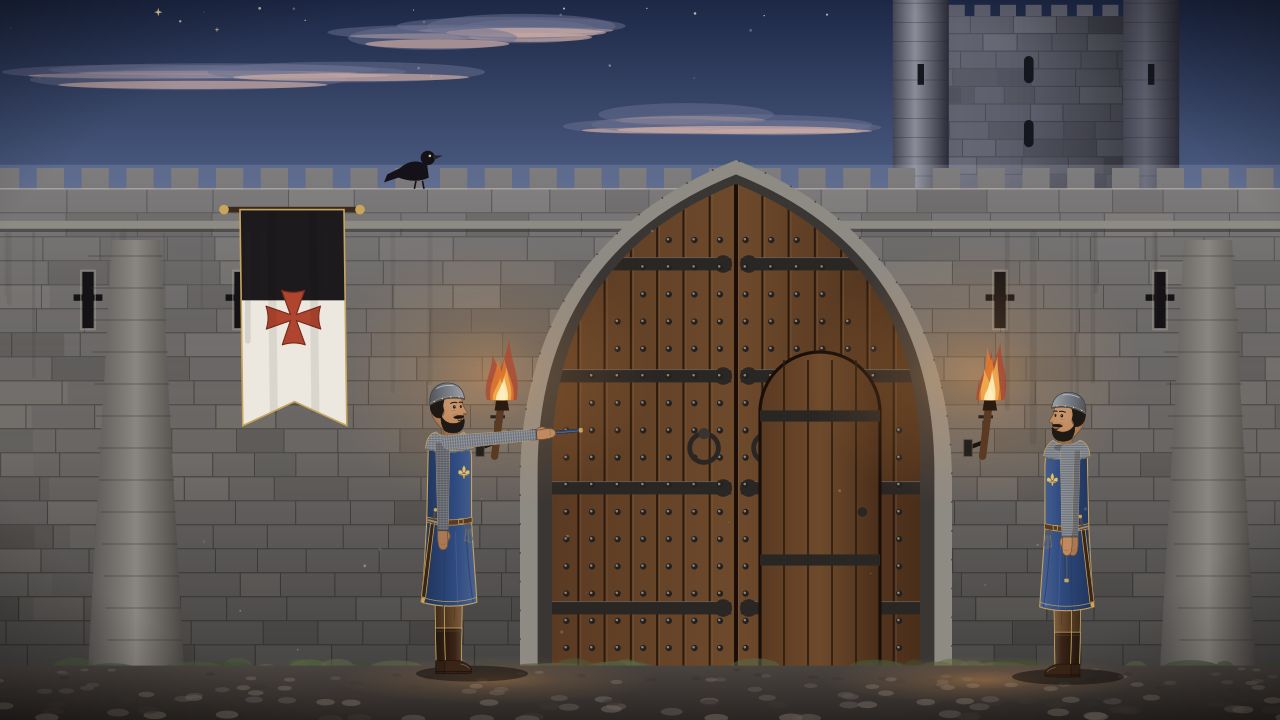
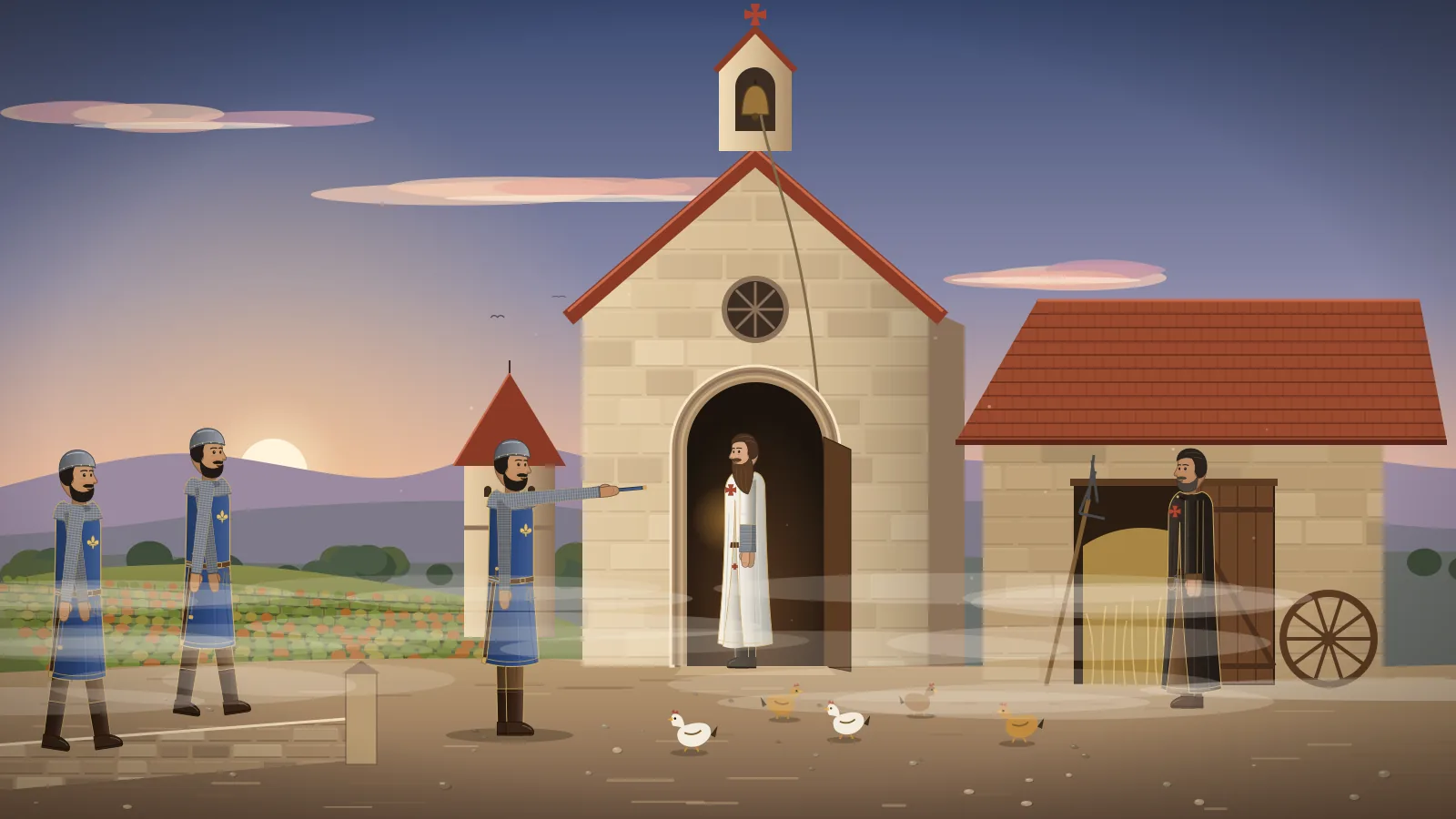
Before sunrise on Friday, 13 October 1307, armed men waited in the grey streets of Paris. They stood outside a great walled compound with a tall dark tower, the Paris house of the Knights of the Temple, one of the richest religious orders in Christendom. At first light the king’s officers knocked on the gate. All across France, at that same hour, other officers were knocking on other doors.
Behind those doors lay the end of a story that had begun nearly two centuries earlier, far to the east, on the roads to Jerusalem.
Chapter Iwatch from 0:44
Guardians of the Road
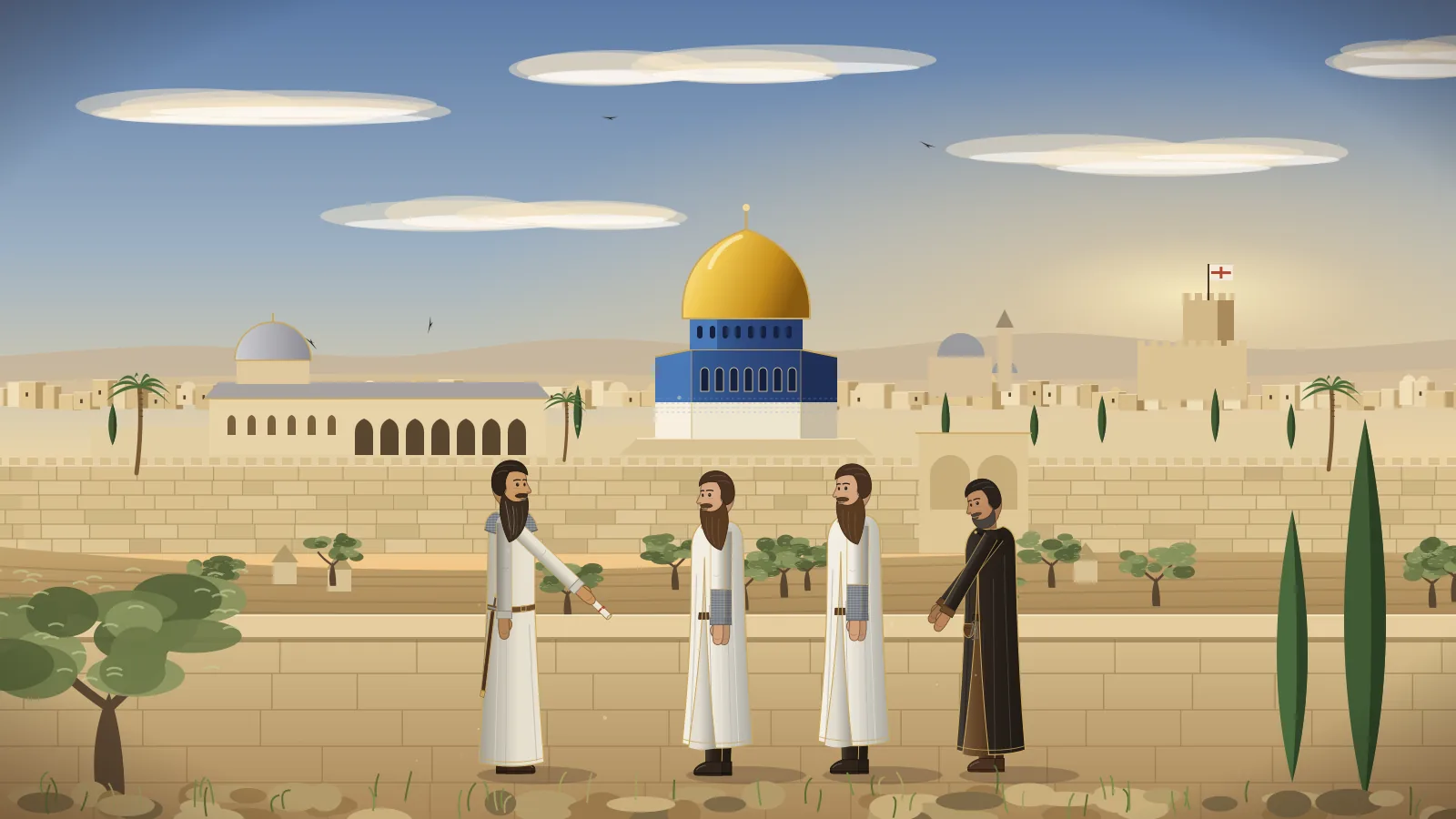
The story began in Jerusalem around 1119 or 1120, some twenty years after the First Crusade had taken the city. Pilgrims from Europe were walking the roads to the holy places, and those roads were dangerous: many travellers were robbed, and many were killed on the way. A French knight, Hugues de Payns, and a small group of companions swore to protect them. A later chronicler spoke of exactly nine founders, but that is a round figure written down afterwards; what is known is only that the band was small.
They were soldiers, but they took vows like monks: poverty, chastity, obedience. The king of Jerusalem, Baldwin II, gave them quarters on the Temple Mount, in the Al-Aqsa Mosque, which the crusaders called the Temple of Solomon. That is how they got their name: the Poor Fellow-Soldiers of Christ and of the Temple of Solomon, known to the world as the Templars.
They were soldiers, but they took vows like monks.
The idea of monks who fought was new, and not everyone liked it. But Bernard of Clairvaux, the most influential churchman of the age, wrote in its defence, praising what he called a new knighthood. In 1129 a church council at Troyes, in France, gave the brothers a rule of life and a white mantle. The red cross on that mantle came later, in the 1140s.
Then gifts poured in: farms, mills, vineyards, whole villages. Within a century the Templars had houses from Scotland to Cyprus. Most of the brothers who ran them were not knights at all, but sergeants, chaplains and estate managers, working the land to pay for the war in the East.
They also became bankers. A pilgrim could leave money at a Templar house in France and collect the same value in the Holy Land, with no coins to lose on the road. Kings borrowed from them, and for many years the Templar treasurer in Paris looked after the French crown’s money.
Chapter IIwatch from 2:04
The Lost Front Line
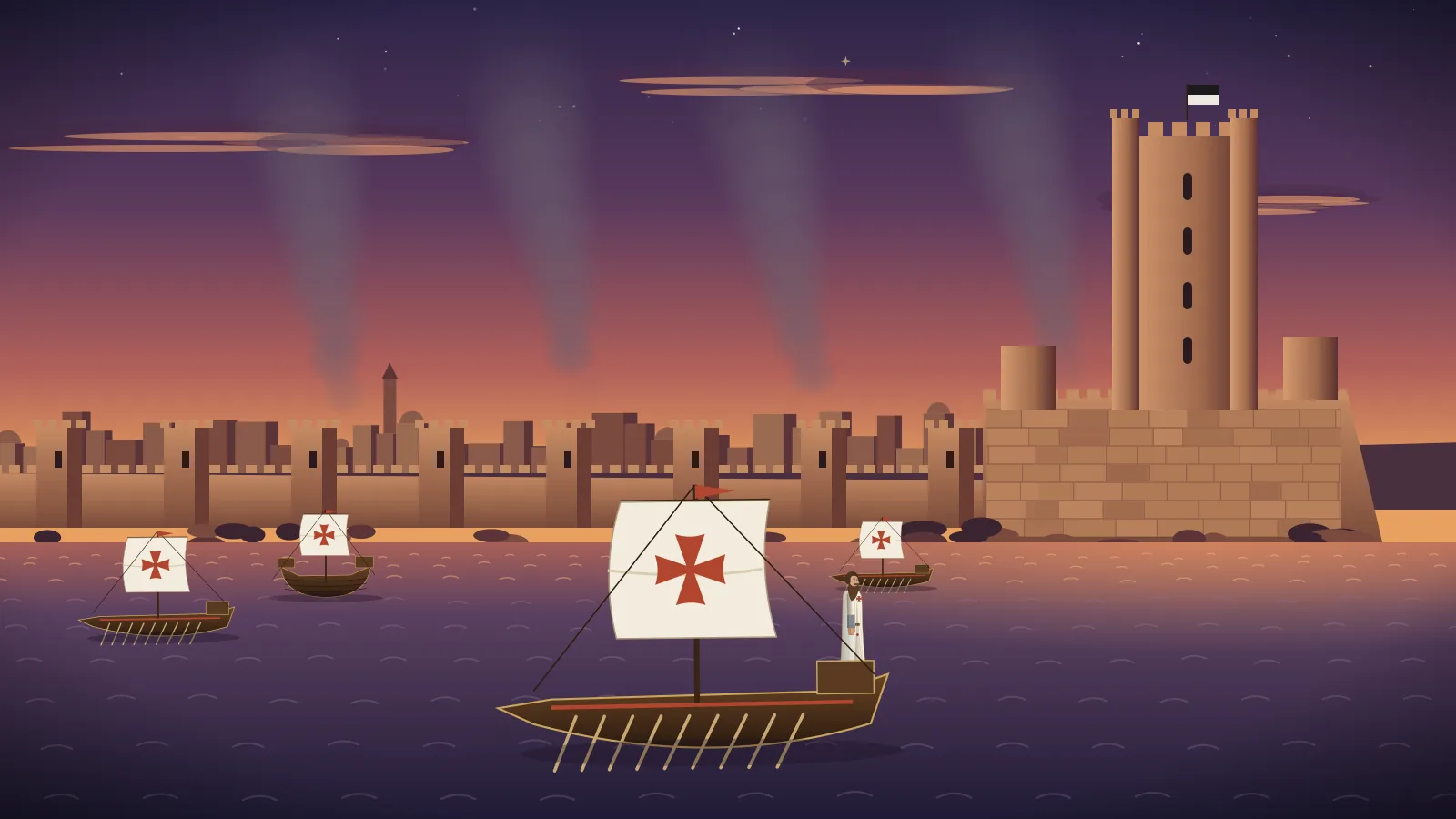
But the order’s reason for existing was the defence of the Holy Land, and in 1291 that was lost. Acre, the last major Christian stronghold, fell to the Mamluk sultan after a six-week siege. The Templars’ great fortress there was the last part of the city to hold out. When it fell, the survivors sailed for Cyprus.
Their new Grand Master, Jacques de Molay, was a veteran knight from Burgundy. He dreamed of a new crusade to win Jerusalem back. But in Europe, people were asking what these wealthy soldier-monks were for. The order answered only to the pope, and its wealth and independence now stood out sharply to rulers who were short of money.
In Europe, people were asking what these wealthy soldier-monks were for.
In France, the king was Philip IV, called Philip the Fair. He was devout, stern, and short of money. His wars with England and Flanders had emptied his treasury. He had debased the coinage and taxed the clergy, and in 1306 he expelled the Jews of France and seized their goods.
The Templars held great wealth, and the crown owed them money. Many historians think that mattered. Yet how far it explains what followed is still debated, and Philip may also have believed the rumours he was told about the order, rumours spread, some say, by former members.
Chapter IIIwatch from 3:16
Friday the Thirteenth
On 14 September 1307, sealed letters left the king’s court, issued from the abbey of Maubuisson, for royal officials all over France. They were to be opened in secret.
Then, on the morning of Friday the 13th, the arrests began, in Paris and in Templar houses across the kingdom. How many brothers were taken is uncertain; estimates run from several hundred to about 2,000. Most of the men taken were not warriors at all, but farm managers, priests, servants and old men. In Paris, Jacques de Molay himself was arrested. The day before, he had walked in the funeral procession of the king’s sister-in-law, Catherine de Courtenay, wife of Charles of Valois.
Most of the men taken were not warriors at all.
The charges were shocking. The king’s men said that new brothers were made to deny Christ, to spit on the cross, and to worship an idol in secret. The prisoners were questioned by royal officers and by the inquisitor of France, Guillaume de Paris, who was also the king’s confessor. Torture was used, and later testimony shows that some brothers died in prison.
Within weeks, most of them had confessed to something. In Paris, of 138 brothers questioned, nearly all admitted at least one of the charges. On 25 October, Jacques de Molay confessed in front of the masters of the University of Paris, repeating what he had first said the day before. Weeks later, before envoys of the pope, he took his confession back.
Chapter IVwatch from 4:56
The Pope's Inquiry
The pope was Clement V, a Frenchman from Gascony. He had not been consulted, and he protested to the king. But in November, in a bull known as Pastoralis praeeminentiae, he ordered the arrest of Templars in every Christian kingdom, and took the inquiry into his own hands. Outside France, the inquiries in England, Aragon, Cyprus and elsewhere produced little or nothing to support the accusations.
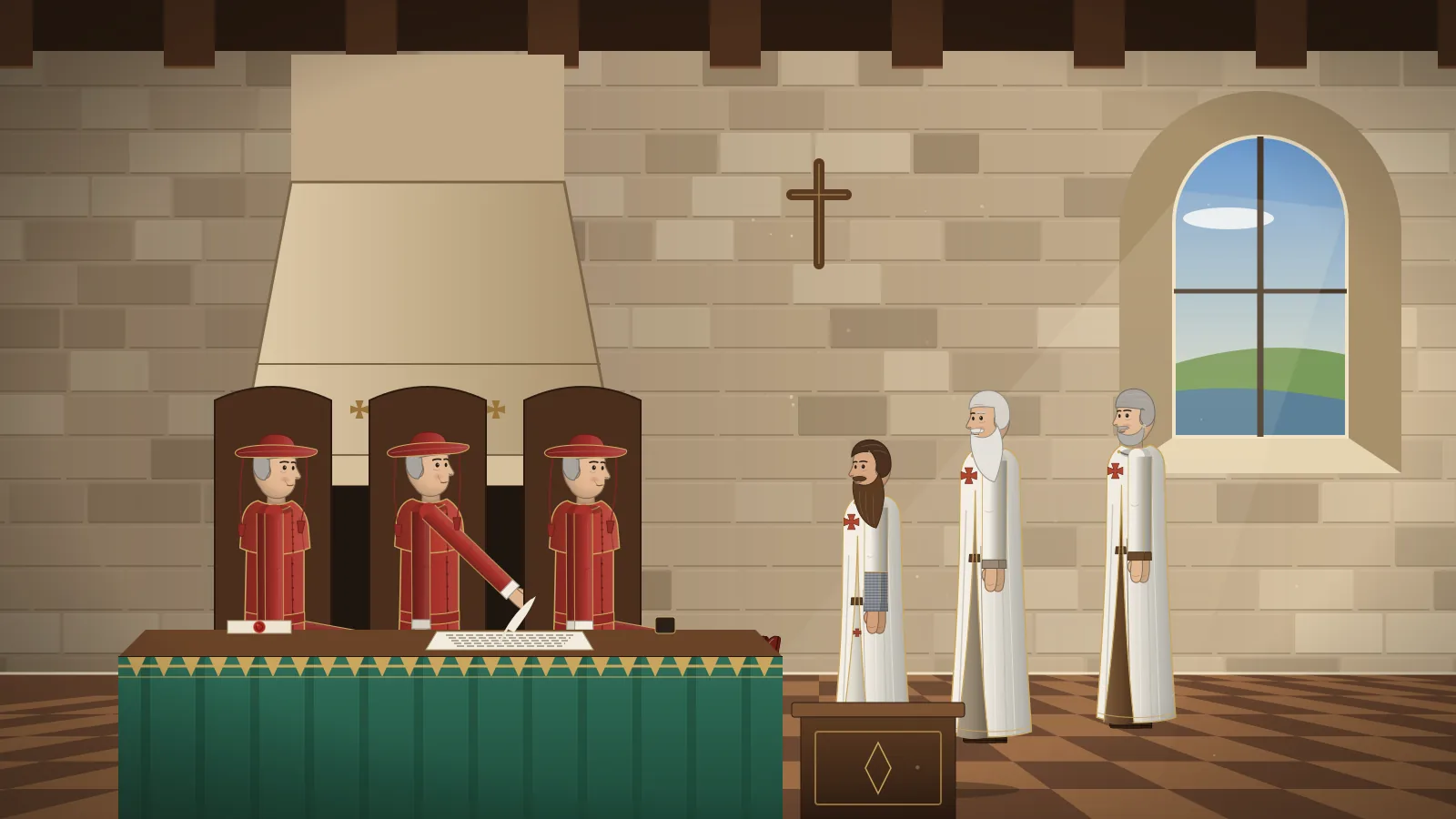
In August 1308, three cardinals rode to the royal castle of Chinon, in the Loire valley, where the leaders of the order were being held. Over several days they questioned Molay and four other senior Templars. The men asked for forgiveness, and the cardinals granted them absolution and received them back into the Church. The record of that hearing was written on parchment. Then it was filed away, and for centuries almost no one looked at it.
In 1310, hundreds of Templars came forward to defend their order before a papal commission. Then, in May, 54 brothers who had withdrawn their confessions were burned outside Paris, on the order of the archbishop of Sens, Philippe de Marigny, and his provincial council. After that, the defence collapsed.
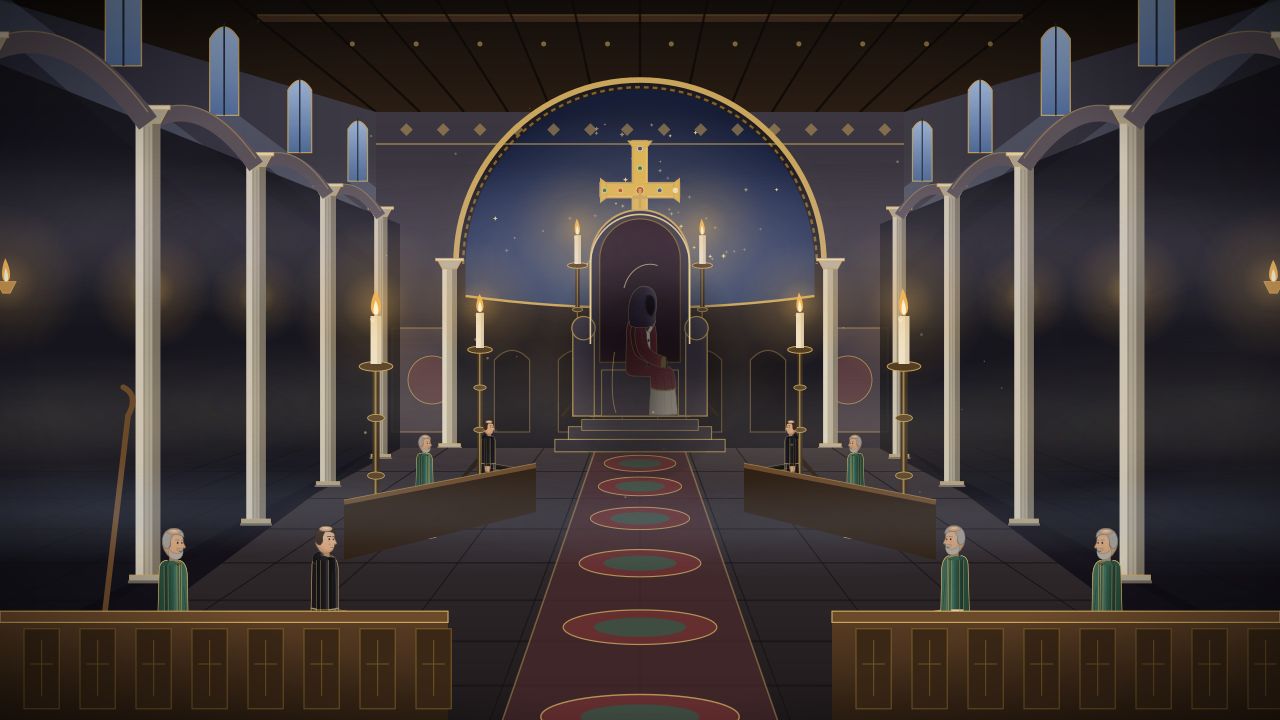
In October 1311 a great council of the Church met at Vienne, on the Rhône, and many bishops wanted to hear the Templars defend themselves. But in March 1312, under pressure from the king, Clement issued a bull called Vox in excelso, a voice from on high. It did not find the order guilty. It abolished it, the pope wrote, for the good of the Church, because its name was now so damaged.
It did not find the order guilty.
Most of the Templars’ lands were given to another military order, the Knights Hospitaller. In Portugal, King Denis later passed them to a new order of his own, the Order of Christ. Many former Templars lived out their lives in monasteries, on small pensions.
Chapter Vwatch from 7:00
Smoke over the Seine
On a March day in 1314, the 18th in most accounts, the four leaders of the order were brought before Notre-Dame to hear their sentence: prison for life. Then Jacques de Molay, by now an old man, and Geoffroi de Charney, preceptor of Normandy, spoke out. The order was innocent, they said, and they had lied only to save themselves.
The order was innocent, they said, and they had lied only to save themselves.
Having taken back their confessions, the two men counted as relapsed heretics. That same evening, on the king’s order, both were burned on a small island in the Seine, just west of the Île de la Cité, known as the Île aux Juifs.
A chronicler in Paris, Geoffroi de Paris, who wrote as an eyewitness, recorded that Molay died calmly, saying that God would avenge them. Pope Clement died a month later. King Philip died that November, after he was taken ill while out hunting.
From these coincidences grew the legend of a curse, called down from the fire. Later writers added more and more detail. In time the curse named both king and pope and reached down to the thirteenth generation, a version made famous by a series of French historical novels begun in 1955.

Chapter VIwatch from 8:02
The Legends and the Parchment
Other legends followed: a lost treasure, secret ships slipping away with the order’s wealth, Templars who never really disappeared but lived on in hiding. Historians have found no evidence for any of them.
And many people today say that this is why Friday the 13th is unlucky. But that link is a modern legend. Fear of Friday the 13th is first recorded only in the late 1800s, and the Templar story was attached to it in the late 20th century; the earliest printed link so far found dates from 1991.
That link is a modern legend.
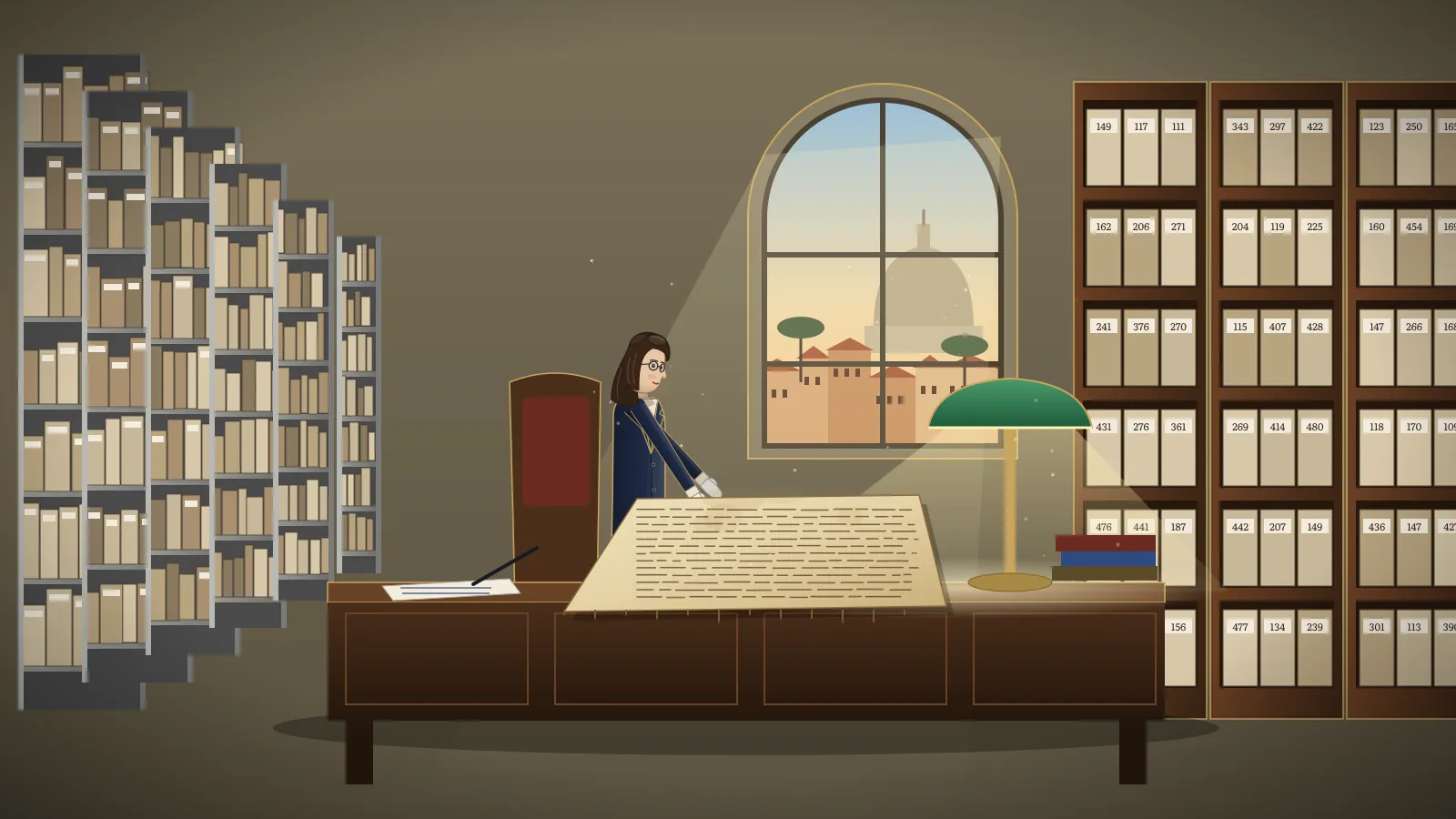
In 2001 an Italian historian, Barbara Frale, was working in the Vatican archives. There she found a large sheet of parchment that, it seems, had been catalogued in the wrong place. It was the record of the hearing at Chinon. It showed that in 1308 the pope’s own envoys had absolved the Templar leaders, and the Vatican published it in 2007.
It does not prove the Templars innocent of every charge. Most historians judge the accusations false and the confessions the fruit of torture and pressure, while some think that certain initiation practices may have existed in some houses. But the parchment shows a pope who had tried, for a time, to save them.
The little island in the Seine is gone now. Around 1600 it was joined to the Île de la Cité, when the Pont Neuf was built. At the tip of the island, a small garden, the Square du Vert-Galant, looks out over the river, and nearby a plaque recalls that Jacques de Molay was burned on this spot. The order that began on a road to Jerusalem ended here, between the knock on a gate one Friday morning and the smoke over a river at dusk.