The story of the film
The Judaean Desert, Bethlehem, Jerusalem and New York · 1946–1956
In the winter of 1946, or perhaps early in 1947, a young shepherd went looking for a lost goat in the cliffs above the Dead Sea. According to the usual account, he saw a small, dark opening high on the rock face. He picked up a stone and threw it in.
From inside came a sound he did not expect. It was not the clatter of rock on rock, but the crack of breaking pottery.
Chapter Iwatch from 0:42
The Jars in the Cave
The Dead Sea lies at the lowest point on the surface of the Earth, more than 400 metres below sea level. The air there is hot and very dry, and that dryness would turn out to matter. The cliffs above its north-western shore are pale, layered limestone, pocked with dark openings.
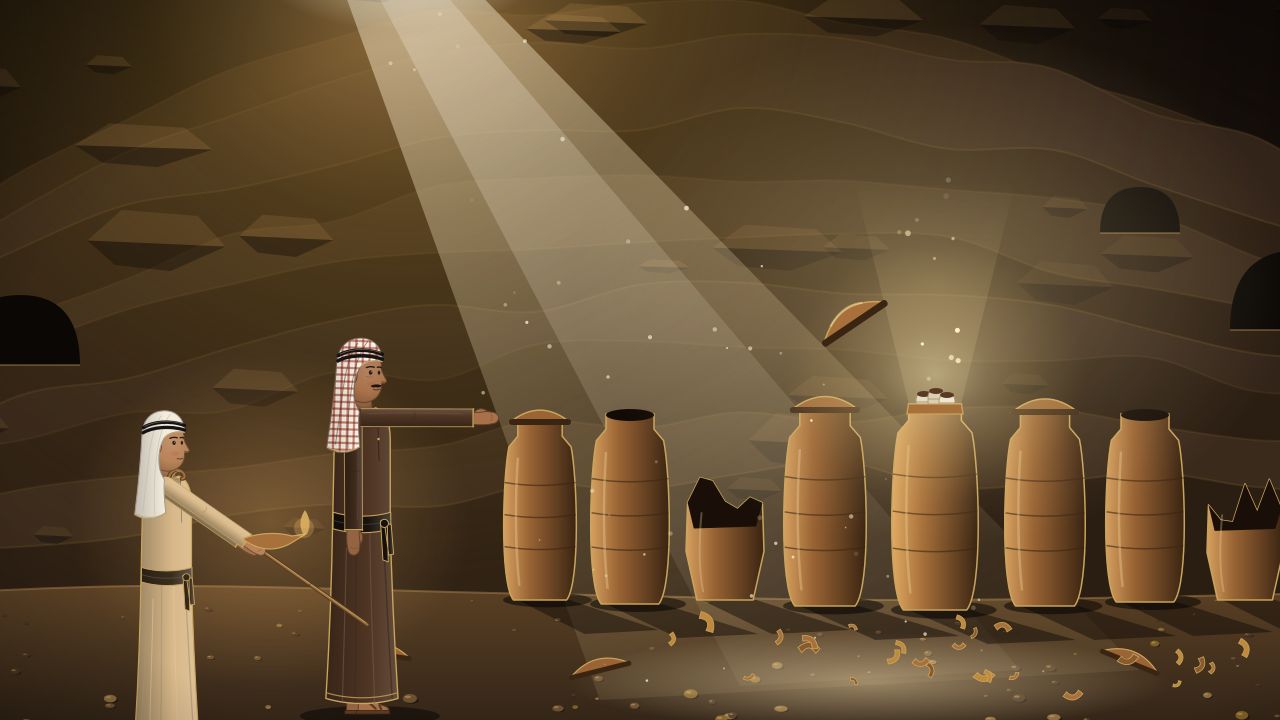
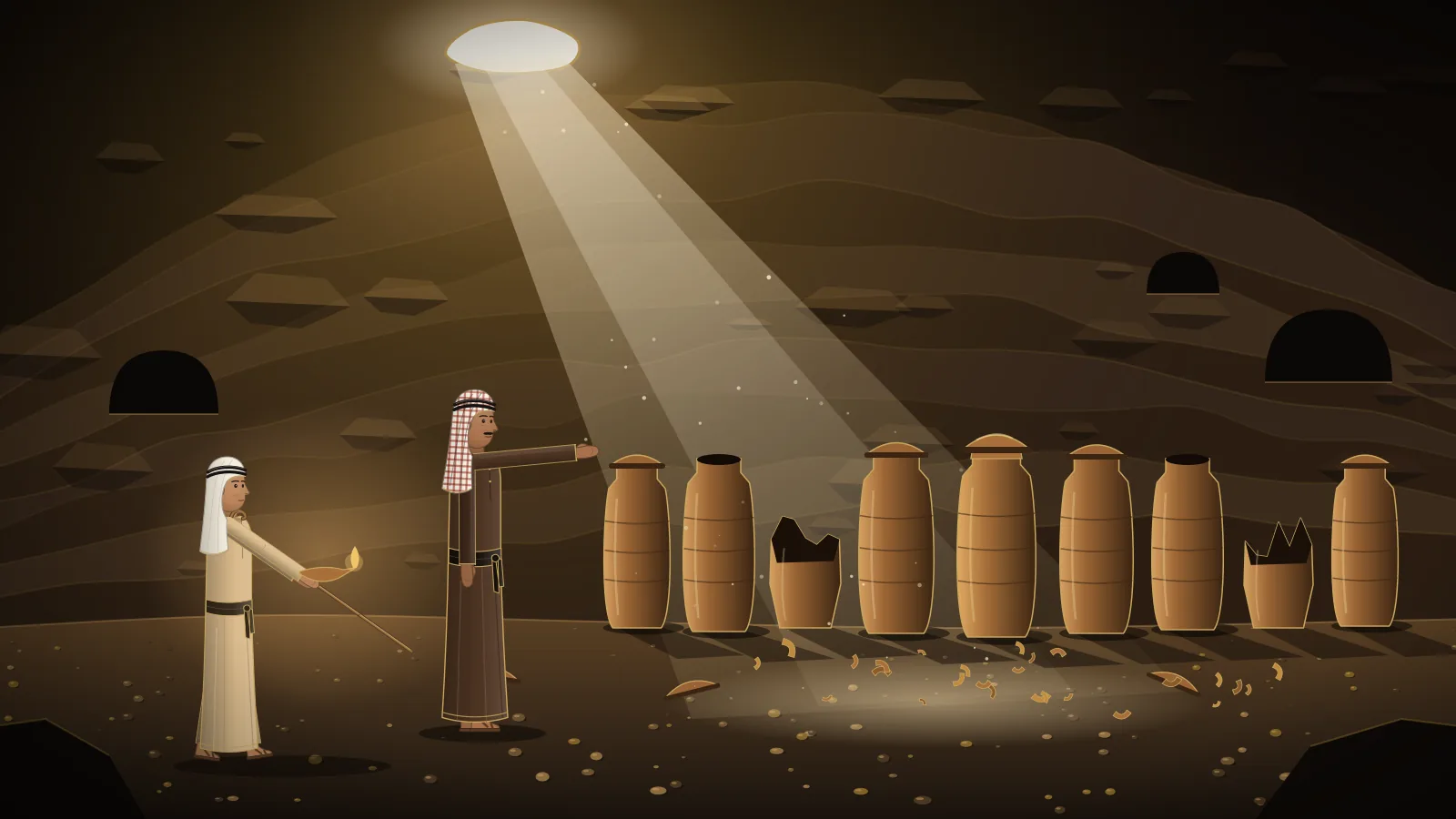
The shepherd’s name was Muhammad edh-Dhib, a young man of the Ta’amireh, a Bedouin tribe who grazed their flocks in the Judaean Desert. That night, the story goes, he told his cousins about the cave. Some of them dreamed of gold. Others feared jinn. Soon after, they climbed up to the opening and squeezed inside.
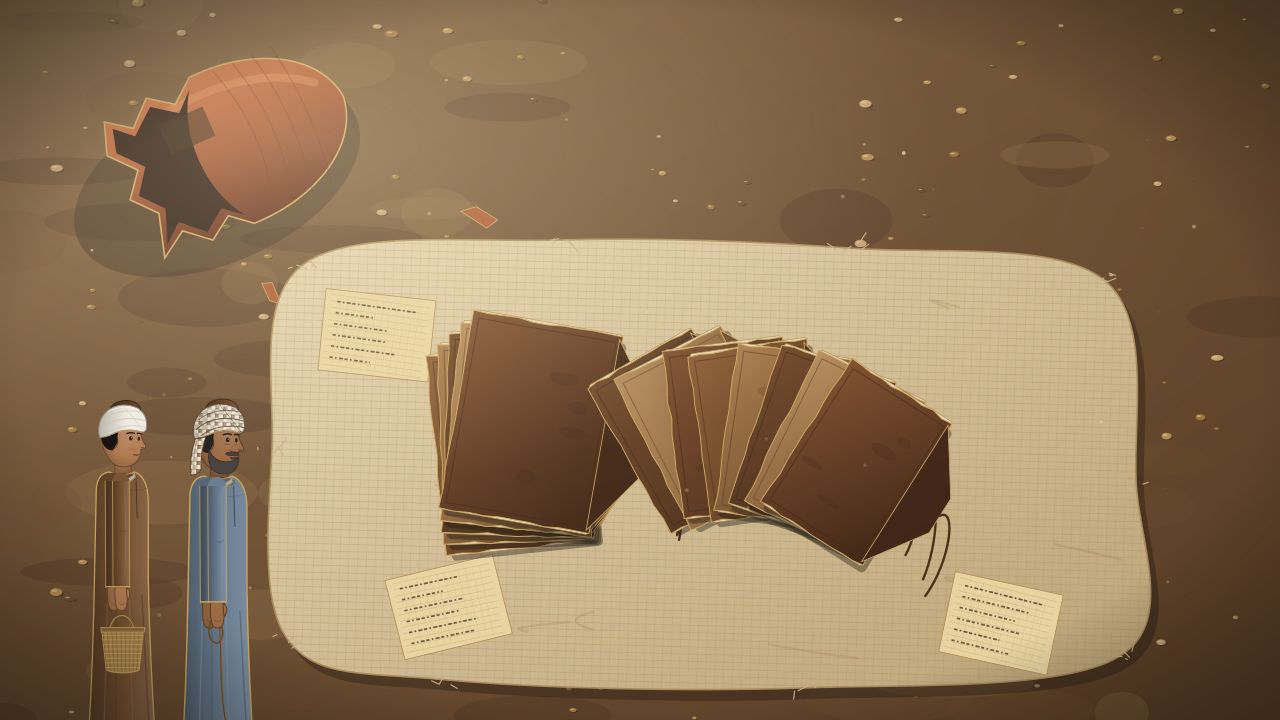
In the half-light stood a row of tall clay jars, some with their lids still on. Most were empty, or filled with dust. But in one of them, wrapped in old linen, were rolls of leather, dark with age. Many scholars think that around 68 CE, as Roman armies put down a Jewish revolt, someone hid these scrolls in the caves and never came back for them.
When the cousins unrolled one, it was covered in columns of tiny, careful letters, in a writing none of them could read. The letters were Hebrew, written with a pen and black ink on prepared animal skin, some of them more than 2,000 years earlier.
There was no gold.
There was no gold. The cousins took the scrolls back to their camp, and, the story goes, for a while they hung them in a bag from a tent pole. They had no idea they were holding the oldest known copies of books of the Bible.
Chapter IIwatch from 2:27
The Shoemaker and the Archbishop
In the spring, the Bedouin brought the scrolls to Bethlehem, to a shoemaker who also dealt in antiquities. His name was Khalil Iskander Shahin, but everyone called him Kando.
Kando could not read them either. But he wondered whether the writing was Syriac, the old language of his own church, and he took them to its archbishop in Jerusalem. He agreed to act as the go-between, for a share of whatever the scrolls might bring.
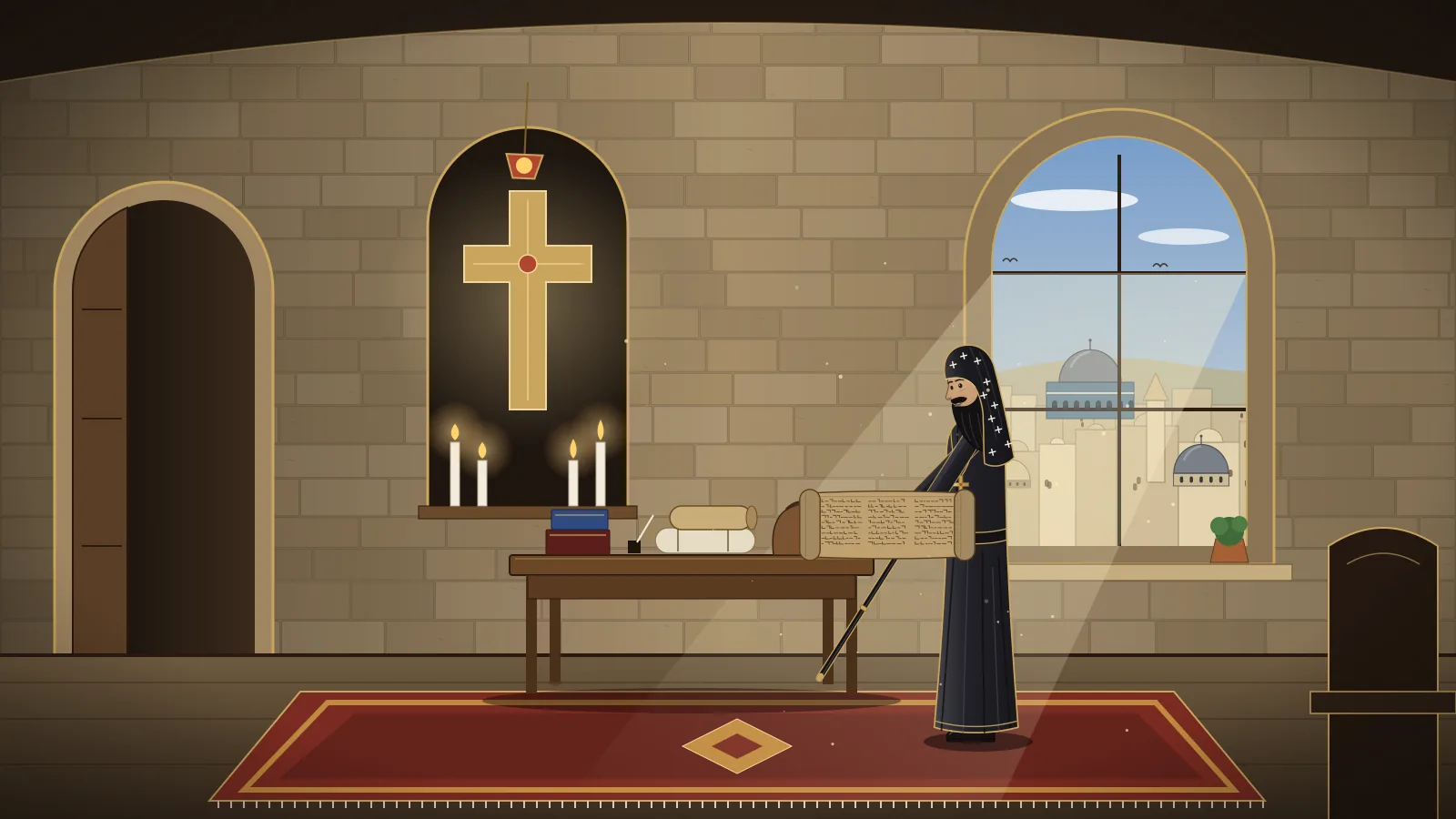
At the Monastery of Saint Mark, in the Old City, lived Mar Athanasius Yeshue Samuel, the Syrian Orthodox archbishop. He became convinced that the scrolls were very old. In July 1947 he bought four of them, for a small sum: about 24 pounds.
Some told him they were worthless.
One of the four was the Book of Isaiah, complete from beginning to end: 17 sheets of leather sewn together, more than 7 metres long. The archbishop showed his scrolls to visiting scholars. Some told him they were worthless. Others doubted they were old at all.
Chapter IIIwatch from 3:35
A Parcel Across the Wire
By now, Jerusalem was a city on the edge of war. Barbed wire and British security zones divided its streets.
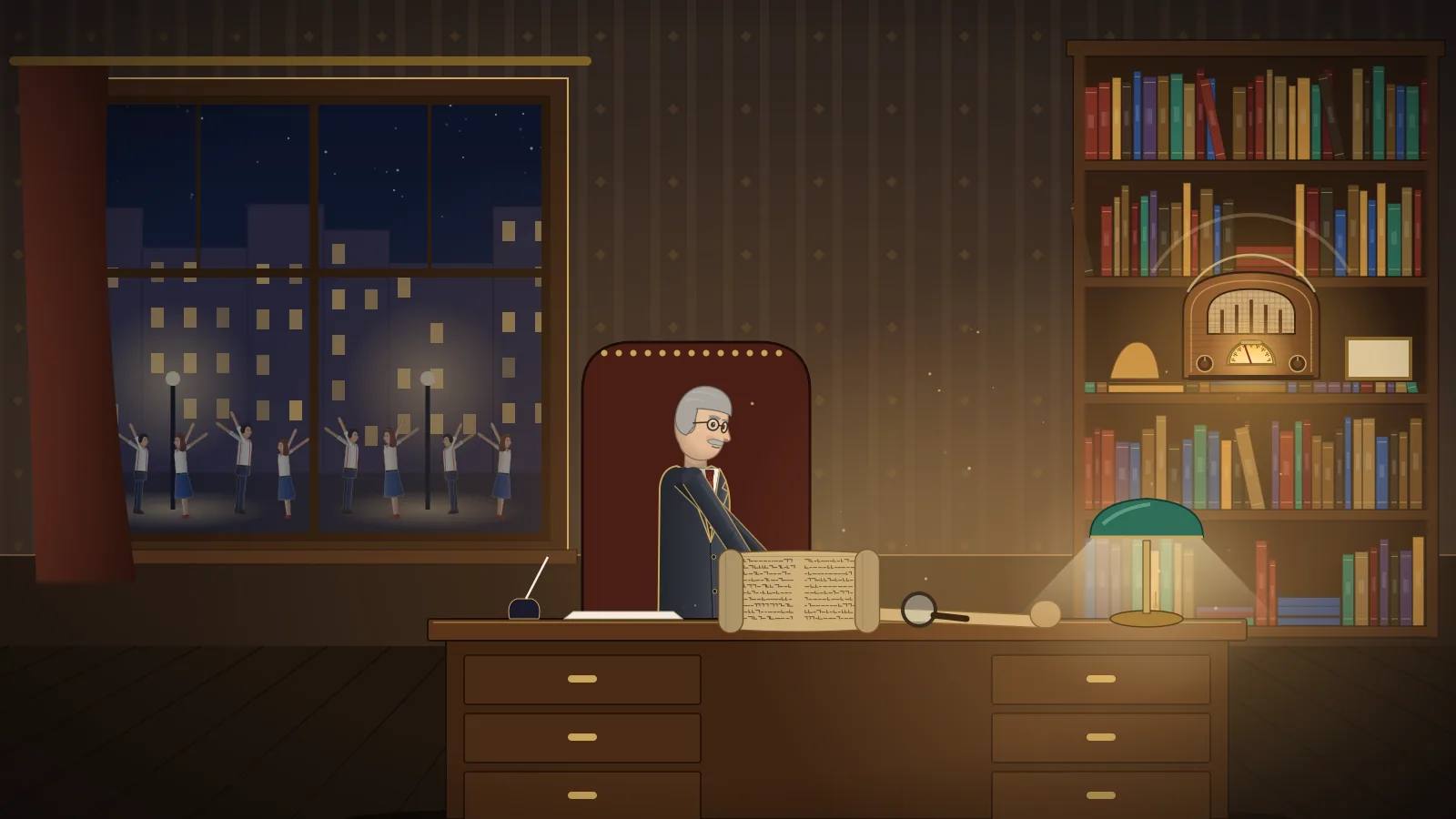
Across the city lived Eleazar Sukenik, a professor of archaeology at the Hebrew University. In late November a dealer held up a scrap of leather for him across the barbed wire. Sukenik recognised the letters at once.
On 29 November 1947 he took a crowded bus to Bethlehem, although, by his son’s later account, he had been urged not to go. He came back with the scrolls wrapped like an ordinary parcel. He had bought two scrolls, and a third would follow a few weeks later.
That night, as he sat reading, the radio was playing. In New York, the United Nations voted to partition Palestine. In Jewish neighbourhoods, people danced in the streets. Arab leaders rejected the plan, and within days violence spread.
Sukenik kept reading.
Sukenik kept reading. In his diary he wrote that he felt privileged by destiny to gaze upon a Hebrew scroll that no one had read for 2,000 years.
Chapter IVwatch from 4:57
Photographs and Exile
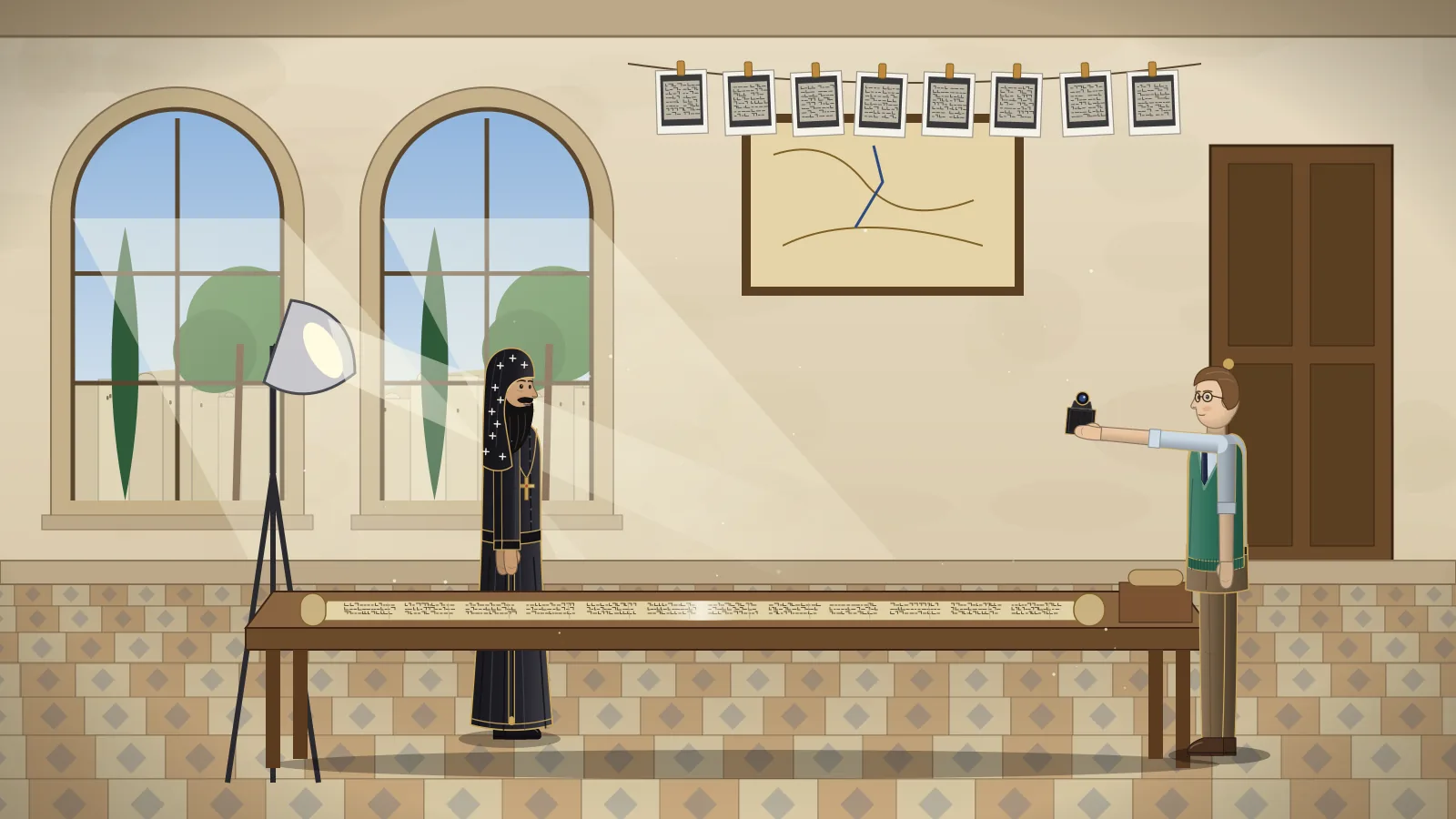
In February 1948 the archbishop let a young American scholar, John Trever, photograph three of his scrolls. The fourth was too brittle to unroll. Trever had come to Jerusalem to photograph the plants of the Holy Land, but now he noticed that the letters looked like those of the oldest Hebrew text then known.
One of the scrolls he photographed was the complete copy of the Book of Isaiah. When the photographs reached America, the archaeologist William Albright wrote back that it was the greatest manuscript discovery of modern times.
The monastery and Sukenik’s home lay on opposite sides of the line.
As the fighting spread, the archbishop’s scrolls were sent out of the country, first to a bank vault in Beirut. When the fighting ended, Jerusalem was divided, and the monastery and Sukenik’s home lay on opposite sides of the line. The seven scrolls from the first cave were now far apart.
Then, in early 1949, the archbishop took his four scrolls to the United States. He hoped to sell them, he said, to help his church and the many families displaced by the war. In America the scrolls were exhibited, admired and argued over. In 1949 they went on show at the Library of Congress in Washington. For 5 years, no one bought them.
Chapter Vwatch from 6:14
Miscellaneous for Sale
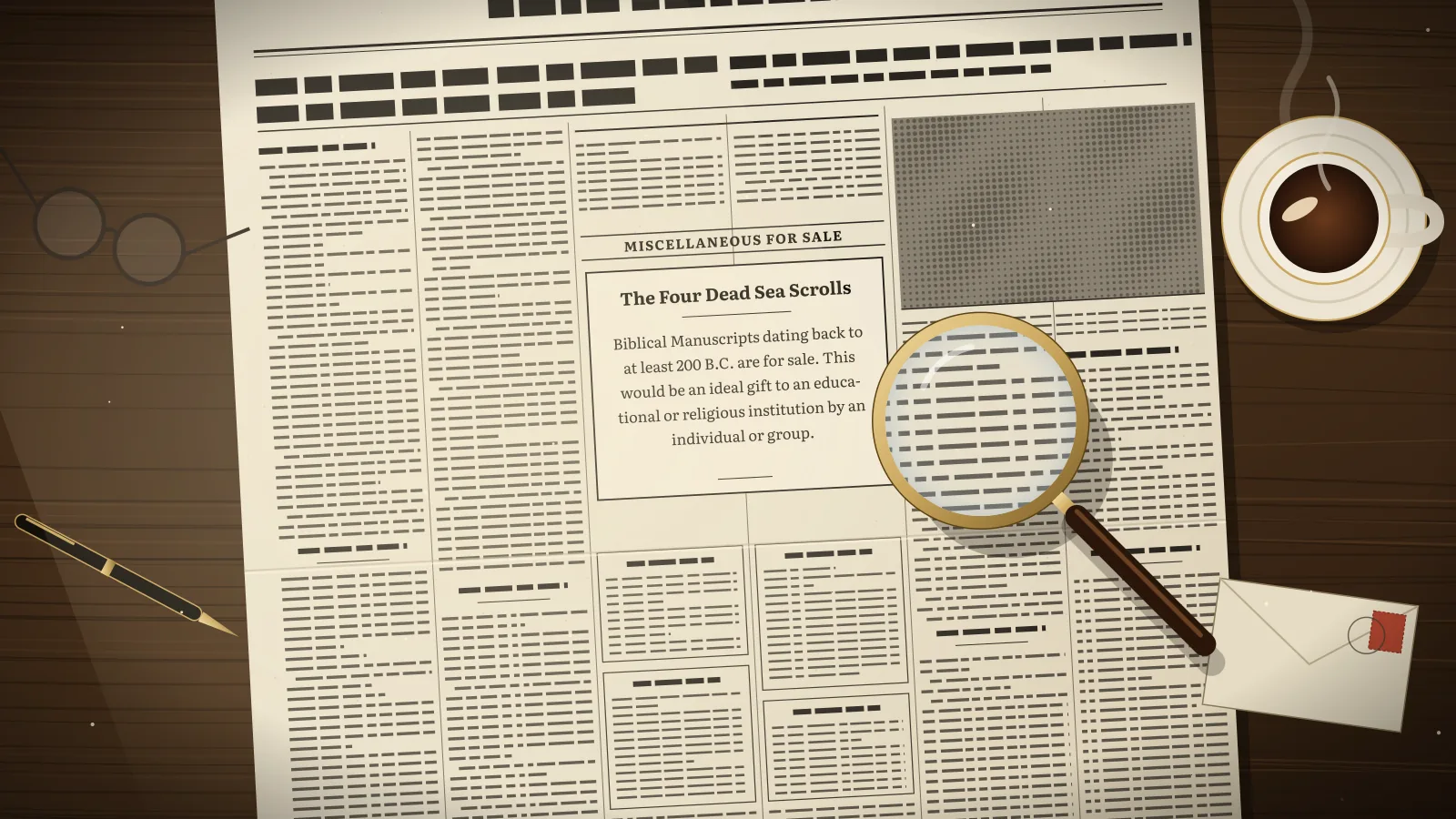
On 1 June 1954 a small advertisement appeared in The Wall Street Journal, under the heading “Miscellaneous for Sale”. “The Four Dead Sea Scrolls,” it read. Biblical manuscripts, dating back to at least 200 B.C., were for sale. They would be, it added, an ideal gift to an educational or religious institution.
By chance, a visitor from Israel was in America that summer, giving lectures. His name was Yigael Yadin, and he was Eleazar Sukenik’s son. His father had died the year before. In 1948 Sukenik had tried to buy these four scrolls too, and failed.
Yadin believed that an open offer from Israel would not be accepted. So he worked through intermediaries, in complete secrecy. A scholar from New York, Harry Orlinsky, was asked to examine the scrolls under a false name: Mr Green. When he was sure they were genuine, he telephoned a single code word: le-chayim, “to life”.
Seven years later, they sold for a quarter of a million dollars.
In early July, in a New York hotel, the deal was done, for 250,000 dollars. In 1947 the archbishop had paid about 24 pounds for the four scrolls. Seven years later, they sold for a quarter of a million dollars.
The scrolls were flown home one at a time. Coded cables reported each safe arrival, and only when all of them had landed was the purchase announced. After 7 years apart, the 7 scrolls from the first cave were together again, as the father had hoped.
Chapter VIwatch from 8:06
Eleven Caves and a White Dome
The first cave was not the last. By 1956, Bedouin and archaeologists had found 10 more caves. One of them, Cave 4, held fragments of some 550 manuscripts. In all, the caves gave up the remains of about 900.
Near the caves stand the ruins of Qumran. Many scholars link them to the people who kept the scrolls, perhaps a Jewish group known as the Essenes. Others disagree, and the question remains open.
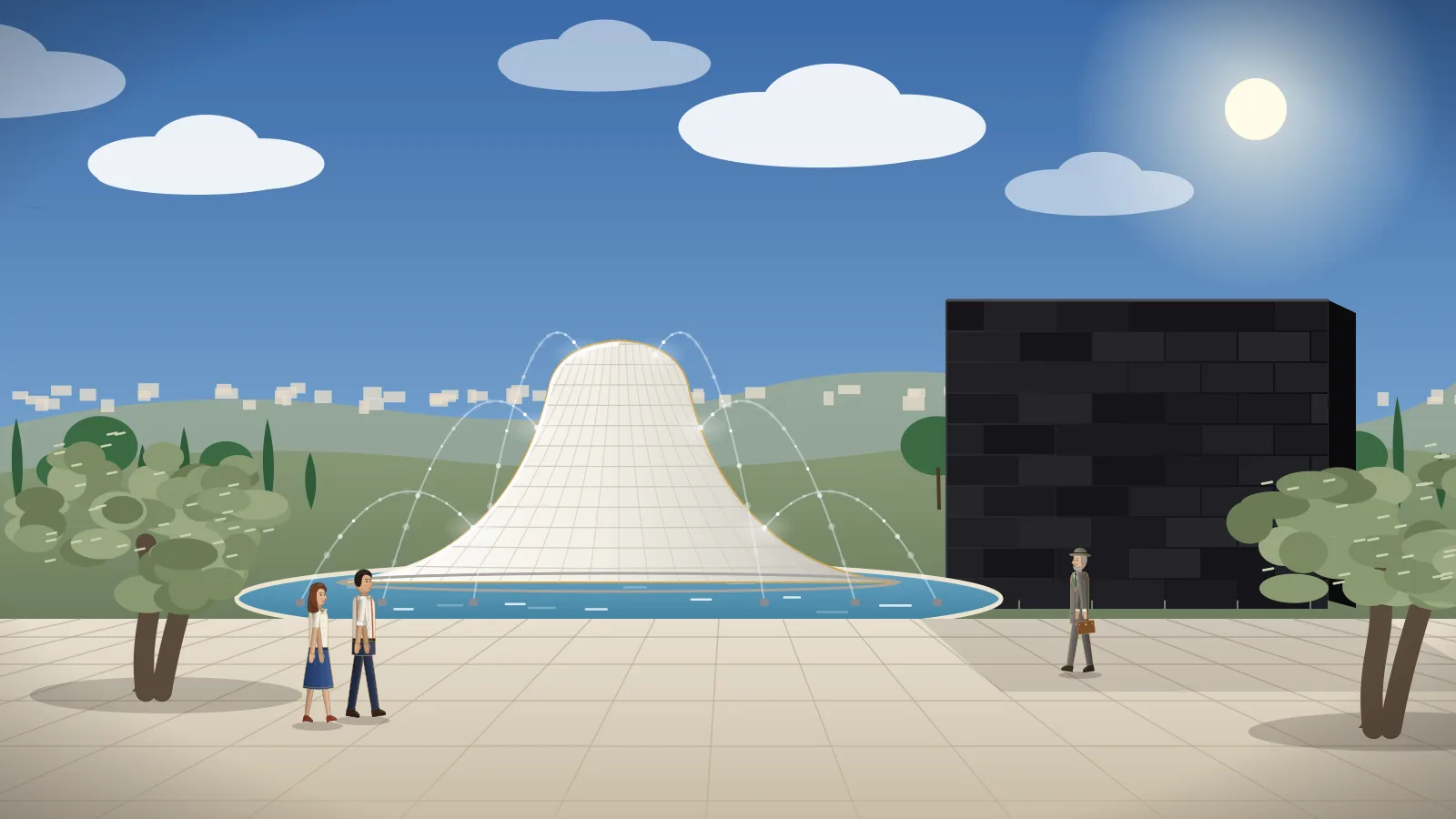
Today the scrolls from that first cave are kept in the Shrine of the Book at the Israel Museum in Jerusalem, under a white dome shaped like the lid of a jar. Beside it stands a black wall, for the scrolls’ battle between the sons of light and the sons of darkness.
The great Isaiah scroll is about 1,000 years older than any complete Hebrew copy of Isaiah known before. When scholars compared it with the Hebrew text read today, the differences were remarkably small: mostly spelling, and a few words. Today anyone can read the scrolls online, column by column, in photographs so sharp they show the grain of the leather.
Some popular books later claimed that the scrolls hid secrets about Jesus. They do not mention him at all. What they show is the Jewish world from which Christianity emerged.
All of it began with a lost goat, and a stone thrown into the dark.
The jars, the bargaining in Bethlehem, the parcel across the wire, the advertisement and the code word in New York: all of it began with a lost goat, and a stone thrown into the dark.