The story of the film
Rome, at the Lateran · 891–897
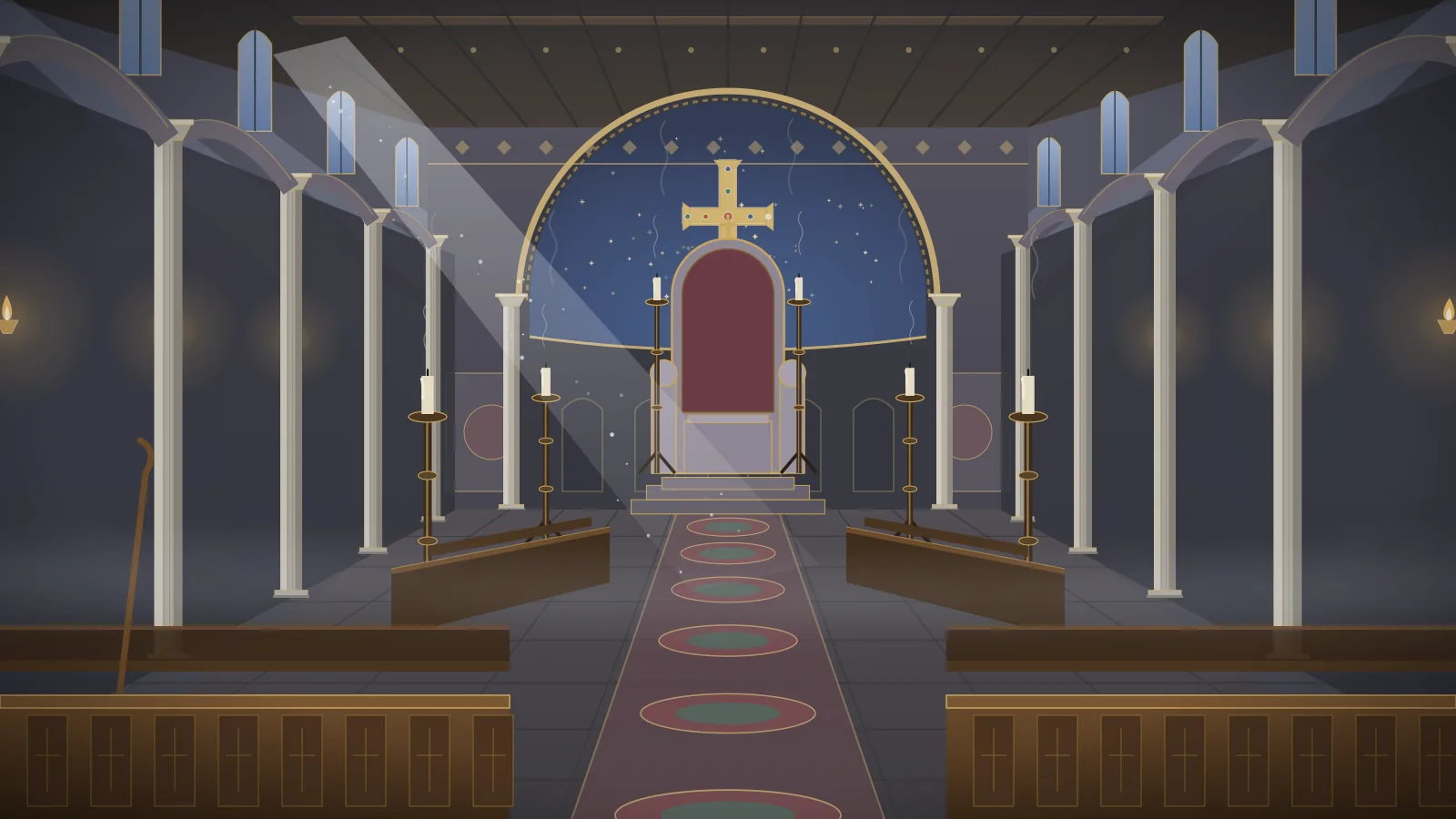
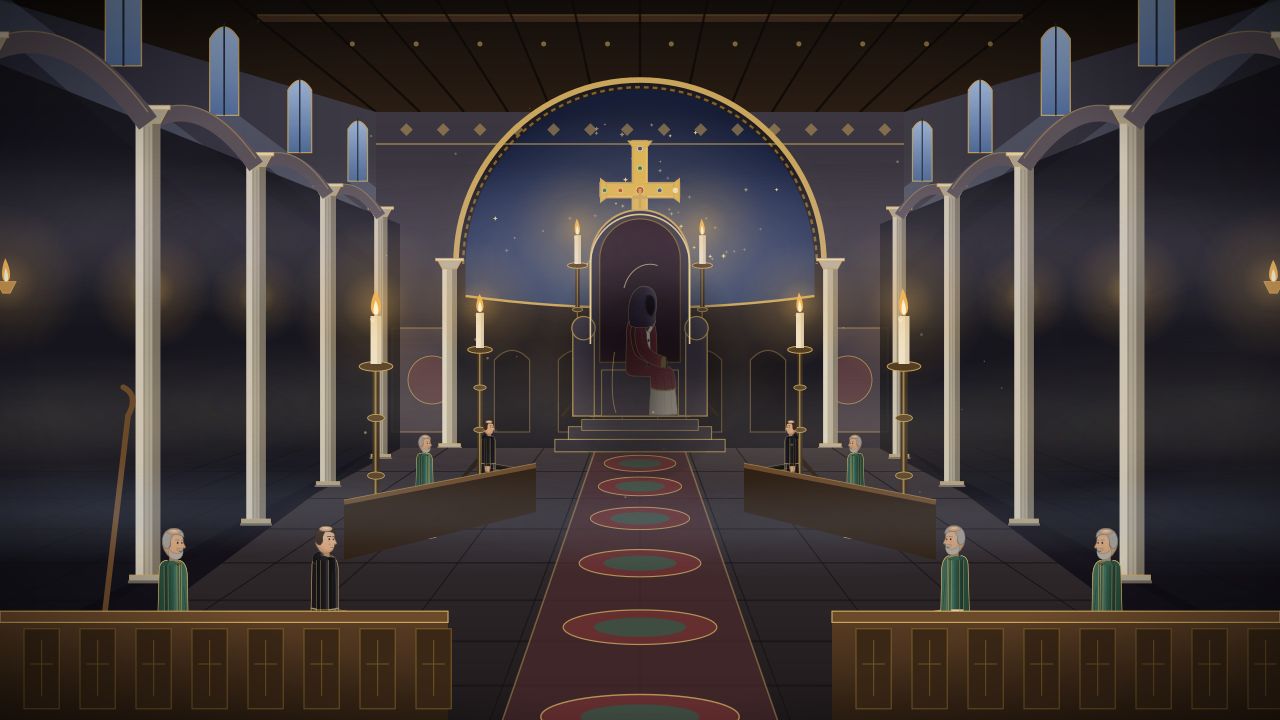
In the winter of 897, most accounts say in January, a council of the Church gathered in Rome at the Lateran, the palace and cathedral of the popes. Bishops and clergy took their seats along the walls. At the far end of the hall, on a throne, sat a figure dressed in the full vestments of a pope.
He did not move, and he did not speak. He had been dead for about nine months, and the council had come together to try him.
Chapter Iwatch from 0:39
A City Among Ruins
To understand how such a thing could happen, we have to go back. Rome in the late 800s was a small, divided city, living among the ruins of a great one. The empire of Charlemagne had broken apart, and rival lords fought over the title of emperor. By custom it was the pope who crowned him, so whoever held the pope held a key to the crown.
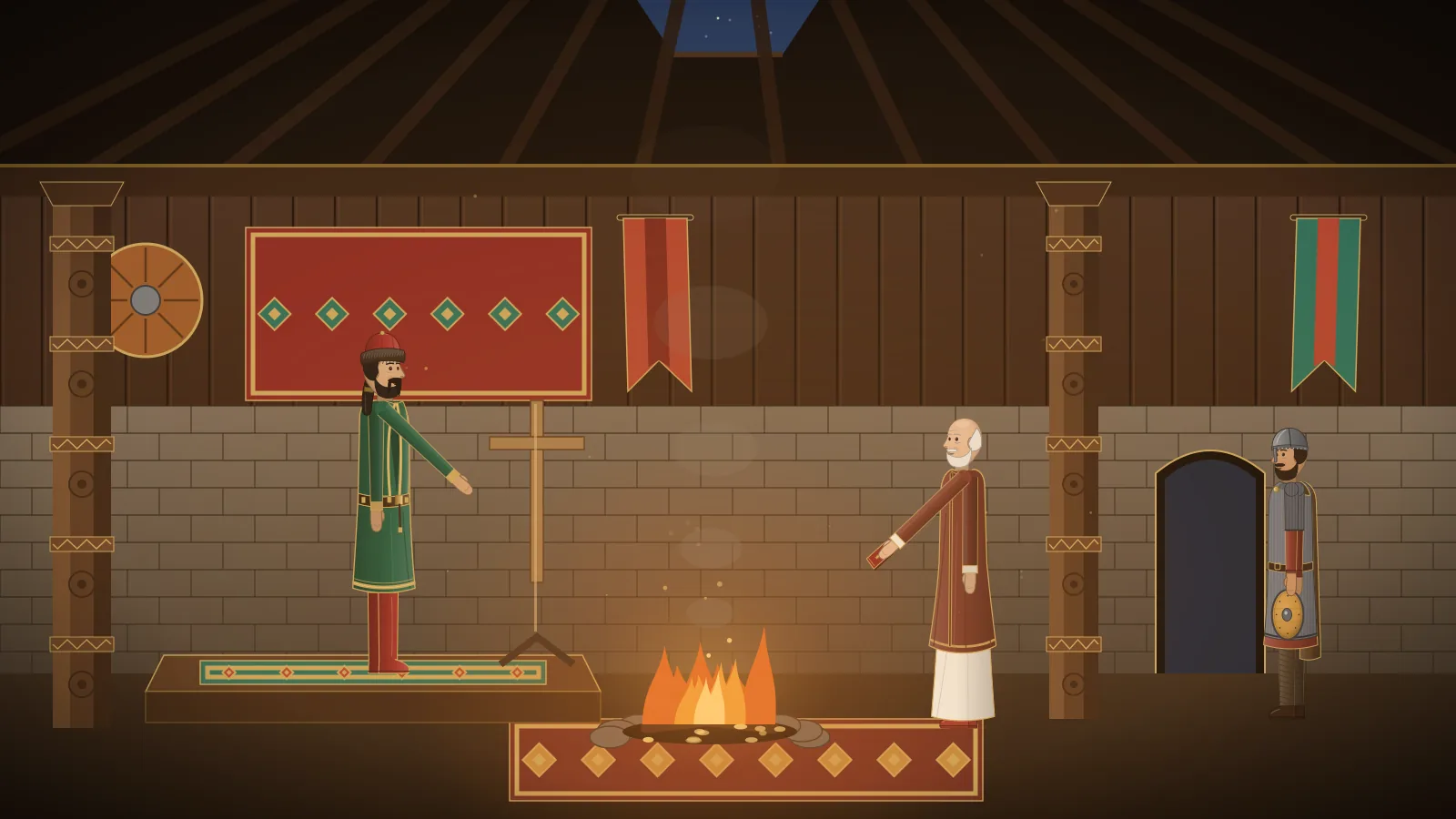
The figure on the throne was Formosus. He was born around 816, probably in Rome, and in 864 he became bishop of Porto, a town near the mouth of the Tiber. Two years later Pope Nicholas I sent him to Bulgaria, whose ruler, Boris, had recently accepted Christianity. Boris admired Formosus so much that he asked for him as his archbishop. The pope refused, because Church law did not allow a bishop to leave his own see for another.
Formosus was able and admired, and he made enemies. In 876 he fled Rome, and Pope John VIII had him condemned and excommunicated. According to a later account of doubtful authenticity, tied to a synod at Troyes in 878, he swore an oath never to return to Rome. Whether or not he ever swore it, that oath would one day be used against him.
Whether or not he ever swore it, that oath would one day be used against him.
After John’s death, Pope Marinus restored him to Porto in 883. Formosus came home.
Chapter IIwatch from 2:05
The Crown and the Alps
On 6 October 891, the clergy and people of Rome elected Formosus pope. He was about 75 years old and had served the Church for most of his life. He came to the throne at a dangerous moment, for power in Italy then lay with the dukes of Spoleto.
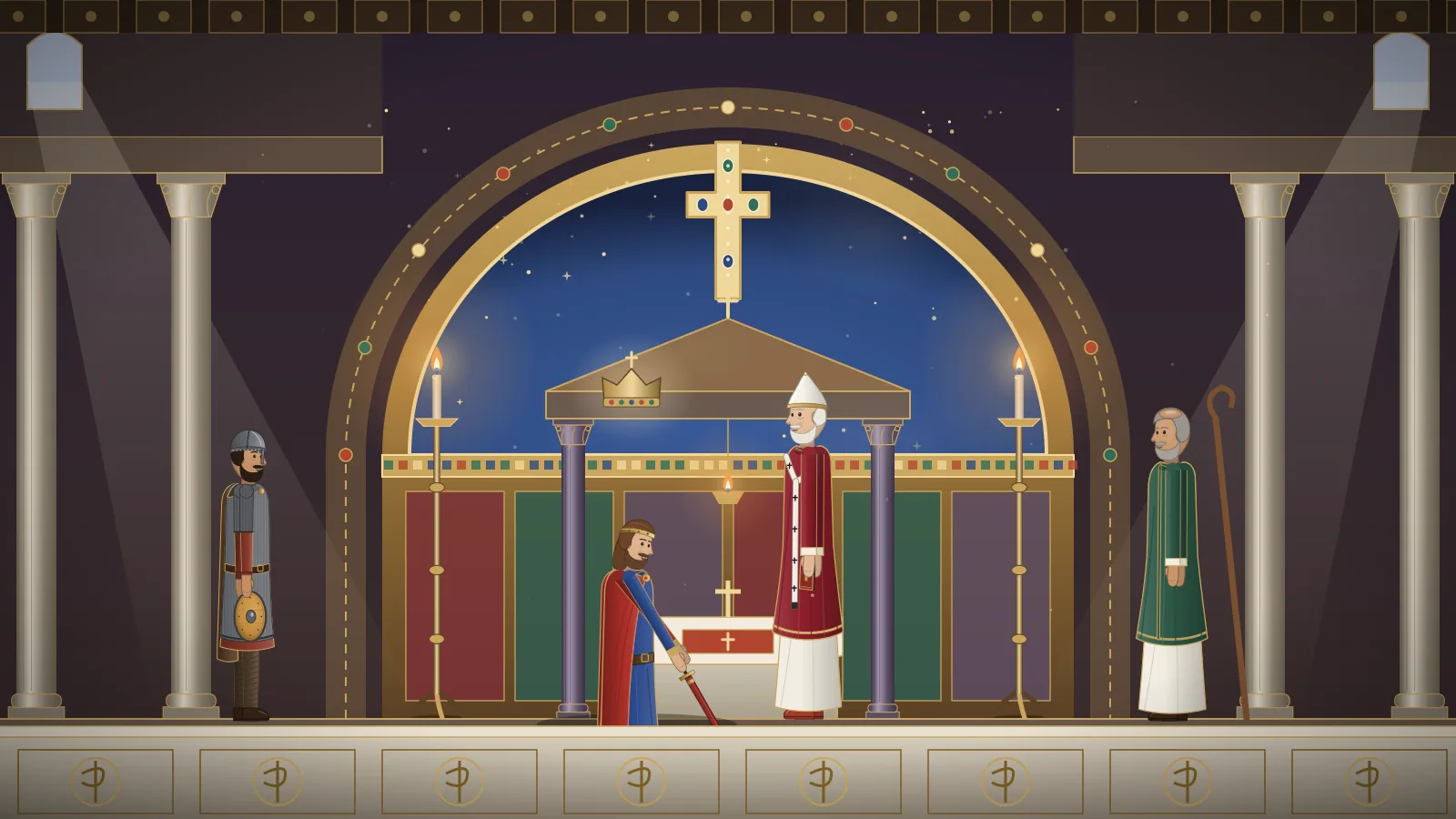
Duke Guy of Spoleto had already been crowned emperor, and in April 892 Formosus crowned Guy’s young son Lambert as emperor beside him. But Formosus did not trust Spoleto. In secret he called on a king from beyond the Alps, Arnulf of Carinthia, ruler of the East Franks.
Arnulf came south in 894. That December Guy died, and Lambert’s mother, Ageltrude, became the fiercest defender of the family’s cause. In February 896 Arnulf’s army reached Rome. Ageltrude’s men held the city, but on 21 February it fell. The next day, in Saint Peter’s, Formosus placed the imperial crown on Arnulf’s head. For the house of Spoleto, it was a betrayal they would not forget.
For the house of Spoleto, it was a betrayal they would not forget.
Soon after, marching against Spoleto, Arnulf was struck by paralysis. He was carried back across the Alps and never came to Rome again. He died three years later, and the pope who had crowned him was left without a protector.
Chapter IIIwatch from 3:25
Beyond Their Reach
On 4 April 896, Formosus died. One of his later defenders, Eugenius Vulgarius, described him as an old man of about 80. His enemies were coming back, but now, it seemed, he was beyond their reach.
His successor, Boniface VI, reigned for about 15 days, and then he too died. In May a new pope was chosen: Stephen VI, a Roman by birth and bishop of Anagni. Older lists count him as Stephen VII, but the man is the same. He had the backing of the Spoleto party, and by early the next year Lambert and Ageltrude had regained their hold on Rome.
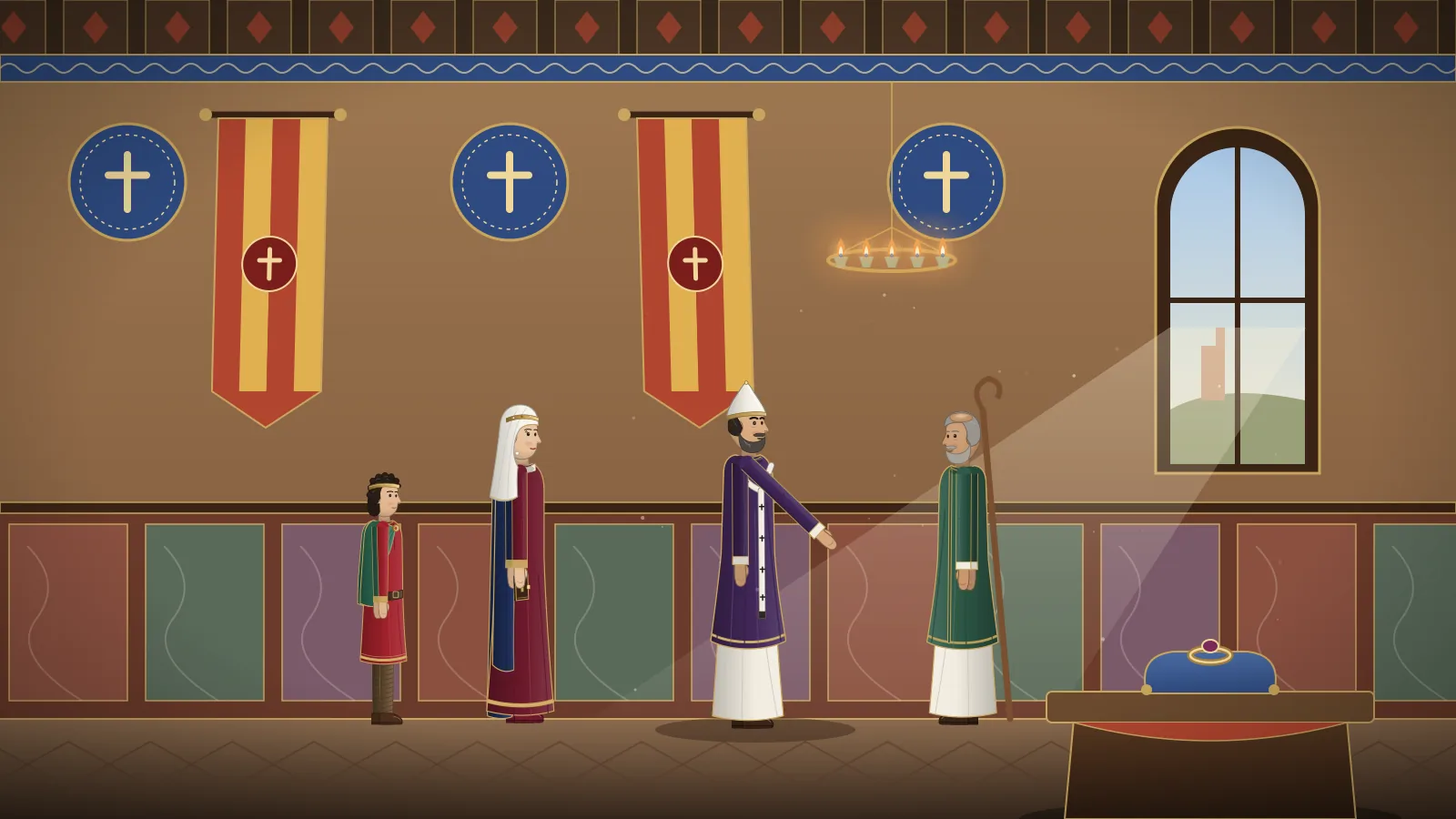
Stephen was a bitter enemy of Formosus and of his memory. Yet it was Formosus who had made him a bishop. The two men were bound together by the very ordination that Stephen would soon call into question.
Yet it was Formosus who had made him a bishop.
Chapter IVwatch from 4:13
The Council and the Throne
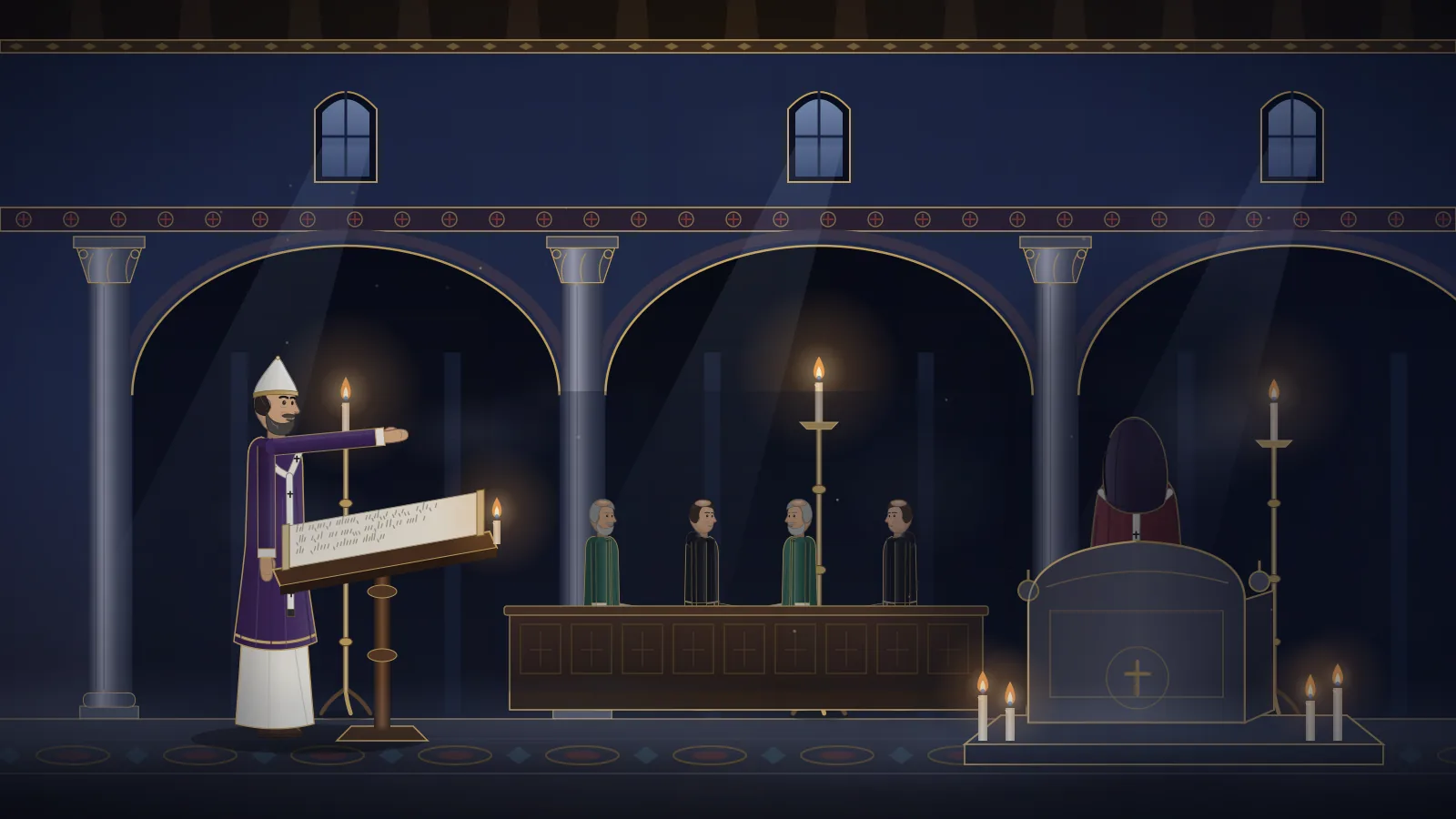
That winter, Stephen ordered the tomb of Formosus in Saint Peter’s to be opened. The body was carried across the city to the Lateran, dressed again in papal vestments, and seated on a throne before the council. Because the dead cannot answer, a deacon was appointed to stand beside the throne and speak for him.
Stephen himself led the questioning, and the charges were read out one by one. Formosus had moved from one see to another, from Porto to Rome, against the law of the Church. He had broken his oath. He had acted out of ambition. According to Liutprand of Cremona, writing decades later, the dead man was asked why, as bishop of Porto, he had seized the universal see of Rome in such a spirit of ambition.
If the deacon made any defence, no record of it has survived. The verdict was guilty. The council declared that Formosus had never been a true pope, and all his acts were annulled.
Because the dead cannot answer, a deacon was appointed to stand beside the throne and speak for him.
Every ordination he had performed was declared invalid, among them the one that had made Stephen bishop of Anagni. Across Italy, priests and bishops no longer knew whether they were priests and bishops at all.
Chapter Vwatch from 5:41
Into the Tiber
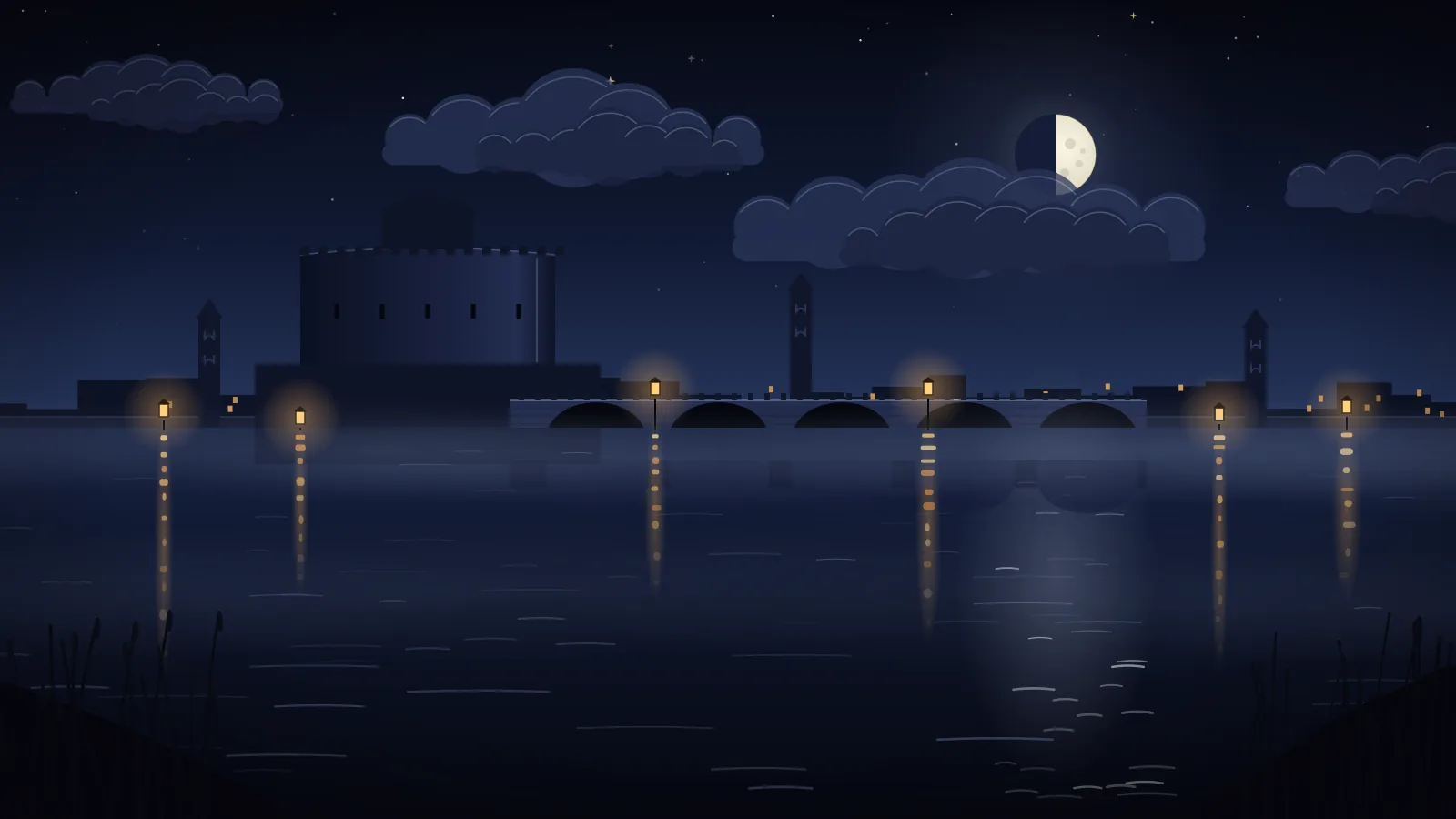
The papal vestments were stripped from the body. Then, the sources say, the three fingers of the right hand, the fingers of blessing, were cut off. The body was buried in a cemetery for foreigners. Soon after, it was taken up again and thrown into the Tiber, weighed down, some accounts say, so that it would never be found. The dark river carried it away, past the sleeping city.
Rome was shaken. Many remembered Formosus as a serious and devout man, and soon there were rumours of miracles along the riverbank. These reports come from writers who sided with Formosus, and they cannot be weighed with any certainty.
In the same period the great Lateran basilica, the pope’s own cathedral, fell into ruin. Later writers blamed an earthquake. To many in Rome, the chronicles suggest, it looked like a sign.
To many in Rome, the chronicles suggest, it looked like a sign.
In the summer of 897 a revolt broke out against Stephen. He was seized, stripped of his office and thrown into prison. There, probably in August, he was strangled. He had been pope for little more than a year.
Chapter VIwatch from 6:59
Restored, and Condemned Again
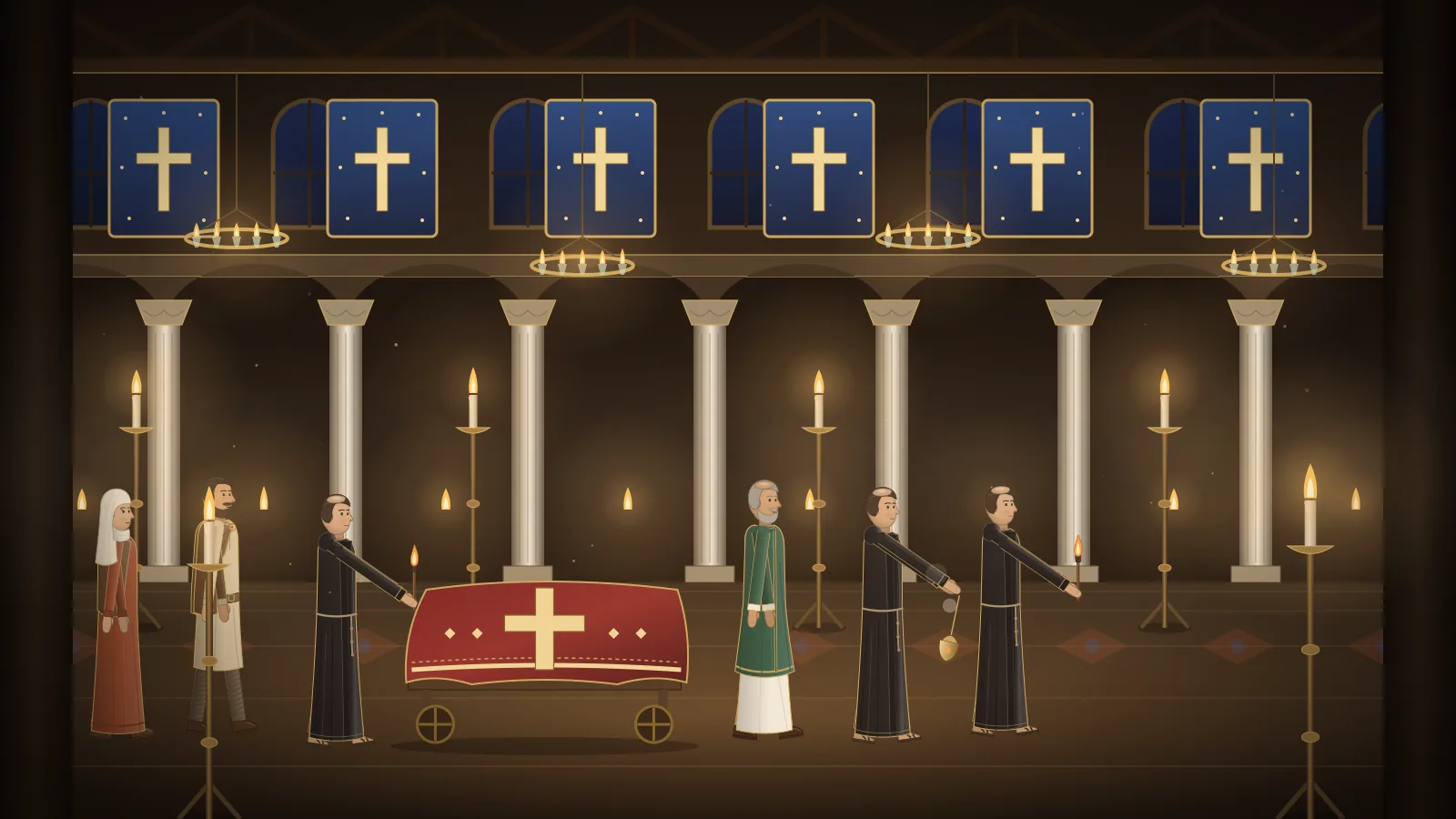
And the body of Formosus? The story goes that it was drawn from the river and hidden: by a monk, says one tradition, by fishermen, says Liutprand. In December 897, after the short reign of Romanus, Pope Theodore II held a council that restored the honour of Formosus. Theodore reigned for less than three weeks, but in that time the body was carried back to Saint Peter’s and buried again with full honours.
Liutprand adds that as it passed, holy images in the basilica bowed in greeting. He admits that he heard this only from others, and it has come down as a pious legend rather than a recorded event.
Liutprand adds that as it passed, holy images in the basilica bowed in greeting.
The next year, Pope John IX held councils in Rome and Ravenna. They annulled the trial, ordered its records burned, and forbade anyone ever again to put the dead on trial. But the quarrel was not over. Sergius III, who had taken part in the trial, became pope in 904. He confirmed its verdict and ordered the priests Formosus had ordained to be ordained again.
On both sides, writers took up their pens. A priest named Auxilius, ordained by Formosus, defended the ordinations, and so did the scholar Eugenius Vulgarius. Much of what we know comes from them, and from Liutprand, who wrote about 60 years after the events and even placed the trial under the wrong pope, naming Sergius instead of Stephen.
Chapter VIIwatch from 8:28
A Silent Figure
Because the records of the trial were burned, and because its fullest descriptions come from people who took sides, much remains uncertain. Historians still debate who wanted the trial most: Stephen himself, or the house of Spoleto. Some details, like the fingers, rest on very few sources. Even the date is not fixed; some writers place the council in February or March rather than January.
In later centuries, Sergius’s ruling was quietly set aside, and the ordinations of Formosus came to be treated as valid. Historians have come to see the trial less as an act of simple madness than as a product of its moment, when the papacy had no strong protector, Rome was torn by faction, and the imperial crown was the prize.
A winter day in Rome, when a council of the Church sat in judgement over a silent figure on a throne.
Eleven centuries on, the Cadaver Synod, as it came to be called, is still remembered as one of the strangest moments in the history of the papacy. It is the story of a winter day in Rome, when a council of the Church sat in judgement over a silent figure on a throne.