The story of the film
Alamut and the Alborz Mountains, Cairo, the castles of Syria and Tyre · 1090–1273, and today
In the summer of 1176, the sultan Saladin camped below the castle of Masyaf, in the mountains of Syria. His tents spread across the valley, and above them, on its rock, the castle kept its gates shut.
One night, the story goes, he woke in his tent and found something beside his pillow: a dagger, and a written warning. No guard had seen anyone come in. Soon after, the sultan lifted the siege, and rode away.
Chapter Iwatch from 0:34
The Missionary from Rayy
The men in that castle belonged to a community that Europe would call the Assassins. It was not a name they had chosen. They were Nizari Ismailis, Shia Muslims, and their story began far to the east, in Iran.
Ismailis follow a line of imams descended from the Prophet Muhammad through his cousin and son-in-law, Ali. In the 11th century their great state was the Fatimid caliphate, which ruled from Cairo, on the Nile.
In Iran, the story begins with one man, Hasan-i Sabbah. He was born in Qom around 1050, and grew up in the city of Rayy, near modern Tehran. There he studied, and at about 17 he joined the Ismaili faith.
He came home as a da’i, a missionary.
In 1078 he reached Cairo, at the end of August by one account, and stayed for about 3 years. He came home as a da’i, a missionary. But Iran was ruled by the Seljuq Turks, Sunni Muslims who saw the Ismailis as heretics, and a missionary of the Fatimid faith needed somewhere safe to stand.
Chapter IIwatch from 1:37
The Eagle's Nest
High in the Alborz Mountains, northeast of Qazvin, Hasan found what he needed: a castle on a narrow rock, rising some 200 metres above a green, terraced valley. Its name was Alamut. It is often translated as “the eagle’s nest”, though the original form of the name may have meant something closer to “the eagle’s teaching”.
According to later Persian chronicles, Hasan’s followers won over the villages of the valley first, then men of the garrison. Hasan himself, it is said, slipped inside disguised as a schoolteacher. On 4 September 1090 the castle was his, almost without a fight. Its lord, the chronicles say, was sent away with a draft for 3,000 gold dinars.
Four years later, in Cairo, the caliph al-Mustansir died. Powerful men at court put his younger son on the throne, instead of the elder son, Nizar. Nizar rose up in Alexandria, was captured, and died in prison. Hasan and the Ismailis of Iran stayed loyal to Nizar’s line, and so they became known as Nizaris.
It was a state without borders, held together by faith.
From Alamut they took or built a chain of fortresses across northern and eastern Iran, and later in Syria. It was a state without borders, held together by faith: castles on far-apart mountains, bound by loyalty to the imam.
Hasan lived plainly, reading, writing and directing the mission. A famous tale says that in 35 years he left his house only twice, both times to climb onto the roof. Historians doubt it. He died at Alamut in June 1124. By then his community had outlasted years of Seljuq sieges.

Chapter IIIwatch from 3:22
Those Ready to Give Their Lives
Facing great armies, the Nizaris had few soldiers. So they used another weapon: the targeted killing of a single powerful enemy, in place of a war they could not win in the field.
The volunteers who carried it out were called fida’is, those ready to give their lives. They usually struck in public, with a dagger, and few came back.
The most famous early case was the great Seljuq vizier, Nizam al-Mulk. On 14 October 1092, near Nihavand, a man dressed as a Sufi approached the litter in which he was carried. The vizier never reached the end of his journey. The killing was blamed on the Nizaris, though rivals at the Seljuq court may also have wanted him gone.
Fear itself became a defence.
Soon almost any killing of a prince, a general or a judge was blamed on them, whoever had really planned it. Fear itself became a defence.
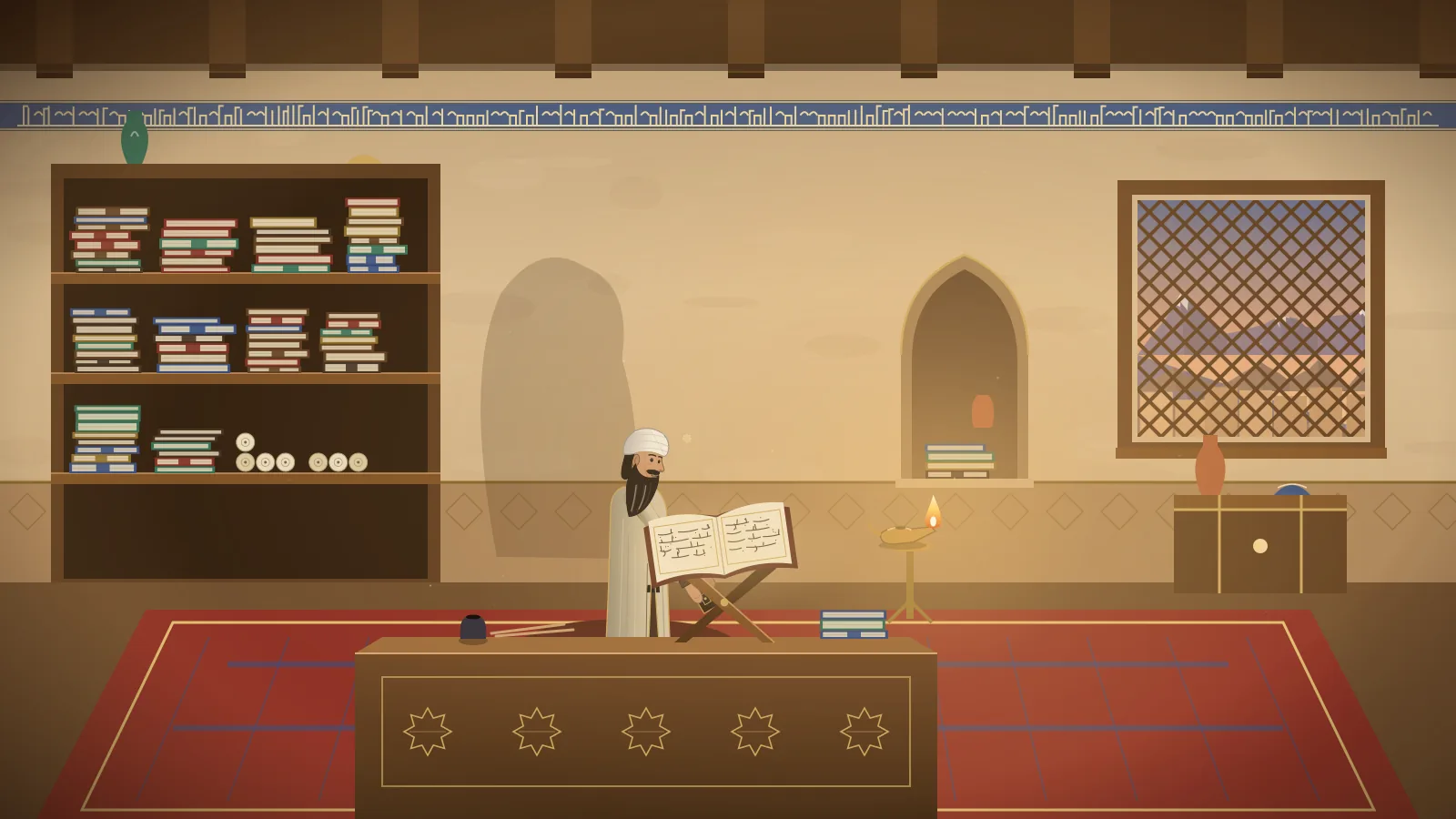
But Alamut was not only a fortress. It held a famous library of books, documents and scientific instruments. The great scholar Nasir al-Din al-Tusi lived for years in Nizari castles, writing on ethics, astronomy and philosophy, among the books and instruments of the mountain strongholds.

Chapter IVwatch from 4:40
The Old Man of the Mountain
In Syria, the Nizaris held castles in the coastal mountains: Masyaf, al-Kahf, Qadmus and others. Around 1162, Alamut sent them a new leader.
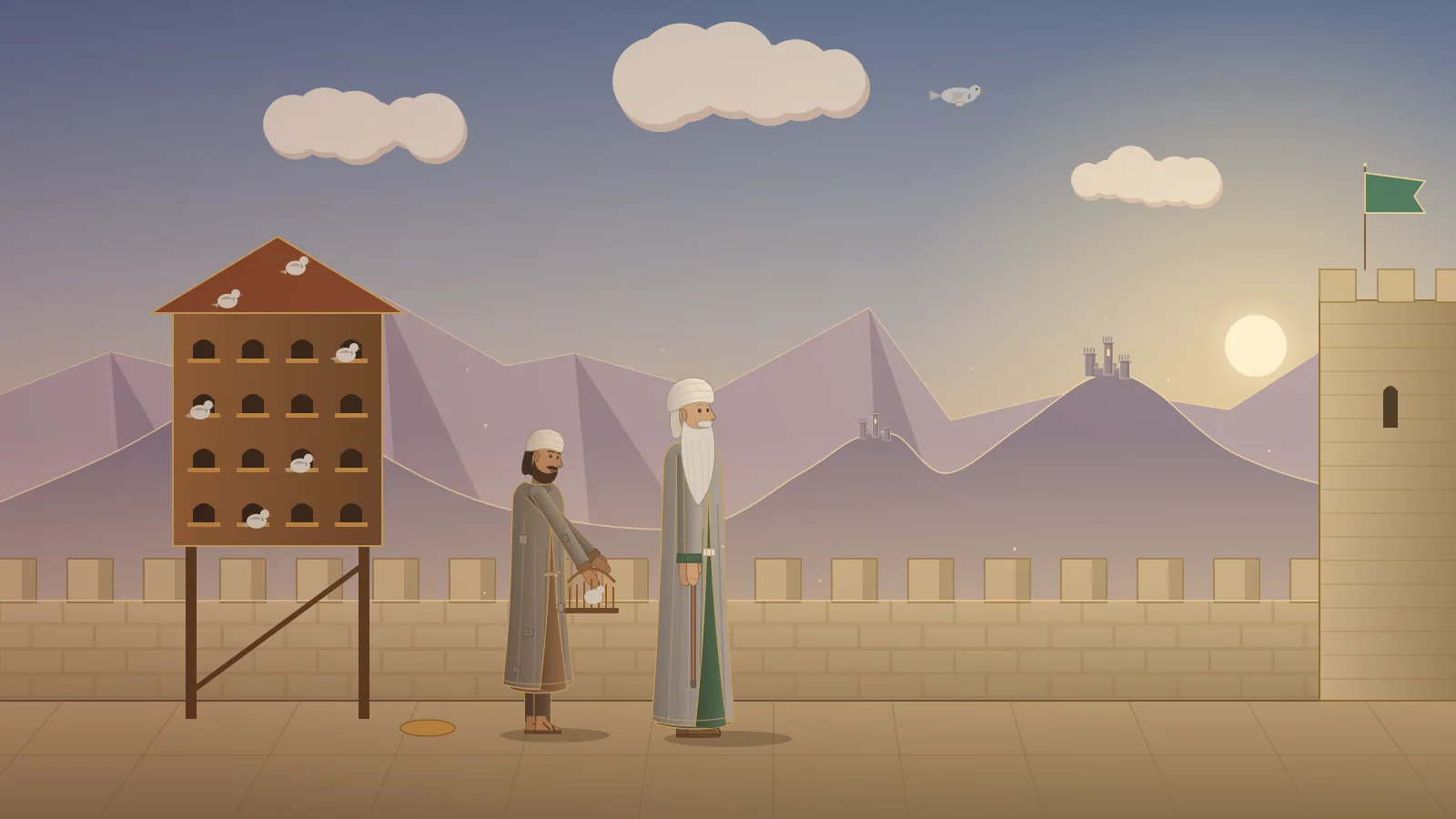
His name was Rashid al-Din Sinan. Born near Basra and trained at Alamut, he led the Syrian Nizaris for some 30 years, and linked his castles with carrier pigeons. The crusaders called him the Old Man of the Mountain, from an Arabic title, shaykh al-jabal.
Sinan feared the rising power of Saladin. In 1175, at Aleppo, and again in 1176, at Azaz, fida’is tried to kill the sultan. Both times he survived; at Azaz, according to one account, his mailed cap saved him. Then Saladin besieged Masyaf. After about a week he withdrew, and the two sides seem to have reached a quiet truce.
Historians treat the scene as legend.
And the dagger by his pillow? That story comes from a life of Sinan written by a Nizari author, Abu Firas, in 1324, nearly 150 years later. Very similar stories were told of other rulers, among them the Seljuq sultan Sanjar, who was said to have woken with a dagger beside him and a note from Hasan-i Sabbah. Historians treat the scene as legend.
In April 1192, in the crusader city of Tyre, Conrad of Montferrat had just been chosen king of Jerusalem. On the 28th, two men dressed as monks approached him in the street. He did not live to be crowned. The killers were said to be Nizari fida’is, but who sent them was argued over at the time, and still is.
Chapter Vwatch from 6:20
The Garden of Paradise
Europeans soon wrote about this strange sect in the mountains. In 1175 an envoy of the German emperor reported that its young men were raised in castles and given golden daggers.
A few decades later the chronicler Arnold of Lübeck added a potion that threw them into ecstasy, and dreams of pleasures their master promised would last forever. A later crusader chronicle told how, to impress a visiting lord, the Old Man gave a signal, and men on his walls leapt from the towers. Many historians think that tale was invented.
The most famous version came from the Venetian traveller Marco Polo, around 1298. He described a hidden garden between two mountains, with streams of wine, milk and honey. Young men were drugged, carried inside, and told they had seen paradise. To return, they had only to obey.
But Polo could not have seen it.
But Polo could not have seen it. Alamut had fallen in 1256, years before he crossed Persia in the early 1270s. His tale drew on rumour.
And the name? Rival Muslims, including the Fatimid court in Cairo, called the Nizaris hashishiyya. It was an insult, meaning something like rabble, people of no account. Crusaders turned it into words like assassini. In 1809 the French scholar Silvestre de Sacy linked it to the drug hashish, and the old story seemed confirmed.
Historians such as Farhad Daftary have found no reliable evidence that the Nizaris used hashish, or kept a garden of paradise. Even their bitterest medieval Muslim enemies tell no such tales.

Chapter VIwatch from 8:16
Fire on the Rock
The castles’ real end came from the east. In 1256 a Mongol army under Hülegü, a grandson of Genghis Khan, marched into the mountains.
In November the imam, Rukn al-Din Khurshah, surrendered. A few weeks later, on his orders, Alamut opened its gates.
He kept copies of the Quran and some scientific instruments, and burned the books he judged heretical.
The historian ‘Ata-Malik Juvayni, who served the Mongols, went through the great library. By his own account, he kept copies of the Quran and some scientific instruments, and burned the books he judged heretical. It is the only account there is of that day, and it was written by a man on the conquerors’ side.
Then the Mongols tore down the walls. In Syria the Mamluk sultan Baybars took the last Nizari castles one by one, and by 1273 al-Kahf, the last of them, had fallen.
Chapter VIIwatch from 9:07
A Living Community
Yet the community did not disappear. For centuries, often in hiding, Nizaris lived on in Iran, Syria, Central Asia and South Asia, still following their imams.
In the 19th century the Shah of Persia gave their imam the title Aga Khan. In the 1840s the first Aga Khan moved to India, and settled in Bombay.
The legend took on a life of its own.
On 4 February 2025, Prince Karim Aga Khan IV died in Lisbon. His son, Rahim, became the 50th imam. By the community’s own count, the Ismailis who follow the Aga Khan number about 12 to 15 million, in more than 35 countries. Their institutions are known for schools, hospitals and the care of historic buildings.
Meanwhile the legend took on a life of its own. Assassin became an everyday word for a political killer, and the Old Man returned in novels and video games, still offering his secret garden to new generations of readers and players.
Today, on the rock above the valley of Alamut, only broken walls remain. The dagger on the sultan’s pillow is a story. The castle, the library, and the people who kept their faith for 9 centuries are real.