The story of the film
Guangzhou and the hills of Guangxi, then Nanjing and the Yangzi valley · 1837–1864
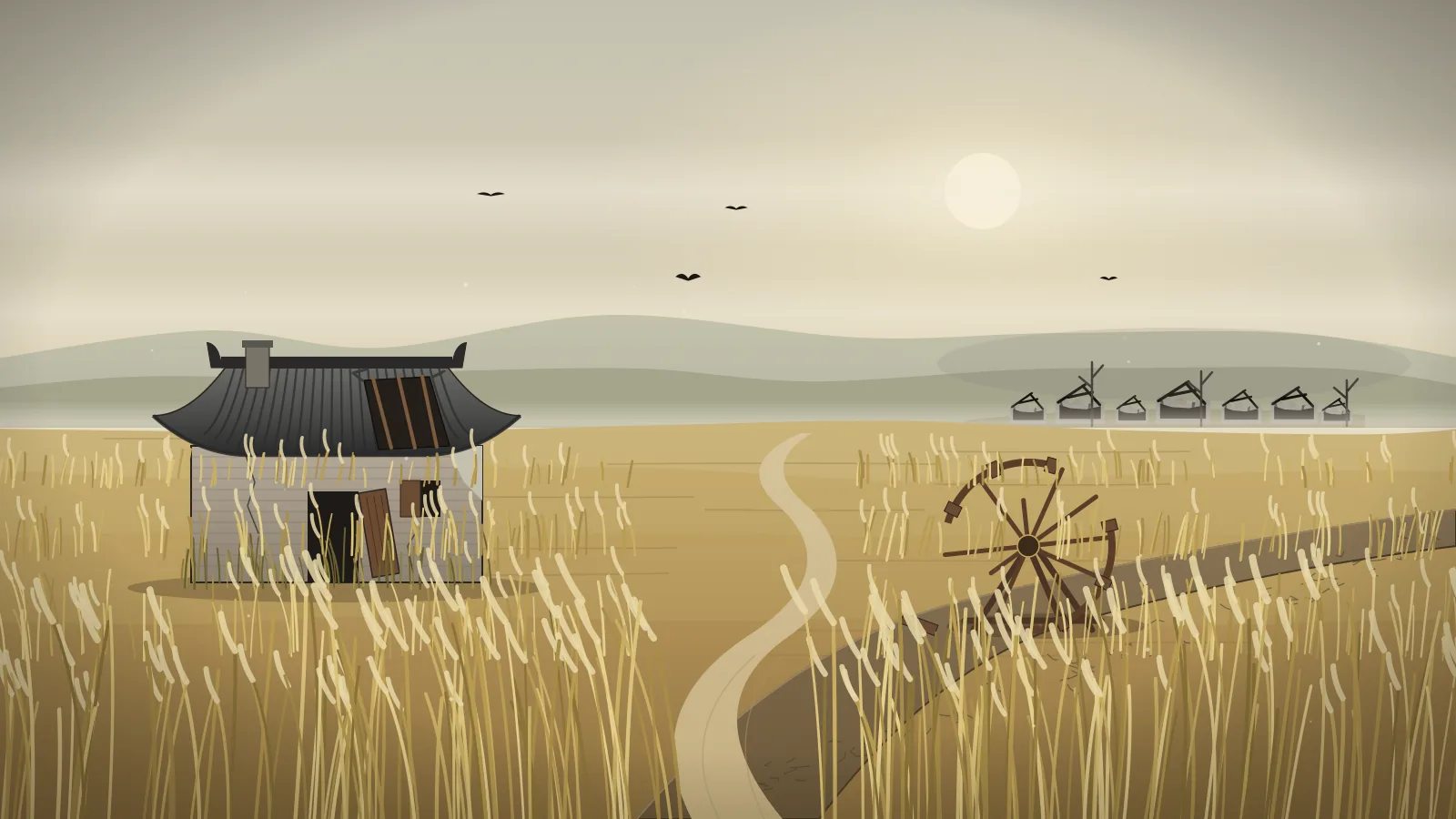
In 1837, in the city of Guangzhou, thousands of young men sat in silent rows, writing essays on the Confucian classics. When it was over, the names of those who had passed were posted. One young man searched the list for his own. It was not there. It was the third time he had failed.
He went home to his village and fell gravely ill. For about 40 days, according to an account his cousin later gave a missionary, he lay in a fever, and saw visions.
Chapter Iwatch from 0:40
The Old Man with the Golden Beard
His name was Hong Xiuquan. He was born in 1814, into a Hakka farming family, in a village north of Guangzhou.
In imperial China, the examinations were the great ladder. Pass them, and a farmer’s son could become an official. Very few did. Hong first sat the examination at 13, and failed. He became a village teacher, and tried again, and again.
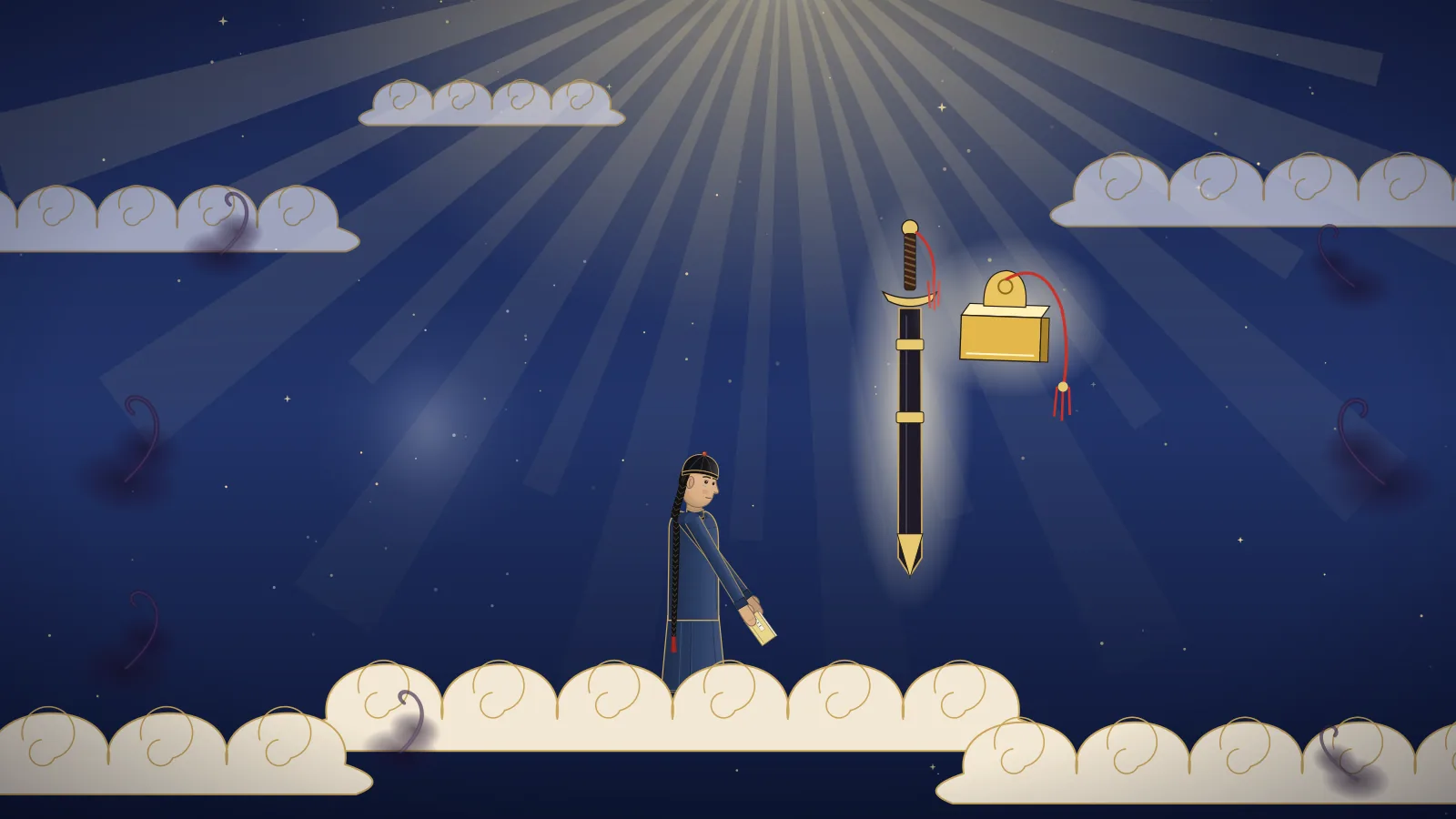
In his fever, as the account describes it, he was carried up in a sedan chair into a bright heaven. There he was washed in a river, and his heart was taken away and replaced with a new one. Then he stood before a venerable old man with a golden beard, dressed in a black robe, who wept that the people of the world worshipped demons instead of him.
A venerable old man with a golden beard wept that the people of the world worshipped demons instead of him.
The old man gave him a sword to destroy the demons, and a seal. A middle-aged man, whom Hong called his elder brother, helped him in the fight. He even heard the old man reproach Confucius, for failing to teach the true doctrine clearly, and in the account Confucius was ashamed.
When the fever passed, Hong went back to his schoolroom and his pupils. For years, no one knew what the visions meant.
Chapter IIwatch from 2:00
Good Words to Admonish the Age
Back in about 1836, in the streets of Guangzhou, Hong had been handed a set of Christian pamphlets in Chinese, in 9 small volumes. He glanced at them, and put them away on a shelf.
They were called Good Words to Admonish the Age. Their author, Liang Fa, was a printer who had become one of the first Chinese Protestants.
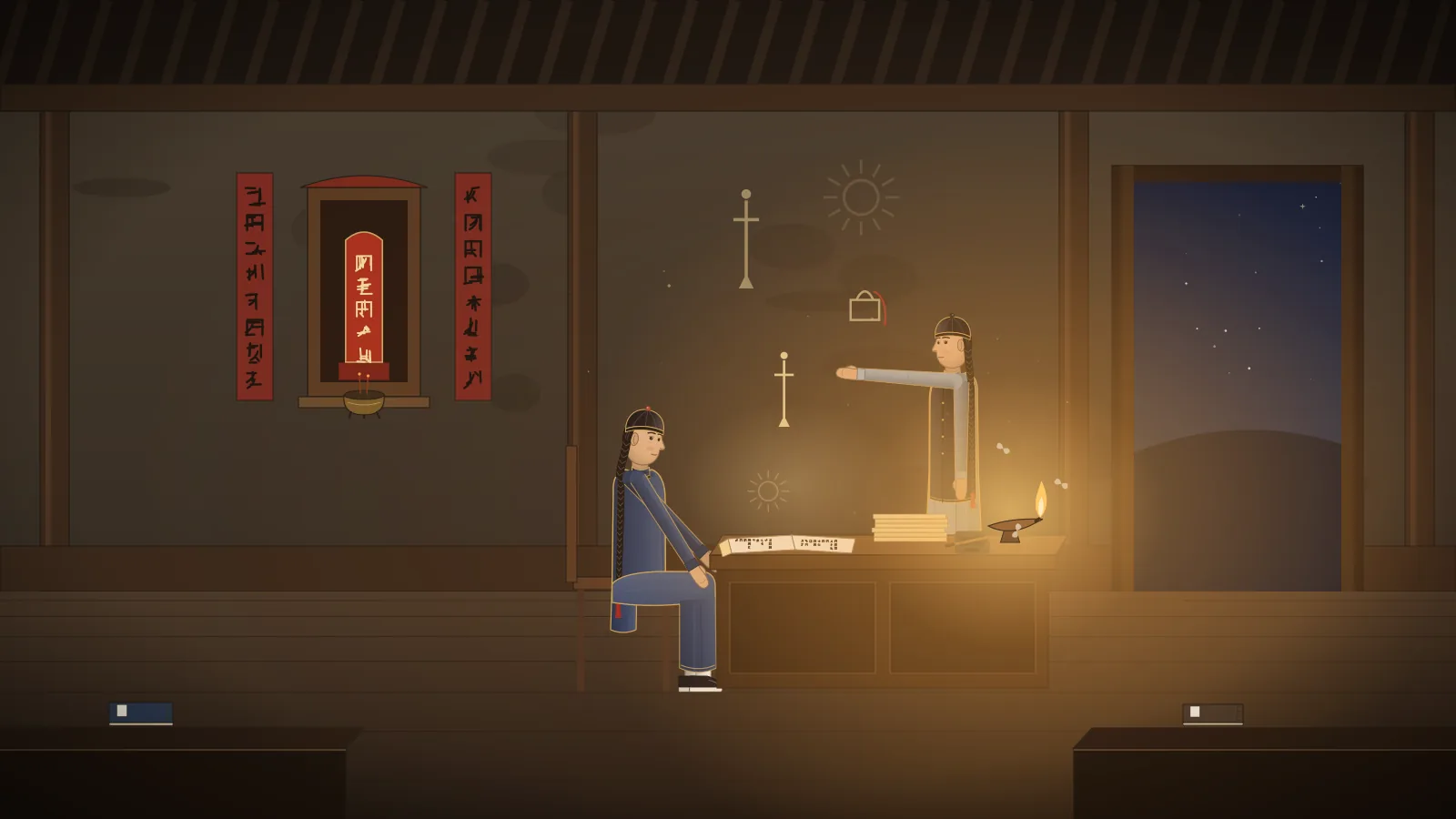
In 1843, Hong failed the examination a fourth time. It was his last attempt. That year a cousin, visiting, noticed the pamphlets on his shelf. Seven years after he had first been given them, Hong read them at last, and everything fell into place.
Hong read them at last, and everything fell into place.
The old man of his vision was God the Father. The elder brother was Jesus. And Hong, he concluded, was God’s second son, the younger brother of Jesus, sent to drive the demons out of China.
With his cousin, he baptised himself, as the pamphlets described. Then he removed the tablets of Confucius from his schoolroom. Soon he lost his post.
Chapter IIIwatch from 3:02
The God Worshippers
In 1844, Hong and his friend Feng Yunshan, another Hakka scholar, set out west into the hills of Guangxi, to preach. After some months Hong went home. Feng stayed. Among poor miners, charcoal burners and farmers around Thistle Mountain, he gathered a society of believers: the God Worshippers.
In 1847, Hong spent about 2 months in Guangzhou with an American Baptist missionary, Issachar Roberts, studying the Bible. Roberts did not baptise him, and why he refused is still unclear.
Meanwhile, in the hills, a charcoal burner named Yang Xiuqing began to fall into trances and speak, his followers believed, with the voice of God the Father. The God Worshippers smashed images in local temples, and in hills torn by banditry and feuds over land, they clashed with local militias.
By 1850, thousands of believers had gathered at the village of Jintian. In January 1851, they proclaimed a new state: the Taiping Tianguo, the Heavenly Kingdom of Great Peace. Hong was its Heavenly King.
His followers let their hair grow long, refusing the braid that the Manchu Qing dynasty required of every man.
His followers let their hair grow long, refusing the braid that the Manchu Qing dynasty required of every man. Pursued by imperial troops, the Taiping marched north through Hunan, then down the Yangzi River, gathering hundreds of thousands of followers as they went.
Chapter IVwatch from 4:40
The Heavenly Capital
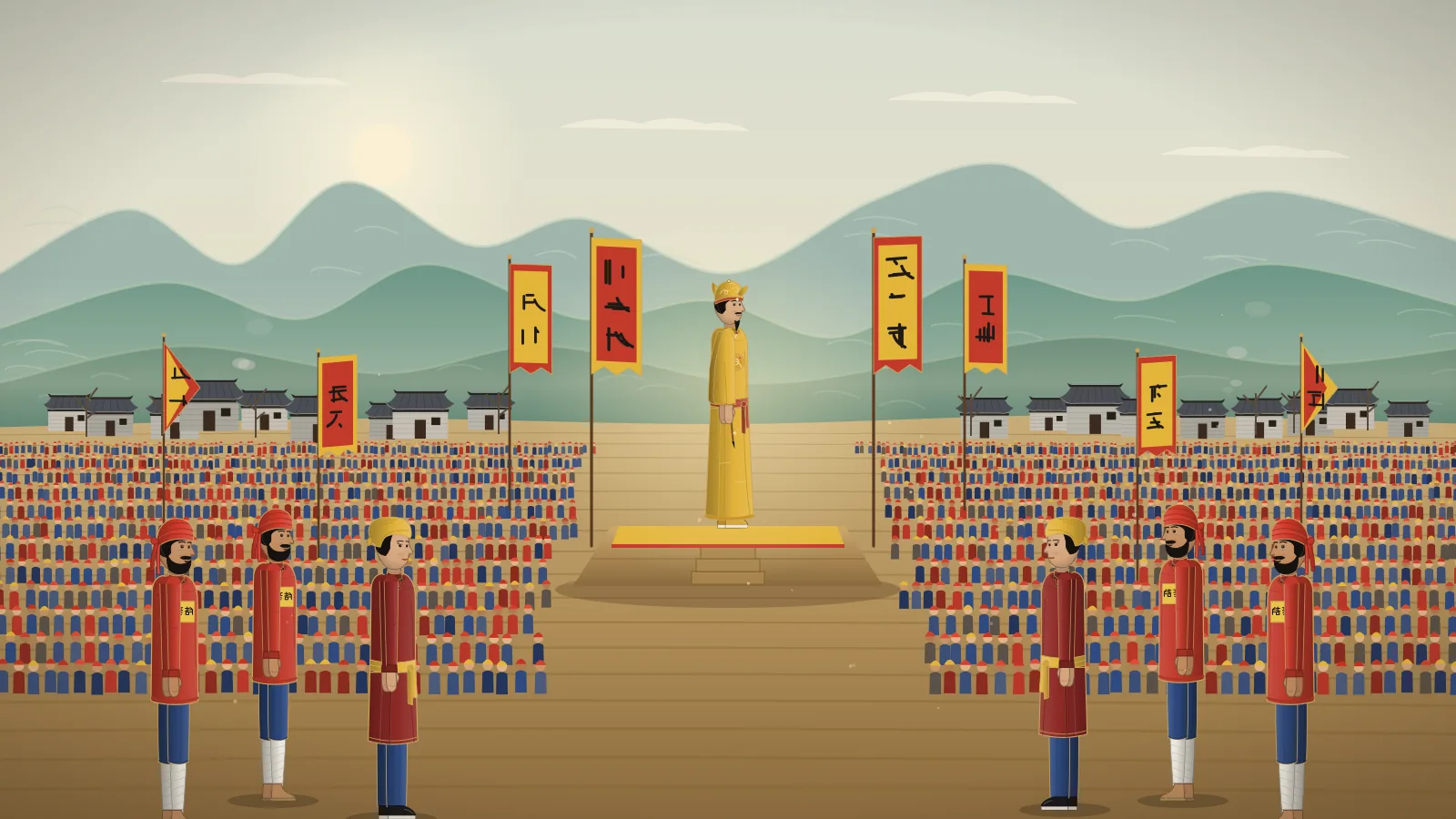
In March 1853, they captured Nanjing, the old southern capital, and renamed it Tianjing, the Heavenly Capital. Many of its Manchu inhabitants were killed.
The kingdom made strict new laws. Opium was banned, and so were alcohol, tobacco, gambling and the binding of women’s feet. At first, men and women lived in separate camps, even husbands and wives. Women served in their own units, and some held office.
People kept the Sabbath, recited the Ten Commandments and sang hymns. The kingdom printed its own Bible, which Hong revised, starting from an earlier Chinese translation by a missionary.
A plan called the Heavenly Land System promised every family an equal share of land, measured by its quality, and every 25 families a common granary and a church. It was never fully carried out.
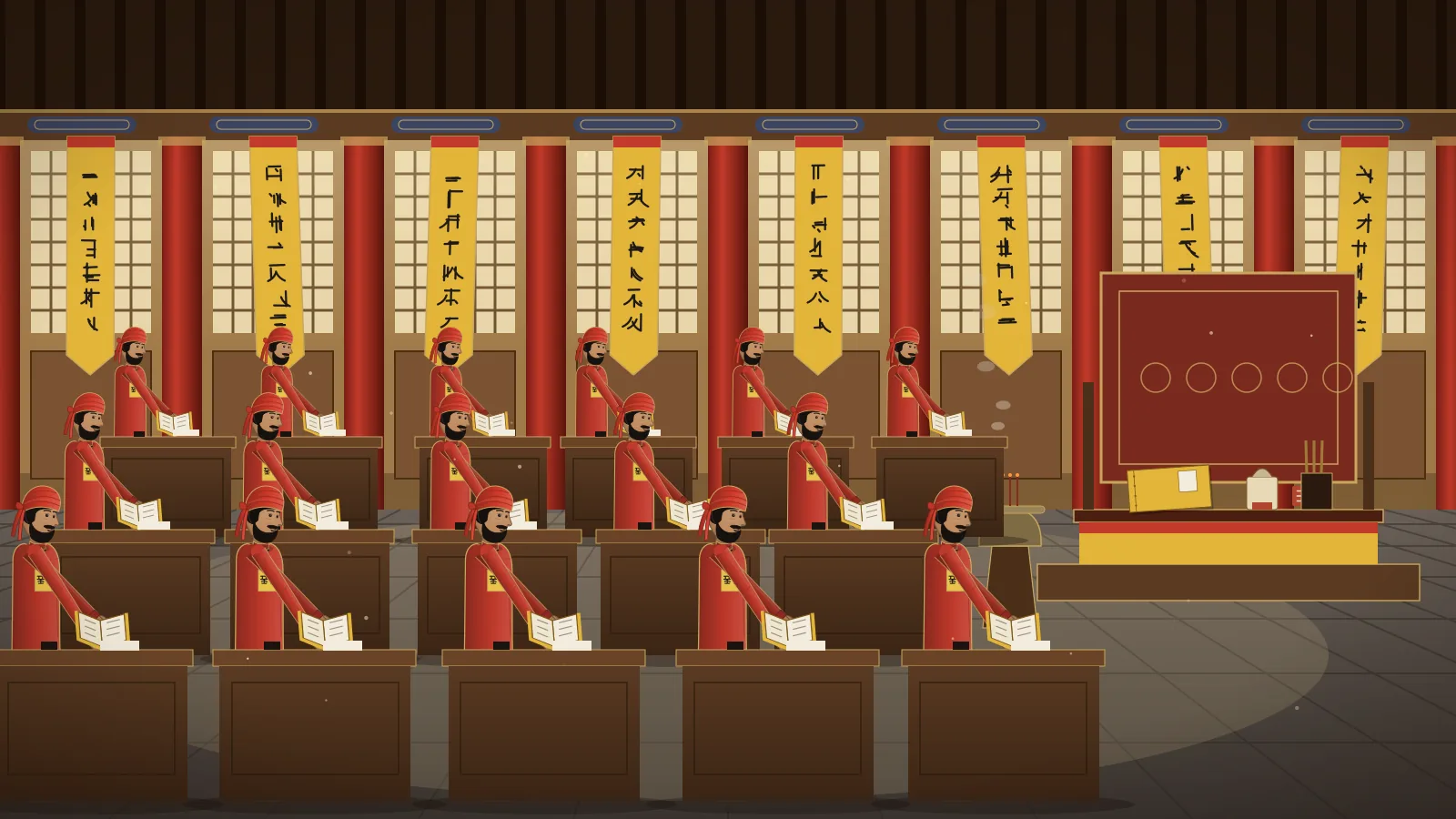
The kingdom even held its own examinations. The man who had failed four times now set the questions. Now the candidates were tested not on Confucius, but on the Bible and the Heavenly King’s writings.
Now the candidates were tested not on Confucius, but on the Bible and the Heavenly King’s writings.
Hong withdrew into his palace, with his writings. Real power passed to Yang Xiuqing, now the East King, who still spoke, at times, as the voice of God.
Chapter Vwatch from 6:04
Ten Thousand Years
In 1856, Yang demanded the title Ten Thousand Years, until then Hong’s alone. Hong, most accounts say, had another leader, the North King, Wei Changhui, strike him down. Some historians think the North King went further than he was asked.
In the purge that followed, thousands of Yang’s followers died.
In the purge that followed, thousands of Yang’s followers died, in killings that went on for months. Then Hong had the North King killed too. Soon his ablest general, Shi Dakai, left Nanjing with his army. Within little more than a year, the Heavenly Kingdom had lost the men who had led it out of the hills.
Chapter VIwatch from 6:36
The Scholar's Army
On the other side stood a very different man. Zeng Guofan, from Hunan, had passed the highest examination in the empire in 1838, the year after Hong’s third failure. Where Hong had been turned away at the foot of the ladder, Zeng had climbed to the top.
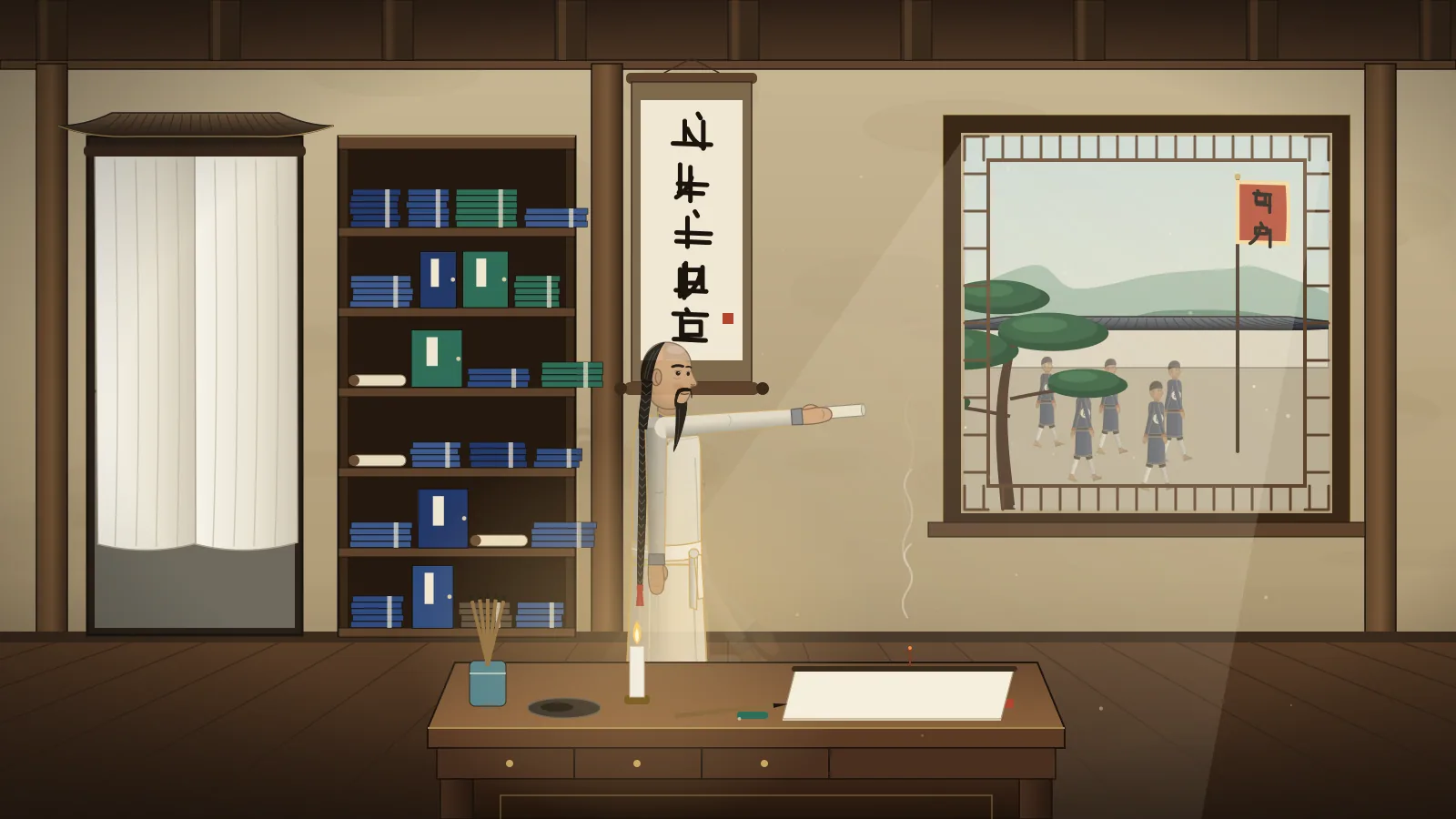
As he mourned his mother at home, the court asked him to raise a local army. It became the Hunan Army. In 1854, Zeng called on loyal men to defend the Confucian order, which, he declared, the rebels were trying to destroy. For years his army fought up and down the Yangzi, with river fleets and long sieges.
Where Hong had been turned away at the foot of the ladder, Zeng had climbed to the top.
In 1859, Hong’s cousin Hong Rengan reached Nanjing, and became the Shield King. He was the cousin whose account of the visions a missionary had published in Hong Kong 5 years before. He had worked with missionaries there, and he proposed railways, banks and newspapers. Little of it was ever done.
In 1860, Taiping armies approached Shanghai. Britain and France, still at war with the Qing in the north, chose to defend the city. A force with Western officers, later called the Ever Victorious Army, fought beside the Qing, led first by the American Frederick Townsend Ward, later by the British officer Charles Gordon.
But the decisive campaigns were fought by Chinese armies. In September 1861, the Hunan Army took Anqing, the river city guarding the way to Nanjing.
Chapter VIIwatch from 8:05
The Fall of the Heavenly Capital
The war was laying waste the richest lands in China. In 1863, Zeng reported that in southern Anhui one could travel an entire day without meeting a single other person. Most of the dead, many historians think, did not fall in battle. They died of hunger and disease, as fields went untilled and refugees crowded into ruined towns.
By then, Zeng’s brother, Zeng Guoquan, had camped his army outside the walls of Nanjing. Inside the city, food ran short. Hong refused to leave. According to his general Li Xiucheng, he told the hungry to eat wild plants, which he called manna, and he ate them himself.
In the spring of 1864 he fell ill. He died on 1 June, most likely of illness, though some accounts speak of poison. Seven weeks later, on 19 July, the Hunan Army broke through the walls. Much of the city’s remaining population was killed, and fires swept the Heavenly Capital.
Nobody counted the dead.
Nobody counted the dead. Historians commonly estimate 20 to 30 million, and some estimates run higher. It was the deadliest war of the 19th century.
To the Qing, the Taiping were bandits; to most missionaries, in the end, heretics. Sun Yat-sen, who grew up in the same region, admired Hong as a rebel against the Manchus. Communist historians later praised a peasant uprising. Today many scholars take Hong’s faith seriously, on its own terms.
In Nanjing today, a museum of the Heavenly Kingdom stands in the old Zhan Yuan garden, where the East King once lived. It has stood there since 1958.
And it all began with a list of names on a wall in Guangzhou, and one young man who could not find his own.