The story of the film
Judaea and Mount Hermon, Aksum and Gondar, then Paris, Oxford, Upper Egypt and Qumran · c. 300 BCE–1976
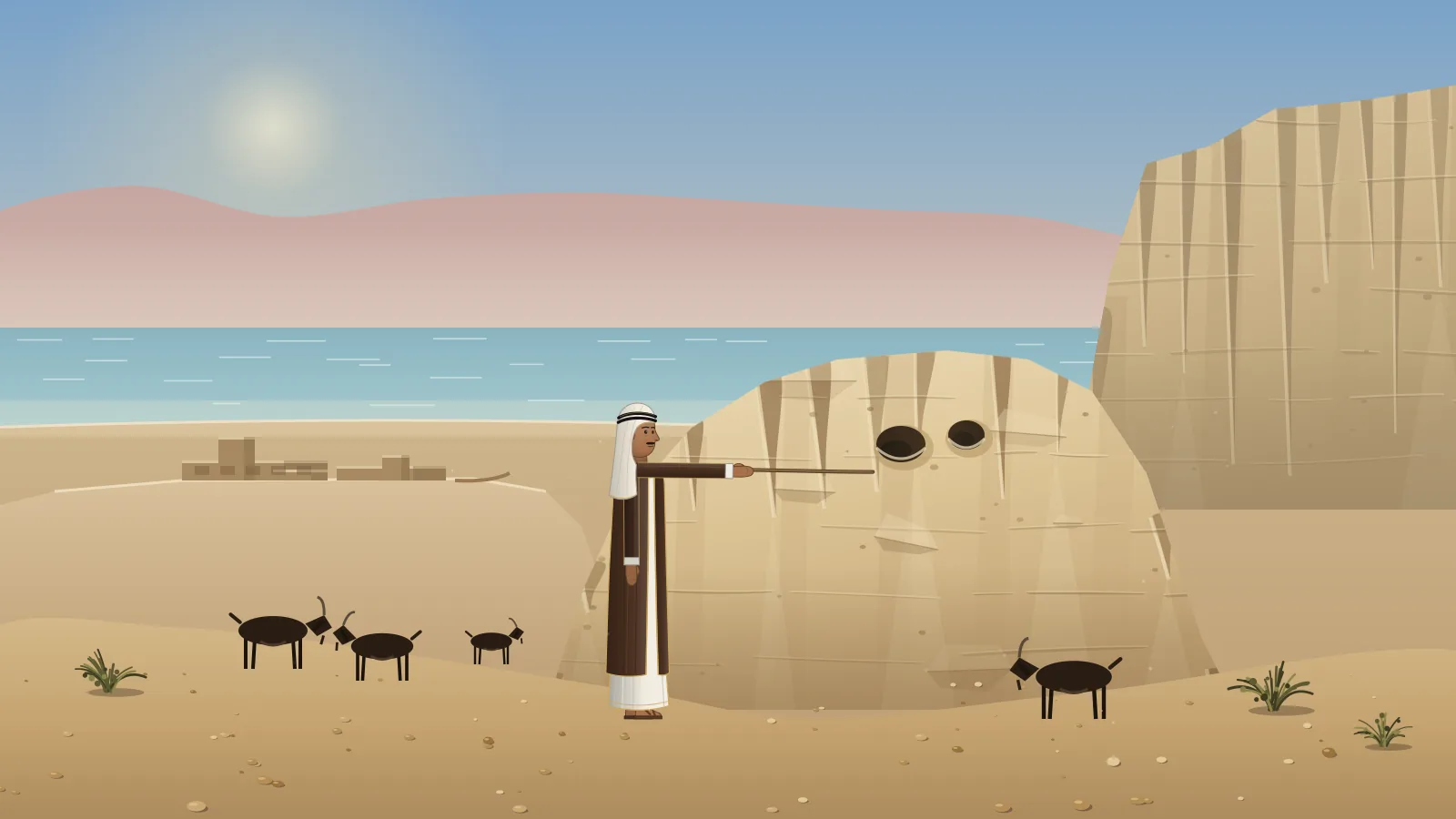
In the highlands of Ethiopia, in round stone churches, priests have read for centuries from heavy books of parchment, written in Ge’ez, the ancient language of their church. One of the books they keep carries the name of a man who lived, the Bible says, before the Flood.
Far away, in the libraries of Europe, scholars knew that same book only by name, and by passages quoted in other writings. For more than a thousand years they believed it was lost. It was not lost. It had been kept all along, in another part of the world.
Chapter Iwatch from 0:39
The Man Who Walked with God
The book carries the name of Enoch, a man who appears in only a few lines of the Book of Genesis. He was the seventh generation from Adam, the son of Jared, the father of Methuselah and the great-grandfather of Noah. Genesis gives him a life of 365 years, and then, instead of saying that he died, it says something strange: “Enoch walked with God: and he was not; for God took him.”
That short sentence left a great silence behind it. Centuries later, Jewish writers asked what it meant. Where had Enoch gone, and what had he seen on the way?
Where had Enoch gone, and what had he seen on the way?
Their answers, written in Aramaic in Enoch’s name, became the Book of Enoch. Scholars call it First Enoch, or 1 Enoch, and it is not one book but five, written by different hands from about the third century BCE to around the turn of the era. Its oldest parts are among the earliest Jewish apocalyptic writings known, visions of heaven, of judgement and of the hidden order of the world.
Chapter IIwatch from 1:37
The Watchers on Mount Hermon
The most famous part is called the Book of the Watchers. It begins with a story that Genesis tells in just 4 verses, about the sons of God, the daughters of men and the mighty ones born to them. The Book of the Watchers tells it at length.
In the days of Enoch’s father, Jared, it says, 200 angels called the Watchers came down onto the summit of Mount Hermon. There, led by one named Shemihazah, they swore an oath together. They took human wives, and their children were giants.
The Watchers taught forbidden knowledge. One of them, Asael, showed people how to work metal, to make swords and shields, bracelets, and paint for the eyes. Others taught spells, the cutting of roots, and the signs of the stars. (In the later Ethiopian text, these two leaders are called Semyaza and Azazel.)
The giants devoured everything people had grown, the story says, and then turned on the living. And the earth itself cried out, its cry rising up to heaven. In the book, this is why the Flood came.
Evil and violence, it suggests, did not begin with humans alone.
Evil and violence, it suggests, did not begin with humans alone. They came down from above. And Enoch was caught in the middle. The Watchers asked him to write a petition for mercy on their behalf. He read it beside the waters of Dan, below Mount Hermon, and fell asleep. In a vision he received the answer, and he had to carry it back to them: they would have no peace.

Chapter IIIwatch from 3:06
To the Ends of the Earth
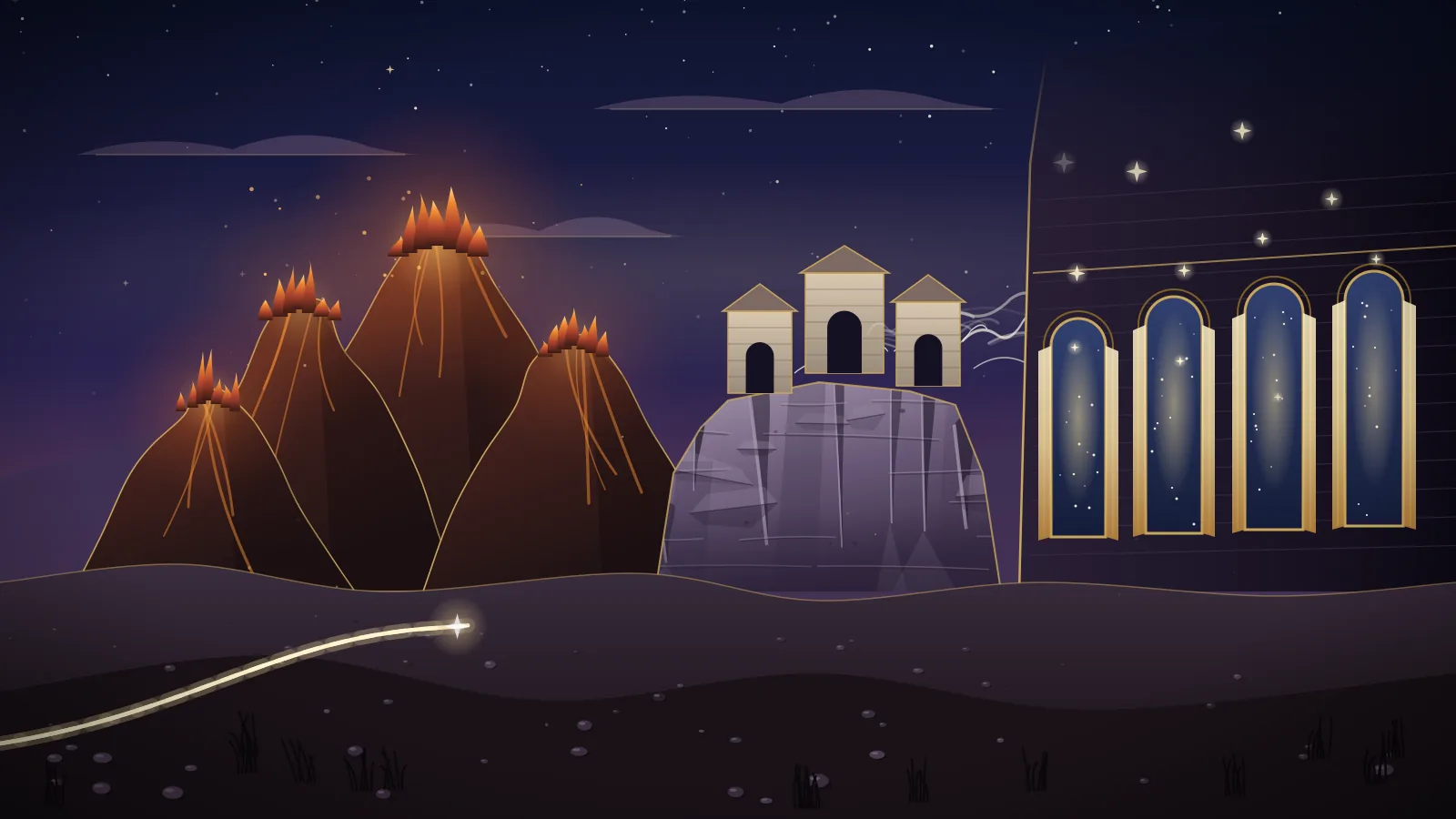
Then the book takes Enoch on journeys to the ends of the earth. He sees mountains of fire, the storehouses of the winds, and the gates through which the stars come out into the sky.
Beyond the edge of heaven and earth, in a desolate place, he sees seven stars like great burning mountains. They are bound there, he is told, because they did not rise at their appointed times.
He sees seven stars like great burning mountains.
Another part, the Astronomical Book, describes a year of 364 days. That is exactly 52 weeks, so every festival would fall on the same day of the week, year after year, never drifting through the calendar.
The other parts are just as strange. In the Book of Dreams, history from Adam onward is retold as a story of animals: bulls, sheep and wild beasts. A letter in Enoch’s name comforts the righteous. And the Parables describe a heavenly judge, called the Son of Man and the Chosen One.
Chapter IVwatch from 4:03
Quoted, Doubted, Set Aside
This was no obscure text. Probably in the first century, a short letter in the New Testament, the Letter of Jude, quoted it almost word for word: “Enoch also, the seventh from Adam, prophesied of these, saying, Behold, the Lord cometh with ten thousands of his saints, to execute judgment upon all.”
Around the year 200, the North African writer Tertullian argued that the book deserved to be read as scripture, even though some did not accept it. Others were not so sure. Saint Jerome noted that many rejected the Letter of Jude itself, because it quoted Enoch. Saint Augustine wrote that the book’s great age made it impossible to be sure it was Enoch’s own work.
There was no single ban.
There was no single ban. As most churches settled which books belonged in the Bible, Enoch was gradually left out. Fewer copies were made, and in the West the book slowly faded away.
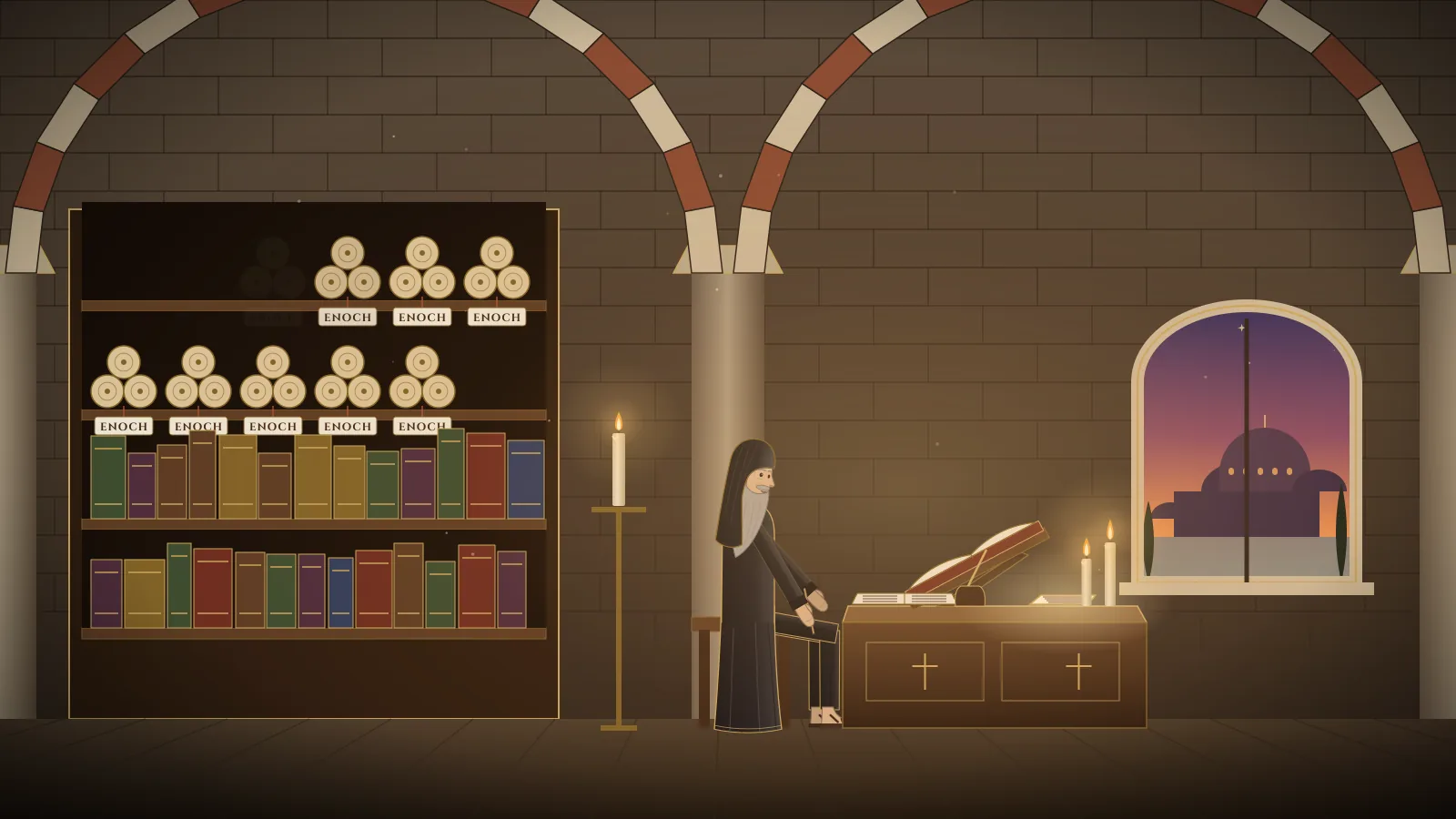
Only pieces survived. Around 800, a Byzantine monk, George Syncellus, copied long Greek passages about the Watchers into his chronicle of the history of the world. Through his pages, and a few quotations in older writers, Europe kept the memory of a book it could no longer read.
Chapter Vwatch from 5:17
Kept in Ethiopia
But by then, the book had already travelled south. Probably between the fourth and sixth centuries, it was translated from Greek into Ge’ez, in the Christian kingdom of Aksum. It had made a long journey already, from Aramaic into Greek, and now from Greek into the language of the Ethiopian church.
There, it was never set aside. It became part of the Bible of the Ethiopian Orthodox Tewahedo Church, and Ethiopia’s Jewish community, the Beta Israel, honoured it too.
There, it was never set aside.
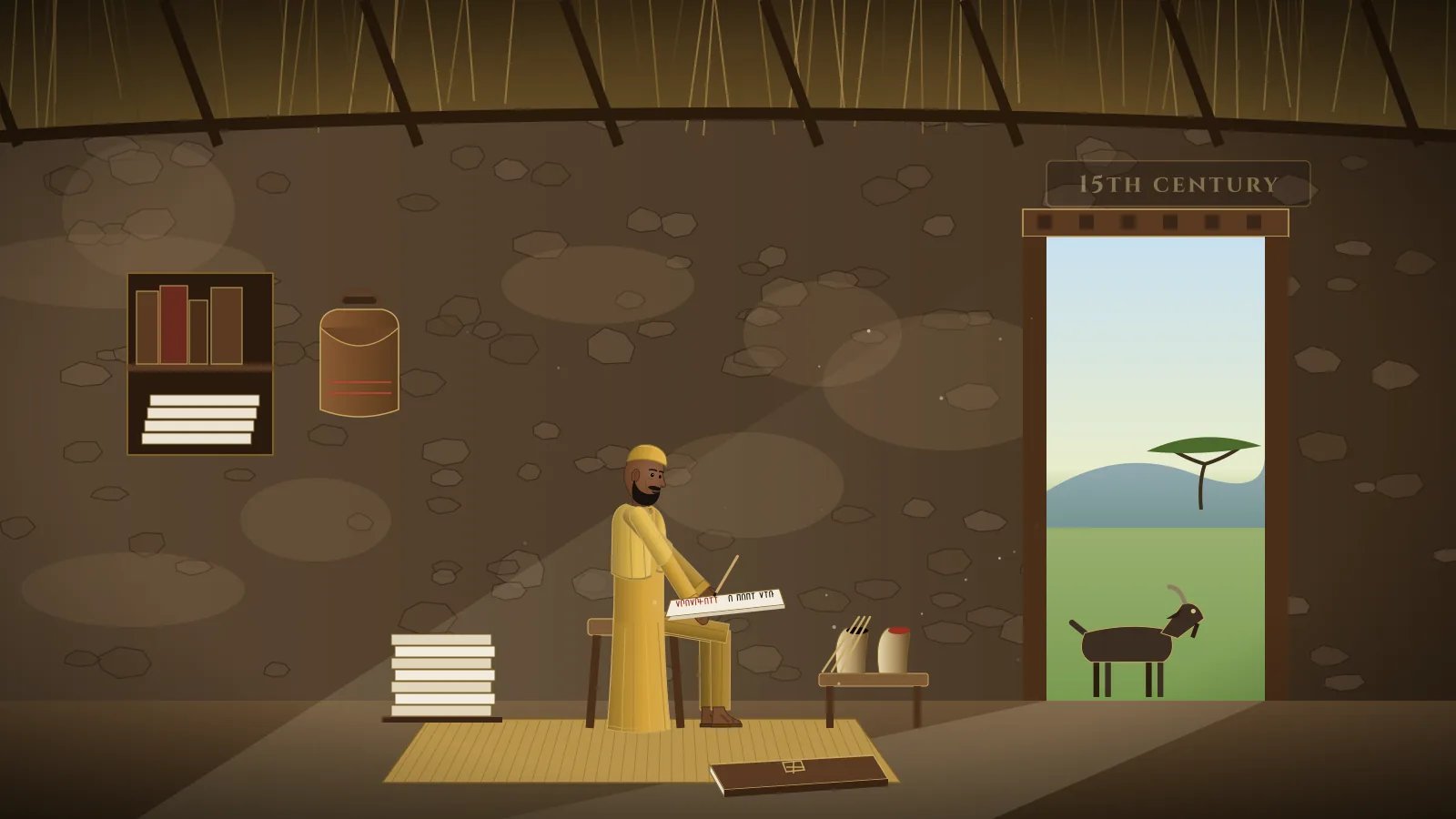
Generation after generation, scribes copied it by hand onto parchment. The oldest Ethiopian copy known today was made in the fifteenth century, and many more survive, around 80 of them in catalogues, with more still kept in Ethiopia. It is the only language in which the whole book has come down to us.
Chapter VIwatch from 5:54
The Hunt for the Book
In Europe, meanwhile, the hunt went on. In 1636 the French scholar Nicolas-Claude Fabri de Peiresc obtained an Ethiopian manuscript from Egypt, through Capuchin friars, said to be the lost Book of Enoch. In 1681 the German scholar Hiob Ludolf, an expert in Ethiopian languages, examined it. It was a different book, The Mysteries of Heaven and Earth, which only mentioned Enoch.
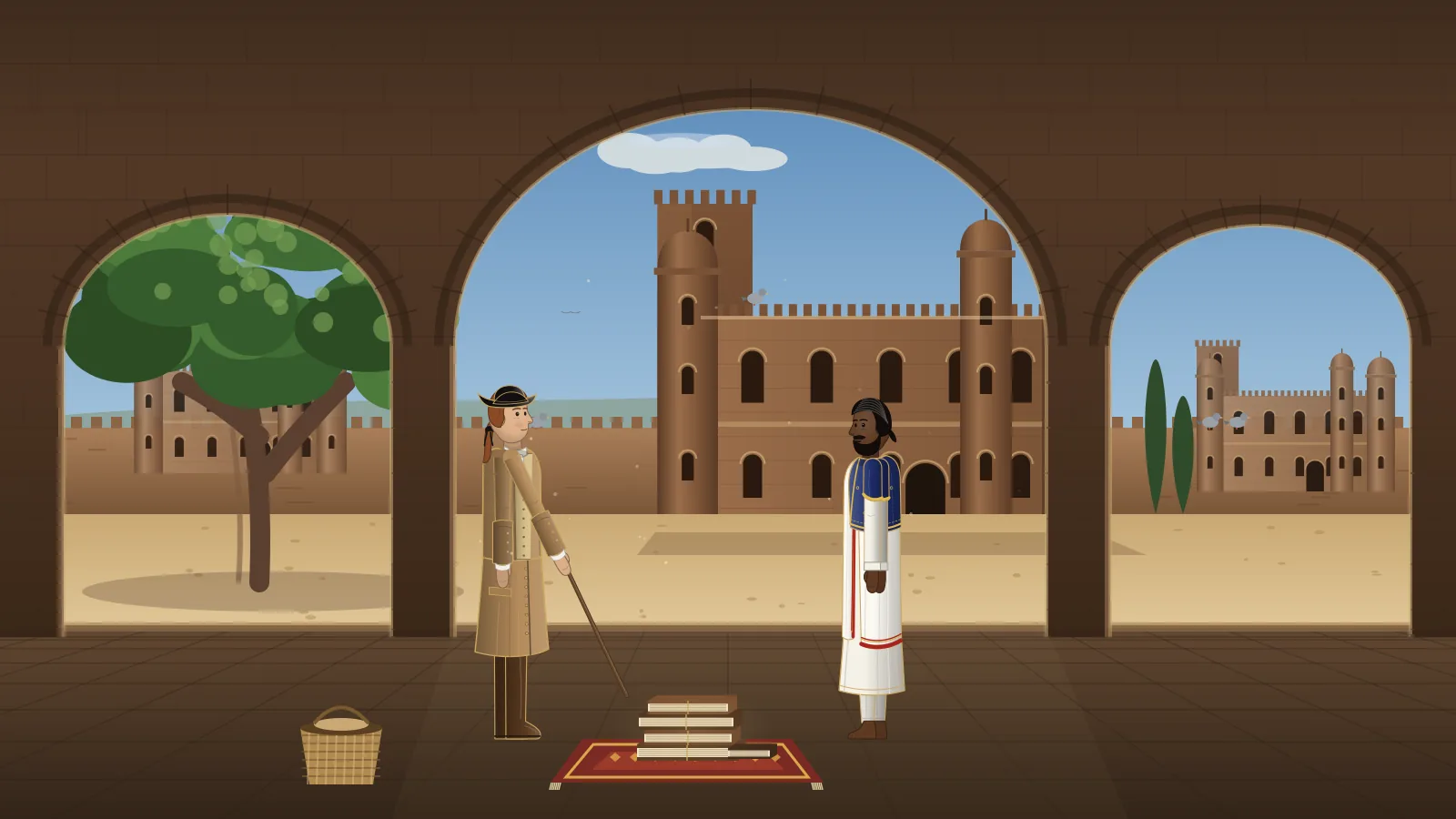
Then came James Bruce, a tall Scottish laird who set out to find the source of the Nile. In February 1770 he reached Gondar, the capital of Ethiopia. He stayed nearly two years, at the royal court and on his travels, and he collected manuscripts.
In 1773 he brought back to Europe three copies of the Book of Enoch, in Ge’ez. He presented one to the royal library in Paris, and another to the Bodleian Library in Oxford. The third he kept for himself; after his death it too went to the Bodleian.
But the manuscripts were real.
In Britain, many doubted Bruce’s tales of his travels. But the manuscripts were real. And for years, almost nobody could read them. In 1800 the French orientalist Silvestre de Sacy published a few chapters in Latin. Then, in 1821, Richard Laurence, professor of Hebrew at Oxford, published the first English translation, made from the Bodleian copy.
Its fallen angels caught the imagination of the age. Lord Byron and Thomas Moore wrote poems about angels who loved mortal women, and William Blake made drawings inscribed “From the Book of Enoch”.
Chapter VIIwatch from 7:44
A Grave and a Cave
In the winter of 1886, French archaeologists at Akhmim, in Upper Egypt, opened a grave they took to be a Christian monk’s. He had been buried with a book. Its pages held, among other texts, the opening chapters of Enoch in Greek, copied many centuries before.
Then, in 1952, Bedouin near the Dead Sea found a cave full of fragments: Qumran Cave 4. Among the remains of some 550 manuscripts, scholars found Enoch in its original Aramaic.
The Polish scholar Józef Milik spent years matching the scraps. In 1976 he published fragments of 11 manuscripts. The oldest had been copied around 200 BCE. Four of the five parts were there. Only the Parables were missing, and most scholars think they were written later, around the turn of the era.
The oldest had been copied around 200 BCE.
The fragments confirmed what Ethiopian tradition had kept: this was a truly ancient Jewish book, read and copied long before the time of Jesus.
Today, Enoch is often sold as a banned book, hidden by the Church for its secrets. Historians find no single act of suppression, only a slow fading in most traditions. Some modern writers claim the Watchers were visitors from other worlds, or that the bones of giants lie hidden somewhere. Archaeology supports none of it.
For scholars, the book is a window into Jewish thought in the centuries before Christianity. For Ethiopian Orthodox Christians, it is scripture, still read today. Europe searched for a lost book for more than a thousand years. In the Ethiopian highlands, it had been there all along, open on a stand, in the morning light.