The story of the film
Izmir, Edirne and Dulcigno, then Salonica, and finally Istanbul · 1665–1950s
Salonica, on the Aegean coast of the Ottoman Empire, in the 1680s. Minarets and church domes rose above a harbour full of sailing ships, and in many of its streets people spoke Ladino, the Spanish of Jews expelled from Spain two centuries before. In these years several hundred Jewish families went together to become Muslims. They took Muslim names, and recited the words of the Muslim profession of faith. Their neighbours called them the Dönme, a Turkish word for converts. Among themselves, they were the ma’aminim, the believers. But their conversion hid a secret, and they kept it for more than two hundred years.
Chapter Iwatch from 0:48
A Messiah from Izmir
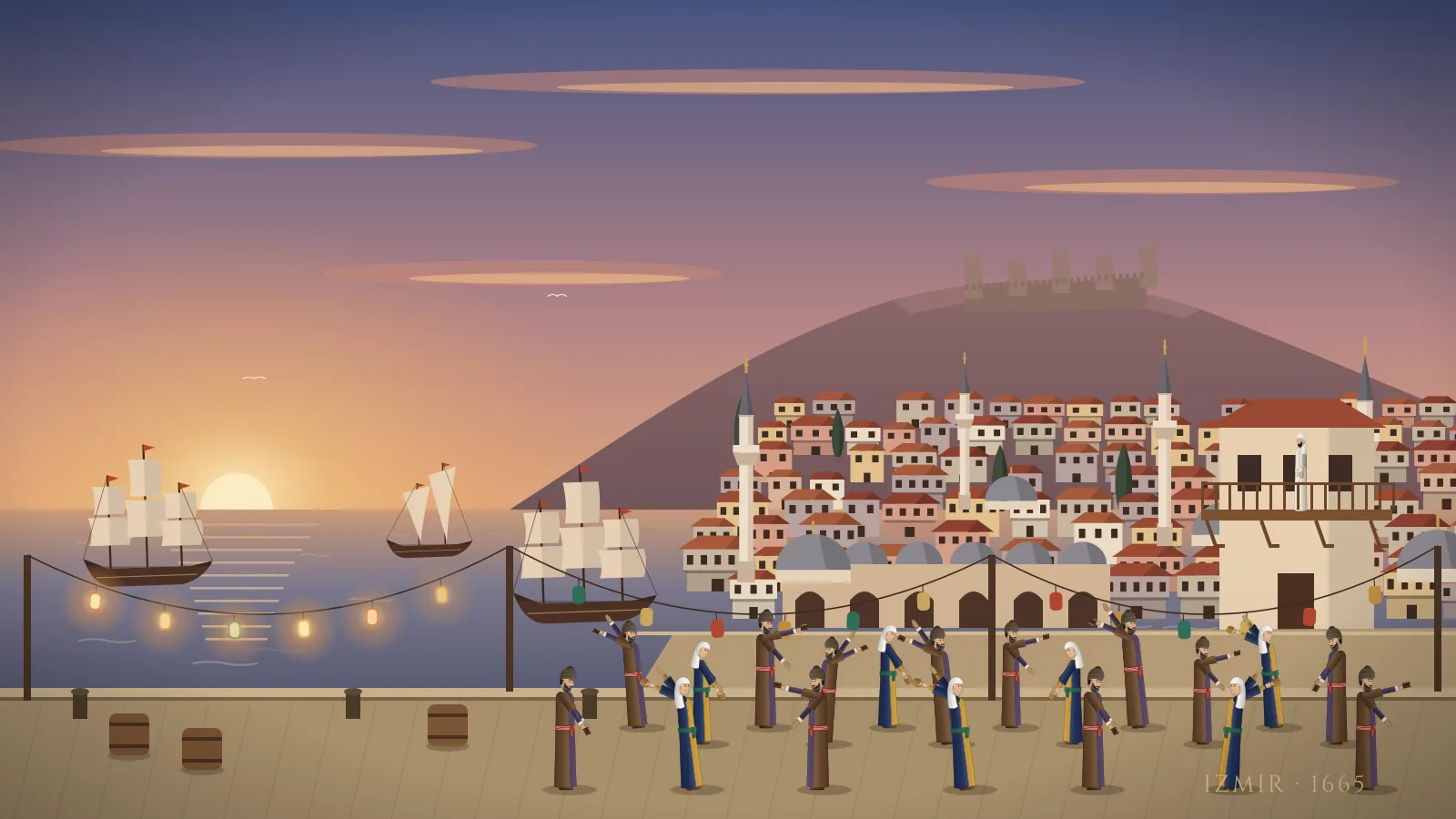
The secret began with one man. In 1665 a rabbi and mystic from Izmir, Sabbatai Zevi, was proclaimed the messiah.
The news swept through Jewish communities from Yemen to Amsterdam. Many families fasted, prayed, and prepared for the end of exile. It seemed to them that the long wait of their people was almost over.
Then, in September 1666, Sabbatai was brought before the court of Sultan Mehmed IV at Edirne. Given a choice between conversion and punishment, he became a Muslim, and took the name Aziz Mehmed Efendi.
Most of his followers were heartbroken. They returned to ordinary Jewish life. His full story is told in its own film on this channel.
But a minority could not let go. They believed that his conversion was part of a hidden mission: a descent into darkness, in order to redeem it. To them, what looked like defeat was a step on the messiah’s strange path. Sabbatai himself died in exile at Dulcigno, today’s Ulcinj, on the Adriatic coast, in 1676. His believers did not give up.
Chapter IIwatch from 1:53
Into Islam Together
Salonica was then one of the great Jewish cities of the Ottoman Empire. There, the believers gathered around his last wife, known as Jochebed or Ayşe, and around her brother, Jacob Querido.
Sources differ on the year: around 1683, or 1686. But Querido is remembered as the man who led those families into Islam. Several hundred households crossed over together, at once. They did not leave their faith in Sabbatai behind. They carried it with them, hidden inside their new religion.
Chapter IIIwatch from 2:15
Two Lives
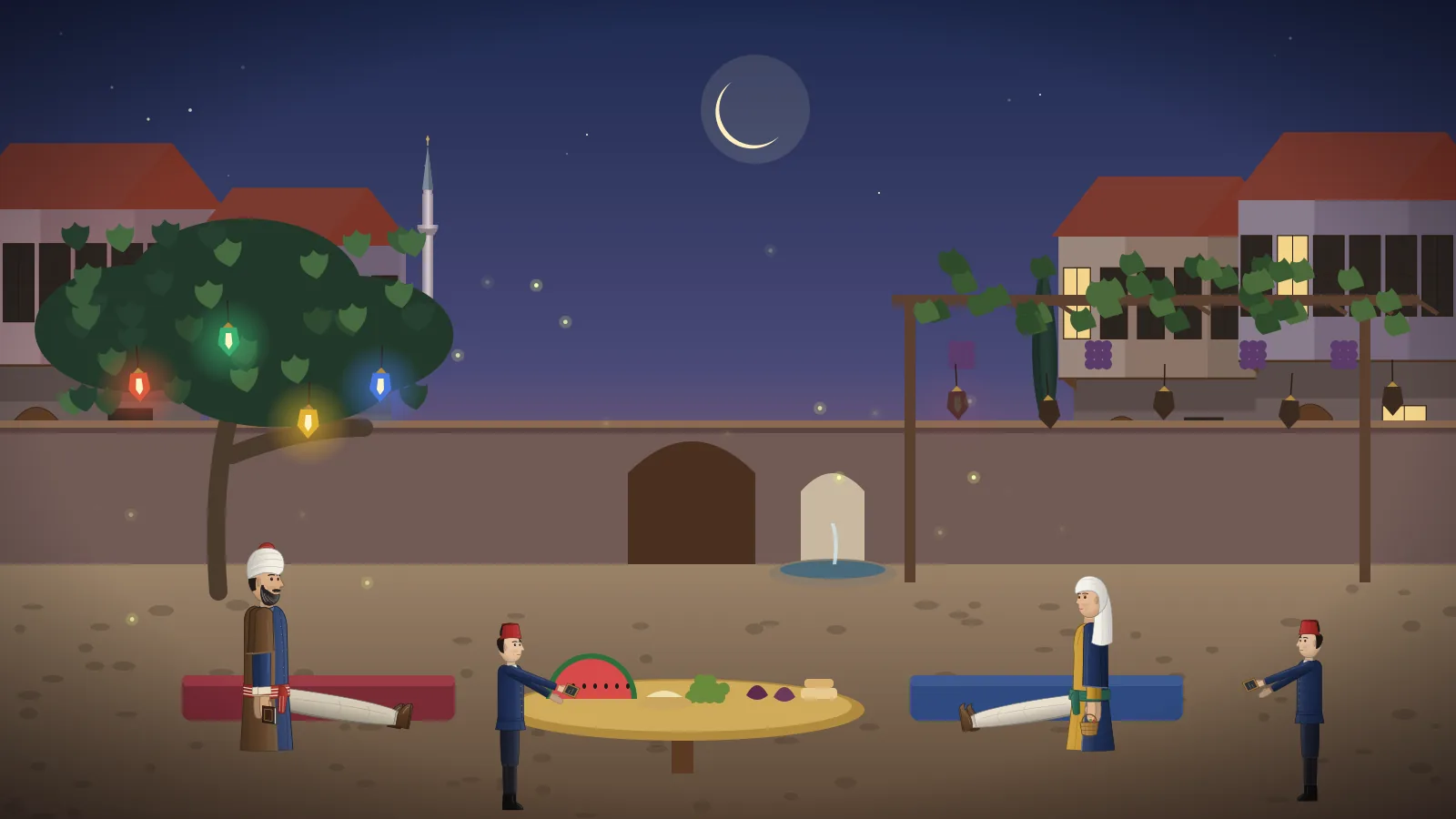
From then on, the Dönme lived two lives. In public, they bore Muslim names, prayed in mosques, and fasted in Ramadan. Some made the pilgrimage to Mecca.
In private, behind closed shutters, they held that Sabbatai was the messiah, and kept a religious life of their own. Their religion drew on Jewish mysticism, and on the teachings of Sabbatai and his successors.
Their rules were set out in eighteen precepts, attributed to Sabbatai himself: faith in him as messiah, the outward observance of Islam, and a ban on marriage with Muslims. They married only among themselves, kept their own family records, and buried their dead in their own cemeteries.
In public, they bore Muslim names, prayed in mosques, and fasted in Ramadan.
The community did not stay united. The followers of Querido became the Yakubiler. Those who traced themselves to Sabbatai’s first circle in Izmir became the İzmirliler, also called the Kapancılar. Around 1700 a new leader, Baruchiah Russo, known as Osman Baba, drew a following of his own. His followers came to see him as Sabbatai’s successor, and after his death in 1720 they revered his memory. His branch, the Karakaşlar, became the largest.
The three branches were rivals. Each had its own prayer houses and its own schools, and each married only within its own circle.
At private gatherings, they recited prayers and hymns, some in Hebrew, but most in Ladino, the Judeo-Spanish language of Ottoman Jews. They kept their own feasts, too. The ninth of Av, a Jewish day of mourning, Sabbatai had turned into a festival of his birth. According to the historian Marc David Baer, they would even break the Ramadan fast a few minutes early, a quiet sign of their difference.
For two centuries, the community lived quietly, and largely kept its secrets. Jews regarded them as apostates. Their Muslim neighbours knew they were a group apart. Yet the Ottoman state generally treated them simply as Muslims. In the 1770s the Danish traveller Carsten Niebuhr reported that about six hundred Dönme families lived in Salonica.
Chapter IVwatch from 4:28
A Modern Port
In the nineteenth century, Salonica grew into a busy modern port, with steamships, warehouses, a railway, and a new seafront.
Dönme families played a large part in its trade: in textiles, and above all in tobacco, the city’s great export. Others served in the customs and the civil service.
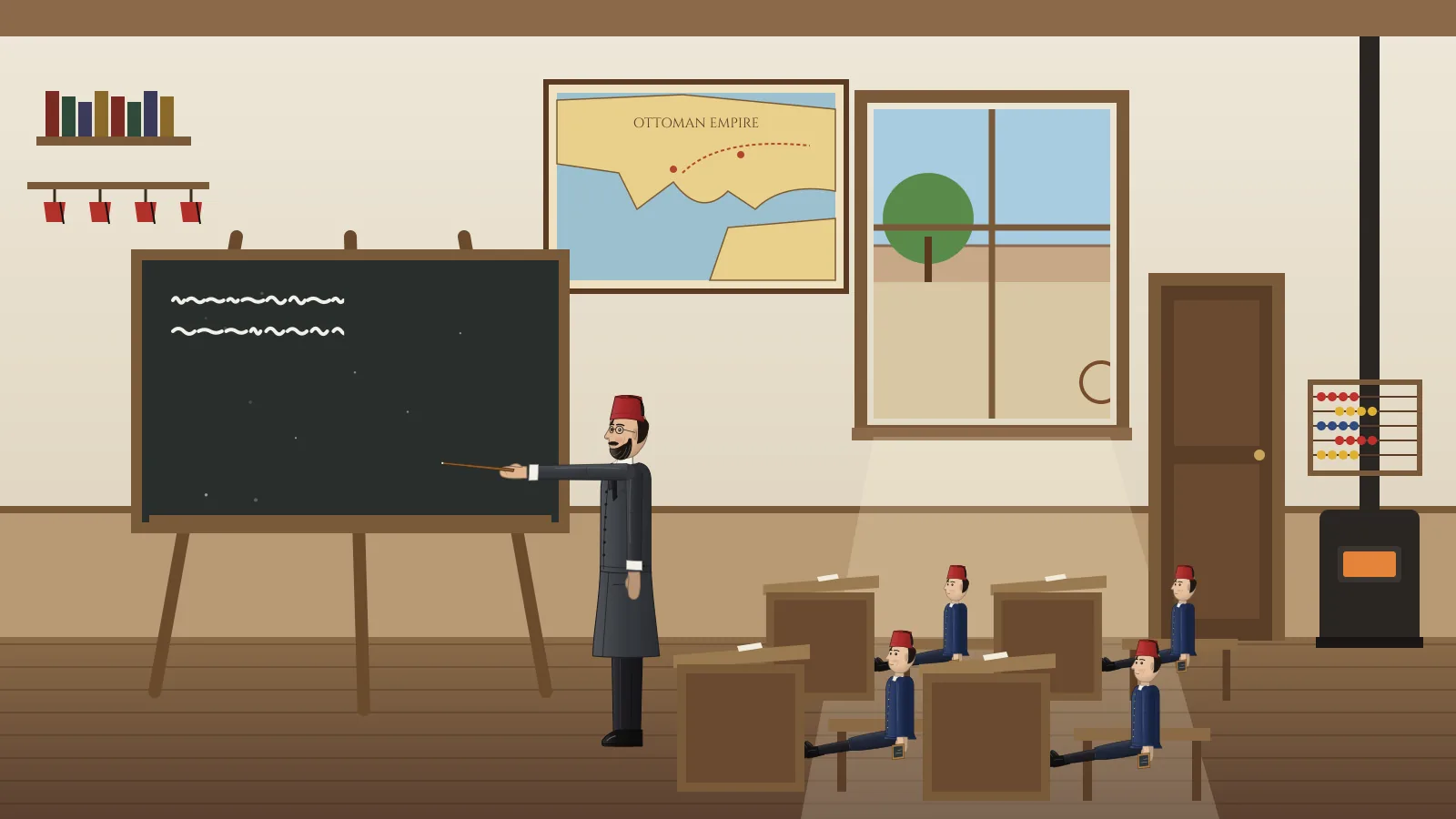
They were also among the city’s keenest supporters of modern education. In the 1870s the teacher Şemsi Efendi opened a modern school, with blackboards, and games between lessons. One of his pupils was a boy named Mustafa, the future Atatürk, founder of the Turkish Republic. In the 1880s, Dönme notables founded the Feyziye schools. Their successors still exist in Istanbul today.
By the 1890s, wealthy families were building villas in the new seaside suburb of Hamidiye, with gardens above the bay and a view across the water to Mount Olympus. There, in 1902, a new mosque rose, designed by the Italian architect Vitaliano Poselli in a mixture of styles, with a clock tower and a sundial. It is remembered as the mosque of the Dönme.
Chapter Vwatch from 5:50
Revolution and a New Flag
Salonica was also the main base of the Young Turks, the reformers who, in July 1908, forced the sultan to restore the constitution. People of every faith celebrated in its streets.
Some Dönme joined the movement, as did many of their neighbours. Mehmed Cavid Bey, from a Dönme family, became the empire’s minister of finance.
Then, in November 1912, during the First Balkan War, the Greek army entered Salonica. After almost five centuries of Ottoman rule, the city became part of Greece.
Some Dönme families left for Istanbul in the years that followed. Others stayed on, in the city that had been their home for more than two centuries.
Chapter VIwatch from 6:41
The Exchange
On 30 January 1923, at Lausanne in Switzerland, Greece and Turkey signed a convention for a compulsory exchange of populations.
Language and ancestry did not decide who had to leave. Religion did. Most Orthodox Christians in Turkey were to go to Greece, and most Muslims in Greece were to go to Turkey.
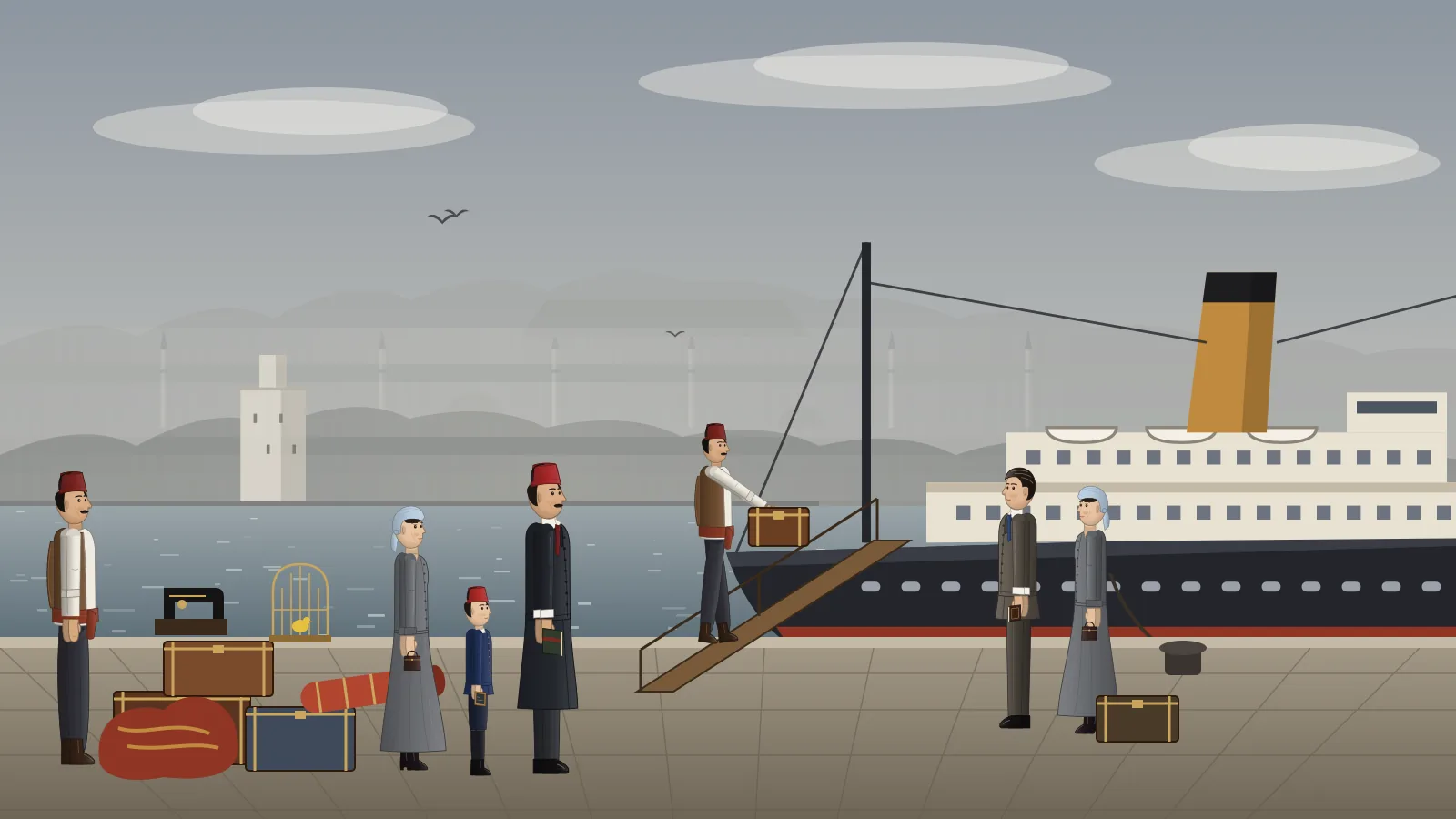
In law, the Dönme were Muslims. So they packed their belongings, left their houses, their schools and their cemeteries, and boarded the steamers on Salonica’s quay. Over 1923 and 1924, almost the whole community left. It numbered perhaps ten to fifteen thousand people, and most of them settled in Istanbul.
Their welcome was uneasy. Since 1919, some pamphlets and newspapers had attacked the Dönme with the same images used against Jews in Europe. In 1924 a Dönme writer, Karakaşzade Rüştü, publicly called on the community to give up its separate ways. The storm in the press that followed brought the Dönme unwanted attention.
Many families chose silence. Some kept a sense of their heritage, but they rarely spoke of it in public. Over the following decades they married outside the group, religious knowledge faded, and most descendants became ordinary, secular Turkish citizens.
Chapter VIIwatch from 8:12
A Second Life for a Name
But the name Dönme took on a second life. Opponents of reform claimed that a hidden Dönme network, often linked with Freemasons and Jews, had overthrown the sultan, and secretly controlled the Republic.
Similar claims still circulate, in bestselling books and online. Some say that Atatürk himself was a Dönme, because he went to Şemsi Efendi’s school.
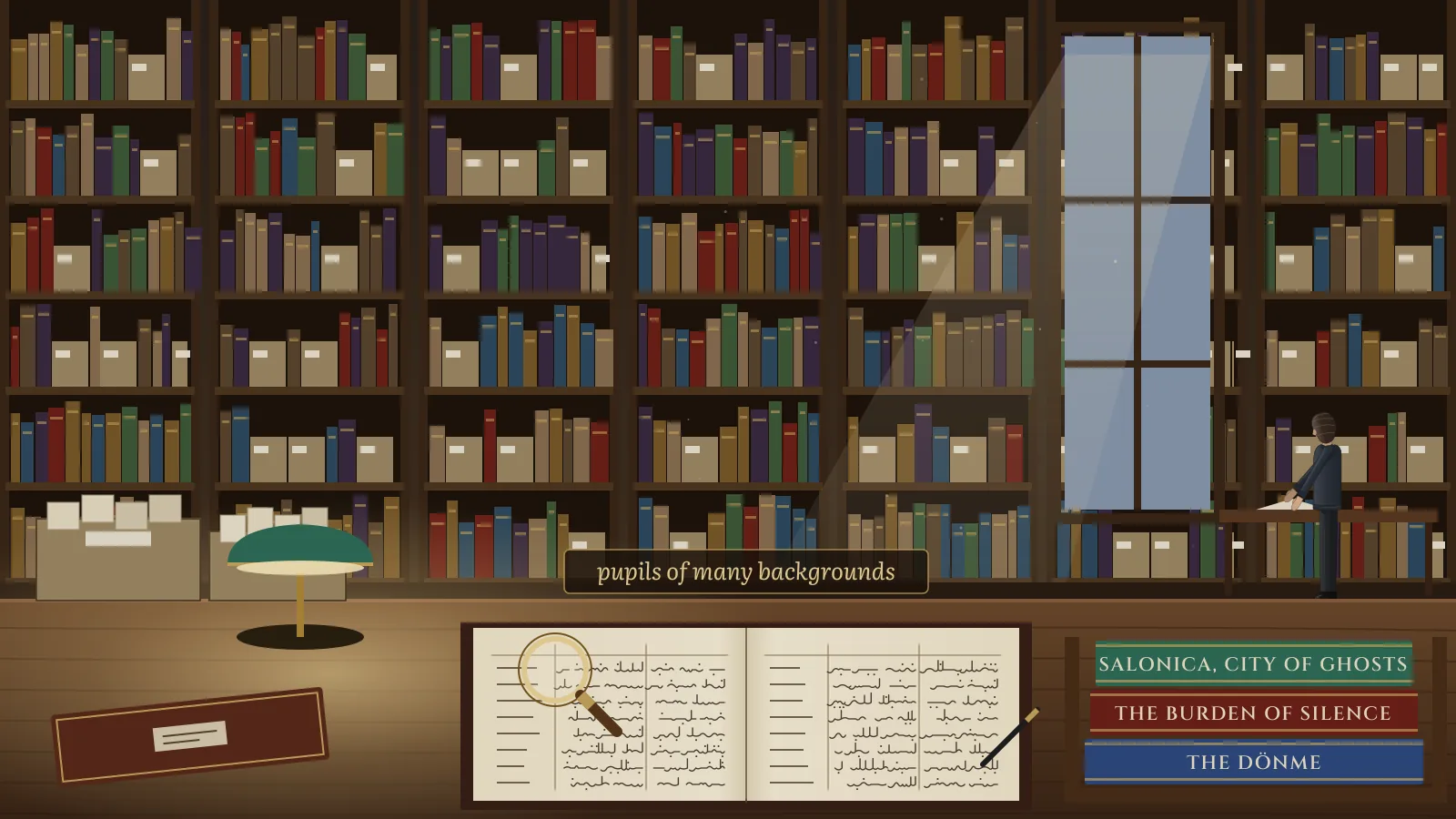
Historians have looked. Şemsi Efendi’s school also took Muslim pupils from outside the community, and there is no evidence that Atatürk was a Dönme. Some Dönme did support reform, as did many of their neighbours. But historians such as Marc David Baer and Cengiz Şişman find no evidence of a hidden collective plot.
Nor were the Dönme simply Jews in disguise. Jewish communities rejected them, and historians describe a distinct religion of their own, shaped by both Judaism and Islam.
The records tell a smaller, stranger story.
The tales of a secret network rest on rumour, exaggeration, and old antisemitic stereotypes. The records tell a smaller, stranger story. A community of a few thousand families kept a hidden faith alive for more than two centuries, and then, in a changed world, quietly let it go.
Chapter VIIIwatch from 9:42
What Remains
In Thessaloniki, as Salonica is called today, the mosque of the Dönme still stands. For almost forty years it housed the city’s archaeological museum. Today it hosts exhibitions.
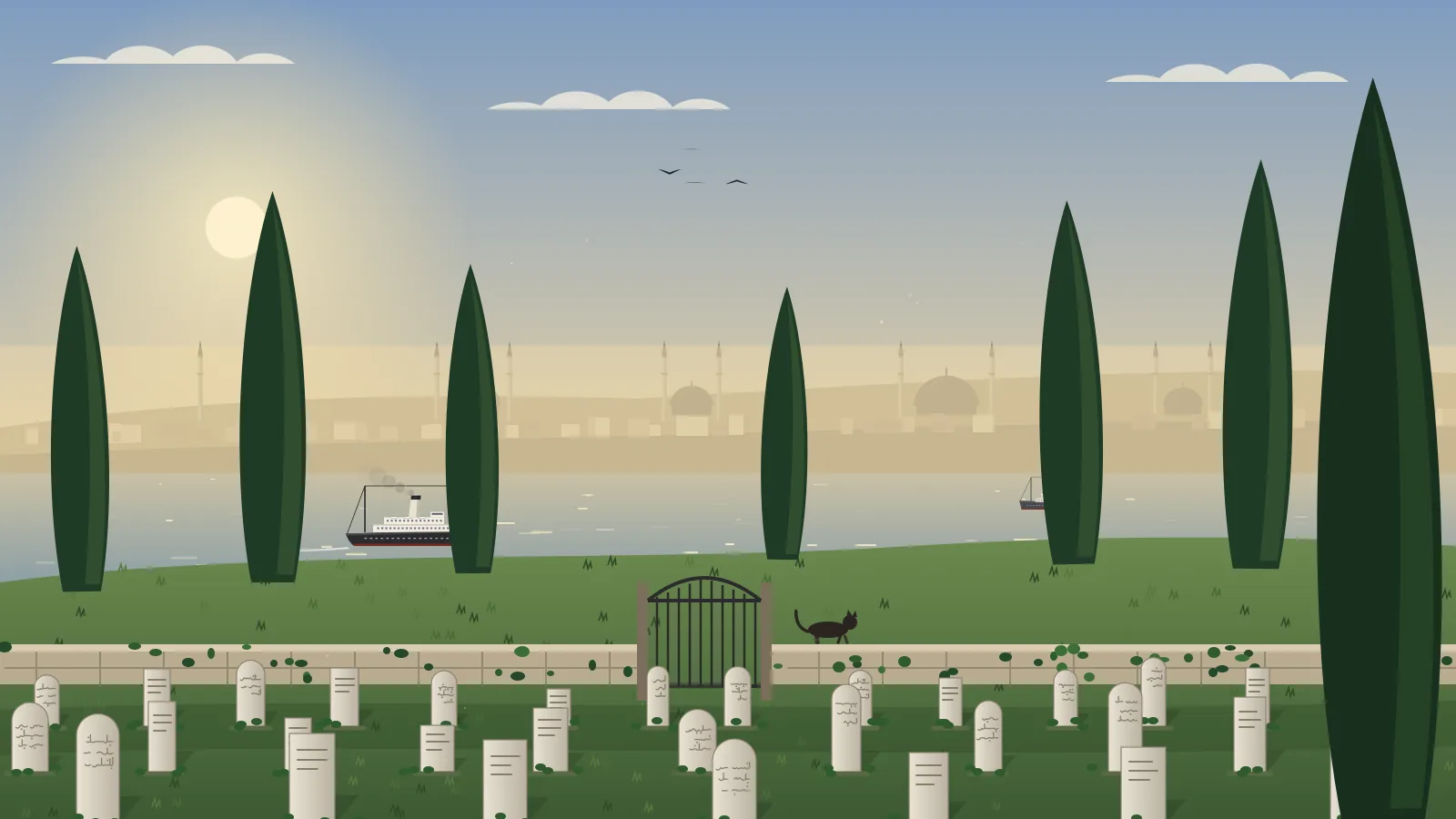
And on a hillside at Üsküdar, on the Asian shore of Istanbul, many Dönme families rest in the Bülbülderesi cemetery, under tall cypress trees. Here, a historian has written, the community is still visible as a group.
Below the cemetery, ships pass along the Bosphorus, as they once passed the quay at Salonica. It all began with a messiah who became a Muslim, and with families who followed him through a door that most of his believers would not enter. For more than two centuries they kept their secret. Then, in a new country, they chose silence.