The story of the film
Low Hampton, New England and western New York · 1816–1863
On the evening of 22 October 1844, in a farmhouse in western New York, a small group of believers sat together and waited. They had paid their debts. They were waiting for the return of Christ, and they believed it would come that very day.
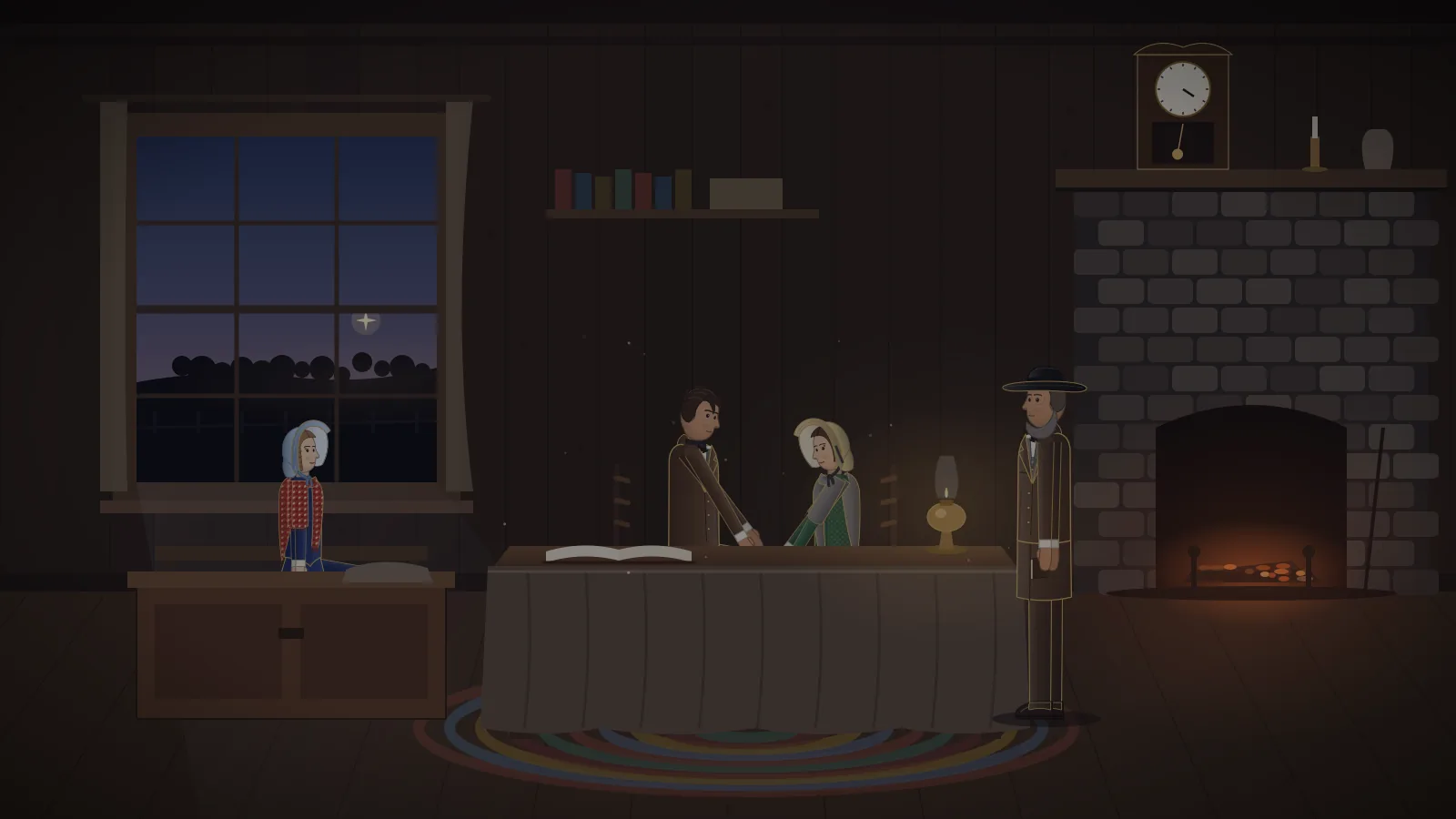
The hours passed. The lamp burned low. Then, in the silence, the clock on the wall struck twelve.
Chapter Iwatch from 0:35
The Farmer and the Bible
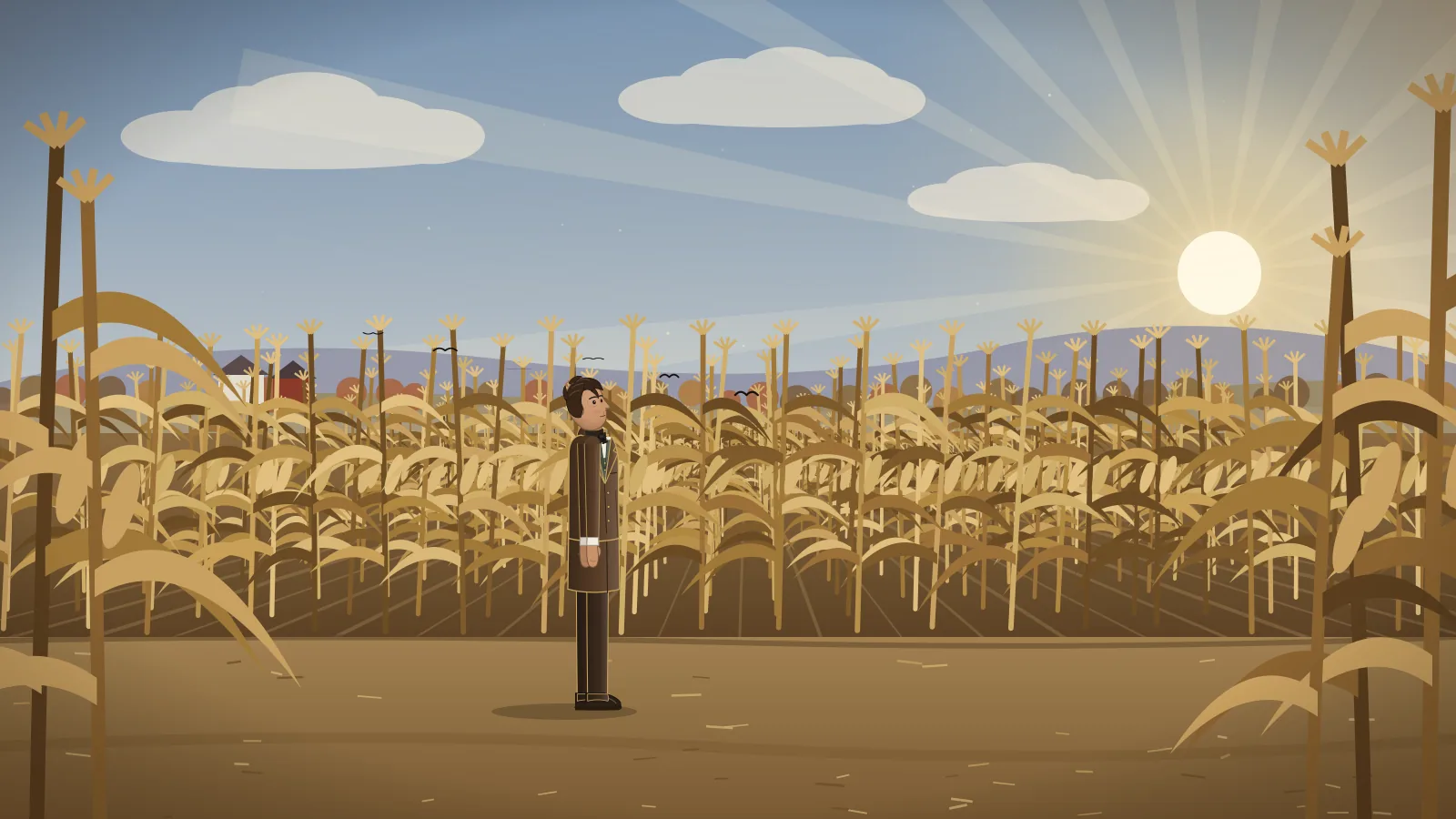
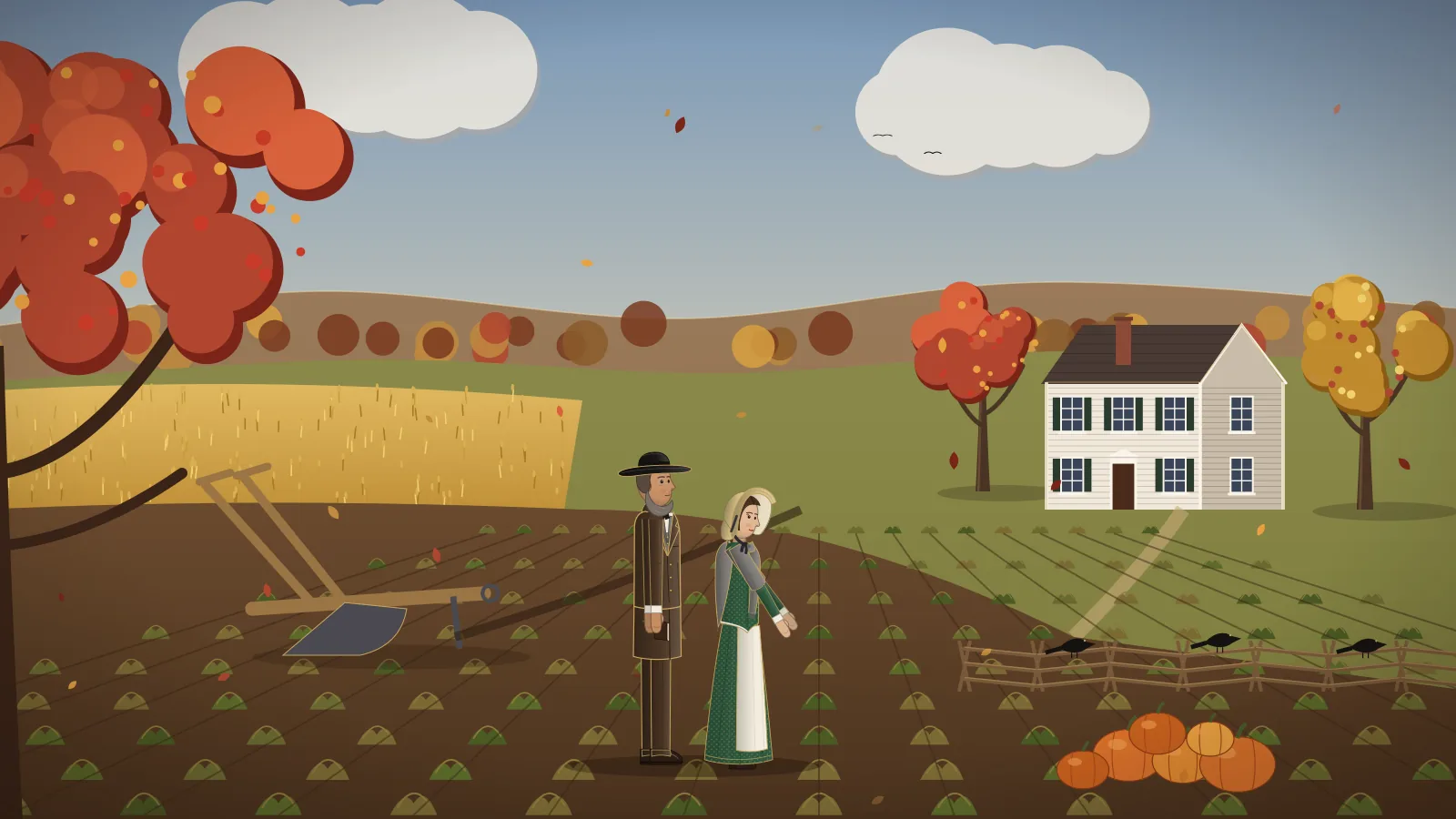
The story had begun more than 25 years earlier, on a farm at Low Hampton, in upstate New York. William Miller, born in 1782 in Pittsfield, Massachusetts, grew up there in a large farming family, the eldest of 16 children, reading every book he could borrow.
As a young man he became a Deist, believing in a distant Creator who did not step into human affairs. In the War of 1812 he served as an army captain. At the Battle of Plattsburgh, in 1814, a shell burst, by his own account, 2 feet from him. He was unhurt.
War, and deaths in his family, shook his certainty. In 1816 he returned to the Baptist faith of his childhood. Challenged by a Deist friend, he decided to read the Bible verse by verse, with only a concordance, never moving on until a passage made sense.
He came to believe that the prophecies were a timetable, and that the timetable could be calculated.
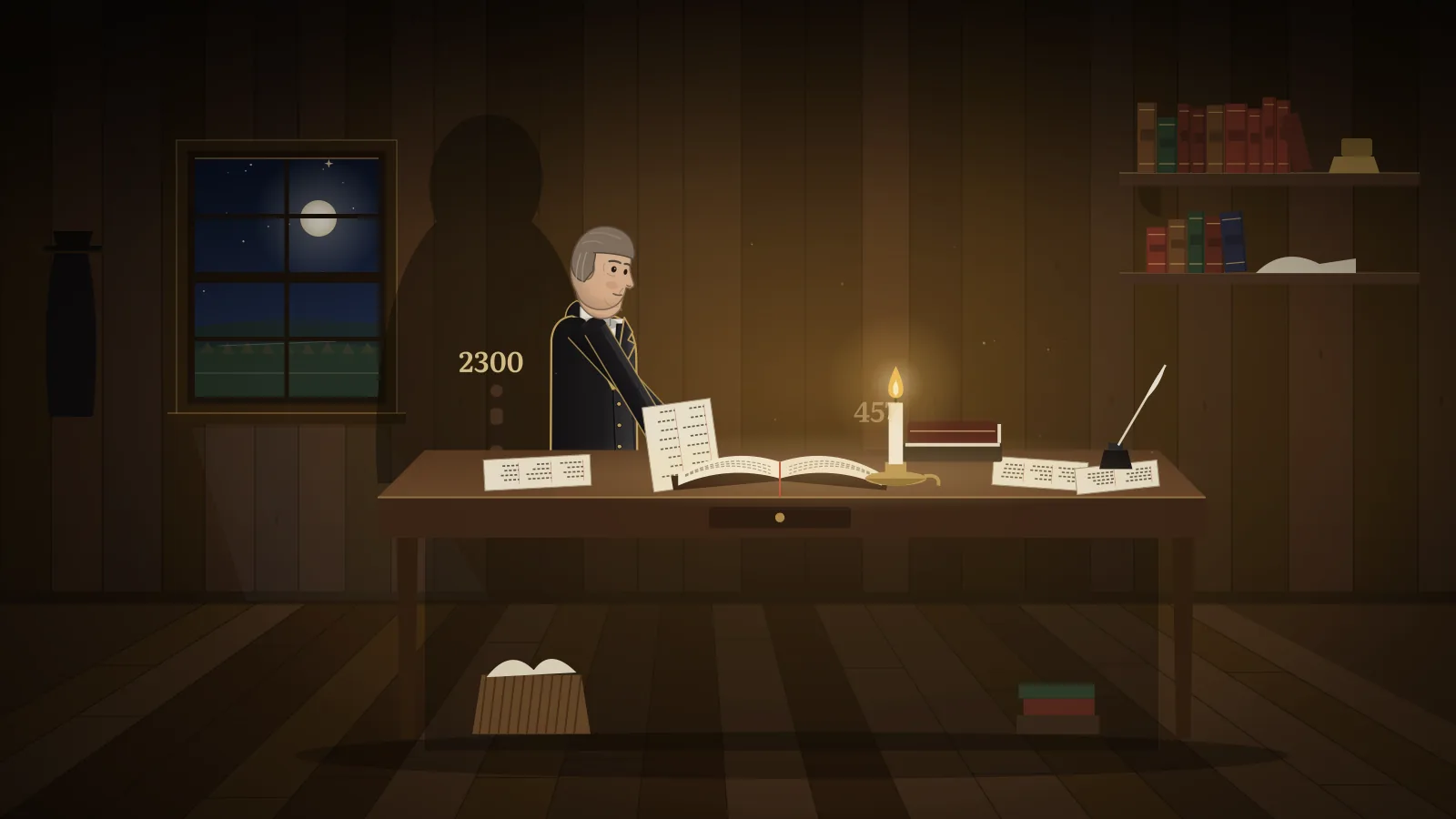
For 2 years he worked by candlelight. He came to believe that the prophecies were a timetable, and that the timetable could be calculated.
Chapter IIwatch from 1:48
Two Thousand Three Hundred Days
The key was one verse in the Book of Daniel, chapter 8: “Unto two thousand and three hundred days; then shall the sanctuary be cleansed.” Following an old Protestant rule, Miller read each prophetic day as a year. He began the count in 457 BC, when, he believed, a Persian king had ordered Jerusalem rebuilt.
That led him to about 1843. The cleansing of the sanctuary, he concluded, meant the return of Christ.
By 1818 he was convinced. Yet for over 10 years he kept it quiet. He was a farmer, not a preacher, and he was afraid of being wrong. According to his own later account, he finally made a promise in prayer: if the way opened, he would go and tell the world what he had found.
If the way opened, he would go and tell the world what he had found.
Within half an hour, he wrote, a boy rode up from Dresden, a village 16 miles away. Would Mr Miller come and speak about the Lord’s coming? So, in August 1831, William Miller gave his first public lecture. The house was full, and he was asked to stay and preach all week.
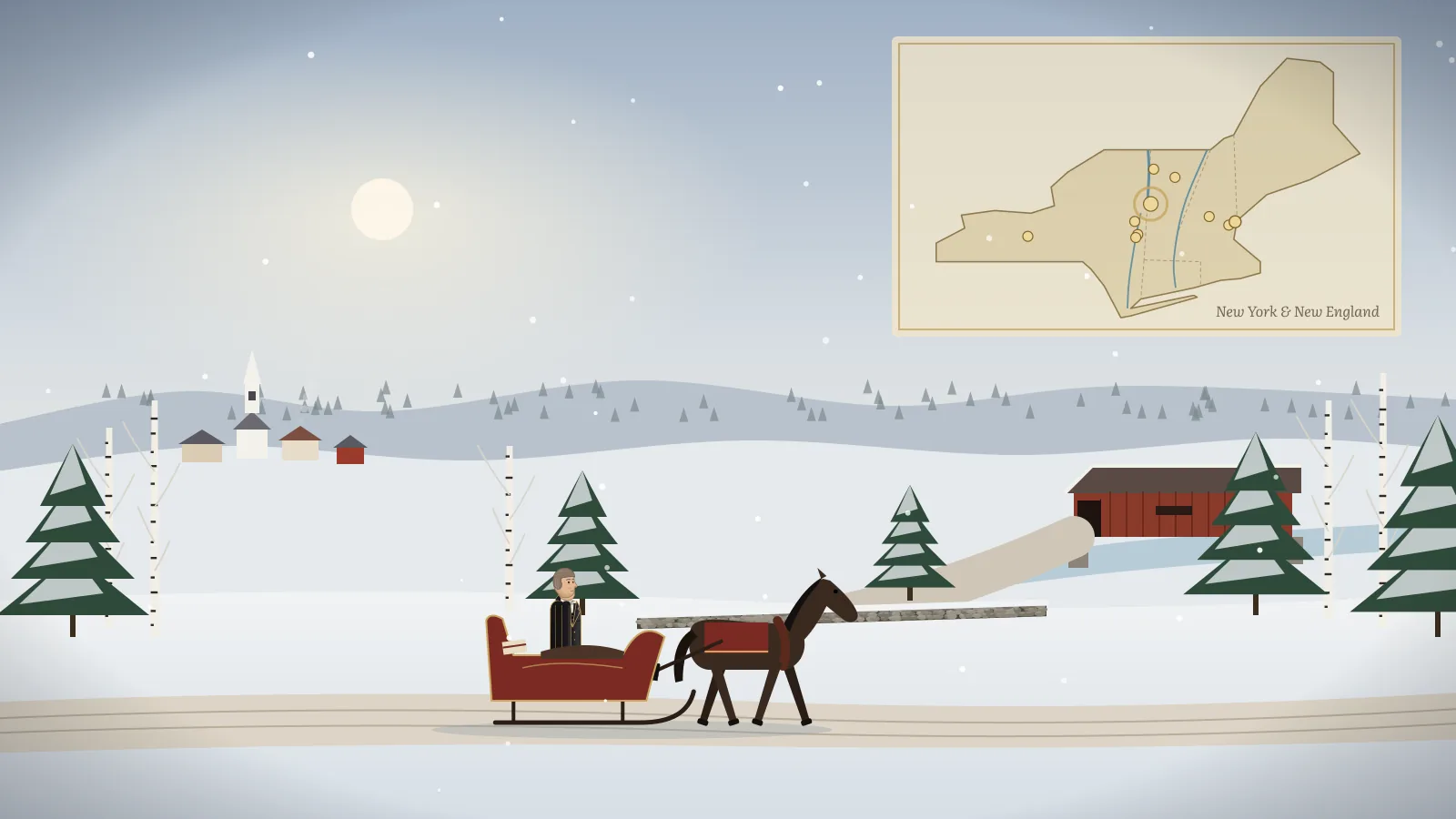
Invitations followed from churches across New York and New England. Miller travelled by wagon and sleigh, a calm farmer of nearly 50, with his Bible and a bundle of notes.
Chapter IIIwatch from 3:12
Tents, Charts and a Comet
In 1839 he met Joshua Himes, pastor of the Chardon Street Chapel in Boston, a minister with a gift for publicity. Himes launched newspapers: Signs of the Times in Boston, then The Midnight Cry in New York. By 1844, Millerite papers and tracts had gone out in about 5 million copies.
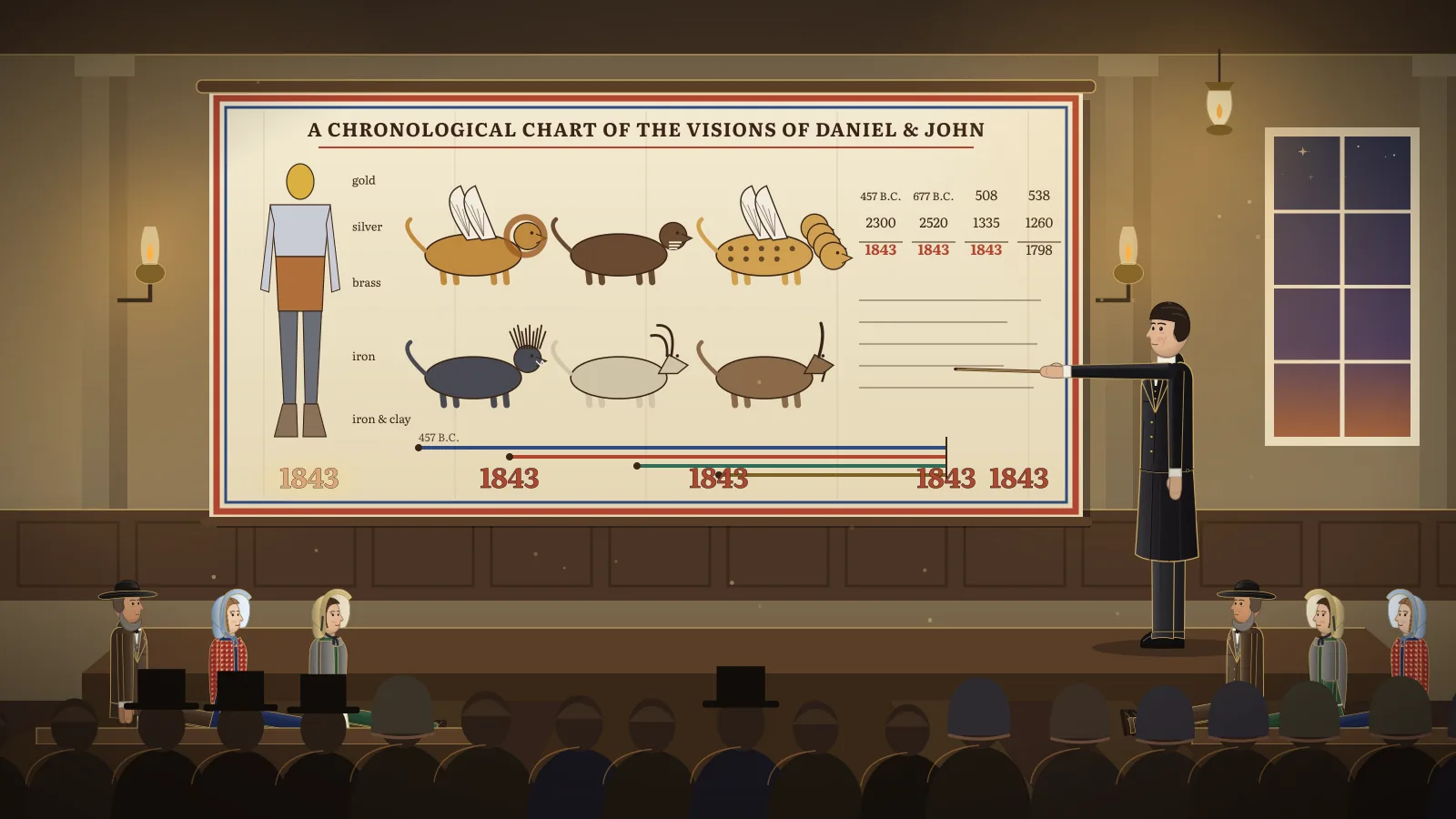
In 1842 the preachers Charles Fitch and Apollos Hale designed a great painted chart, with the strange beasts of Daniel’s visions and columns of numbers. It was lithographed in about 300 copies, each more than a metre across: line after line of figures, all ending in the same year, 1843.
Line after line of figures, all ending in the same year.
That summer the Millerites held their first camp meeting in the United States, at East Kingston, New Hampshire. Newspapers guessed the crowd at between 7,000 and 15,000 people. Then they acquired a great tent, said to hold 4,000 people, the largest in the country. It was first pitched at Concord, New Hampshire, and then carried from town to town. Inside, they sang from their own hymnbook, The Millennial Harp. Most were ordinary farmers, craftsmen and shopkeepers, members of churches they had known all their lives.
In late February 1843 a great comet appeared, so bright that it was seen in daylight, close beside the sun. Through March its long tail stretched across the night sky. Many people, believers or not, wondered whether it was a sign.
But many churches closed their doors to the message, and some believers were expelled. The preacher Charles Fitch urged them to come out of those churches, which he called Babylon.
Chapter IVwatch from 5:00
The Tenth Day of the Seventh Month
Miller had always said “about 1843”. Pressed for a date, he named a year running from March 1843 to March 1844. The spring of 1844 came, and nothing happened. Miller admitted his disappointment, but urged his followers to keep watching.
In August 1844, at a camp meeting near Exeter, New Hampshire, a preacher named Samuel Snow presented a new calculation. He linked the prophecy to the Day of Atonement, the tenth day of the seventh month. By the reckoning of the Karaite Jews, in 1844 that day fell on 22 October.
The new date spread with astonishing speed. Miller held back at first, but in early October he accepted it. “I see a glory in the seventh month,” he wrote. Presses ran late into the night. The movement now had a single date, and only a few weeks left.
The movement now had a single date, and only a few weeks left.
In those last weeks some farmers left potatoes in the ground and grain unharvested. Others gave money away, or closed their businesses. In Philadelphia, a newspaper reported, a shop closed with a notice in the window: in honour of the King of kings, who would appear about the 22nd of October.
On Tuesday the 22nd, believers gathered in homes and meeting halls across the northern states and in Canada. They prayed, they sang, and they waited.
Chapter Vwatch from 6:35
Till the Day Dawn
One of them was Hiram Edson, a farmer at Port Gibson, New York. He and his friends watched, he later wrote, until the clock tolled twelve at midnight. “Our fondest hopes and expectations were blasted,” he wrote, “and such a spirit of weeping came over us as I never experienced before.”
Outside, the sky over the fields slowly turned grey. “We wept, and wept,” he wrote, “till the day dawn.” Another believer, Henry Emmons, wrote simply: “I waited all Tuesday, and dear Jesus did not come.”
“We wept, and wept,” he wrote, “till the day dawn.”
In the days that followed, crowds jeered at them. Mobs broke up some meetings, and in Ithaca, New York, a Millerite meeting house was burned.
A famous story says that the Millerites put on white ascension robes and climbed hills and rooftops to wait. Historians have found no reliable evidence for it. The tale came mostly from hostile newspapers, and later writers repeated it. Miller himself called such reports scandalous and false. Nor did Millerism fill the asylums, as critics claimed.
Chapter VIwatch from 7:50
What Grew from the Disappointment
William Miller did not hide. “I confess my error,” he wrote, “and acknowledge my disappointment.” But he still believed that the day of the Lord was near. In 1845 many who still hoped met at Albany, and declared the Advent near, without a date. From them grew the Advent Christian Church. In 1848 Miller built a small chapel on his farm. He died at Low Hampton in December 1849, aged 67.
One small group read the disappointment differently. On the morning after, 23 October, Hiram Edson crossed his cornfield and, by his later account, a new understanding came to him. The sanctuary in Daniel, he came to believe, was in heaven. In 1844, Christ had begun a new work there, rather than returning to earth.
Other former Millerites, among them Joseph Bates, James White and Ellen Harmon, later Ellen White, joined that idea to keeping Saturday as the Sabbath. In 1863, at Battle Creek, Michigan, their movement was formally organised as the Seventh-day Adventist Church. Today it has more than 24 million members worldwide. It runs schools and hospitals, and it does not set dates for the end of the world.
Some left. Some kept waiting. And some built something new.
For historians, the Millerites are a classic case of a community facing a failed prophecy. Some left. Some kept waiting. And some built something new.
On Miller’s old farm at Low Hampton his chapel still stands, and a rock that tradition calls Ascension Rock, where some believers are said to have waited that October day. They had expected the end of the world. What came instead was an ordinary sunrise, and the long work of starting again.