The story of the film
Smyrna, Gaza, Gallipoli and Edirne, with Hamburg and Salonica · 1626–1676
In September 1666, under guard, a rabbi from Smyrna was brought through the gates of the Ottoman Sultan’s palace at Edirne. Far beyond those walls, from Amsterdam to Yemen, Jews had been praying for him by name. Many of them believed he was the Messiah.
Now he stood in a hall lined with guards, and he faced a choice. By the reports that have come down to us, it was a choice between death and a turban.
Chapter Iwatch from 0:34
The Kabbalist of Smyrna
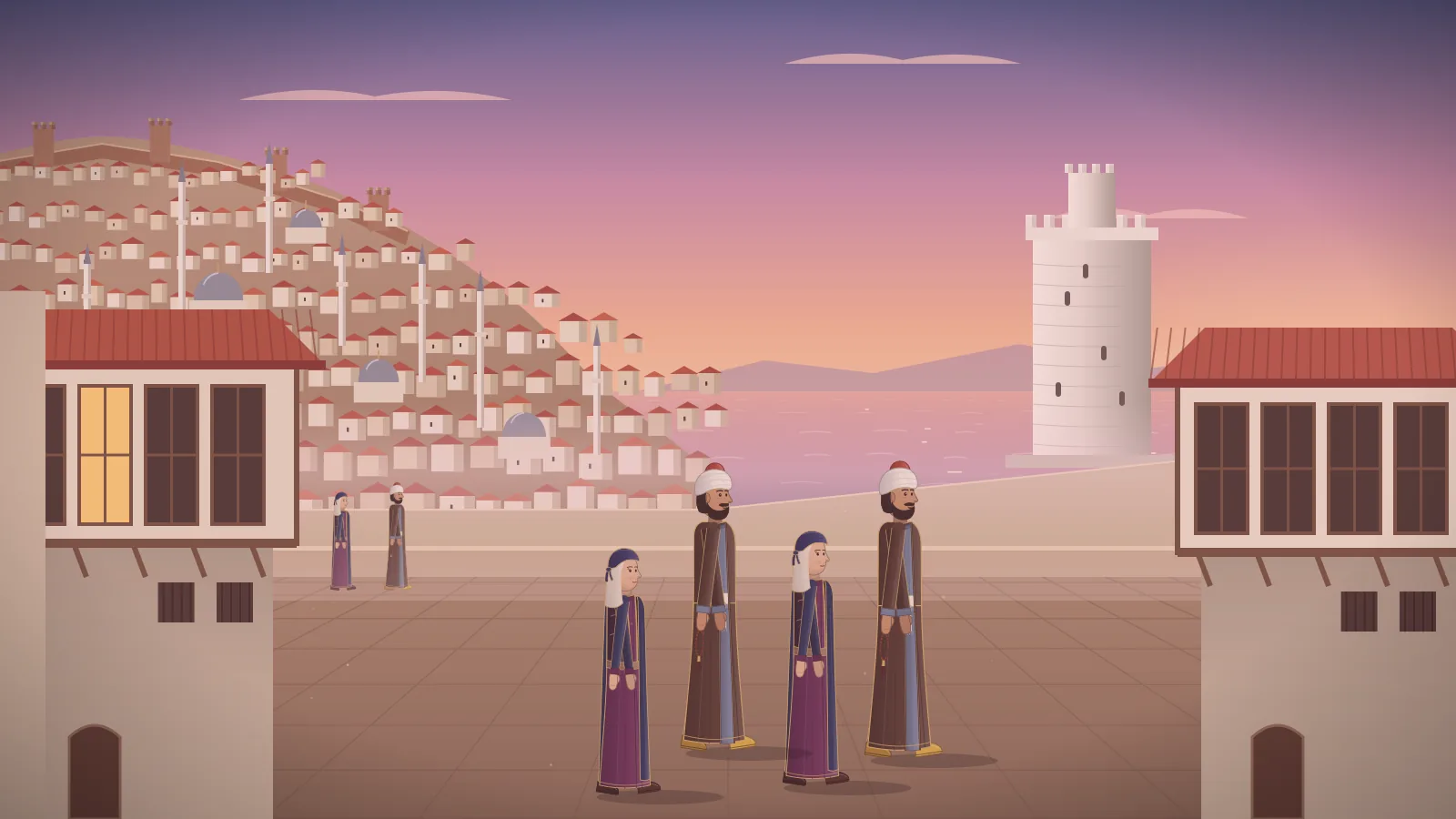
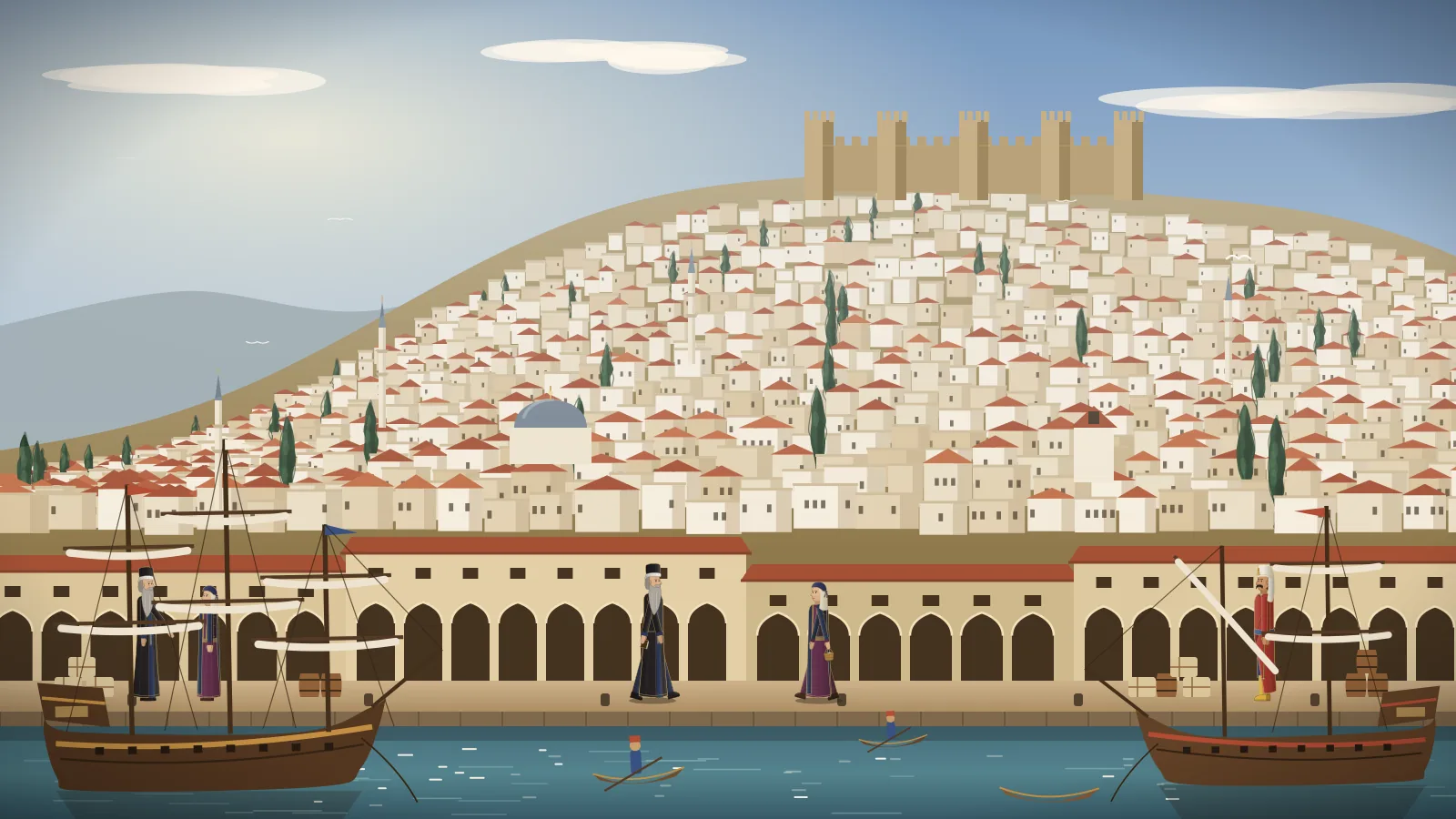
His name was Sabbatai Zevi. He was born in 1626 in Smyrna, a busy Ottoman port on the Aegean Sea, the city that is today Izmir. Ships came and went from its harbour, and his father was a merchant who worked for English traders there. In later years his followers would say that the boy had been born on the Ninth of Av, the fast day on which Jews mourn the destruction of the Temple in Jerusalem.
He grew up among books. He studied the Talmud and the Kabbalah, the Jewish mystical tradition, and he was ordained a rabbi while still young. Those who knew him found him learned, and solitary. The kabbalist Isaac Luria had taught that sparks of holiness lay scattered through the world, trapped in darkness, and that when they were gathered and restored, redemption would come.
In 1648 terrible news reached the Jewish world. During a Cossack uprising in Ukraine, led by Bohdan Khmelnytsky, many thousands of Jews had been killed. That same year, in Smyrna, Sabbatai began to hint at a calling of his own. He spoke aloud the sacred name of God, which Jewish tradition forbids saying aloud.
He spoke aloud the sacred name of God, which Jewish tradition forbids saying aloud.
His moods rose and fell. He lived through dark depressions and sudden times of exaltation. Some modern writers suspect an illness, but no one can diagnose a man across the centuries. In the early 1650s the rabbis of Smyrna banished him, and years of wandering followed.
In Salonica, the story goes, he held a wedding ceremony with a scroll of the Torah as his bride, and the rabbis there sent him away too. Later he lived in Cairo and in Jerusalem. In Cairo a wealthy official named Raphael Joseph became his patron, and there, in 1664, Sabbatai married Sarah, a young woman orphaned in the massacres in Poland. She was said to have declared that she would marry the Messiah.
Chapter IIwatch from 2:38
The Prophet of Gaza
In the spring of 1665 Sabbatai travelled to Gaza, on the edge of the desert, to see a young scholar known as a healer of troubled souls. His name was Nathan, and he was about 21 years old.
Nathan had already had visions of his own. When the visitor came to him, he told him that he did not need healing. He was the Messiah. At first, the sources say, Sabbatai hesitated. Then he accepted. In late May 1665, in Gaza, he proclaimed himself the Messiah.
He told him that he did not need healing. He was the Messiah.
From then on Nathan became the movement’s voice. By lamplight he wrote letters, prayers and instructions for penance, and they were carried along the Mediterranean trade routes from port to port. The rabbis of Jerusalem were alarmed and threatened excommunication. By the autumn, Sabbatai was home again in Smyrna.
There, on a Sabbath in December 1665, he came to the Portuguese synagogue, where his opponents had gathered, and found its doors shut against him. He called for an axe and struck at the doors until they opened. Inside, by the accounts, he preached, spoke the holy name, and handed out the kingdoms of the earth to his followers. He named a date for the redemption: the following June.
Some of his opponents went into hiding. Prayers for “our Lord and King, Sabbatai Zevi” were added to the services, and he abolished a fast day.

Chapter IIIwatch from 4:15
The Year of Expectation
Then the news spread. Letters reached Aleppo and Cairo, Venice and Amsterdam, Hamburg, Poland, Morocco and Yemen. In many communities people fasted for days, bathed in icy water and gave alms, to make themselves ready. In others there was dancing in the streets.
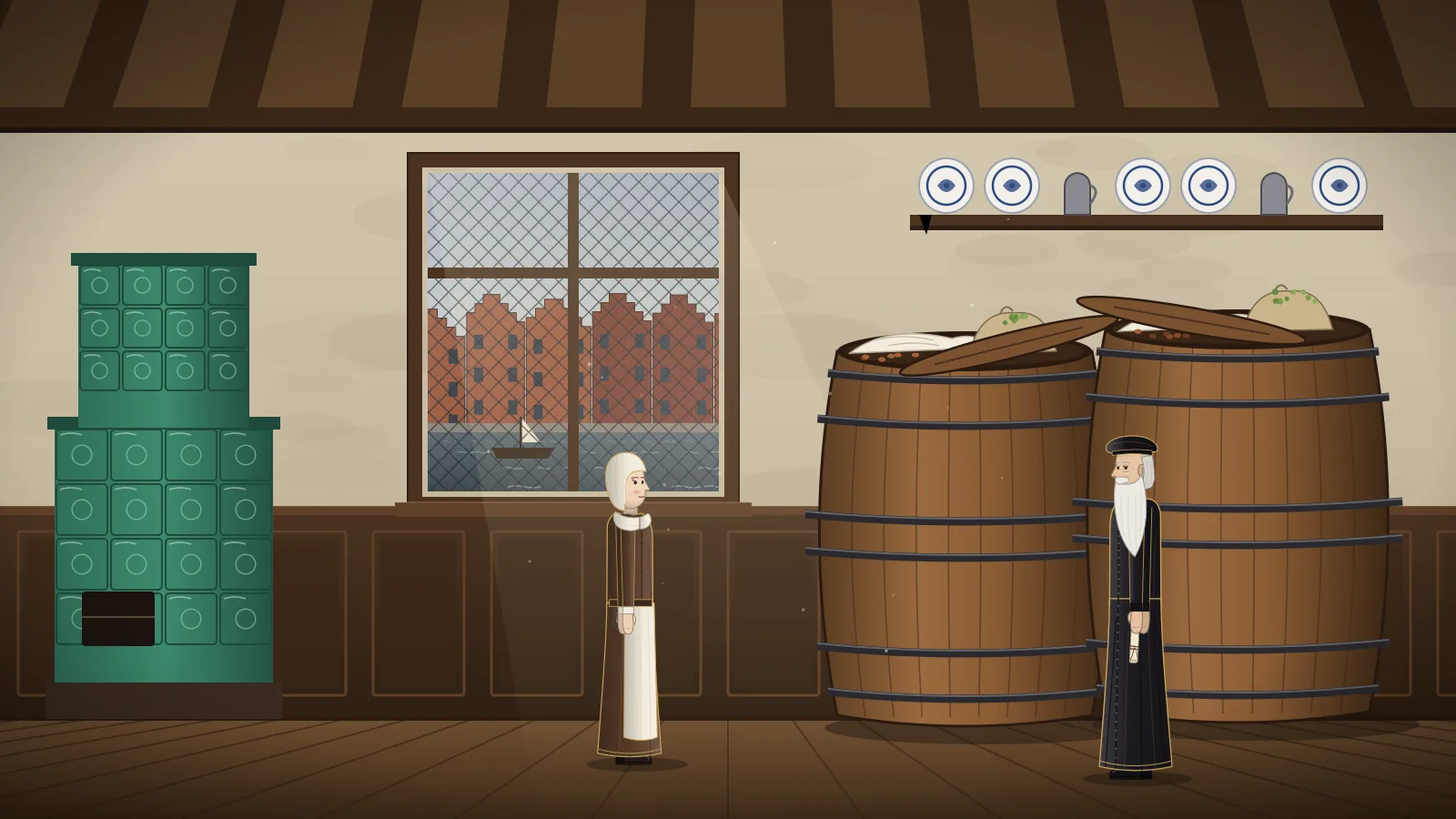
In Hamburg a young mother named Glikl later recalled the letters arriving. The Sephardic Jews of the city read them aloud in their synagogue, and young men came in their finest clothes, with timbrels and with dancing. Her father-in-law, who lived in Hildesheim, sent her household two enormous casks of linen, peas, beans and preserved food, ready for the journey to the Holy Land. Then he waited for the signal to depart.
For three years, she wrote, the casks stood ready.
Christians were watching too. In London, in February 1666, the diarist Samuel Pepys heard of wagers that the man at Smyrna would be owned by the Sultan as King of the world. In England and Holland many Christian millenarians already expected great events in the year 1666.
Chapter IVwatch from 5:36
The Tower of Strength
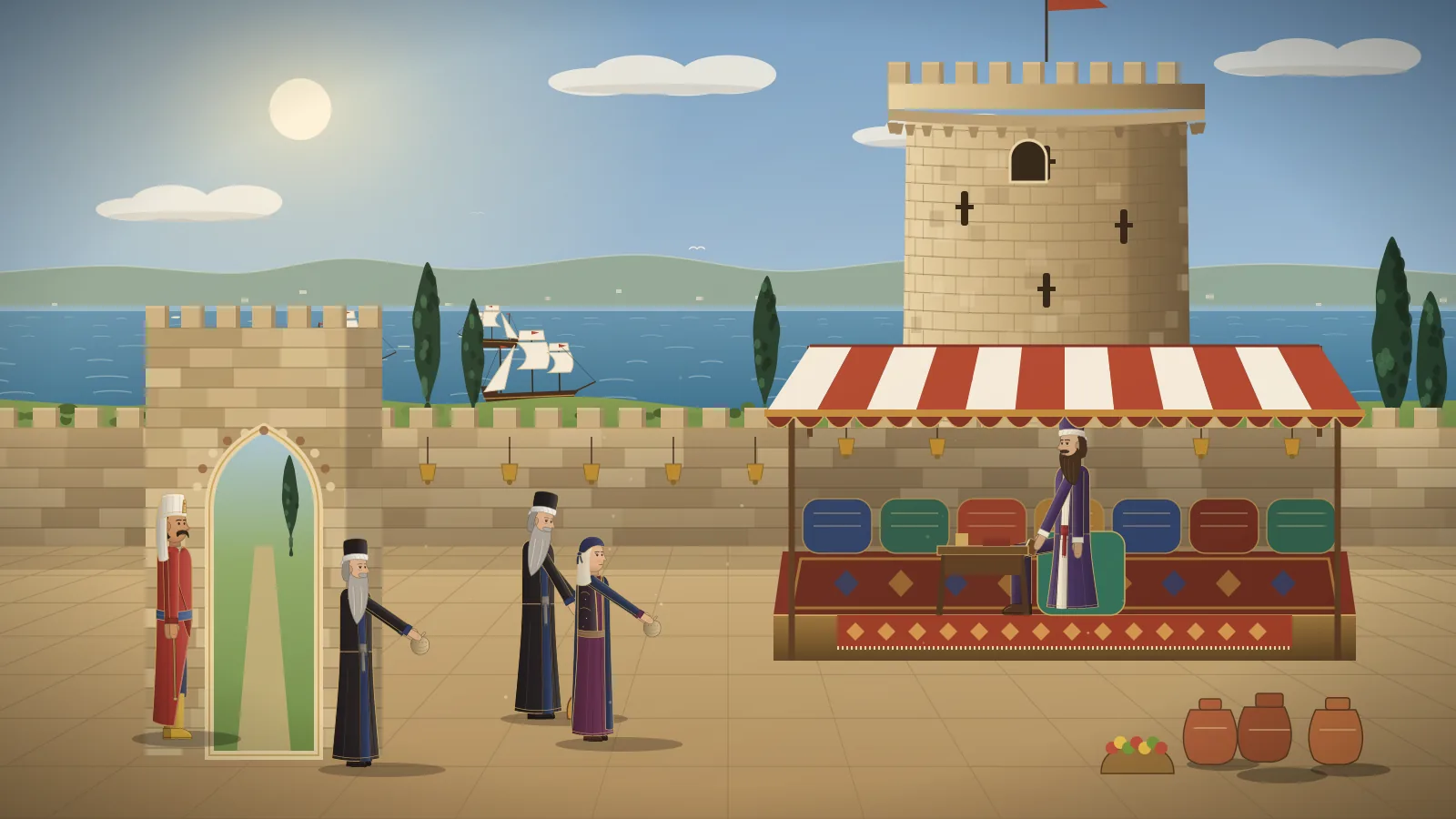
At the end of 1665 Sabbatai had sailed for Istanbul, the Ottoman capital. Many believers expected him to take the crown from the Sultan. Instead, in February 1666, as his ship reached the coast, Ottoman officials arrested him.
He was held in Istanbul, and then, in the spring, he was moved to the fortress at Gallipoli, on the Dardanelles. His followers called it the Tower of Strength. He lived there in some comfort, and pilgrims came from many lands to see him.
In the summer he declared that the Ninth of Av, his birthday and the saddest fast of the Jewish year, would become a feast. In many places believers kept it so, turning a day of mourning into a day of joy.
In many places believers kept it so, turning a day of mourning into a day of joy.
Then, in early September, a visitor came from Poland: a kabbalist named Nehemiah ha-Kohen. What passed between the two men is not known for certain. After their meeting, according to the sources, Nehemiah denounced Sabbatai to the Ottoman authorities.
Chapter Vwatch from 6:43
The Turban
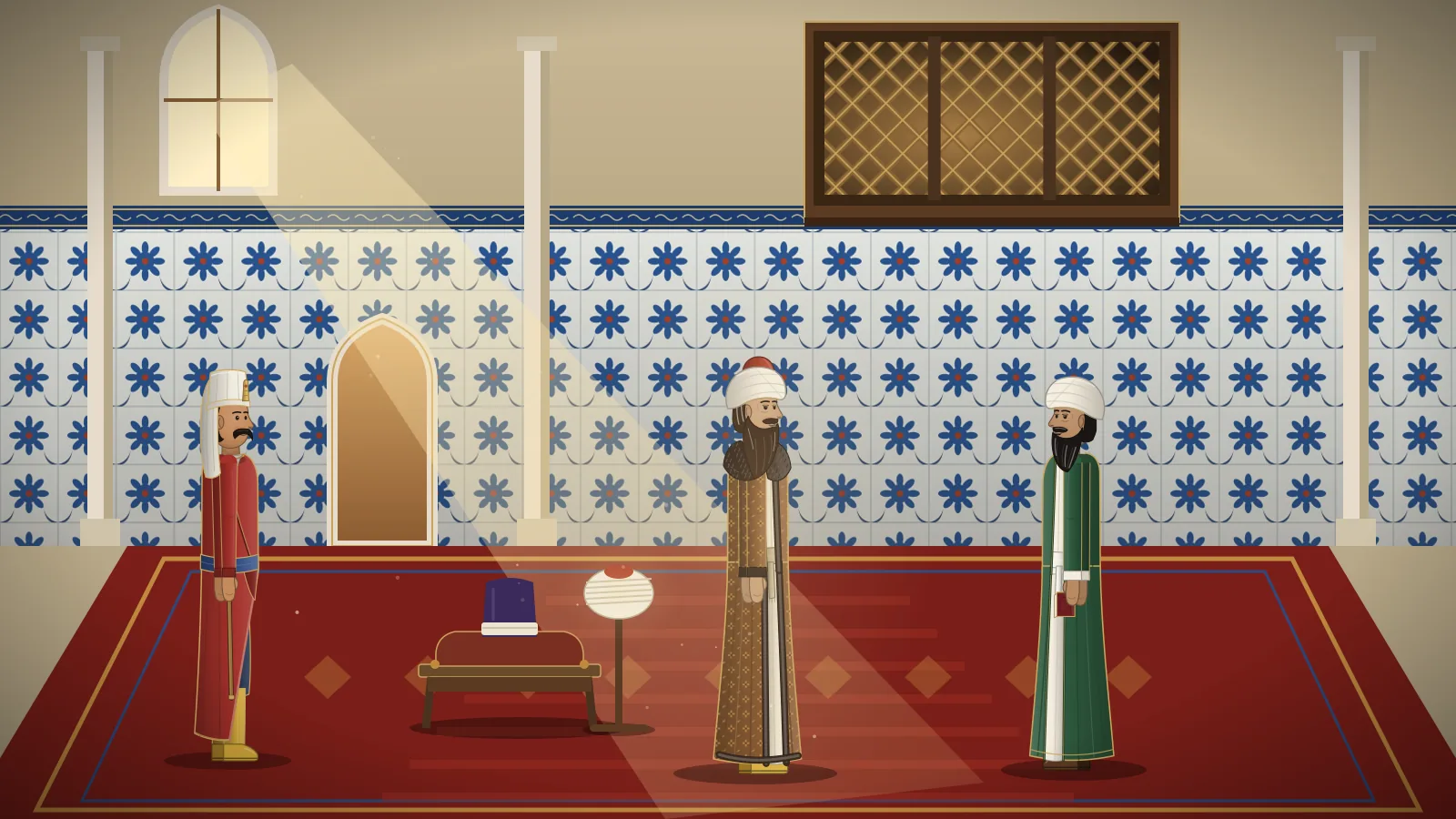
Sabbatai was taken under guard to Edirne, where Sultan Mehmed IV held his court. One report says that the Sultan watched unseen, from behind a latticed screen. Among those in the hall were his preacher, Vani Efendi, and the palace physician, himself a convert from Judaism.
By the reports, Sabbatai denied that he had ever claimed to be the Messiah. Given the choice between death and Islam, he chose Islam. On 16 September, by most accounts, he set aside his Jewish headdress and put on a Muslim turban. He took the name Aziz Mehmed Efendi.
Given the choice between death and Islam, he chose Islam.
He was given an honorary title and a pension of 150 silver coins a day. About a week later Sarah converted too, and took the name Fatima.
Chapter VIwatch from 7:43
The Hidden Step
The news crossed the Jewish world as fast as the first letters had. For most believers it was a catastrophe. In Hamburg, Rabbi Jacob Sasportas, a fierce critic from the start, gathered the movement’s letters and reports. Many communities tried to erase every trace of it from their records.
But not everyone gave up. Nathan taught that the Messiah had to descend into the realm of darkness, to rescue the holy sparks hidden there. The conversion, he argued, was a necessary, hidden step on the road to redemption.
The conversion, he argued, was a necessary, hidden step.
Sabbatai lived on as a Muslim, while still keeping some Jewish customs. In 1673 he was exiled to Dulcigno, on the Adriatic coast. He died there in 1676, according to some accounts on the Day of Atonement. Nathan died in 1680, in Skopje.
Chapter VIIwatch from 8:42
The Believers
The story did not end with them. In Salonica, in the 1680s, a few hundred families of believers converted to Islam together. Outsiders called them the Dönme, those who turned; they called themselves the believers.
In public they lived as Muslims. Privately, for more than two centuries, they married among themselves and kept their own prayers in Sabbatai’s honour. After the Greek and Turkish population exchange of 1923, most of them moved to Turkey, and slowly merged into Turkish society.
In public they lived as Muslims.
In Poland, in the 1750s, a merchant named Jacob Frank, steeped in Sabbatean ideas, led a new movement, which in the end took his followers to Catholic baptism.
Mainstream Judaism remembers Sabbatai Zevi as a false messiah, and his movement as a painful lesson about messianic hopes. The historian Gershom Scholem, in a great study of 1957, saw it as a turning point in Jewish history. Later historians have questioned parts of his view, but not the scale of what happened.
In Edirne, a turban ended a dream. And in a house in Hamburg, two casks packed for the Holy Land stood waiting, for a signal that never came.