The story of the film
Sinai, Shiloh and Jerusalem; Mount Nebo; Aksum, Ethiopia · Biblical times to the present
In Aksum, in the highlands of northern Ethiopia, a small stone chapel stands behind an iron fence. Pilgrims pray at the railing, but they never go inside. Only one man may: a monk chosen for life, who never leaves the grounds.
His church teaches that he guards the most famous lost object in the world: the Ark of the Covenant.
Chapter Iwatch from 0:33
A Chest of Acacia and Gold
According to the Book of Exodus, the Ark was made at the foot of Mount Sinai, while the Israelites camped in the wilderness. A craftsman named Bezalel built it. It was a chest of acacia wood, a little over a metre long, covered with gold inside and out, with rings for two carrying poles.
On its golden lid stood two cherubim, winged figures facing each other. Inside, the Bible says, lay the two stone tablets of the law. The Ark was kept behind a curtain, in the innermost room of a great tent, the Tabernacle. There, the Bible says, God would speak to Moses from between the cherubim.
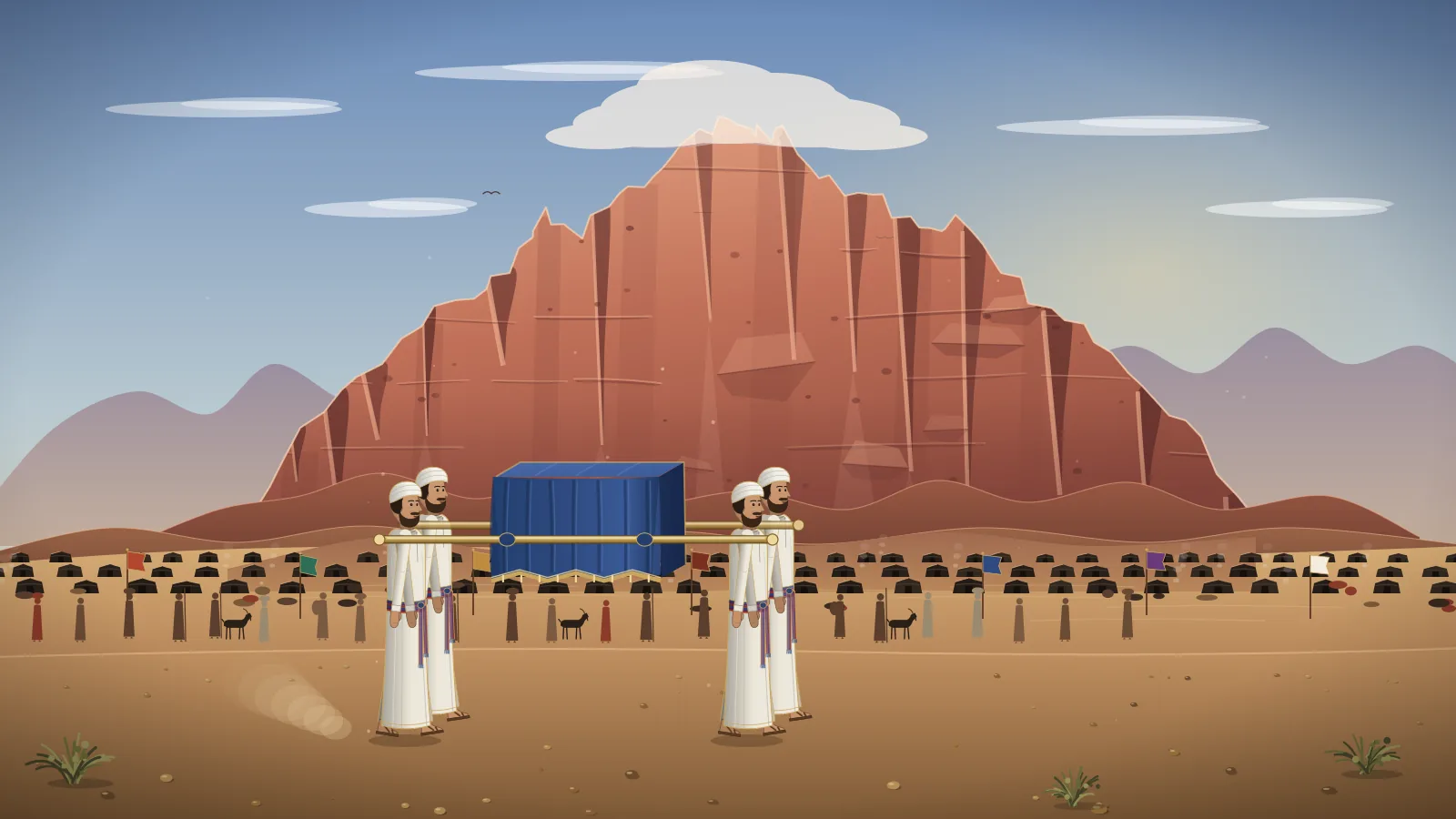
When the camp moved, the priests covered it, as the Book of Numbers describes: first with the curtain, then with fine leather, then with a cloth of pure blue. Then the Levites lifted the poles onto their shoulders and carried it on.
When the camp moved, the priests covered it: with the curtain, then fine leather, then a cloth of pure blue.
Many scholars think this description took its final form centuries later. But sacred chests carried on poles were common in the ancient world. One of them, a gilded chest topped by a black jackal, lay in the tomb of the Egyptian king Tutankhamun.
Chapter IIwatch from 1:50
Into Battle
The Book of Joshua tells how the waters of the Jordan stopped when the priests carried the Ark into the river, and how, for 7 days, it was carried around the walls of Jericho. In Canaan it came to rest at Shiloh, a sanctuary in the hills, in the care of an old priest named Eli and his two sons.
After a defeat by the Philistines near Ebenezer, says the First Book of Samuel, the elders sent for the Ark, hoping it would save them. It did not. Israel was beaten again, Eli’s sons were killed, and the Ark was captured. Old Eli was waiting by the road for news. When he heard that the Ark had been taken, he fell backwards from his seat, and died.
When he heard that the Ark had been taken, he fell backwards from his seat, and died.
The Philistines set it in the temple of their god Dagon, at Ashdod. Next morning, the story goes, Dagon’s statue lay face down before it. Then sickness spread through one Philistine city after another, and after 7 months they wanted it gone.
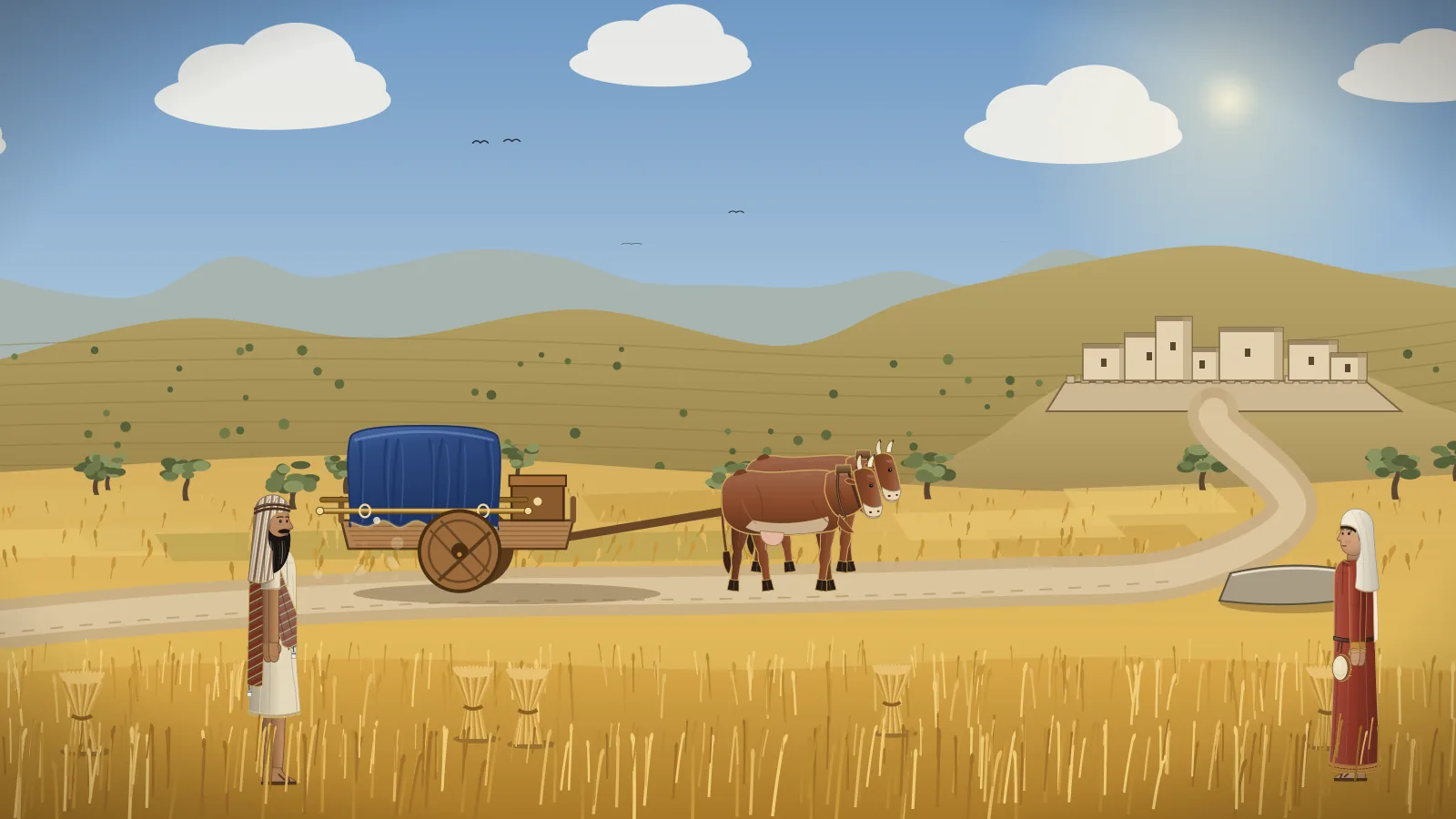
They put it on a new cart drawn by two cows, with an offering of gold. Lowing as they went, the cows walked straight to the Israelite town of Beth Shemesh. Farmers reaping wheat in the valley looked up, and saw it coming. Later the Ark was kept in a house at Kiriath-jearim, a hill town, for 20 years.
Chapter IIIwatch from 3:22
The Holy of Holies
Then, the Bible says, King David brought it up to Jerusalem, with harps and lyres, tambourines and cymbals. The king himself danced before it with all his might.
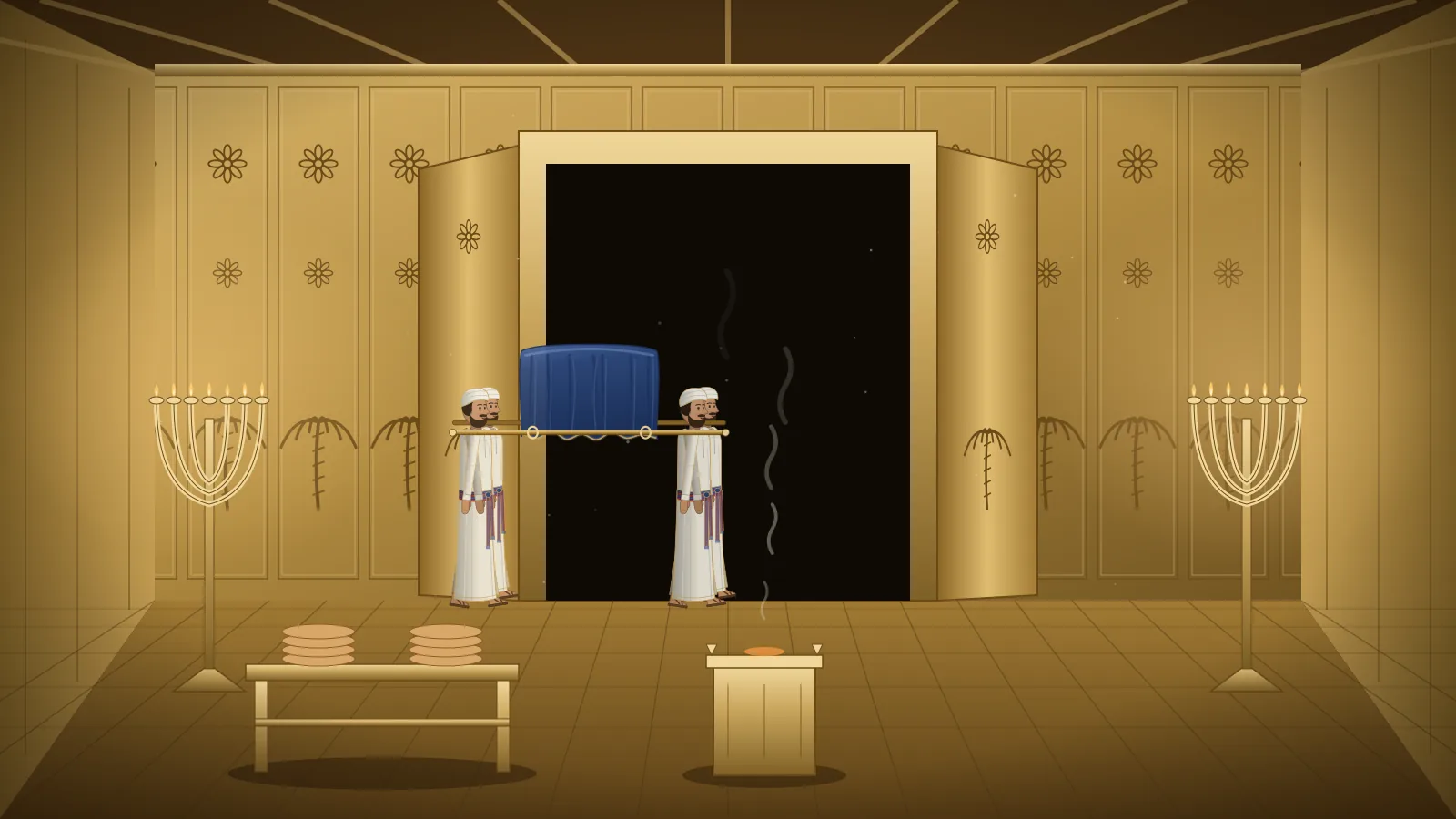
His son Solomon built a temple of stone, cedar and gold, traditionally dated to the 10th century BCE. Priests carried the Ark into its innermost room, the Holy of Holies, and set it beneath two great cherubim of olive wood.
Its poles were so long that their ends could be seen from the room in front. “They are there to this day,” says the First Book of Kings. Inside the Ark, it adds, there was nothing but the two tablets of stone.
Inside the Ark, it adds, there was nothing but the two tablets of stone.
Chapter IVwatch from 4:14
The Silence of the Sources
And then the Ark slips quietly out of the story. The Books of Kings never mention it again.
They do record that around 925 BCE the pharaoh Shishak of Egypt carried off the treasures of the Temple. Was the Ark among them? The Bible does not say.
And then the Ark slips quietly out of the story.
Three centuries later, the Book of Chronicles has King Josiah tell the Levites to put the holy Ark in the Temple. It is the Ark’s last appearance in the story of the kingdom. And a prophecy in the Book of Jeremiah says that one day no one will speak of the Ark, or remember it, or make another.
Chapter Vwatch from 4:54
Fire in Jerusalem
In 587 or 586 BCE, the armies of Babylon took Jerusalem and burned the Temple. The Second Book of Kings lists what they carried away: bronze pillars and stands, a great bronze basin, pots, shovels, and bowls of gold and silver.
The Ark is not on the list.
The Ark is not on the list.
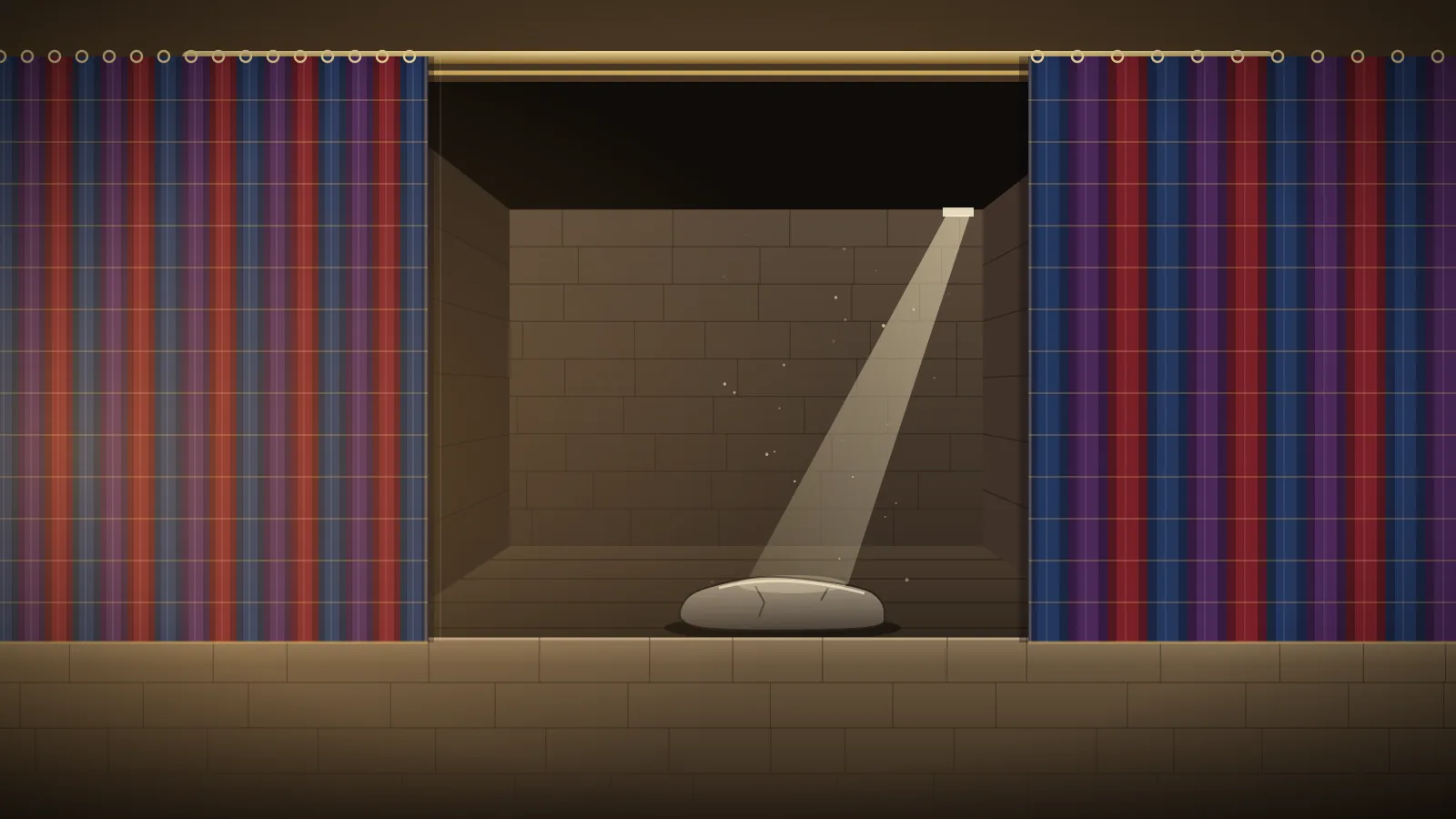
When exiles returned from Babylon and rebuilt the Temple, its innermost room stood empty. The historian Josephus wrote that there was nothing at all in it. Once a year, on Yom Kippur, the high priest went in alone and, says the Mishnah, set his firepan on a bare stone where the Ark had once stood.
In 63 BCE the Roman general Pompey walked into that room. The historian Tacitus wrote that he found it empty.
Chapter VIwatch from 5:53
A Cave, a Stone, a Gate
So where had the Ark gone? Perhaps it was simply lost: burned, broken up for its gold, or taken long before. A Jewish book of about 100 CE, Second Esdras, mourns that the Ark was plundered.
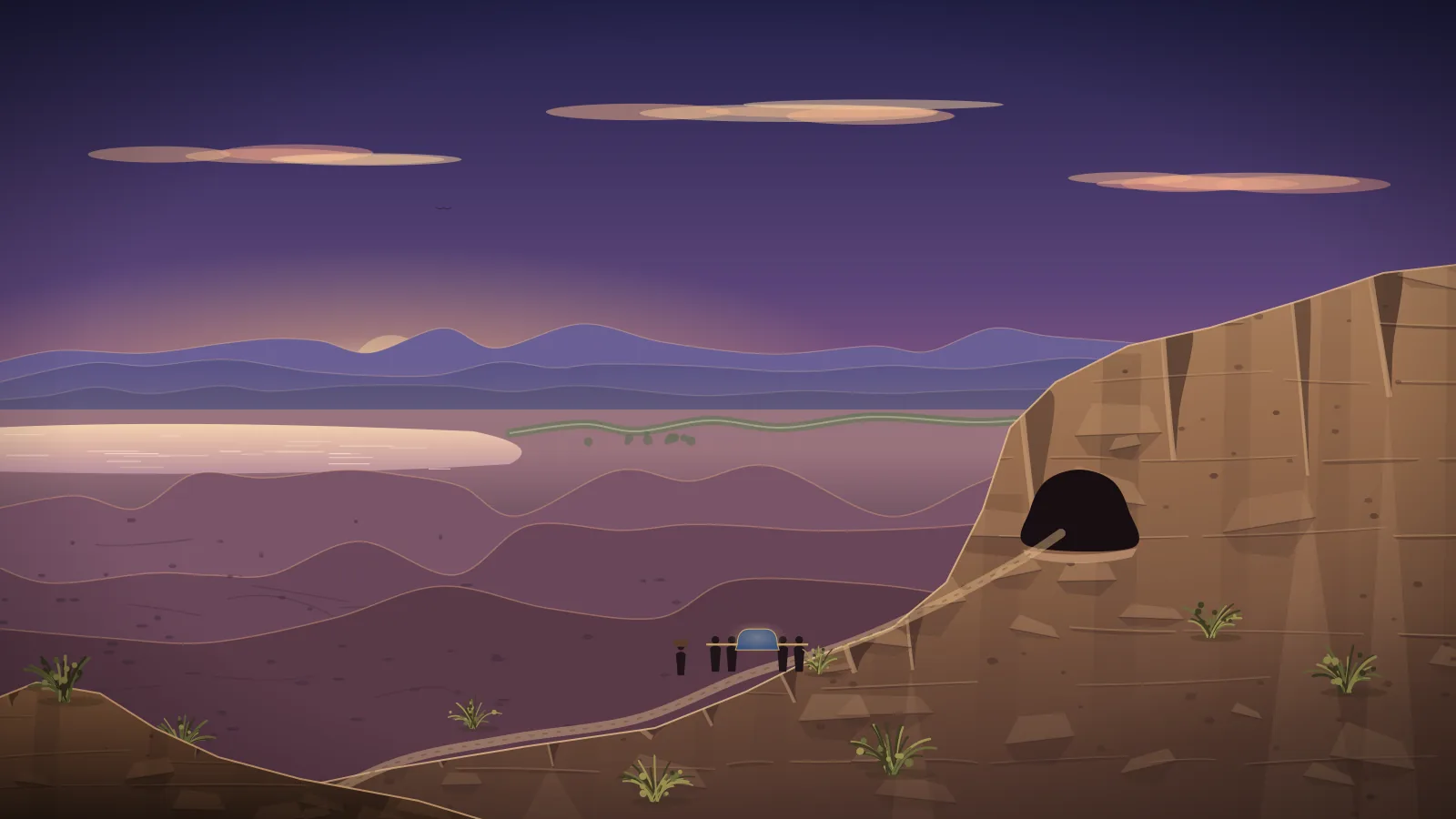
The Second Book of Maccabees, part of the Bible of Catholic and Orthodox Christians, tells another story. Warned by God, it says, the prophet Jeremiah had the Tabernacle and the Ark carried to Mount Nebo, the mountain from which Moses saw the promised land. There he found a cave, placed them inside, and sealed the entrance. Some who followed could not find the way. The place, he said, would stay unknown until God gathers his people together again.
The place, he said, would stay unknown until God gathers his people together again.
The rabbis of the Talmud debated it too. Some said the Ark went to Babylon. Others said that King Josiah had hidden it beneath the Temple itself. The Mishnah tells of a priest who noticed an odd paving stone in a storeroom. He began to tell a companion, but died before he could finish. Then, it says, they knew the Ark was hidden there.
In July 1981 Yehuda Getz, the rabbi of the Western Wall, had workers clear an ancient sealed gate into the Temple Mount, a place holy to Jews and Muslims alike. He believed the Ark lay near. Weeks later, workers from the Mount’s Islamic trust came to wall it off. A scuffle broke out underground, and the gate was sealed. It is still closed.
Chapter VIIwatch from 7:28
The Chapel in Aksum
And then there is Ethiopia. In the early 14th century, Ethiopian scholars set down the Kebra Nagast, the Glory of the Kings. It tells how the Queen of Sheba came to Jerusalem to hear Solomon’s wisdom, and bore him a son, Menelik.
When Menelik visited his father, the book says, young men of Israel’s leading families went home with him, secretly taking the Ark and leaving planks of wood under its covering. Ethiopia’s emperors, from 1270 down to the last, Haile Selassie, traced their line to Menelik.
Historians note that the oldest clear mention of the Ark in Ethiopia comes from an Egyptian Christian writer, Abu al-Makarim, around 1200 CE. A British scholar, Edward Ullendorff, said that in 1941, as an army officer, he had seen the object, and that it was a medieval replica. No outsider can check.
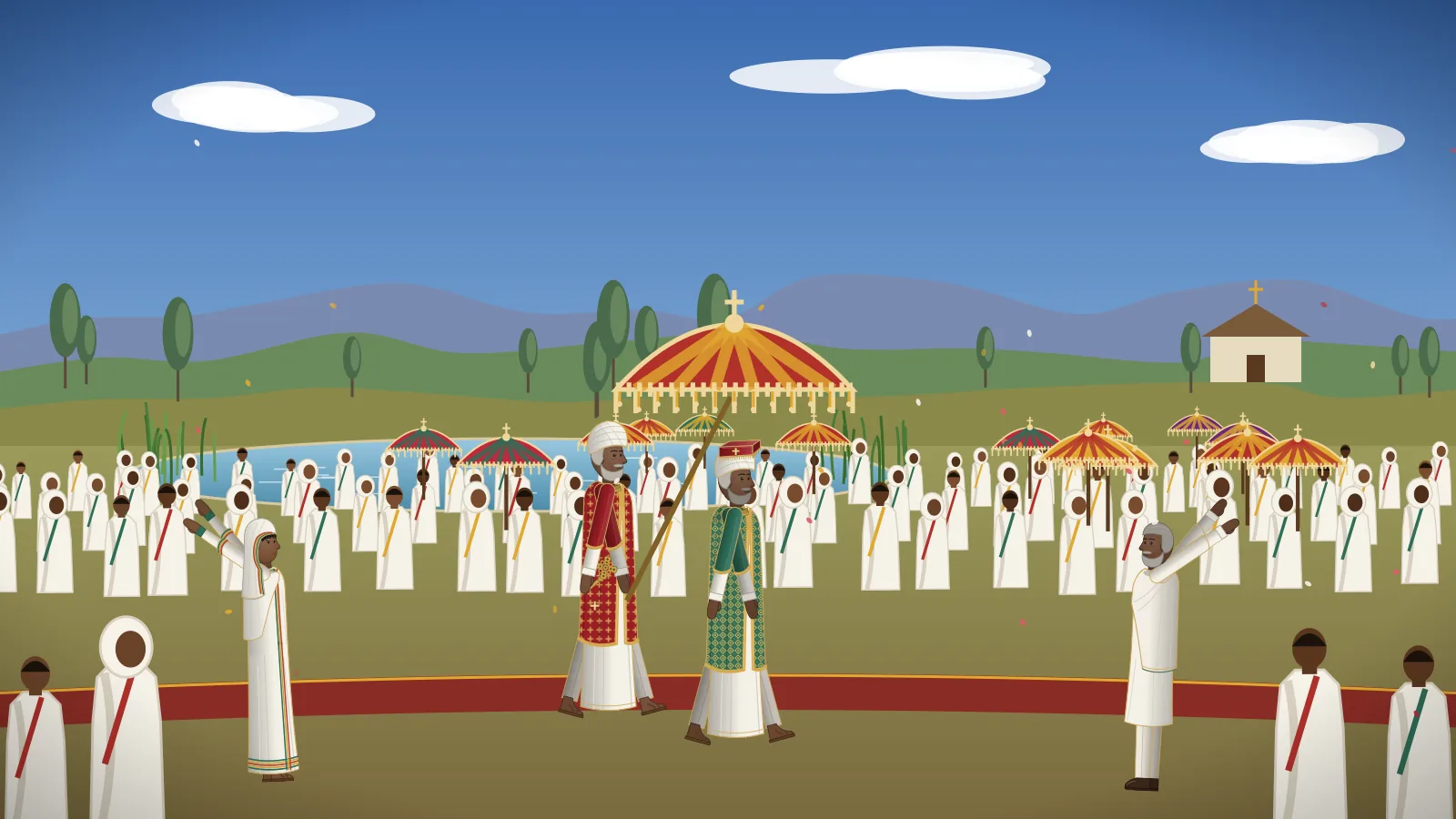
For Ethiopian Orthodox Christians, the Ark is not only in Aksum. Every church holds a tabot, a consecrated tablet standing for the Ark and the law. Without it, no liturgy can be held there. Every January, at the feast of Timkat, priests carry the tabots out on their heads, wrapped in rich cloth, through singing and dancing crowds.
Every church holds a tabot, a consecrated tablet standing for the Ark and the law.
In synagogues, too, the cabinet that holds the Torah scrolls is often called the holy ark, the aron ha-kodesh. It usually stands on the wall that faces Jerusalem.
Modern writers have hidden the Ark in Ireland, in southern Africa and, in Raiders of the Lost Ark, in a vast government warehouse. None has produced evidence.
In Aksum, the light goes down over the chapel, and the guardian keeps his watch by the iron fence. Whatever lies behind that door, no one else will see it.