The story of the film
Udvada, Sanjan, Navsari and Surat in Gujarat, Bombay (Mumbai), and Yazd in Iran · 7th century–today
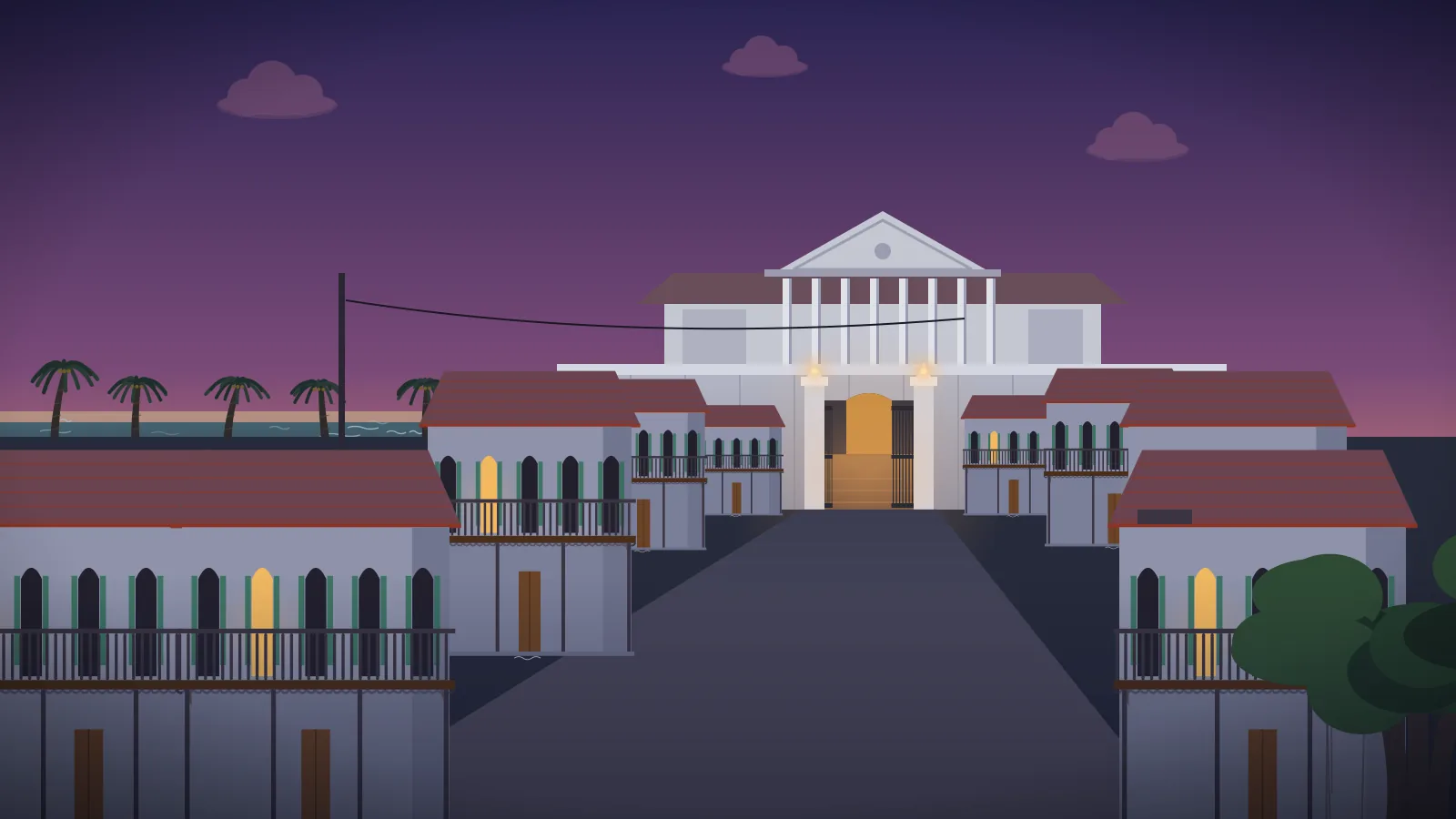
It is before dawn in Udvada, a small town on the coast of Gujarat, and the lanes are quiet. Old houses with carved wooden balconies lean over the street, and a few lamps glow in the windows. Pilgrims in white walk toward a large temple behind a high wall. Inside it burns the Iranshah, the most revered sacred fire of the Parsis, the Zoroastrians of India. At each watch of the day, a priest in white, his mouth covered by a cloth so that his breath never touches the flame, lays sandalwood on the fire and prays. By long custom, only Zoroastrians may enter. The fire has burned in this temple since 1742, and, by the community’s tradition, for many centuries before that.
Chapter Iwatch from 0:57
One Wise God
The Parsis follow the prophet Zarathustra, who lived in ancient Iran, perhaps three thousand years ago; scholars disagree by many centuries. He taught the worship of one wise God, Ahura Mazda, and a simple rule for life:
Good thoughts, good words and good deeds.
Every person, he taught, must freely choose between truth and the lie.
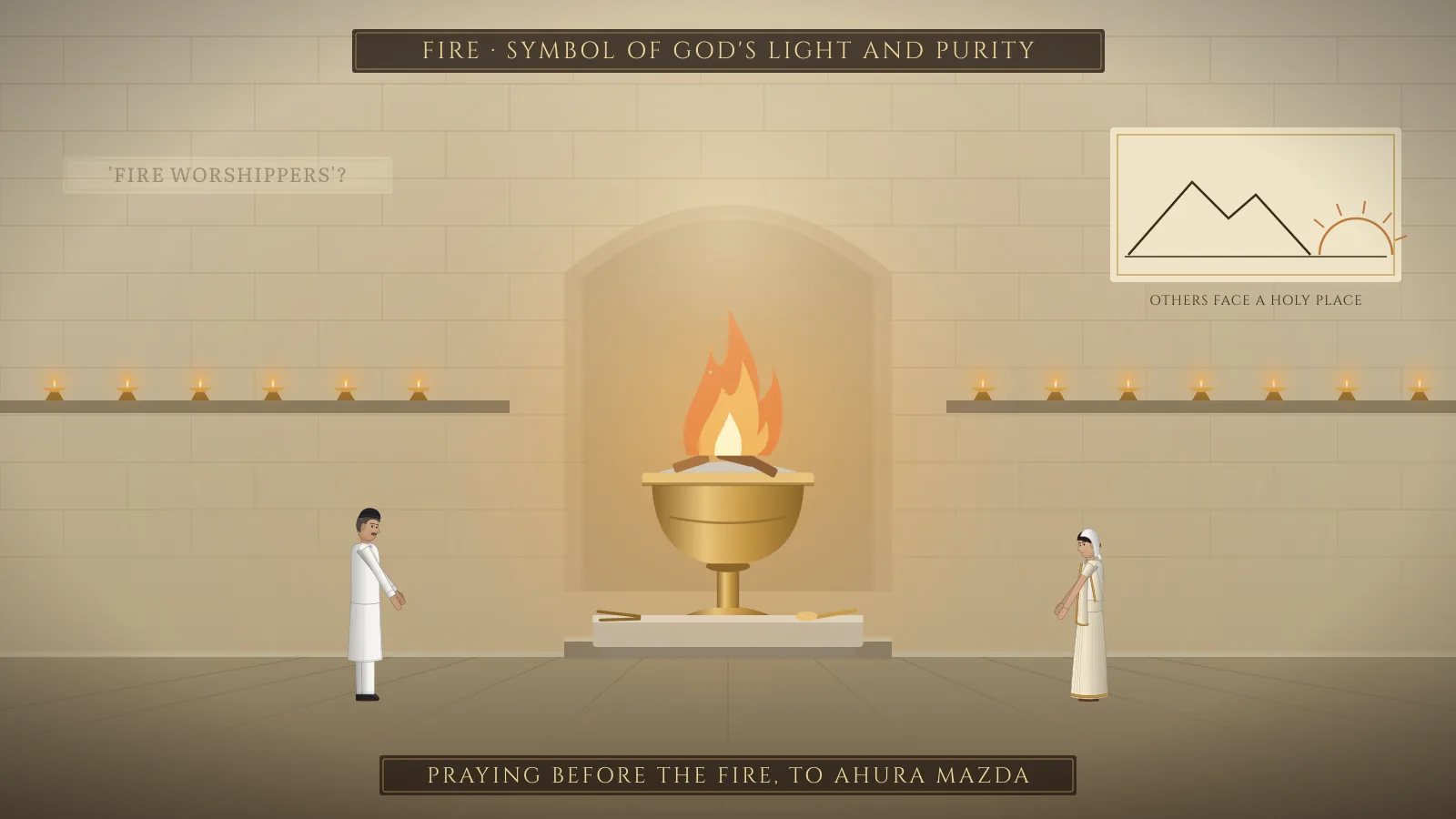
Outsiders have often called Zoroastrians fire worshippers. That is not how they see it. Fire is honoured as the purest of God’s creations, a symbol of his light and truth. They pray in its presence, as others pray facing a holy place. They worship Ahura Mazda, not the fire itself.
For over a thousand years this was the faith of the great Persian empires. At Persepolis the kings invoked Ahura Mazda in stone, and under the Sasanian kings it became the religion of the state.
In the seventh century Arab armies conquered Persia. The last Sasanian king died in 651, and over the following centuries Iran slowly became a Muslim land. Zoroastrians became a shrinking minority, paying a special tax, and many held on in the desert cities of Yazd and Kerman. Others, the story goes, decided to leave.
Chapter IIwatch from 2:28
The Story of Sanjan
That story was written down in 1599 by Bahman Kaikobad, a priest of Navsari in Gujarat, in a Persian poem called the Qissa-i Sanjan, the Story of Sanjan. It is the community’s own account of how it came to India.
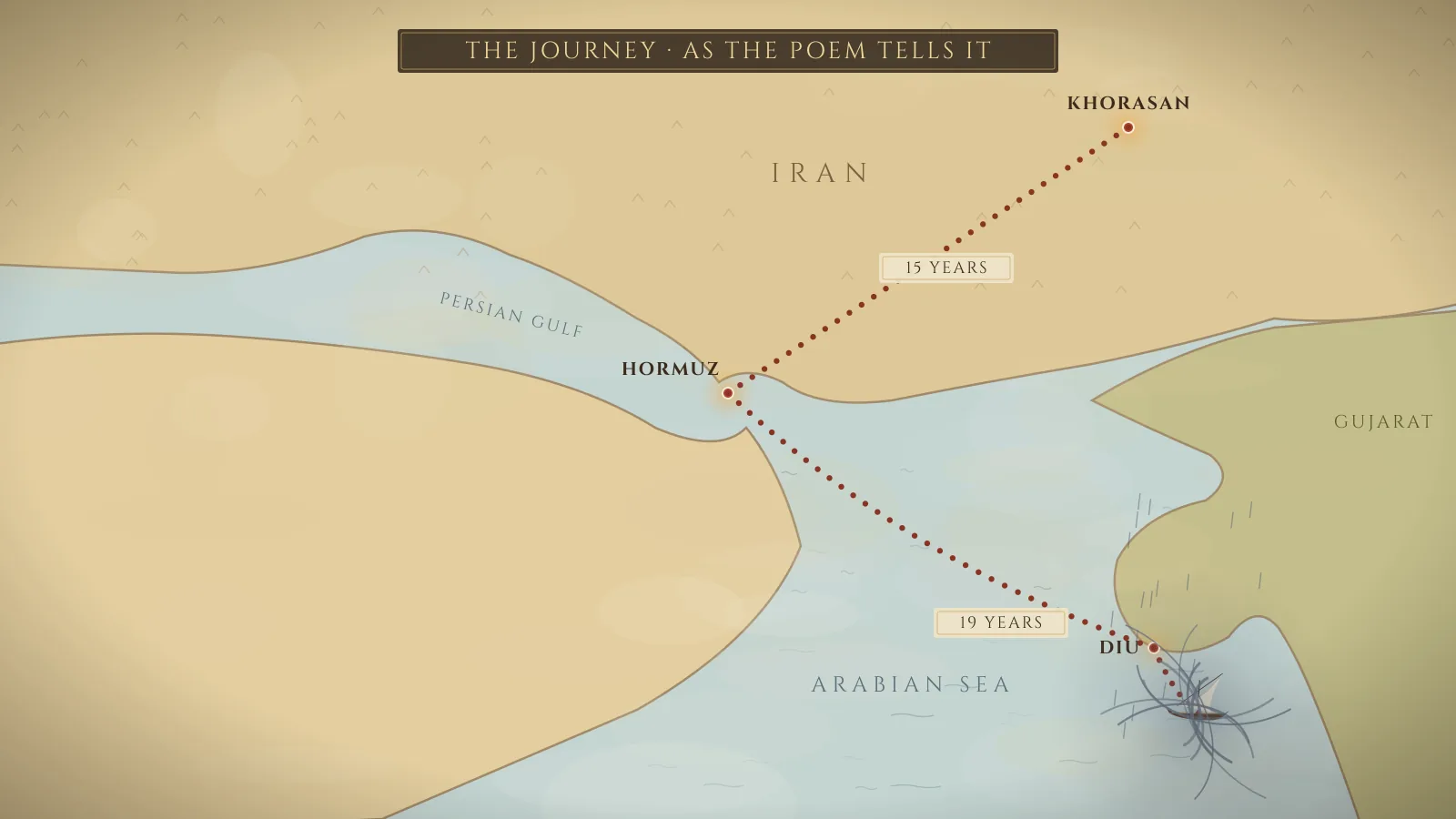
The poem tells how a group of the faithful left Khorasan, in north-eastern Iran, and sheltered for fifteen years at a port called Hormuz. Then they sailed for India. They lived for nineteen years on the island of Diu, then set out again. At sea, the poem says, a great storm struck, and they vowed that if they reached land, they would kindle a sacred fire.
They came ashore on the coast of Gujarat, where a Hindu ruler, remembered as Jadi Rana, agreed to let them stay, on four conditions. They would speak the language of the land, their women would dress like the women of the land, they would lay down their weapons, and their weddings would be held in the evening.
They named the place Sanjan, and there they kindled their fire. In India they became known as the Parsis, the Persians, after Pars, a region of south-western Iran.
Historians read the poem with care. It was written centuries after the events, and the landing has been dated anywhere from the eighth to the tenth century. But it gave the community its founding story, and Parsis still tell it with affection.
A much-loved later story adds that the ruler sent them a bowl of milk filled to the brim, to say his land was full, and a priest stirred in sugar, to show that they would sweeten the land without making it overflow. The story is often told, but it is not in the poem.
Chapter IIIwatch from 4:03
The Gujarat Coast
For centuries the Parsis lived along the Gujarat coast, in Navsari, Surat and other towns, as farmers, weavers, carpenters and traders. They spoke Gujarati, as the poem says they promised, and their cooking came to mix Persian dishes with the spices of Gujarat.
When Sanjan was attacked, tradition says, the priests carried the fire to safety: to a hill called Bahrot, then to Vansda and Navsari. In 1742 it was installed at Udvada, where it burns today.
Chapter IVwatch from 4:33
The Bombay Years
From the late seventeenth century Parsis moved to Bombay, a growing port of the East India Company. In 1672, land on Malabar Hill was set aside for their dead.
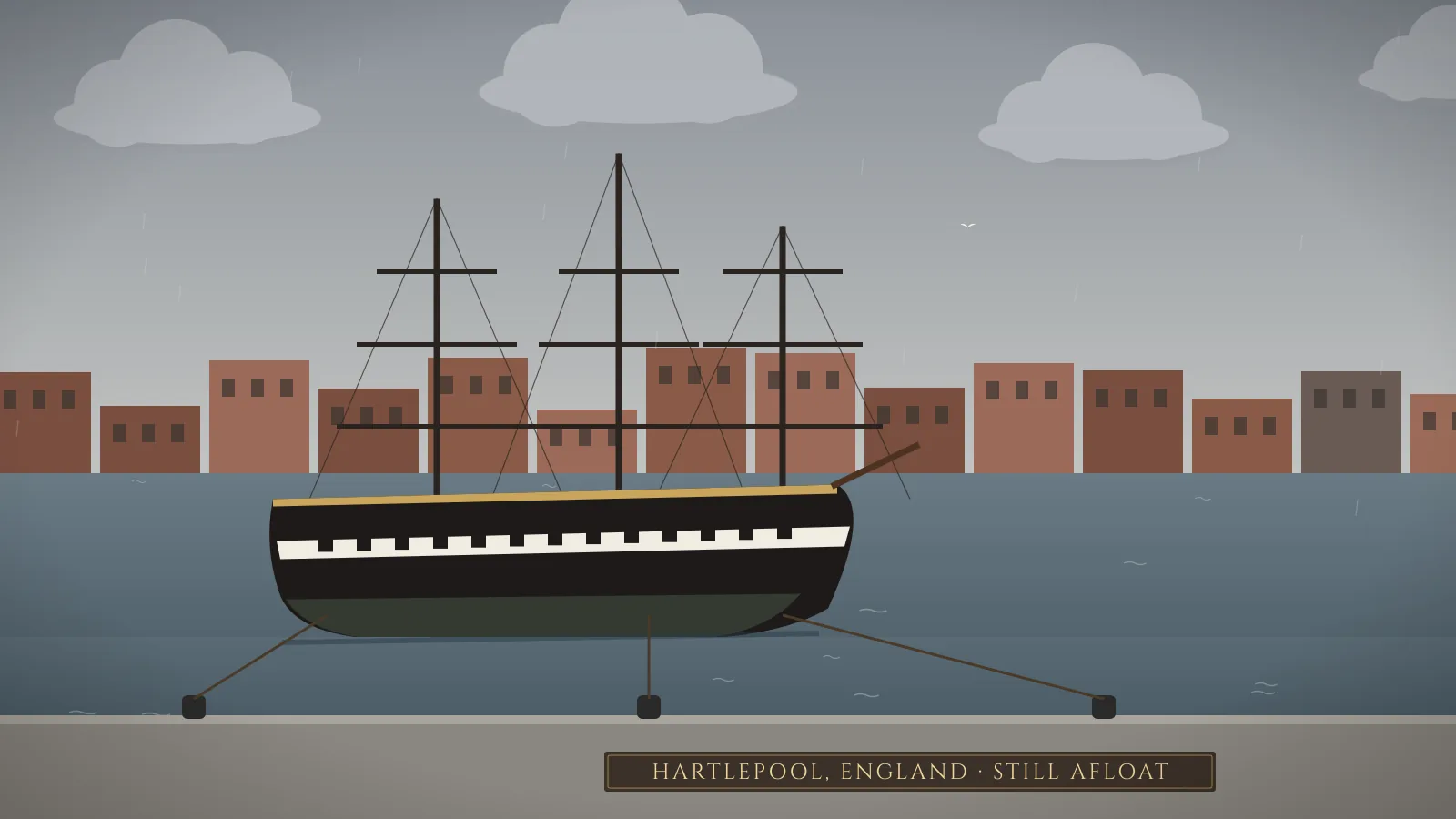
In 1736 the Company brought Lovji Nusserwanjee Wadia, a master shipbuilder from Surat, to Bombay, and his family built ships of Indian teak for generations. One of them, the frigate Trincomalee, launched in 1817, still floats today, at Hartlepool in England.
Parsi merchants grew rich in the China trade, in cotton and also in opium, and later in cotton mills. Wealth brought a tradition of giving. Jamsetjee Jejeebhoy funded a great hospital, opened in Bombay in 1845, and many schools and public works. In 1857 he became the first Indian baronet.
Jamsetji Tata, founder of what became the Tata Group, planned India’s first great steel works and an institute of science. Both opened after his death in 1904, and much of the family fortune passed into charitable trusts.
Parsis also took a leading part in public life. In 1892 the scholar Dadabhai Naoroji, a founder of the Indian National Congress, was elected to the British House of Commons, by just five votes. He is often called its first Asian member.
Not every Parsi was rich. Alongside the famous business families there have always been Parsis of modest means. Community trusts built housing colonies, schools and fire temples, and the Bombay Parsi Punchayet cared for the poor and for the towers of silence.
Chapter Vwatch from 6:22
Remembering Iran
The Parsis never forgot Iran. In 1854 they sent Manekji Limji Hataria to help the Zoroastrians there, who still paid the old tax. He opened schools, and in 1882 the tax was abolished.
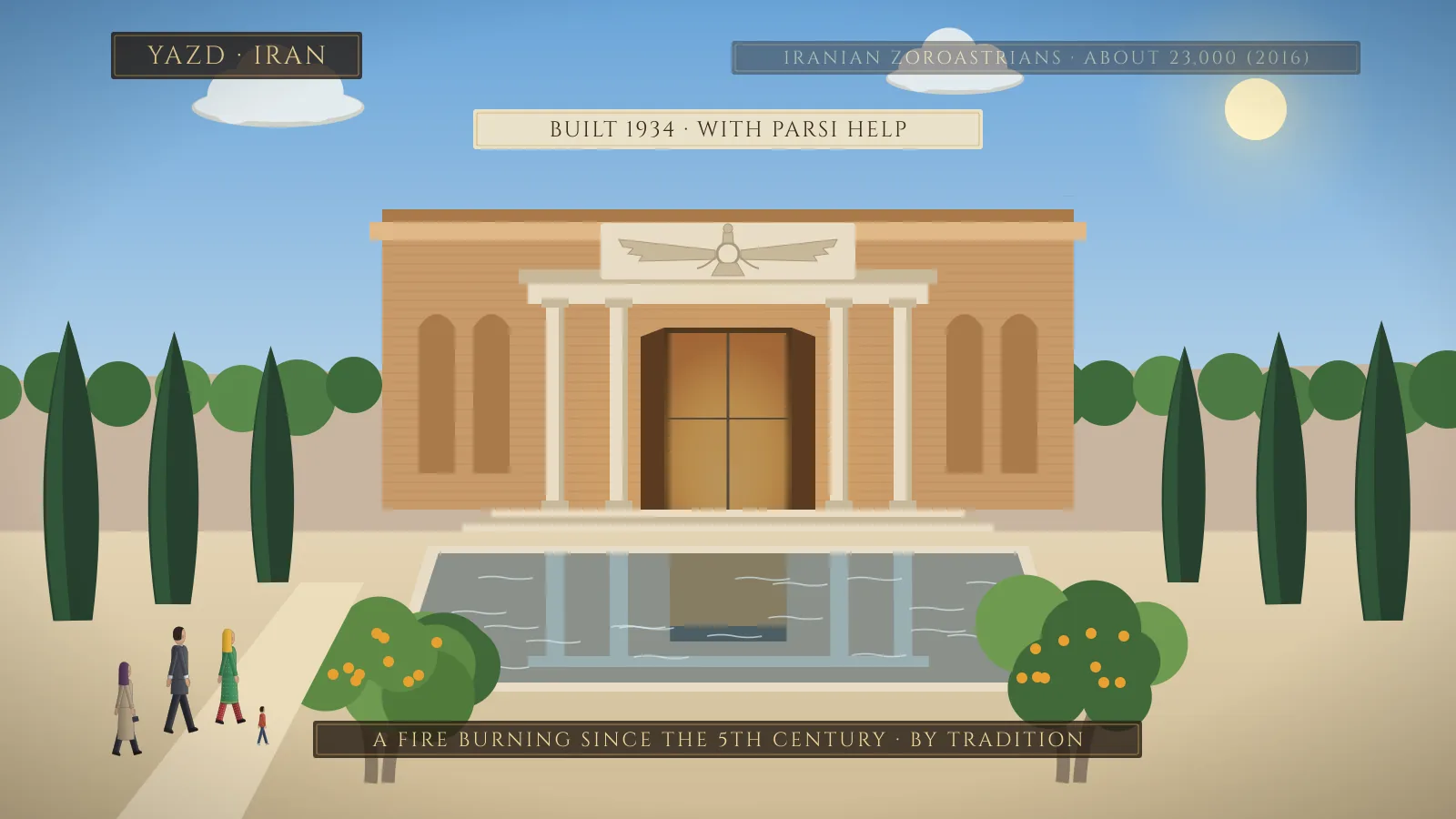
In Yazd stands a fire temple built in 1934 with help from Parsis in India. Its fire, by tradition, has been burning since the fifth century.
Iranian Zoroastrians, recognised in Iran as a religious minority, are a community of their own, not Parsis; Iran’s census of 2016 counted about twenty-three thousand. The two communities share one faith, and two long histories.
Chapter VIwatch from 7:01
Shirt, Cord and Flame
Between about seven and eleven, every Parsi child is initiated in the . With a priest, the child puts on the sudreh The white cotton undershirt worn by initiated Zoroastrians. Glossary, a white muslin shirt, and ties the kushti The sacred cord, woven of 72 threads, tied around the waist and retied in daily prayer. Glossary, a woollen cord, around the waist. Both are worn for life. Several times a day Parsis untie and retie the cord as they pray, facing a source of light, in Avestan, the ancient language of their scriptures. At home they speak their own form of Gujarati.
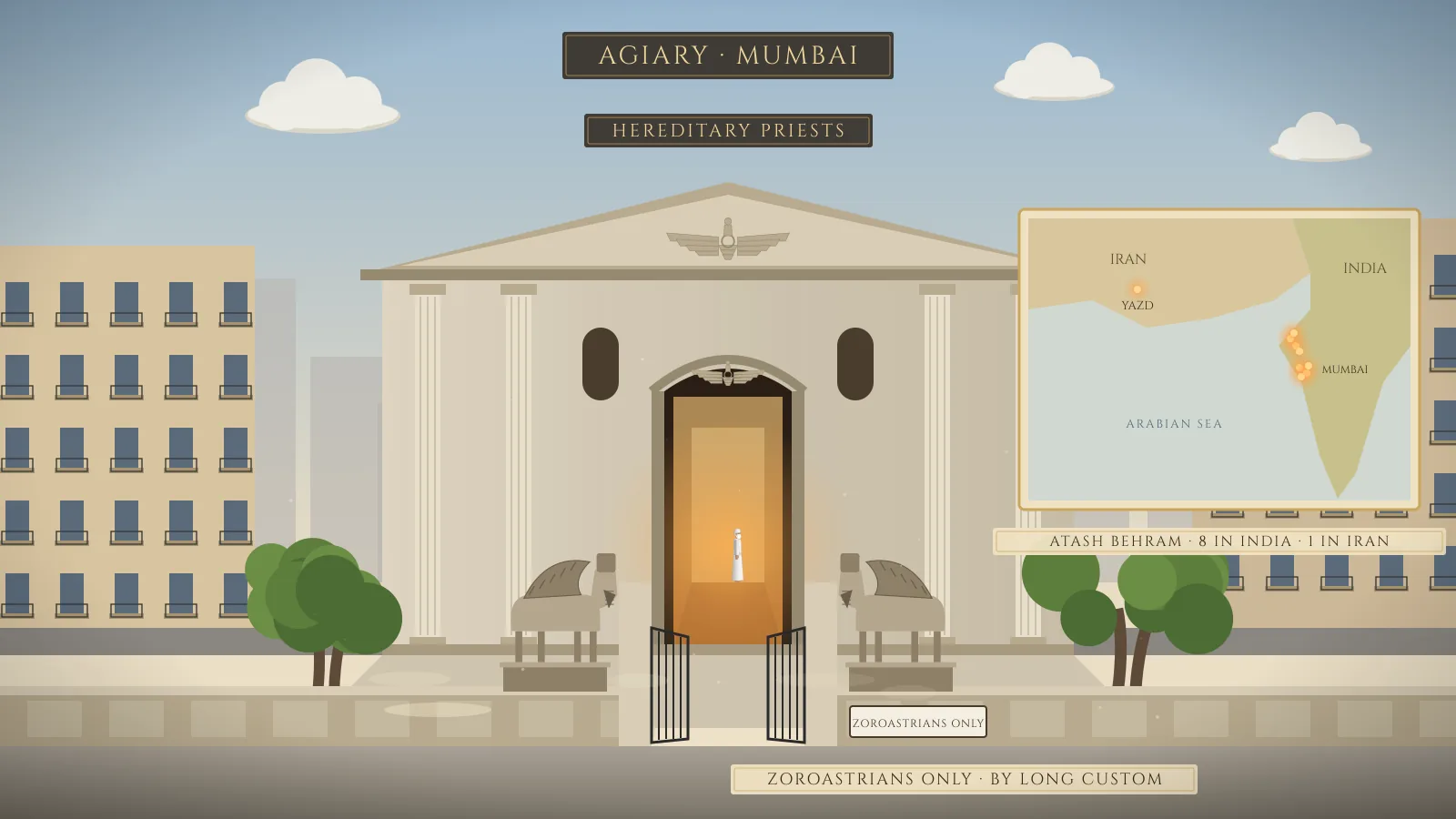
In Mumbai, prayers are offered in fire temples called agiary A Zoroastrian fire temple of the Parsis, especially a neighbourhood temple housing a consecrated fire. Glossary, and in the great Atash Behrams, the highest grade. Of the nine Atash Behrams in the world, eight stand in India, and one in Yazd. Hereditary priests tend the fires, and by long custom non-Zoroastrians do not enter. Worshippers bring sandalwood of their own, and bow before the flame.
In August comes the Parsi New Year, Navroz, after ten days of remembering the dead, the Muktad, when families honour their departed with flowers and prayers. On New Year’s day they put on new clothes, visit the fire temple and share a festive meal.
At a wedding, two priests shower the couple with rice as they recite blessings, and the feast is served on banana leaves.
Chapter VIIwatch from 8:25
A Small Community
Keeping earth, water and fire pure is a religious duty. So the dead were not buried or burned, but laid in a dakhma, a tower of silence, open to the sun and the birds. On Malabar Hill the towers still stand, among quiet trees. Since the vultures almost vanished in the 1990s, many families have chosen cremation, and a prayer hall for them opened in 2015.
Today the community is small and ageing. In 1941, India’s census counted nearly one hundred and fifteen thousand Parsis; in 2011, it counted 57,264. Parsis often marry late, have few children, and emigrate. In 2013 the Indian government launched Jiyo Parsi, to help couples have children; some hundreds of babies have been born with its help.
The decline sharpens an old debate about who belongs. By custom, children are Parsis only through a Parsi father, and converts are not accepted. Reformers would welcome the children of Parsi mothers; traditionalists reply that lineage has kept the community alive for a thousand years.
Parsis also live in Karachi, and in growing numbers in Britain, Canada, the United States and Australia, often beside Iranian Zoroastrians, with whom they share associations and fire temples. The singer Freddie Mercury was born into a Parsi family, on Zanzibar.
Chapter VIIIwatch from 10:03
What the Records Show
It is often said that the Parsis worship fire, that they are all wealthy, and that they won their place in India with a bowl of milk and sugar.
The records show a people who pray before fire to one wise God; farmers, weavers and housing trusts beside the great fortunes; and a tale of milk and sugar told long after their own poem.
Evening falls on Udvada. The pilgrims walk back through the narrow lanes, and the sea grows dark beyond the palms. Behind the high wall, a priest lays sandalwood on the fire once more, as his forefathers did, and the flame they carried from Sanjan burns on into the night.