The story of the film
Kuchwada, Jabalpur and Poona in India, then the Big Muddy Ranch and The Dalles in Oregon · 1931–1990, chiefly 1981–1985
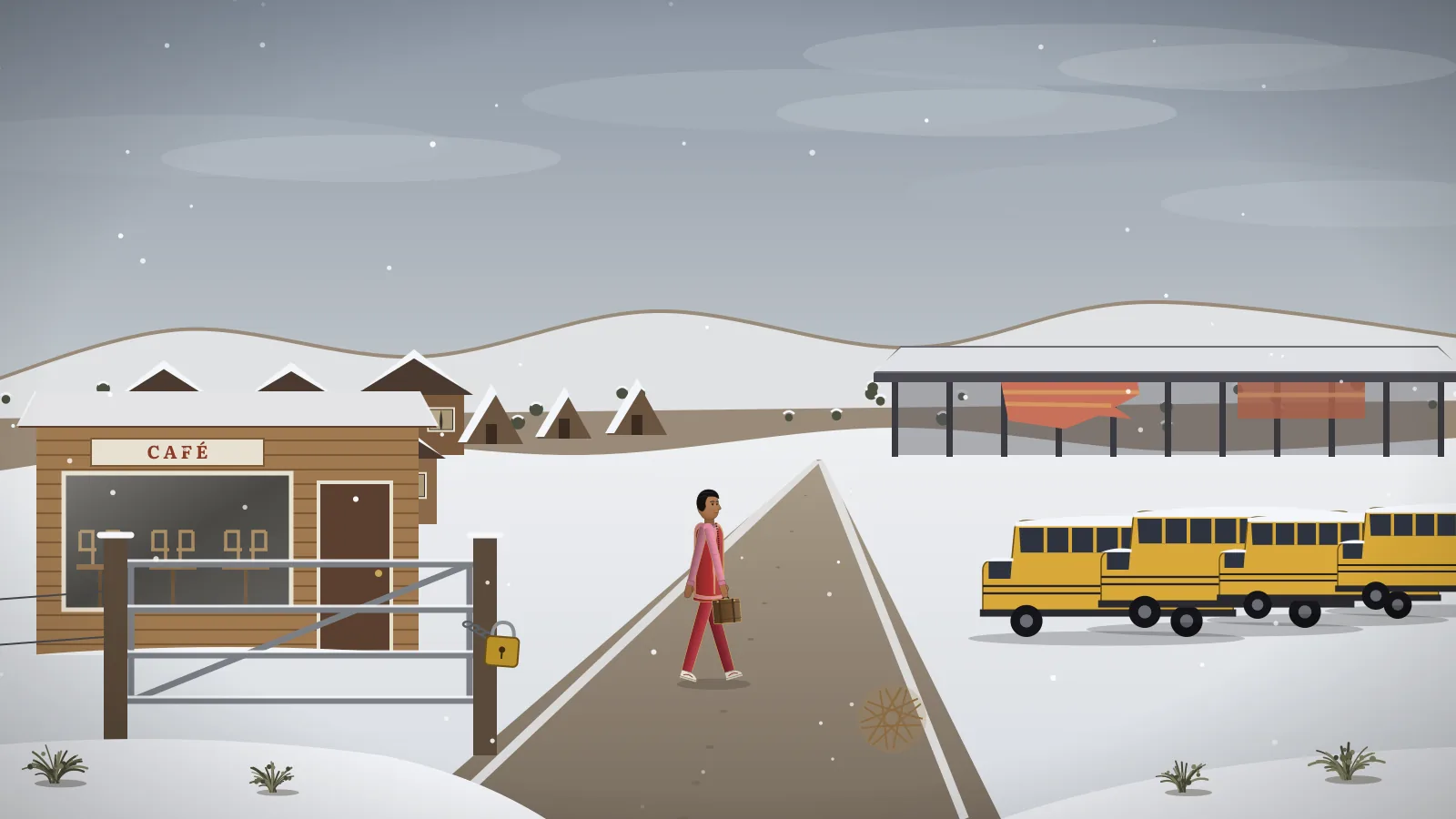
On summer afternoons in the early 1980s, hundreds of people stood waiting beside a dusty road in the Oregon desert. They were dressed in the colours of sunrise: red, orange and purple, with a string of small wooden beads around every neck. Slowly a Rolls-Royce came down the road. At the wheel sat a man with a long white beard, who in those years was silent in public. As he passed, they bowed, and sang, and danced.
For them he was a master, and this valley was the beginning of a new city. Within five years, it would stand empty.
Chapter Iwatch from 0:44
A Teacher from Central India
He was born Chandra Mohan Jain on 11 December 1931, in Kuchwada, a village in central India, into a Jain family. He later said that at the age of 21, sitting under a tree in the Bhanvartal garden in Jabalpur, he became enlightened. That is his own account, given years afterwards, but his followers still remember the day: 21 March 1953.
He taught philosophy at the university in Jabalpur, then in 1966 he left to travel and speak. He attacked politicians, priests and the old rules about sex, and the crowds came to hear him.
From 1970 he began to initiate disciples, called sannyasins. In the old Indian tradition a sannyasin renounced the world; in his teaching, renunciation meant detachment, not a life of hardship. His disciples took new names, beginning with Ma for women and Swami for men. He took a title of his own: Bhagwan Shree Rajneesh.
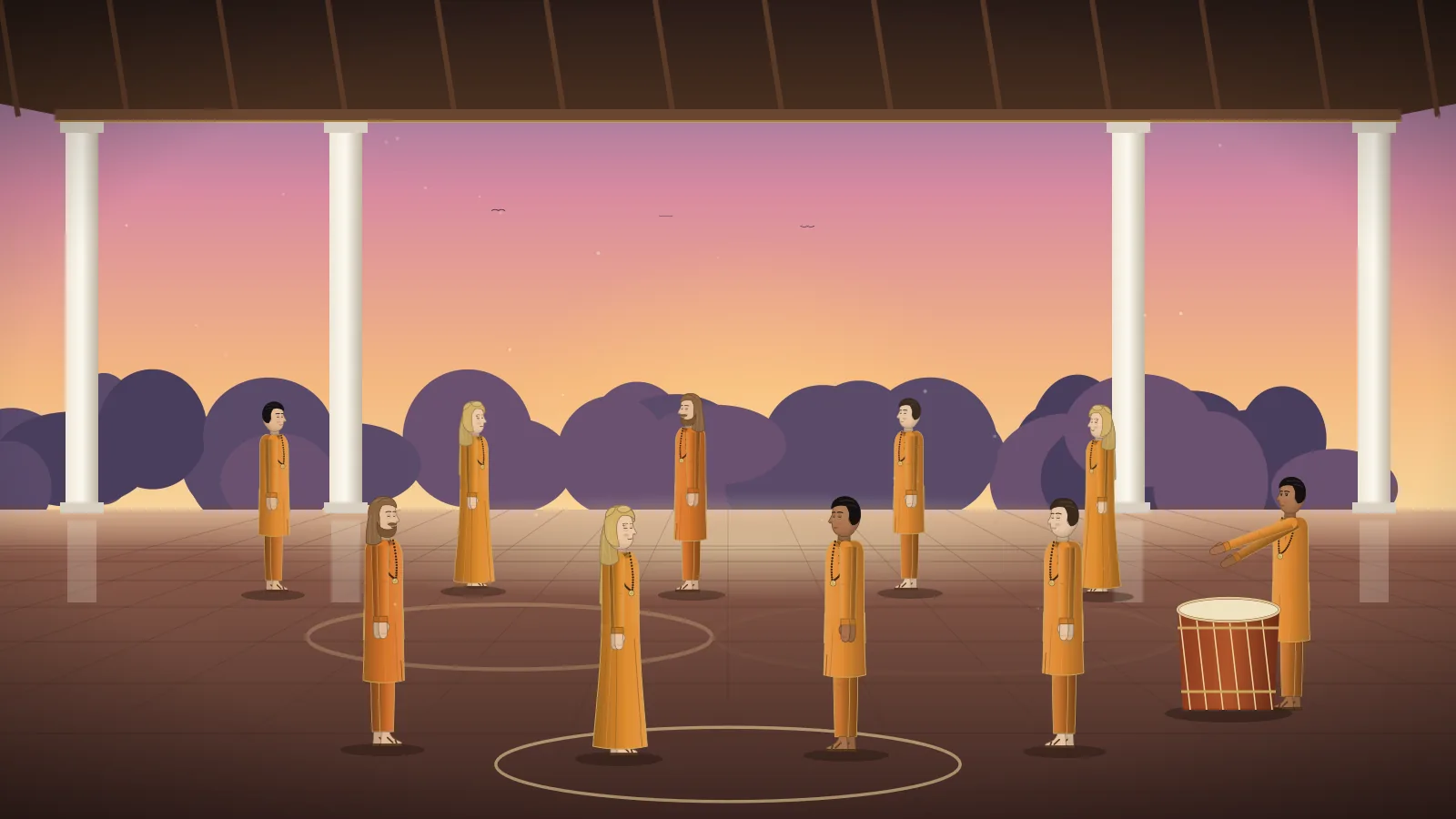
In 1974 he opened an ashram in Poona, now called Pune, in Koregaon Park, a leafy district of old villas. Each day began at dawn with his best-known technique, Dynamic Meditation: fast breathing, then shouting and shaking, then jumping, then stillness, and finally dance. He drew on Hindu and Buddhist teaching, on Taoism and Sufism, and on Western psychology. His ideal was “Zorba the Buddha”: a person who could enjoy the world fully, and still be at peace inside.
His ideal was “Zorba the Buddha”: a person who could enjoy the world fully, and still be at peace inside.
By 1981 about 30,000 visitors a year were coming to Poona, many of them young Westerners. Its therapy groups were intense, and some were criticised as rough. There were tax disputes too, and angry neighbours, and no room to grow. On 10 April 1981, Rajneesh fell silent and stopped giving public talks.
Chapter IIwatch from 2:42
A City on the Big Muddy
On 1 June 1981 he flew to the United States on a tourist visa, officially for medical treatment, and stayed at first in Montclair, New Jersey. His secretary, Ma Anand Sheela, ran the movement’s practical affairs. She was quick, tough and outspoken.
That summer the movement paid nearly 6 million dollars for the Big Muddy Ranch in central Oregon: about 64,000 acres of dry hills, sagebrush and juniper. The nearest town, Antelope, had about 40 residents, a post office and a little church.
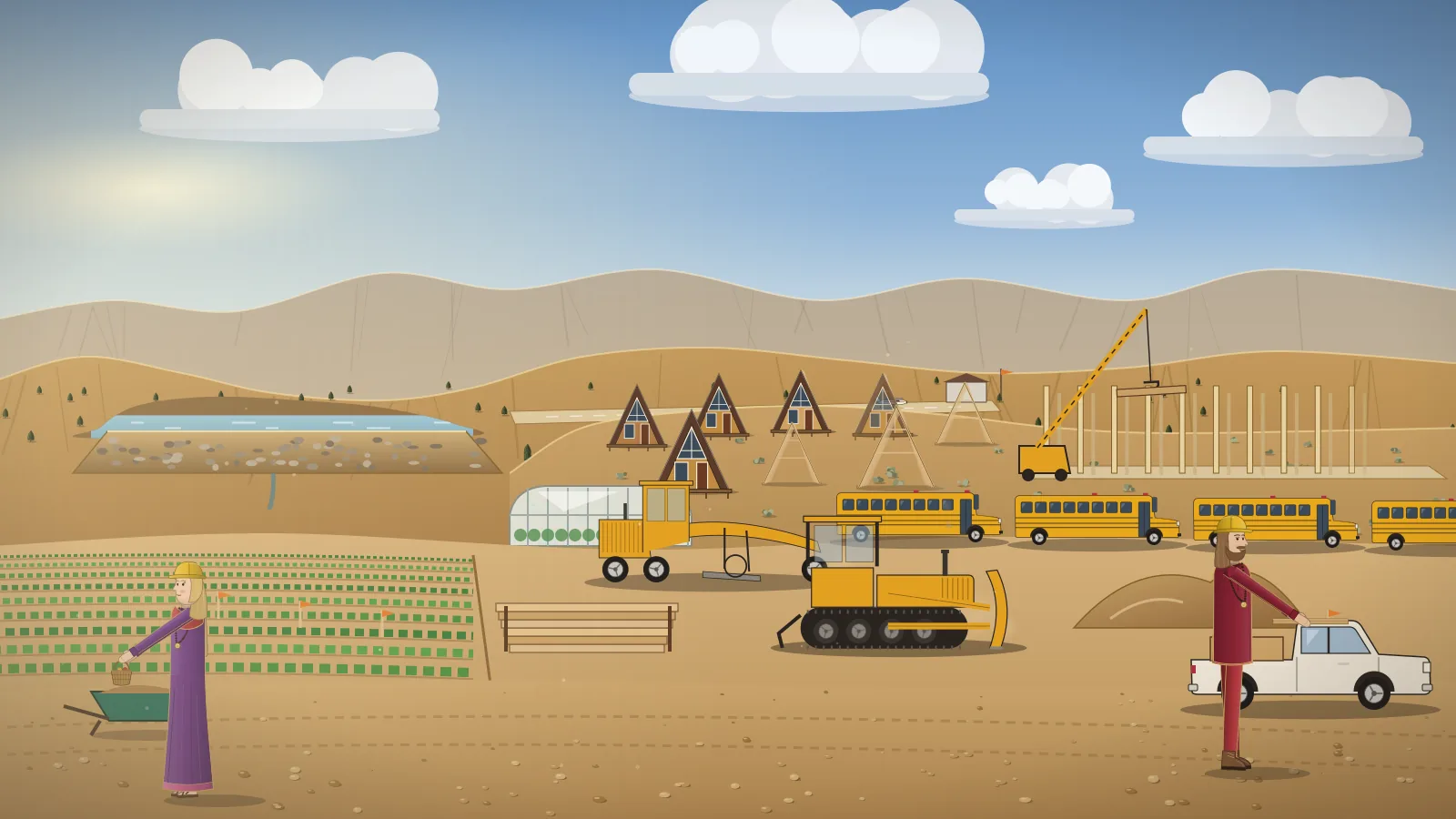
Followers came by the hundreds, then by the thousands, and on 29 August Rajneesh himself moved to the ranch. They built houses, roads and farms, and a dam with a lake behind it. There were shops and restaurants, buses, an airstrip, and a vast hall for meditation. Residents worked 12 hours a day or more, without wages. The leadership called it worship.
Residents worked 12 hours a day or more, without wages. The leadership called it worship.
In May 1982 the residents voted to become a city: Rajneeshpuram. Now it had its own police, and the power to grant building permits. Within two years about 7,000 people lived there, though not all of them full-time. Each summer, from July 1982, a World Celebration brought thousands of visitors to dance and meditate in the desert.
And every afternoon came the drive-by. By 1985 there were 93 Rolls-Royces for Rajneesh’s use. Critics saw greed. Many followers saw a joke at the idea that holiness means poverty.
Chapter IIIwatch from 4:24
The Red City and Its Neighbours
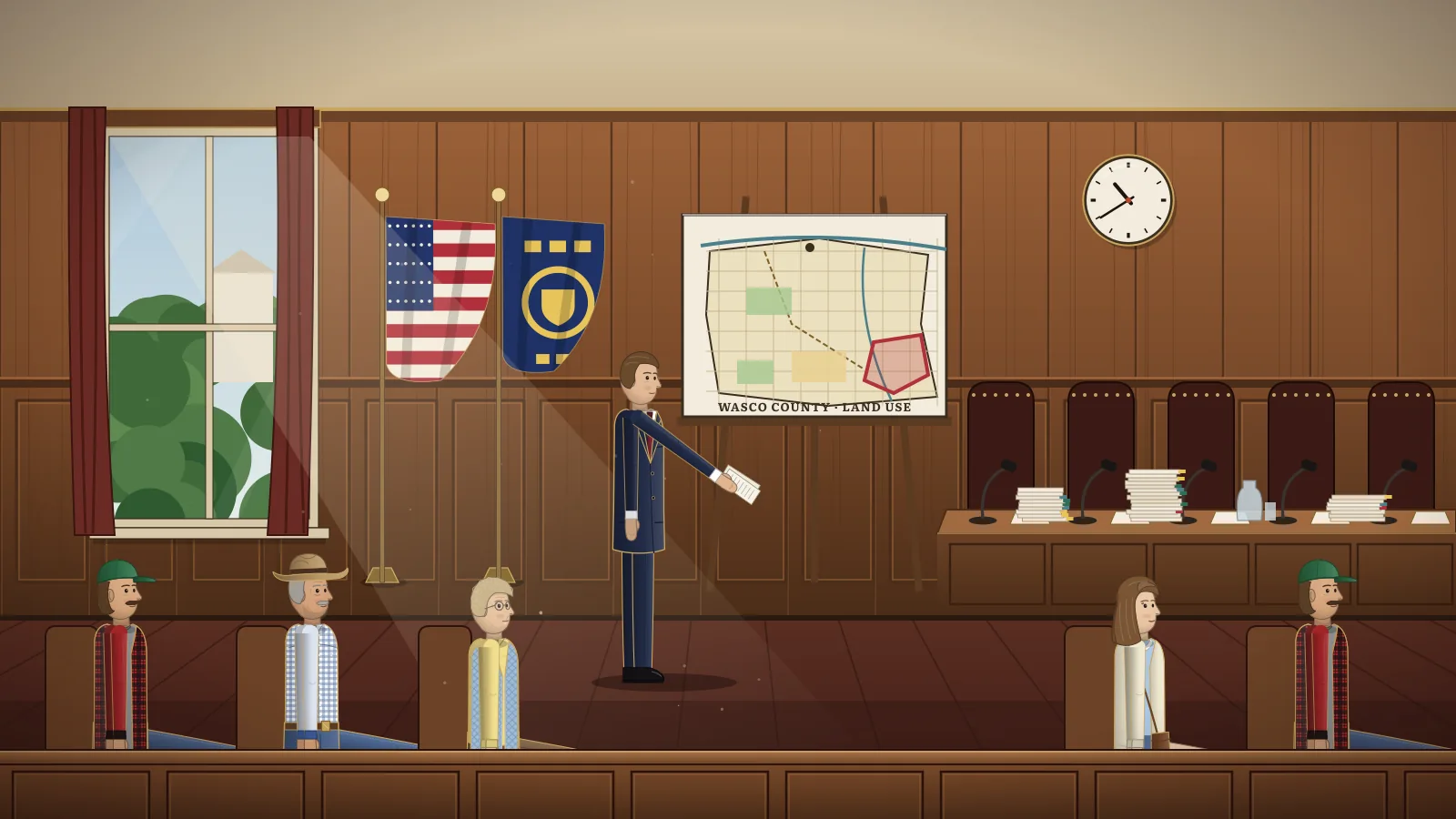
To many neighbours, the red city was alarming. A conservation group, 1000 Friends of Oregon, challenged it under the state’s land-use laws. The state’s attorney general, David Frohnmayer, argued that a city run by a religious group broke the separation of church and state.
Sannyasins moved into Antelope, 18 miles from the ranch, and won a majority on its council. In 1984 the little town was renamed Rajneesh. The year before, in 1983, a bomb planted by an outsider had damaged the movement’s hotel in Portland, and on the ranch the feeling of siege grew. Sheela became the commune’s public face. On television she insulted critics in words that made headlines, and the ranch built up an armed security force.
In November 1984, Wasco County would elect commissioners who could decide the ranch’s future, and Sheela’s inner circle wanted their own candidates to win. About half the county’s people lived in one town: The Dalles, on the Columbia River.
At the end of August, two county commissioners visited the ranch. They were offered glasses of water. Both fell ill, and one was taken to hospital.
They were offered glasses of water. Both fell ill, and one was taken to hospital.
In September the commune began a programme it called Share-a-Home. Buses brought thousands of homeless people from cities across America to the ranch. Officials feared they had come to vote.
Chapter IVwatch from 5:59
A Sickness in The Dalles
That same September, people in The Dalles began to fall sick. First there were about a dozen, then hundreds. The town’s only hospital ran out of beds. Most of the sick had one thing in common: they had eaten from a restaurant salad bar.
By October, 751 people had fallen ill with salmonella, after eating at 10 restaurants. Of them, 45 were taken to hospital. No one died.
The town’s only hospital ran out of beds.
State health officials and the Centers for Disease Control checked suppliers, water and kitchens. They found no proof that it was deliberate, and blamed the hygiene of food workers. For a time it looked like an accident.
In February 1985 an Oregon congressman, James Weaver, told Congress that he believed the commune was behind it. Many dismissed his claim.
By then the election plan had already failed. The state made new voters prove that they qualified, and the commune boycotted the vote. No candidate from the ranch was elected, and most of the homeless soon left.

Chapter Vwatch from 7:02
The Collapse
On 14 September 1985, Sheela and more than a dozen of her closest team suddenly flew to Europe. Two days later Rajneesh, who was speaking again by then, called the press. He accused them of crimes, including the poisoning, and invited the police to investigate.
On 2 October about 50 investigators arrived with search warrants. In a clinic laboratory on the ranch they found salmonella that exactly matched the strain from The Dalles. In time, over the following months and years, investigators also uncovered wiretaps, arson, an attempt to poison Rajneesh’s own doctor, and a plot, never carried out, to kill Oregon’s federal prosecutor, Charles Turner.
In a clinic laboratory on the ranch they found salmonella that exactly matched the strain from The Dalles.
At the end of October, two small jets carrying Rajneesh landed to refuel at Charlotte, North Carolina. Federal agents were waiting, and he was arrested on immigration charges. In November, in a federal court in Portland, he entered an Alford plea to 2 charges: he accepted conviction without admitting guilt. He received a 10-year suspended sentence and a fine of 400,000 dollars, and agreed to leave the country. Whether he knew of the crimes on the ranch is still disputed; he blamed Sheela’s group.
Sheela and another leader, Ma Anand Puja, were arrested in West Germany. In July 1986 they entered pleas to charges including attempted murder, assault, and the poisonings in The Dalles; Sheela’s pleas included assaults on the two county commissioners who had been given water at the ranch. Sheela was sentenced to 20 years. She was released after about 29 months, in December 1988, and went to live in Switzerland.

Chapter VIwatch from 8:41
Never Born, Never Died
The residents packed up and left. Most had known nothing of the crimes, and many walked away with little money, after years of unpaid work.
Turned away by country after country, Rajneesh returned to his ashram in Pune in January 1987. In 1989 he took the name Osho, and he died there on 19 January 1990, aged 58. His epitaph reads: Never born, never died. Only visited this planet Earth between those two dates.
Never born, never died. Only visited this planet Earth between those two dates.
Today the Osho movement runs a meditation resort in Pune and centres around the world. His talks fill hundreds of books, and many people practise his meditations far from the story of Oregon.
The poisoning is often called the largest bioterror attack in American history, and it is still studied as a warning of how hard such attacks are to detect. Two claims about it are often repeated. Some say Rajneesh was convicted of the poisoning. He was never even charged with it: his convictions were for immigration offences. Some say people died. No one did.
The ranch was sold, and since 1999 it has been a summer camp run by a Christian youth organisation. On the road where the cars once passed, there are no crowds in red any more. Only dust, sagebrush, and the wind of the high desert.