The story of the film
Rome, Mainz, Jüterbog and Wittenberg, and Trent · 1095–1626, and today
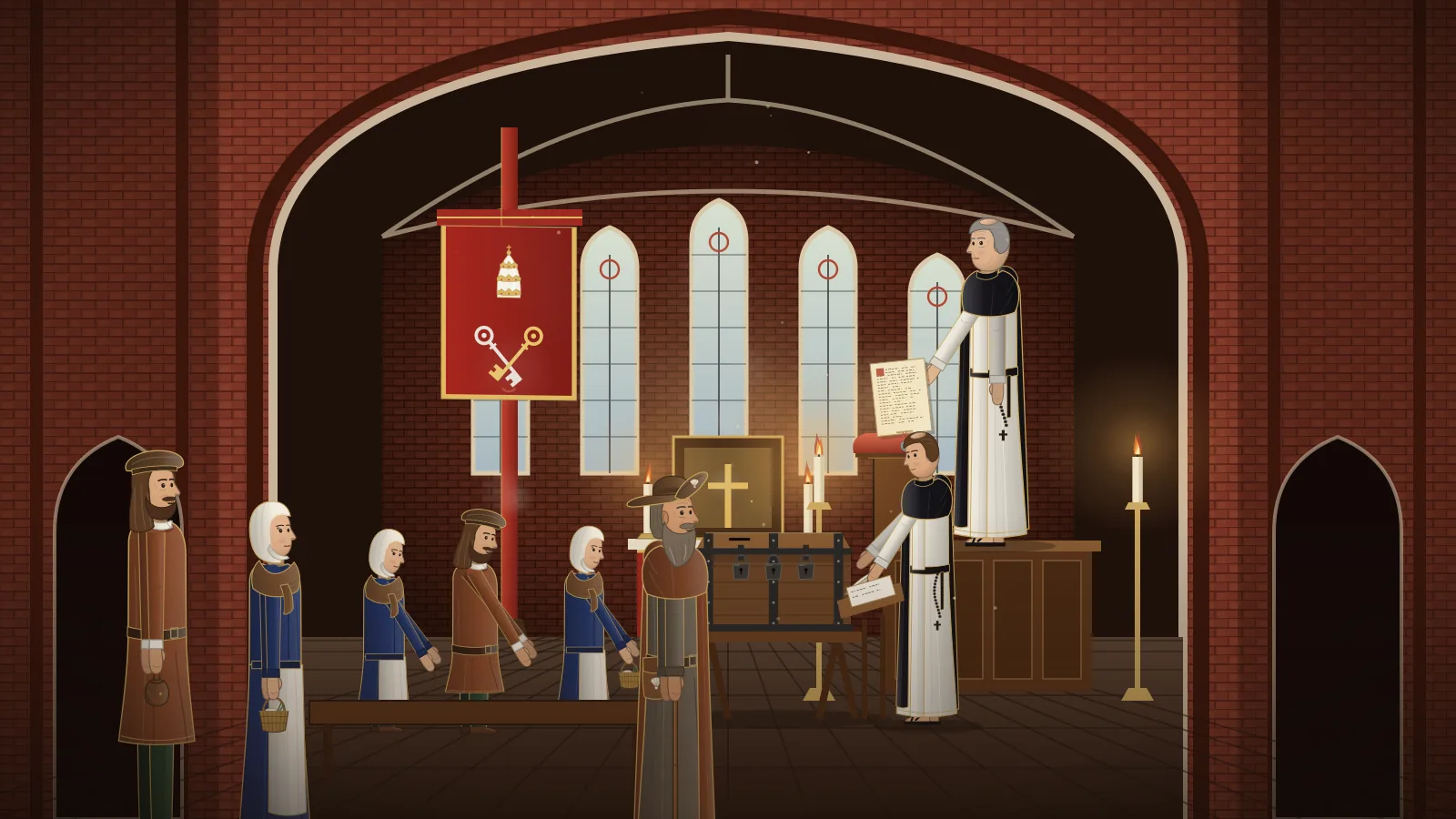
In the spring of 1517, the story goes, a procession entered the little town of Jüterbog, in Germany. At its head rose a tall red cross, hung with the arms of the pope. Behind it walked a Dominican friar, and behind him came a heavy wooden chest, bound with iron.
From the town of Wittenberg, a day’s walk away, people set out to find him. They had come for a letter, and they were ready to pay.
Chapter Iwatch from 0:36
The Debt That Remained
To understand what they wanted, we have to step back into the medieval Church, and its teaching about sin and penance. A sinner who repented and confessed was forgiven. The guilt was gone, and with it the threat of eternal punishment.
But a debt remained, called temporal punishment. It had to be paid by penance in this life, or by purification after death, in purgatory. In the early Church, penances were long and public. A serious sin might mean years of fasting, standing at the church door, where everyone could see.
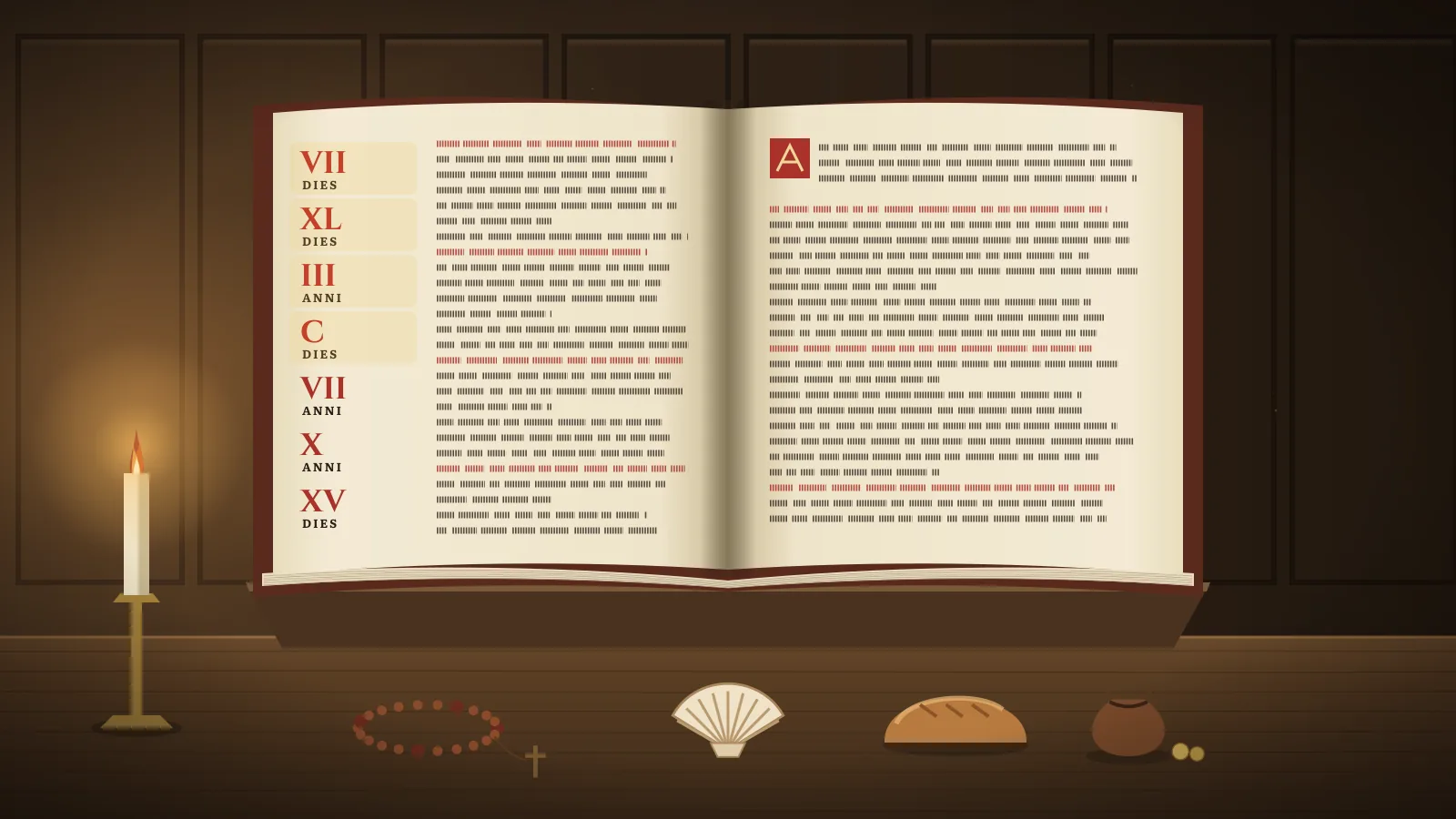
Over time, the Church allowed such penances to be exchanged for other good works: prayers, pilgrimages, or gifts to the poor. An indulgence was a remission of this debt, granted through the Church. It did not forgive sin; it lifted the punishment still owed for sins already forgiven. A partial indulgence was counted in days or years. A plenary indulgence cleared it all.
An indulgence was a remission of this debt, granted through the Church.
In 1095, at Clermont, in France, Pope Urban II promised that those who went on crusade with a pure intention would have their penance counted as done. In 1300, Pope Boniface VIII declared the first Jubilee. Pilgrims who came to Rome and prayed at its great churches could gain a plenary indulgence.
Chapter IIwatch from 2:07
The Treasury of Merit
But where did this power come from? Theologians answered with the idea of a treasury of merit. Christ’s sacrifice, and the holy lives of Mary and the saints, had won far more merit than was needed. The Church, holding the keys of Peter, could share it out. In 1343, Pope Clement VI set out this teaching in a papal bull.
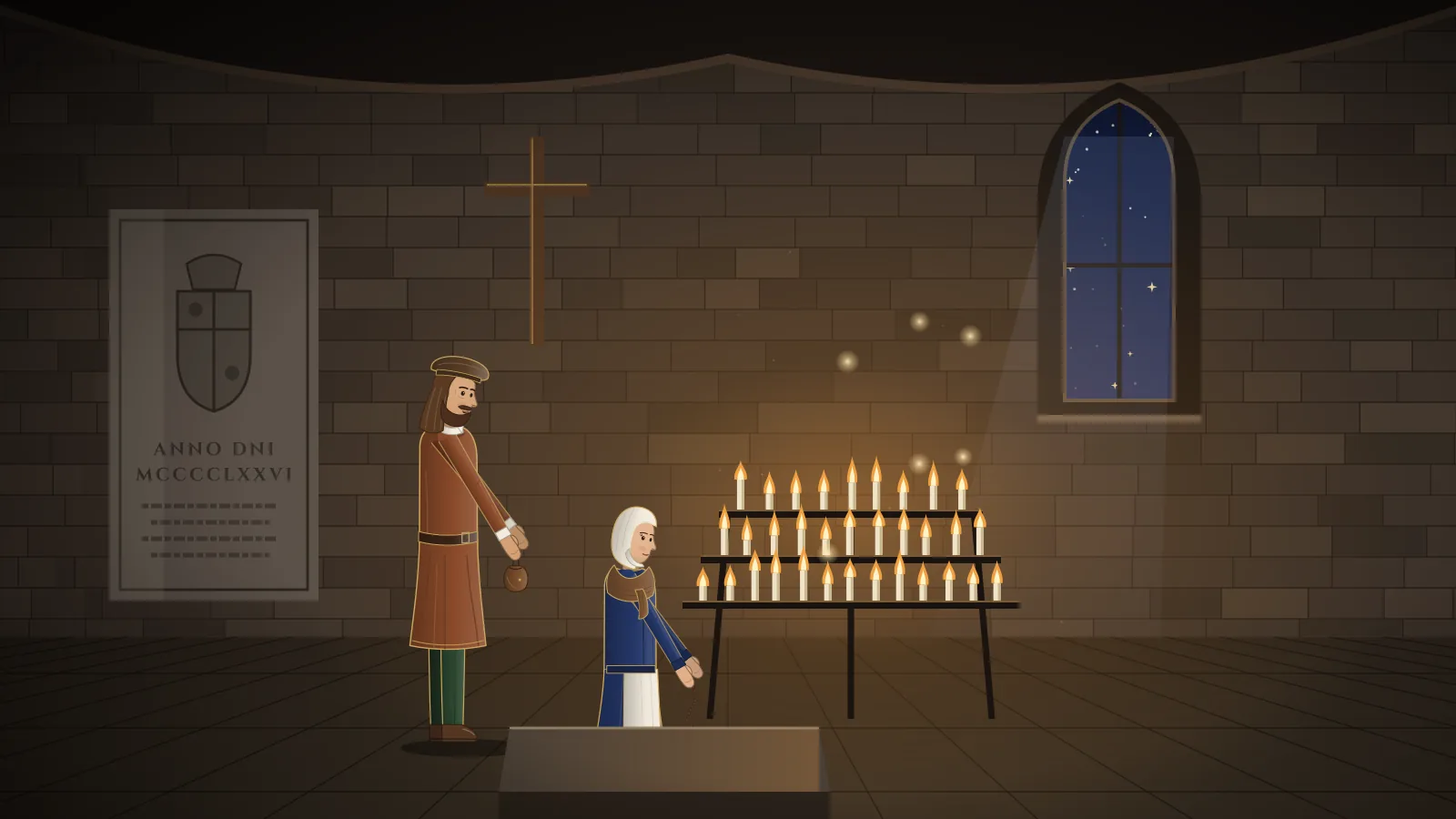
In 1476, Pope Sixtus IV declared that the living could also gain indulgences for the souls of the dead in purgatory. Now a widow could do something for her husband, a son for his mother. For many, this was a deep comfort.
Now a widow could do something for her husband, a son for his mother.
An indulgence always required repentance and a good work. And the good work could be a gift of money. By the 15th century, indulgences were helping to pay for churches, hospitals, bridges, and wars against the Turks. In 1454, in the time of Gutenberg’s first press in Mainz, letters of indulgence were among the earliest things printed, with blank spaces left for the buyer’s name. One of them, issued by Pope Nicholas V for the defence of Cyprus against the Turks, is the earliest precisely dated piece of European printing with movable type.
Preachers, often friars, travelled from town to town with papal letters. The rich paid more, the poor less, and the very poor could give prayer and fasting instead. Yet even loyal Catholics complained that some preachers promised too much, and that ordinary people heard a simpler message: pay, and be saved.
Chapter IIIwatch from 3:40
A Church for Saint Peter
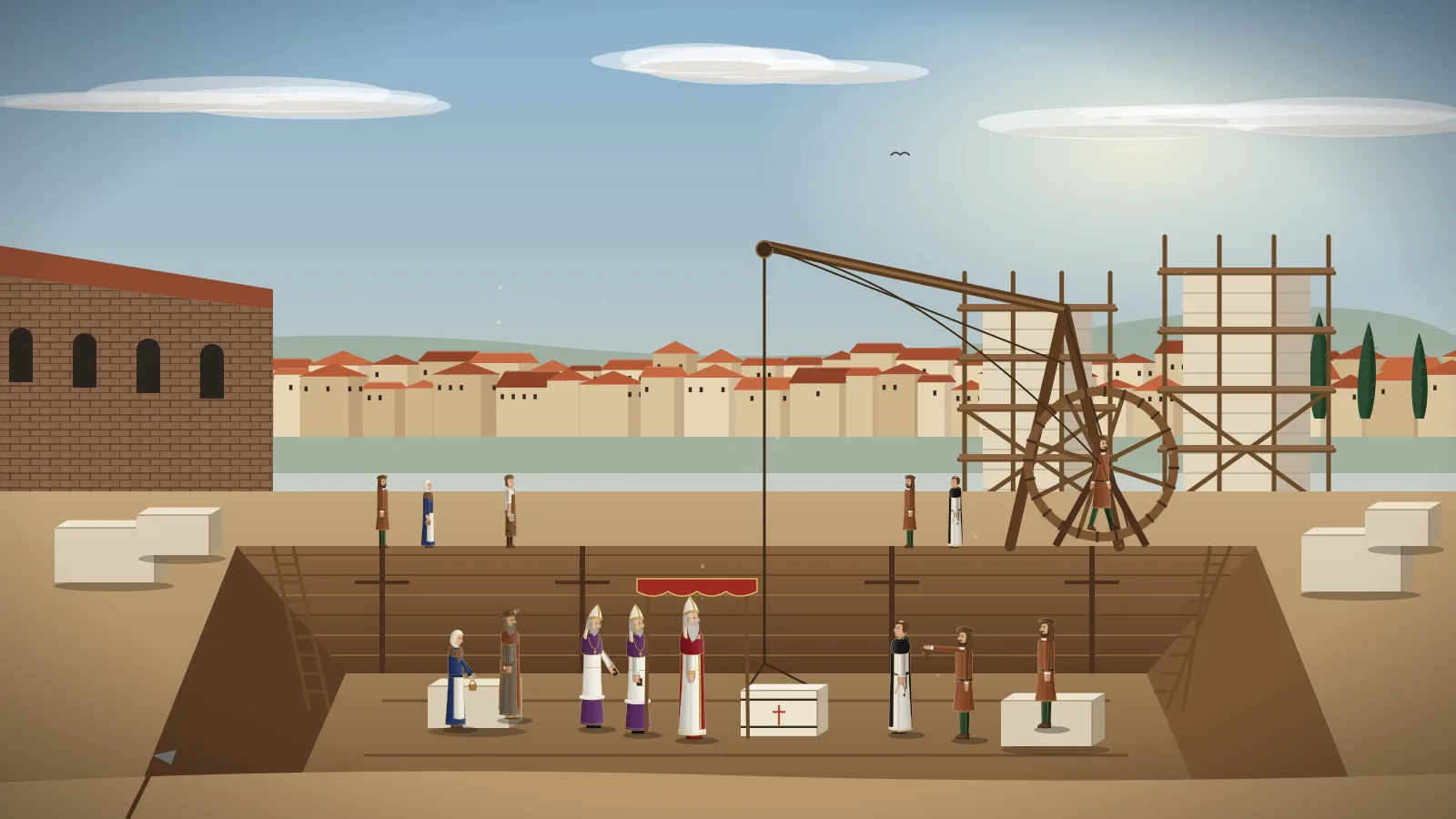
In Rome stood the old basilica of Saint Peter, more than 1,000 years old, its walls cracked and leaning. In 1506, Pope Julius II laid the foundation stone of a vast new church. The work would take more than a century, and cost a fortune.
In 1515, his successor, Leo X, renewed an indulgence to help pay for it. In much of Germany, it was entrusted to Albrecht of Brandenburg. At 23 he had become Archbishop of Mainz, while already holding other sees.
Holding so many offices was against church law. He needed a papal dispensation, and the fees were enormous. He borrowed the money from the Fuggers of Augsburg, the richest bankers in Europe.
The deal was not made public.
It was agreed that about half of what the indulgence raised in his lands would go to repay that debt. The deal was not made public, and the money raised in Germany was owed in two directions at once: to Rome, and to Augsburg.
Chapter IVwatch from 4:48
The Preacher and the Chest
Albrecht’s chief preacher was Johann Tetzel, a Dominican in his fifties, born at Pirna, in Saxony, with long experience of preaching indulgences. In 1516 and 1517 he had preached through Meissen, Magdeburg and Halberstadt.
Tetzel taught, like some theologians of his day, that an indulgence for a soul in purgatory could be gained by a gift alone, without the giver’s own confession. Other theologians disagreed, and the question was not yet settled.
A famous rhyme is put in his mouth: “As soon as the coin in the coffer rings, the soul from purgatory springs.” It comes from his critics, and whether he ever said it is uncertain.
A famous rhyme is put in his mouth.
He could not preach in Wittenberg itself. Frederick the Wise, Elector of Saxony, had banned the campaign from his lands. Frederick had indulgences of his own. In his Castle Church he kept one of the largest relic collections in Europe, more than 19,000 items by 1520, and visitors on certain feast days could gain indulgences there too. So Tetzel preached just across the border, and Wittenbergers crossed over to buy his letters.
Chapter Vwatch from 5:49
Ninety-Five Theses
In Wittenberg lived Martin Luther, an Augustinian friar and professor of theology, 33 years old. He was troubled, he later recalled, that people came to confession waving their letters, and no longer saw why they should repent.
On 31 October 1517, the eve of All Saints, he wrote to Archbishop Albrecht, and enclosed 95 theses, in Latin, for a scholarly debate. They were questions to be argued over by learned men, not a manifesto for the street.
He meant the whole life of believers to be one of repentance.
The first thesis said that when Christ told people to repent, he meant the whole life of believers to be one of repentance. Another asked why the pope, richer than the richest Roman, did not build Saint Peter’s with his own money, instead of the money of poor believers.
Chapter VIwatch from 6:44
The Door and the Presses
Everyone knows the picture of Luther nailing the theses to the church door. It rests mainly on Philip Melanchthon, writing in 1546, after Luther’s death, who says only that he posted them. Some historians doubt it ever happened. Others point to a note by Luther’s secretary, Georg Rörer, and to church doors used as the university’s notice board.
What is certain is what came next. Printers in Nuremberg, Leipzig and Basel copied the theses, and within weeks they were being read across Germany. The same presses that had turned out letters of indulgence now carried the questions against them.
What is certain is what came next.
Albrecht sent the theses on to Rome. Tetzel answered with counter-theses, mostly drafted by Konrad Wimpina, defending the pope’s authority. He died in Leipzig in 1519, and Luther, by one account, wrote to console him.
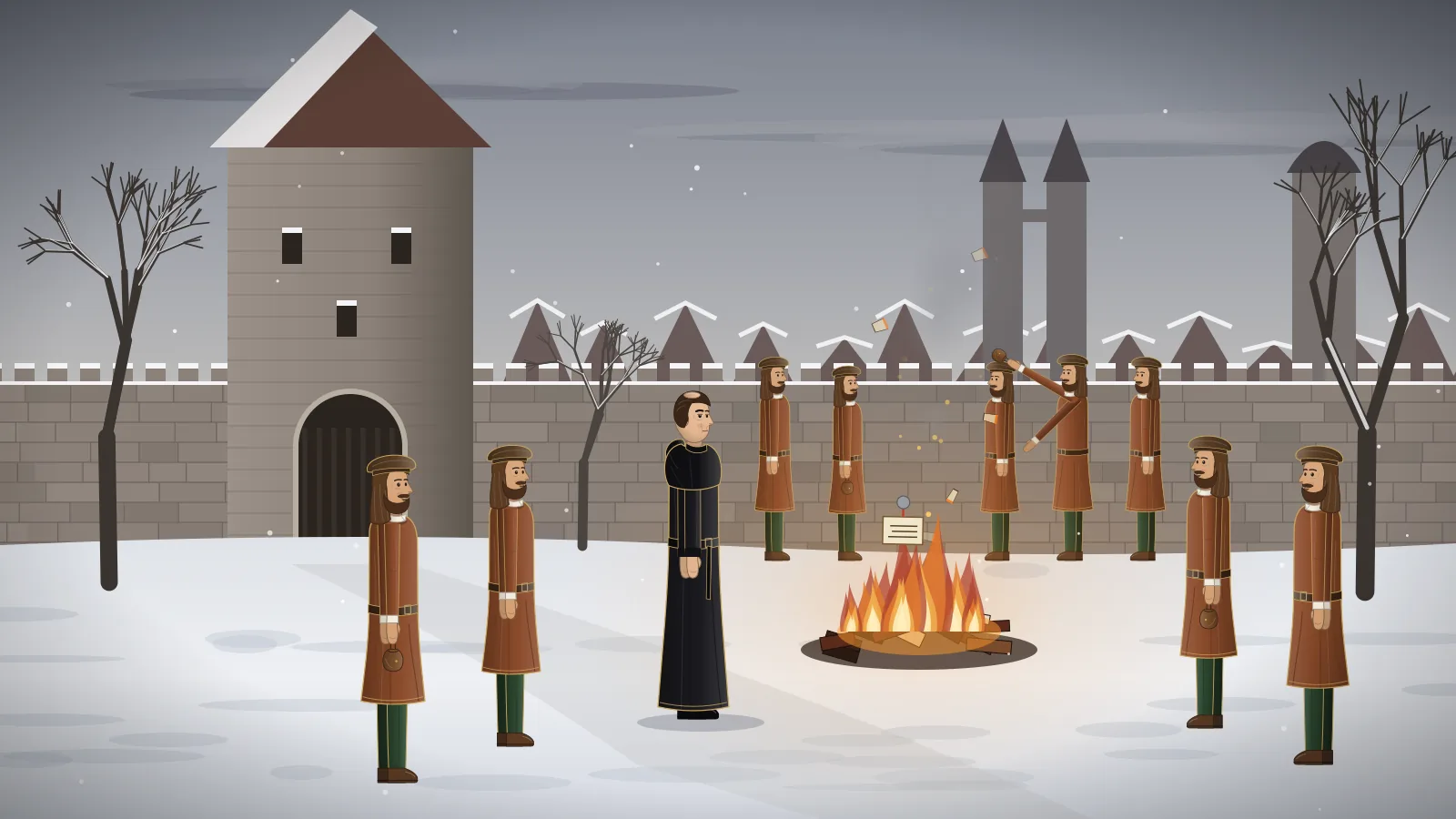
On 10 December 1520, outside the Elster Gate of Wittenberg, Luther threw a papal bull that threatened him with excommunication into a bonfire. In 1521 he was excommunicated. A dispute about indulgences had become a dispute about grace and authority, and Western Christianity divided.
Chapter VIIwatch from 8:00
Trent and the Holy Door
The Catholic Church answered at the Council of Trent, in the Alps, which met on and off from 1545 to 1563. In 1562 the council abolished the professional collectors who had preached indulgences for alms. From then on, indulgences were to be published by the bishop, and any alms received without fee, not for gain but for piety.
In December 1563 it declared that indulgences were most beneficial to Christians, but ordered that all evil gain from them be wholly abolished. The council held that the power to grant indulgences had been given to the Church by Christ. The doctrine stood; the abuses were to go. In 1567, Pope Pius V went further. He cancelled every grant of indulgences tied to fees or payments of money.
None of them could buy it.
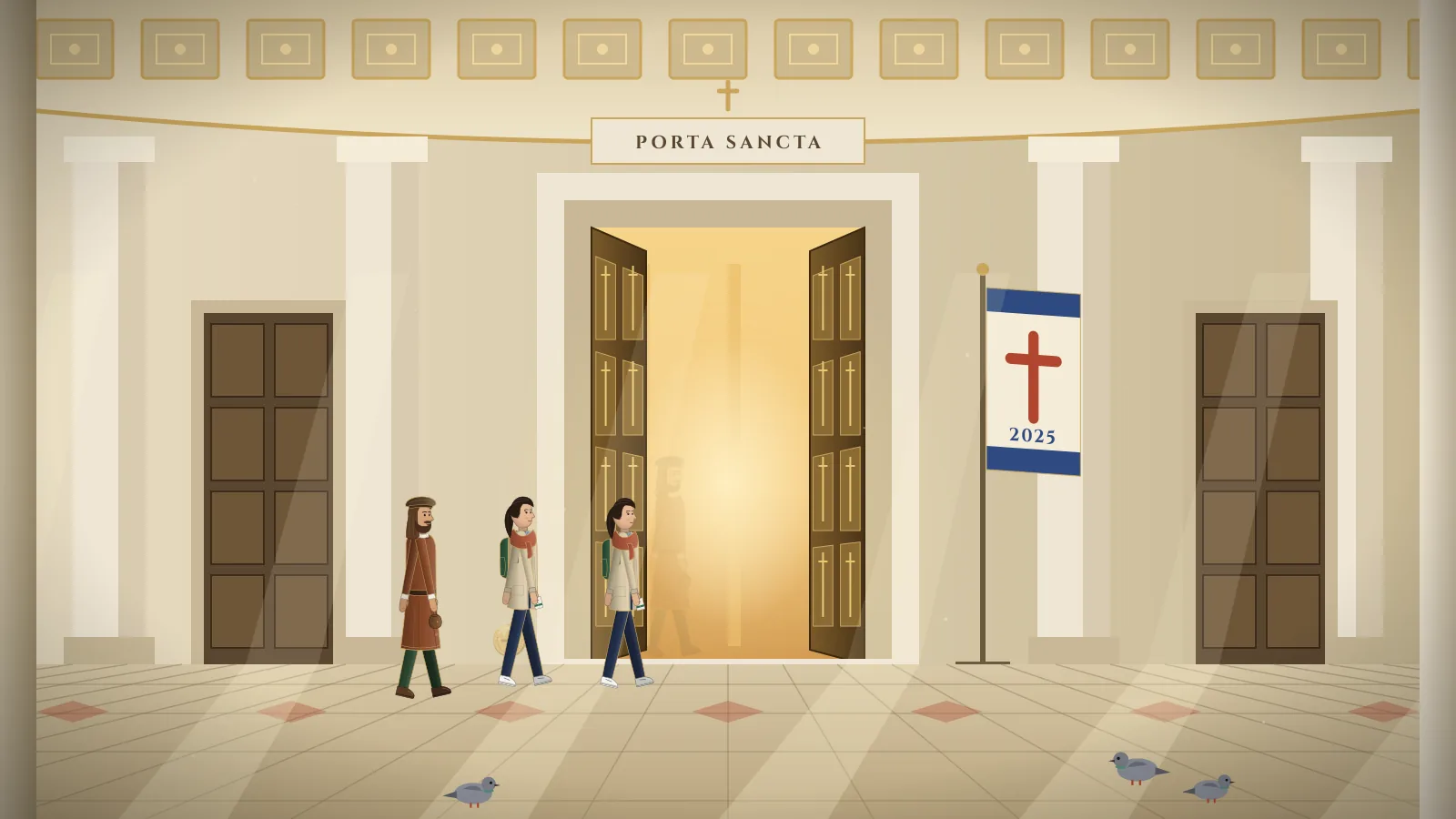
In 1626, the new Saint Peter’s was finally consecrated, more than a century after the first stone. Indulgences are still part of Catholic teaching. In 1967 Pope Paul VI stopped the counting of days and years, and stressed inner conversion. In the Jubilee of 2025, pilgrims passed through the Holy Door of Saint Peter’s, with confession, communion and prayer, to seek one. None of them could buy it.
For Protestants, 31 October is Reformation Day. Many Catholic historians agree the abuses were real, while noting that the Church never taught that forgiveness could be bought.
And in Saint Nicholas’ Church in Jüterbog, an old wooden chest is still shown as Tetzel’s. No one can prove it was his. It is empty now. But the question it once raised, what a person can give for heaven, divided a continent.