The story of the film
Languedoc, from Toulouse and Carcassonne to Montségur in the Pyrenees · c. 1140–1321
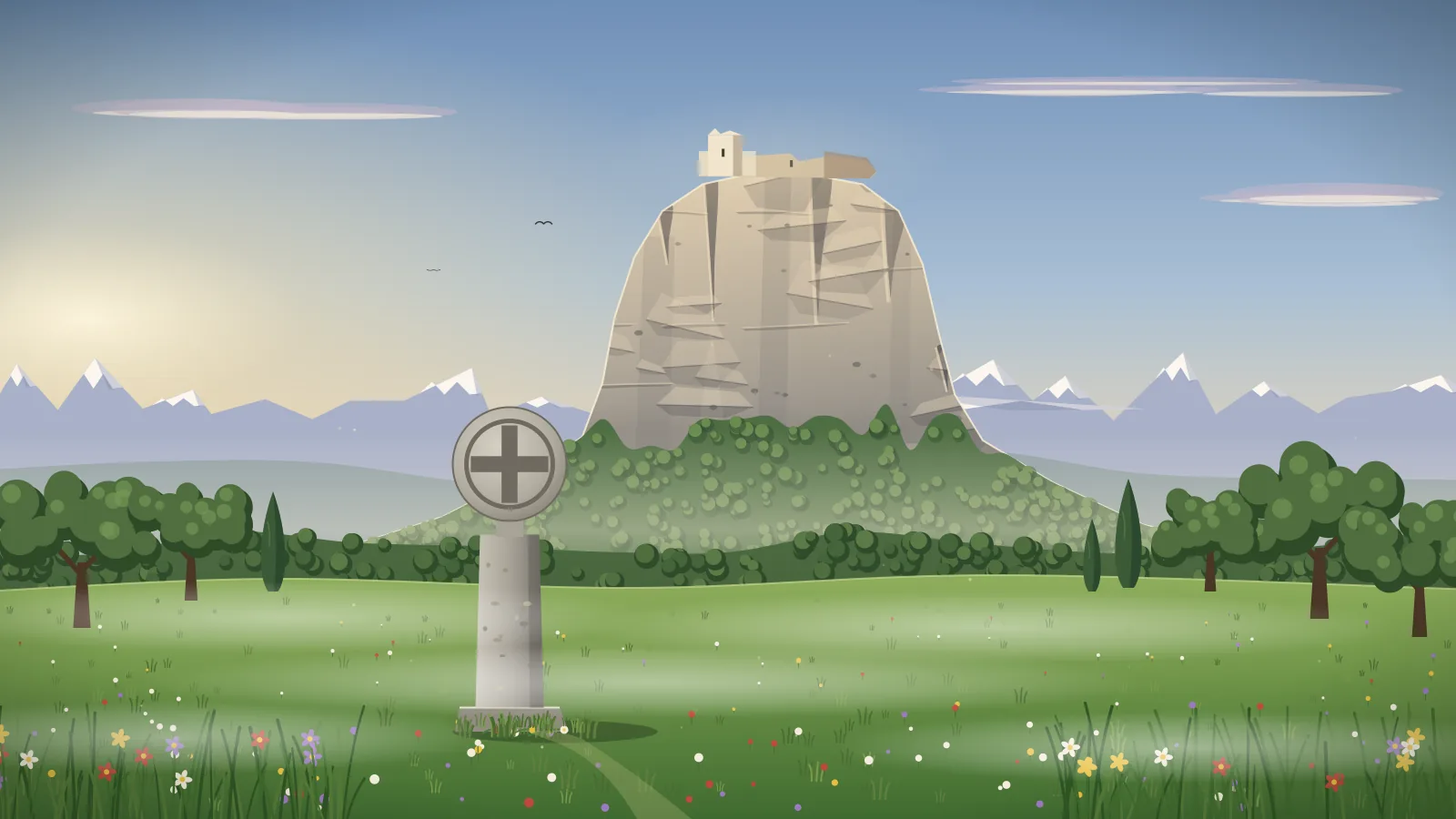
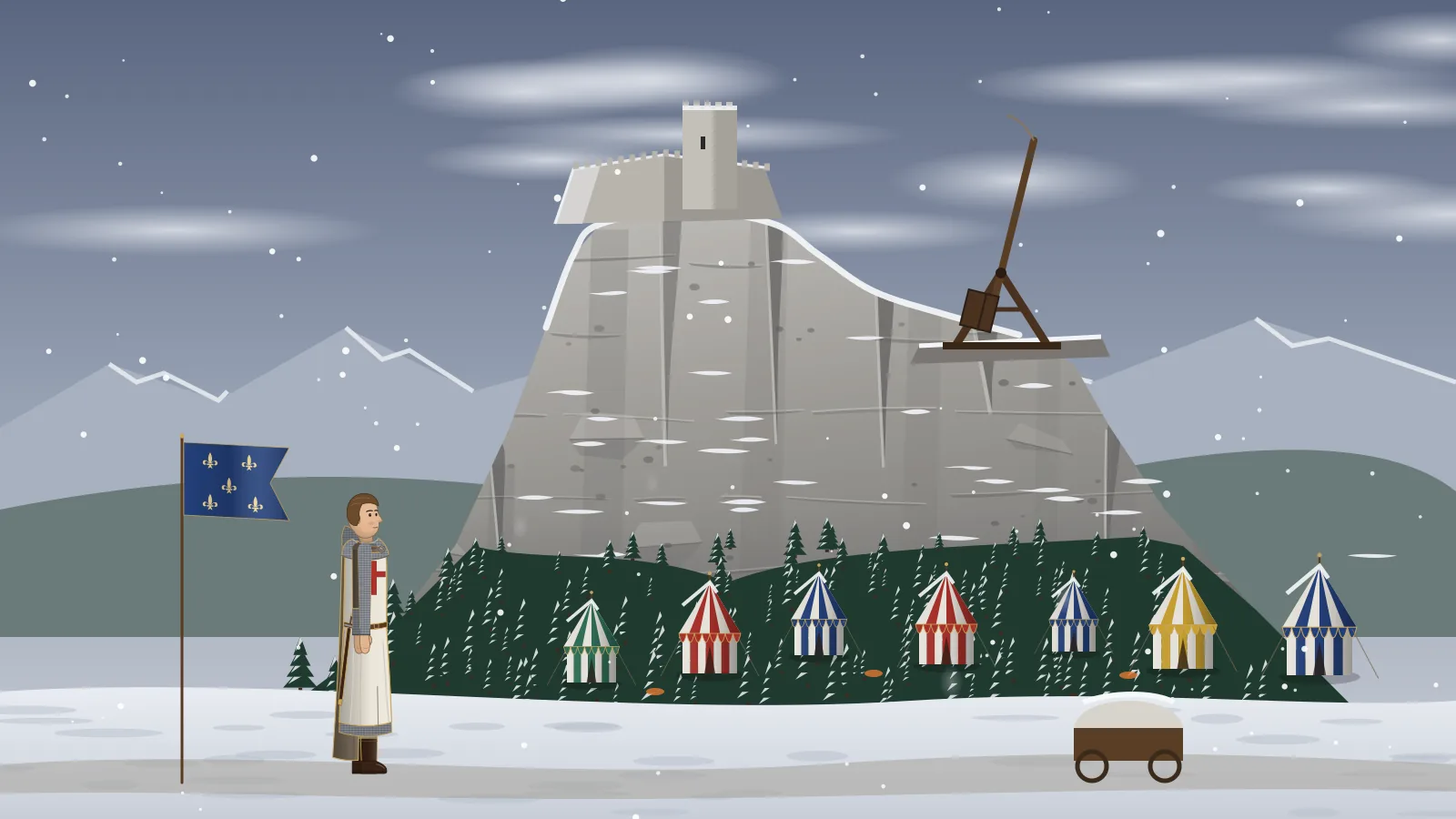
On a cold March morning in 1244, in the foothills of the Pyrenees, a small fortress stood alone on the top of a great rock. Below it lay the camp of a royal army. For nearly ten months that army had waited, through autumn and winter, and now the fortress had surrendered.
Inside, the good men and women had been offered their lives, if they would give up their faith. More than 200 of them refused.
Chapter Iwatch from 0:36
The Good Men
Their story began a century earlier, in Languedoc, the country between Toulouse and the Mediterranean. It was a rich land of vineyards, walled towns and castles perched on the hilltops. Here people spoke Occitan, the language of the troubadours, and their lords paid little heed to the King of France, far away in Paris.
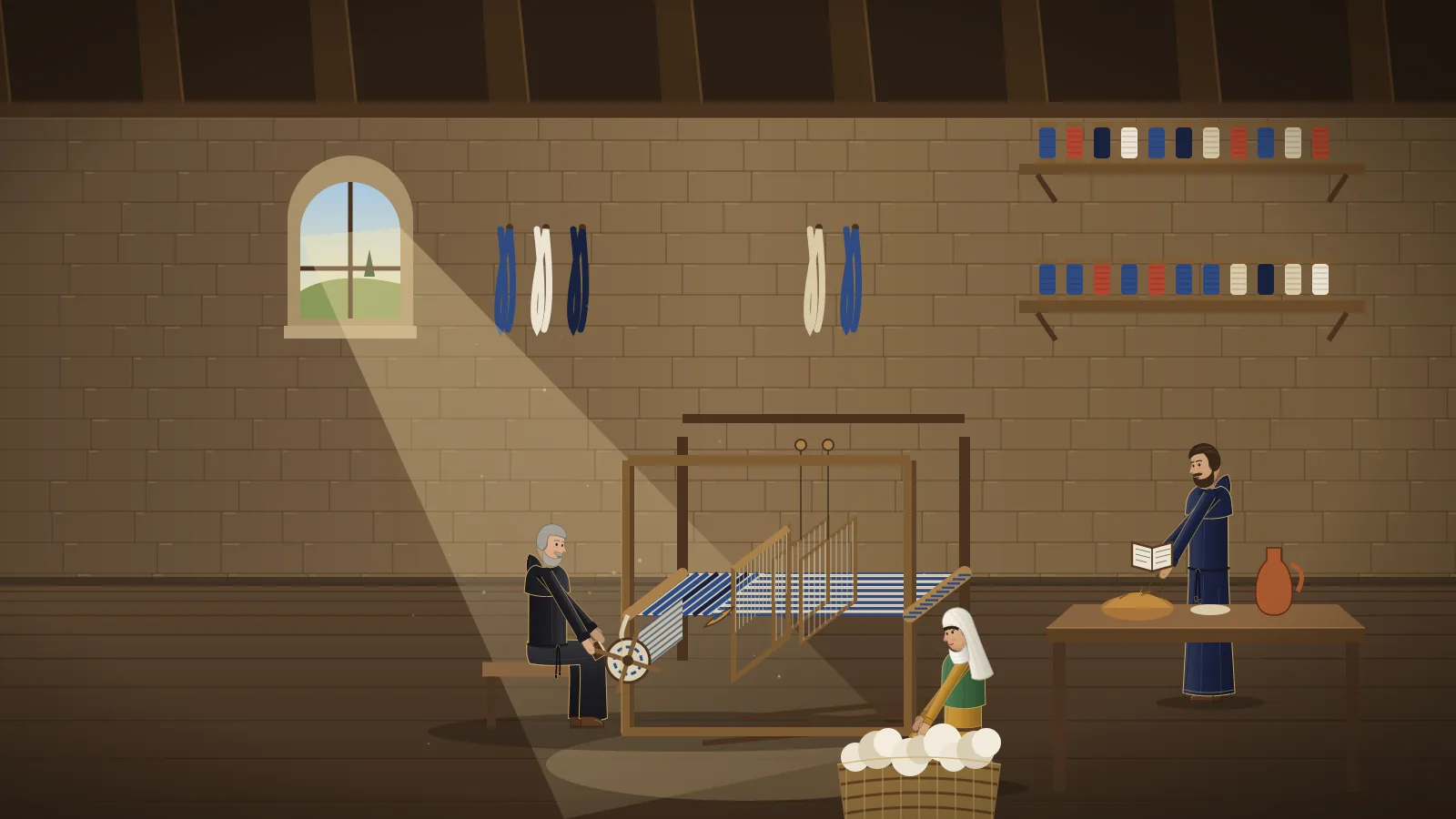
In the 12th century, new preachers appeared in these towns. They travelled in pairs, in dark robes, and owned almost nothing. They never ate meat. They did not marry or swear oaths, and they earned their bread with their own hands, many of them as weavers at the loom. Their followers called them the good men and the good women, and bowed low before them to ask for a blessing.
They taught that there were two principles: a good God, who made the unseen world of spirit, and an evil power behind the visible world of matter. Human souls were spirits trapped in flesh. Life on earth was an exile.
Life on earth was an exile.
The way home was a single sacrament, the consolamentum. A good man laid his hands and the Gospel book on the believer’s head. The life it demanded afterwards was so hard that most believers received it only when they were dying.
Women shared this world too. In 1204, at Fanjeaux, Esclarmonde, sister of the Count of Foix, became a good woman herself. Their enemies called them Albigensians, after the town of Albi, or Cathars, from a Greek word for “the pure”. They called themselves good Christians.
Chapter IIwatch from 2:26
Preachers on Foot
To the Church, they were heretics, and its first answer was preaching. Grand envoys of the pope had ridden through Languedoc on horseback, with all the pomp of their office, and had made little headway. In 1206 a Spanish bishop, Diego of Osma, and one of his canons, named Dominic, began to walk the roads of Languedoc instead.
They went on foot, begging their food, as poor as the good men they hoped to win back. Through the summer of 1206 they moved from town to town. That December, at Prouille, below the hill of Fanjeaux, a house was founded that became, in part, a refuge for women who had left the Cathar houses.
They went on foot, begging their food, as poor as the good men they hoped to win back.
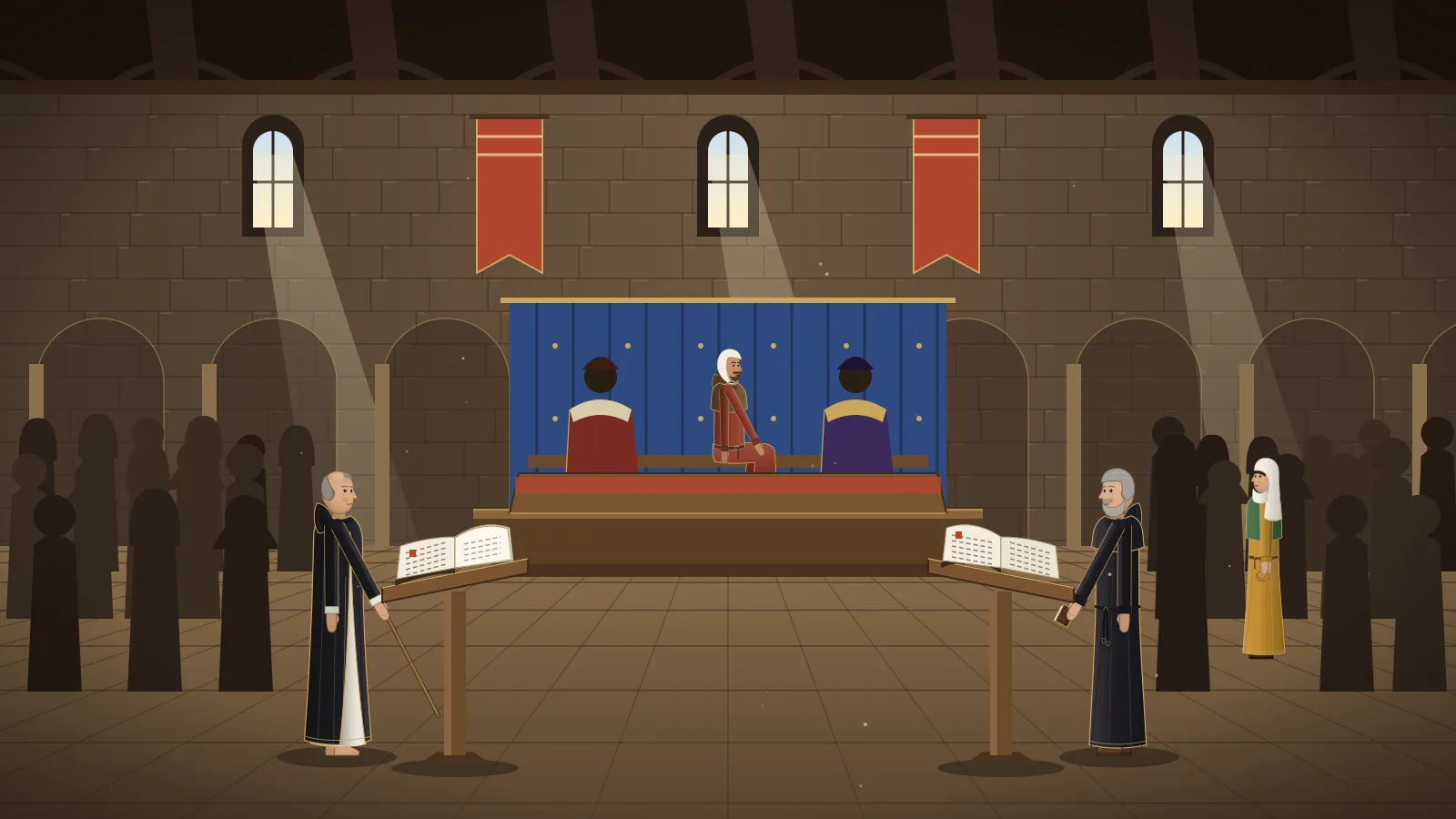
At Montréal and Pamiers they debated Cathar preachers in public, before judges and crowds. Esclarmonde of Foix herself took part in the meeting at Pamiers. Arguments were set out and answered, but few minds were changed.
A chronicler, Peter of Vaux-de-Cernay, who said he heard it from Dominic himself, told a story from those days. A page Dominic had written was thrown into a fire three times, and three times, the story goes, it leapt out unburned. Where and when it happened is still debated.
At the end of 1207 Diego died in Spain. Dominic stayed on in Languedoc. But by then the time for preaching was running out.
Chapter IIIwatch from 3:16
A Crusade at Home
Then came a killing. On 14 January 1208, beside the Rhône near Saint-Gilles, the papal legate Pierre de Castelnau was struck down by a rider. The killer was said to serve Count Raymond VI of Toulouse, whom the legate had excommunicated. It was never proved that the count gave the order.
Pope Innocent III called the knights of the north to the cross. 40 days of service would earn the same pardon as a crusade to the Holy Land. In the summer of 1209 a great army marched south under banners and crosses. This crusade was aimed at fellow Christians, in the heart of Europe.
This crusade was aimed at fellow Christians, in the heart of Europe.
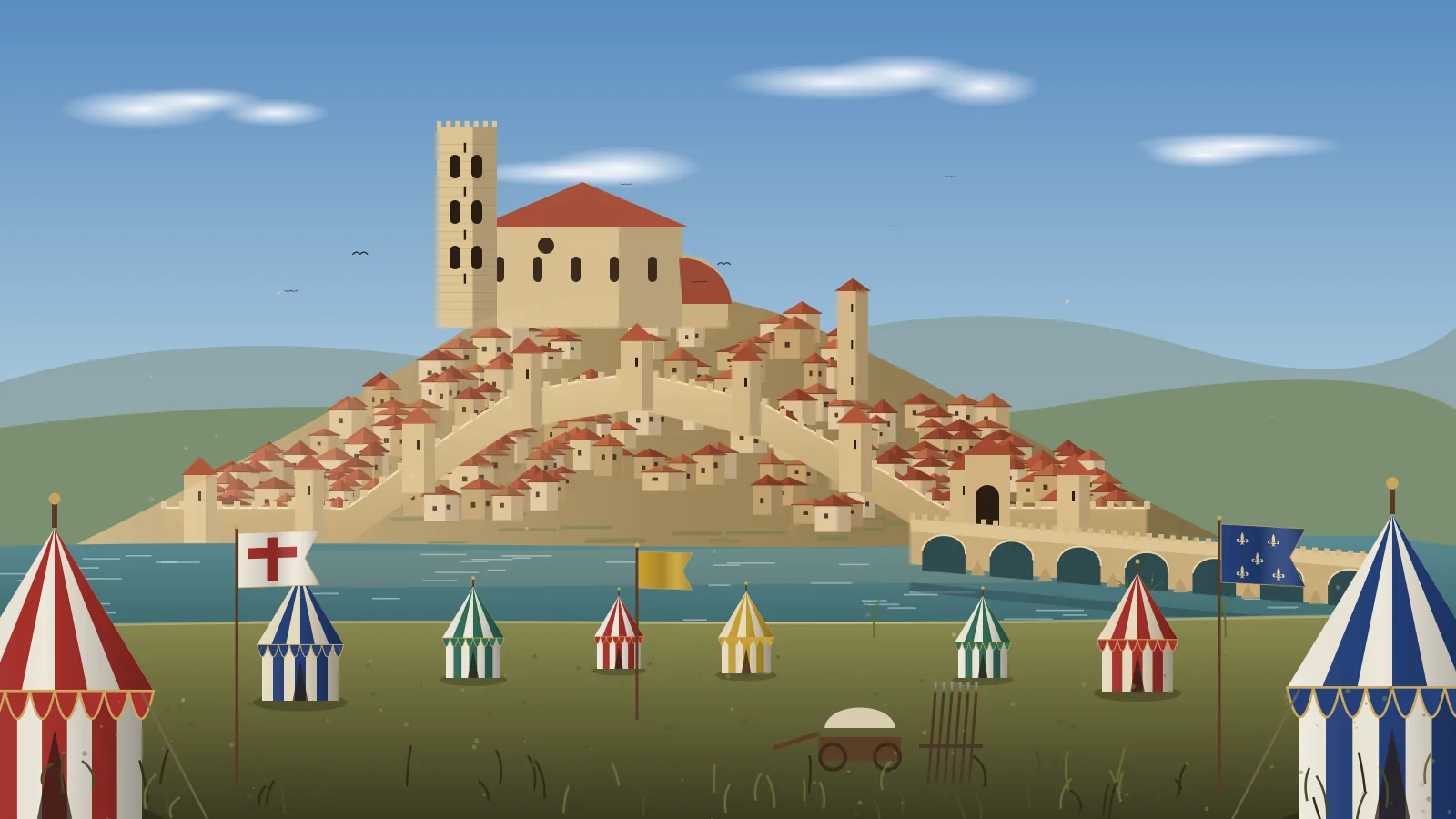
On 21 July it reached Béziers, on its hill above the river Orb, and camped by the water. The town refused to hand over its heretics. Next morning, while the leaders were still talking, camp followers rushed the walls. The city fell within hours. Many of its people were killed, even in the churches, and the town was burned.
The abbot leading the crusade, Arnaud Amaury, wrote to the pope that almost 20,000 had died. Historians think the real number was lower, since the whole town may have held only some 10,000 to 15,000 people. But it was still terrible.
Asked how to tell Catholics from heretics, the abbot is supposed to have answered: “Kill them all. God will know his own.” But the line comes from a German monk, Caesarius of Heisterbach, writing more than ten years later, and he says only that the abbot was reported to have said it. Many historians doubt that the words were ever spoken.
Chapter IVwatch from 4:56
Castle after Castle
In August the great fortress city of Carcassonne surrendered. Its people were sent away, by one account, in nothing but their shirts and breeches. Its young viscount, Raymond-Roger Trencavel, was 24 years old. He was held prisoner, and he died in prison that November. His lands went to a knight from near Paris: Simon de Montfort.
For years Simon fought on, castle after castle, across the hills of Languedoc. At Minerve, in 1210, about 140 good men and women were burned for refusing to give up their faith.
For years Simon fought on, castle after castle.
Then Toulouse rose against him. On 25 June 1218, a stone from a throwing machine inside the walls struck Simon, and he died. A poem of the time, the Song of the Albigensian Crusade, says the machine was worked by the ladies, girls and wives of the city.
At last the King of France took over the war himself. In 1229, by the Treaty of Paris, the Count of Toulouse submitted. Twenty years after the army had first marched south, the war was over. The faith of the good men was not.
Chapter Vwatch from 5:59
The Safe Mountain
Armies could take castles, but not beliefs. In the 1230s the pope sent inquisitors, most of them Dominican friars. In 1245 and 1246, in the cloister of Saint-Sernin in Toulouse, two inquisitors, Bernart de Caux and Jean de Saint-Pierre, questioned more than 5,000 villagers.
Had they heard the good men preach? Had they given them bread? Scribes wrote down every answer. Many who confessed had to wear yellow crosses sewn on their clothes.
Armies could take castles, but not beliefs.
Many good men and women found refuge on Montségur, the safe mountain, a rock more than 1,200 metres high. In 1242, men from Montségur killed two inquisitors at Avignonet. A year later, in May 1243, a royal army laid siege to the rock.
It held all winter, until the besiegers won a foothold on the summit ridge and could bring their machines close. In March the defenders agreed to surrender, and a two-week truce began. During the truce, some of the defenders, among them Corba, the wife of the castle’s lord, asked for the consolamentum, knowing what it meant.
Later testimony says the community’s money had been carried out during the siege, and that at the very end, a few men slipped away down the cliffs.
On 16 March, those who would not renounce their faith were led down the mountain. More than 200 of them died in a great fire below the rock.
Chapter VIwatch from 7:35
The Last Good Man
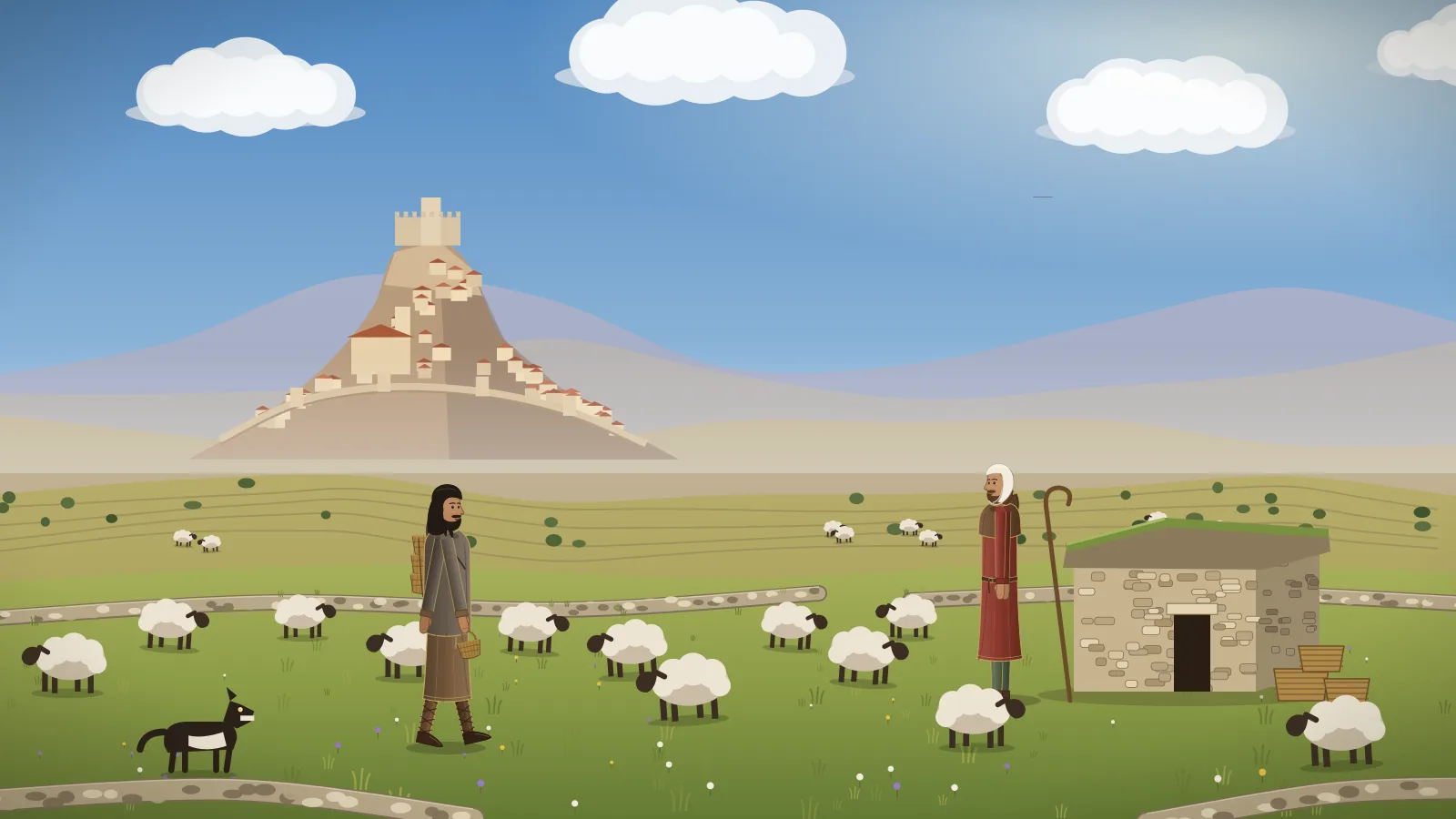
The faith lived on in secret among mountain families and shepherds. The last good man known in Languedoc was Guilhem Bélibaste. He lived in exile beyond the Pyrenees, in the Kingdom of Valencia, making baskets and combs, and quietly serving a small circle of believers.
In 1321 a spy for the Inquisition, Arnaud Sicre, won his trust and led him into a trap. Bélibaste was burned at the castle of Villerouge-Termenès.
The faith lived on in secret among mountain families and shepherds.
In those same years, Jacques Fournier, bishop of Pamiers and a future pope, questioned the villagers of Montaillou, a mountain village of shepherds and farmers. His register, kept today in the Vatican, records their quarrels, their loves and their faith. Centuries later, in 1975, the historian Emmanuel Le Roy Ladurie built a famous book about Montaillou from its pages.
Chapter VIIwatch from 8:27
Records and Legends
Almost everything we know about the Cathars comes from records like these, made by their enemies, often under threat. Some historians see an organised church, with bishops and roots in the Balkans. Others, like Mark Pegg and R. I. Moore, think churchmen pressed one label onto many local beliefs. The debate goes on.
Then came the legends. In the 1930s a German writer, Otto Rahn, searched Montségur for the Holy Grail. He later joined Himmler’s SS. The money carried out of Montségur grew into a fabulous treasure: secret books, sacred relics, even the Grail itself. No medieval record mentions them.
No medieval record mentions them.
Today, road signs welcome visitors to Cathar country, a name the department of the Aude took up in 1991. Tourists climb to castles on the peaks, though most of what stands there was built after the crusade, as royal French border fortresses. Even the ruin on top of Montségur is a later castle, not the one the good men knew.
Below Montségur lies a quiet meadow, known as the Field of the Burned. A simple stone there honours the Cathars, the martyrs of pure Christian love, and gives the date: 16 March 1244.
Above it, the bare rock still catches the first light of morning, as it did on that March day, nearly 800 years ago.