The story of the film
Ingolstadt and Munich in Bavaria, Gotha, then Edinburgh, London and New England · 1776–1830
On 1 May 1776, in the Bavarian university town of Ingolstadt, a young professor of law gathered a few of his students. Counting him, there were five. Where and at what hour they met, no record says. What is known is that together they founded a secret society, and gave it one ambitious goal: to make human beings better, through reason.
Their emblem was the owl of Minerva, the Roman goddess of wisdom. Two and a half centuries later, their name would be known all over the world.
Chapter Iwatch from 0:38
A Professor in Ingolstadt
In the 1770s, Bavaria was a deeply Catholic land, ruled by a prince called the elector. For two centuries the Jesuits had run its schools and much of its university. In 1773 the pope dissolved their order, but their influence remained in the classrooms, the libraries and the habits of the men who taught there.
Adam Weishaupt was born in Ingolstadt in 1748. He was schooled by the Jesuits, and he earned a doctorate in law at 20. In 1773 he took the university’s chair of canon law, the law of the Church, a post that until then only Jesuits had held. He was 25.
He believed that people could be morally improved through reason and education.
In private, he read the French philosophers of the Enlightenment, books that were frowned on, or banned, in Bavaria. He believed that people could be morally improved through reason and education. Freemasonry drew him, but he found the lodges costly, and short of real purpose.
He hoped, too, to train a circle of enlightened young men who might one day fill the offices of the state.
So he founded a society of his own. Its first members called themselves the Perfectibilists, those who believed that human beings could be perfected. In 1778 they took a new name: the Illuminati, the enlightened ones.

Chapter IIwatch from 1:57
Spartacus and the Owl
From the start, the society lived behind a screen of secrecy. Every member took a classical code name. Weishaupt signed his letters Spartacus, after the gladiator who led a slave revolt against Rome. One of the first students, Franz Anton von Massenhausen, became Ajax. Letters from that first year survive, signed Spartacus and addressed to Ajax, full of advice on recruiting and reading.
Places were renamed too. Munich became Athens. Ingolstadt became Eleusis, after the Greek town of the ancient mysteries, and Freising became Thebes. Some words in the letters were written in a number code, so that a stranger who opened one would find only a puzzle.
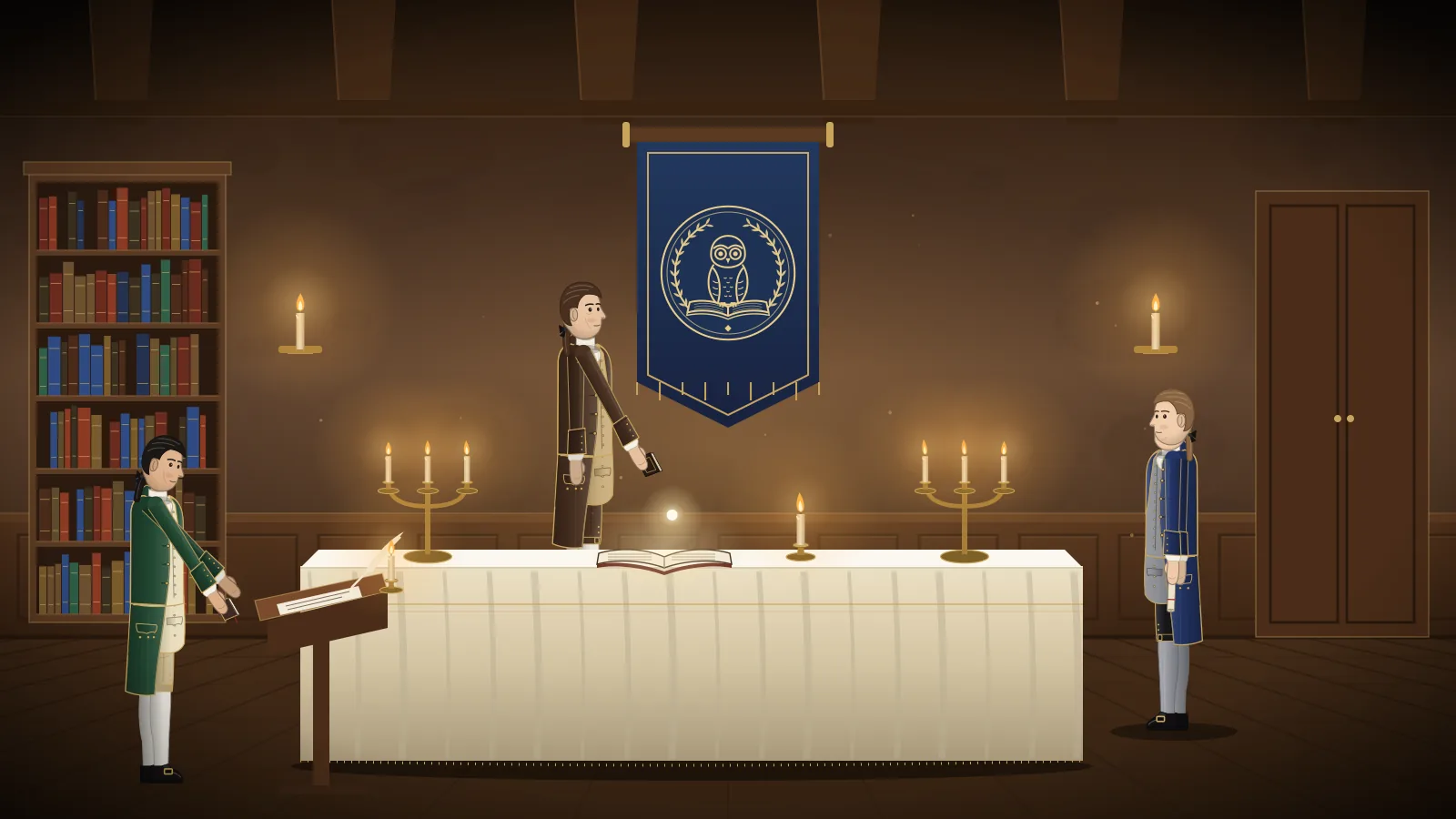
A recruit began as a Novice. Later he became a Minerval, and at a candlelit ceremony he received secret signs and a password. The emblem of his grade was an owl perched on a book.
Only the leaders were meant to know the order’s final aims.
Members read approved books and sent in reports: on their reading, on their own faults, and on one another. Only the leaders were meant to know the order’s final aims. For 4 years the society grew slowly, among young men in a handful of Bavarian towns.
Chapter IIIwatch from 2:54
The Baron and the Lodges
Then, in 1780, came a new recruit: Adolph Freiherr Knigge, a baron from Hanover, a writer, and an experienced Freemason. In the order, he was called Philo.
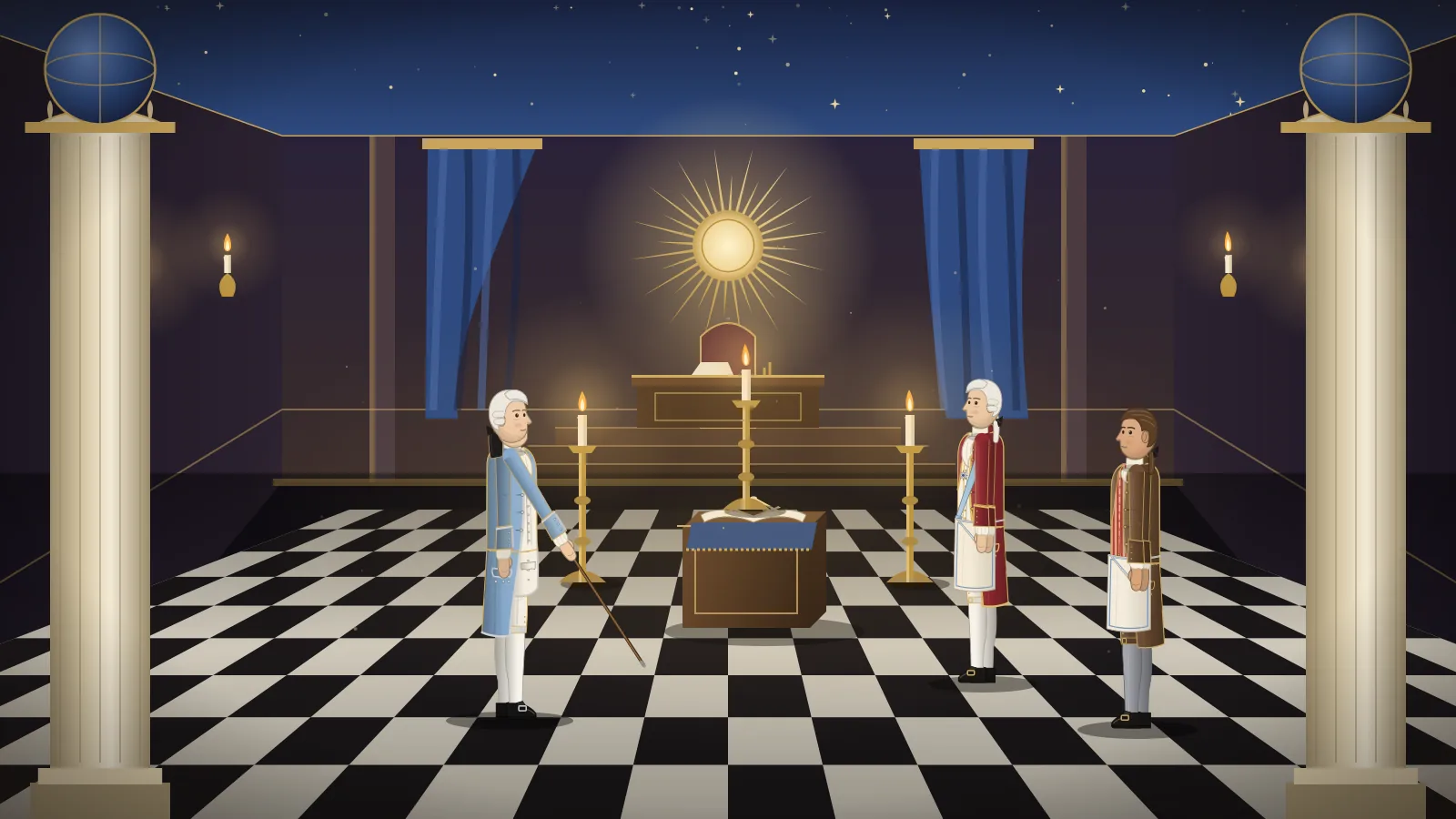
Knigge gave the Illuminati elaborate rituals and new grades on the Masonic model, and he recruited heavily inside the Masonic lodges, among their masters and wardens. In the summer of 1782 a great Masonic congress met at Wilhelmsbad and left the lodges divided and uncertain. The Illuminati gained ground from the confusion.
Officials, professors, clergymen and nobles joined. So did princes: Duke Ernst II of Saxe-Gotha, and Duke Carl August of Saxe-Weimar. In 1783 the poet Johann Wolfgang von Goethe joined as well. His code name was Abaris.
Historians can confirm far fewer names.
At its height, the order may have had around 2,000 members, across the German-speaking lands and beyond. That figure comes partly from the leaders themselves. Historians can confirm far fewer names: by one modern count, about 650 members can be verified.
But success brought quarrels. Knigge found Weishaupt domineering, and even accused him of behaving like a Jesuit. On 1 July 1784, Knigge left the order.
Chapter IVwatch from 4:20
The Bans
By then, rumours were reaching the court in Munich. Former members spoke of plots against religion and the state. Rivals, among them the Rosicrucians, urged the elector to act.
On 22 June 1784, Elector Karl Theodor banned every society founded without his permission. On 2 March 1785 a second edict named the Freemasons and the Illuminati outright. Members lost their posts, and some were sent into exile. Weishaupt lost his chair, and left Ingolstadt in a hurry, first for Regensburg, a free imperial city beyond the elector’s reach.
A famous story says that on 20 July 1785 a priest named Lanz, a friend of Weishaupt, was killed by lightning in Regensburg, and that papers of the order were found on him. His death in the storm is recorded. But historians think the importance of those papers was greatly exaggerated by later writers.
They carried away boxes of letters, membership lists, seals and cipher keys.
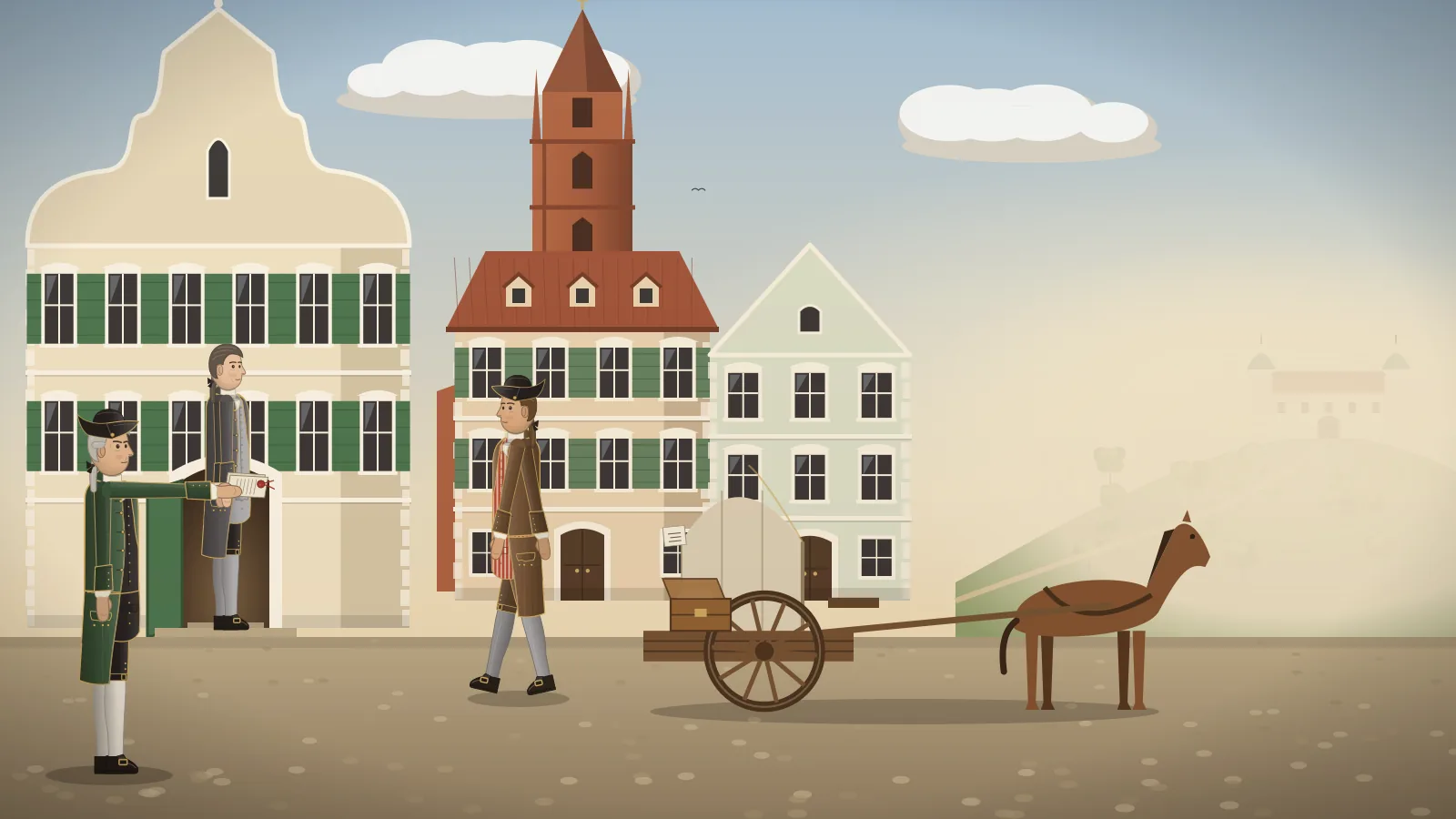
The real blow came in October 1786. On 11 October officials searched the house of Franz Xaver Zwack, one of the leaders, in Landshut. Five days later they searched a castle at Sandersdorf belonging to another member, Baron Bassus. They carried away boxes of letters, membership lists, seals and cipher keys.
In 1787 the Bavarian government printed the papers, as Some Original Writings of the Order of the Illuminati, so that the public could judge for itself. Readers found plans to place enlightened men in power, and passages that shocked them. They also found something more ordinary: dues, recruiting, rivalries, and complaints about colleagues. A third edict, in August 1787, threatened recruiters with the harshest penalties. By about 1788, most historians think, the order had ceased to exist.
Chapter Vwatch from 6:33
Revolution and Conspiracy
Then, in 1789, the French Revolution began. Within a few years the monarchy had fallen, and frightened Europeans looked for someone to blame.
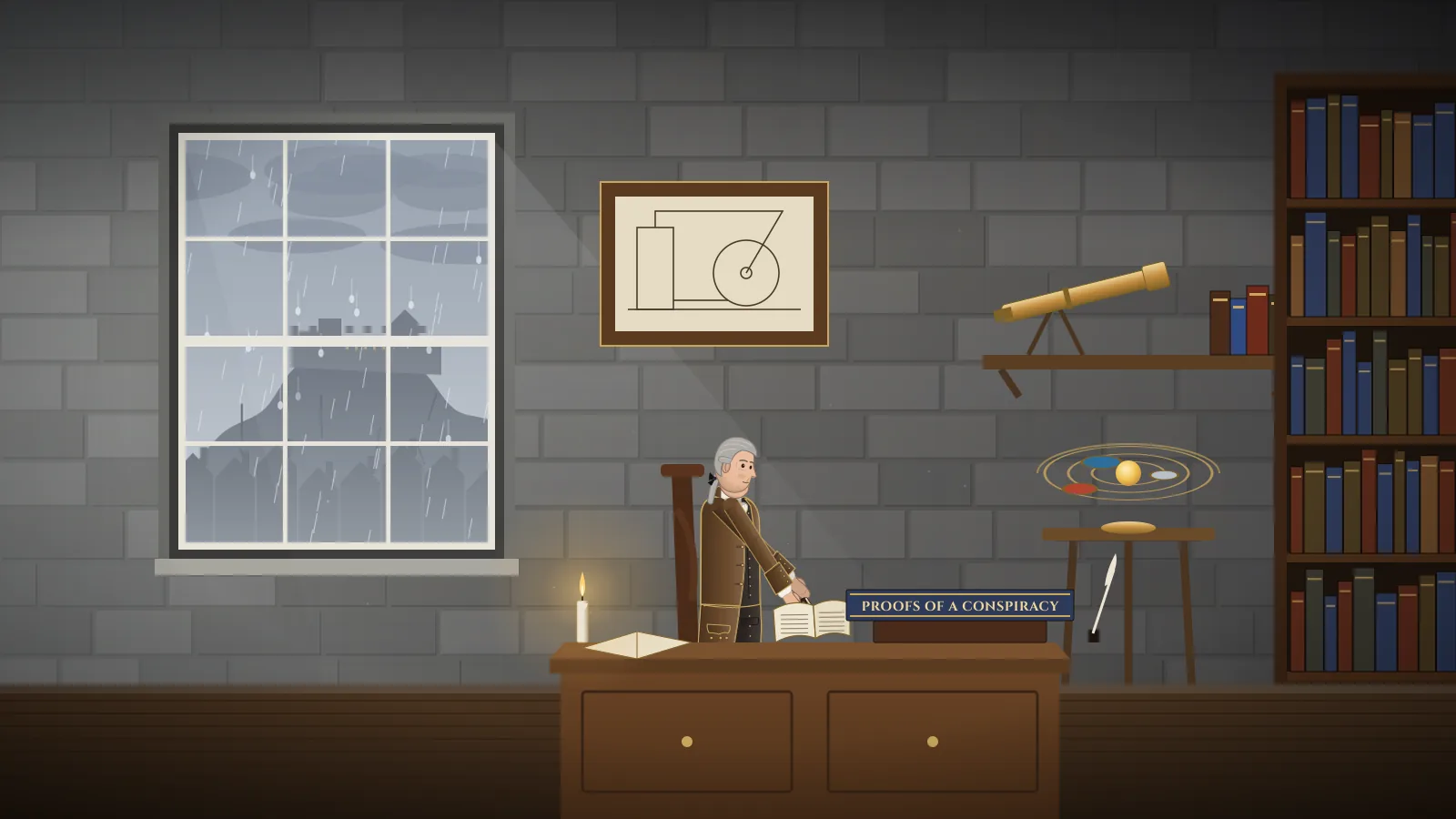
In 1797 John Robison, a professor of natural philosophy at Edinburgh, published Proofs of a Conspiracy. He admitted that his German was poor, confessing to what he called a scanty knowledge of the language. That same year the French priest Augustin Barruel, a former Jesuit living in exile in London, began publishing his Memoirs Illustrating the History of Jacobinism.
Barruel saw three plots in one: against religion, kings and society.
Working independently, both men argued that Freemasons and Illuminati had survived in secret, and had plotted the Revolution. Barruel saw three plots in one: against religion, kings and society. Their books were reprinted and translated across Europe, and they soon crossed the Atlantic.
On 9 May 1798, the Massachusetts minister Jedidiah Morse warned his listeners that agents of the Illuminati were at work in the young United States. That autumn, in a letter of 24 October, George Washington agreed that such ideas had reached America, but doubted that the Masonic lodges, as societies, had spread them. Within a few years, the scare faded.
Chapter VIwatch from 8:02
Quiet Years in Gotha
Far away in Gotha, where he had settled in 1787 under the protection of Duke Ernst, Weishaupt lived quietly. He wrote books defending himself, and he never tried to rebuild the order. He died there on 18 November 1830, aged 82.
Knigge’s book On Human Relations, of 1788, became so famous that in German, a “Knigge” still means a guide to good manners.
His old partner and rival left a gentler mark. Knigge’s book On Human Relations, of 1788, became so famous that in German, a “Knigge” still means a guide to good manners.
And in 1799 a former member, Maximilian von Montgelas, became Bavaria’s chief minister in Munich, and brought in reforms in the spirit, many historians think, that the Illuminati had hoped for.
Chapter VIIwatch from 8:40
The Eye on the Dollar
But the name lived on. Over 2 centuries, “the Illuminati” became a label for almost any feared hidden power. Later, some writers fused it with antisemitic conspiracy myths, a dark turn historians have traced and rejected. Novelists played with it, from the satirical Illuminatus! trilogy to Dan Brown’s Angels and Demons.
Many people believe that the eye above a pyramid on the American one-dollar bill is an Illuminati symbol. It is not. It comes from the Great Seal of the United States, approved by Congress on 20 June 1782. The eye in a triangle was a familiar Christian symbol of God’s watchful providence.
None of its designers had any known link to the order.
The date on the pyramid, 1776, is the year of American independence, a coincidence with the order’s founding year. The design reached the dollar only in 1935. None of its designers had any known link to the order.
Scholars of conspiracy belief, such as Michael Barkun, see the modern Illuminati as a story that explains a confusing world, and gives one name to feelings of powerlessness. The documents tell a smaller story: a Bavarian society that lasted only about a decade, and whose secrets were seized and printed for anyone to read.
Today, in Ingolstadt, on Theresienstrasse, a small plaque on the house where Weishaupt lived marks a meeting place of the order. It is easy to walk past. It all began with a professor, a few students, and an owl perched on a book. They hoped to spread light. What they left behind was a shadow far larger than themselves.