The story of the film
Zhangpu county in Fujian, Changhua and Zhuluo in Taiwan, then southern China and Chinese communities overseas · c. 1761–1911
Around the year 1761, in Zhangpu county, not far from the coast of southern Fujian, a Buddhist monk began to gather men around him at a place called Gaoxi. His name was Tixi. The men who followed him were poor, restless and far from home, and he offered them something precious: a family of sworn brothers. They met at night, before an altar heavy with incense, and swore to stand by one another until death. They called themselves the Heaven and Earth Society, the Tiandihui. In their verses, heaven was their father, and earth their mother.
Chapter Iwatch from 0:48
Brothers of the Coast
In the 1760s the Qing dynasty ruled China from Beijing. Its emperors were Manchus, whose armies had taken the capital in 1644, more than a century before.
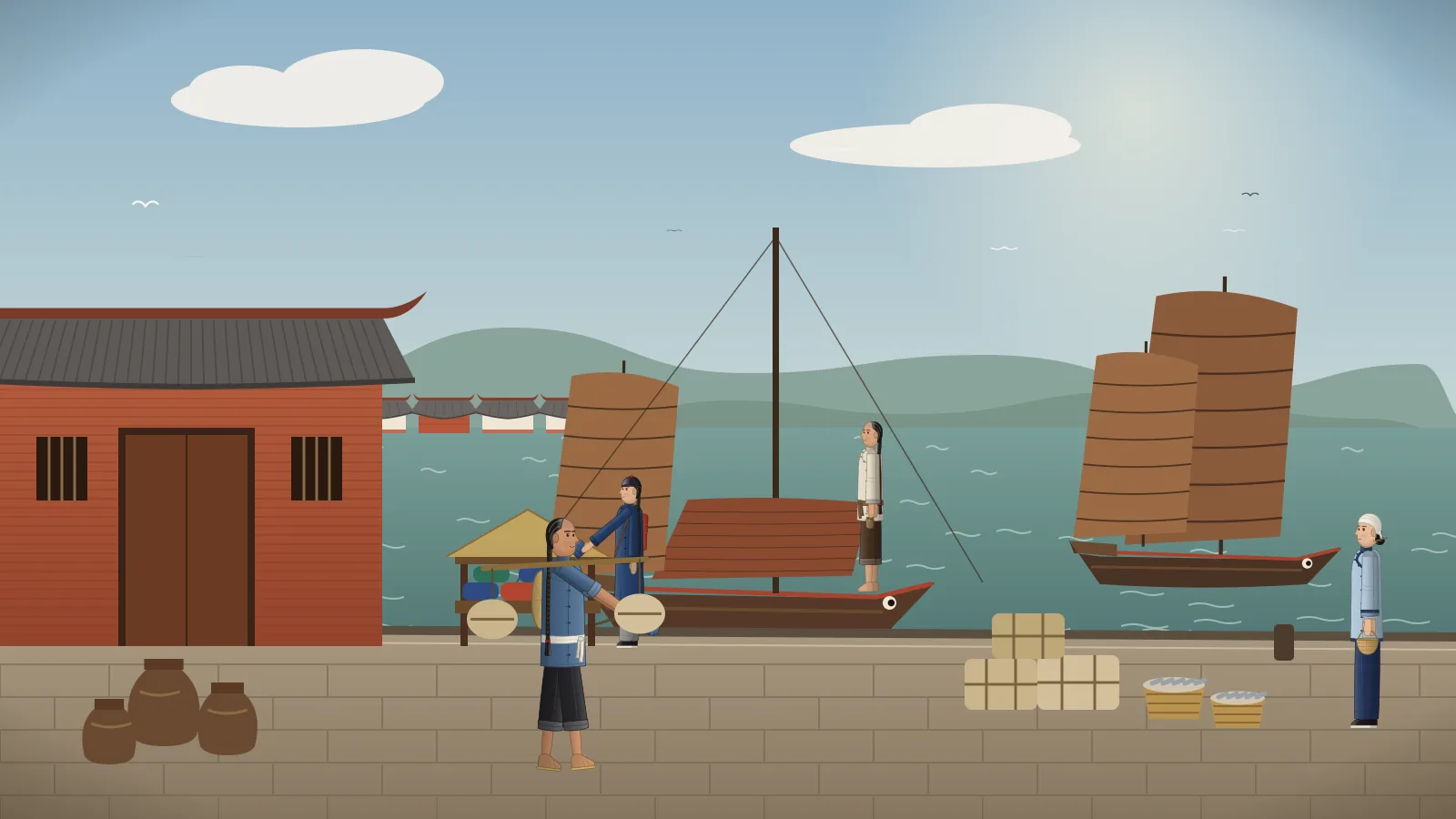
Southern Fujian lay squeezed between rugged hills and the sea, and it was crowded. Land was scarce, family clans feuded, and every year young men left home to find work. They became boatmen, porters, peddlers and labourers. Many crossed the strait to Taiwan, a frontier island where settlers fought over land and water.
Far from their clans, and from the protection a family could give, such men often swore brotherhood before the gods. They promised one another help on the road, in quarrels, and at the grave.
The Qing state distrusted any group bound by oaths, and it outlawed these brotherhoods. They flourished all the same. Tixi’s society was one of them.
Chapter IIwatch from 1:46
Found in the Archives
For a long time, Tixi’s society was known only through its own legends. Its real beginnings were found much later, in the archives of the Qing court.
In the twentieth century the Chinese historian Qin Baoqi searched those archives, and read the confessions of members arrested after 1786. The confessions named the founder: a monk called Tixi, also known as Hong Er Heshang. They named the place: Gaoxi, in Zhangpu county, then a part of Zhangzhou prefecture. And they gave a date: around 1761, though some records suggest 1762.
The men who joined came from Fujian and from neighbouring Guangdong. The society looked after them. It protected them on journeys, helped them in lawsuits, and paid for funerals.
It also had a harder side. Its numbers could be used for robbery, and in feuds with rival villages. The same strength that sheltered a poor man on the road could be turned against his neighbours.
Chapter IIIwatch from 2:45
The Night Ritual
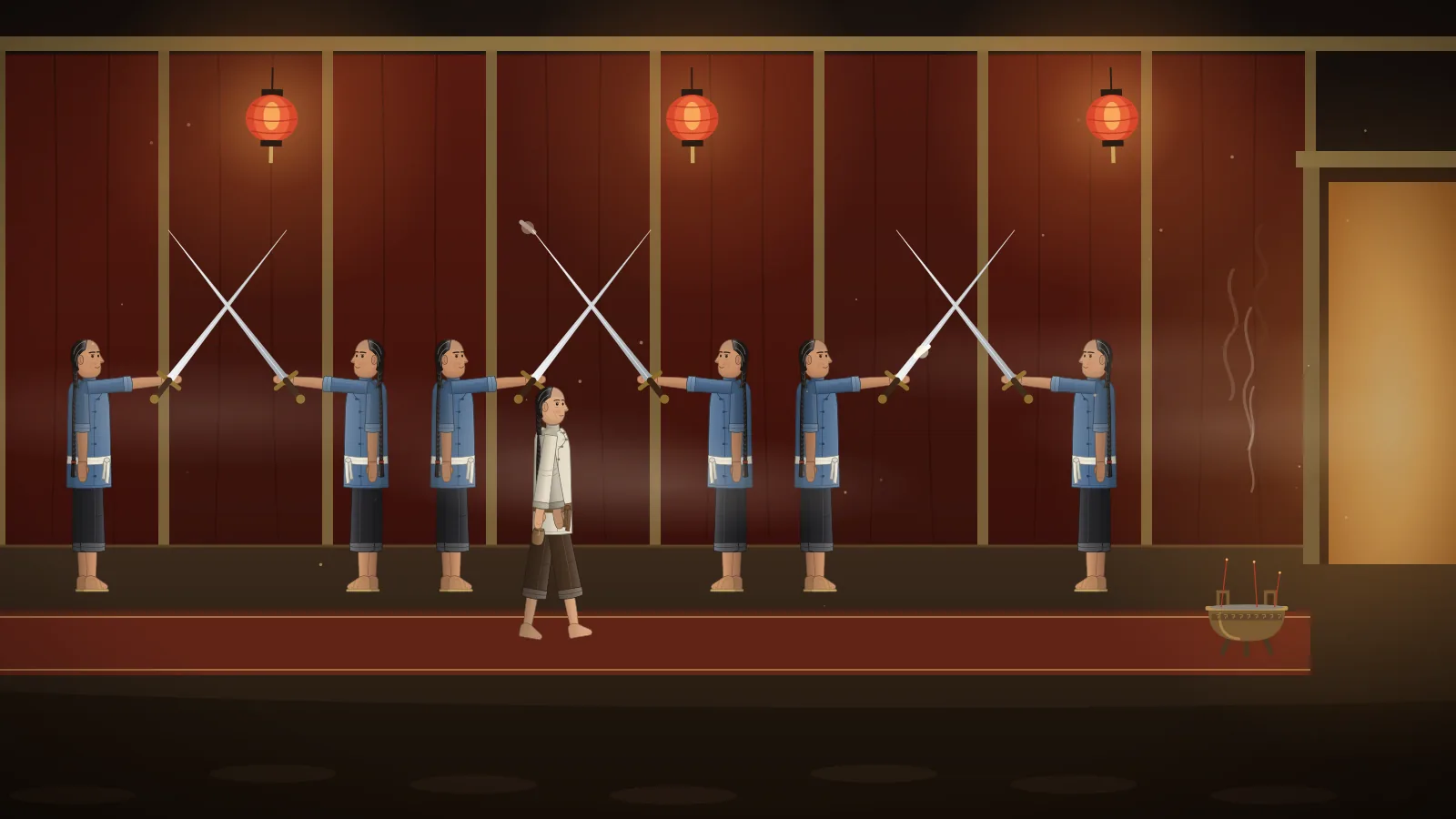
What set the society apart was its ritual. A new member was brought in at night, to a lodge laid out as a sacred city, with brothers guarding its gates.
The manuals describe him passing from gate to gate, and under swords raised by his future brothers. Each stage stood for a step on a long and dangerous journey.
On the altar stood incense, candles, and a wooden bushel of rice bristling with flags. There he swore the oaths, traditionally thirty-six of them. He promised loyalty and help to every brother, and called down punishment on himself if he ever betrayed them.
Then the brothers drank wine from one bowl. The manuals say it was mixed with drops of blood. This was the blood oath that made them one family. The ceremony drew on popular Daoism and Buddhism, on local religion, and on the old practice of blood covenants.
This was the blood oath that made them one family.
Every member took the same surname, Hong, and called the others brothers. So the society was also known as the Hongmen, the Hong League. Brothers recognised one another by hand signs, passwords and coded poems, and by the way teacups were set out on a table. Where a stranger saw only cups, a brother saw a sign.
Chapter IVwatch from 4:09
The Rising in Taiwan
In the 1780s the society crossed the strait. Qing records credit a Fujianese cloth peddler named Yan Yan with bringing it to Taiwan.
In Changhua, on the island’s western plain, lived a settler named Lin Shuangwen. He had come over from Zhangzhou with his father in 1773. Around 1784 he became leader of the local branch. Taiwan was a land of feuds, where settlers from different districts fought one another and the government was far away, and many men sought the society’s protection.
In 1786 officials began hunting society members, and made arrests. Villages that would not help the search, it is said, were burned.
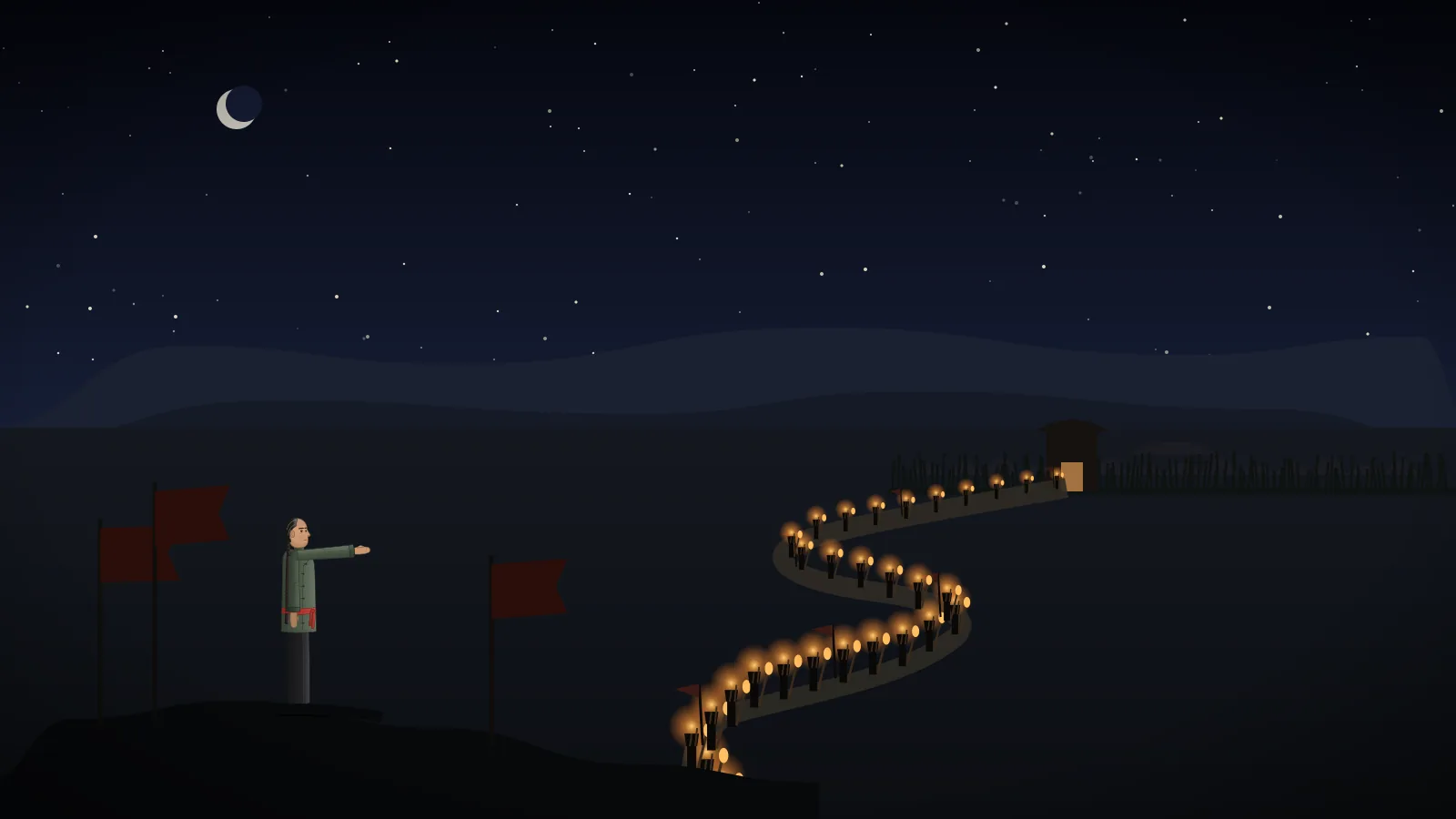
In January 1787 Lin and his brothers rose in revolt. They attacked the government camp, killed officials, and took the county seat of Changhua. The rising spread across much of western Taiwan. In the south another leader, Zhuang Datian, took Fengshan. Tens of thousands joined, or were swept into the fighting.
Chapter Vwatch from 5:22
The Siege of Zhuluo
For months, rebel forces besieged the walled county town of Zhuluo. Its people and local militias held out, month after month, waiting for help.
In Beijing, the Qianlong Emperor sent troops in wave after wave. At last he turned to a trusted Manchu general, Fuk’anggan. Late in 1787 Fuk’anggan crossed the strait with thousands of fresh soldiers, and landed at the port of Lugang. Within weeks, the siege of Zhuluo was lifted. The emperor renamed the loyal town Jiayi, a name praising its righteousness. Today it is the city of Chiayi.
The rebel armies broke apart. Lin fled into the hills, and early in 1788 he was captured. He was taken to Beijing and executed there. His rising had been one of the largest in the history of Qing Taiwan.
The questioning that followed traced the society back across the sea, to Tixi and to Gaoxi. From then on, the Heaven and Earth Society was hunted as a rebel organisation. Its brothers on the mainland went underground. New branches took new names, the better to hide from the magistrates.
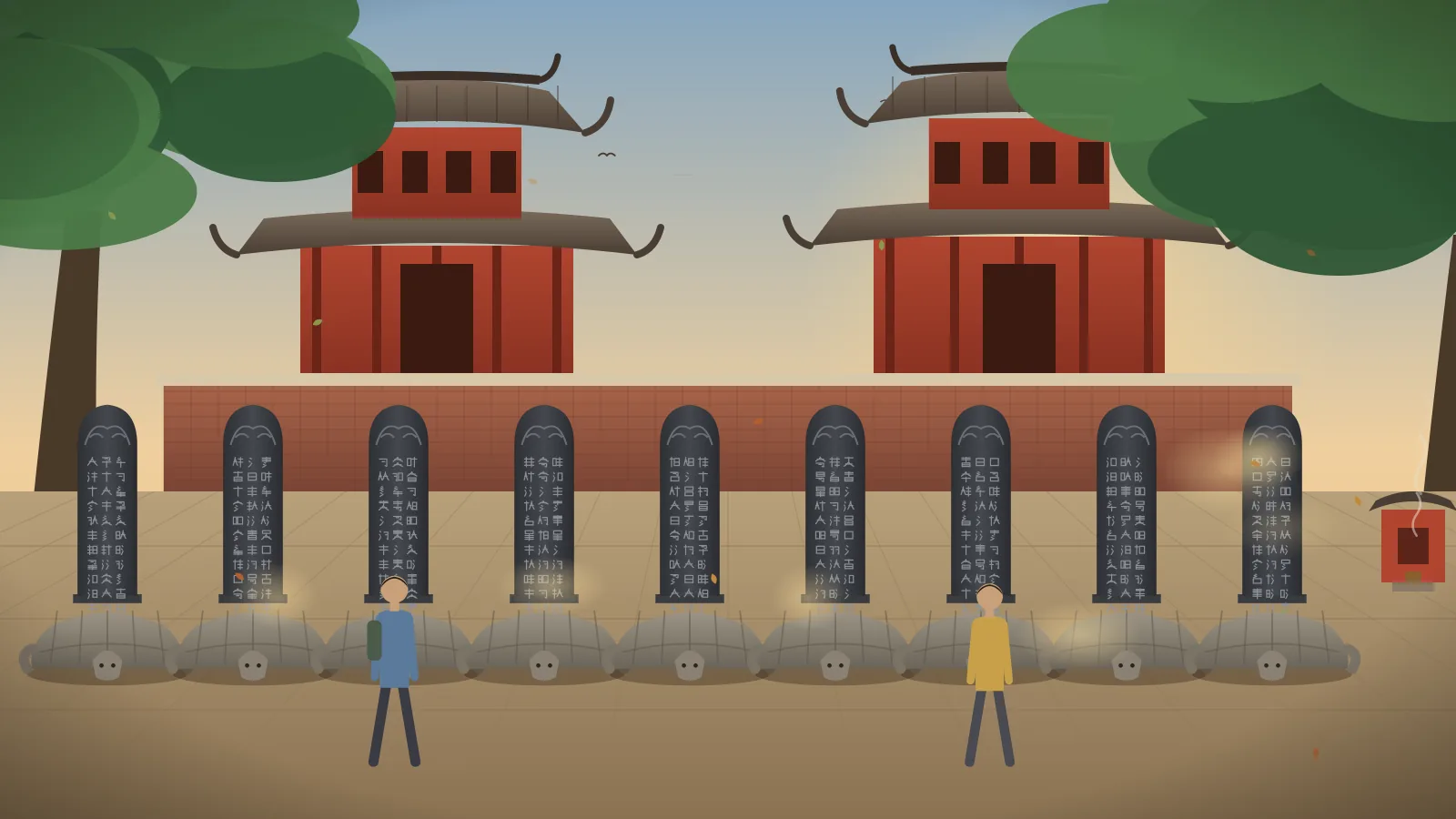
The emperor, meanwhile, had his victory carved in stone, on tall tablets carried by great stone turtles. Ten of them were shipped to Taiwan in 1788.
Chapter VIwatch from 7:00
The Legend of the Monks
Hunted and scattered, the society told its own story of its birth. Its manuals, many of them later seized by officials or colonial police, speak of the monks of Shaolin, in the reign of the Kangxi Emperor.
One hundred and twenty-eight monks, the story goes, helped the Qing defeat invaders from the west. Jealous officials then persuaded the emperor that the monks were dangerous, and soldiers burned their monastery. Only five monks survived. Guided by omens, they wandered, met loyal heroes, and swore brotherhood.
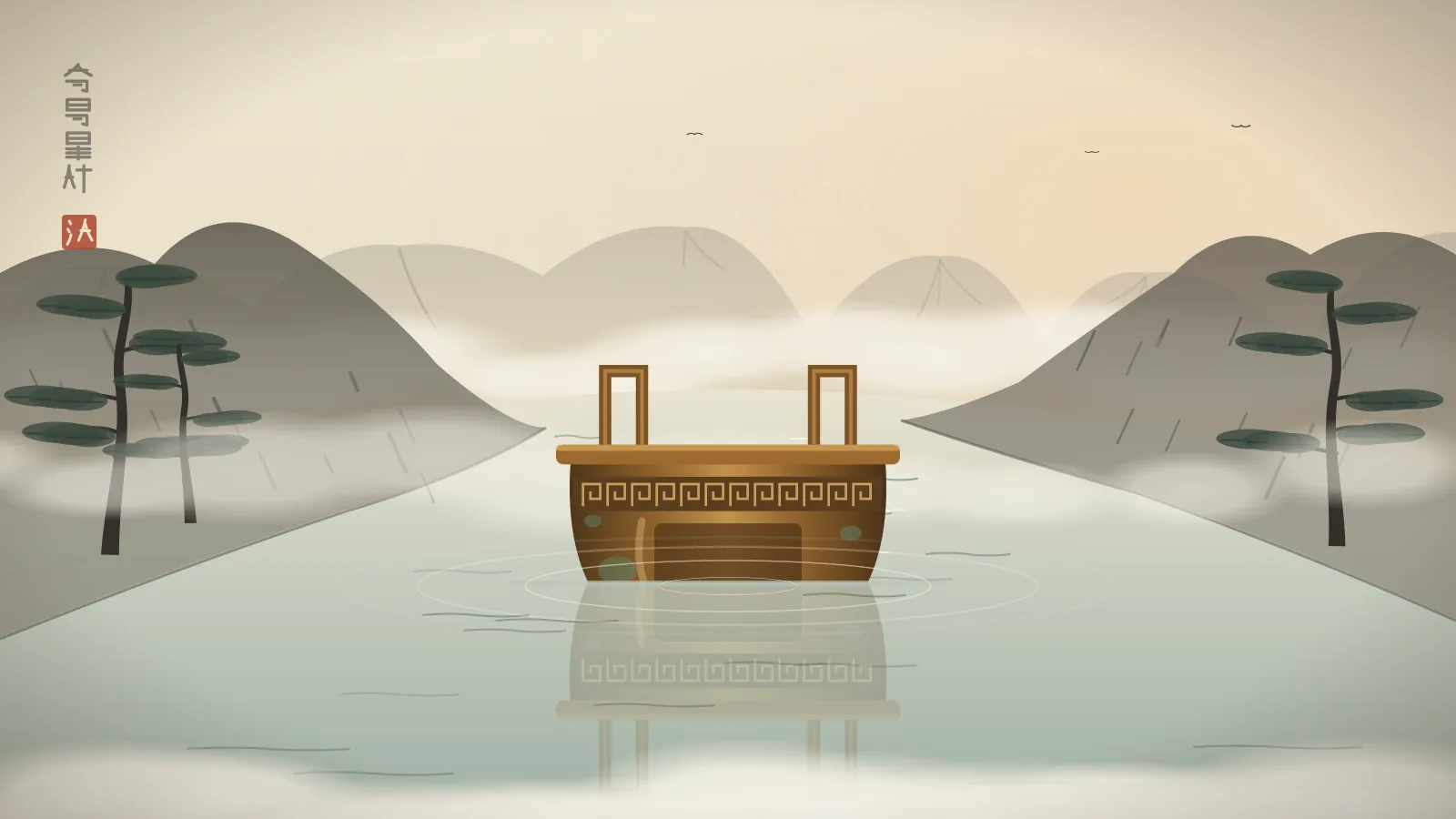
One omen was an incense burner rising from a river, bearing the words: “Overthrow the Qing, restore the Ming.”
Each initiation re-enacted the monks’ journey, so that every new brother lived the legend himself.
Historians have found no record of any such burning.
Historians have found no record of any such burning. The story first appears in manuals of the early 1800s, and it is full of miraculous elements. Historians read it as a founding myth. It gave outlaws shared ancestors and a righteous cause, and a reason to see themselves as righteous outlaws rather than common criminals.
Chapter VIIwatch from 8:10
Hong League and Triads
In the nineteenth century the brotherhood multiplied under many names. One was the Three Harmonies Society, and from it, Westerners took the word “triad”. Branches spread through Guangdong and Guangxi and, with migrant workers, to Southeast Asia and beyond.
In 1845 the new British colony of Hong Kong passed an ordinance against the triad societies. From 1853 to 1855 the Small Swords Society, an offshoot of the Heaven and Earth tradition, held the walled city of Shanghai.
In 1866, in Batavia on Java, the Dutch scholar Gustaaf Schlegel, an interpreter for the colonial government, published a book on seized ritual manuals, Thian Ti Hwui. It was the first major Western study of the society.
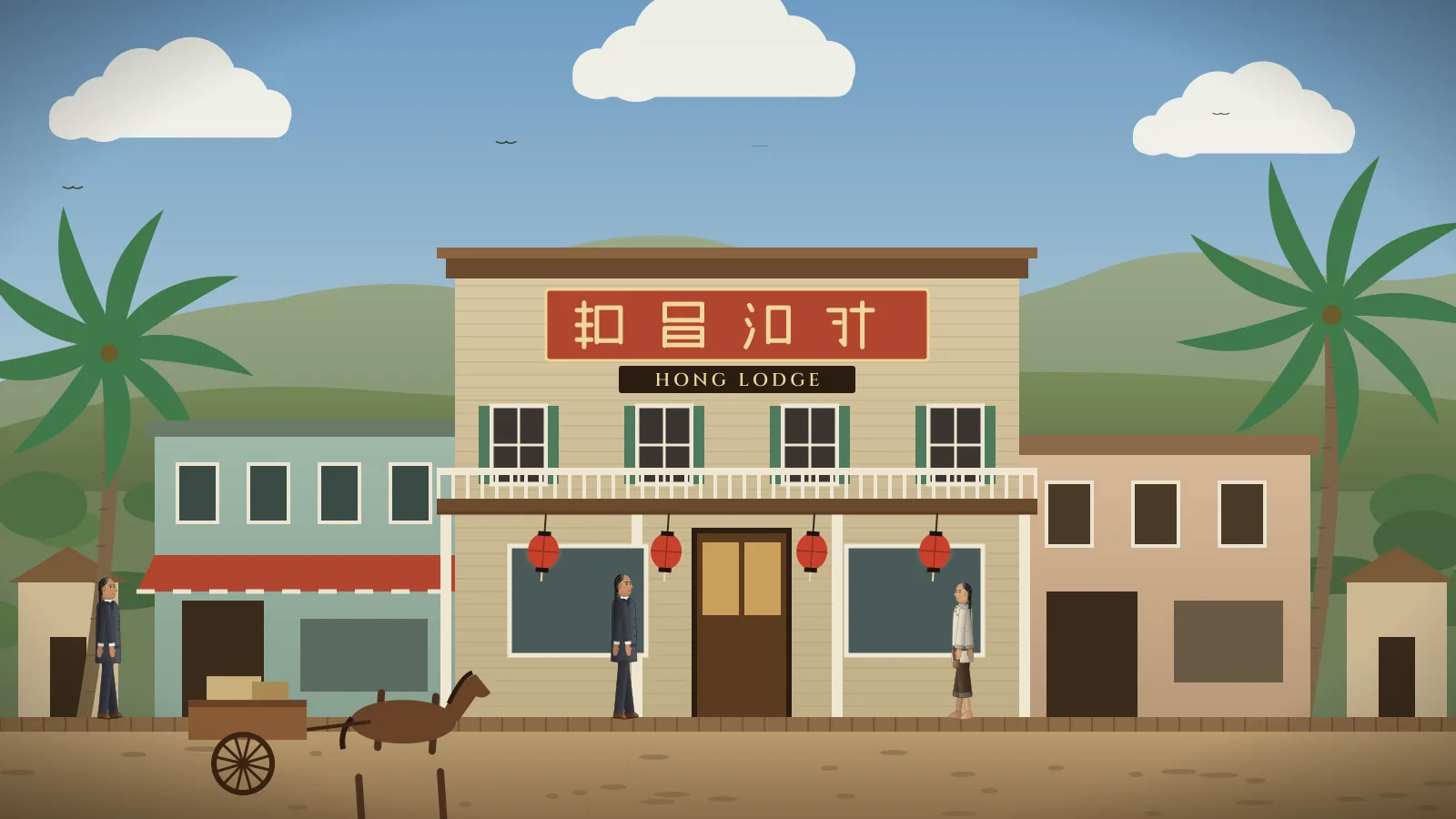
Overseas, Hong lodges became benevolent associations for Chinese migrants. In North America some took the name Chinese Freemasons, though historians find no real link with Freemasonry. Around 1904 the revolutionary Sun Yat-sen joined a Hong lodge in Honolulu, seeking support for his cause.
After the revolution of 1911 brought down the Qing, the old cause was gone. Some groups that kept the ritual became criminal gangs, especially in Hong Kong. Many lodges abroad remain lawful fraternal and charitable bodies. The old brotherhood of the Fujian coast had left two very different heirs.
Chapter VIIIwatch from 9:51
What the Records Show
It is often said that the society was founded by Ming loyalists soon after 1644, or by monks who escaped a burning temple. Early twentieth-century nationalists took the legend at face value. The archives tell a different story. They place the founding in the 1760s, more than a century after the Qing conquest, and Ming loyalism entered the society mostly through its myth.
The records show something smaller, and more human: a monk in rural Fujian, and poor men far from home, who wanted brothers.
Today in Tainan, at Chihkan Tower, nine of the emperor’s stone turtles still carry his victory tablets, under the trees. The tenth was lost in the waters of the old inner sea. Visitors stroll past them, and few stop to read the words.
The empire that carved them is long gone. The brotherhood it hunted, in all its many forms, outlived it.