The story of the film
Constantinople, Edirne and the Bosphorus · 1439–1454
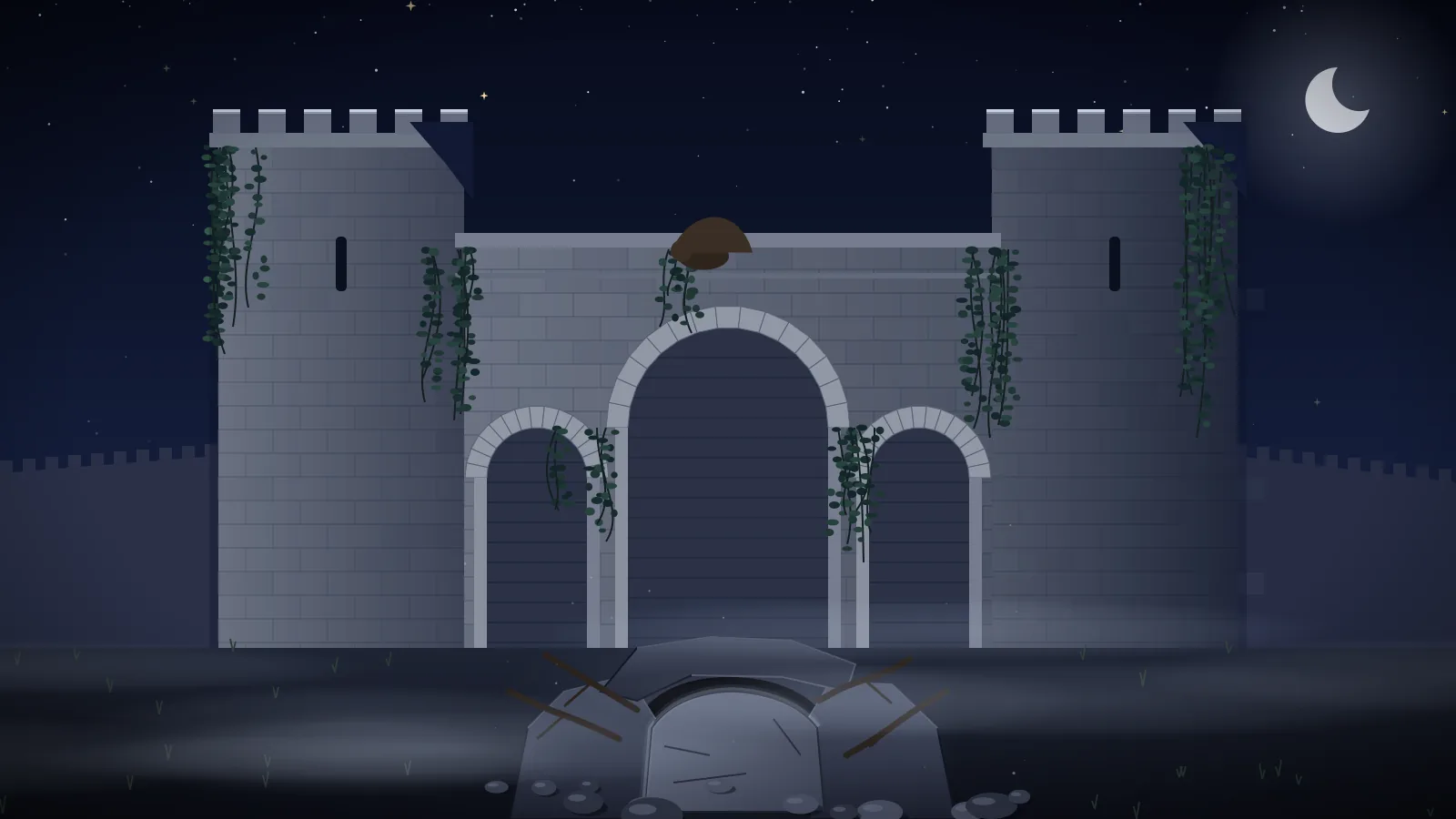
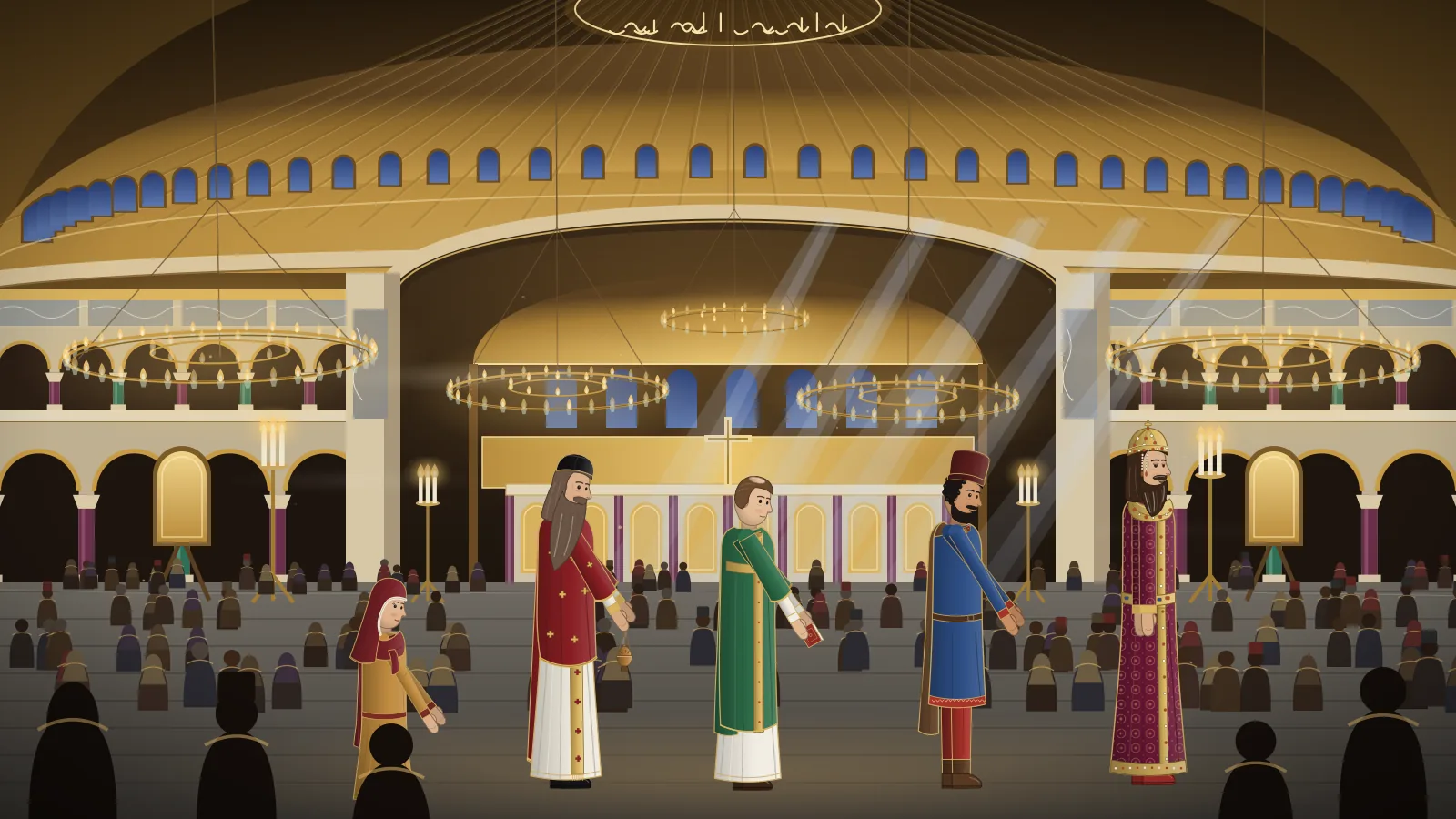
On the evening of 28 May 1453, thousands of people crowded into the great church of Hagia Sophia, in Constantinople. Greeks and Latins, who had quarrelled for months, prayed side by side under the golden dome, among the candles and the smoke of incense. By later accounts, the emperor, Constantine XI, came among them and asked forgiveness of all.
Outside the land walls, as far as the eye could see, burned the campfires of an army many times larger than the city’s defenders. Both sides knew that the morning would decide everything.
Chapter Iwatch from 0:40
The New Rome
Constantinople stood on a sea-washed triangle of land, where Europe meets Asia. On one side lay the Sea of Marmara, on another the long inlet of the Golden Horn, and at its tip the Bosphorus ran between two continents. The emperor Constantine the Great had dedicated the city in 330, as a new Rome.
For more than a thousand years it was the capital of the Roman Empire in the East, the empire we now call Byzantine. Its people never used that word. They called themselves Romans.
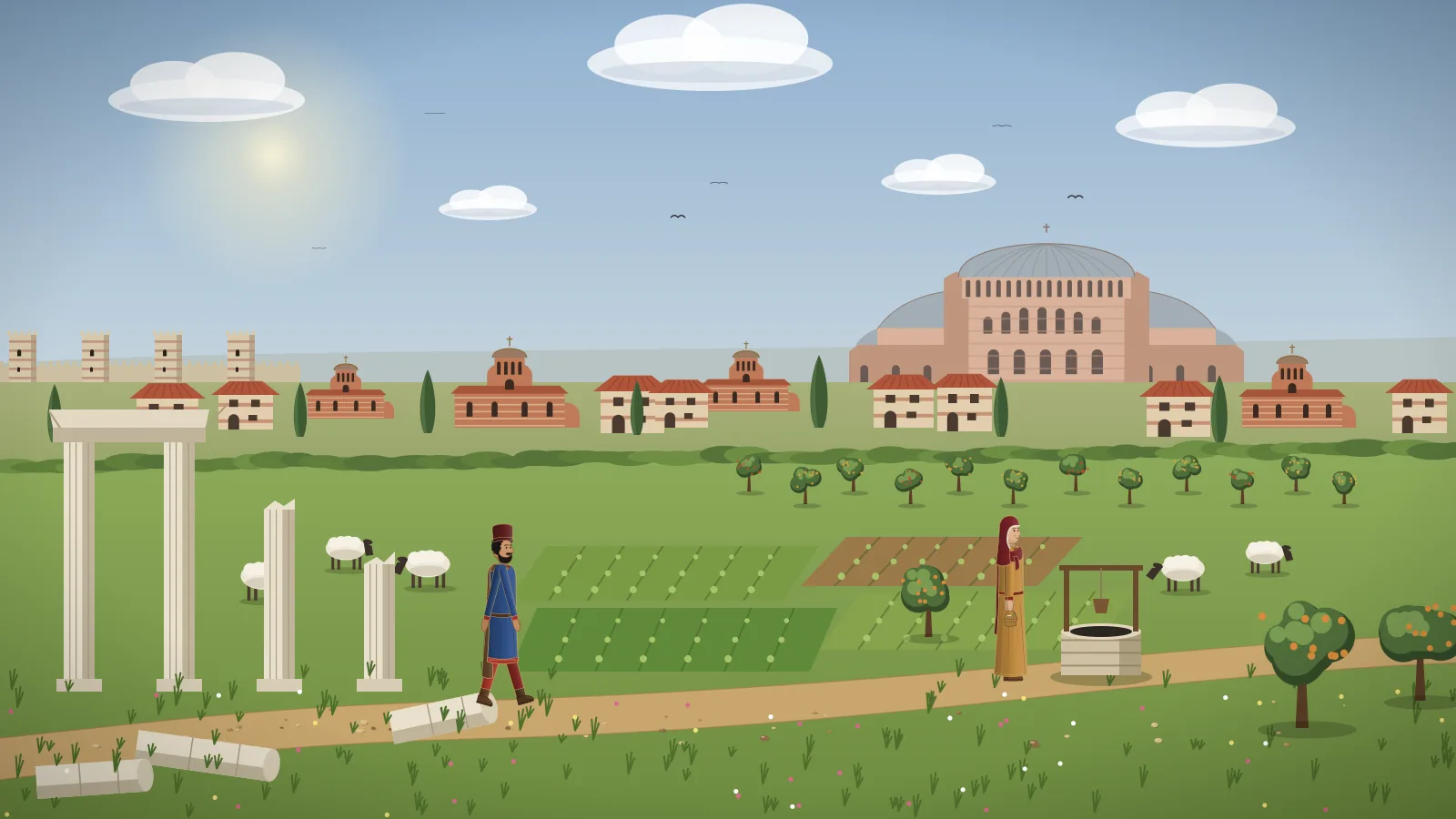
But by 1453 that empire had shrunk to little more than the city itself, with a few islands and the Morea, in southern Greece. Crusaders had sacked Constantinople in 1204, and it never fully recovered. Perhaps 50,000 people still lived inside walls built for far more. Between the churches lay fields, orchards and ruins.
Between the churches lay fields, orchards and ruins.
The city was divided, too. To win help from the West, its rulers had agreed to unite the Greek and Latin Churches, at the Council of Florence in 1439. Many Orthodox monks and townspeople rejected the union. When at last it was proclaimed in Hagia Sophia, in December 1452, many of them stayed away from the great church.
Chapter IIwatch from 1:53
The Young Sultan and the Great Gun
In Edirne, the Ottoman capital, a young sultan had other plans. Mehmed II was 18 when he came to the throne for the second time, in 1451. He was clever, well read and restless. Taking Constantinople would fulfil an old Muslim hope, and it would join his lands in Europe and in Asia, which the city stood between.
In 1452, on the European shore of the Bosphorus, opposite an older Ottoman castle on the Asian side, he built a fortress in about four months. Its guns could threaten every ship in the strait. Today it is called Rumeli Hisarı, but the Turks of the time gave it a harder name.
The Turks called it Boğazkesen: the cutter of the strait, or of the throat.
The Turks called it Boğazkesen: the cutter of the strait, or of the throat. The word for strait and the word for throat were the same.
Around then, a cannon founder named Orban, probably from Hungary, came to Constantinople and offered his skills to the emperor. Constantine could not afford him, and paid him only a small and irregular sum. So Orban went to the sultan instead.
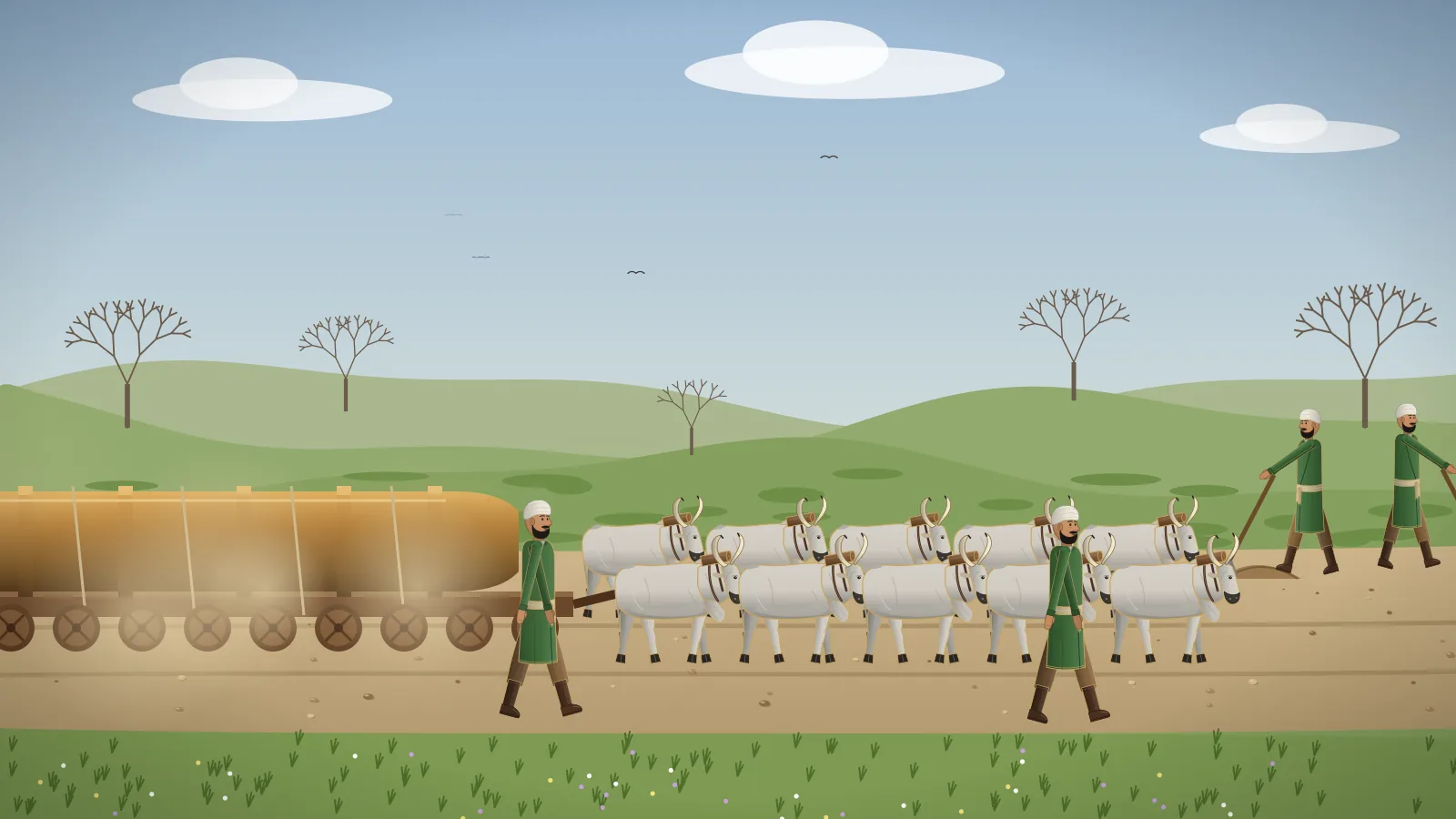
At Edirne he cast a monster of bronze, about 8 metres long, which fired stone balls weighing more than half a tonne. By the usual account, it took 60 oxen and 200 men some 6 weeks to haul it about 140 miles to the walls of Constantinople.
Chapter IIIwatch from 3:04
The Walls of Theodosius
On 6 April 1453 the siege began. Facing the land stood the walls of Theodosius, a barrier in three layers: first a moat, then an outer wall, then a great inner wall with nearly 100 towers. For a thousand years, no army had broken through them by force.
For a thousand years, no army had broken through them by force.
Against perhaps 50,000 to 80,000 Ottoman soldiers, the emperor’s friend George Sphrantzes, who made the count for him, found fewer than 5,000 Greeks fit to fight. Foreigners added perhaps 2,000 more.
The best known of the foreigners was Giovanni Giustiniani Longo, a Genoese captain who had arrived in January with 700 men. He took charge of the land walls, where the danger was greatest.
Orban’s monster could fire only about seven times a day. But day after day the great guns pounded, and sections of the wall crumbled. Every night, the defenders came out with timber, earth, barrels and rubble, and rebuilt what had fallen, working in the dark so that the gaps were closed again by morning.
Chapter IVwatch from 4:13
Ships over the Hill
North of the city lay the Golden Horn, a sheltered harbour. Across its mouth the defenders stretched a great chain on floating timbers, all the way to Galata on the far shore. Galata was a Genoese colony that tried to stay neutral. Behind the chain, the Christian ships were safe. Links of that chain still survive in the museums of Istanbul.
On 20 April, four ships carrying soldiers and grain fought their way through the Ottoman fleet and slipped in behind the chain. The story goes that the sultan, watching from the shore, rode his horse into the sea in fury.
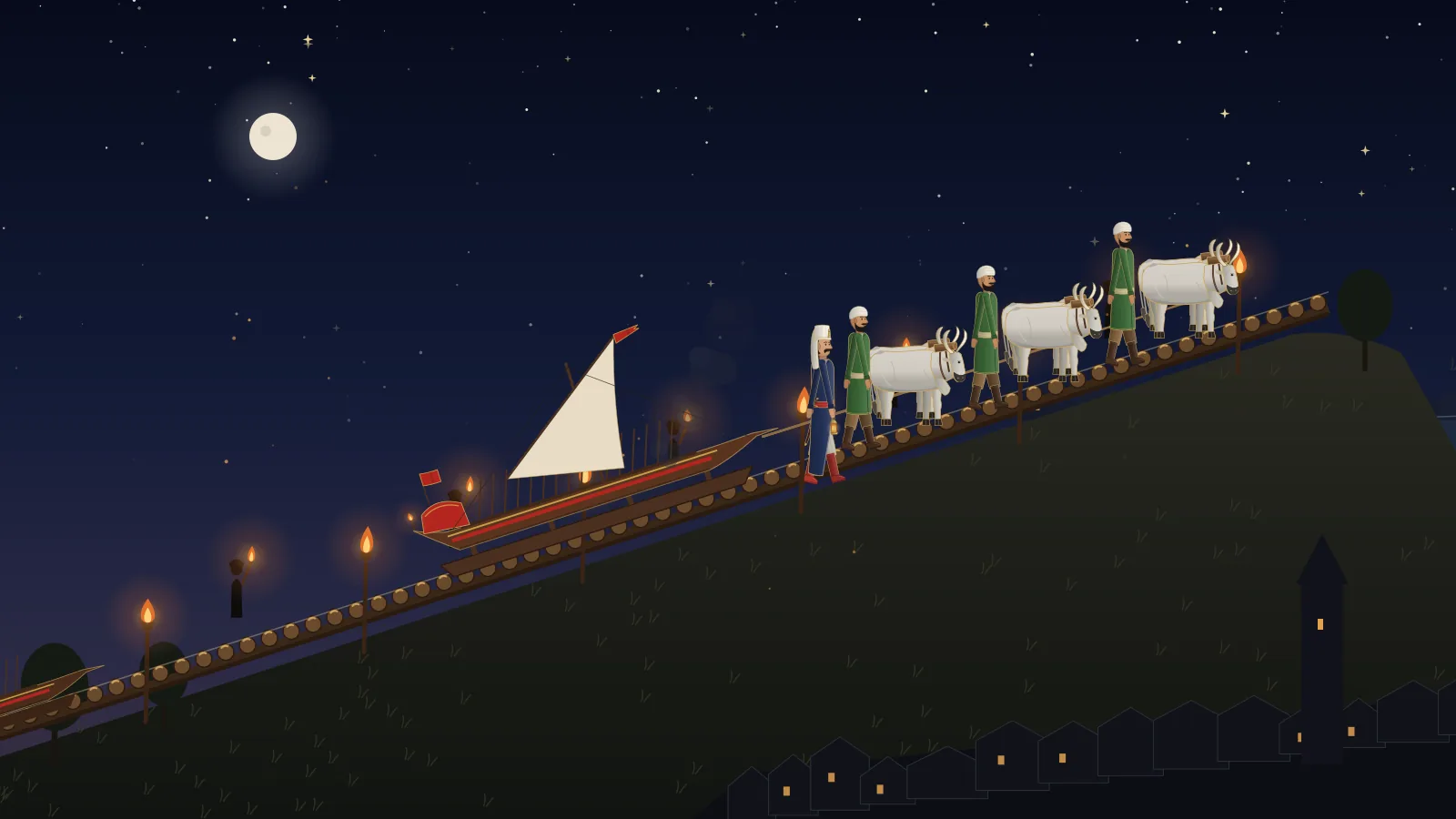
Two days later, he answered. His men laid a track of greased timbers over the hill behind Galata. Oxen and men hauled about 70 ships up the slope and down the other side. One chronicler, Kritovoulos, says that the crews raised their sails with a shout, and sat at the oars as if they were rowing, so that the ships seemed to be sailing over the land.
On the morning of 22 April, the defenders saw Ottoman ships floating in the Golden Horn, behind their own chain.
The defenders saw Ottoman ships floating in the Golden Horn, behind their own chain.
Now the sea walls on that side had to be guarded too, by men the city could not spare.
Chapter Vwatch from 5:28
The Last Night
In late May came signs that frightened the city. On 22 May the full moon rose in eclipse, a thin sliver of light, like a crescent, as the Venetian Nicolò Barbaro described it. Days later, during a procession, the city’s most sacred icon slipped from its bearers’ hands. Then came a storm of rain and hail, and the next day, a thick fog. These omens were written down by Christian chroniclers after the fall, and they do not agree on the exact days.
In the Ottoman camp, the sultan ordered a day of rest and prayer. For many there, the conquest would fulfil a saying attributed to the Prophet Muhammad, praising the army that would take the city. And so, on the evening of the 28th, both sides prepared. In Hagia Sophia, the candles burned late into the night.
In Hagia Sophia, the candles burned late into the night.
In the dark before dawn on the 29th, the attack began along the whole length of the walls. Drums and trumpets sounded. Church bells rang across the city. Wave after wave came on: first irregular troops, then the Anatolian regiments, then the sultan’s own Janissaries.
Near dawn, Giustiniani was badly wounded and carried from the wall. His men saw him go, and began to lose heart. One Greek chronicler, Doukas, tells another story: that a small gate called the Kerkoporta had been left unbarred, and that Ottoman soldiers slipped through it. Other witnesses do not mention it. Most historians think the breakthrough came near the Gate of Saint Romanus, where Giustiniani had been fighting.
As the sun rose, Ottoman banners appeared on the towers, and word spread that the city was lost. The emperor was last seen near the walls, fighting in the breach. No one ever identified his body with certainty. The city was given over to plunder. Many were killed, and thousands were carried off into slavery, though some were later ransomed.
Chapter VIwatch from 7:39
The Conqueror
That afternoon, Mehmed rode into the city, a conqueror at 21, and went to Hagia Sophia, the church that the emperor Justinian had completed in 537.
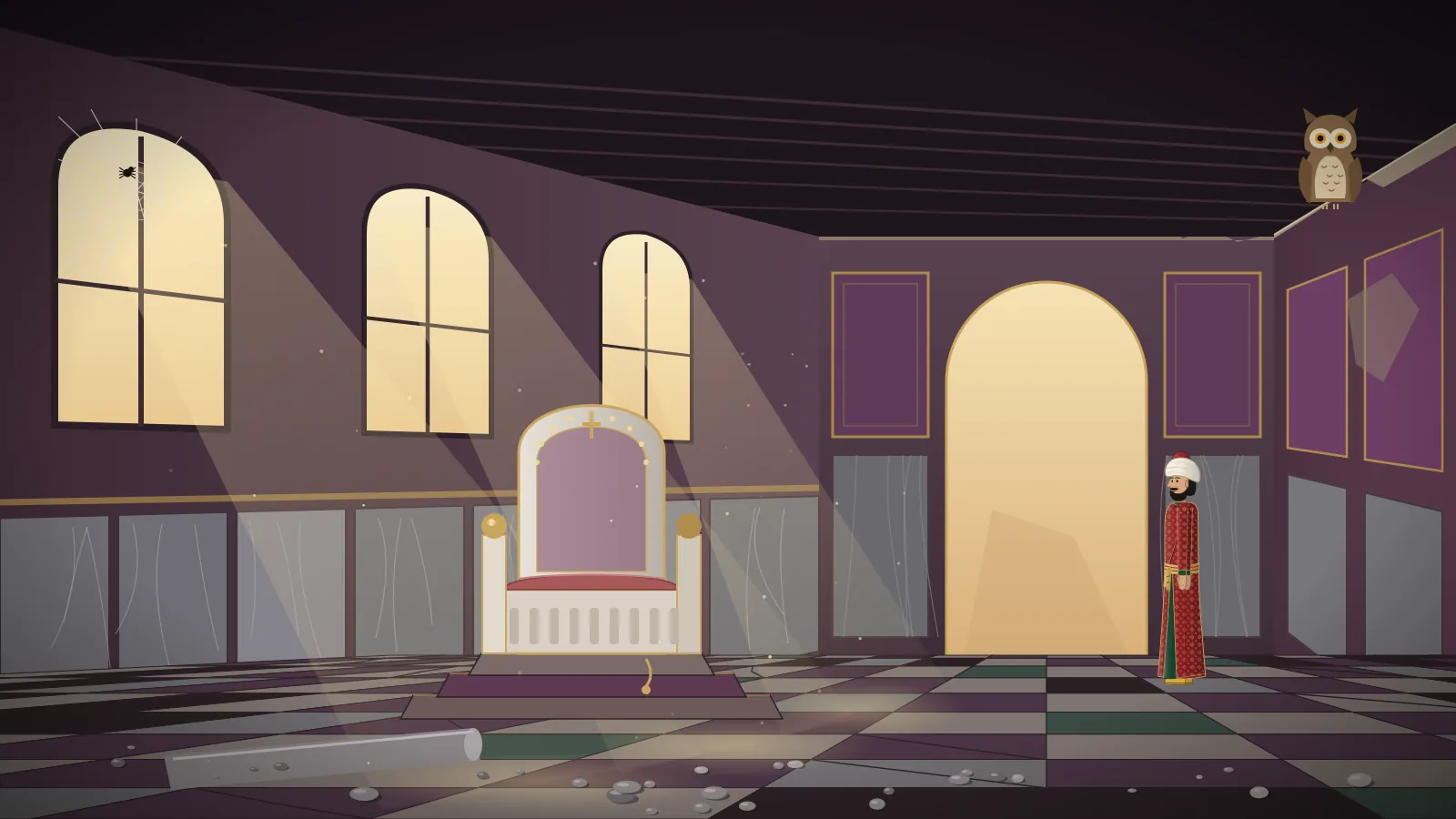
Tursun Beg, an Ottoman official who was with him, wrote that the sultan walked through the ruined palace of the emperors, reciting a Persian verse. A spider, it said, weaves the curtains in the palace of the Caesars. An owl calls the hours in the towers of Afrasiab.
A spider weaves the curtains in the palace of the Caesars.
On 1 June the sultan attended Friday prayers in Hagia Sophia, now a mosque. Later, minarets rose around it, and many of its mosaics were covered rather than destroyed, most of the figures only long afterwards.
Mehmed made the city his capital, and brought in Muslims, Christians and Jews to fill its empty streets. He took the title Caesar of Rome. To Muslims, he became Fatih: the Conqueror.
In 1454 he made a monk, Gennadios Scholarios, patriarch of the Orthodox Church. Gennadios had been a fierce opponent of union with Rome. Under him and those who followed, the Orthodox Church lived on under Ottoman rule.
Chapter VIIwatch from 8:47
The Marble Emperor
For the Greeks, the fall was a catastrophe, and legends grew around it. The most famous says that an angel turned the last emperor to marble and hid him in a cave beneath the Golden Gate, where he waits until the day he returns.
Another tells of a priest who was celebrating the liturgy that last morning. He walked into a wall of Hagia Sophia, the story says, and the wall opened to hide him. One day he will come out and finish the service.
One day he will come out and finish the service.
Historians see such stories as folk tradition, a way of carrying a people’s grief. Nor did the fall end the Middle Ages by itself, as is often said. It was one turning point among many.
The building stayed a mosque for almost five centuries. It became a museum in 1934, and a mosque again in 2020.
For some, the last night of Byzantium is a service still unfinished. For others, it is a promise fulfilled. Both memories live on under the same great dome, where on an evening in May 1453 Greeks and Latins prayed side by side, and the candles burned late into the night.