The story of the film
Arabia and Mecca, Damascus, Paris, Cairo and the Muslim world today · c. 500 CE to today
Long ago, before Islam, a traveller crossing Arabia came at nightfall to a lonely valley. He made his camp among the rocks, lit a small fire, and watched the dark close in around him. Before he slept, according to an old account, he spoke into the night: “I seek refuge with the master of this valley.”
He was not praying to God. He was asking for protection from the hidden ones he believed lived all around him in the silence: the jinn.
Chapter IIwatch from 1:33
Creatures of Fire
Early in the 7th century, in the trading town of Mecca, the Prophet Muhammad began to recite the revelations that Muslims believe came from God. His opponents reached for the words they knew. They called him a poet, a soothsayer, a majnun: a man possessed by a jinn. In Arabic, the word still means “mad”.
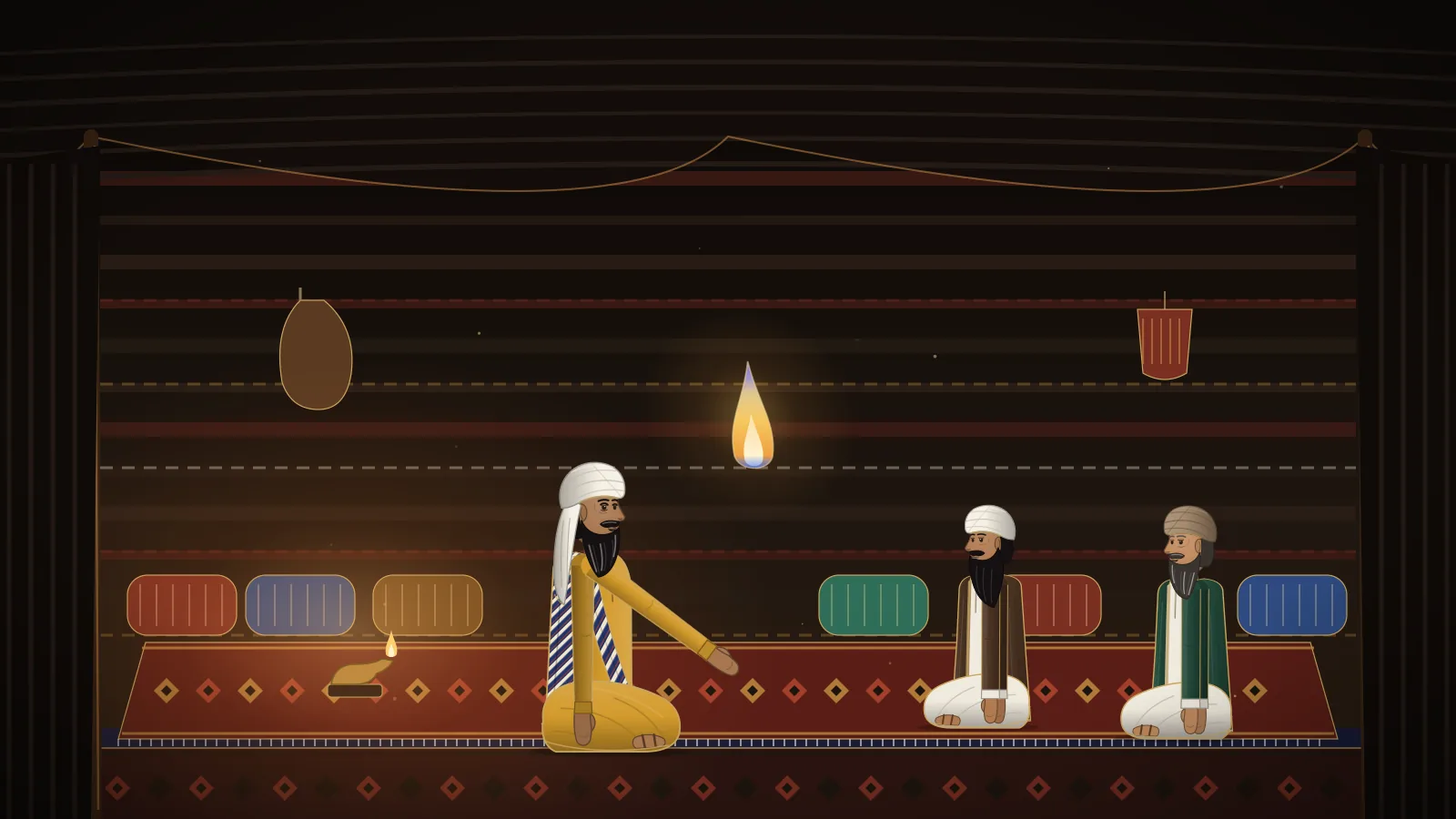
The Qur’an rejected those charges. And it gave the jinn a new place in its picture of the world: not gods, not rivals of God, but creatures. It says that humans were made from clay, and the jinn, before them, from fire: “a smokeless flame of fire”, or “the fire of a scorching wind”. A well-known saying of the Prophet adds that the angels were created from light, the jinn from smokeless fire, and Adam from clay.
Not gods, not rivals of God, but creatures.
Light, fire and clay: three kinds of being, made by one Creator. And the Qur’an gives jinn and humans a single purpose: “I did not create the jinn and mankind except to worship me.”
So the jinn share with humans something that angels, in Islamic teaching, lack: free will. They can believe or refuse, and they too will be judged. One chapter, Surat al-Rahman, speaks to humans and jinn together, asking them again and again the same question: “Which, then, of your Lord’s blessings will you deny?”
Chapter IIIwatch from 3:03
The Listeners at Nakhla
Islamic tradition tells of a dawn at Nakhla, a valley of palms between Mecca and Taif. The Prophet was leading the morning prayer there, reciting aloud as the light came up over the trees.
In those days, the account says, jinn who listened at the edges of heaven for news of the future were driven back by shooting stars. Something had changed in the sky, and they roamed the earth to find out why. Some of them came upon the recitation at Nakhla. They stopped, and listened.
They stopped, and listened.
The 72nd chapter of the Qur’an, al-Jinn, opens with their story: “We have heard a wondrous recitation, which guides to the right path, and we have believed in it.” They went back to their own people as warners. “Among us,” they said, “are the righteous, and among us are others.”
The same chapter looks back at the old custom of the valleys, the custom of the traveller by his fire: men who sought refuge with the jinn. It says this only brought them more trouble.
And the Qur’an says that one famous being was also of the jinn: Iblis, who refused to bow down to Adam when God commanded it. Iblis became the great tempter. Many Muslim scholars, following this verse, see him as a jinn who chose to disobey; others said he had once lived among the angels.

Chapter IVwatch from 4:33
The Jinn of Solomon
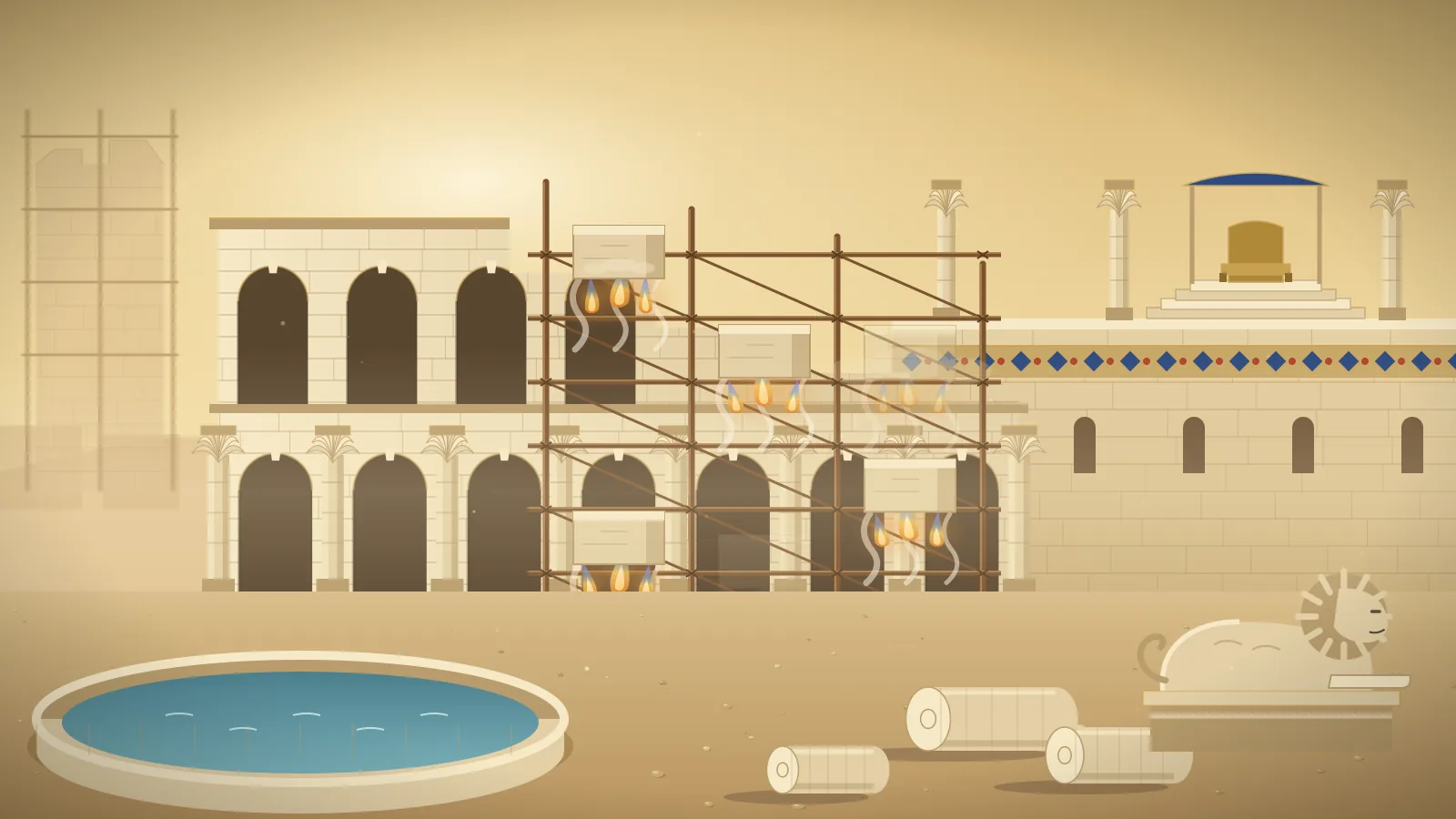
The Qur’an also tells how jinn worked for the prophet and king Solomon, Sulayman in Arabic. They built him high chambers, statues, and basins as large as reservoirs. Others, whom the Qur’an calls devils, dived into the sea for him, or were bound together in chains.
When Solomon sent for the throne of the Queen of Sheba, an ifrit offered to bring it before he could rise from his seat. Such was the strength the jinn were said to have.
Yet there were things they did not know. When Solomon died, the Qur’an says, the jinn did not know it. Only a small creature of the earth, gnawing at his staff, revealed it. When the staff fell, the jinn understood: if they had truly known the unseen, they would not have stayed at their hard labour.
If they had truly known the unseen, they would not have stayed at their hard labour.
Later traditions added more. They spoke of a ring engraved with the name of God, by which Solomon commanded the jinn, and of rebels shut away in sealed vessels. Scholars, too, kept writing. In the 1300s a Syrian judge, Badr al-Din al-Shibli, gathered 140 chapters on the jinn, covering their nature and the rulings about them, down to whether a human could marry one.
Chapter Vwatch from 5:46
The Fisherman and the Jar
The sealed vessels surfaced again in the Thousand and One Nights, a great collection of stories gathered in Arabic over many centuries.
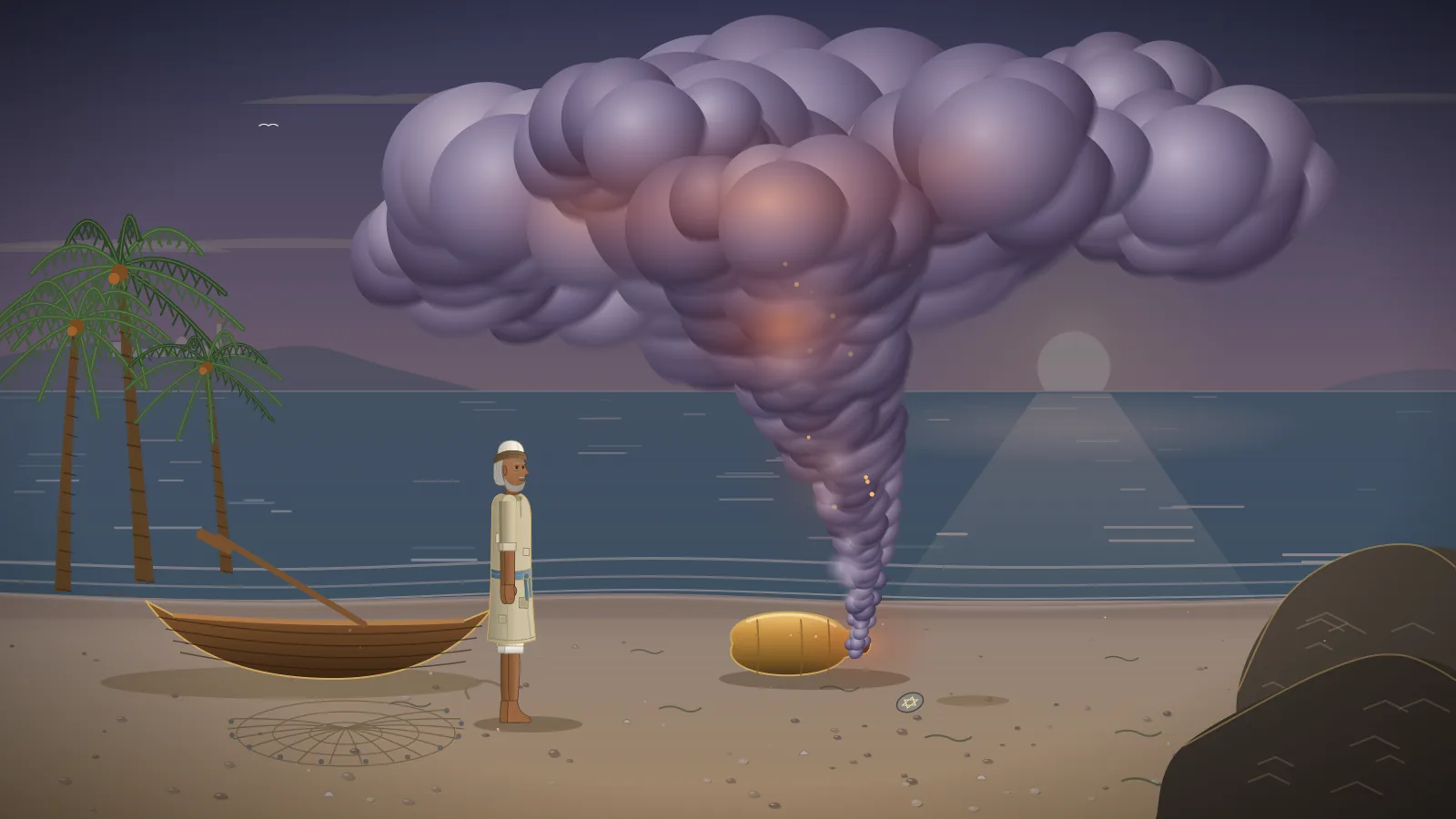
In one of its tales, a poor fisherman went down to the shore and cast his net 4 times. On the last cast he pulled up a brass jar, closed with lead and stamped with the seal of Solomon. He prised it open. Smoke poured out, rose to the sky, and gathered into an ifrit, a towering jinn.
Shut away for centuries, the ifrit had made vows. First, he had sworn to make his rescuer rich; then, to open the treasures of the earth for him; then, to grant him three wishes. At last, in his anger, he had sworn to kill whoever freed him. And now the fisherman stood before him.
At last, in his anger, he had sworn to kill whoever freed him.
The fisherman said he could not believe so huge a jinn had fitted in so small a jar. To prove it, the ifrit turned back into smoke, and poured himself inside. At once, the fisherman pushed the leaden stopper back into place.
Chapter VIwatch from 7:00
The Birth of the Genie
In 1704, in Paris, the scholar Antoine Galland began to publish the Nights in French. For jinn, he chose the word génie, from the Latin for a guardian spirit, because it sounded alike. The two words are not related. But in English, the jinn became the genie.
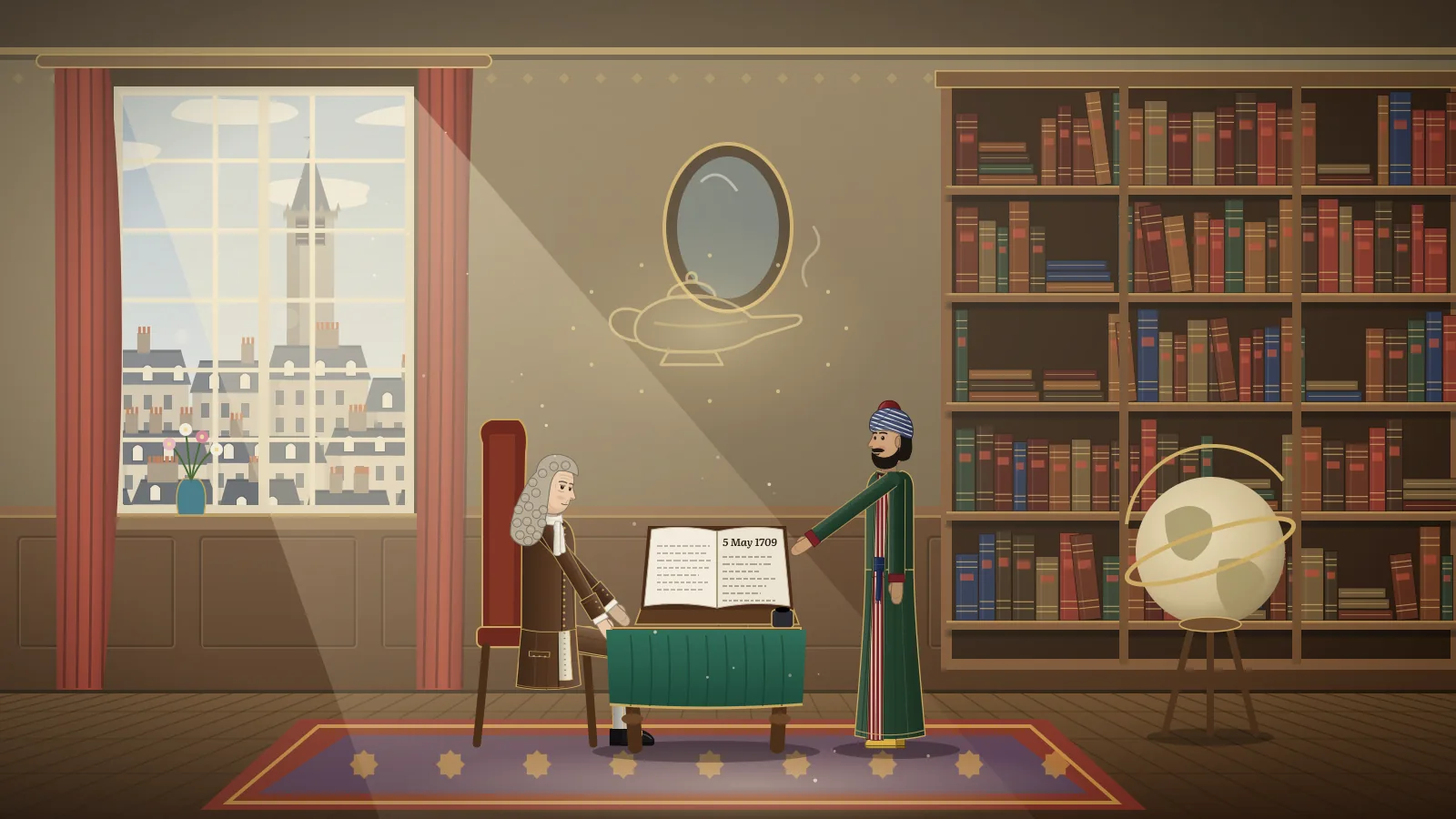
In 1709 a young Maronite Christian from Aleppo, Hanna Diyab, visited Paris. Galland’s diary records that on 5 May, Hanna told him a story about a lamp. It was the tale of Aladdin: a poor boy, an old lamp in a cave, and a jinn bound to serve whoever holds it.
No Arabic manuscript of the Nights older than Galland’s edition contains it. Many scholars now see Hanna Diyab as its true source.
So the genie of the lamp was born between Aleppo and Paris.
So the genie of the lamp was born between Aleppo and Paris. It filled Victorian pantomime stages and, in 1992, became a wisecracking, wish-granting Disney star.
That genie is fiction. The jinn of the Qur’an are something else: for believers, a real creation, living unseen beside us.
Chapter VIIwatch from 8:24
Neighbours, Not Masters
Folklore added its own figures: the mighty ifrit, the rebellious marid, and the desert ghul, which gave English the word ghoul. Jinn, it was said, could take the shape of a snake or a cat.
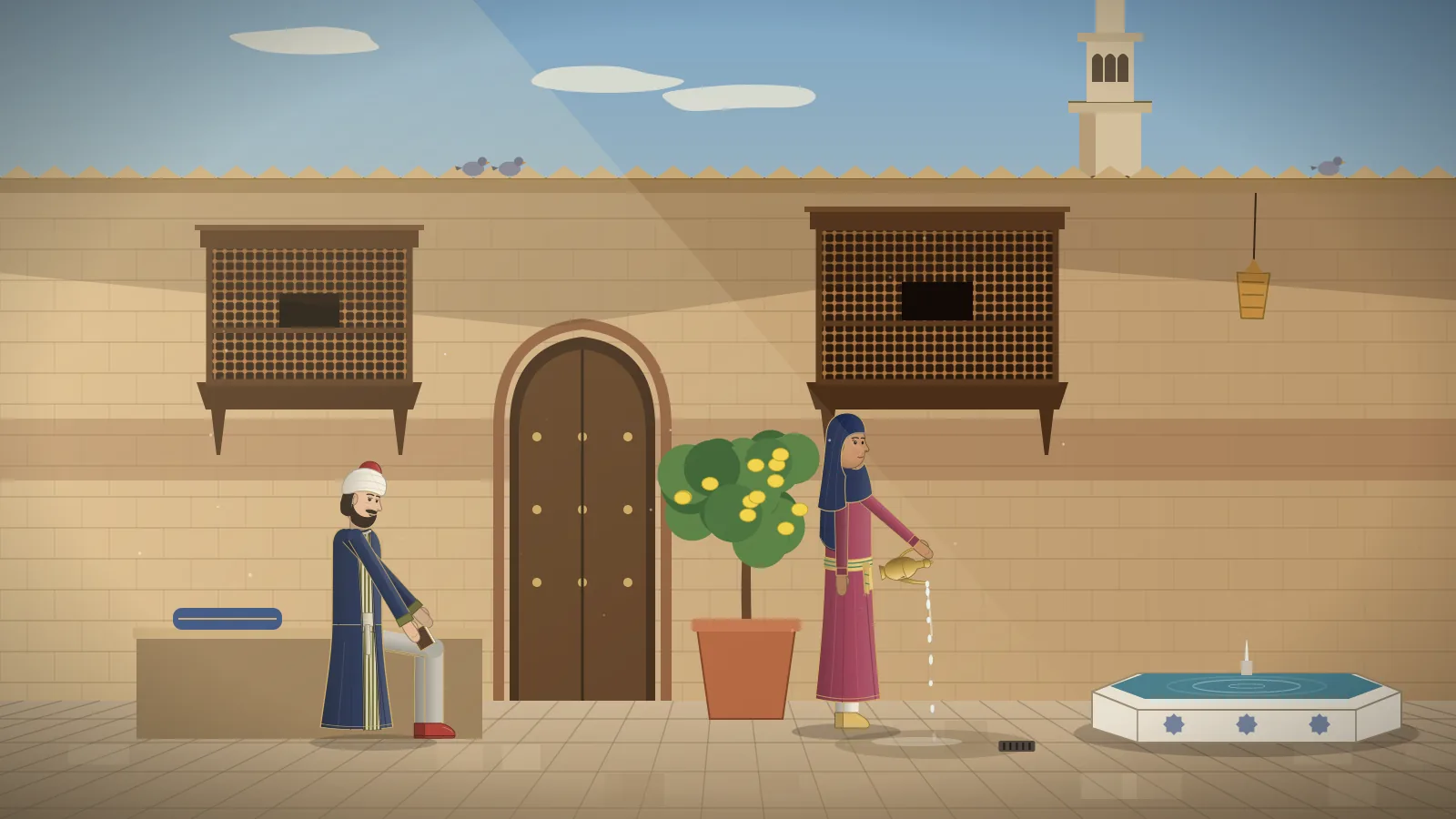
In the 1830s the English scholar Edward William Lane described daily life in Cairo. When people poured water on the ground, he wrote, they murmured “Destoor”: by your leave, a word of permission to any jinn nearby.
Such beliefs have not faded. In 2012 the Pew Research Center published a survey of Muslims in many countries. Asked whether jinn exist, 86 percent in Morocco said yes. In Bangladesh, 84 percent did.
For most, belief lives in small acts of faith.
For most, belief lives in small acts of faith: saying “In the name of God” before entering a dark room, or reciting the Throne Verse and the last two chapters of the Qur’an before sleep. Some seek healing by recitation, called ruqya. Many Muslim scholars and doctors warn against fraudulent healers, and against blaming jinn for illness that needs a doctor.
Long ago, a traveller in a lonely valley asked the master of the jinn to protect him. Today, a traveller camping in the same desert might say only: “In the name of God.” The hidden ones, believers say, are still there. But now they are neighbours, not masters.