The story of the film
Northern France, the Rhineland, the Alps and Italy · 1212
On a Saturday at the end of August 1212, a long column of travellers came down out of the hills to the port of Genoa. Many of them were young. They carried crosses, staffs and pilgrims’ bags, their clothes were grey with the dust of the roads, and they had walked all the way from the Rhineland, over the Alps.
Below them lay the harbour, the masts of the ships and the wide, bright sea. Few of them could have paid for a passage on any of those ships. Many believed that the sea would open in front of them, and that they would walk across it to Jerusalem.
Chapter Iwatch from 0:42
The Lost Cross
To understand them, we have to go back. Since 1187, Jerusalem had been in Muslim hands. That year, at the Battle of Hattin, the crusaders had also lost their most precious relic, a piece of the True Cross. For Christians across Europe, both losses were a lasting wound.
Crusade after crusade had failed to win the city back. The main army of the Fourth Crusade never reached the Holy Land at all. In 1204 it sacked Constantinople instead, a Christian city, and the great hopes of that expedition ended in smoke over the Bosphorus.
In the spring of 1212, the Church called for prayers and processions for the Christian kingdoms of Spain, which were at war with the Almohads. In July, the Christians won a great victory at Las Navas de Tolosa.
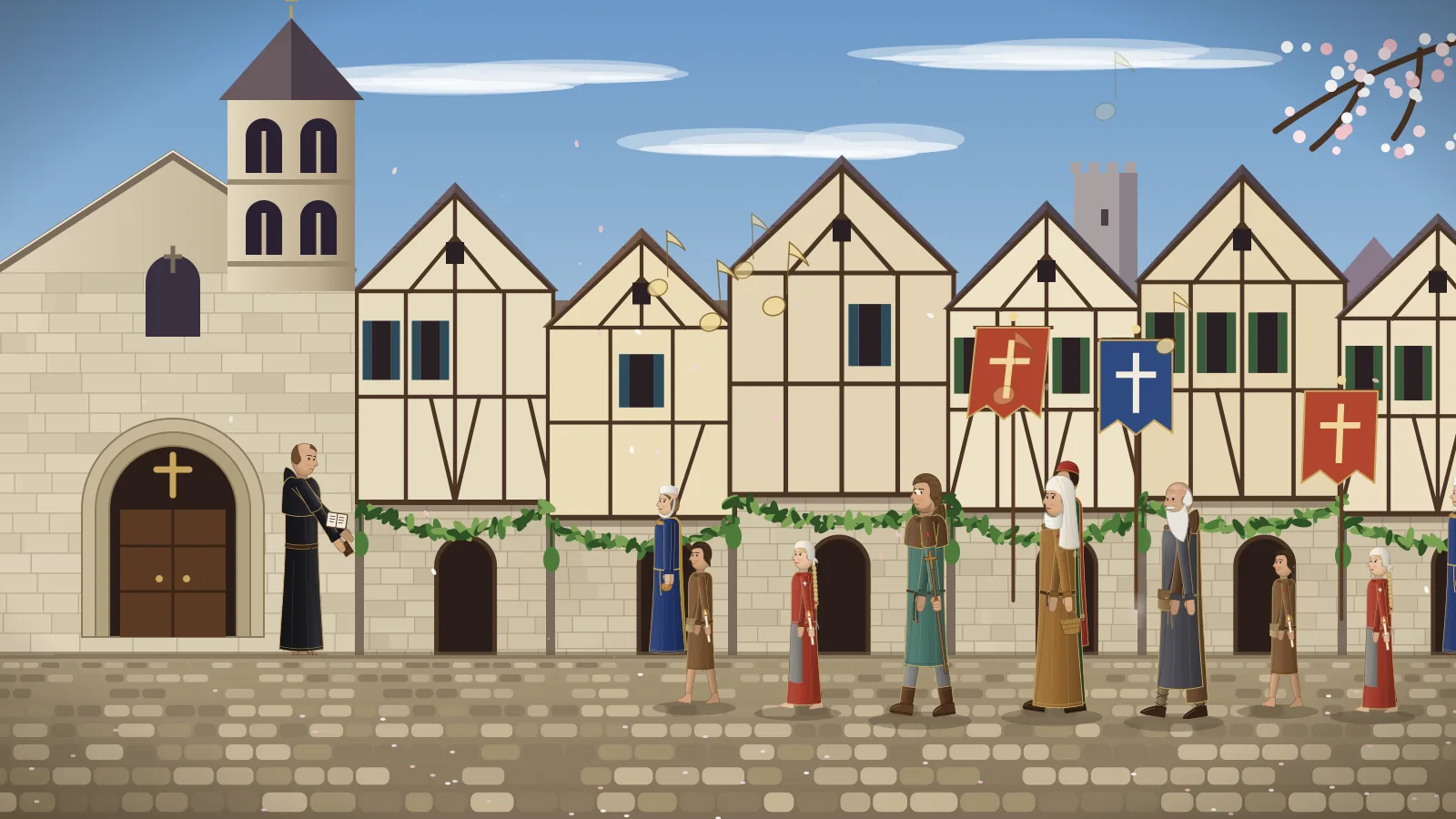
A chronicler at the abbey of Mortemer, in Normandy, described the processions of that year as they passed through towns and villages, with banners, candles, crosses and censers. Boys and girls walked at the front. They sang in French, not in Latin. Lord God, they called, raise up Christendom. Give us back the True Cross.
They sang in French, not in Latin.
Chapter IIwatch from 1:49
The Shepherd of Cloyes
Near Vendôme lay the village of Cloyes, and there, among the fields and flocks, lived a shepherd called Stephen. The chronicles call him a puer, a boy, and no early source gives his age.
According to an unnamed chronicler of Laon, Stephen said that the Lord had come to him in the guise of a poor pilgrim. Stephen gave him bread, and received letters for the king of France.
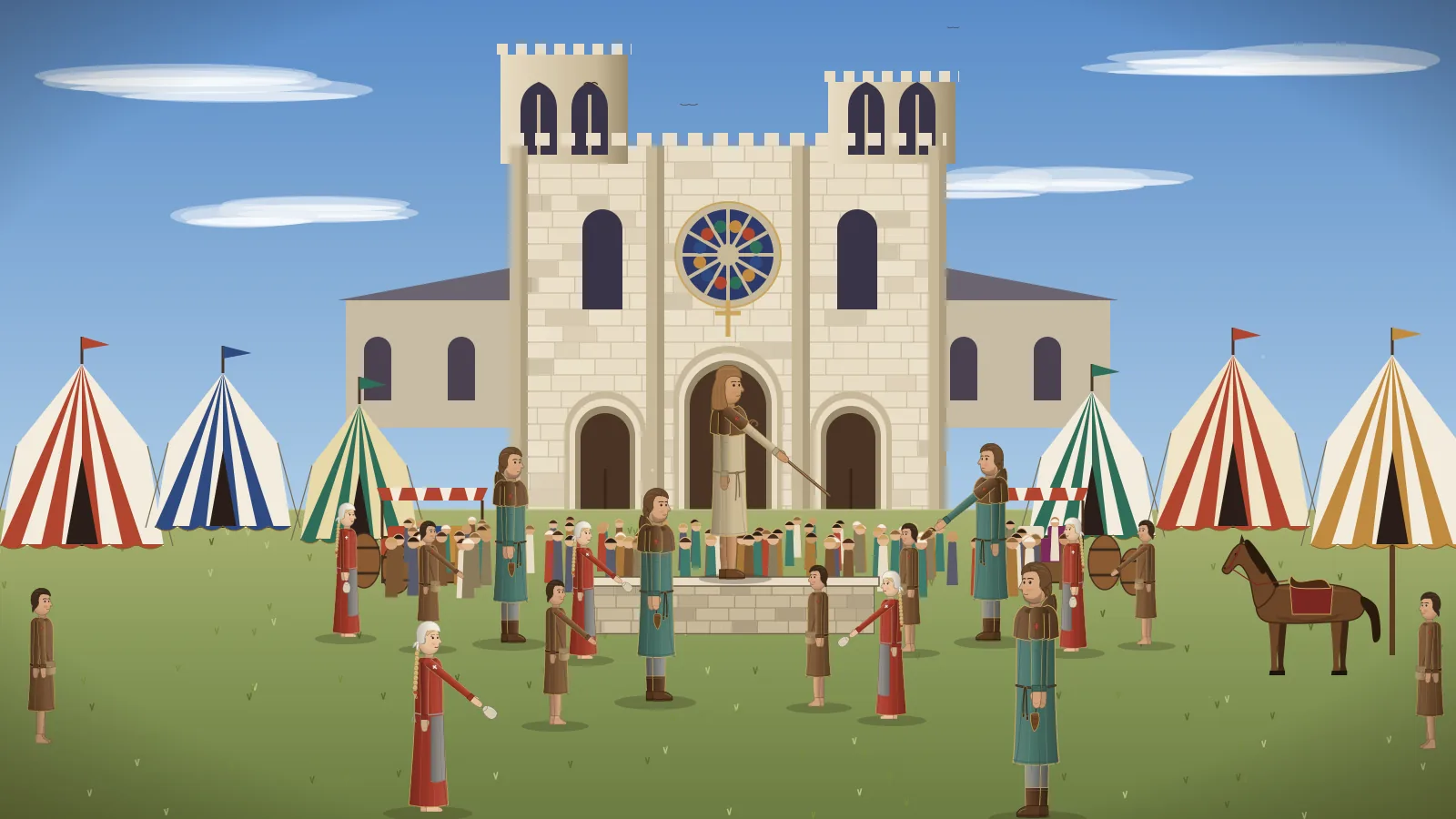
In June, Stephen went to Saint-Denis, the royal abbey near Paris, to reach King Philip II. Other shepherd boys followed him, then more and more people. The Laon chronicler speaks of nearly 30,000. Medieval numbers like this were guesses, and an English chronicler gave only half that.
At Saint-Denis, the chronicler says, Stephen was said to work miracles. It was June, the season of the great Lendit fair at the abbey. Other boys, with followers of their own, came to join him and accepted him as their leader.
The king was not won over. He consulted the masters of the schools of Paris, and then ordered the crowds to go home. And the movement, the Laon chronicler wrote, ended as easily as it had begun. Older retellings have Stephen lead his followers south to Marseille, but modern historians find no reliable evidence for it. In the most reliable sources, that is the last we hear of Stephen.
The movement, the Laon chronicler wrote, ended as easily as it had begun.
Chapter IIIwatch from 3:11
The Boy with the Tau
That same summer, in the countryside around Cologne, another boy began to preach. His name was Nicholas. He carried a cross in the shape of the letter T, the tau, an old sign of protection. A chronicler at Trier called it a sign of his holiness.
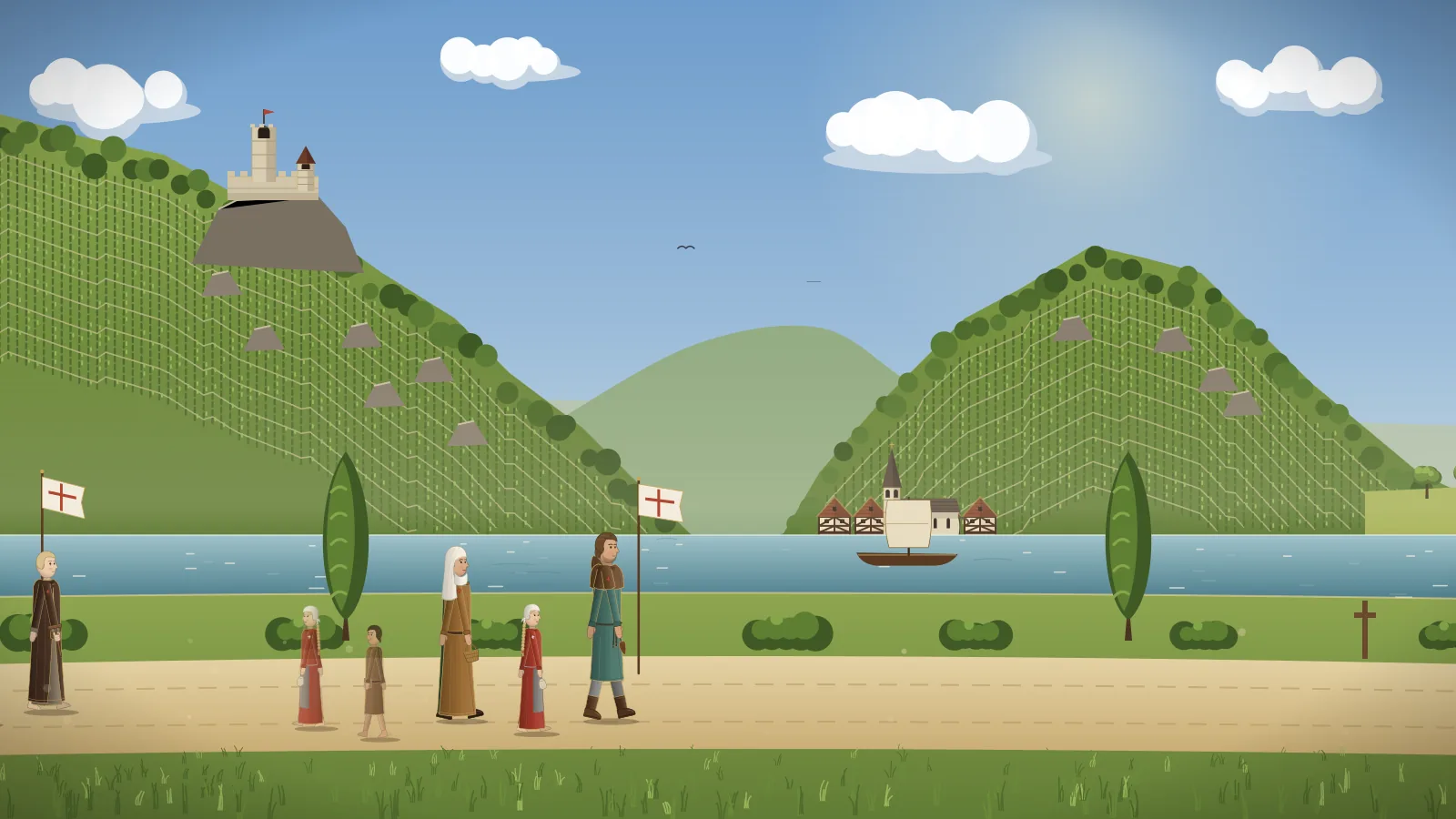
The sea, he promised, would dry up before them, as it had for the Israelites fleeing Egypt. They would win back the Holy Land by faith, without weapons. A royal chronicle of Cologne says that people left their ploughs and carts, and the flocks they were tending, to follow him.
They would win back the Holy Land by faith, without weapons.
In July they set off, in groups of 20, 50 or 100, each with its own banner, and walked south along the Rhine. At Mainz, some already turned back, and others stayed in the city. On 25 July, an annalist at Speyer noted a great pilgrimage passing through.
They had no money. A chronicler at Marbach, in Alsace, wrote of their empty purses, but also of the people who gave them food along the way.
Not everyone welcomed them. When clergy called the pilgrimage vain and useless, the Marbach chronicler says, angry lay people turned on the clergy and called them unbelievers.
Chapter IVwatch from 4:37
The Sea That Did Not Part
Then came the Alps. We do not know which pass the marchers took, or how many were lost on the high, cold roads. Many turned back, and some died of hunger and cold.
On 20 August, a chronicler in Piacenza, John Codagnello, recorded a German boy called Nicholas, with a countless multitude, all hastening to cross the sea.
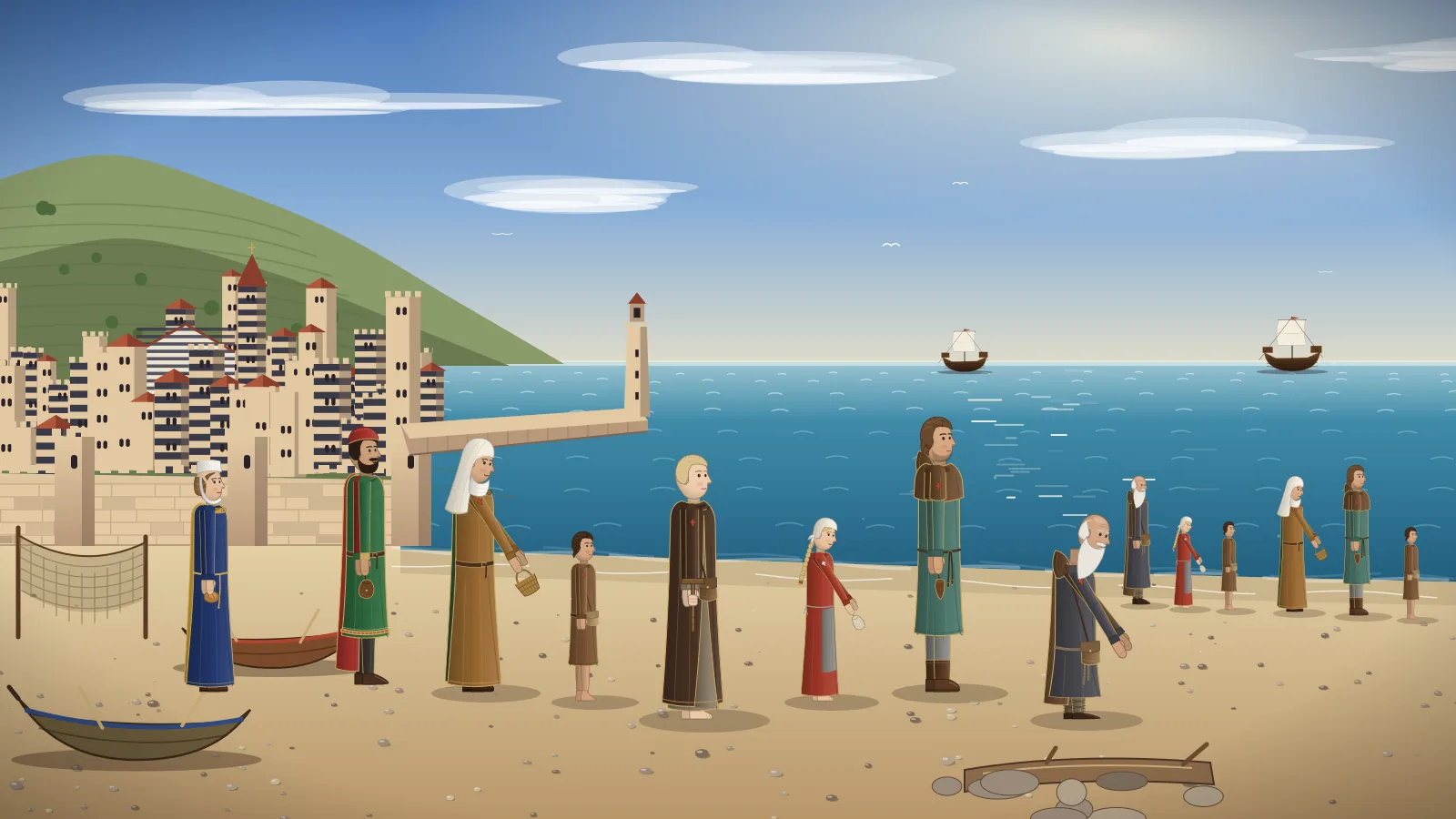
On 25 August they reached Genoa. The city’s official chronicler, Ogerio Pane, counted more than 7,000 of them. It was the best count anyone made, and it was still only an estimate.
Whatever they had hoped for at the water’s edge, the sea did not open. The very next day, the crowd moved on. But many men, women, boys and girls, Pane wrote, stayed behind in Genoa.
Whatever they had hoped for at the water’s edge, the sea did not open.
Chapter Vwatch from 5:29
Scattered across Italy
Others went on to Pisa. One chronicler, Richer of Sénones, says two ships sailed from there, full of young pilgrims. No one knows what became of them.
Some reached Rome. According to the Marbach chronicler, the very young and the very old were released from their crusading vows. A later chronicler has Pope Innocent III say that these children put us to shame, because while they rushed to recover the Holy Land, the rest of Christendom slept. Many historians think the words were put in his mouth.
One group made it to Brindisi, in the far south of Italy, where ships left for the East. But the bishop there suspected a deception, and would not let them sail.
Most turned for home. They went back over the mountains, poor and exhausted, and some chroniclers mocked them for it.
Of Nicholas himself, we know very little. One chronicle says he later fought on a real crusade, in Egypt. Another says his father met a bad end in Cologne. Neither can be checked.
Most turned for home.
Chapter VIwatch from 6:37
The Ships of Marseille
So where do the slave ships of the famous story come from? Mostly from one man: Alberic, a Cistercian monk of Trois-Fontaines, in Champagne, writing 20 or 30 years after the events.
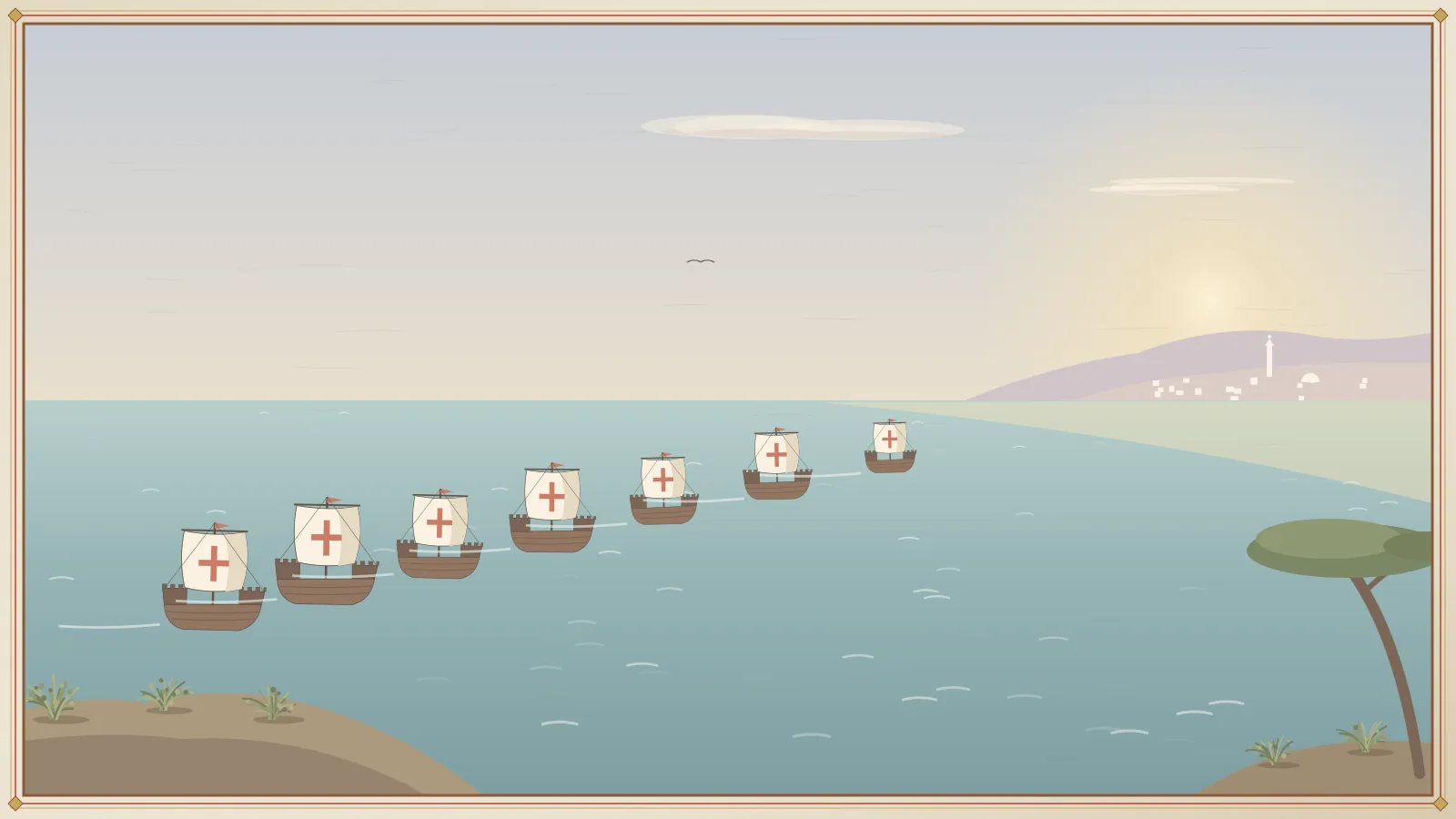
In his version, 30,000 children came to Marseille. Two merchants, Hugh the Iron and William the Pig, offered to carry them across the sea for free, for the love of God. Seven large ships set sail. Near Sardinia a storm struck, and two of them were lost with everyone on board.
The other five, Alberic says, reached Bougie, in North Africa, and Alexandria, in Egypt, where the young passengers were sold as slaves. Only 18 years later, he wrote, did a priest who had been among them come home and tell the story. Pope Gregory IX, he added, built a church on the island of the shipwreck, for the New Innocents. No such church has ever been confirmed.
Historians are cautious. No earlier writer mentions a voyage from Marseille. Alberic blended the French and German movements together, and his numbers cannot be trusted.
The two names seem to belong to real men of the time, but nothing ties them to the children. Slave trading across the Mediterranean was real. This voyage cannot be confirmed.
This voyage cannot be confirmed.
Chapter VIIwatch from 8:05
Who Were the Pueri?
Other writers added more. The English monk Matthew Paris blamed the Devil. Centuries later, Voltaire called the crusades an epidemic disease that spread even to children.
Some linked the story to the Pied Piper of Hamelin, who was said to have led away a town’s children in 1284. That tale was written down long afterwards, and most historians see no real link.
In 1977, the Dutch historian Peter Raedts looked again at the word the chronicles use: pueri. It can mean children. But it could also mean young people of low standing: shepherds, farmhands, servants, people with no land and no say. People who left their ploughs and their flocks.
People who left their ploughs and their flocks.
In 2008, Gary Dickson agreed that most were young and poor, though real children were among them too, along with women and old people.
Yet the legend of innocence betrayed lived on: in Marcel Schwob’s tales of 1896, in a poem by Bertolt Brecht, and in Kurt Vonnegut’s Slaughterhouse-Five, subtitled The Children’s Crusade.
What the chronicles show is smaller, and perhaps more human: thousands of ordinary young people who believed that faith alone could do what kings and armies had failed to do. They walked to the edge of the sea at Genoa. It did not open. And then, quietly, most of them walked home.