The story of the film
London, Rome, and the abbeys of England and Wales · 1509–1547
Look closely at a British coin. Around its edge runs a line of small Latin letters, and near the end stand two of them: F and D. They stand for Fidei Defensor, Defender of the Faith, a title that a pope gave to King Henry VIII in 1521.
Thirteen years later, the same king had cut England off from the pope and made himself head of its Church. Between the reward and the break lay a marriage, a verse of scripture and a quarrel that no one could settle.
Chapter Iwatch from 0:35
A King's Marriage
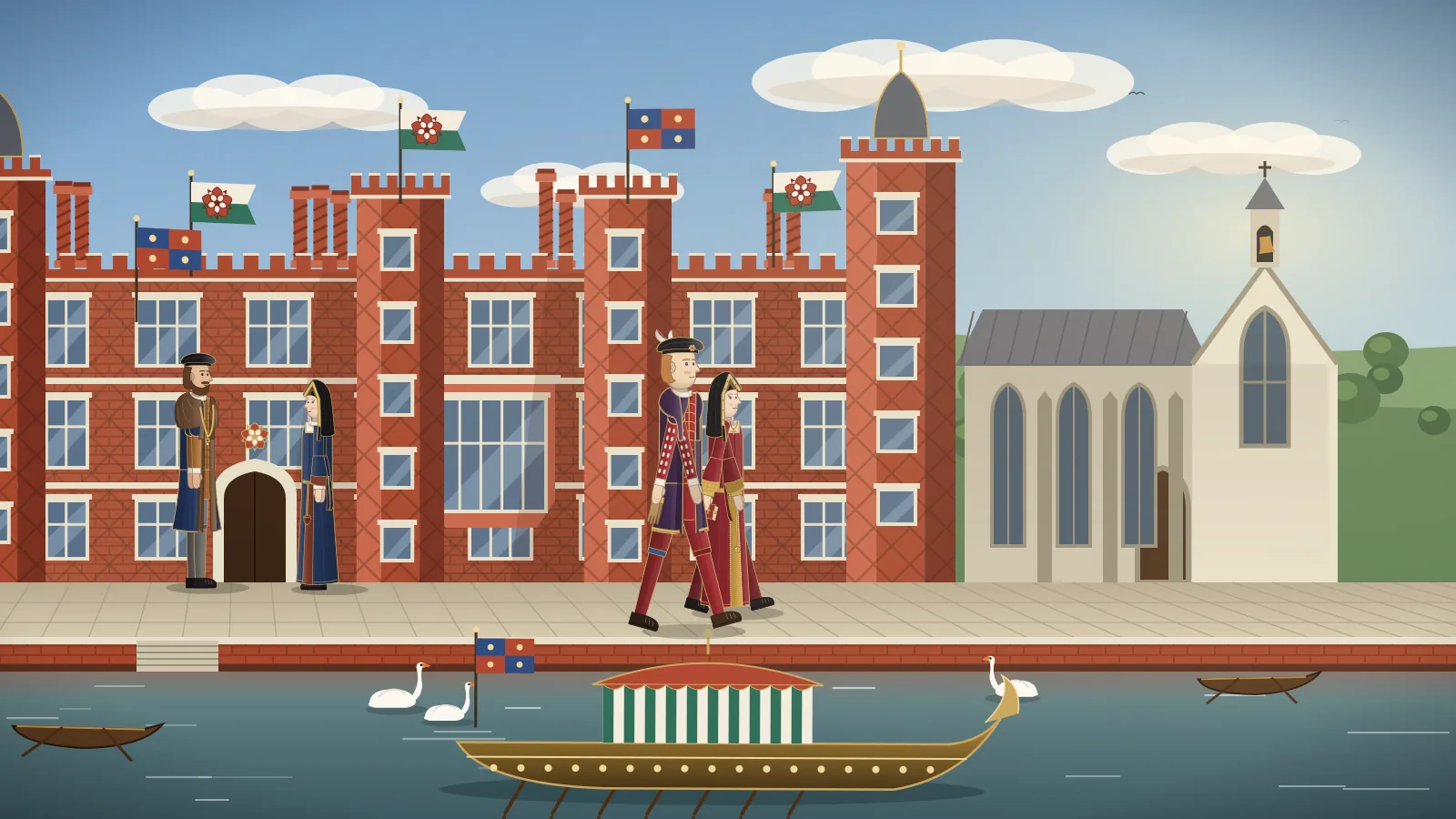
In June 1509, seven weeks after he became king, Henry, aged 17, married Catherine of Aragon, a Spanish princess, at the Franciscan church at Greenwich. She was the widow of his elder brother Arthur, who had died in 1502. For such a marriage Henry needed the pope’s permission, and he received it.
Catherine was pregnant at least six times. Some of her babies were stillborn; others lived only hours or weeks. One child survived: a daughter, Mary, born in February 1516. England still remembered the Wars of the Roses, and Henry believed that only a son could keep the peace after him.
The king was also devout and learned. In 1521 he wrote a book against Martin Luther in defence of the seven sacraments, and Pope Leo X rewarded him with his new title.
By 1527 Henry was in love with Anne Boleyn, a lady of the court who had been educated in France. She would not simply become his mistress. And Henry had found a verse in the Book of Leviticus: if a man takes his brother’s wife, they shall be childless. He came to believe that his marriage was cursed, and that no pope could ever have allowed it.
He came to believe that his marriage was cursed, and that no pope could ever have allowed it.
What he sought was not a divorce in the modern sense but an annulment, a ruling that the marriage had never been valid at all. People called it the King’s Great Matter.
Chapter IIwatch from 2:07
The Court at Blackfriars
Popes had granted kings such rulings before. But in May 1527 the mutinous troops of the Emperor Charles V sacked Rome. Pope Clement VII was besieged in his fortress, the Castel Sant’Angelo, and for months he was a prisoner in all but name. And the emperor was Catherine’s nephew.
The task fell to Henry’s chief minister, Cardinal Thomas Wolsey, a man of modest birth who governed England for the king. Clement played for time. At last he sent a second cardinal, Lorenzo Campeggio, to hear the case in London together with Wolsey.
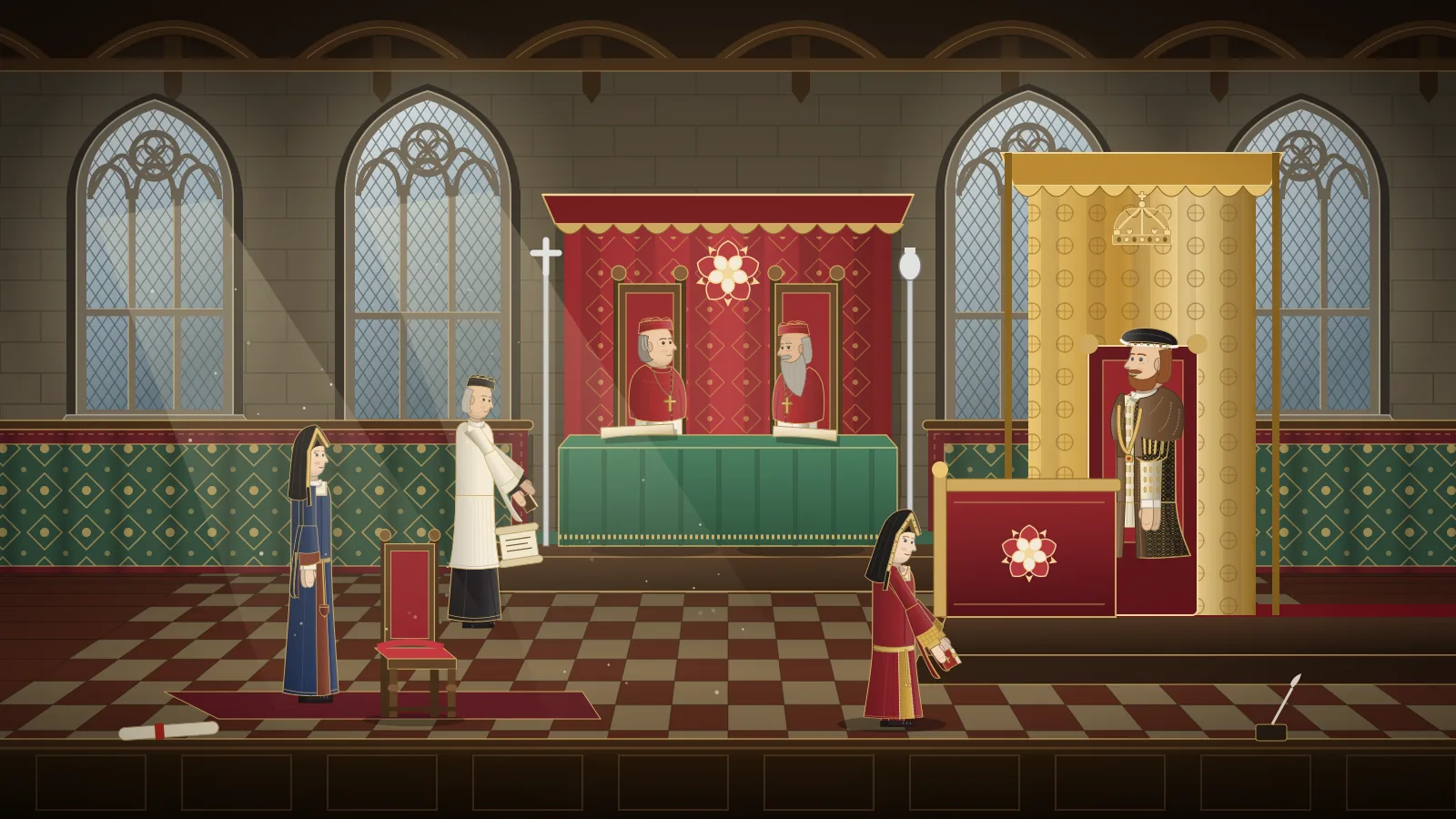
In the summer of 1529 the two cardinals sat as judges at Blackfriars, a friary in London, and the king and queen were both summoned. What happened on 21 June comes down to us in 5 eyewitness accounts, and they do not all agree. Most of them say that Catherine left her seat and knelt before her husband. In the best-known account, written decades later by Wolsey’s servant George Cavendish, she called herself “a true, humble and obedient wife”.
She called herself a true, humble and obedient wife.
She appealed to the pope as her only judge. Then, Cavendish says, she bowed to the king, walked out of the hall and did not return. Meanwhile Clement had decided to call the case to Rome, and in late July the court adjourned without a verdict.
Wolsey had failed his master. In October 1529 he gave up the Great Seal and lost his offices. A year later he was arrested for treason, and in November 1530 he died on the road to London, at Leicester Abbey. Cavendish recorded his last words: “If I had served God as diligently as I have done the King, He would not have given me over in my grey hairs.”
Chapter IIIwatch from 3:49
Supreme Head
His place was taken by new men. The ablest was Thomas Cromwell, a tradesman’s son from Putney who had once served Wolsey. The answer he helped to shape, with other advisers and with the king himself, was bold. If the pope would not decide, the Church in England could decide for itself, under its king.
In February 1531 the clergy were made to accept the king as their supreme head, with one careful phrase added: as far as the law of Christ allows. In May 1532 they gave the king control over new church law, promising to make no new canons without his licence. The next day the Lord Chancellor, Thomas More, resigned.
In January 1533 Henry married Anne Boleyn in secret. She was already pregnant. That spring Parliament declared that the realm of England was an empire, and forbade appeals to Rome. In May the new Archbishop of Canterbury, Thomas Cranmer, declared the first marriage void. Nearly 24 years of marriage were undone.
Nearly 24 years of marriage were undone.
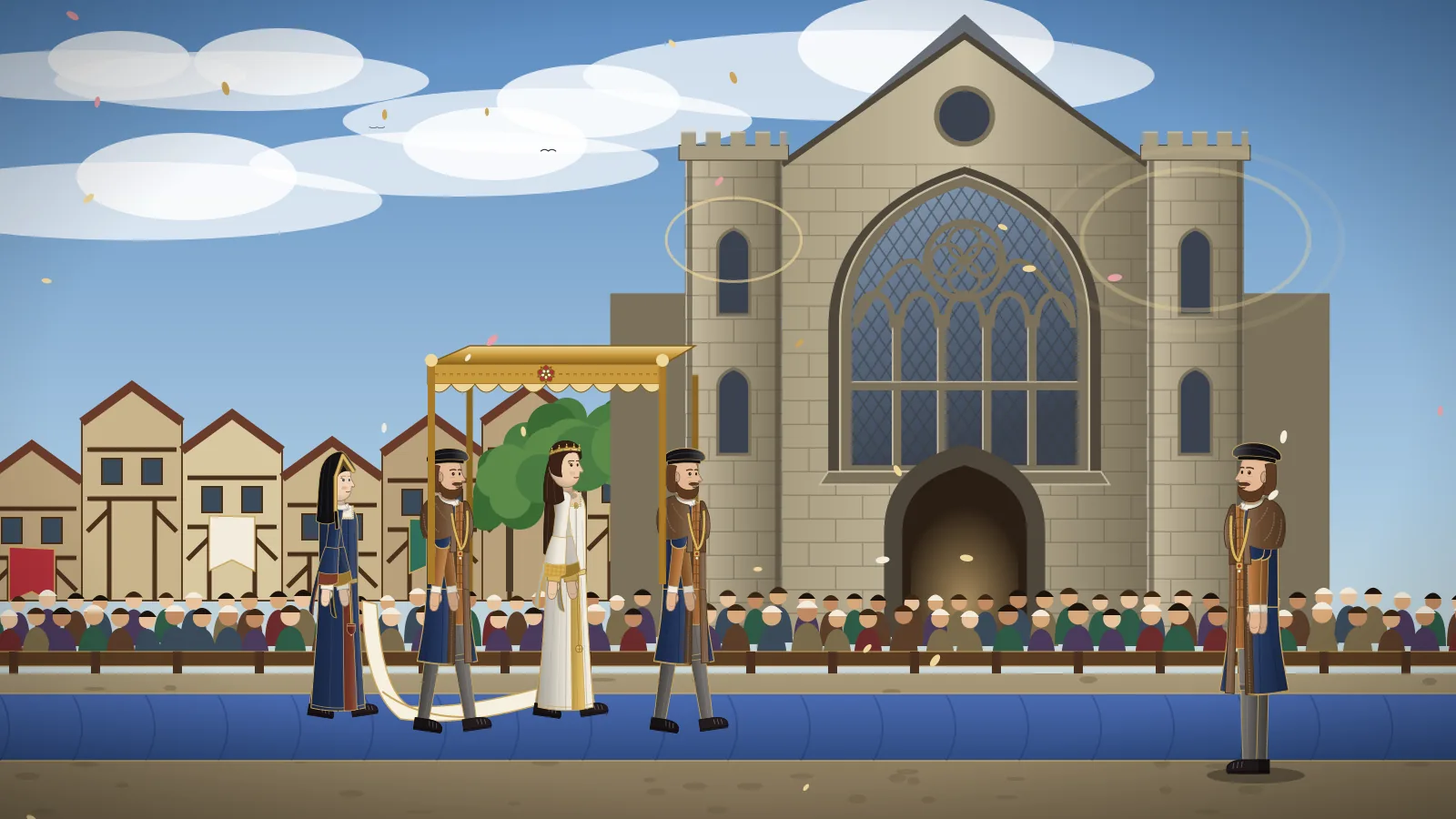
In June Anne was crowned. In September she gave birth, not to a son but to a daughter, Elizabeth. In March 1534 Clement at last gave his verdict in Rome: the first marriage was valid. It came too late.
That November the Act of Supremacy named the king “the only supreme head in earth of the Church of England”. A new Treasons Act made it a crime even to deny the king’s titles in words, and earlier that year subjects had been made to swear an oath accepting Anne’s children as heirs. In the parish churches the pope’s name was scraped out of the prayer books, and the money once sent to Rome now went to the king.
Chapter IVwatch from 5:44
The Price of Refusal
The new laws soon claimed lives. In May 1535 John Houghton, prior of the London Charterhouse, was put to death with two other Carthusian priors, a Bridgettine monk and a priest, because they would not accept the king’s supremacy over the Church.
In June John Fisher, Bishop of Rochester, whom the pope had lately made a cardinal, was beheaded. Thomas More had refused the oath in April 1534 and had been held in the Tower for over a year. He was convicted of treason on disputed evidence, the testimony of Richard Rich, which More called perjury, and he was beheaded on Tower Hill on 6 July 1535. A report printed in Paris within weeks says that he died the king’s good servant, but God’s first. In 1935 the Catholic Church declared Fisher and More saints.
He died the king’s good servant, but God’s first.
The two women of the Great Matter did not outlive them long. In January 1536 Catherine died at Kimbolton Castle, still calling herself Henry’s true wife. Four months later Anne Boleyn was executed, on charges of adultery and treason that most historians believe were false. Eleven days after that Henry married Jane Seymour. In October 1537 she gave him a son, Edward, and died 12 days later.
Chapter Vwatch from 6:45
The Silent Abbeys
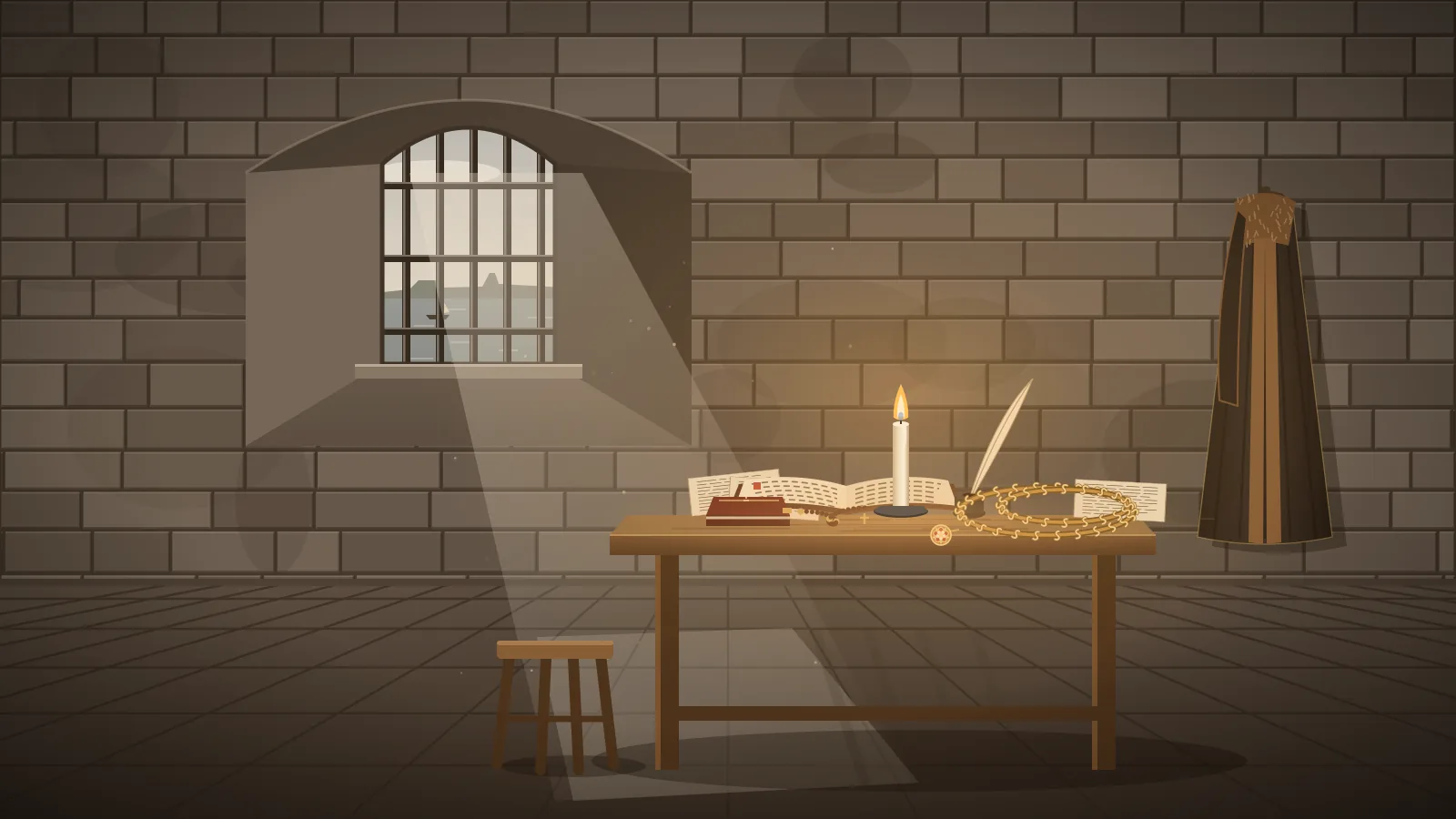
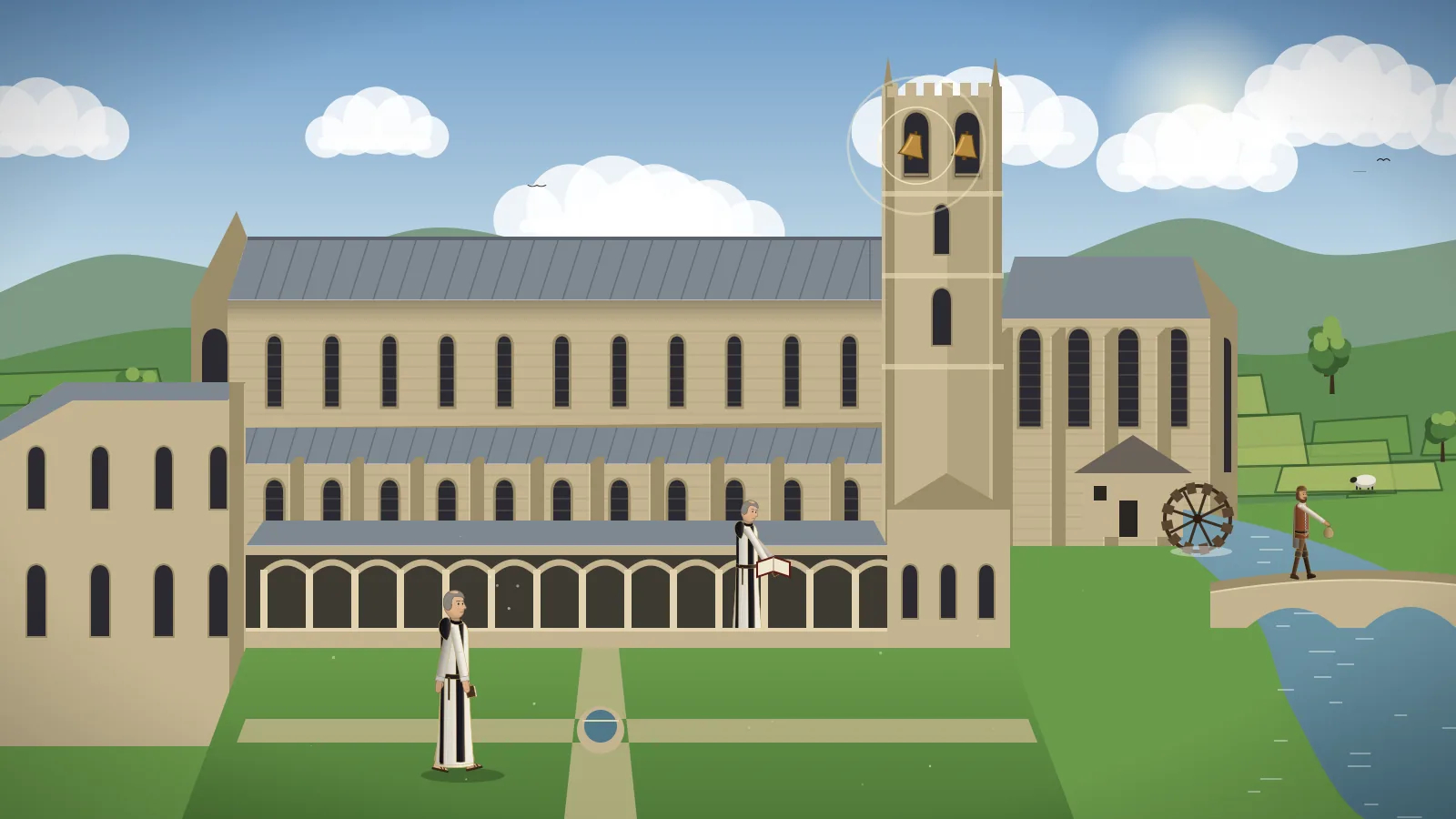
There were about 800 monasteries, nunneries and friaries in England and Wales. In some of them prayers had been sung every day for centuries.
In 1535 royal commissioners valued their wealth in a great survey, the Valor Ecclesiasticus, and Cromwell’s agents rode from house to house to inspect them. Their reports of scandal were often exaggerated. In 1536 the smaller houses, those worth less than £200 a year, began to be closed. The great abbeys surrendered one by one, and the last, Waltham Abbey, closed in March 1540. Lead was stripped from the roofs and melted, and the bells were broken and sold. The lands went to the crown, and most were then sold to nobles and gentry.
In some of them prayers had been sung every day for centuries.
In the autumn of 1536 the north rose. Tens of thousands of men marched under a banner of the Five Wounds of Christ, in what they called the Pilgrimage of Grace. They were promised a pardon, and they went home. After new risings in 1537 many were executed, among them their leader, the Yorkshire lawyer Robert Aske.
In 1538 the golden shrine of Saint Thomas Becket at Canterbury, rich with the offerings of pilgrims over centuries, was broken up and stripped. In December of that year Pope Paul III excommunicated the king.
Chapter VIwatch from 8:06
Punishing Both Sides
Yet Henry never became a Protestant. In 1539 the Act of Six Articles upheld the traditional teaching on the Mass, on confession and on unmarried priests. Meanwhile a great English Bible was ordered into every parish church. On its title page the king hands the Word to Cranmer and Cromwell, and the people below cry Vivat Rex: long live the king.
Cromwell’s own turn came in 1540, after the king’s fourth marriage, to Anne of Cleves, failed. He was arrested in June and beheaded in July, and on that same day Henry married Catherine Howard. Two days later, in London, 3 Protestant preachers were burned as heretics, and 3 Catholic priests were executed as traitors. Henry punished both sides.
Henry punished both sides.
Henry died in January 1547. Under his son Edward the Church of England became Protestant. Mary brought back the pope. Elizabeth broke away again, for good.
Chapter VIIwatch from 9:02
Two Small Letters
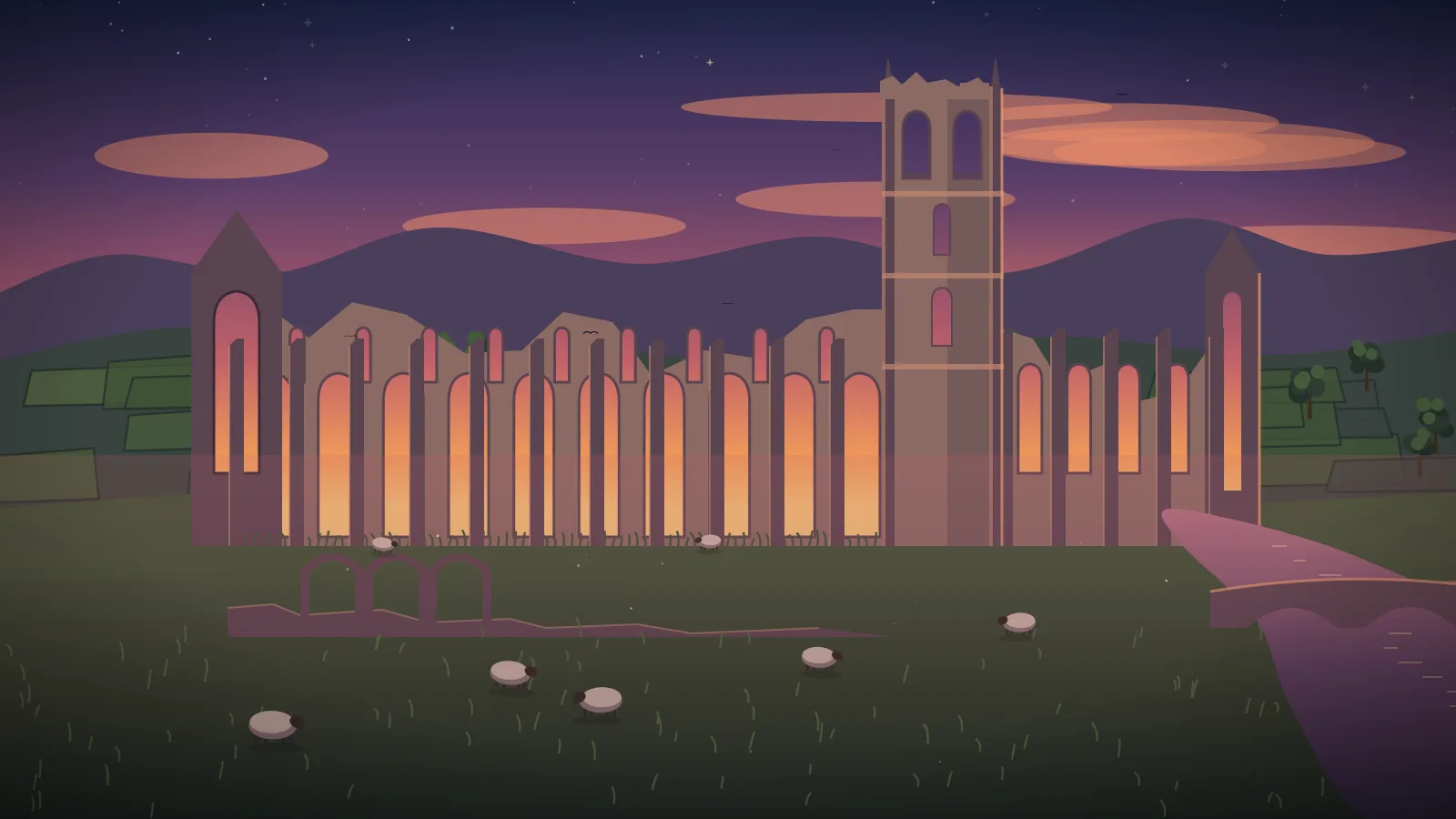
Across England, roofless abbeys like Fountains and Rievaulx still stand in green valleys. Catholics remember the men who died rather than deny the pope, and the houses of prayer that fell silent. Protestants remember the English Bible set up in the parish churches, and the reformers whom the same king sent to the fire.
It is often said that Henry founded the Church of England to get a divorce. The marriage was the spark. But royal power, money and reform turned a quarrel into a lasting break.
The marriage was the spark.
And his papal title? Pope Paul III withdrew it in 1538. In 1544 Parliament gave it back. It is still there today, on British coins, in two small letters: a pope’s reward, kept by a crown that no longer answers to Rome.