The story of the film
Tenochtitlan and the Valley of Mexico, then Mexico City and Mexico today · c. 1500, recorded after 1521; Mexico today
Around the year 1500, Tenochtitlan, the island city of the Aztecs, rose from a lake in the Valley of Mexico. When an old person died there, the family did not speak of heaven or hell. They prepared the dead for a long road, a journey of 4 years.
And, the old accounts say, they tied a loose cotton thread around the neck of a small yellow dog. The dog was going too.
Chapter Iwatch from 0:38
Layers of the World
The Mexica, as the Aztecs called themselves, shared their picture of the world with many peoples of ancient Mexico. The earth was a flat land floating on water. Above it rose layers of sky. Below lay the levels of the underworld, and the deepest of them was Mictlan, the place of the dead.
Mictlan was linked with the north, the region of cold and darkness. Its lord was Mictlantecuhtli, and its lady was Mictecacihuatl. In carvings and painted books, the lord of the dead appears as a skeleton, or with a skull for a face. He was one of the great gods, not a devil.
Yet almost everything written about Mictlan dates from after 1521, when the Spanish and their Indigenous allies took Tenochtitlan. At Tlatelolco, beside the ruined city, the Franciscan friar Bernardino de Sahagún worked for decades with Nahua scholars, who questioned elders about the old ways. Their great work, the Florentine Codex, was written in Nahuatl, the Aztec language, with Spanish beside it.
Another manuscript, the Codex Vaticanus A, painted in the 1560s and now in the Vatican Library, shows 13 heavens above the earth, and 9 levels below. Both books were made under Christian friars, and many historians think the neat stacks of 13 and 9 were partly shaped by that colonial setting.
He was one of the great gods, not a devil.
Chapter IIwatch from 2:22
The Precious Bones
Mictlan was already ancient in Aztec stories. One of them, written down in 1558 in the Legend of the Suns, says that people themselves came from there.
The god Quetzalcoatl went down into the land of the dead to fetch the precious bones of an earlier humanity. The lord of the dead set him a test: to blow a conch shell that had no holes.
Worms bored holes in the shell, the story says, and bees flew inside to make it sound. Quetzalcoatl took the bones, and ran. But he fell, the bones broke, and quail pecked at them. Retellings often add that this is why people come in different sizes. Then the gods gave them life, and a new humanity began.
Worms bored holes in the shell, the story says, and bees flew inside to make it sound.
Chapter IIIwatch from 3:07
Where the Dead Went
Not everyone went to Mictlan. In Aztec belief, where you went after death depended mostly on how you died, not on how you had lived.
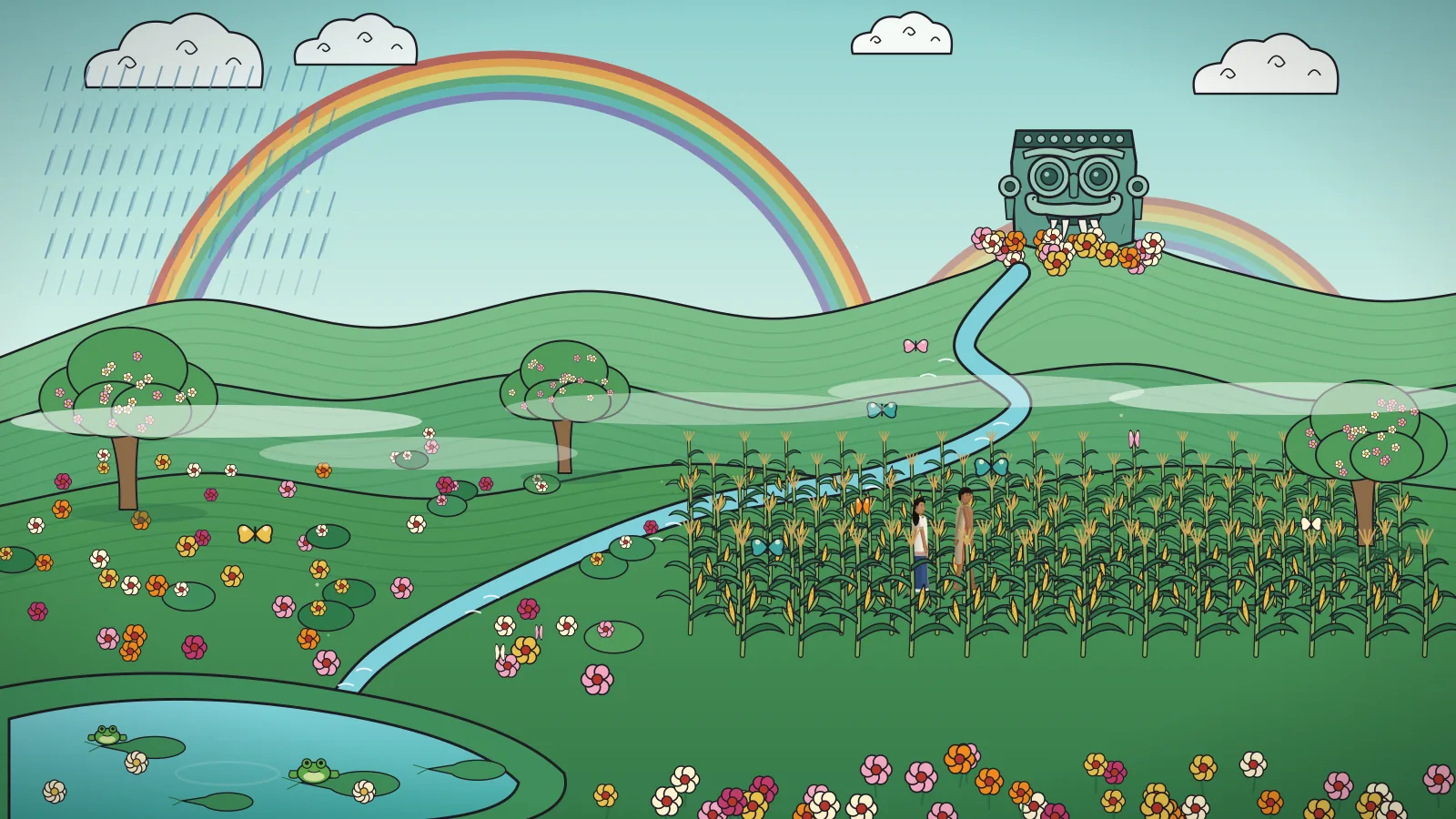
Those taken by the rain god Tlaloc, by drowning, by lightning, or by illnesses linked to water, went to Tlalocan, a land of endless spring. They were buried, not burned.
Warriors who fell in battle, captives who died on the altars, and merchants who died on the road went to the House of the Sun, in the eastern sky. Each morning they escorted the rising sun, and after 4 years, the sources say, they returned to earth as hummingbirds and butterflies. Women who died in childbirth were honoured like fallen warriors. They carried the sun from noon down to its setting in the west.
And babies who died before eating maize went, says the Codex Vaticanus A, to a tree that dripped milk, to wait there to be born again.
Everyone else, rulers and commoners alike, who died of old age or illness, took the road to Mictlan. It was not a punishment, simply where death led.
It was not a punishment, simply where death led.
Chapter IVwatch from 4:26
Paper for the Road
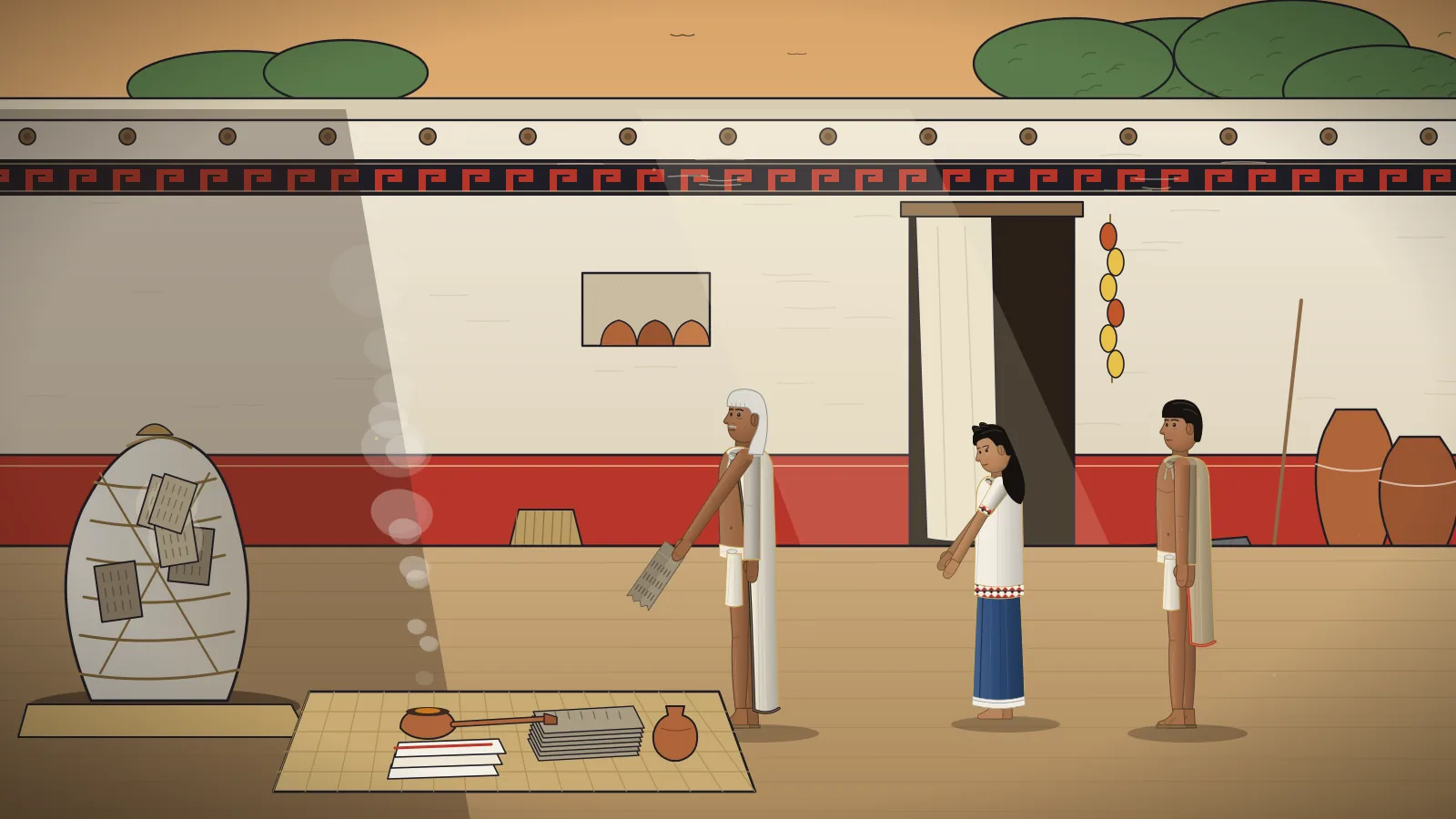
The Florentine Codex describes the preparations. The body was dressed and wrapped into a bundle, and a stone bead was placed in the mouth, to stand for the heart. For a noble it was greenstone, and for a commoner a plainer stone.
Then the elders came. They were old men whose task was to cut paper, and they laid sheets of cut bark paper on the dead, with words for each sheet: this will carry you past the next danger on the road. Every danger had its own paper.
The dead were given a jar of water for the way. Then the bundle was burned, with clothes and belongings to shield them on the journey. The little dog was killed, so that it could travel with its master, and it was burned too. Smoke rose over the rooftops of the city.
Every danger had its own paper.
Chapter Vwatch from 5:05
The Obsidian Wind
The road began between two mountains that crashed together, again and again. The dead had to pass between them. Beyond them lay a road guarded by a serpent, and then the place of a blue-green lizard. After that the dead crossed 8 deserts, and climbed over 8 hills.
Then came the place of the obsidian wind, a wind full of stones and blades of volcanic glass that cut like knives. That, the elders said, was why the dead were burned with their belongings: the burned clothes became a shelter against it. Those who had nothing suffered most.
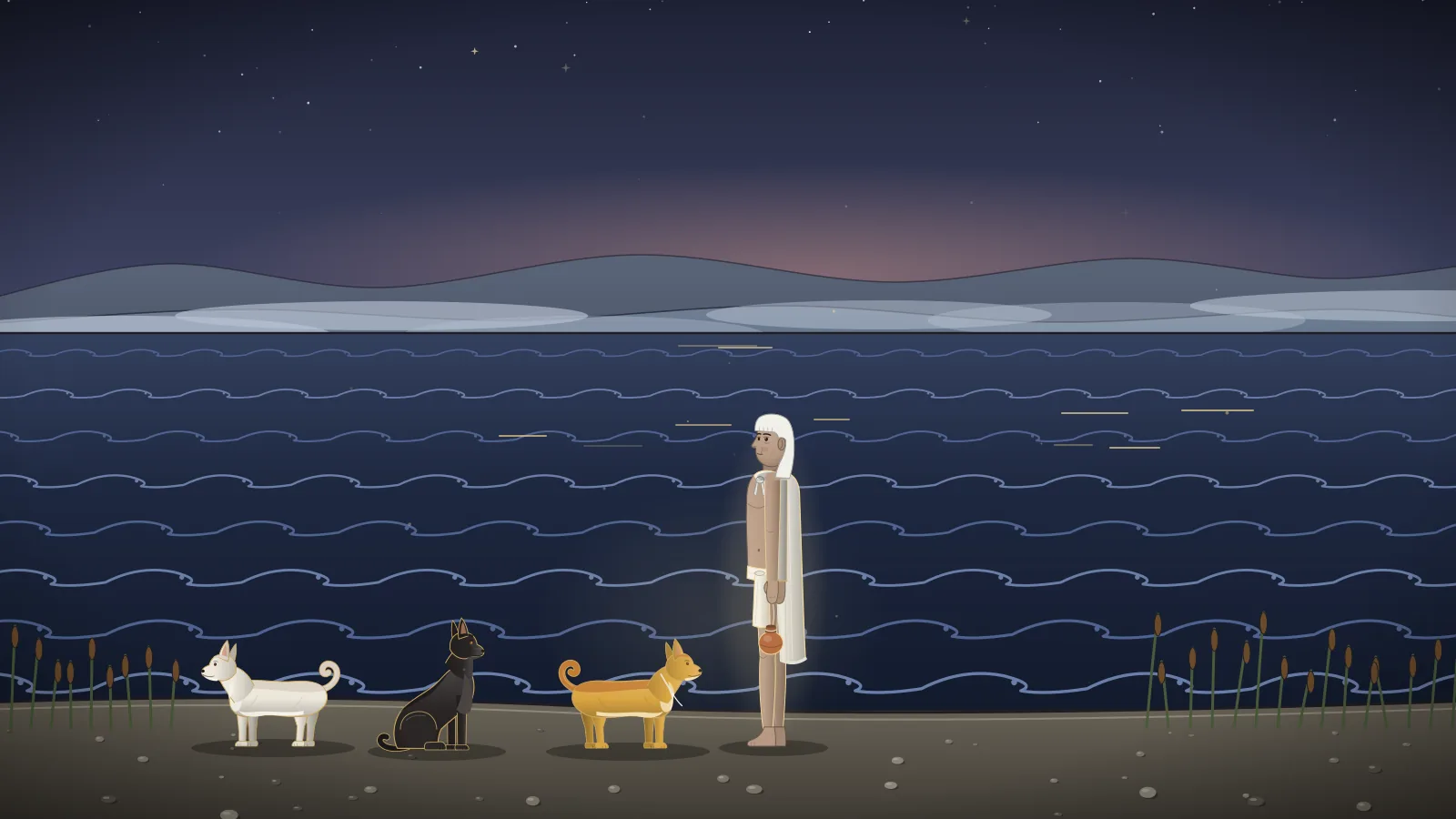
At last the traveller came to a wide river. There, the story goes, the dog recognised its master, and carried him across on its back. But not just any dog would do. A white dog, said Sahagún’s informants, would refuse, saying it had just washed itself. A black dog would refuse too, because it had just stained itself black. Only a yellow or reddish dog would carry its master across.
In Mictlan, the dead came before Mictlantecuhtli, and offered him the paper, the incense and the clothing their families had sent with them. After 4 years, they went on to the ninth and last place: utterly dark, the sources say, with no windows and no smoke hole. In Sahagún’s account, the road ended there, and the dead were gone for ever.
Nahua poets, whose songs were written down after the conquest, called life on earth a brief dream, and asked whether anyone truly lives in the place of the dead. But the living did not forget them. Offerings were burned again after 80 days, and then once a year, for 4 years, the length of the road. The Mexica calendar also held 2 feasts of the dead each year, a little one and a great one.
Only a yellow or reddish dog would carry its master across.
Chapter VIwatch from 7:14
Hell, Clay and a Dog
The friars saw Mictlan through Christian eyes. Their Nahuatl catechisms used its name for hell, and the land of the dead, which had never been a place of punishment, slowly became a place of torment.
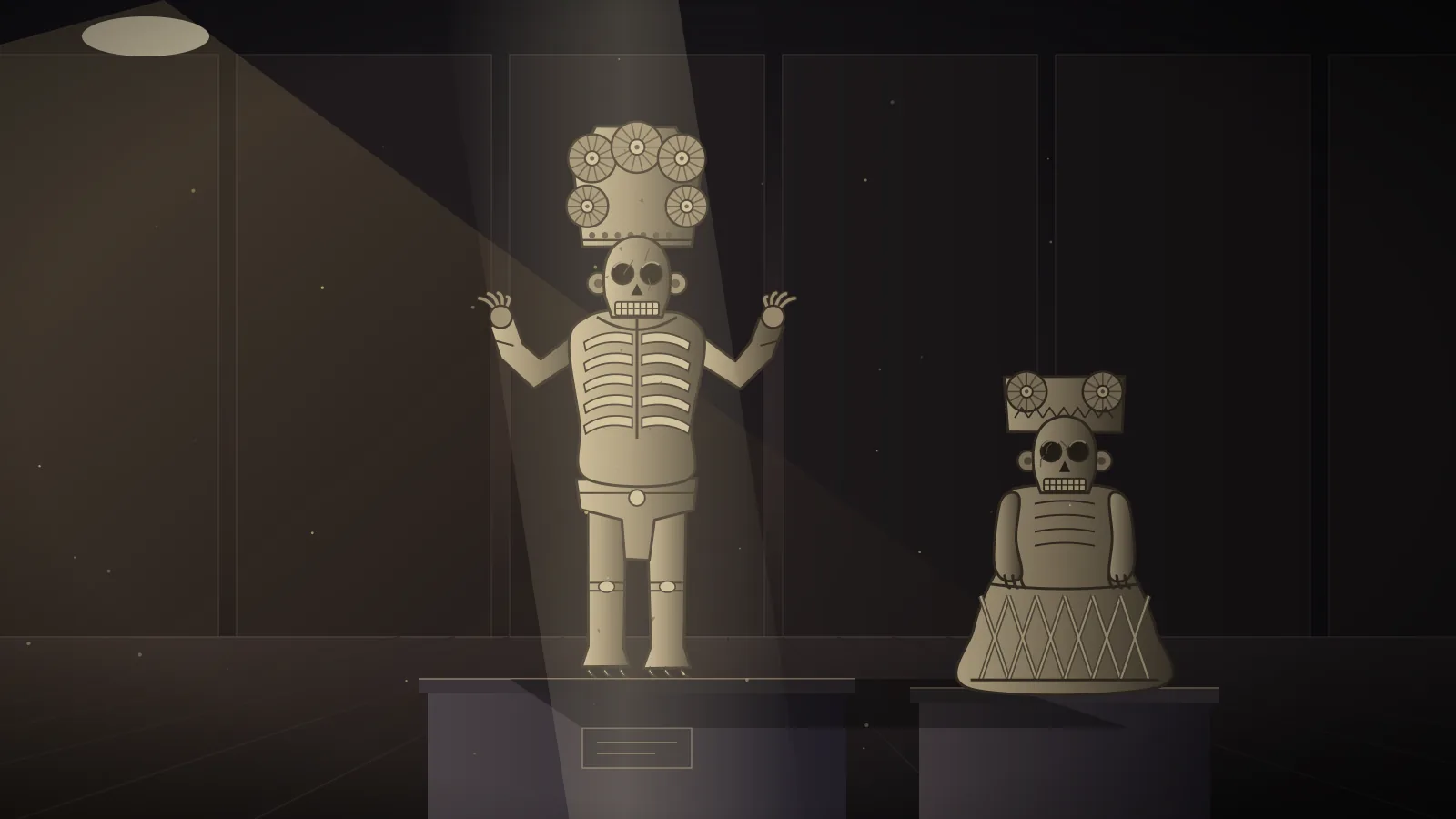
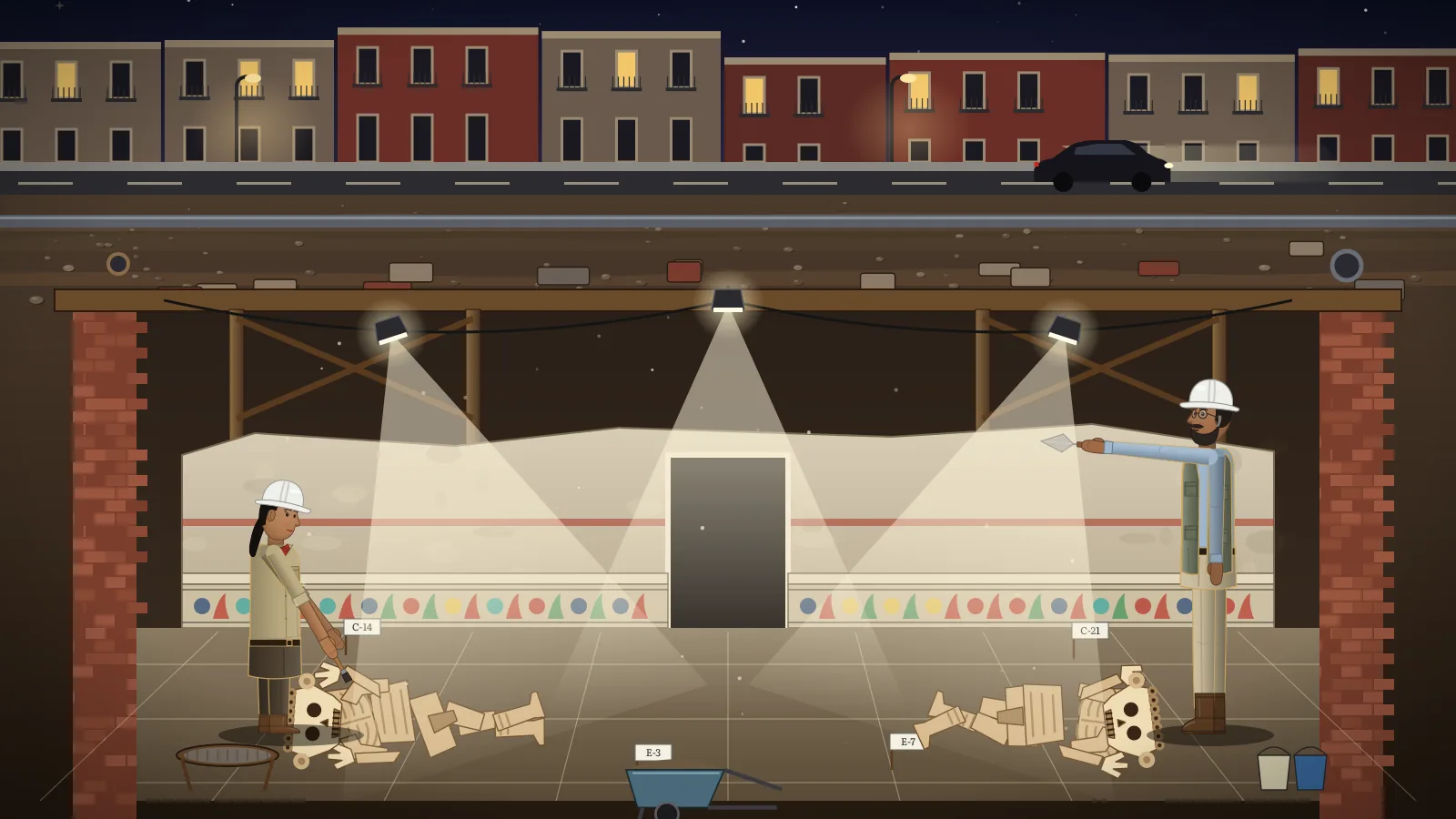
Centuries later, the old world came back up out of the ground. In August 1994, archaeologists tunnelling under a street beside the Templo Mayor, the great temple of Tenochtitlan, reached the House of the Eagles. Beside a doorway, in their original places, stood two life-size clay figures of the lord of the dead, broken into hundreds of pieces. It took about 2 years to restore them.
In 2008, beside the same temple, archaeologists found the remains of a dog, or perhaps a wolf, deep in an offering. It wore a jade collar, with small gold bells at its ankles. The archaeologist Leonardo López Luján saw in it the dog that guides its master across the river.
It wore a jade collar, with small gold bells at its ankles.
Chapter VIIwatch from 8:12
A Road of Marigolds
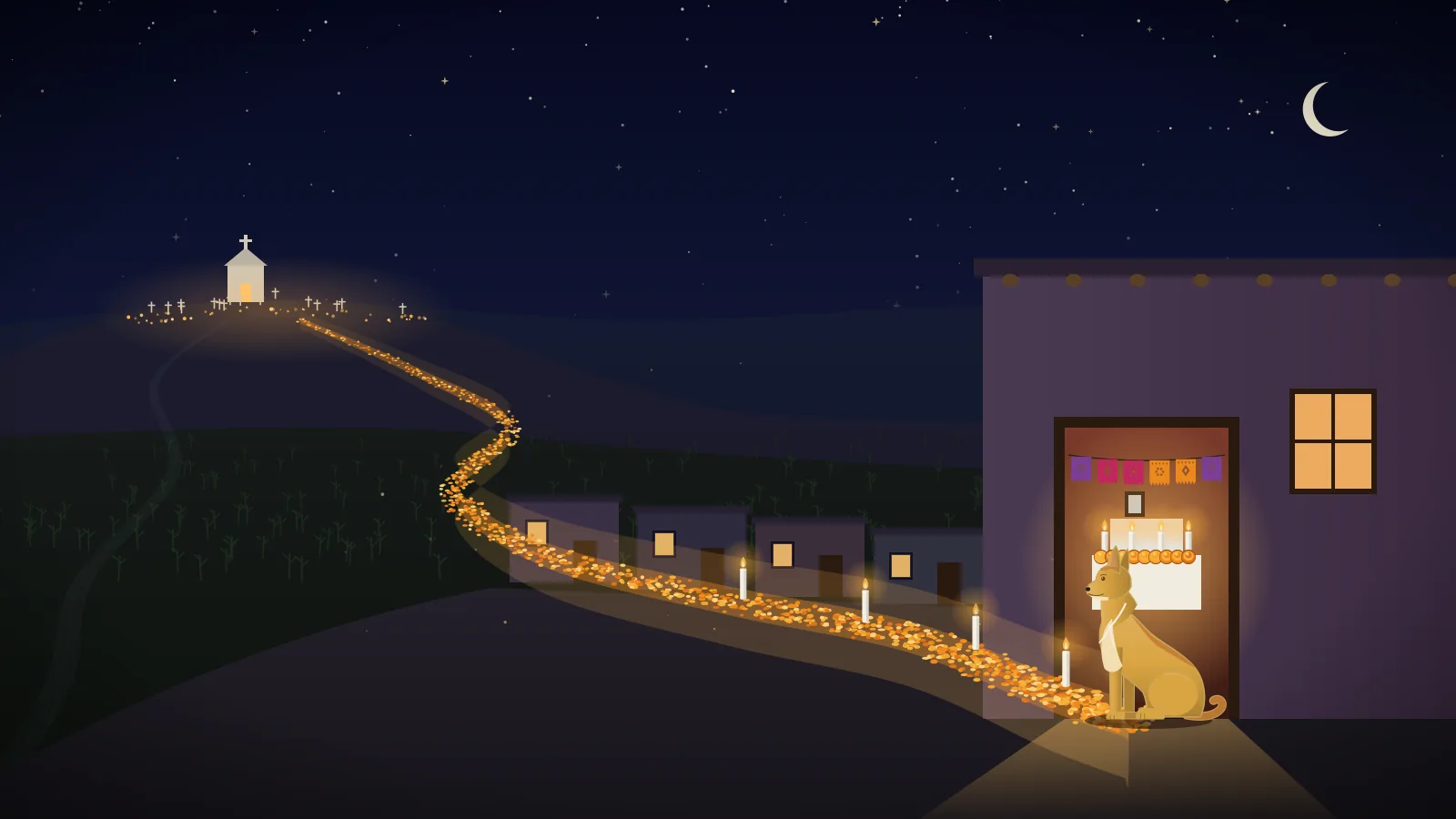
Today, at the turn of October and November, families across Mexico welcome their dead home for the Día de Muertos, the Day of the Dead. They build altars with candles, food, photographs and paper cut-outs, and lay paths of marigold petals from the grave to the door, to guide the souls home.
It is often called an Aztec festival. Historians see a meeting instead: Indigenous care for the dead, joined with the Catholic feasts of All Saints and All Souls. How much of the old world lives on is still debated. The anthropologist Stanley Brandes argues that there is no single, authentic original to find.
Some of its best-known images are modern. La Catrina, the elegant skeleton lady, began as a print by José Guadalupe Posada, published in 1913. The hairless Xoloitzcuintli is often called Mictlan’s guide dog, but the old source asks only for a yellow or reddish one. Still, dogs did go with the dead.
Historians see a meeting instead: Indigenous care for the dead, joined with the Catholic feasts of All Saints and All Souls.
In the old belief, the road to Mictlan ran one way only, and it took 4 years. Now, for a few nights each year, a road of marigold petals runs the other way, and beside the altar, a dog lies waiting.