The story of the film
Rome and Anagni, Avignon, Pisa and Constance · 1303–1417
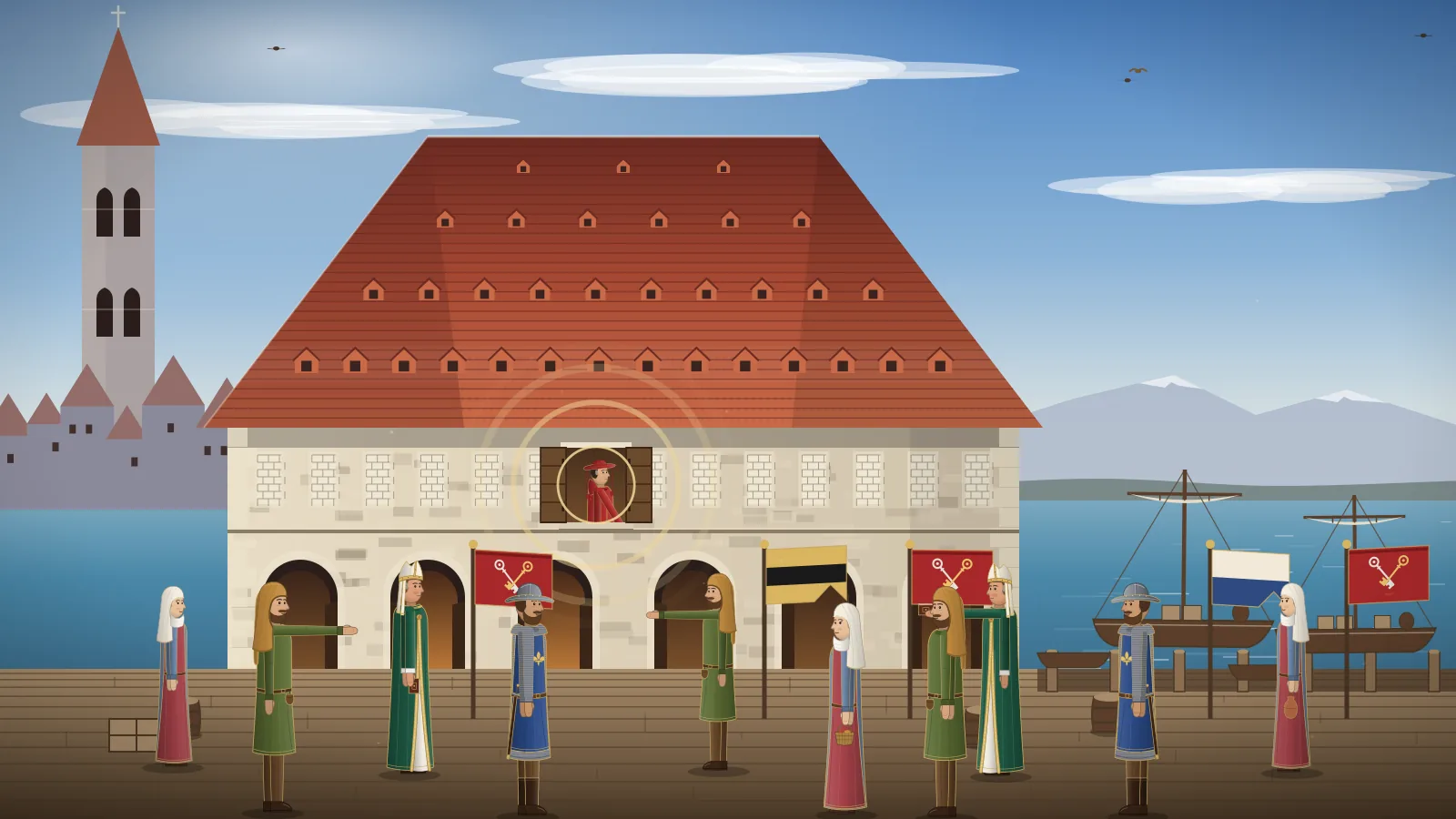
In November 1417, beside the lake harbour of Constance, the windows of a merchants’ warehouse were walled up. Inside, 53 men were locked in, each with a small wooden cell: 23 cardinals and 30 representatives of the nations of Europe. They had one task: to choose a pope.
For almost 40 years, the Western Church had had not one pope, but two. For 6 of those years, it had had three. The road to that walled-up warehouse had begun more than a century earlier, in Rome.
Chapter Iwatch from 0:35
From Rome to the Rhône
Rome around 1300 was a city of ruins and fortified towers. Among the old columns and the great basilicas, powerful families such as the Colonna and the Orsini fought for control of the streets, and of the Church’s highest office.
On 7 September 1303, agents of King Philip IV of France, with Colonna allies, burst into the papal palace at Anagni and seized the aged Pope Boniface VIII. He was freed after a few days, but died a month later. The famous story that he was slapped in the face is probably a later legend.
In 1305, after 11 months of quarrelling, the cardinals elected a Frenchman, the Archbishop of Bordeaux. As Clement V, he was crowned at Lyon, with the French king looking on. He never went to Italy. He had urgent business north of the Alps: peace between France and England, a crusade, and the king’s campaign against the Knights Templar. For a few years he moved from place to place, to Bordeaux, Poitiers and Toulouse.
In 1309 he settled at Avignon, a town on the River Rhône. It was not part of France. It belonged to the counts of Provence, beside a small territory of the popes’ own, the Comtat Venaissin. It was meant to be a temporary stop. It lasted almost 70 years.
It was meant to be a temporary stop. It lasted almost 70 years.
Seven popes lived there in turn, all of them French. Of the 134 cardinals they created, 111 were French too: more than four in five.
Chapter IIwatch from 2:10
A Palace on the Rhône
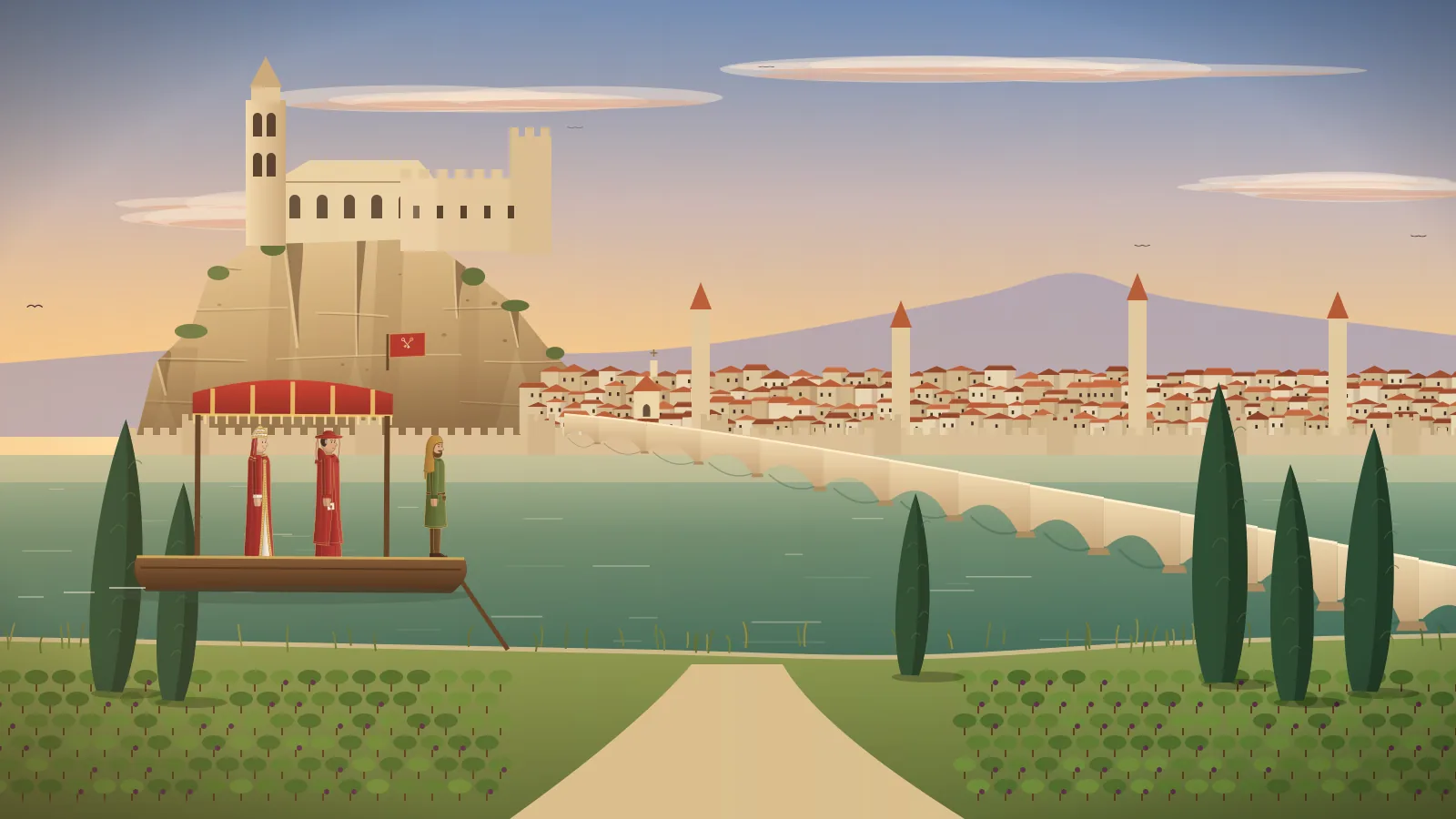
In the 1330s Benedict XII, a stern former Cistercian monk, began a new palace: high walls and towers, part fortress, part monastery. His successor, Clement VI, built a second palace beside it, larger and brighter. Together, the Old Palace and the New became the largest Gothic palace in Europe.
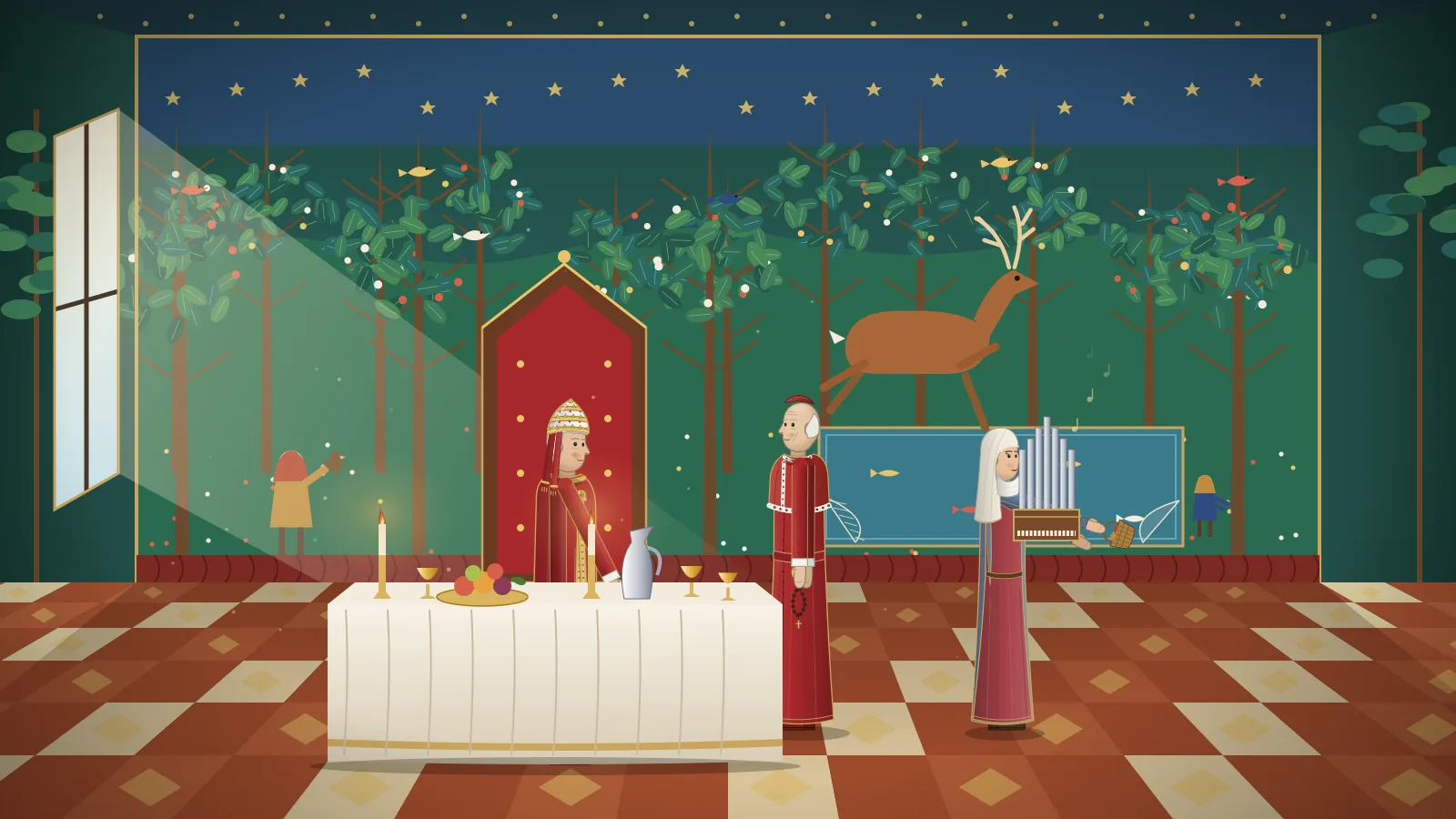
Clement loved splendour. The walls of his study were painted with hunting scenes: a fishpond, falconers, and a stag among green trees. He gave great feasts, and welcomed painters, poets and scholars to his court.
The little town became a capital. Italian bankers, lawyers, scribes and petitioners crowded its narrow streets, and taxes flowed in from churches all over Europe. The papal administration grew into one of the most efficient governments of its age.
The little town became a capital.
Then, in 1348, the Black Death reached Avignon. Within months, thousands were dead. Clement stayed in the city. His physician, Guy de Chauliac, believed that fire could cleanse poisoned air, and, the story goes, the pope sat between great fires.
Across Europe, Jews were blamed for the plague and attacked. Clement issued bulls to protect them, pointing out that Jews were dying of it like everyone else. That same year, on 9 June, he bought Avignon outright from Queen Joanna of Naples, for 80,000 gold florins.
Chapter IIIwatch from 3:50
The Babylon of the West
Not everyone admired the papal city. The Italian poet Petrarch, who lived for years nearby, beside a spring in the hills of Vaucluse, knew it well. In his letters he called Avignon “the Babylon of the West”: a place of luxurious palaces and licentious banquets, where even the horses were decked in gold.
In his letters he called Avignon “the Babylon of the West”.
The image stuck, and the whole period came to be called the Babylonian Captivity of the Church. Historians today are fairer. The popes leaned towards France, but they were not its prisoners.
Meanwhile, Rome felt abandoned. Its churches decayed, and the popes’ lands in Italy were slipping out of their control.
In 1367 Pope Urban V sailed back to Rome, and in October he entered the city. Three years later, he went back to Avignon. The Swedish visionary Bridget had warned him that if he returned there, he would soon die. He reached Avignon in September 1370. Within three months, he was dead.
Chapter IVwatch from 4:53
The Letters of Catherine
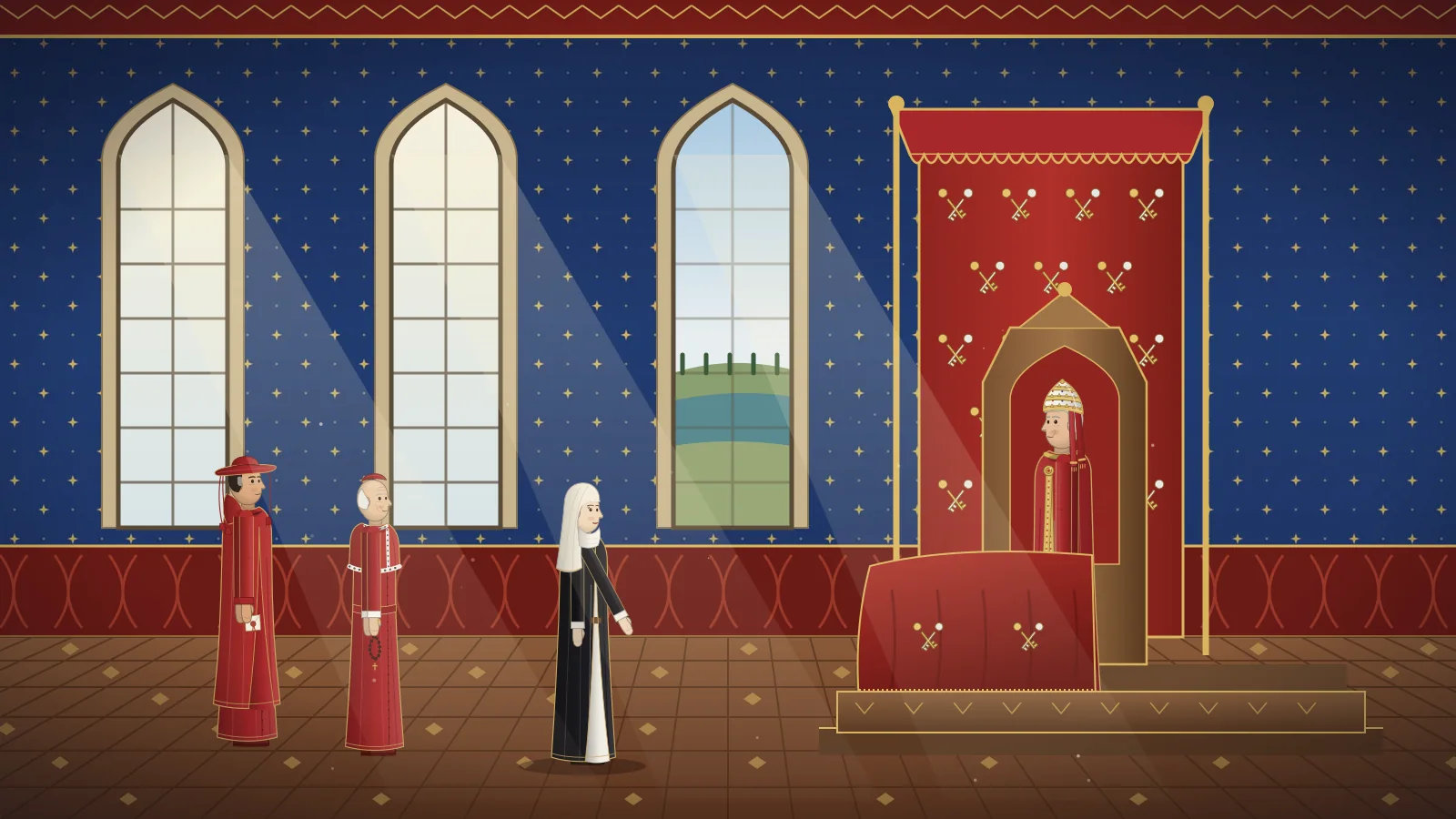
Then a young woman from Siena took up the cause. Catherine was a Dominican laywoman, in a white habit and a black mantle. She dictated her letters to secretaries, and only learned to write herself late in her short life. Nearly 400 of her letters survive.
To Urban’s successor, Gregory XI, she wrote with startling frankness. She called him “Babbo”, Daddy, and urged him to come home to Rome. In June 1376 she travelled to Avignon herself, as an envoy of Florence, and spoke with the pope.
She called him “Babbo”, Daddy, and urged him to come home to Rome.
How far she changed his mind, historians still debate; Gregory had planned the return before she came. But that September, against the wishes of the French king and most of his cardinals, Gregory left Avignon. In October his ships sailed from Marseille along the coast, and on 17 January 1377 he entered Rome.
Fourteen months later he was dead, and for the first time in 75 years, the cardinals had to elect a pope in Rome.
Chapter Vwatch from 6:00
Two Popes
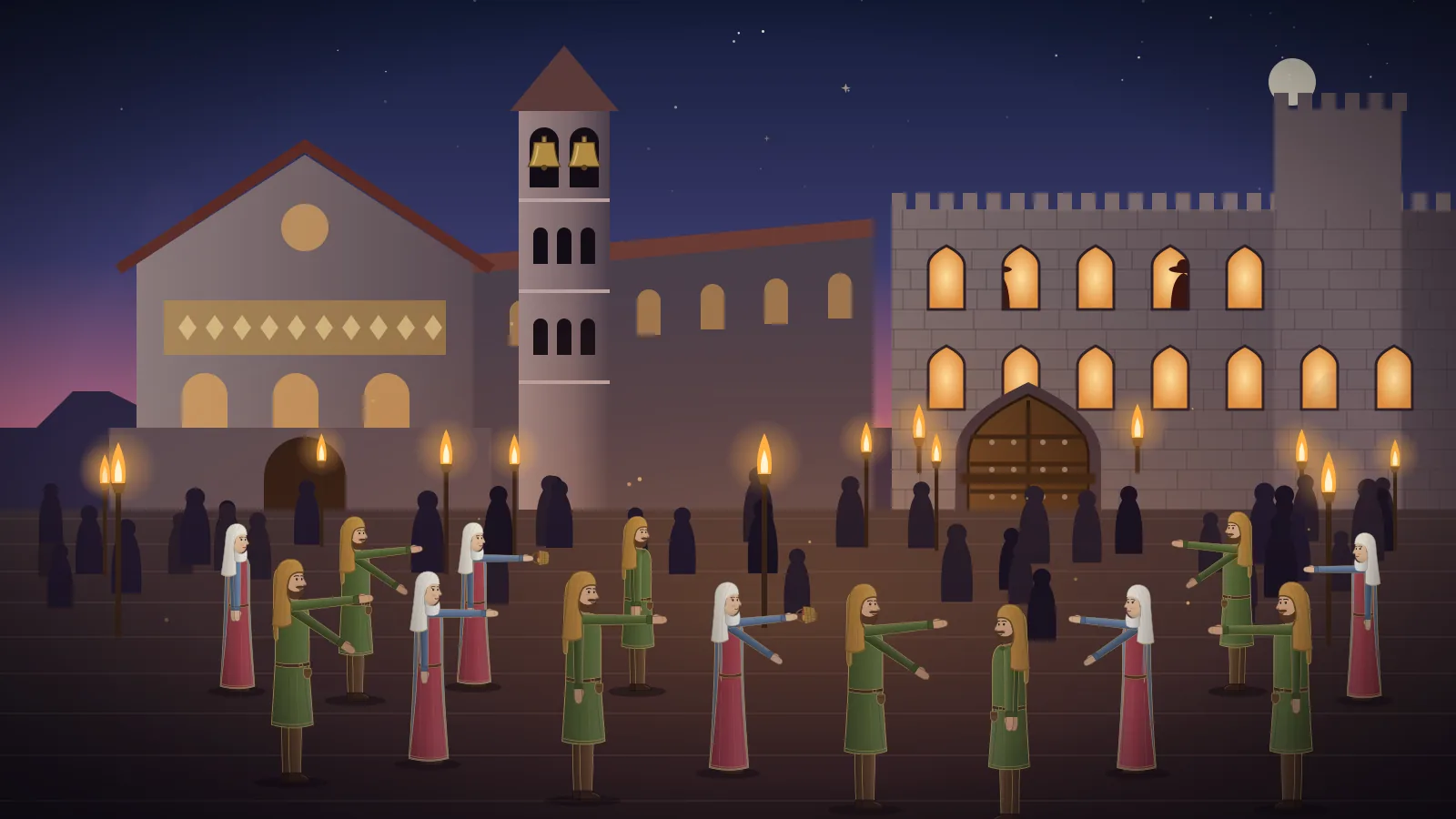
A crowd gathered outside the conclave, shouting: “We want a Roman, or at least an Italian!” Some got into the palace. Then the bells rang the alarm. On 8 April 1378, the cardinals chose an Italian, the Archbishop of Bari. He took the name Urban VI.
The new pope proved harsh and violent-tempered, though some of the accounts of his temper come from his enemies. He insulted cardinals to their faces, and attacked their wealth.
That summer most of the cardinals withdrew. At Anagni, the town where the story had begun, they declared the election invalid, made under fear of the mob. Whether that fear was real has been argued ever since. In September, at Fondi, 13 cardinals elected another pope: Clement VII. The same men had chosen two popes in five months. Clement soon returned to Avignon.
The same men had chosen two popes in five months.
Europe split along political lines. France, Scotland and the Spanish kingdoms followed Avignon. England, most of the Empire, Hungary and much of Italy followed Rome. Each pope had his own cardinals, and each excommunicated the other’s followers. Even future saints took different sides: Catherine of Siena stood with Rome, the preacher Vincent Ferrer with Avignon.
For ordinary believers, it was bewildering. Which pope was the true one? No one could be sure.
Chapter VIwatch from 7:21
Three Popes
Each side kept electing successors. In Avignon, in 1394, the Spaniard Pedro de Luna became Benedict XIII. When France withdrew its support in 1398, he was besieged in his own palace for almost 5 years. One night in March 1403, he slipped away.
In 1409 cardinals from both sides met at Pisa. They deposed both popes, and elected a new one. Neither of the deposed popes accepted the verdict. Now there were three.
Neither of the deposed popes accepted the verdict. Now there were three.
Under pressure from Sigismund, King of the Romans, the Pisan pope, John XXIII, called a general council at Constance. It opened in November 1414, and thousands poured into the little town. When John saw that the council expected him to resign, he fled by night, in disguise, according to the chroniclers, to Schaffhausen. He was brought back, and in May 1415 he was deposed.
The council declared that it held its authority directly from Christ. The Roman pope, Gregory XII, agreed to resign, and in July 1415 his resignation was given to the council.
The same council condemned the Czech reformer Jan Hus, who had come under a promise of safe conduct. In July 1415 he was burned. His death helped to spark war in Bohemia.
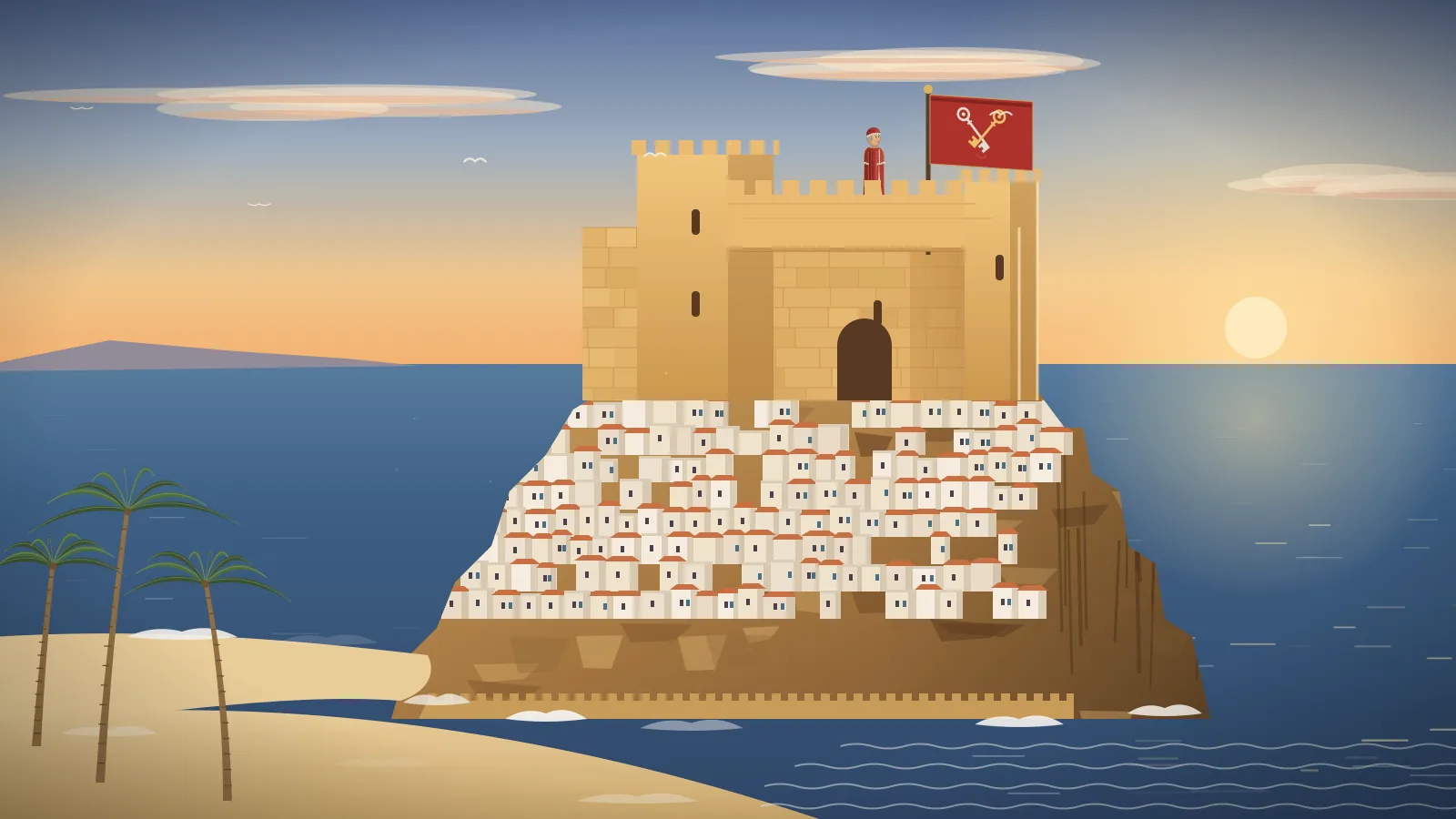
Only Benedict refused. The council deposed him in July 1417, but he did not yield. On a fortress rock above the sea at Peñíscola, in Spain, he called himself pope until his death, most likely in 1423, at a great age.
Chapter VIIwatch from 8:56
The Window by the Lake
And so, in November 1417, the electors entered the warehouse by the lake. It had been built in 1388 as the town’s merchants’ hall. Now its windows were walled up, and inside it 56 small cells had been made ready.
On 11 November, the feast of Saint Martin, shortly before midday, they chose a Roman, Oddone Colonna. He took the name Martin V. A window was opened, and the news was called out to the crowd. The council’s chronicler, Ulrich Richental, wrote that flocks of small birds settled on the roof, and many took it as a sign.
A window was opened, and the news was called out to the crowd.
The popes stayed in Rome. Avignon remained papal land until 1791. Its palace later became a barracks and a prison, and in 1906 a national museum, which it remains today.
The Catholic Church counts the Roman line as the true popes. That is why, in 1958, a new pope could take the name John XXIII again.
The old warehouse still stands by the harbour at Constance. A century that began with soldiers bursting into a palace at Anagni ended here, where, one November morning, a window opened, and the Church had one pope again.