The story of the film
London and Manchester in England, then Baltimore, New York and towns across the United States · 1740s–present
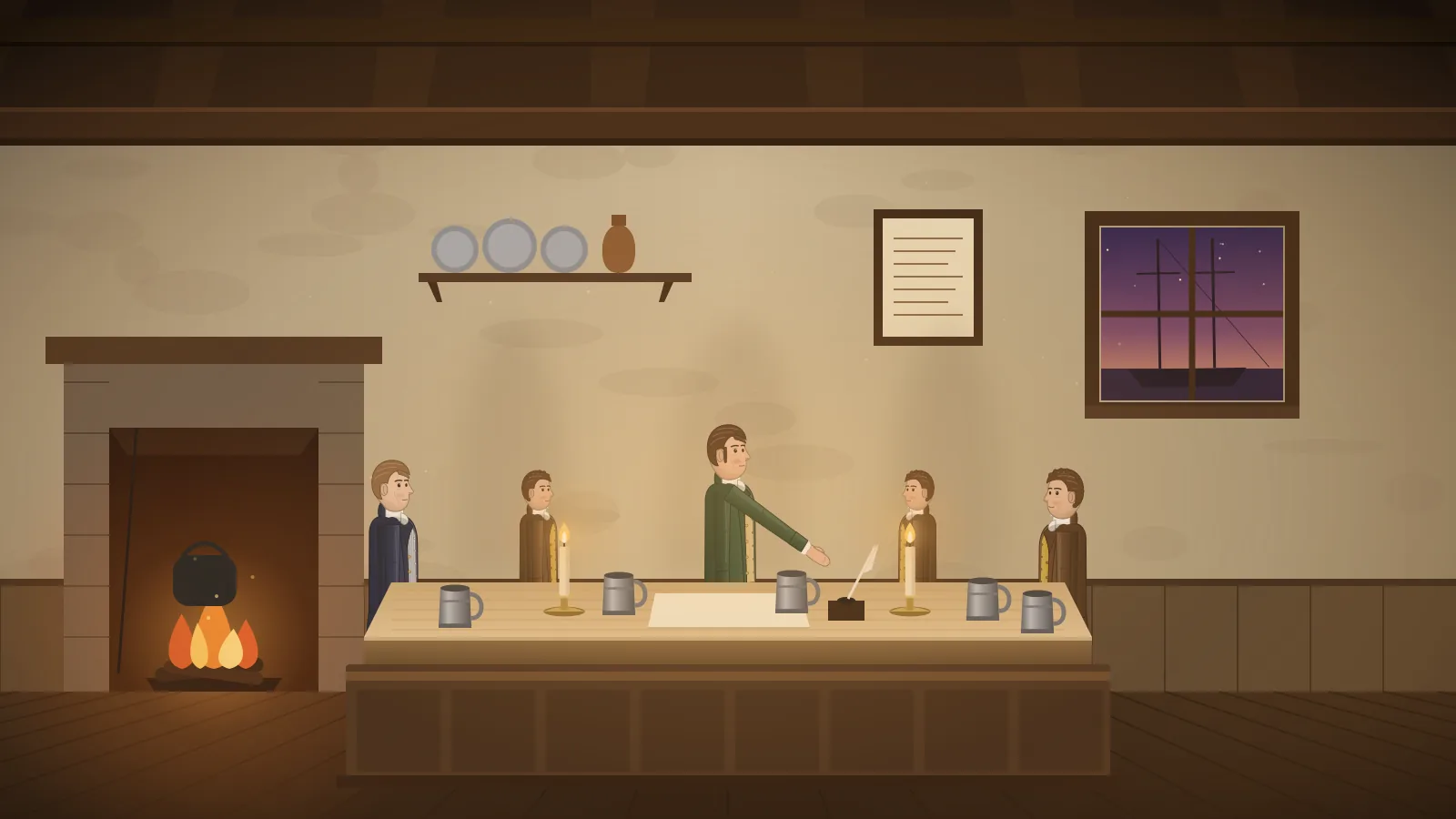
On 26 April 1819, in the port city of Baltimore, five men met at a tavern called the Seven Stars, on Second Street. Some of them were English working men, far from home. That evening they founded a lodge, and they made one another a plain promise: if one of them fell sick, the others would help.
Their emblem was a chain of three links. A century later, more than two and a half million people belonged to their order.
Chapter Iwatch from 0:38
Pennies in a Common Box
The story begins in England, in the 1740s. There was no sick pay then, and no pension. For a worker who could not work, there was only meagre relief from the parish. So working people looked after one another.
Artisans met in taverns to drink and sing, and some of their clubs called themselves Odd Fellows. The evenings could be lively. One account says that the night watch was sometimes called to restore order.
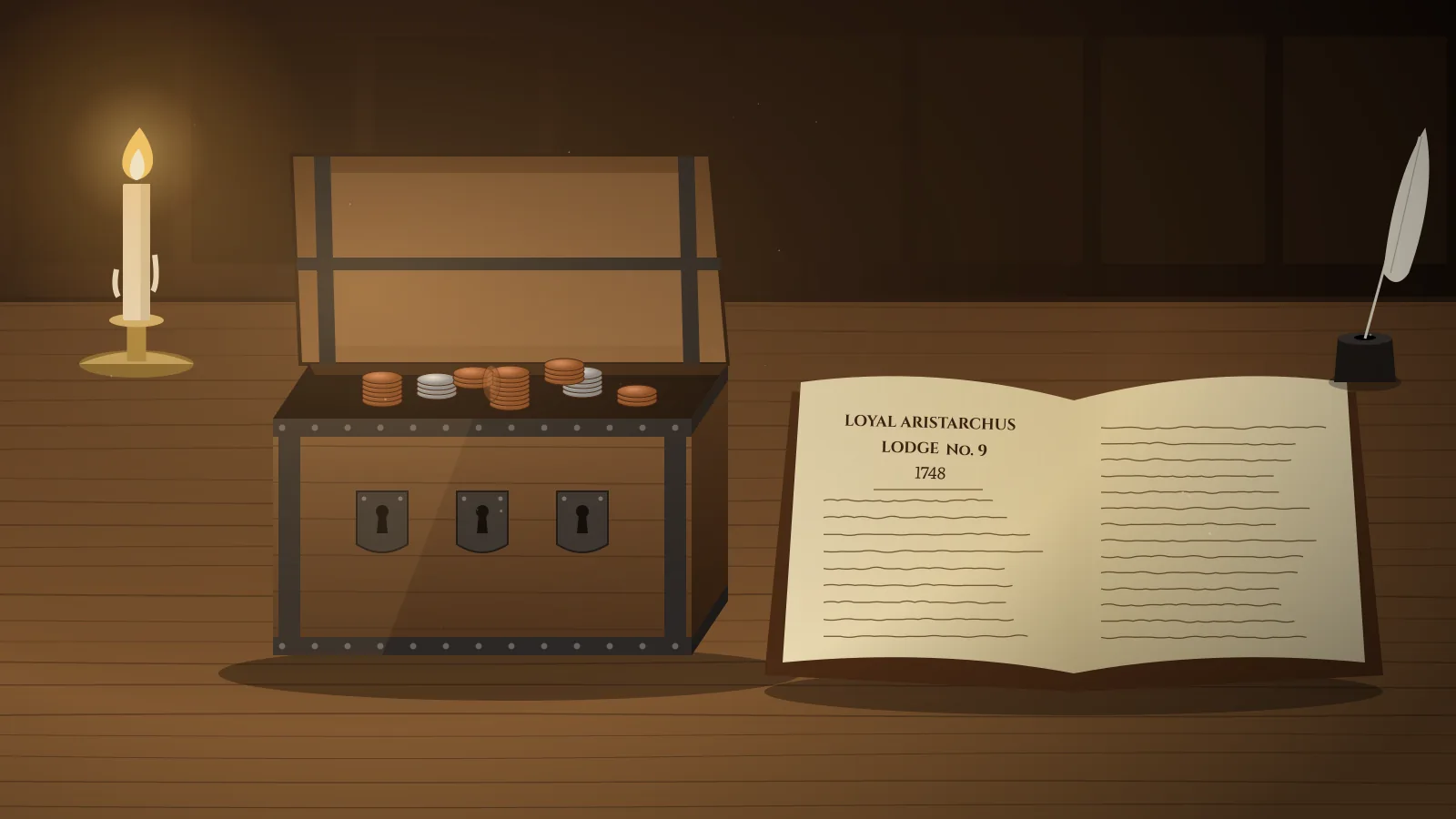
But the clubs had a serious side. Every member paid a few pence a week into a common box. A member who fell ill, lost his work, or died, would be helped from it.
The oldest surviving records come from a London lodge called Loyal Aristarchus, No. 9, and they date from 1748. The lodge met in London taverns. Its number suggests that older lodges already existed, though no record of them survives.
No one knows for certain where the name came from. One story says the members seemed odd, because they helped strangers. Another says they were men of odd, mixed trades, too few in any one craft to form a guild of their own. No theory is proven.
The help, at least, was real. When a member lay sick, brothers from his lodge came to his door, with money from the box.
Chapter IIwatch from 2:01
Passwords and Breakaways
By the end of the century, England lived in an age that feared revolution. In 1797 and 1799 Parliament passed laws against unlawful oaths and secret societies. The laws were not aimed at the Odd Fellows by name, but clubs that swore oaths and used signs had reason to worry.
So they learned to tread carefully. They guarded their passwords and signs, and kept their ceremonies private.
The clubs were loosely organised, and rival unions formed and split. In 1810 lodges around Manchester broke away, at a meeting in a pub in Salford, and founded the Independent Order of Oddfellows, Manchester Unity. It grew quickly. By the 1850s it was described as the largest and richest friendly society in the world.
Chapter IIIwatch from 2:41
A Blacksmith in Baltimore
One of the London Odd Fellows was a blacksmith named Thomas Wildey. He was born in London on 15 January 1782, and he made springs for coaches. He had helped to start a London lodge called Morning Star, No. 38.
In 1817, like many English craftsmen after the long wars with Napoleon, he crossed the Atlantic in search of a better life. He settled in Baltimore, a busy, growing port of brick houses, shipyards and fast schooners.
There he met another English Odd Fellow, John Welch. But a lodge needed five members, and two were too few.
So in March 1819 they placed notices in the Baltimore American newspaper, calling on any Odd Fellows in the city to meet. The first notice brought little. The second worked.
On 26 April, at the Seven Stars, five men founded Washington Lodge, No. 1: Thomas Wildey, John Welch, John Duncan, John Cheatham and Richard Rushworth. Wildey was elected its presiding officer, the Noble Grand.
In 1820 a charter arrived from the Manchester Unity in England. It gave the little lodge the right to found new ones, and it did. New lodges opened along the east coast, then followed the roads and rivers westward. By 1830 the order had about 3,000 members.
Relations with England grew strained, over questions of authority and ritual. In 1842 the American lodges set up their own government, and in 1843 they took the name Independent Order of Odd Fellows.
Chapter IVwatch from 4:30
Doors Opened Elsewhere
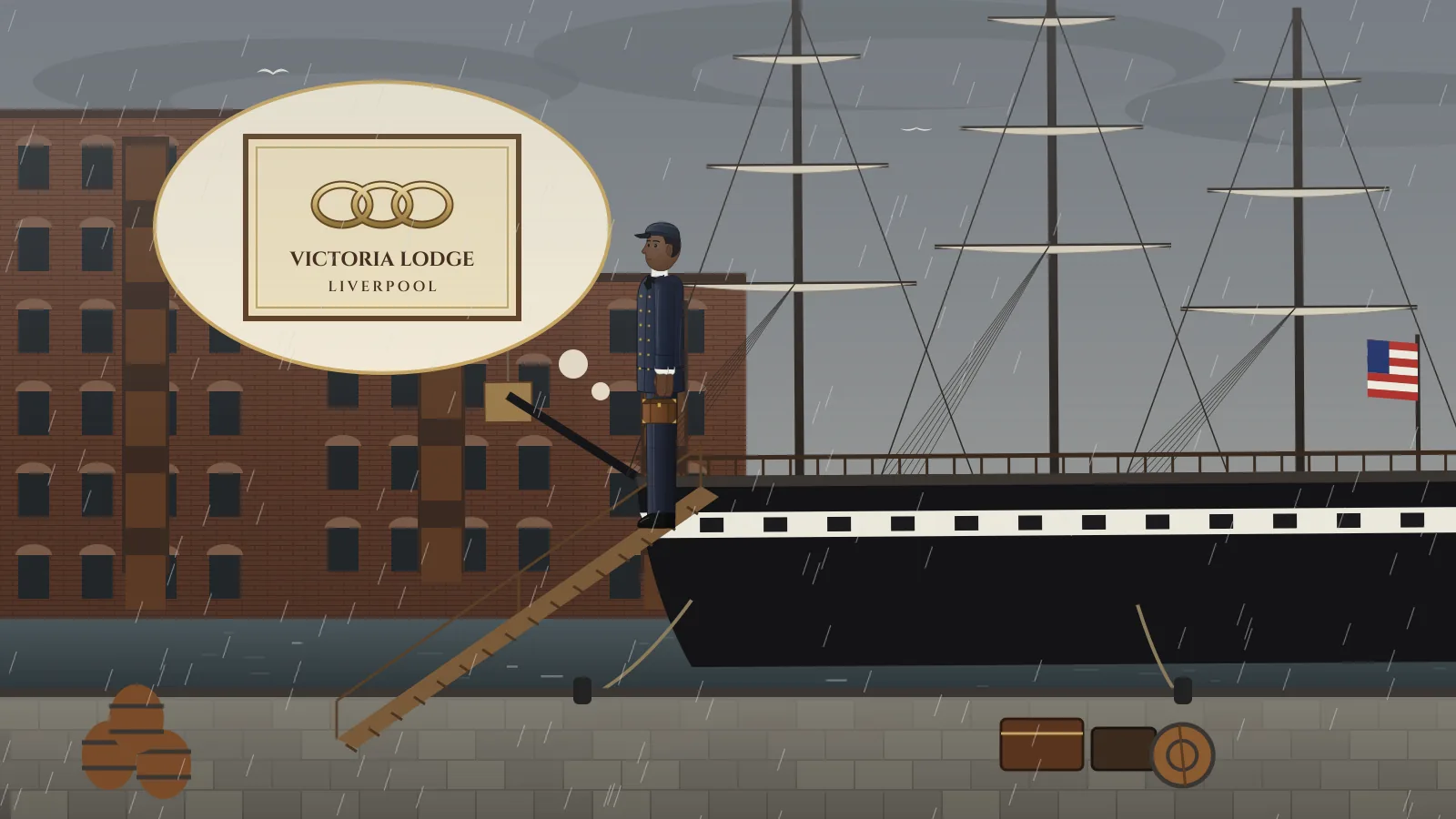
Not everyone was welcome. Peter Ogden was a Black sailor, probably born in the West Indies, and a steward on the packet ship Patrick Henry, which sailed between Liverpool and New York. In Liverpool he had joined an English lodge, Victoria Lodge, No. 448.
In New York, a group of educated Black men, the founders of a society called the Philomathean Institute, asked the American order for a charter. Because of their race, it refused them.
Ogden urged them to turn to England instead. With a charter from the Grand United Order of Oddfellows, Philomathean Lodge, No. 646, opened in New York on 1 March 1843, with 48 members and Ogden at its head. It grew into the Grand United Order of Odd Fellows in America, one of the great Black fraternal orders of the nineteenth century. Ogden died in New York in 1852.
Women, too, wanted a place. In 1851 a young Indiana newspaper editor, Schuyler Colfax, then 28 and later Vice President of the United States, championed a degree for them. On 20 September 1851 the order adopted the Rebekah degree, named after the woman in the Bible who gave water to a stranger at a well.
It was one of the first American fraternities to give women a formal place, and the Rebekah lodges shared in its charitable work.
Chapter Vwatch from 5:54
Friendship, Love and Truth
What happened inside a lodge? Members met behind closed doors, often in a hall on an upper floor. There were passwords at the door, and officers in collars and sashes.
After an initiatory degree came three more: Friendship, Love and Truth. Each had its own colour, its own lesson, and its own stories from the Bible. Those are the three links of the emblem, marked F, L and T.
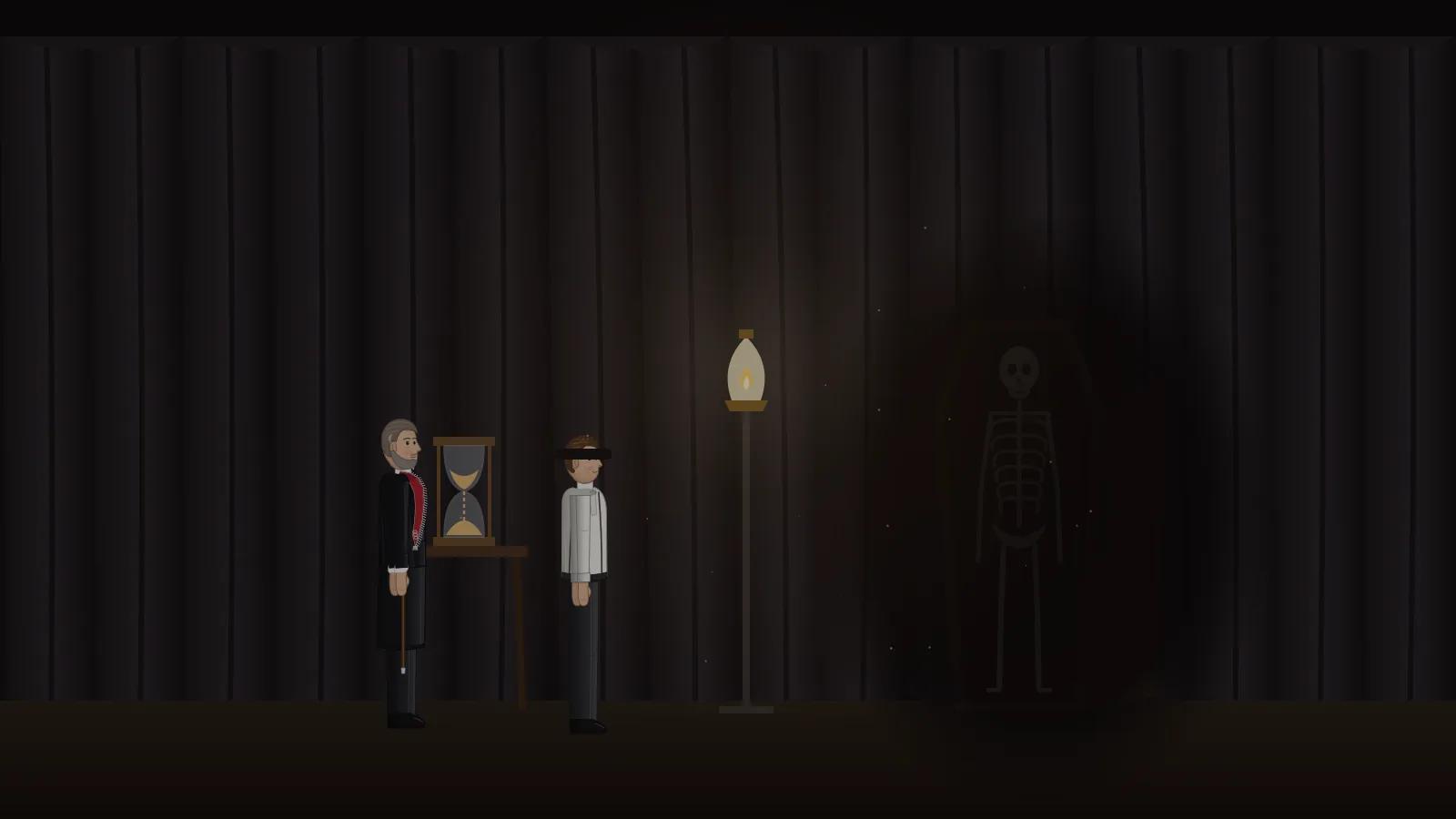
And there was one famous surprise. A candidate was led, blindfolded, into a dim room. When the blindfold was lifted, he found himself facing a skeleton.
Rich or poor, everyone dies, so live well.
It was not a threat, but a reminder: rich or poor, everyone dies, so live well. Many lodges bought real skeletons for this, from medical and lodge suppliers.
Chapter VIwatch from 6:49
Visit the Sick, Bury the Dead
But the heart of the order was practical. Its stated duty was to visit the sick, relieve the distressed, bury the dead, and educate the orphan.
The rules of one Virginia lodge, Loudoun Lodge, No. 26, in Leesburg, show how this worked. In 1906 they promised a sick member $3 a week. Brothers visited him on a set schedule, and were fined if they missed their turn.
When a member died, the lodge paid toward his funeral, collected money for his widow, and walked behind the coffin in regalia.
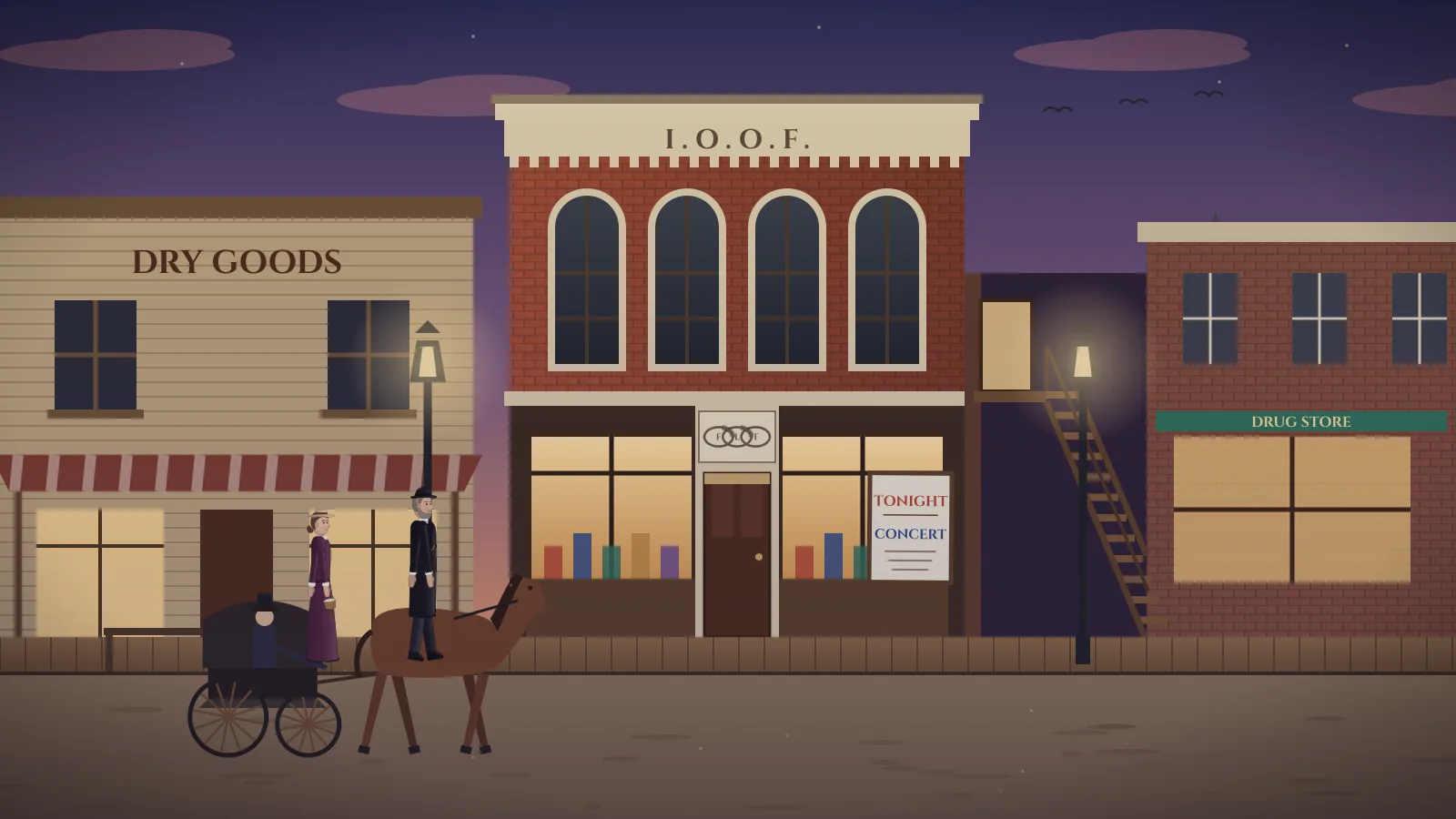
Across the country, the order built orphanages, homes for the elderly, and Odd Fellows cemeteries. In many small towns the Odd Fellows hall became a centre of town life, serving as theatre, meeting room and public hall, with the three links carved above the door.
The numbers kept rising. From about 3,000 members in 1830, the order grew to 465,000 in 1877. In 1922 it reported more than 2.6 million.
Chapter VIIwatch from 8:00
Halls Sold, Skeletons Found
Then the numbers fell. In the 1920s alone, the order lost almost a quarter of its members.
Insurance companies, company pensions and, from the 1930s, state welfare took over the work of mutual aid. Radio, cars and the cinema claimed the evenings once spent at the lodge.
Lodges closed, and their halls were sold. And sometimes, the new owners found something strange.
In 2001 an electrician working in a former Odd Fellows building in Warrenton, Virginia, found a black box hidden between two walls. Inside lay a skeleton, wrapped in a white shroud. The police took the remains away to be studied.
Finds like this have sparked rumours of crimes. Historians explain most of them as the order’s old teaching skeletons, often medical specimens.
Chapter VIIIwatch from 8:58
A Safety Net in the Open
Legends have gathered around the order from the start. Old traditions of the order traced it to Roman soldiers, or to the exiled Israelites. Historians find no evidence for it before eighteenth-century England. Others imagine the Odd Fellows as a secret society with hidden power.
Only its rituals were secret.
The records tell a plainer story: working people in English taverns, a blacksmith in Baltimore, and an order whose aims, finances and members were publicly reported. Only its rituals were secret.
The order survives. Its Sovereign Grand Lodge is in Winston-Salem, North Carolina, and by its own estimate it has some 600,000 members, in about 26 countries. The Manchester Unity carries on in Britain and Australia, and many lodges now give their time to local charity, community halls and scholarships.
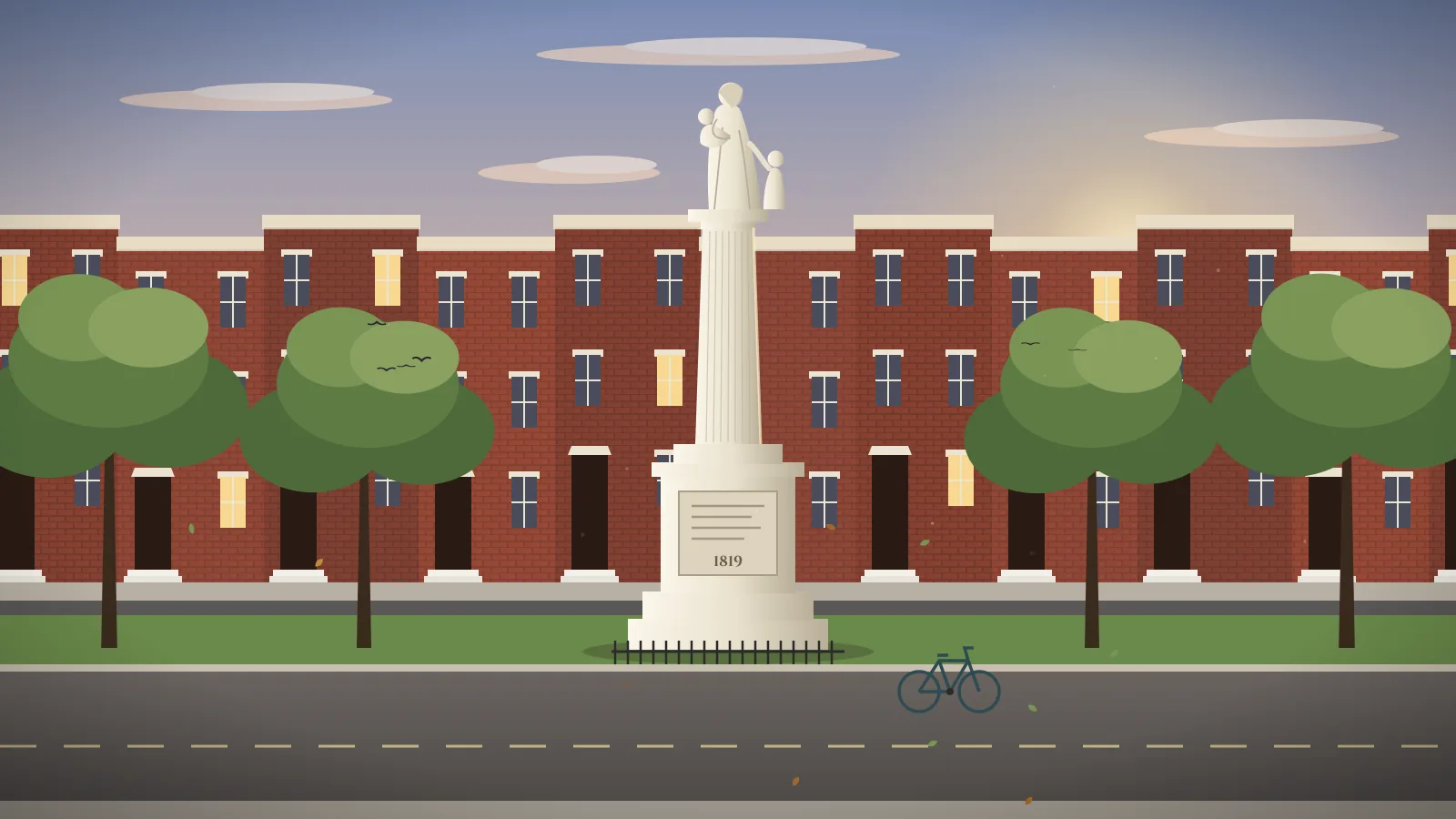
Thomas Wildey died on 19 October 1861. In 1865 the order raised a marble column in his memory, on Broadway, in Baltimore, the city where he began. On top stands a figure of Charity, holding one child, and looking down at another.
It all began with a few pence in a box, and a promise to help a brother in need. The help was never a secret at all.