
The story of the film
Thebes, Saqqara and the Valley of the Kings, then Turin and London · c. 2350 BCE–4th century CE
Every evening at Thebes, in Upper Egypt, the sun went down behind the cliffs on the western bank of the Nile. The light turned gold, then red, and the long shadow of the hills crept over the fields and the river. To the ancient Egyptians, this was not an ending. It was the sun entering a hidden world, where it would sail all night, towards the dawn.
They called that world the Duat. And every Egyptian hoped, one day, to make the same journey.
Chapter Iwatch from 0:35
Into the West
The Duat was not simply a cave underground. The oldest texts placed it among the stars of the night sky; later ones set it beneath the earth. The Egyptians held these pictures side by side, and none of them was the only map.
In one famous image, the sky goddess Nut arched over the world, her body spangled with stars. Each evening she swallowed the sun, and each morning she gave birth to it again.
Each evening she swallowed the sun, and each morning she gave birth to it again.
The way in lay in the west, where the sun set. There, on the edge of the desert, beyond the reach of the flood and the green fields, the Egyptians buried their dead. They called them the westerners.
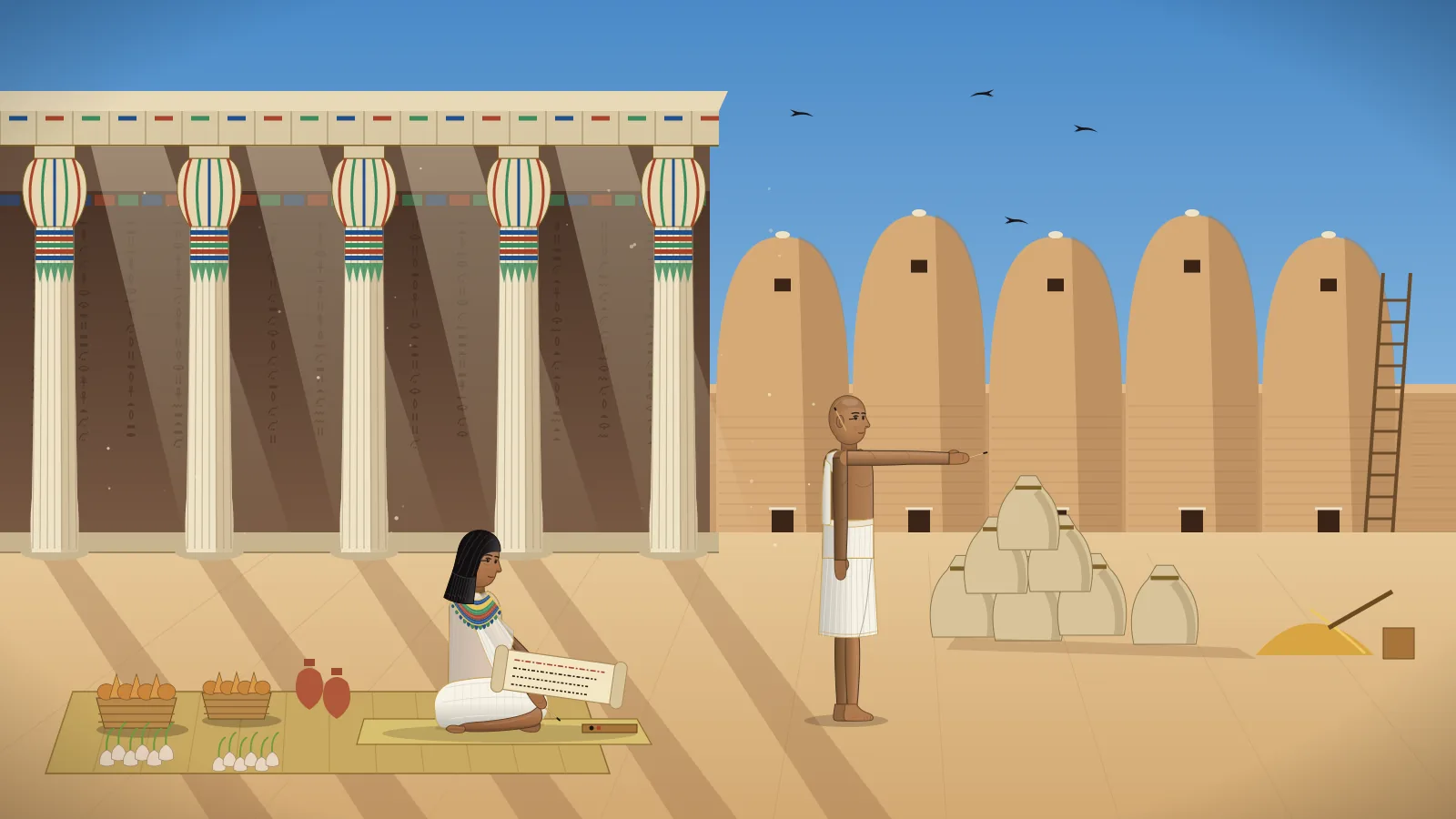
Around 1250 BCE, a royal scribe named Ani worked at Thebes. He kept the accounts of the offerings brought to the gods: the bread, the beer, the cattle and the grain. His wife, Tutu, was a singer in the temple of Amun. Almost everything we know of them comes from one object, made for Ani’s own journey into the west.
Chapter IIwatch from 1:34
Seventy Days
When an Egyptian of his rank died, the embalmers worked for 70 days. They dried the body with natron salt, and wrapped it in linen, layer upon layer. They removed the brain, but they left the heart in place. The heart, they believed, held a person’s thought and memory, and it would be needed.
Over the heart, among the wrappings, they often laid a stone scarab, carved with a spell that spoke to the heart directly. “O my heart, which I had from my mother,” it begins, “do not stand up against me as a witness.” The words were meant to keep the heart from speaking against its owner at the moment of judgement.
The heart, they believed, held a person’s thought and memory, and it would be needed.
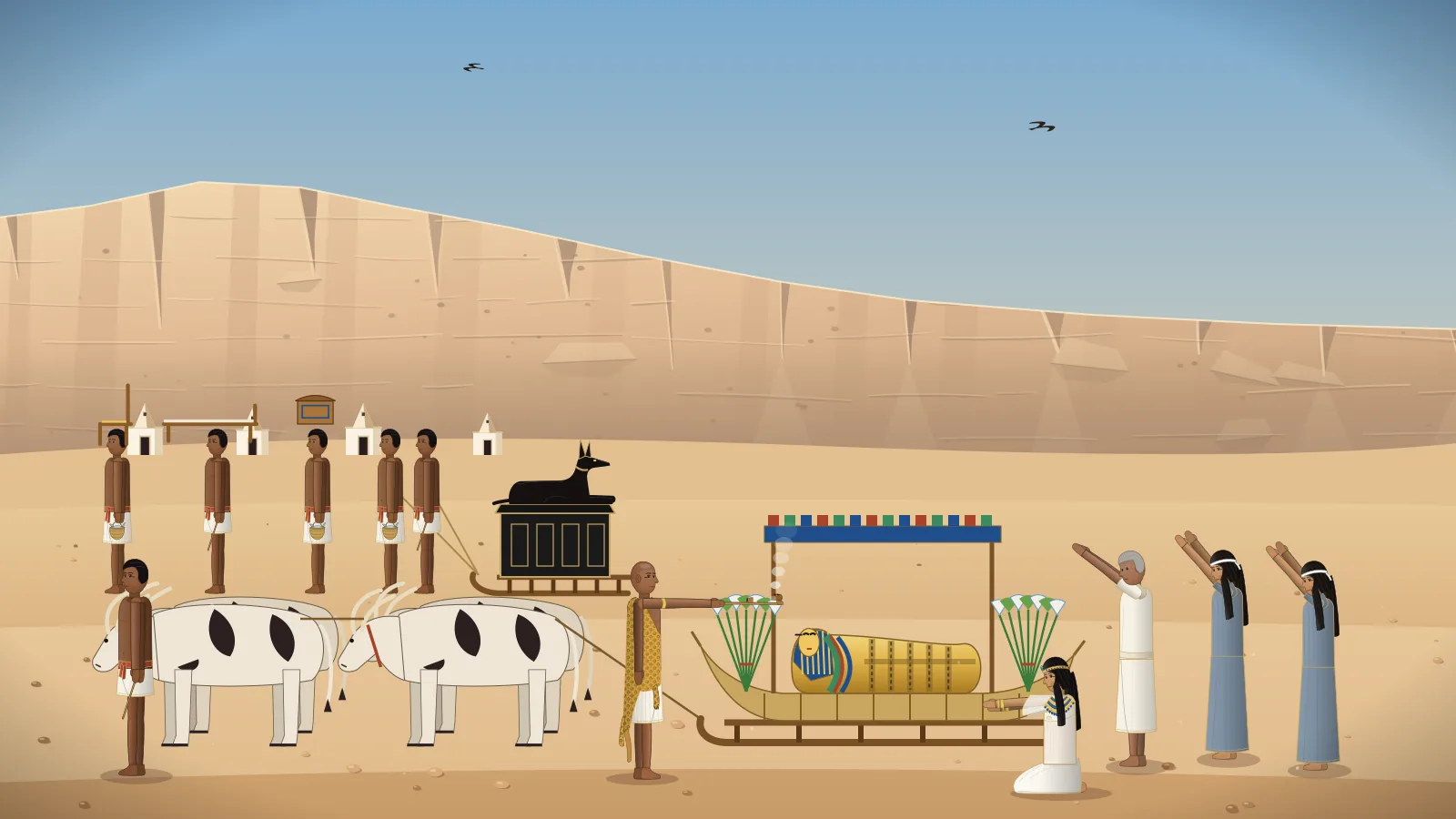
Ani’s own papyrus paints a funeral like his. Oxen pull the coffin on a boat-shaped bier, set on a sledge, and a priest in a leopard skin burns incense. Mourners follow. One hides his tears; another throws dust on his head. Tutu kneels beside the coffin in grief.
At the tomb, priests performed the opening of the mouth. They touched the mummy’s face with special tools, so that the dead could breathe, eat and speak again.
The tomb was filled with what the dead would need: food, furniture, clothing, and small figures called shabtis. If their owner was called to work in the fields of the afterlife, they would answer instead. An ideal set held 401 of them: a worker for every day of the year, and 36 overseers to keep them at their tasks.
Chapter IIIwatch from 3:15
Words for the Journey
But above all, the dead needed words. Around 2350 BCE, spells were carved in columns of hieroglyphs inside the pyramid of King Unas, to help him rise to the sky. These Pyramid Texts are the oldest body of religious writing that survives from Egypt.
Centuries later, officials had similar spells painted inside their wooden coffins. Some included the Book of Two Ways, a map of the beyond, with a land path and a water path divided by a lake of fire.
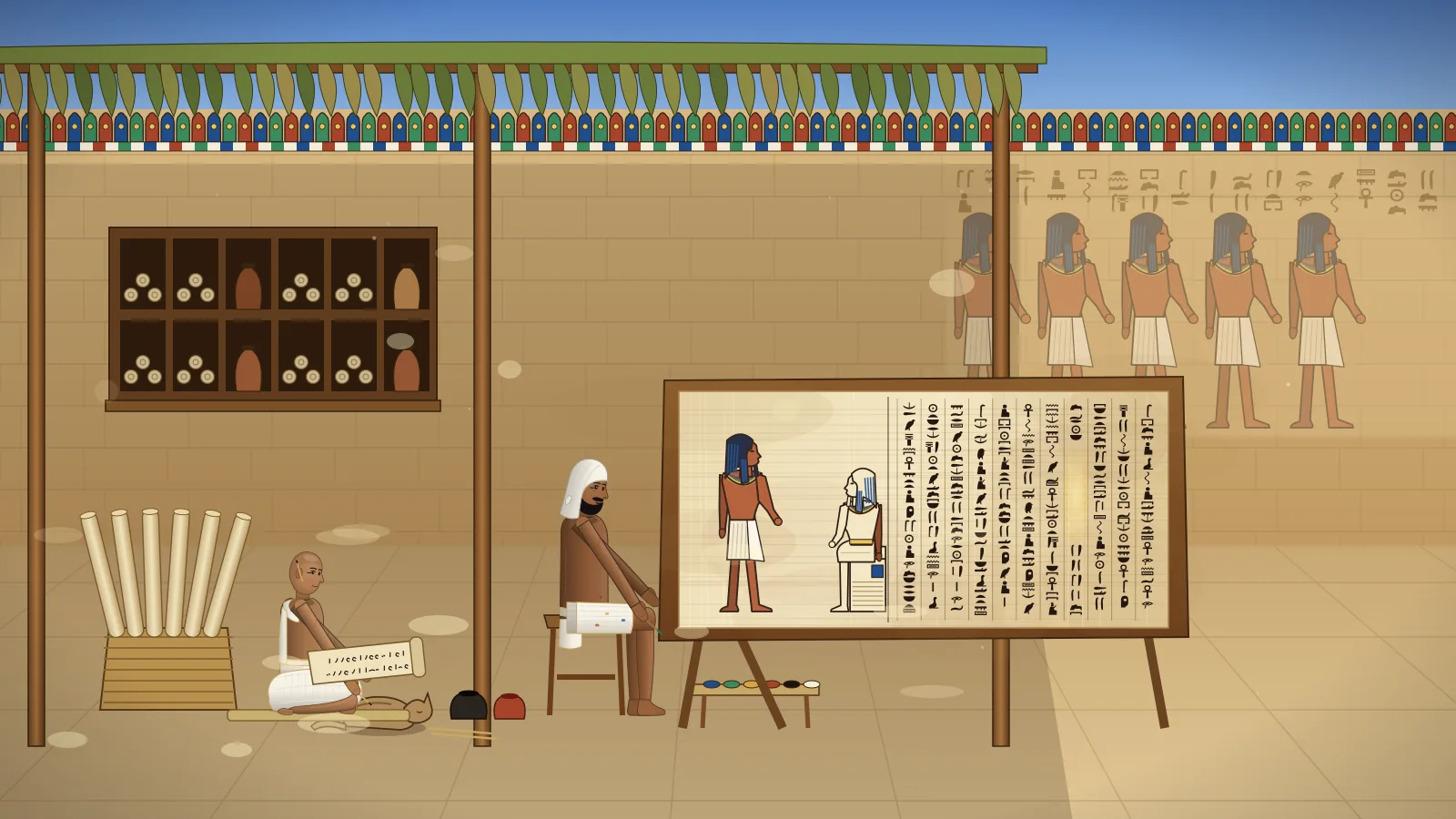
Then, from about 1550 BCE, scribes copied spells onto rolls of papyrus. The Egyptians called them the spells for going forth by day. We call them the Book of the Dead. Workshops sold ready-made rolls, with blank spaces where a buyer’s name could be written in later.
But above all, the dead needed words.
Ani’s roll was one of the finest ever made: more than 23 metres long, and painted in brilliant colour, scene after scene.
Chapter IVwatch from 4:21
The Hall of the Two Truths
With these spells, the dead set out. The Duat was full of gates, each with its keepers, bearing strange names like He Who Lives on Snakes. To pass, the dead had to know the name of every gate and every keeper. In the Duat, knowledge was protection.
At last came the Hall of the Two Truths, where Osiris, king of the dead, sat enthroned before 42 judges. The dead had to greet each judge by name, and to each one declare a wrong they had never done. “I have not stolen.” “I have not caused hunger.” “I have not taken milk from the mouths of babes.” “I have not reduced the measuring vessel.” It reads like a portrait of a good life in Egypt: honest measures, bread for the hungry, no harm to the weak.
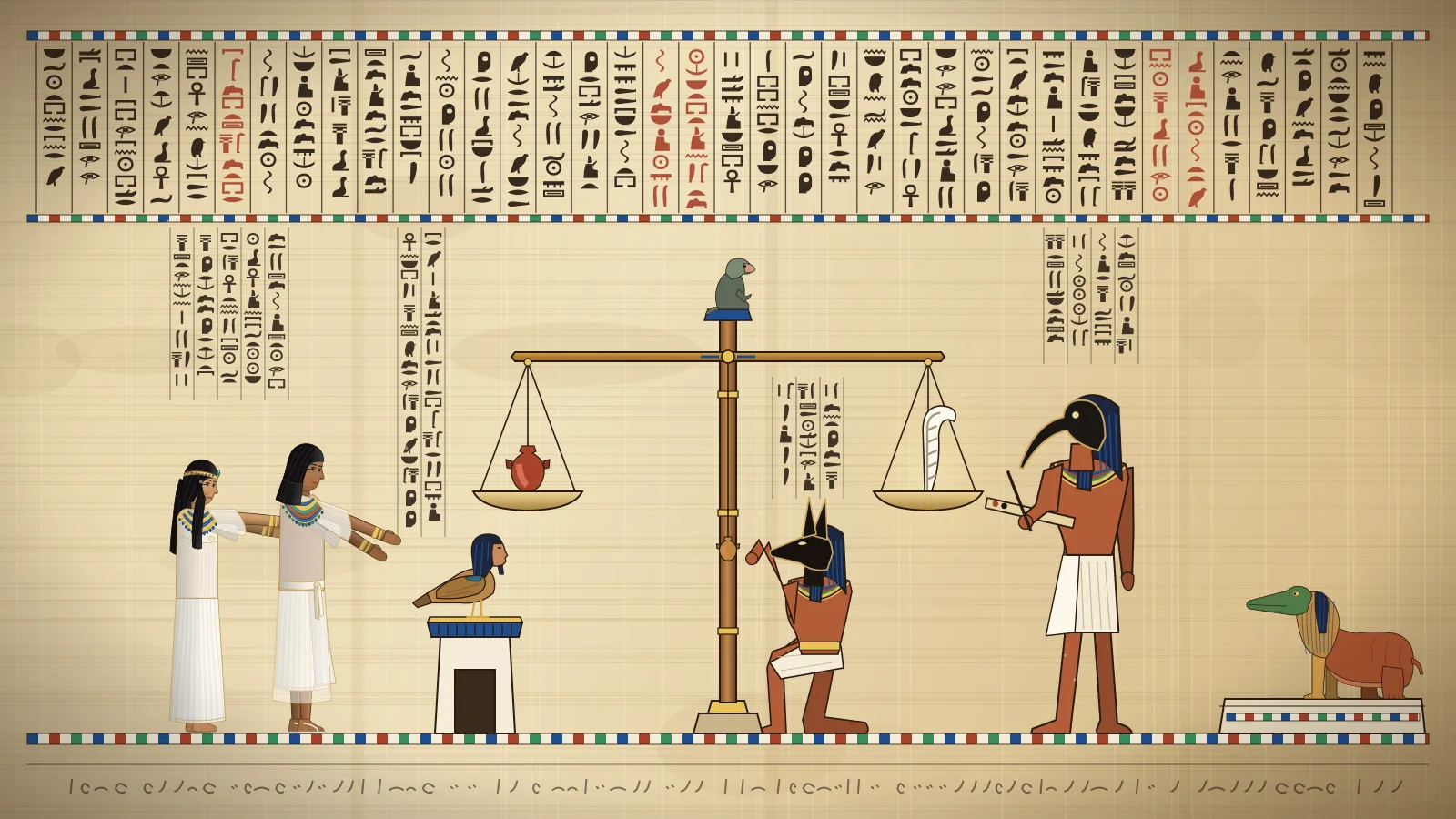
Then came the most famous moment. In Ani’s papyrus, the jackal-headed god Anubis kneels beside a great balance. On one pan lies Ani’s heart. On the other lies a single feather: the feather of Maat, the goddess of truth, justice and the right order of the world. Beside the scales stands Thoth, the ibis-headed god of writing, with his pen and palette, ready to record the result.
And crouching nearby waits Ammit, the Devourer, part crocodile, part lion, part hippopotamus. If the heart was heavy with wrongdoing, the texts say, Ammit would devour it. The person suffered the second death, and ceased to exist.
But in the paintings, the balance almost always holds level.
But in the paintings, the balance almost always holds level. The spells were written to make sure of it. Ani is declared true of voice, and led into the presence of Osiris.
Chapter Vwatch from 6:29
The Field of Reeds
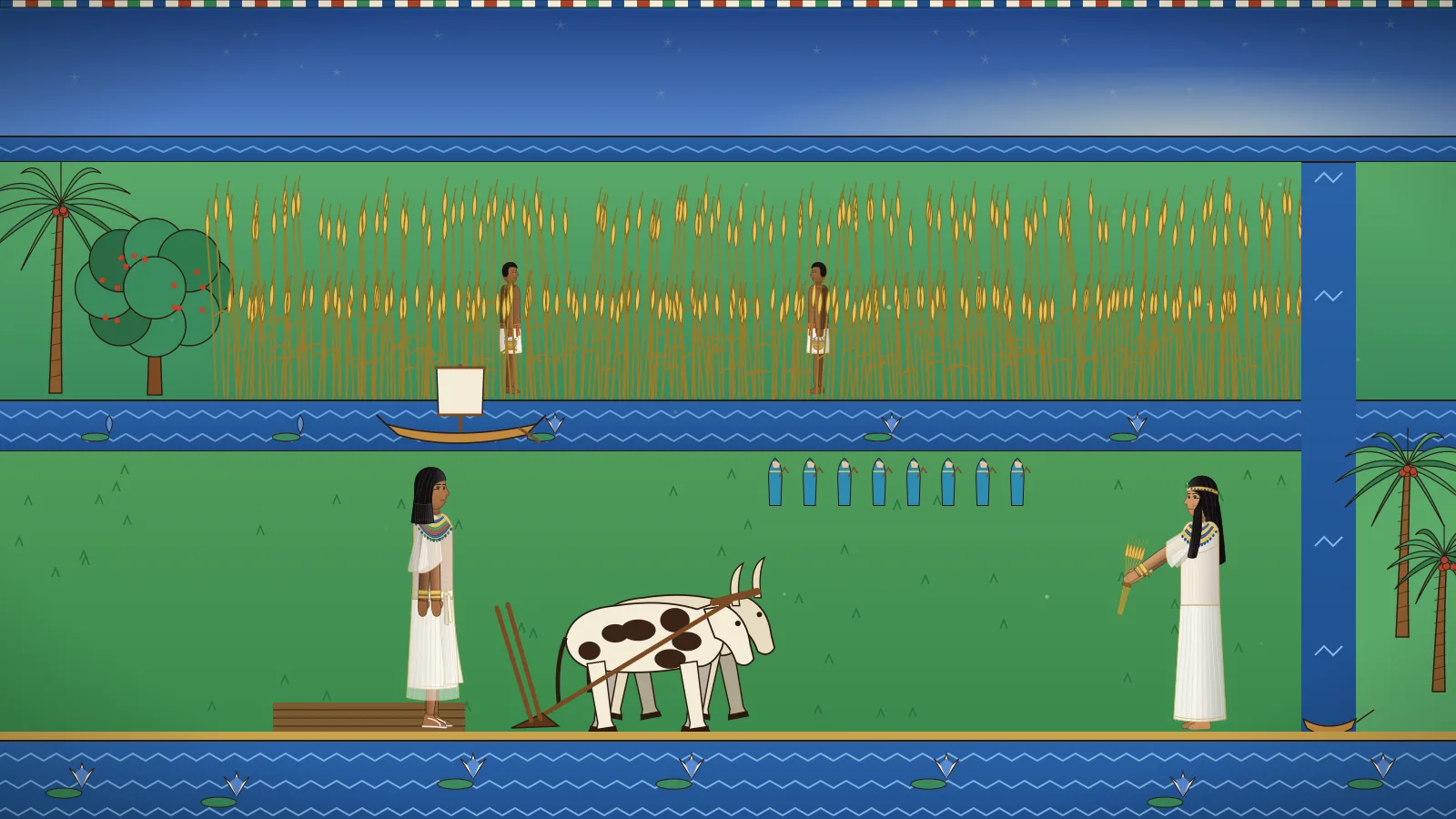
Now the blessed dead could live in the Field of Reeds, an ideal Egypt of canals and rich harvests, where the grain grew taller than a man. The paintings show them ploughing, reaping and sailing on its waters.
Their ba, pictured as a bird with a human head, could leave the tomb by day, and return to receive the offerings of the living: the bread and water that families brought to the tomb.
The dead could hope for something greater still: to sail with the sun itself, through the night.
And the dead could hope for something greater still: to sail with the sun itself, through the night.
Chapter VIwatch from 7:01
The Night Voyage of the Sun
For the kings, that journey was painted on the walls of their tombs in the Valley of the Kings. The oldest complete version is in the tomb of Thutmose III, from the 15th century BCE. It is called the Amduat, what is in the underworld. The walls are painted yellow, like a vast unrolled papyrus, with crowds of slender figures, hour after hour.
The sun god, with the head of a ram, entered in the west in his boat. For 12 hours he sailed through dark waters and deserts of sand. In the deepest hours, the texts say, his soul was united with the body of Osiris, and from that union, new life began.
But every night the great serpent Apep rose against him, and swallowed the waters to stop the boat. Every night he was bound, and overcome. In Egypt’s temples, priests recited spells to help the sun, and in their books, Apep’s name was written in red ink.
Every night he was bound, and overcome.
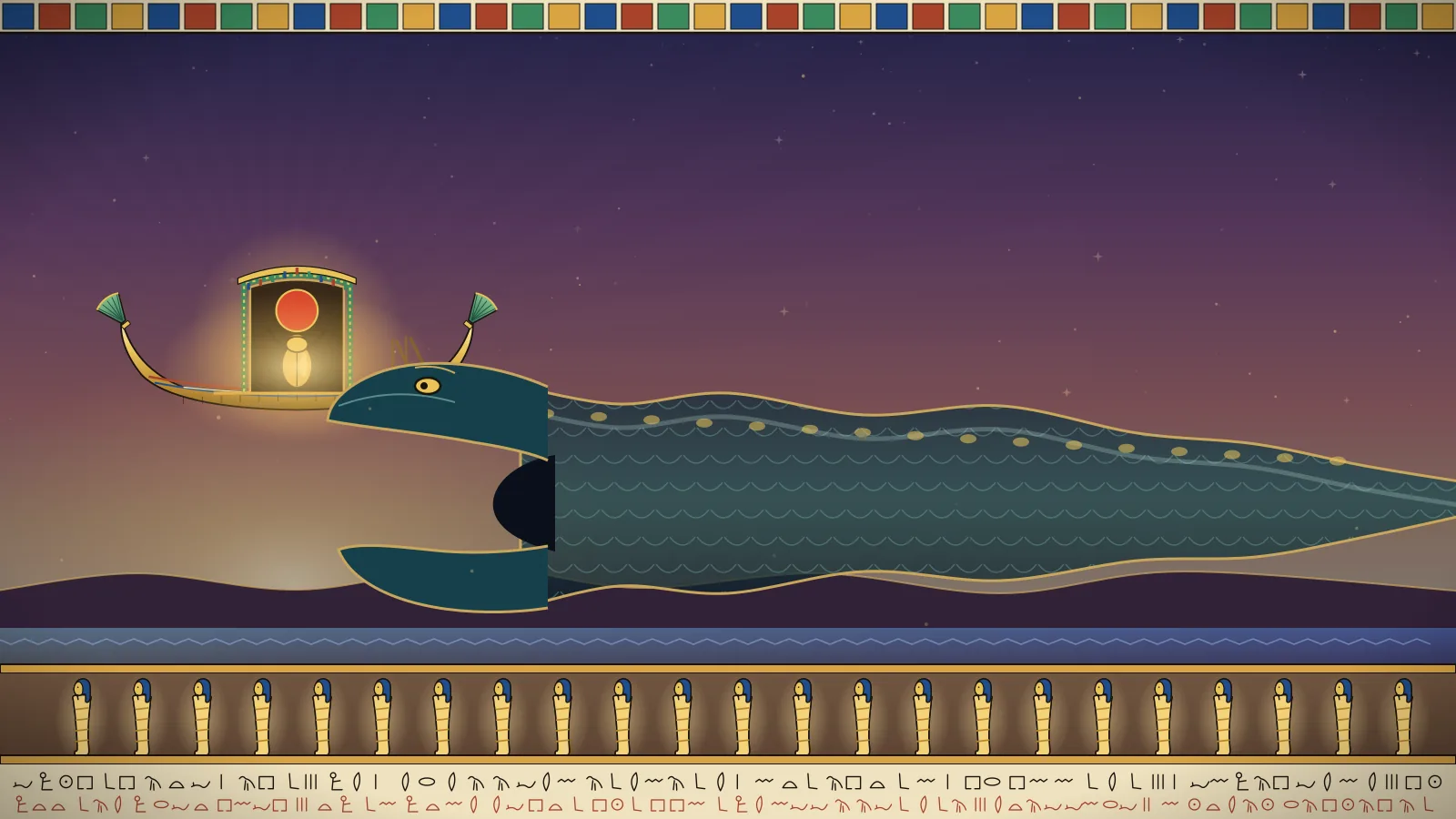
In the 12th hour, the boat was towed through the body of a vast serpent, entering at its tail and coming out of its mouth. The sun emerged as Khepri, the scarab beetle of the morning, born again. And the dead who sailed with him were renewed as well.
Chapter VIIwatch from 8:31
The Book Found Again
For some 3,000 years these hopes shaped Egyptian tombs, until Christianity spread, in the 4th century CE, and the old customs faded.
In 1842, the German scholar Karl Richard Lepsius published a papyrus kept in Turin, numbered its spells, and gave them the name we still use: the Book of the Dead. In 1888, Ani’s papyrus was acquired for the British Museum by Wallis Budge. Today it rests in London, in 37 frames.
It is often called an Egyptian Bible. In fact it was a flexible collection of about 190 spells, and no two papyri hold exactly the same ones. Each roll was made for one person and one journey.
Their tombs, spells and offerings all aimed at one thing: life that would go on.
The Egyptians are often said to have been obsessed with death. But their tombs, spells and offerings all aimed at one thing: life that would go on.
So each morning at Thebes, when the sun rose over the eastern hills, it was more than a sunrise. It was the sun come back from the Duat, and proof that the journey through the night could be made.




























































