The story of the film
Mount Lu, the Yangzi delta, the Yellow River, the Great Wall, the mountains of Hubei, Sichuan and Shaanxi, and Beijing · 402–1900
Beijing, autumn, 1813. In the shops outside the gates of the Forbidden City, small groups of men waited. They carried strips of white cloth, to tie around their heads and waists, so that they would know one another. A few palace eunuchs, secretly on their side, were ready to lead them in. The men believed that the present age of the world was ending, and that a new one was about to begin. When it was over, officials wrote their reports. As so often before, the rebels were tied to one old and frightening name: the White Lotus.
Chapter Iwatch from 0:47
The Lotus and the Pure Land
The lotus grows from the mud at the bottom of a pond, yet its flower opens clean above the water. For Buddhists, it is a symbol of the pure life.
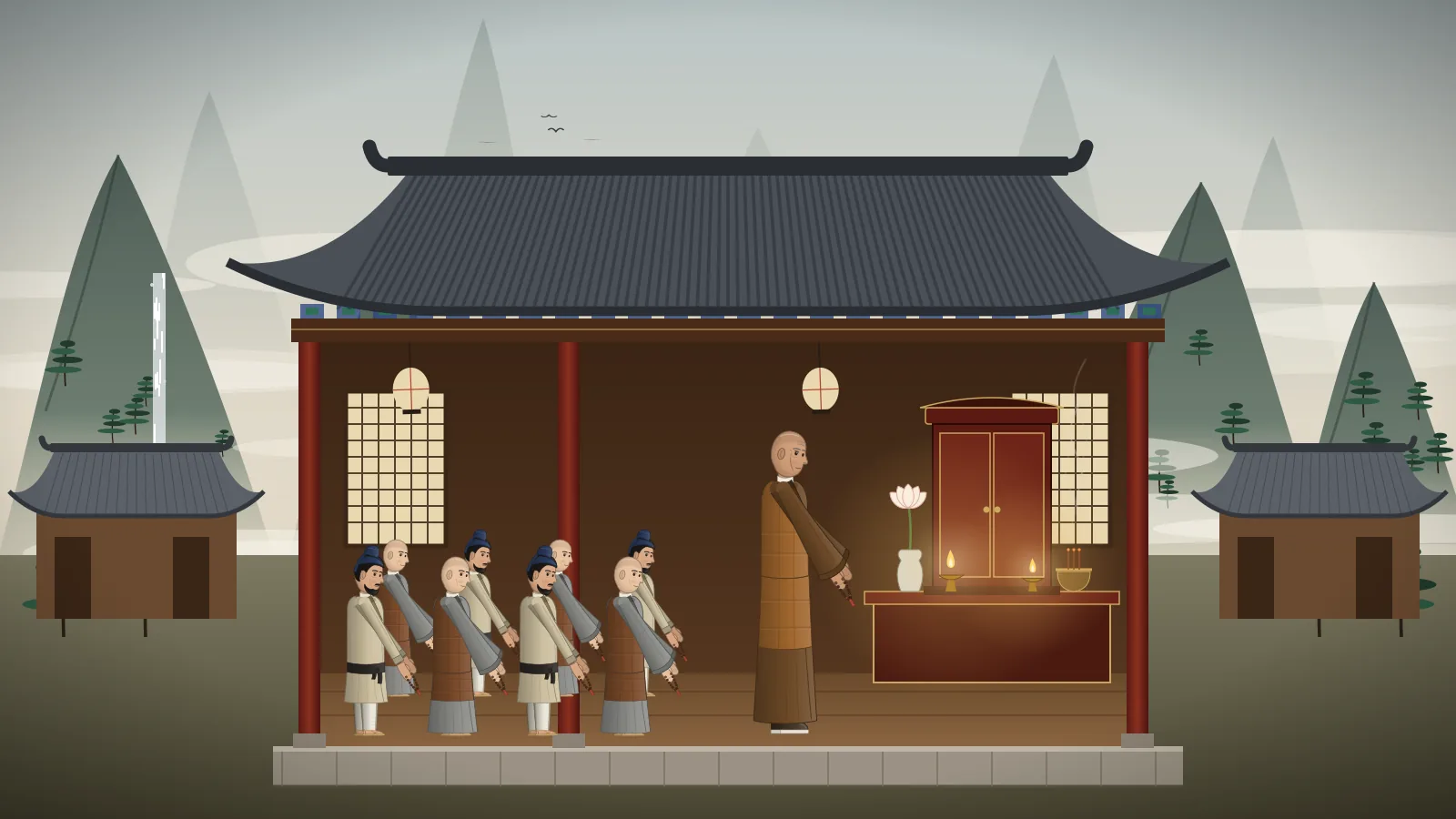
Tradition says that in the year 402, on Mount Lu in southern China, the monk Huiyuan gathered 123 disciples, monks and laymen alike. Before an image of the Buddha Amitabha, they vowed to be reborn together in his Pure Land. Later writers called them the White Lotus Society. The circle was honoured as a pioneer of Pure Land devotion, but the name, and any link to what came after, belongs to later times.
Men and women worshipped side by side.
Seven centuries later, in the 1130s, a monk named Mao Ziyuan, who lived from about 1096 to 1166, built a hall of penitence beside Lake Dianshan, near the mouth of the Yangzi, and took up the old name. His teaching was simple enough for anyone: recite the name of Amitabha, keep the precepts, eat no meat, drink no wine, and hope for rebirth in the Pure Land.
Men and women worshipped side by side. Lay leaders, some of them married, ran the halls. People called the followers the White Lotus vegetarians.
Monks and officials distrusted such independence. Mao was accused of improper practices, even of “demonic” ones, and sent into exile, up the Yangzi to Jiujiang. But the movement kept growing.
Chapter IIwatch from 2:07
Maitreya and the King of Light
Under the Mongol Yuan dynasty, White Lotus halls owned land and won powerful patrons. Wealthy followers paid for roads, bridges and temples. Yet in 1308 the court banned the movement. It was briefly restored to favour, then banned again in 1322.
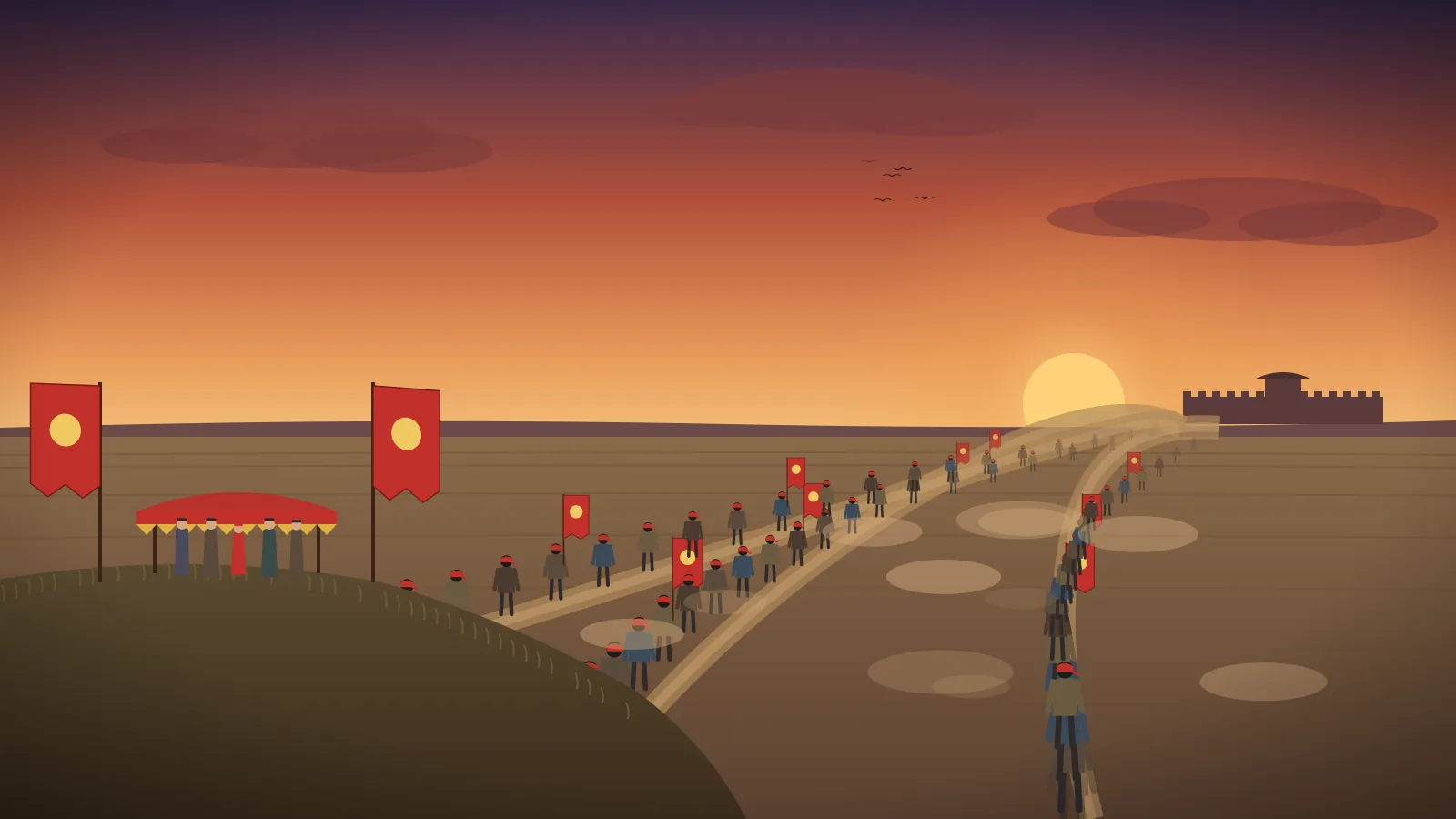
By the 1350s, Yuan rule was failing. After years of floods, in 1351, vast gangs of labourers, perhaps 150,000 of them, were set to rechannel the Yellow River. The story goes that a one-eyed stone figure was dug up there, with a prophecy of revolt carved on its back. Many accounts say that a sect leader of the Huai river region, Han Shantong, had it buried there in secret, so that it would be found.
Han proclaimed that Maitreya, the Buddha of the future, was about to descend, and that a King of Light would appear. The plot was discovered, and Han Shantong was executed. But his ally Liu Futong raised the revolt anyway. The rebels wrapped red cloths around their heads, and became the Red Turbans. Han’s son, Han Lin’er, was proclaimed the Young King of Light.
There is no firm evidence.
One Red Turban commander, a former novice monk named Zhu Yuanzhang, outlasted all his rivals. In 1368 he founded a new dynasty, the Ming. Some writers think that the name Ming, meaning bright, echoed the King of Light. A few historians find the idea plausible. There is no firm evidence, and the question remains open.
What is certain is that, once in power, the Ming outlawed White Lotus and Maitreya teachings in its law code. The Qing dynasty, which came after it, kept the ban.
Chapter IIIwatch from 4:01
The Eternal Mother
In the 1470s, a soldier named Luo Qing, from a family of hereditary soldiers, served at the garrison of Miyun on the Great Wall, north of Beijing. For thirteen years, it is said, he searched for a way out of suffering. At last he came to see all things as emptiness, and he wrote it down. In 1509 his books were printed.
Luo himself condemned the White Lotus. But he began a wave of popular scriptures called baojuan, “precious scrolls”, written in simple verse for soldiers, boatmen and farmers.
Many of them told of the Eternal Venerable Mother, the Wusheng laomu. Long ago, they said, she sent her children into the world, and there they forgot their true home. Ever since, she has longed to call them back. Believers recited a short mantra about that lost home, and the mother who waits there.
Few called themselves White Lotus.
History, the scrolls taught, passes through three ages: the age of the Lamp-Lighting Buddha, the age of Shakyamuni, and, still to come, the age of Maitreya. When the present age ends, those who have joined the true teaching will be saved.
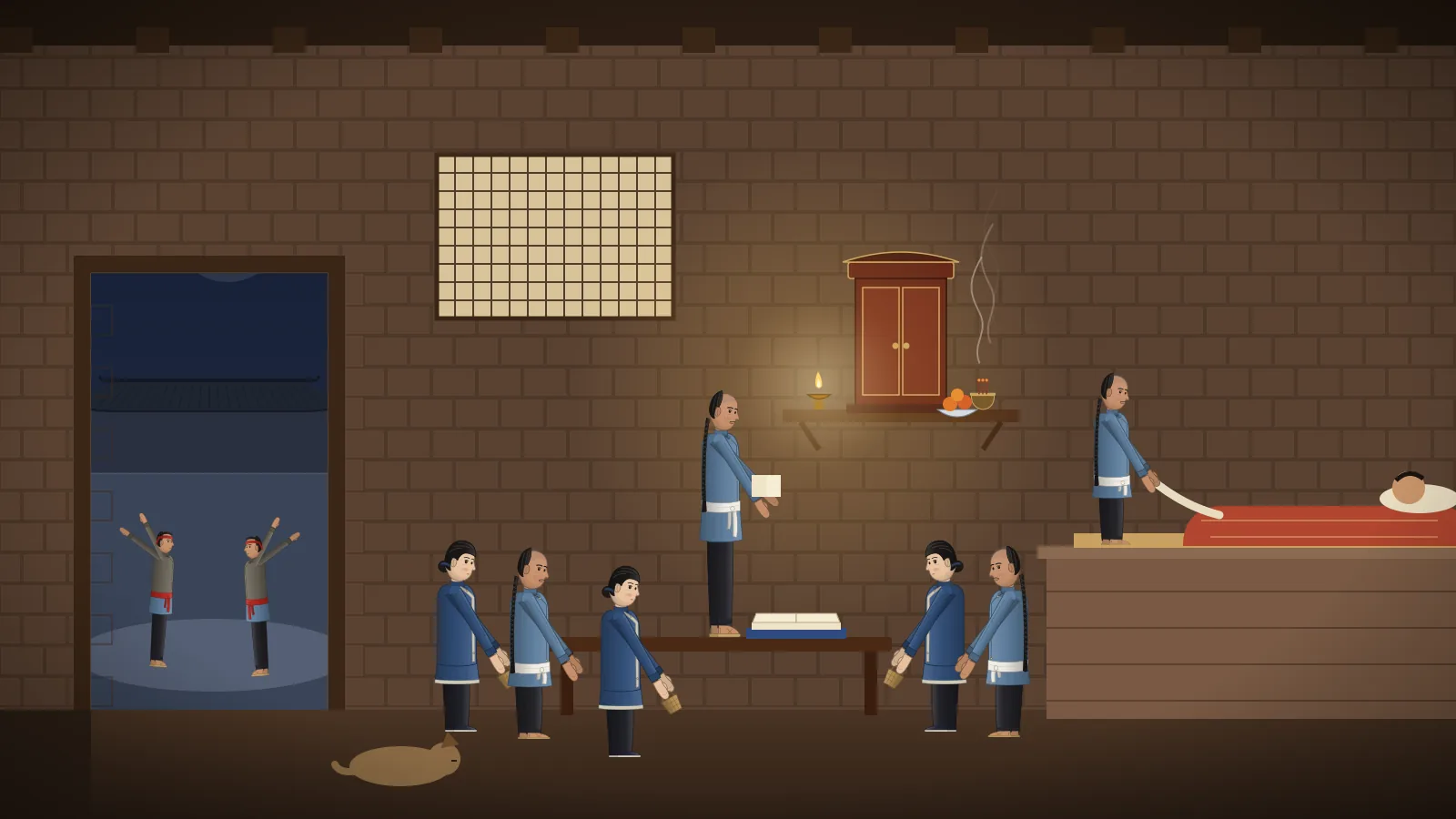
Most of these sects were quiet congregations. Members met to recite scriptures, kept a vegetarian diet, and learned breathing exercises, meditation and healing. A few groups practised boxing. Teachers handed their lineage down to disciples, often within their own families, and collected contributions from followers. Most sects had their own names. Few called themselves White Lotus.
A few teachers, though, announced that the end of the age was near, and in times of hardship their message could turn into rebellion. But to an official, the label fitted them all. To be called White Lotus was to be accused of heresy and rebellion.
Chapter IVwatch from 5:57
The War in the Mountains
There had been warnings. In 1774 Wang Lun, the teacher of a sect in Shandong, led a short-lived rising. Twenty years later, in the 1790s, officials in central China began hunting the followers of a preacher named Liu Zhixie. The searches were harsh. Local officials used them to squeeze money from villagers. Whether a man paid often mattered more than whether he belonged.
In the borderlands of Hubei, Sichuan and Shaanxi lived poor settlers, salt smugglers and men without work, far from government control. Early in 1796, sect members rose in Hubei. The revolt spread across the mountains into Sichuan and Shaanxi.
Her bands struck and vanished.
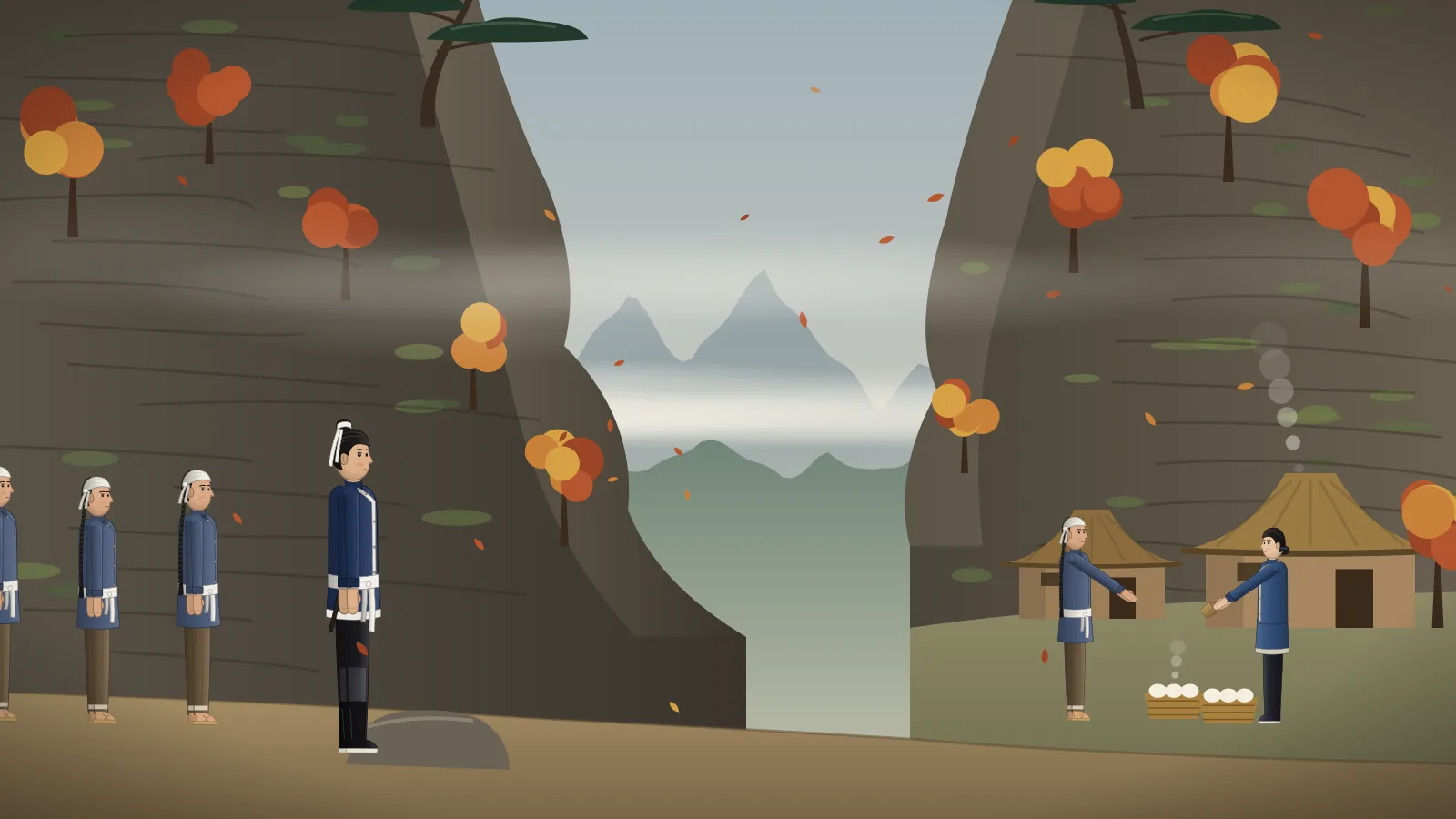
Among the rebel leaders was Wang Cong’er, a young widow from Xiangyang. Her husband had died at the hands of the Qing, and she led her own forces into the hills. Her bands struck and vanished, fed and sheltered by villagers who sympathised with them.
In 1798, Qing troops cornered her in the mountains near Yunxi. Accounts say that, with no way out, she leapt to her death.
Chapter Vwatch from 7:11
The Long Hunt
The rebels had no single command. They moved in mobile bands through the hills, and the imperial armies, weakened by corruption, chased them for years.
Many blamed Heshen, the powerful favourite of the old Qianlong Emperor. He and his friends were said to be pocketing the war funds. In 1799 Qianlong died. The Jiaqing Emperor, emperor since 1796 but at last ruling in his own right, removed Heshen, and reorganised the campaign.
The war had lasted nine years.
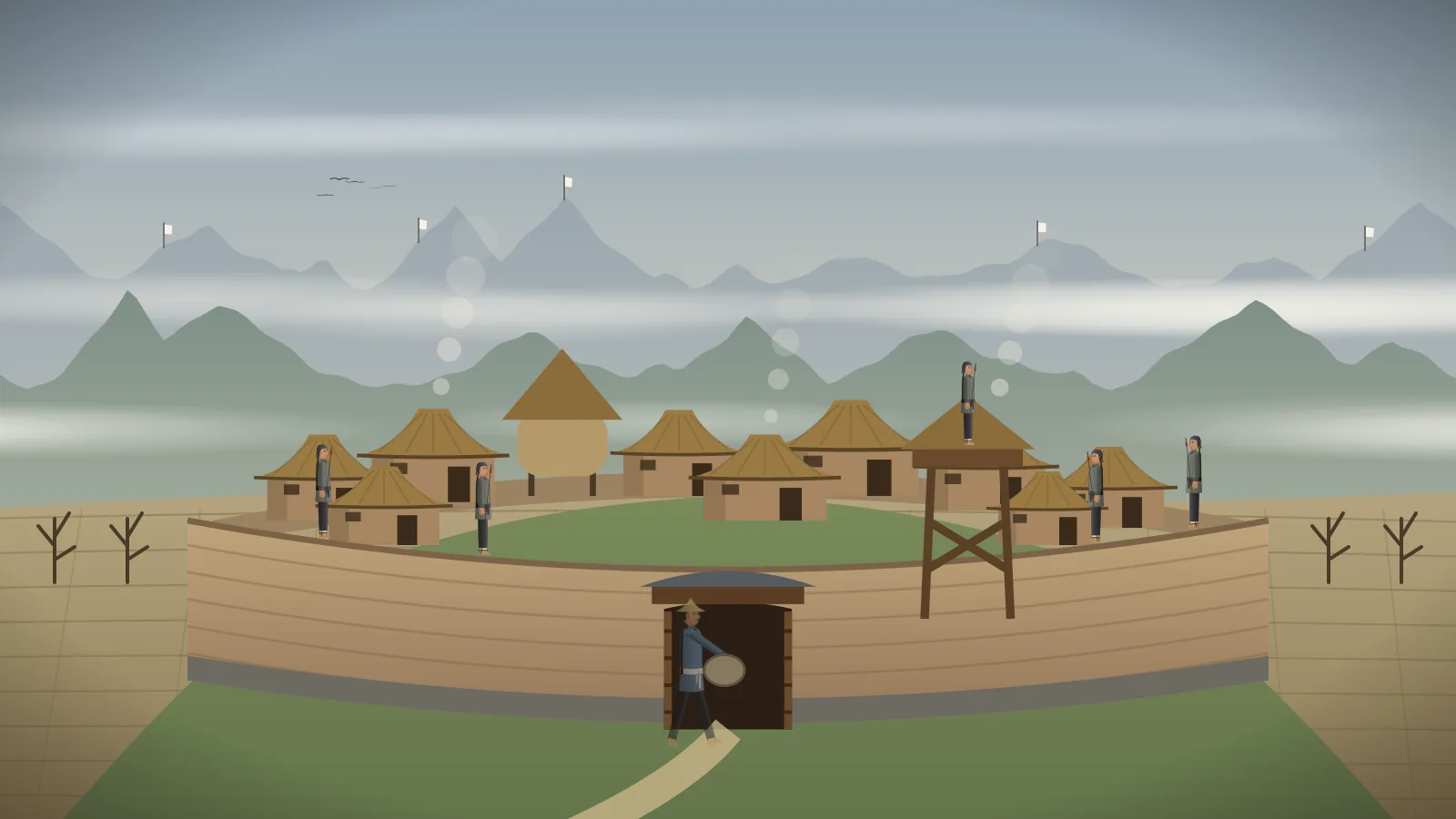
The Qing now gathered villagers into walled stockades and raised local militias, cutting the rebels off from food and recruits. By 1804, the main bands had been destroyed. The war had lasted nine years.
Its cost is often put at around 200 million taels of silver, though estimates vary. It strained the treasury, and showed how fragile the great dynasty had become.
Chapter VIwatch from 8:11
At the Palace Gates
Nine years later came that autumn day in Beijing. Sources differ on whether it fell in September or October. The men waiting at the gates belonged to the Eight Trigrams sect, and they believed that the Eternal Mother had sent their leader, Lin Qing.
About eighty of them got through before the gates swung shut.
About eighty of them got through before the gates swung shut. They were soon overcome. In the provinces, the Eight Trigrams had risen too, and that rising was crushed within months: it ended when Qing troops took the town of Huaxian on 1 January 1814.
Chapter VIIwatch from 8:37
A Name in the Files
In 1900, when the Boxers rose in northern China, Qing officials and foreign observers called them a White Lotus offshoot too. Modern studies, notably by the historian Joseph Esherick, trace the Boxers instead to village boxing and spirit possession.
For a long time, historians wrote of one secret White Lotus Society, hidden for centuries, from the Song dynasty to the Boxers. Researchers such as Barend ter Haar have found no such organisation. The name lives mainly in official files, a catch-all for any sect the state feared.
The other is of a state that feared them, and gave them all one sinister name.
So the records tell two stories. One is of many religious groups, mostly peaceful, that gave ordinary people scriptures, community and hope. Their rare risings came mostly in times of hardship, or after persecution. The other is of a state that feared them, and gave them all one sinister name.
On a village pond at dawn, a lotus opens above the mud, as it always has. Its name was borrowed again and again. The flower never belonged to anyone.