The story of the film
Munich in Bavaria, with Bursa in the Ottoman Empire and postwar Paris · 1912–1925, and the legend after 1960
Munich, 18 August 1918. Germany was losing a world war. Bread was rationed, and wounded soldiers were a common sight in the streets. That day, in rented rooms of a fashionable hotel, a small association held a ceremony and gave itself a new name: the Thule Society.
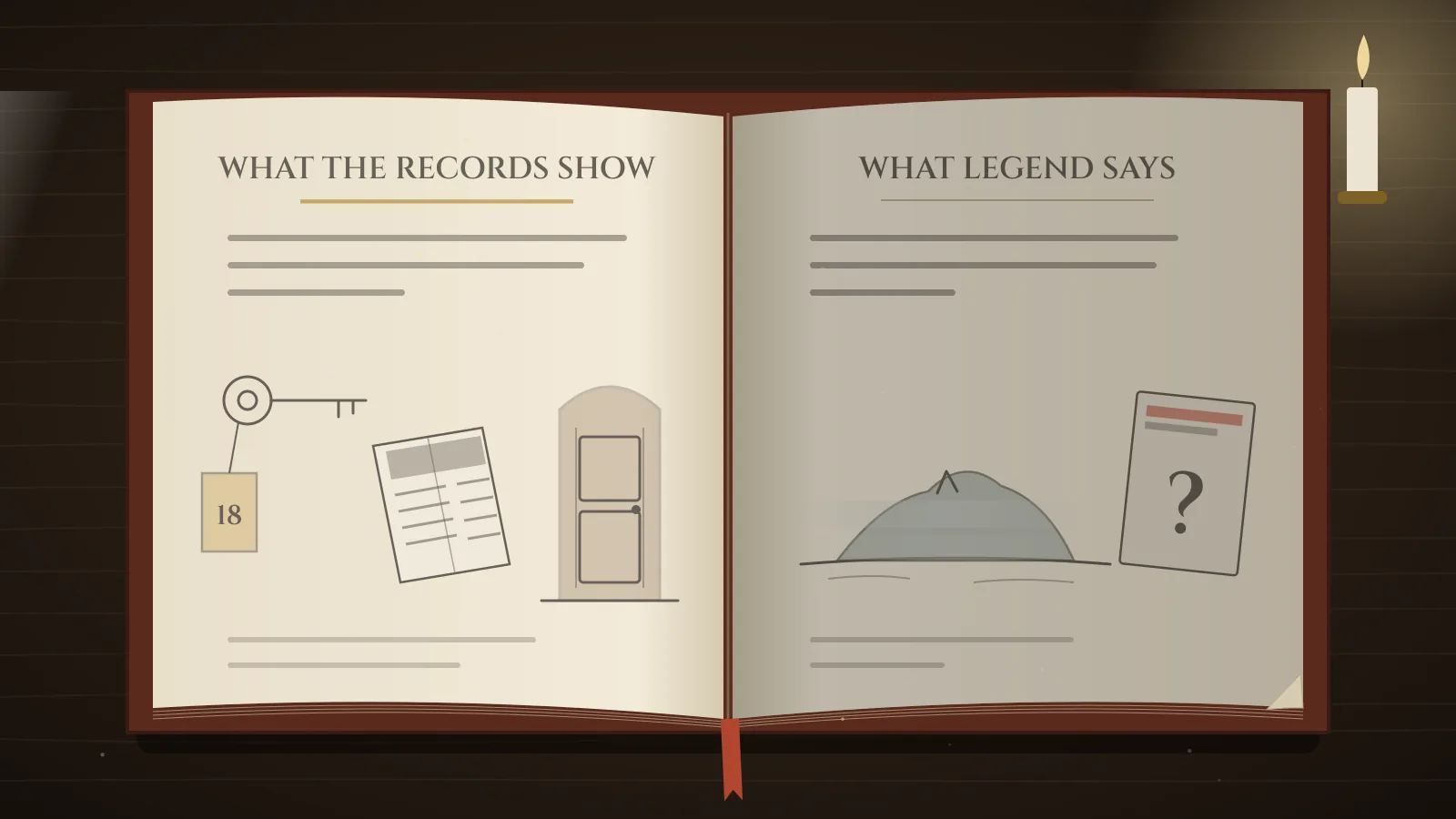
It was a nationalist club, openly racist and antisemitic. Men from its circle helped found the small party that Adolf Hitler would soon take over. After the Second World War, popular books turned it into an all-powerful occult brotherhood behind Nazism. The records tell a smaller and darker story, and historians reject that legend.
Chapter Iwatch from 0:54
A Name from the Far North
The name came from antiquity. More than 2,300 years ago, the Greek explorer Pytheas of Massalia wrote of a land called Thule, six days’ sail north of Britain. For Roman poets, Ultima Thule was the edge of the known world. Around 1900, German nationalists borrowed the name as a romantic symbol of an imagined northern homeland.
Thule grew out of the völkisch movement: a loose world of clubs, publishers and leagues in imperial Germany. Its followers dreamed of a racially defined German people, and they blamed Jews for the ills of modern life.
Those ideas were racist, and they were false.
Those ideas were racist, and they were false. But in the anxious years before the First World War, they spread through cheap pamphlets, magazines and reading circles.
In 1912 one of the more secretive of these groups was formally founded: the Germanenorden, the Germanic Order. It copied the outward form of a Masonic lodge, with grades, initiations and ritual music, though it hated Freemasonry. In 1916 it split, and one faction, the Germanenorden Walvater, was led by Hermann Pohl.
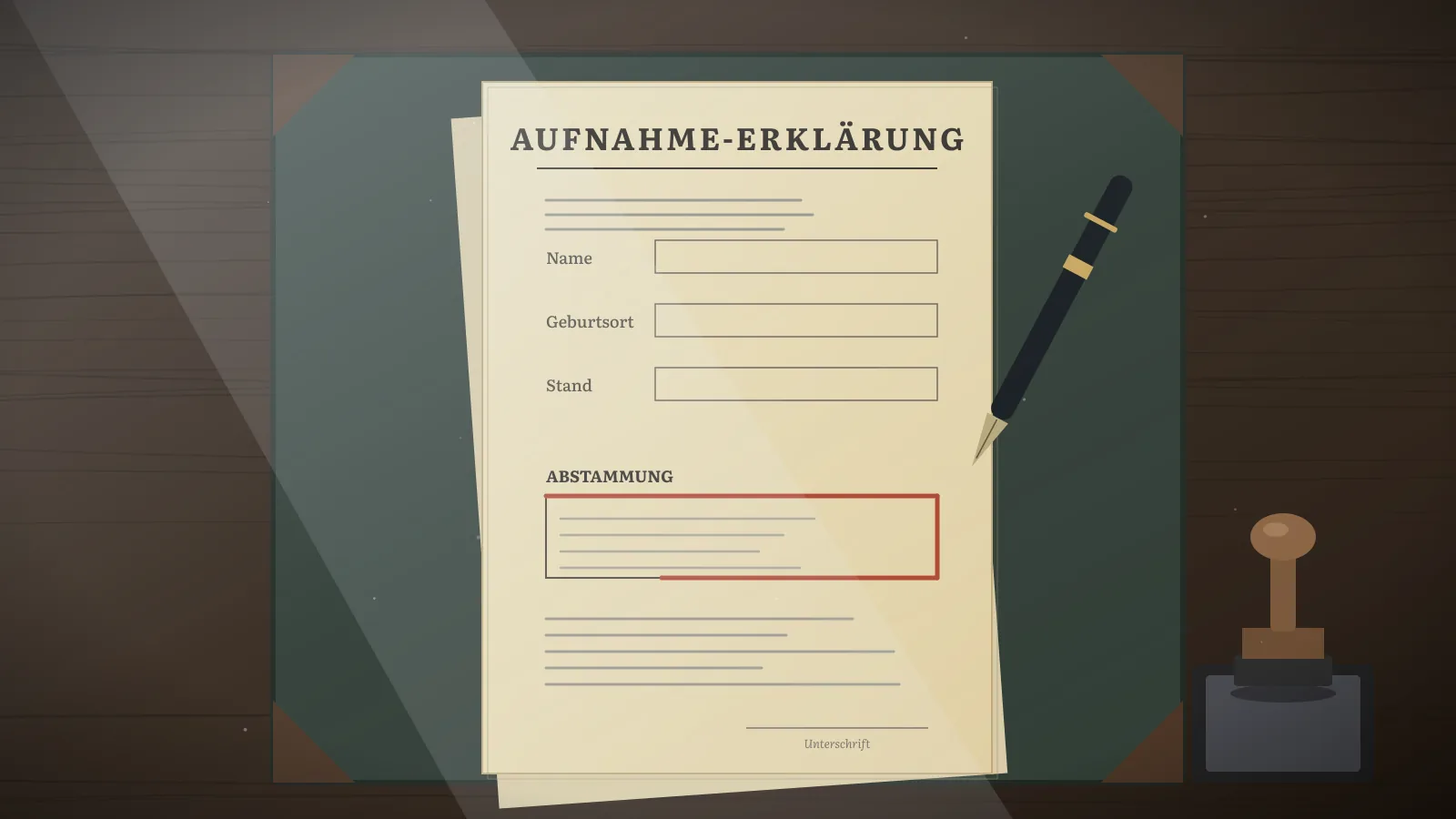
To join, members had to declare that they had no Jewish ancestry. This was the racial antisemitism at the heart of the whole movement: Jews were shut out not for anything they believed or did, but for their descent.
Chapter IIwatch from 2:29
The Man Who Made Thule
The man who made Thule had a strange past. He was born Adam Alfred Rudolf Glauer, in 1875, in the Silesian town of Hoyerswerda.
He settled in the Ottoman Empire in 1901, lived for years near Bursa, and became an Ottoman citizen in 1911. There, he said, a German baron adopted him, and he took the baron’s name: Rudolf von Sebottendorf. Whether the adoption was valid has long been questioned.
In Turkey he took up astrology, alchemy and numerology, mixed with what he had seen of Sufi mysticism and Freemasonry. Historians find little real Sufism in the result.
Back in Germany, he joined Pohl’s order, and was sent to build it up in Bavaria. In Munich he found a study group on Germanic antiquity. It was led by Walter Nauhaus, an art student from Berlin, badly wounded in the war, who kept family trees for the order and had moved to Munich in 1917. Its official name was plain and scholarly: the Study Group for Germanic Antiquity.
Chapter IIIwatch from 3:32
Rooms at the Four Seasons
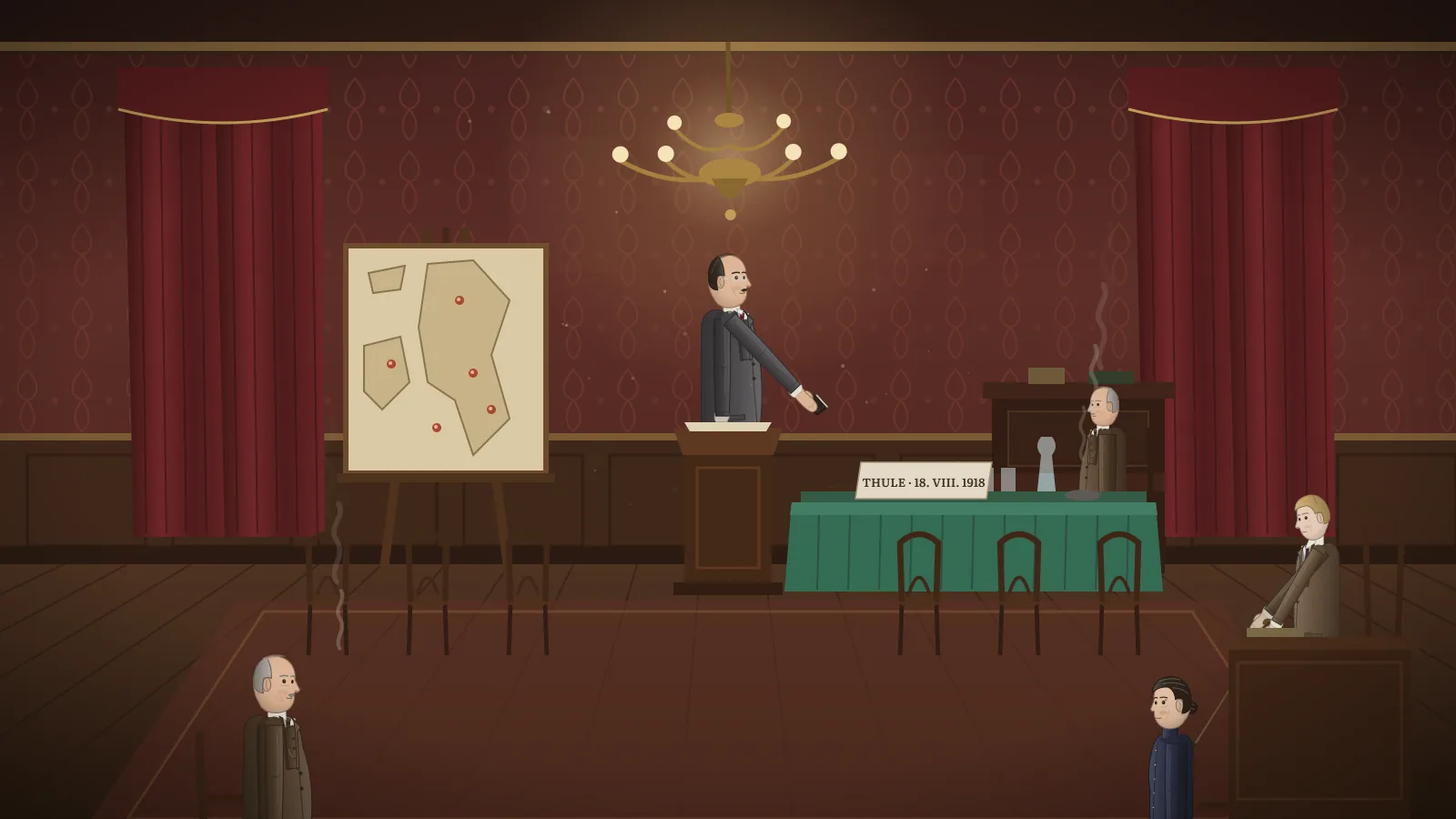
To avoid unwanted attention, the Bavarian lodge took a harmless-sounding cover name: Thule. From July 1918 it leased rooms at the Hotel Vier Jahreszeiten, the Four Seasons, on Munich’s Maximilianstrasse, and there, on 18 August, Sebottendorf dedicated the lodge under its new name.
The evenings brought lectures on Germanic prehistory, folklore and family trees, mixed with astrology. By the autumn, according to the historian Nicholas Goodrick-Clarke, there were about 1,500 followers in Bavaria, some 250 of them in Munich.
Sebottendorf also bought a weekly newspaper, the Münchener Beobachter, and used it to spread nationalist and antisemitic views.
Chapter IVwatch from 4:13
Revolution and Hostages
Then, in November 1918, revolution came. King Ludwig III fled Munich, and the socialist Kurt Eisner proclaimed Bavaria a free state.
Thule’s rooms became a meeting place for the new government’s nationalist enemies. They attacked the government, and Eisner himself, who was Jewish, in openly antisemitic terms. On the morning of 21 February 1919, on his way to parliament, Eisner was shot dead in the street by a young nationalist officer, Count Anton von Arco-Valley, a lieutenant of 21. Bavaria slid toward chaos.
In early April, radicals declared a Bavarian Soviet Republic. Thule plotted against it, and helped the volunteer units preparing to take the city. On 26 April, revolutionary guards raided the society’s rooms and arrested several members, among them the society’s secretary.
On 30 April, 10 hostages were shot at a Munich school, the Luitpold Gymnasium. Seven of them were Thule members, arrested in the raid, among them Walter Nauhaus and the society’s secretary, Countess Hella von Westarp.
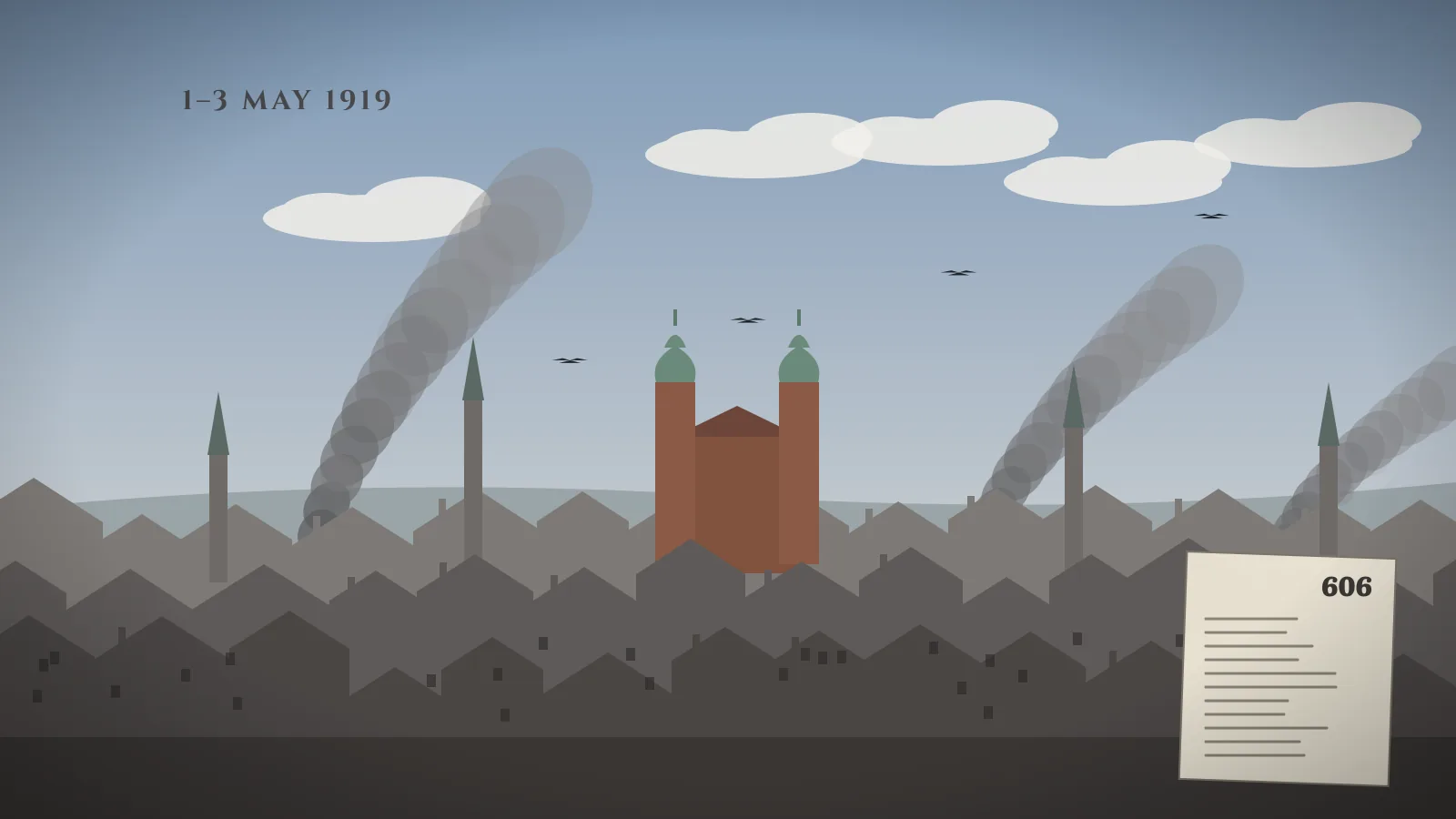
On 1 May, government troops and volunteer Freikorps units broke into Munich, and within days the Soviet Republic was crushed. In the fighting and the reprisals that followed, at least 600 people died, many of them civilians.
For the far right, the hostage killing became a rallying cry. Sebottendorf, blamed by his own followers for the arrests, soon left Munich.
Chapter Vwatch from 5:53
The Party in the Back Room
Thule’s lasting mark came from a side project. Sebottendorf wanted to win working men away from socialism, and a Thule journalist, Karl Harrer, ran a small workers’ circle.
On 5 January 1919, Harrer and a railway worker, Anton Drexler, founded the German Workers’ Party, the DAP, at a Munich tavern, the Fürstenfelder Hof. It stayed tiny: a few dozen men meeting in the back rooms of taverns.
In September the army sent an informant to watch one of its meetings. His name was Adolf Hitler. He soon joined, and the party became his platform. Harrer wanted a secretive discussion circle; Hitler wanted mass meetings and propaganda. Early in 1920 Harrer was forced out, and the party was renamed the NSDAP, the Nazi Party.
Thule’s newspaper, now called the Völkischer Beobachter, was sold to the party in December 1920, and became its main paper.
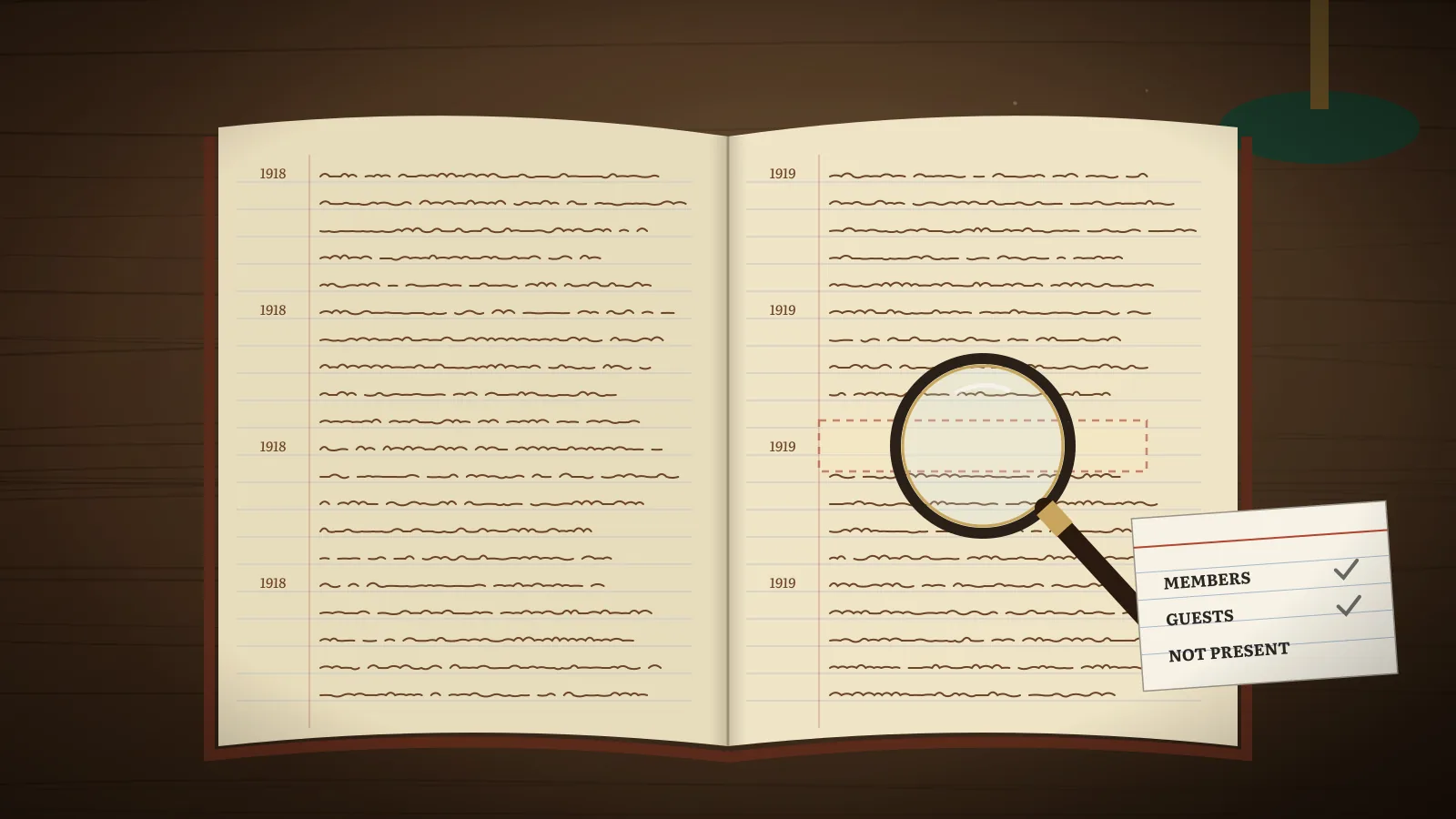
And Thule itself? A member, Johannes Hering, kept a diary of its meetings. Hitler does not appear in it, and historians find no evidence that he ever attended. Some later Nazi leaders did pass through. Rudolf Hess and Hans Frank were members. Others, like Alfred Rosenberg, came only as guests.
Without its founder, its party or its newspaper, the society faded. Around 1925, years before the Nazis took power, it was dissolved.
Chapter VIwatch from 7:41
How the Legend Was Made
In 1933 Sebottendorf came back to Germany and published a book, Bevor Hitler kam, Before Hitler Came, claiming that Thule had laid the foundations of Nazism. The new regime wanted no rivals for the credit. It banned the book. He was arrested, left for Turkey, and died in Istanbul in 1945.
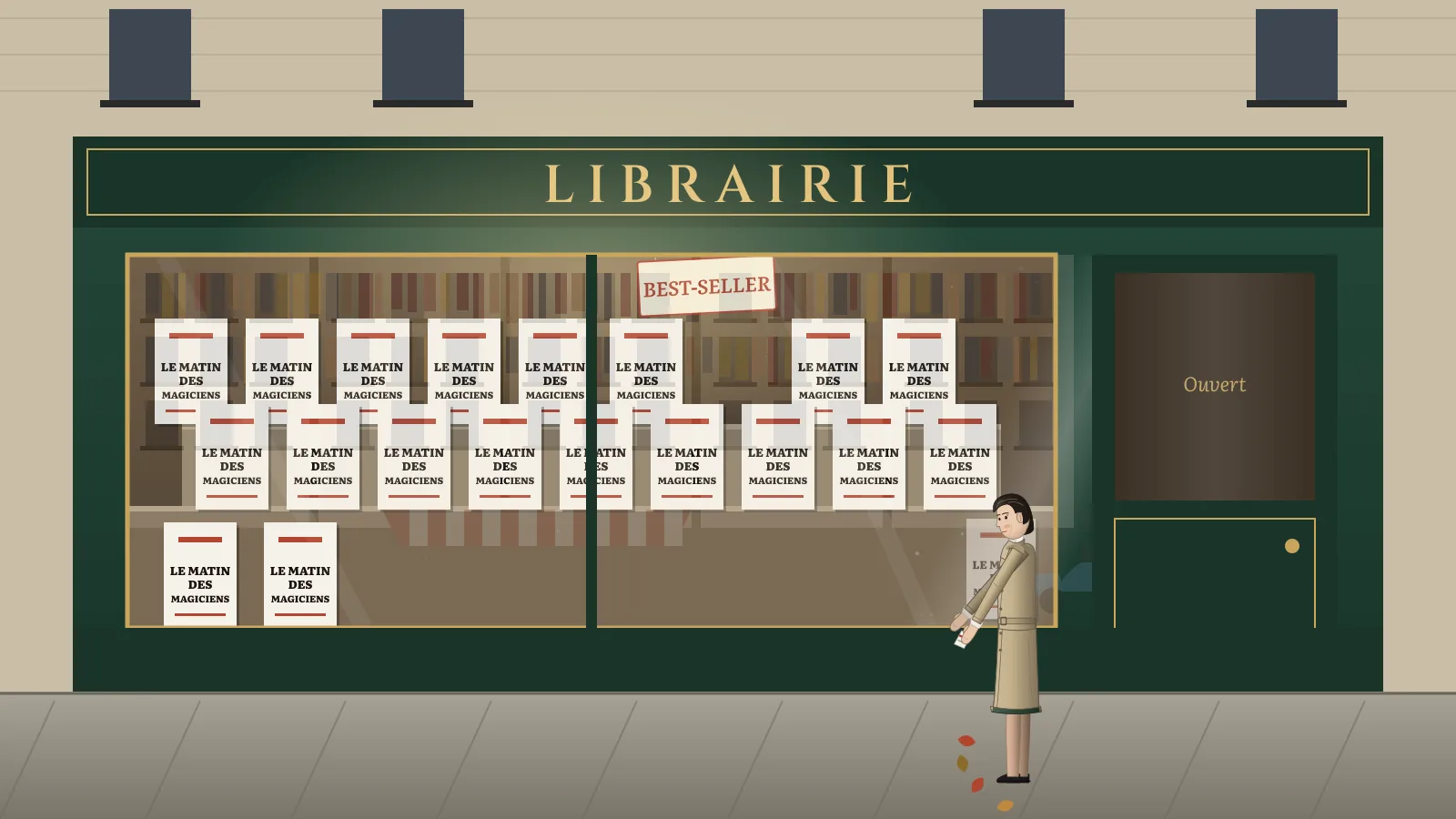
The modern legend began much later. In 1960, in Paris, Louis Pauwels and Jacques Bergier published Le Matin des magiciens, The Morning of the Magicians, a bestseller about hidden occult forces. They painted Nazism as the work of secret societies, Thule among them, in touch with mysterious masters, and they never said clearly where fact ended and fancy began.
They also wrote of a Vril Society, which they made into an inner circle of Thule. But Vril was a magic energy invented in 1871 by the English novelist Edward Bulwer-Lytton, for a novel, The Coming Race.
Later books added more: secret masters, lost polar civilisations, flying machines, and long lists of famous Nazis said to be Thule members. Some of it was taken up by far-right groups.
Chapter VIIwatch from 9:00
What the Records Show
Then historians went back to the records. In 1985 Nicholas Goodrick-Clarke published The Occult Roots of Nazism, still the standard account. He showed that völkisch occult groups supplied some ideas and symbols to the Nazi movement, but did not direct it. Scholars have found no historical basis for the tales of a Vril Society.
Goodrick-Clarke judged the famous membership lists unreliable. Of all the names in them, a few were members, some only guests, and many had no link at all.
Historians still debate how far esoteric ideas touched some Nazi leaders, above all in Heinrich Himmler’s SS; Eric Kurlander, for one, argues for more influence than Goodrick-Clarke allowed. But the regime was not run by occult masters. Its driving forces were racism, antisemitism, nationalism and violence.
The records show a small antisemitic club in revolutionary Munich, which met in hotel rooms, printed a newspaper, and lost its role within two years. The legend shows a hidden order with secret powers. It makes the story thrilling.
The truth is duller, and darker.
The truth is duller, and darker. Thule’s ideas about race were common, crude and false, and the movement they fed went on to murder 6 million Jews.
Today the hotel on Maximilianstrasse, mostly destroyed by bombs in 1944 and rebuilt, still welcomes guests. The rooms the society rented are gone. Thule opened no door to hidden powers. Its real lesson is plainer: how quickly hatred, once printed and organised, can find a stage.