The story of the film
Paris, St Petersburg, Constantinople, London and Berne · 1864–1937
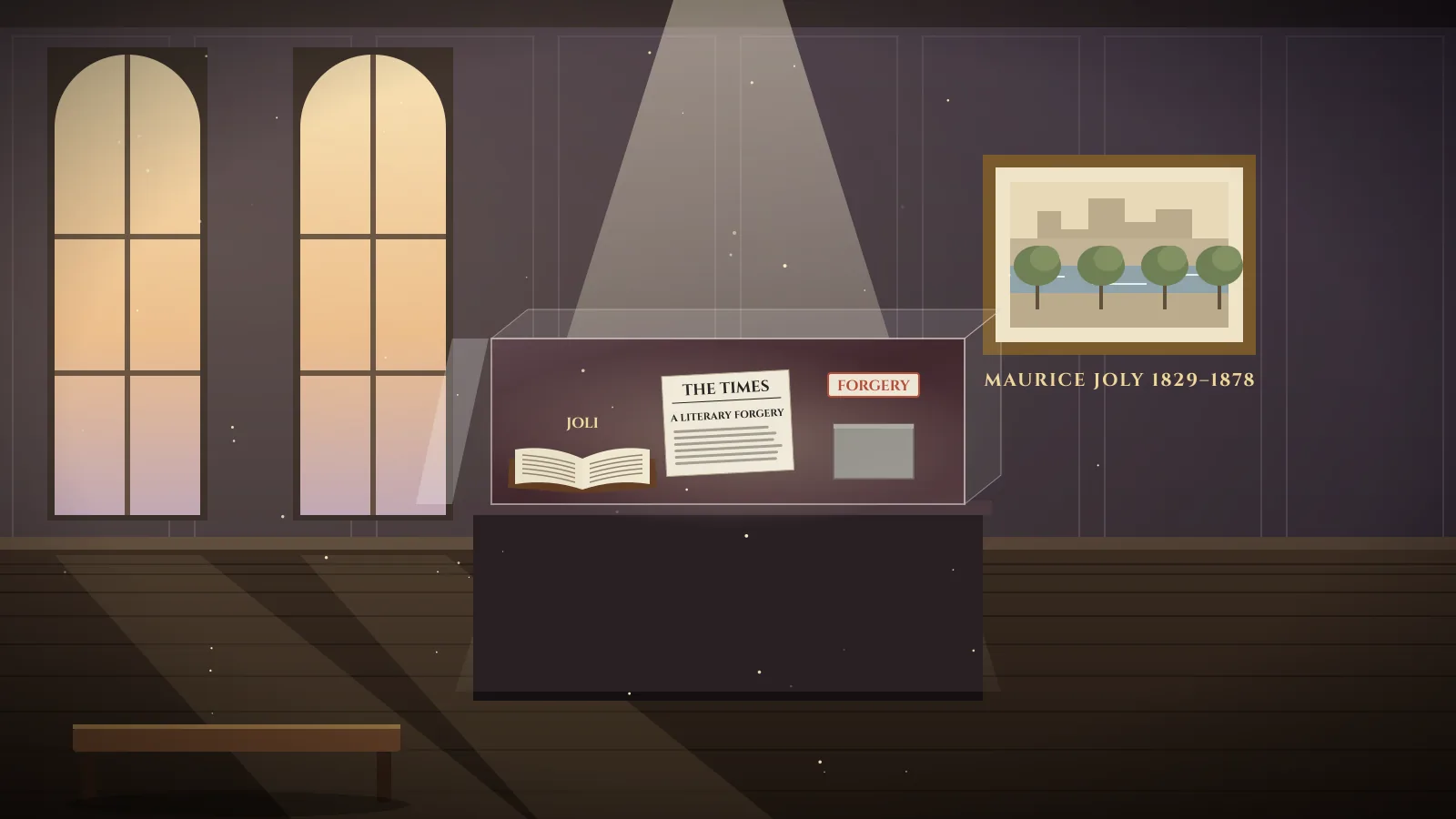
In the summer of 1921, the old imperial city of Constantinople was crowded with refugees from Russia, who had fled the civil war with whatever they could carry. One of them, a Russian émigré, brought a small, battered French book to Philip Graves, the Constantinople correspondent of The Times of London. Its title page was missing. On its worn leather spine was a single word, in Latin capitals: Joli. Inside, the émigré said, he had found something that mattered. This is the story of how one of the most harmful lies of modern times was made, and how that little book helped to prove it a forgery. The lie is called the Protocols of the Elders of Zion. It claims to record secret meetings of Jewish leaders, laying out a supposed plan for world domination. No such meetings ever took place. No such leaders ever existed. Nothing in it is true, and the records show how we know.
Chapter Iwatch from 1:14
A Satire Against an Emperor
The story begins in Paris, under the Second Empire. Napoleon III ruled France, and a printed word against him could cost a man his liberty.
Maurice Joly was a lawyer, born in 1829 at Lons-le-Saunier, in the Jura. He watched the emperor’s rule with growing anger, and decided to answer it not with a speech in court, but with satire.
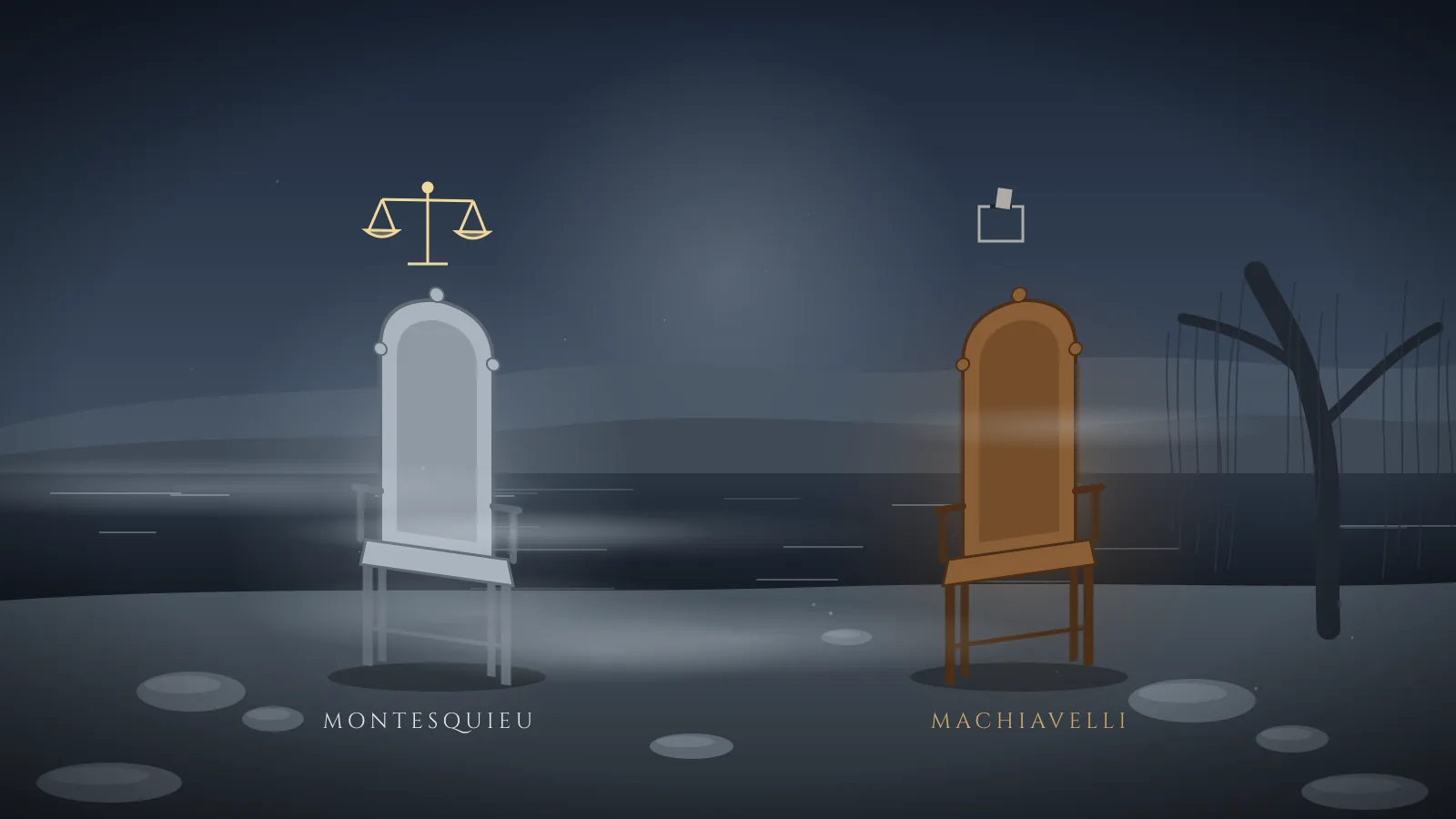
In 1864 he wrote a Dialogue in Hell between Machiavelli and Montesquieu. Two famous ghosts meet on a gloomy shore, among the dead, and argue about power. Montesquieu defends liberty and law. Machiavelli explains how a modern despot could rule through a tame press, managed elections and clever finance. The despot was plainly Napoleon III.
The book has nothing to say about Jews.
The book has nothing to say about Jews. It is about France, and one man’s grip on it.
It was printed anonymously in Brussels, signed only “by a contemporary”. When copies were smuggled into France, the police seized them as they crossed the border. They traced the book to Joly. On 25 April 1865 he was sentenced, and he served his time in Sainte-Pélagie prison in Paris. His book was soon forgotten.
A few years later, in 1868, a German writer, Hermann Goedsche, published a sensational novel called Biarritz. One invented chapter, a secret gathering at midnight, would later feed the myth too. It came from a novelist’s imagination, and from nowhere else.
Chapter IIwatch from 2:49
A Text Without a Source
Nearly forty years passed. In the Russian Empire, at the turn of the century, antisemitic writers and newspapers falsely blamed Jews for the country’s troubles.
One of them was the journalist Pavel Krushevan. In the spring of 1903, his newspaper in Kishinev stirred up hatred before a pogrom in which dozens of Jews were killed.
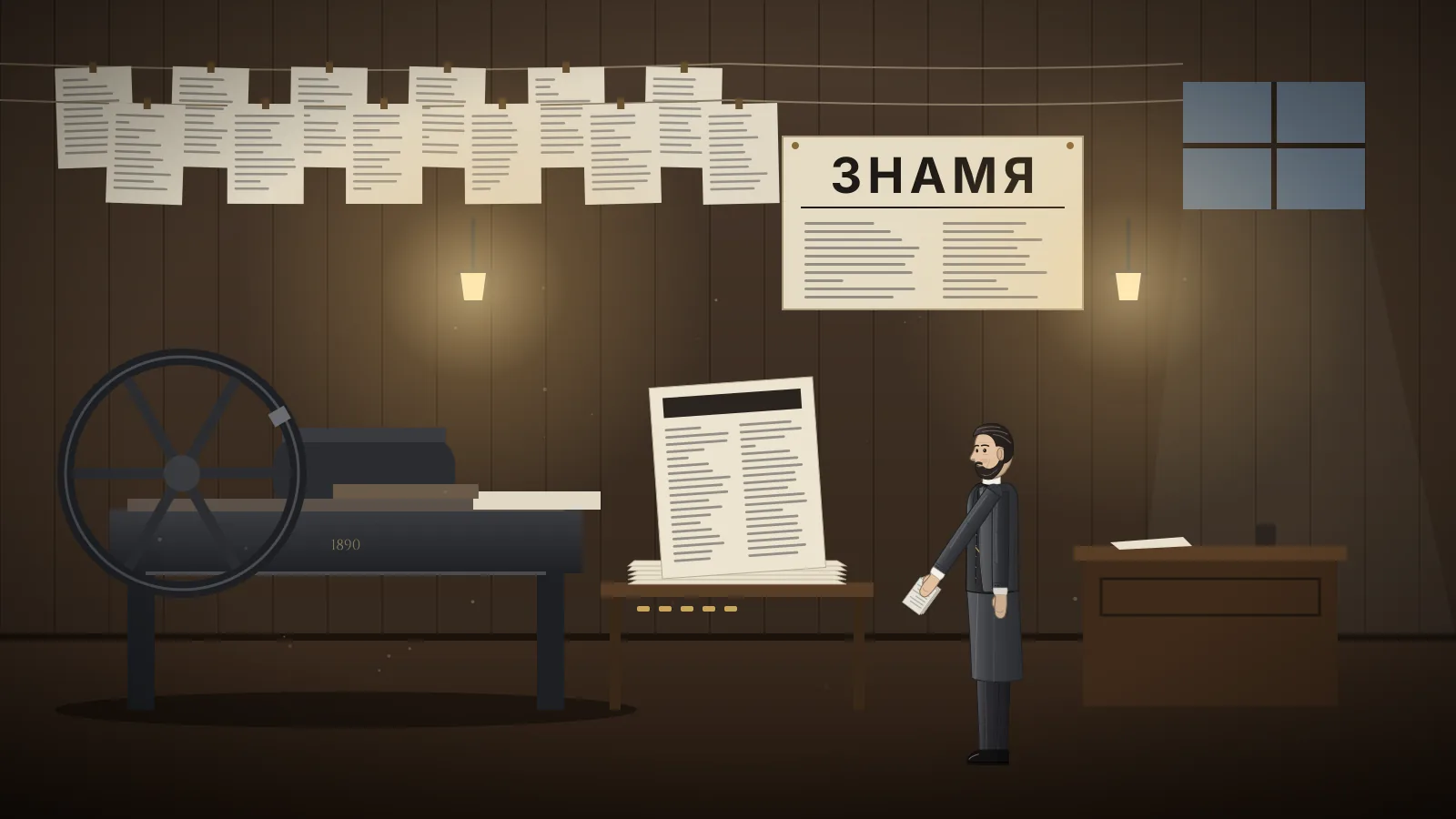
Later that year, in his Saint Petersburg paper, Znamya, The Banner, Krushevan printed a strange text in nine instalments. It is the first known version of the Protocols. It named no speakers, no place and no date. It was offered as a secret document, with no proof at all of where it came from.
In 1905 a religious writer, Sergei Nilus, put a version into his book The Great in the Small, about the coming of the Antichrist. Reprinted many times, his edition became the standard text.
Its promoters told shifting stories about its origin, and the stories did not agree with one another. Some tied it to the First Zionist Congress at Basel, in 1897. But that congress was a public meeting, and its proceedings were printed for anyone to read.
Who actually wrote the text is still debated. One account, which became widely known in the 1920s and 1930s, blamed the office of the Russian secret police in Paris. Many historians now think, with the Italian scholar Cesare De Michelis, that it was put together in Russian antisemitic circles around 1902. On one point they all agree: it was written by antisemites, at the turn of the twentieth century, and not by Jews.
Chapter IIIwatch from 4:39
Carried West
For years the text stayed mostly inside Russia. Then came the revolution of 1917, and the end of the First World War.
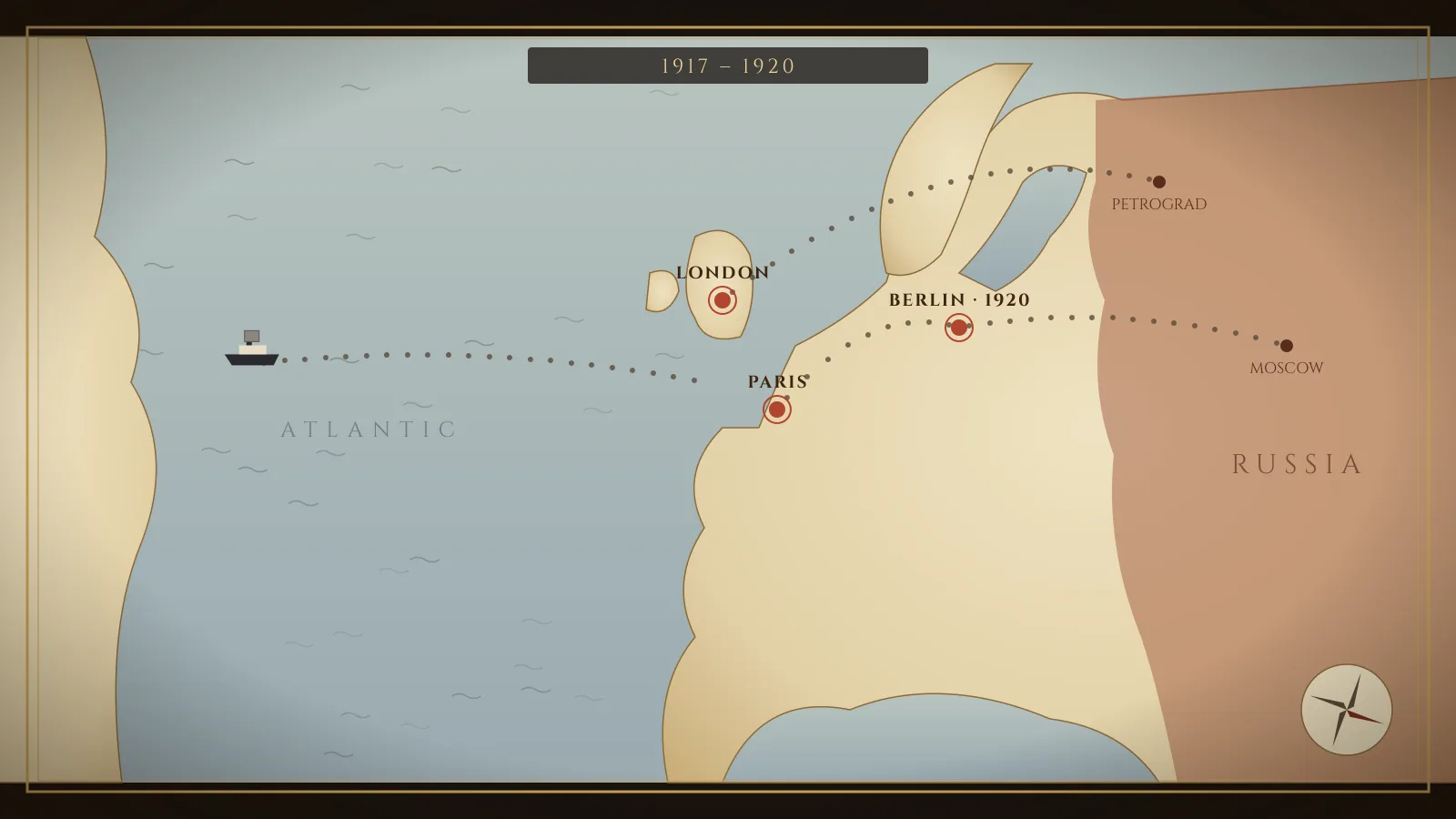
Émigrés fleeing the new Soviet state carried it west. German editions appeared around 1920, and English, French and American ones soon followed, and even a Japanese one. In a frightened, grieving Europe, many people looked for someone to blame. The forgery offered them a ready answer, a false one, and it sold.
In May 1920, even The Times of London asked, in a long article, whether the pamphlet might be genuine, and called for an inquiry. In America, a newspaper owned by the carmaker Henry Ford, the Dearborn Independent, began a long antisemitic series drawing on the text, later collected as a book.
Others pushed back at once. In London, the historian Lucien Wolf published a rebuttal in 1920. In New York, the journalist Herman Bernstein prepared a book called The History of a Lie, which appeared in 1921. The answers were there for anyone who looked. What was still missing was the source itself.
Chapter IVwatch from 5:50
The Book with Joli on Its Spine
Which brings us back to Constantinople, and to the little book with the word Joli on its spine.
The émigré, later identified as the monarchist Mikhail Raslovlev, had bought it with other old books from a former officer of the tsar’s political police, who had fled to the city. The volume was small and cheaply rebound, and its preface was dated Geneva, 15 October 1864. Raslovlev asked Graves to keep his name secret, and in print Graves called him only Mr X.
The book reached London. There, in the British Museum, its missing title was found: Maurice Joly’s Dialogue in Hell, the satire of 1864.
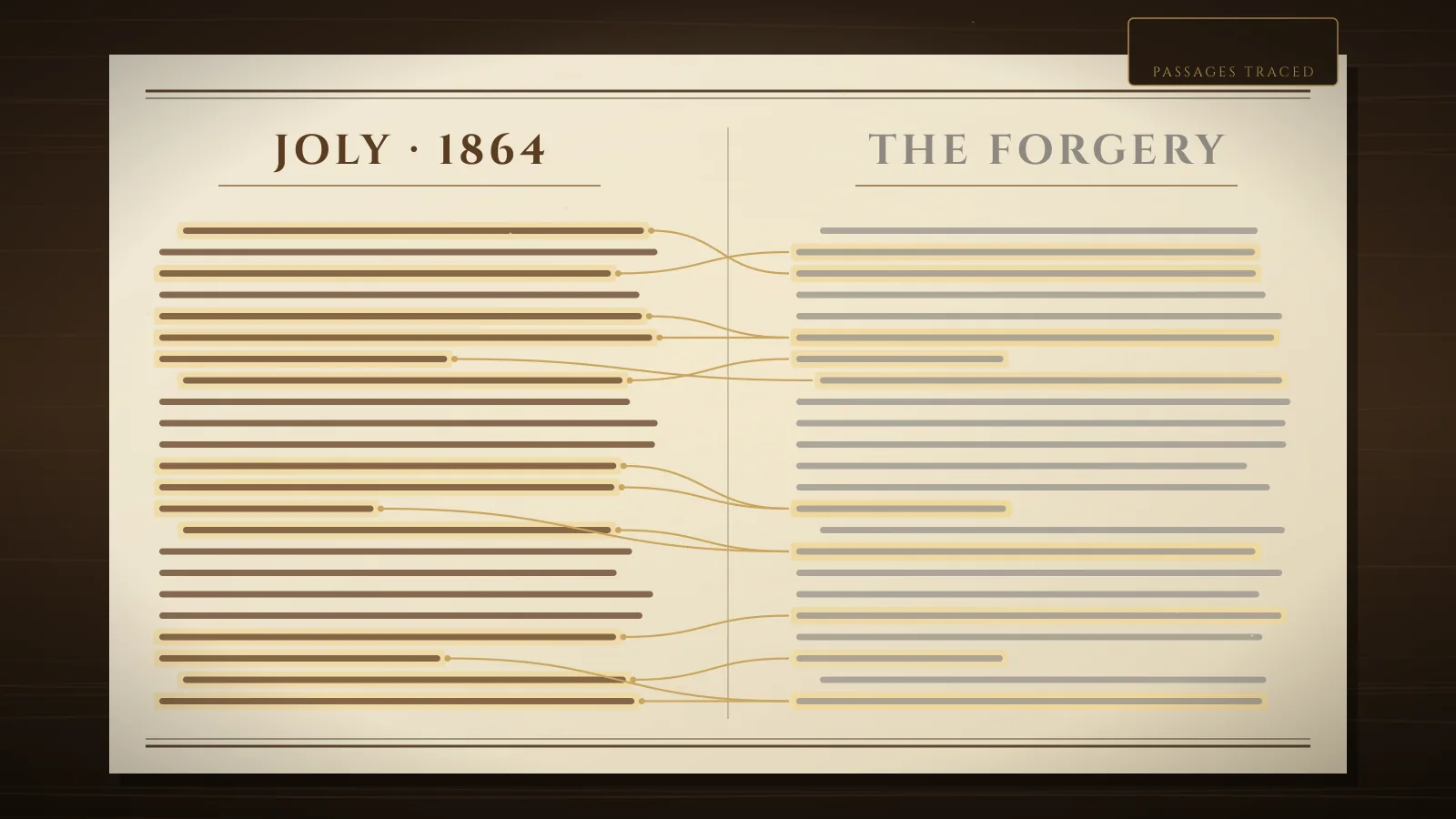
Graves set the two texts side by side. Again and again, the forgery followed Joly, page after page, sometimes almost word for word. Machiavelli’s arguments about Napoleon III had simply been handed to imaginary Jewish elders. A satire against one French emperor had been turned, by others, into a weapon against a whole people. One later scholarly count traces some 160 passages to Joly.
Again and again, the forgery followed Joly, page after page.
On 16, 17 and 18 August 1921, The Times printed his findings in three articles, the first under the heading A Literary Forgery. The newspaper that had called for an inquiry a year earlier now called the Protocols a clumsy forgery. The question seemed settled.
In 1927 Henry Ford publicly apologised and withdrew his book. But copies kept circulating abroad, far beyond his reach.
Chapter Vwatch from 7:24
The Trial in Berne
On 13 June 1933, at a rally in the Casino hall in Berne, members of a Swiss far-right movement, the National Front, handed out copies of the Protocols.
The Jewish communities of Switzerland and of Berne took them to court, under a local law against trashy, harmful literature, known in German as Schundliteratur. The case would put the text itself on trial.
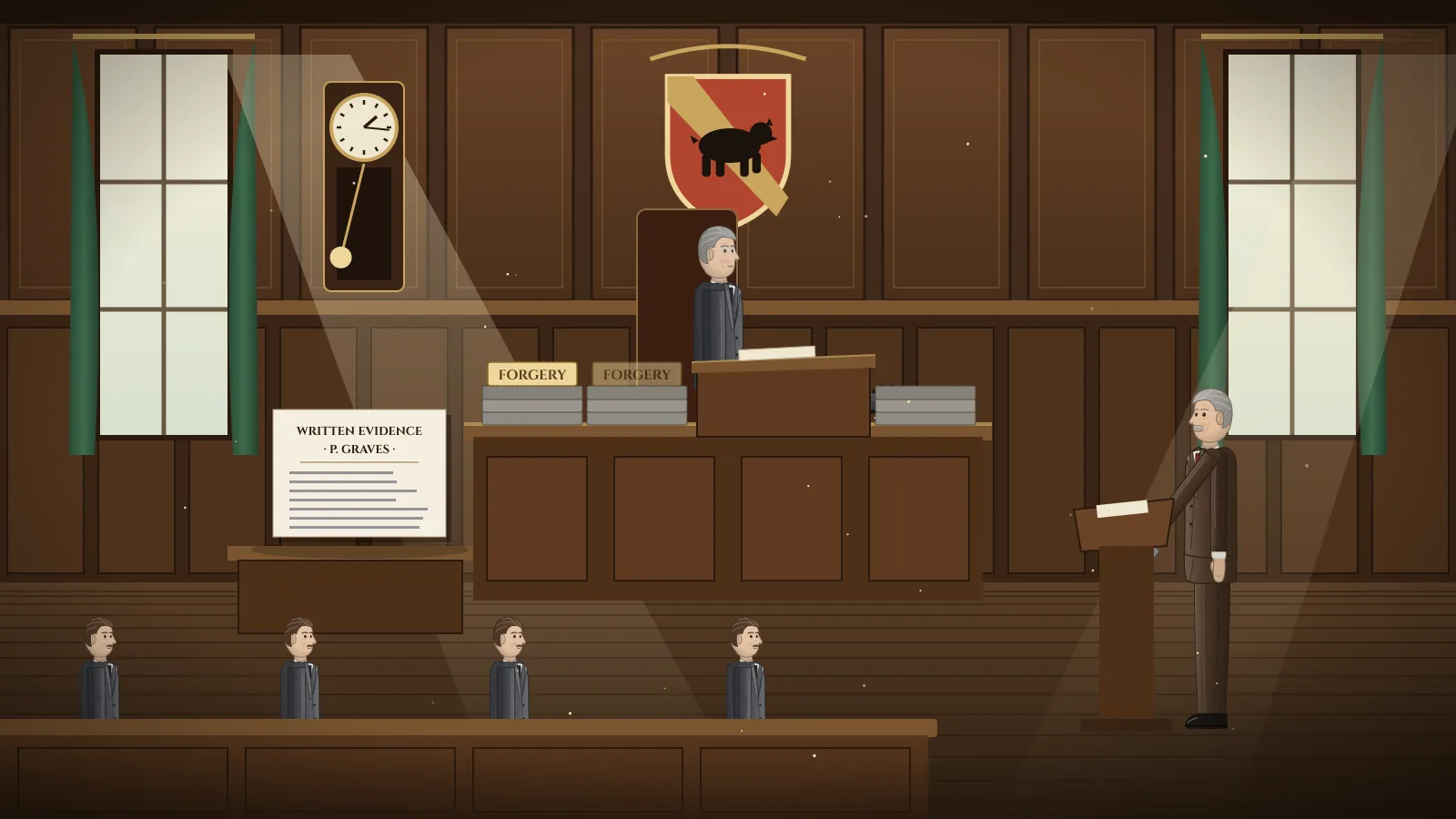
The court heard witnesses who had attended the Basel congress of 1897, and so could say what had really happened there. It received written evidence from Philip Graves. Then three experts were asked to examine the text. The court’s own expert, the Swiss writer Carl Albert Loosli, and the plaintiffs’ expert both found it a forgery and a plagiarism. Only the expert chosen by the defence disagreed, and the court did not accept his view.
In May 1935, Judge Walter Meyer ruled that the Protocols were a forgery, and trashy literature. Two men were given small fines, of 50 and 20 francs.
In 1937 a higher court overturned the fines on a point of law: the statute, it said, covered obscene writing, not political texts. It did not question that the text was forged. The appeal settled only what a Bernese law meant. It did not clear the text.
Chapter VIwatch from 8:41
A Lie That Outlived Its Exposure
But exposure did not stop those who wanted the lie. In Germany, the Nazi party’s publishing house issued more than twenty printings by 1938, and the forgery was used in schools and in propaganda.
Historians do not call it the cause of the Holocaust. But they see it as one of the texts that made the idea of a Jewish world conspiracy seem familiar, and helped prepare the ground for persecution and the murder of six million Jews.
Exposure did not stop those who wanted the lie.
It is sometimes said that the exposure came too late to matter. In fact the forgery had been publicly disproved by 1921, years before its worst use. Scholars see its survival as a sign that its readers wanted to believe it, not that the evidence was unclear.
It still circulates today, in print and online, in many languages, often far from the empire where it was made.
Chapter VIIwatch from 9:28
What the Records Show
The records are clear. A French satire against an emperor. Pages copied from it. A scene borrowed from a novel. A newspaper that printed a secret document with no sources. And journalists, courts and scholars who checked it line by line, and found the same answer each time.
Some promoters say it does not matter whether it was forged. Historians answer that it describes meetings that never happened, and was made to spread hatred.
Maurice Joly died in Paris in 1878, a quarter of a century before his words were stolen. He had written them to defend liberty against a despot. He never knew what others would make of them.
Today, museums, libraries and teachers set the evidence beside the claims, so that anyone can see how a lie was made, and how it was found out. It began with a satire against one emperor. It was undone, in the end, by a small book with a single word on its spine.