The story of the film
Cairo, Wadi al-Taym, the Chouf, Deir al-Qamar, Jabal al-Druze, Mount Carmel, Galilee and the Golan Heights · 11th century–today
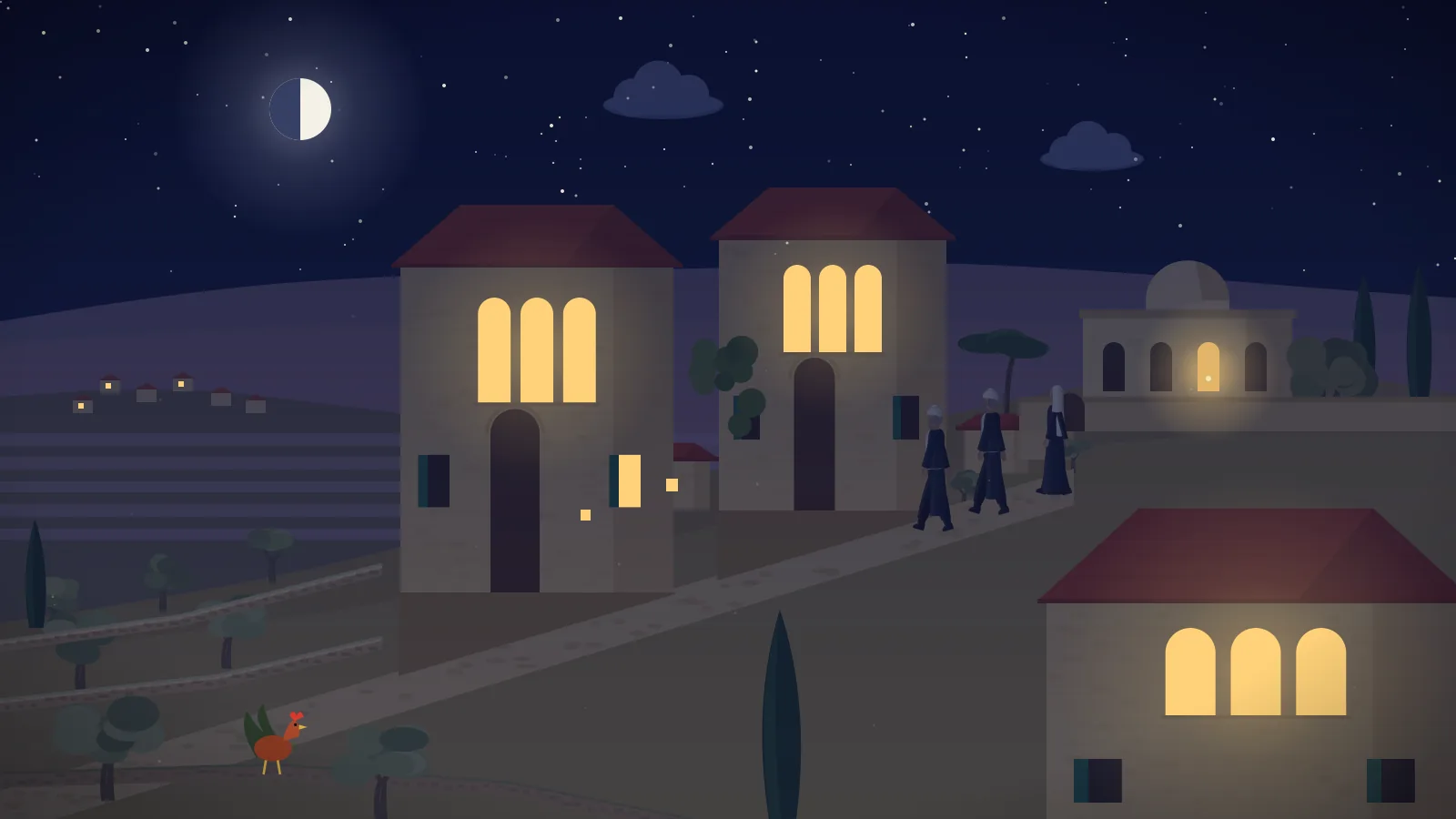
It is Thursday evening in a village of the Chouf mountains, in Lebanon. In the low sun the stone houses turn gold, and the valley below fills with mist. Men in dark robes and white turbans walk slowly uphill, and women in dark dresses with long white veils follow at a little distance. They are going to the khalwa, a plain house of prayer on the hilltop. Inside there are no pictures and no call to prayer: only carpets, a lamp and the reading of old books, which outsiders do not hear. What is read there belongs to those who keep it. What follows is what is told openly.
Chapter Iwatch from 0:41
Those Who Affirm Oneness
Outsiders call them the Druze. They call themselves al-Muwahhidun, “those who affirm the oneness of God”, and also Bani Ma’ruf. About a million live today, by estimates that vary, mostly in the mountains of Lebanon, southern Syria and northern Israel, with smaller communities in Jordan and emigrant families in the Americas and Australia.
Theirs is a closed faith. For almost a thousand years no one has been able to join it: one is born a Druze, of Druze parents. Its scriptures are taught in full only to the initiated. This story keeps to what the Druze say openly, and to what the scholars who study them describe.
Chapter IIwatch from 1:09
The Call in Cairo
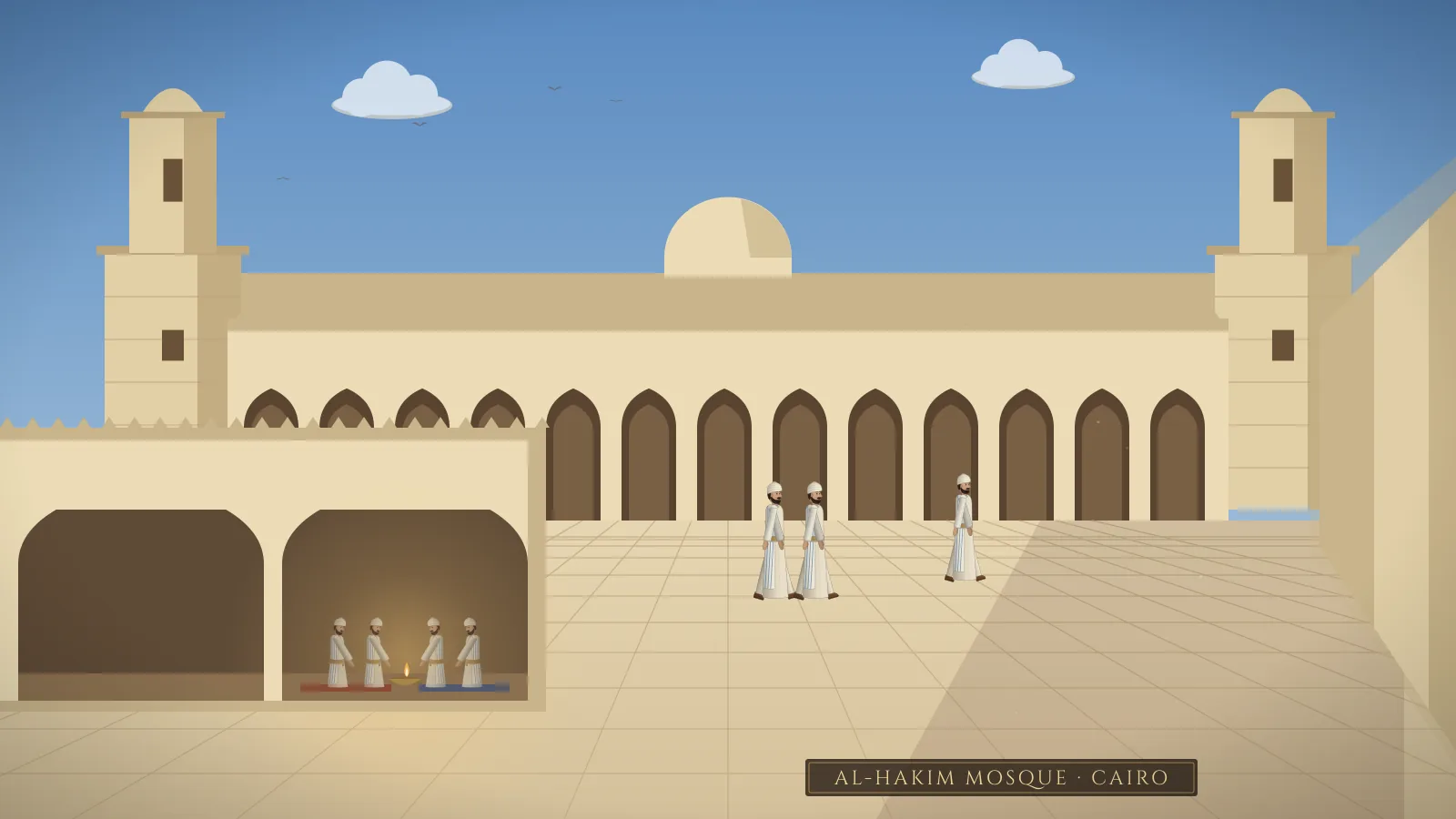
It begins in Cairo, capital of the Fatimids, a Shia Ismaili dynasty that ruled Egypt and much of the Levant. Their sixth caliph, al-Hakim bi-Amr Allah, reigned from 996. His great mosque still stands in old Cairo, its courtyard ringed with arcades. Around his court, a circle of preachers taught bold ideas about the nature of God and the inner meaning of religion.
In 1017 one of them, the Persian-born Hamza ibn Ali, proclaimed a new call, the da’wa. The one God, he taught, had made himself manifest in al-Hakim, and it was time to pass from the outward law of religion to its inner truth.
Another preacher, al-Darazi, broke with Hamza, and the believers rejected him as a heretic. Yet outsiders named them all after him, and “Druze” has stayed: a name from outside.
In 1021 al-Hakim went out one night into the hills above Cairo and never returned. His followers believed he had gone into concealment. The next caliph turned against the movement, and its members in Egypt were persecuted. The call survived to the north, in the mountain villages of Syria and Lebanon.
There the leader Baha al-Din al-Muqtana guided the believers by letter. In 1043 he declared the call closed, and the community has accepted no converts since.
Chapter IIIwatch from 2:41
Epistles and Teaching
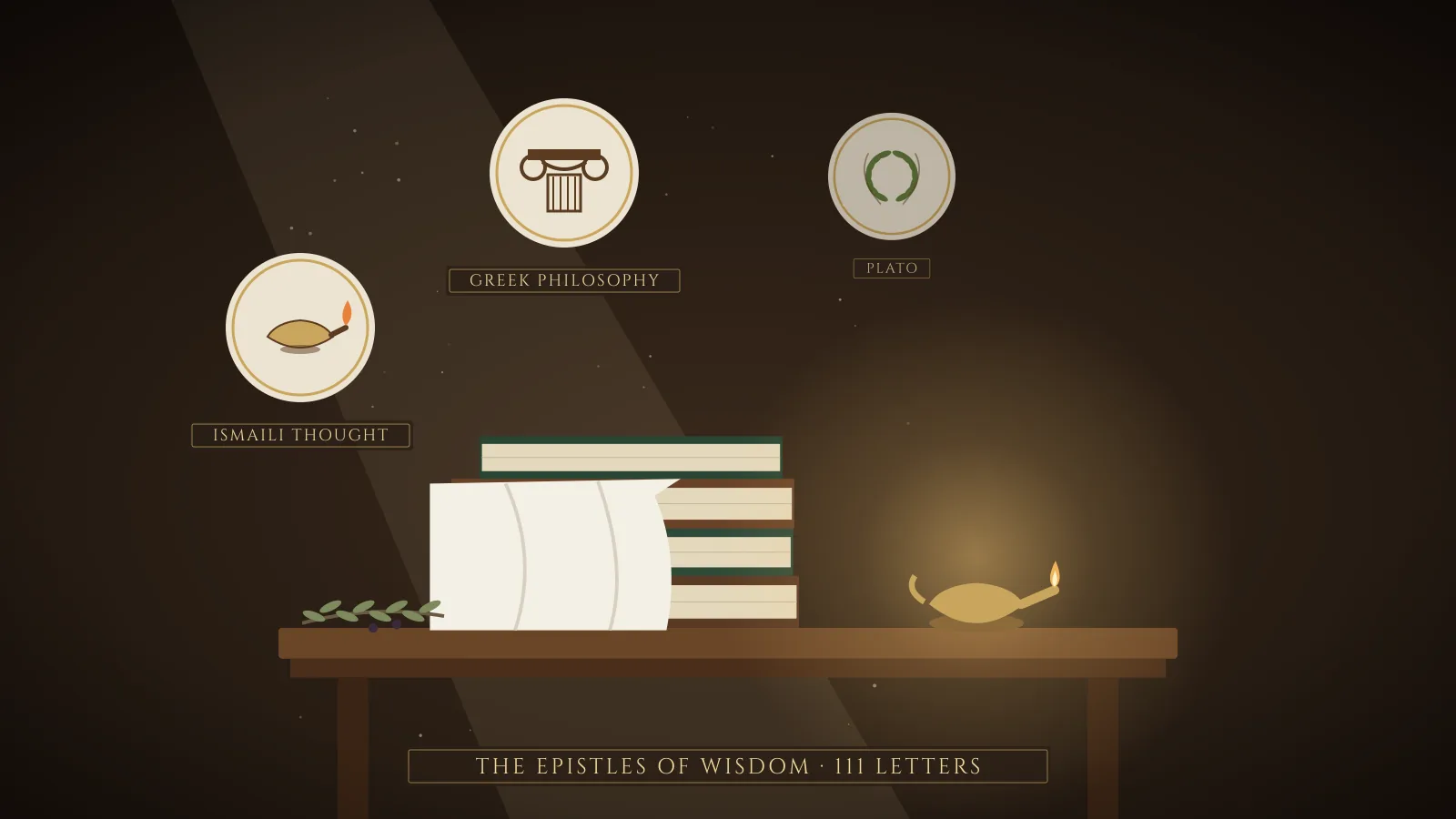
The founders’ letters were gathered as the Epistles of Wisdom, the Rasa’il al-Hikma, one hundred and eleven of them. Scholars find in them Ismaili thought, Greek philosophy, and reverence for prophets and sages from many traditions, from Jethro to Jesus, Muhammad and Plato. They were copied by hand and kept by the initiated, and printed editions were long frowned upon. Their inner teaching is not explained to outsiders.
What is professed openly begins with God. God is utterly one and beyond description, yet has shown himself in human form, last of all, Druze teaching holds, in al-Hakim. Scholars call this a theology of manifestation, not the worship of a man.
Most Druze do not keep the ritual duties of Islam, such as the five daily prayers, the Ramadan fast or the pilgrimage to Mecca, which, scholars explain, their books read in an inner sense. At the heart of the faith stand seven commandments, among them truthfulness, care for one another and submission to God’s will.
Druze believe in reincarnation, taqammus. At death, the soul passes at once into a newborn Druze child. The number of souls is fixed, so in spirit the community has neither grown nor shrunk since the call was closed. Some Druze tell of children who remember a past life, a former name, a former village. Such accounts are heard with respect.
Druze society has two paths. The uqqal, the wise, have asked to be initiated. They study the scriptures and keep a strict, modest life, without alcohol or tobacco, in simple dark clothes: white turbans for the men, a long white veil, the mandil, for the women. Women may be uqqal as well as men, and the most learned and devout are honoured as ajawid.
Most Druze are juhhal, the uninitiated, who live much like their neighbours and are not taught the inner doctrines. Any adult may ask to cross over.
Chapter IVwatch from 4:47
The Mountain
In Wadi al-Taym, the valley below Mount Hermon, the call took root in the 1020s. Near Hasbaya, the retreats of al-Bayada are still a centre of learning.
In the fifteenth century the scholar al-Amir al-Sayyid al-Tanukhi reformed religious life in Mount Lebanon. His tomb at Abey is visited to this day.
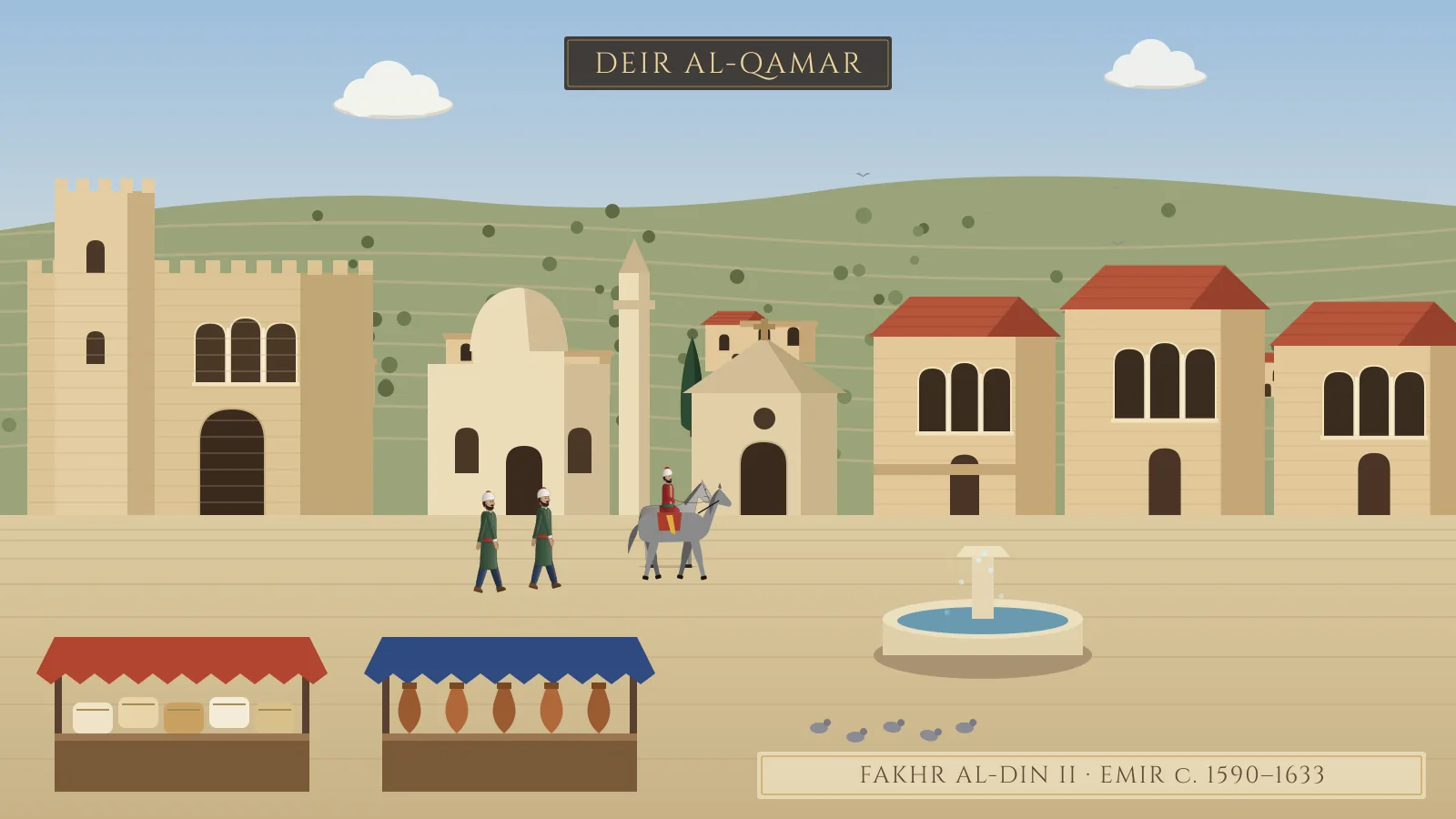
Under Ottoman rule, Druze lords governed the mountain. The most famous was Fakhr al-Din the Second, of the Ma’n family, who from about 1590 built a near-independent emirate from Deir al-Qamar, in the Chouf.
He traded with Europe, and spent five years in exile in Italy, first at the Medici court of Tuscany. In the end the Ottomans turned against him, and he died in Istanbul in 1635.
When the Ma’n line ended, in 1697, the lords of the mountain chose the Shihab family as emirs. Over these centuries many Druze also settled in the Hauran mountain of Syria, a range of round dark hills, later called Jabal al-Druze.
Chapter Vwatch from 6:01
Conflict and Revolt
In 1860, conflict between Druze and Maronite Christians spread through Mount Lebanon, and thousands died, most of them Christians. European powers stepped in, and in 1861 Mount Lebanon was given a new autonomous government.
The memory was long. In 2001, after Lebanon’s civil war, the Maronite patriarch and Druze leaders sealed a reconciliation of the mountain.
In 1925 Jabal al-Druze rose against French rule. Its leader, Sultan al-Atrash, headed the Great Syrian Revolt, which lasted until 1927. Its slogan is still remembered:
Religion is for God, the homeland is for all.
Al-Atrash is widely honoured in Syria as a national hero.
In Lebanon, the Jumblatt palace at Mukhtara, in the Chouf, has long been a centre of Druze politics. Kamal Jumblatt founded the Progressive Socialist Party in 1949, and led it until his assassination in 1977.
Chapter VIwatch from 7:13
Across Borders
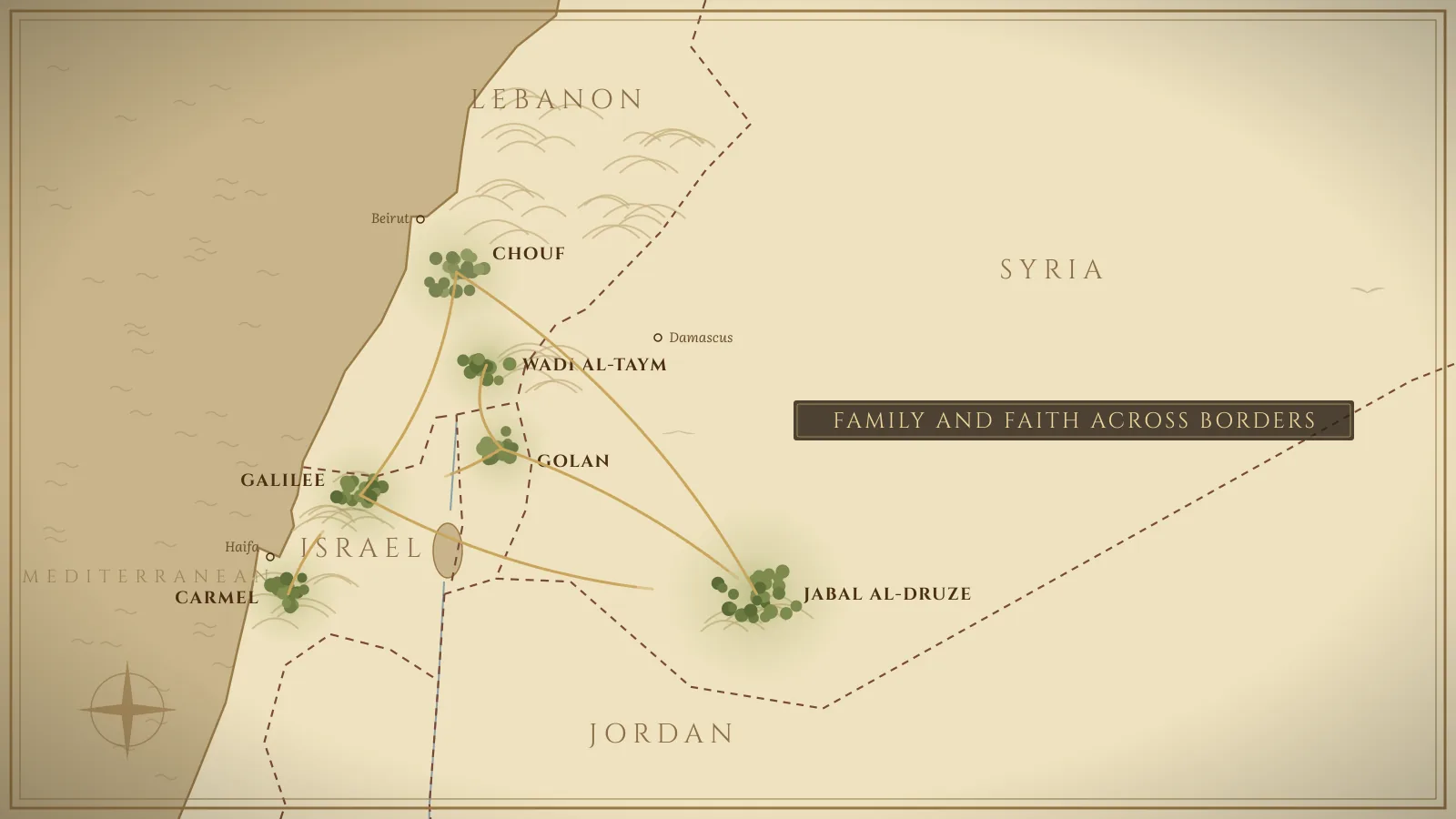
When modern borders were drawn, the Druze found themselves divided between Lebanon, Syria, Israel and Jordan. With no state of their own, they have generally sought good relations with their governments.
In Lebanon, some 200,000 Druze or more, by most estimates, hold a fixed share of seats in parliament, and their leaders remain central to national politics.
Syria is thought to hold the largest community, mostly around Suwayda. After the Assad government fell in December 2024, their place in the new Syria became a painful question. In July 2025, deadly fighting struck the province. A United Nations commission of inquiry later reported at least 1,700 people killed in those days, most of them Druze civilians. Some local leaders now call for self-rule; others favour agreement with Damascus, whose government pledges to protect minorities.
In Israel, about 152,000 Druze lived at the end of 2024, by official figures, in Galilee, on Mount Carmel and in the Golan. Since 1956, Druze men have been drafted by law. Some community leaders asked for that step; others opposed it. Many Israeli Druze speak of a covenant of blood and serve with pride; a smaller number refuse.
In 2018, Israel’s Nation-State Law defined the country as the nation-state of the Jewish people, and lowered the status of Arabic. Many Druze felt their service had been slighted, and tens of thousands rallied in Rabin Square in Tel Aviv, where City Hall was lit in the Druze colours. The government said the law affirmed the country’s Jewish character without harming anyone’s individual rights. In 2021 the Supreme Court upheld it. The argument goes on.
In the Golan Heights, taken by Israel in 1967, live more than 29,000 Druze. Most have long kept a Syrian identity; by early 2025 about one in five held Israeli citizenship.
Chapter VIIwatch from 9:35
Bread, Flags and Pilgrims
In every village, hospitality comes first. A guest is offered coffee and fruit, and women bake saj bread, thin as cloth, on a domed iron griddle over the fire.
Druze marry only Druze, and take one spouse; men and women may both seek divorce. One who marries out has traditionally been seen as leaving the community. In recent years modern education, emigration and marriage outside the community have raised the question of how a closed faith can keep its young.
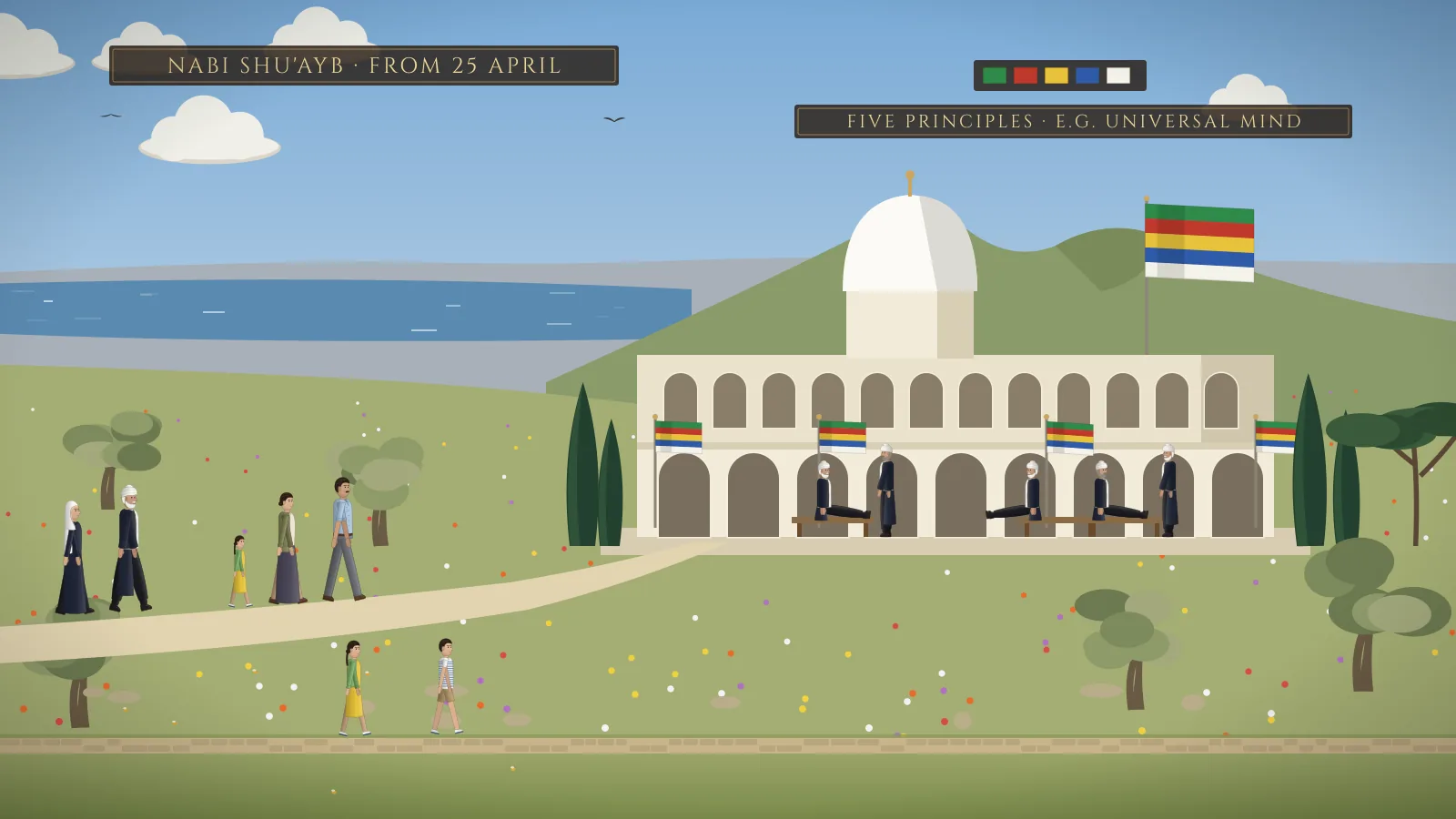
On feast days the five-coloured flag flies: green, red, yellow, blue and white, for five principles that Druze teaching places at the root of creation, such as universal mind.
Each April, from the 25th, families gather at the shrine of Nabi Shu’ayb, identified with Jethro, on a hillside near Hittin in Galilee. Children run, and flags move in the wind.
Chapter VIIIwatch from 10:31
Legend and Record
Legend says the Druze are a sect of Islam, that they worship a man, that they hide strange rites, and that their loyalty is a mask.
The records show a faith born in Islam, which historians trace to Ismaili Shiism, but which most Druze, and many scholars, now see as a religion of its own. They show a theology of God’s oneness, and a secrecy that guards the study of scripture, while worship is simple prayer, reading and meditation. The custom of taqiyya, outwardly conforming to the faith of the majority in time of danger, has been taken as a sign of disloyalty; historians see in it the way a small minority survived centuries of persecution. Above all, the records show a small people that survived by holding together.
Back in the Chouf, it is late on Thursday night. In the khalwa on the hill a single lamp still burns, and the old books are closed until next week. Below, the village sleeps, and the terraces of olives wait for morning.